TTG Asia
Asia/Singapore Thursday, 25th December 2025
Page 1613

Viceroy hotel to rise in Vietnam’s new entertainment hub

0

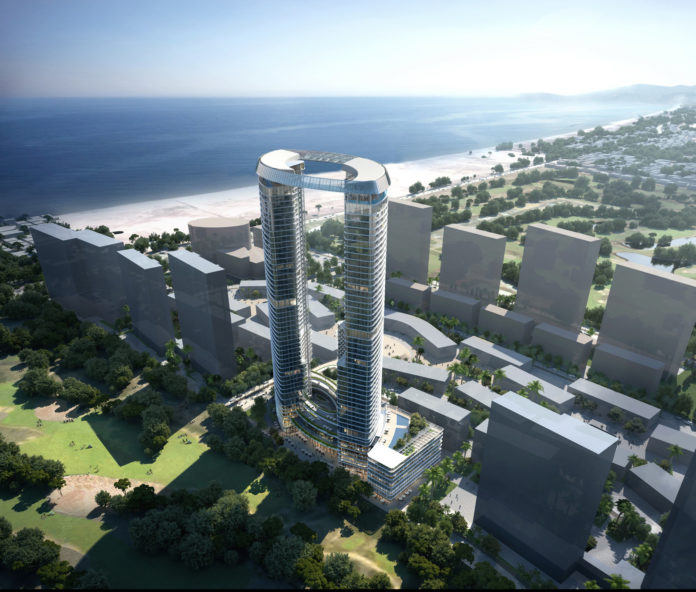
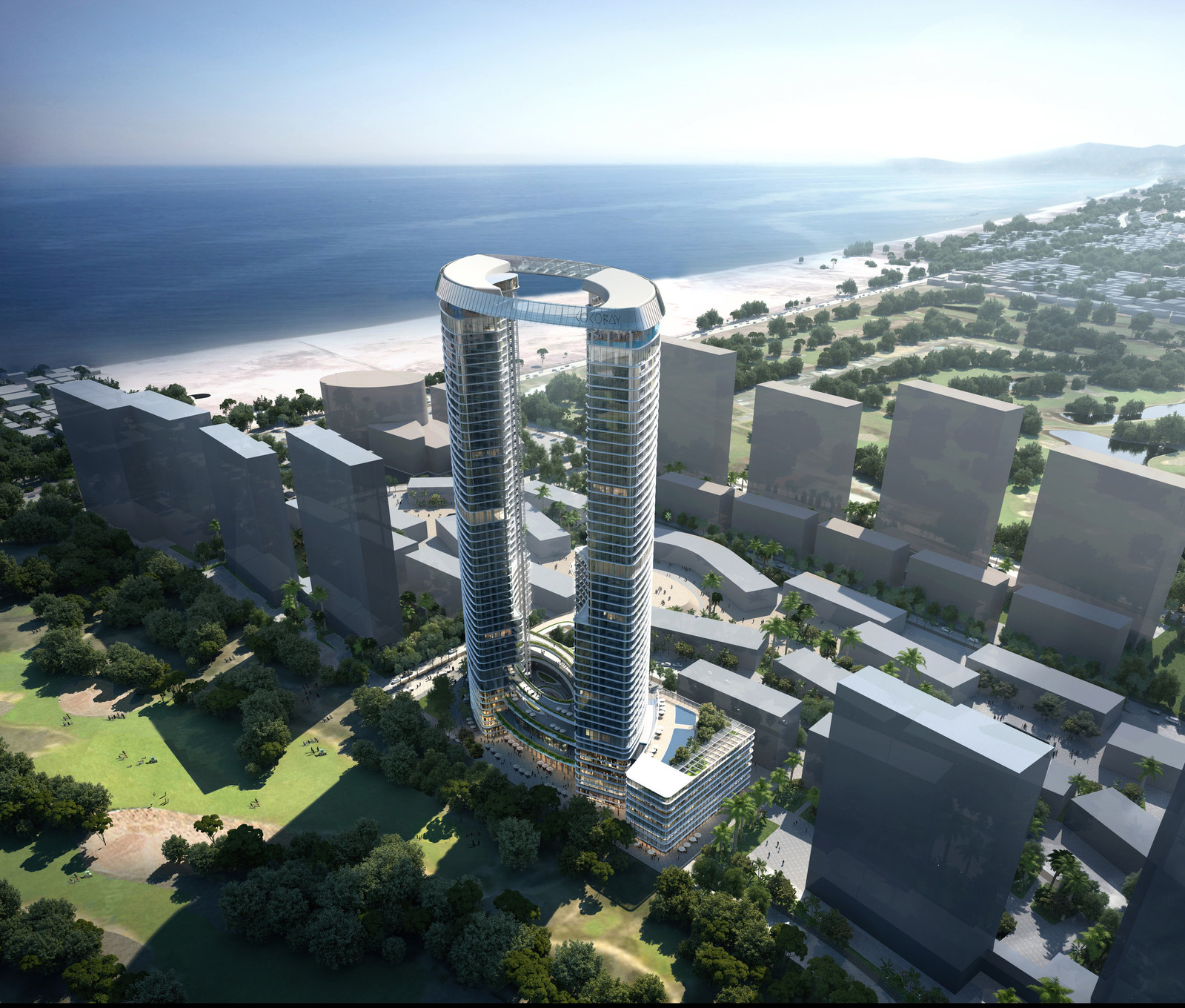
Viceroy Da Nang Vietnam is set to open in 2020 in the heart of the upcoming Cocobay entertainment and hospitality hub near Hoi An.

A partnership between Viceroy Hotel Group and Empire Group, the project is expected to boast 700 luxury hotel rooms, suites and condo units; eight restaurants, lounge and bar concepts; meeting and event spaces including three ballrooms; plus a cabana-flanked pool and a spa.

A “crystal bridge” linking the top of the property’s distinctive twin towers will offer guests panoramic views of Danang and the ocean.

Located near the ancient town of Hoi An, 20 minutes from Da Nang International Airport, Cocobay’s master plan features a convention centre, opera house, sports arena, beach club, retail stores, and numerous nightlife and dining destinations.

“This is Viceroy’s first foray into Asia’s most highly-anticipated market, which is being created from the ground up,” said Anton Bawab, regional president of Viceroy Hotel Group. “The mix of culture, nightlife and hospitality that will come to life here will solidify Viceroy Da Nang Vietnam as a must-visit destination.”

Amid China-Korea spat, Japan eases visa rules to lure Chinese

0

The Japanese government will expand its multiple-entry visa to Chinese travellers with “sufficient financial capability” and their families effective May 8.

The new visas are valid for three years, limit each period of stay up to 30 days and require that the first visit be a sightseeing trip. Documentation for single-entry tourist visa applications will also be simplified for individuals with gold credit cards, the Ministry of Foreign Affairs said.

Chinese already account for the largest number of inbound tourists into Japan – nearly 1.7 million Chinese arrived in Japan in 1Q, 25 per cent more than the same period last year.

“Chinese visitors are one of the fastest-growing markets for our international sales team, which is good (not only for) us, (but also for) the tourism sector and Japanese economy,” said Toshio Yanagibashi, international sales executive, Hilton Fukuoka Sea Hawk Hotel.

The new rules also coincide with a worsening diplomatic stand-off between China and South Korea that has seen Chinese tourists seeking alternative vacation destinations like Japan and South-east Asia.

“We have seen the impact of the dispute between China and South Korea, with one large group of Chinese due to arrive here next week after cancelling a visit to South Korea,” Yanagibashi said. “There are a couple more groups that have done the same later in the year as well.”

Kaho Mori, assistant manager of Nippon Travel Agency’s inbound division, agrees there has been “a clear increase” in Chinese arrivals in 1Q2017, although she said it would not be possible to confirm if they might otherwise have gone to South Korea.

New look for Carlson Wagonlit Travel

0

Carlson Wagonlit Travel (CWT) has unveiled its refreshed branding and launched a new global marketing campaign centred around the tag line “Make the world work for you”.

CWT has shed its teal branding – first created in 1994 – in favour of a new corporate colouring that combines a blood orange shade called sanguinello with the contrasting grey of charcoal. Sanguinello represents optimism, pleasure and a thirst for action; while charcoal adds solidity and stability, and reflects a sense of calm, the company said in a release.

“The invigorating change in our branding underlines our proposition as the enabler of change in our industry,” said Patrick Andersen, chief strategy officer. “The new tag line not only illustrates our sense of purpose at a corporate level, but it can also be adapted to our different divisions.”

The new branding, which comes a year after Kurt Ekert was appointed president and CEO, was created by London-based creative branding agency Curious.

Australian government to build new Sydney airport

0

The Australian federal government has committed to building a second international airport in Sydney valued at A$5 billion (US$3.7 billion), with construction scheduled to start next year.

Sited in Badgery’s Creek, the airport is expected to serve about 2.2 million people in western Sydney.


Sydney Airport Corporation runs the existing Mascot airport

According to reports, the commitment came after Sydney Airport Corporation declined to take on the project, citing risks on monetary return for investors as the main reason.

Details on the project will be announced in the federal budget next week.

More AirAsia flights take off from secondary hubs

0

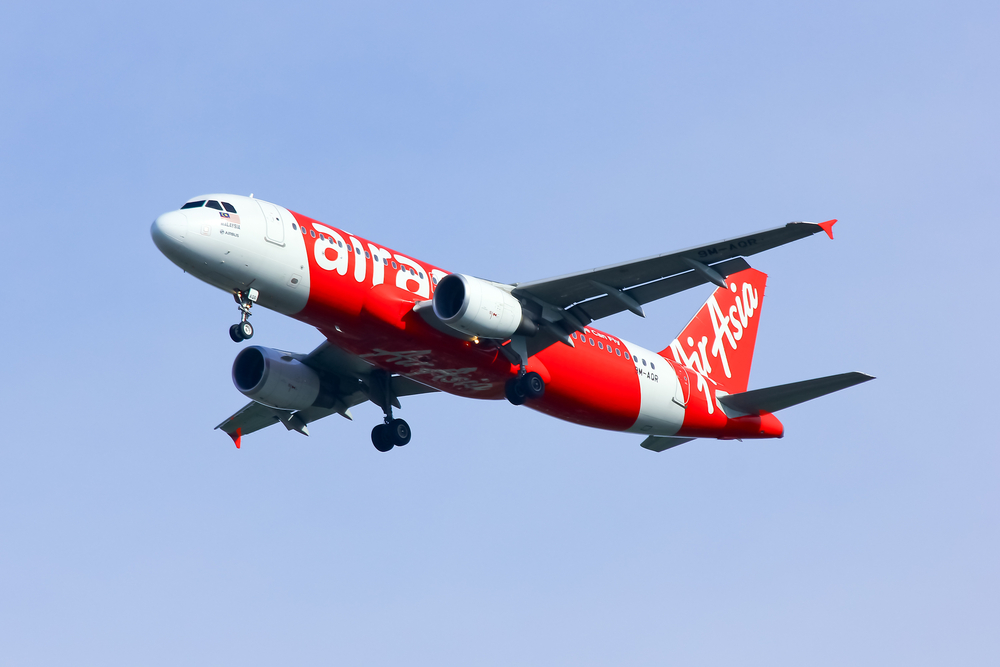
AirAsia has unveiled more domestic routes from its secondary hubs in Malaysia as well as several new connections to China and India launching this year.

The Malaysian LCC commenced a Kuala Lumpur-Bhubaneswar (India) flight on April 26, the first international airline to fly into the east Indian city and capital of Odisha, which Malaysian agents expect to spur FIT demand.

“Prior to the opening of this route, travellers from Bhubaneswar and surrounding areas would have to take flights from Chennai, Mumbai or Kolkata to travel to Malaysia,” A Aruldas, managing director of Tourland Travel, said. “The new flights are also timely with Malaysia’s relaxation of the visa facility for Indian tourists.”

Come August 9, AirAsia will begin a thrice-weekly service connecting Langkawi to Shenzhen for the first time and four-times weekly flights between Langkawi and Kuching that same day.

Other new domestic routes include the inaugural Johor Bahru-Langkawi service launched since April 28, in addition to the upcoming Johor Bahru-Kuala Terengganu flights commencing June 22.

Thomas Cook India snaps up Kuoni’s DMC network, including Asian Trails

0

Kuoni’s new owner EQT is selling another chunk of Kuoni’s business, this time its DMC network comprising AlliedTPro US, Asian Trails, Australian Tours Management, Desert Adventures/Gulf Dunes Middle East and Private Safaris Africa, to Thomas Cook India.

In Asia, Asian Trails’ CEO Laurent Kuenzle told TTG Asia this morning in a phone interview that the Asian Trails brand, leadership and team would be retained and that the shift in new ownership would strengthen the DMC further.

“They didn’t buy Asian Trails to make a Thomas Cook India out of us,” said Kuenzle.

“Thomas Group India believes that the original people who manage a company are the key drivers to its success. They are buying the entrepreneurial spirit, the management team that leads the company, and they are interested in the synergies that can be had,” he said.

Kuenzle expects a lot of synergies and growth, particularly from the Indian market. “They buy us because we are specialists and we are international, i.e. we have the expertise to handle international markets (travelling to Asia). We have a Spanish team, French team, Italian team, etc, to handle the individual needs of these clients and this will continue as always. Plus we look forward to harness the potential of the Indian market. We already handle Indian clients, including from Thomas Cook India, and as you know the potential of this market is enormous.

“It’s a change in ownership, but nothing changes except this puts us on a growth trajectory,” said Kuenzle.

Asian Trails is established in eight countries in the region (excluding Australian Tours Management which reports to it). In all, it has 33 offices in the region.


Kuenzle: ownership change puts Asian Trails on growth trajectory

Thomas Cook India had previously bought Kuoni businesses in India, i.e. the outbound travel brand SOTC and DMC SITA, and Kuoni Hong Kong, before the Swiss tour operating company completely sold itself to EQT. Its style has always been to acquire “exceptional management teams”.

In an October 2015 interview, Madhavan Menon, Thomas Cook India’s managing director, told TTG Asia: “We don’t have the ability to run them (the travel businesses it acquires). It’s never our policy to interfere. It’s the same when we were acquired by Fairfax and it’s exactly what we’ll replicate.”

Thus far, it has left Kuoni Hong Kong alone. Thomas Cook India and SOTC India operate separately but share backend services. Only Kuoni India’s inbound business, Kuoni Destination Management, which operates under SITA, will be merged with Fairfax’s Travel Corporation of India, ending the use of the Kuoni brand in India in the coming months. “The value of SOTC, 59 years old, and SITA, 55 years old, is far higher,” Menon had said in that interview.

At press time, Menon could not be reached for comments on the latest acquisition.

The deal does not include Kuoni Destination Management Europe and Kuoni Destination Management US (global MICE business) which remain in Kuoni’s Global Travel Services division. These aren’t part of the destination management specialists network.

EQT, which is also selling GTA to Hotelbeds, is left with what some say is the jewel in the crown, the highly lucrative VFS Global, visa and passport facilitation services. Some industry observers speculate that’s the reason why it bought Kuoni, however it could not buy only VFS but the rest of it.


Emerging markets, new tech to drive business travel in next decade

0

Emerging markets and technology uptake will drive the global business travel sector growth by 3.7 per cent annually over the next decade from its current US$1.2 trillion, as revealed in a Travelport and WTTC report released at the WTTC Global Summit in Bangkok.

The business travel market in the Asia-Pacific will overtake Americas with a growth rate of 6.2 per cent each year to 2027. China is expected to the way with 9.5 per cent annual growth, followed by Myanmar (8.7 per cent), Hong Kong (eight per cent), Cambodia (7.4 per cent) and India (7.2 per cent).

Currently, the largest business travel markets are the US, China, the UK, Germany and Japan.

According to the report, business travel is often the driving force in the overall growth in contribution of travel and tourism to national GDP as companies continue to find ways to develop new markets and maximise their revenues.

The report also incorporates White Paper proposals underlining the need for investment in technology and infrastructure, the removal of visa burdens, tackling cyber security and personalising services for travellers.

As well, technology is expected to be key in driving the growth in the business travel sector, where a Travelport research highlighted that business travellers want mobile phone alerts and information about disruptions, flight updates and upgrades. In addition, the report reveals that the industry needs to focus on serving digitally-connected millennials in order to engage customers more effectively.

CEO of Travelport, Gordon Wilson, commented: “Every day we see business travel growing at a significant rate in many emerging markets with technology playing an increasingly important role in easing the way for those on trips for their work. As an industry we need to continue to invest in the best technologies and infrastructure while governments need to be more business-friendly by removing burdensome visa requirements.”

Only premium, economy airline business models feasible: Fernandes

0

Stabilising fuel prices and a new generation of fuel-efficient aircraft models may bring some relief to airline operators in the current aviation landscape, but AirAsia Group CEO Tony Fernandes believes that legacy carriers will encounter greater challenges in their business models as they seek to cut costs in the face of fierce low-cost competition.

Speaking at the recent WTTC Global Summit in Bangkok, Fernandes shared his prediction: “In time you’re going to have two different airline models – LCCs will do the economic class and full-service carriers doing the premium sectors.”


Fernandes speaking during WTTC’s 17th Global Summit in Bangkok 

The presence of four classes – first, business, premium economy and economy – among some airlines is deemed “very inefficient” in Fernandes’ eyes. “One Singapore Airlines seat will be equal to 40 of mine,” he quipped. “We are more fuel-efficient and eco-friendly than any airline out there because we carry more passengers per foot.”

What about hybrid carriers, the business model that straddles between full-service and no-frills carriers, asked TTG Asia. The outspoken airline chief thinks it’s a “disaster” for legacy airlines to pursue the hybrid business model. “Hybrid carriers is where airlines kind of messed up, as they (full-service carriers) compete with LCCs. You choose either one (business model),” he said.

Fernandes also expects the arrival of a new generation of fuel-efficent aircraft the likes of Boeing 787 Dreamliner and Airbus A330neo will help LCCs to optimise their routes and network performance and push the envelop of more longhaul, low-cost models.

Commenting on Norwegian’s plans to launch budget flights on the London Gatwick-Singapore route, Fernandes said: “We are jealous of Norwegian; they have the right aircraft (Boeing 787-9 Dreamliner)… We want to go to Europe, but the Ukraine incident put an extra hour on our aircraft.”

He also doesn’t rule out the possibility of resuming services to Europe or flying farther afield to the west coast of North America on AirAsia X. The longhaul budget carrier last flew to Paris (Orly) and London (Gatwick) in 2012, and recently announced the launch of services to Honululu in 2018.

However, London may not be on AirAsia X’s radar when it returns to Europe. “There are many interesting points in Europe, so it may not be a hub airport like London. It may be Manchester or Dublin,” Fernandes said.

When asked where aviation is heading, Fernandes sees tremendous opportunities for airlines to keep costs down especially in their use of data. “Data excites me tremendously. The data explosion will decrease costs and increase revenue… I hope governments will use data to improve security and make travelling easier.”

Mob dance for Vietjet’s first Hanoi-Singapore flight

0

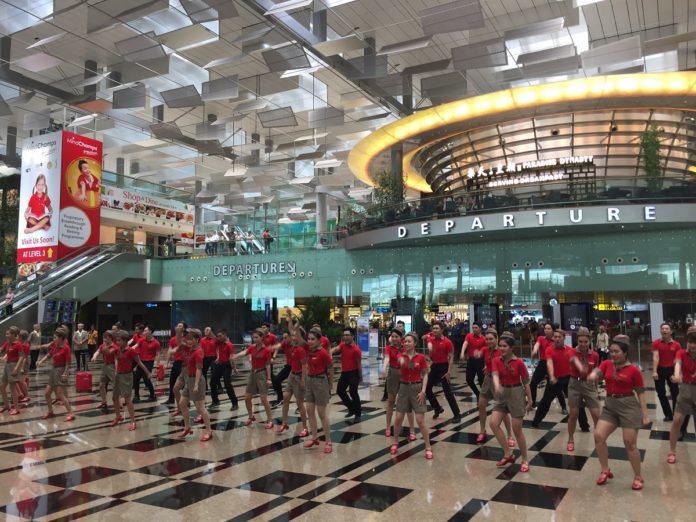
Vietjet cabin crew last Thursday put up an impromptu flash mob dance at Singapore Changi Airport to mark the launch of the airline’s inaugural flight from Hanoi to Singapore. The daily Hanoi flight is Vietjet’s second route connecting Vietnam and Singapore after Ho Chi Minh City. The airline is also planning to connect Singapore with Dalat and Danang in the near future.

Emirates flies all-A380 to Melbourne as Qantas hops over Dubai to London

0

From March 25, 2018, Emirates will provide an all-A380 service from Melbourne when it upgrades its third daily flight from the Australian city to Dubai from a Boeing 777-300ER, right as Qantas replaces the Melbourne-Dubai-London with the Melbourne-Perth-London route on March 24, 2018.

Emirates’ move will add 945 seats per week on flights EK408 and EK409, representing a 10 per cent increase in capacity, which is expected to support more business and leisure travel between Dubai and Melbourne.

The Emirates A380 offers 489 seats in a three-class cabin configuration with 14 private suites in first class, 76 flat-bed seats in business class and 399 spacious seats in economy.

Meanwhile, Qantas customers in Melbourne will have the option to fly to Dubai with partner Emirates on Qantas code.

By swapping its daily A380 Melbourne-Dubai-London service for a daily 787-9 on the Melbourne-Perth-London (Heathrow) service, Qantas customers travelling to London from Melbourne will reduce their total travel time by more than an hour compared with existing A380 services.

Qantas is expecting a surge in stopovers and tourism for Western Australia while making Victoria the hub for its first four Dreamliner. The carrier’s first two 787s will be dedicated to the Melbourne-Los Angeles route from December 2017, and the third and fourth to the Melbourne-Perth-London service from March 2018.

According to Qantas, the A380 that currently operates the Melbourne-London route will be redeployed to meet periods of high demand from Melbourne and Sydney to destinations in Asia, such as Singapore and Hong Kong.

Qantas Group CEO Alan Joyce said there had been global interest in the Perth-London flights since they were announced in December 2016.