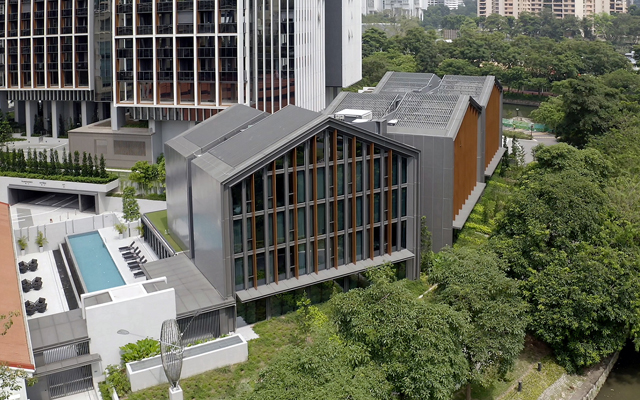
Ben Schumacher has been appointed to Wyndham Hotels & Resort’s senior leadership team in the region in his new role as head of operations.
Based in Singapore, Schumacher will lead the hotel operations for both franchised and managed hotels across the region.
Having first joined Wyndham in 2016 as a franchise services manager, Schumacher has been directly responsible for the successful opening of more than 15 hotels in the past few years, including playing an instrumental role in supporting operations in South Korea over the past 12 months. Alongside his team, Schumacher currently services more than 130 franchised hotels within the South-east Asia and Pacific Rim region.
Before joining Wyndham Hotels & Resorts, he undertook several senior operational roles within the hotel industry, and was part of pre-opening teams across Australia and New Zealand for various Hilton Hotels.
A defiantly strong currency and global economic uncertainty are among the key factors battering Thailand tourism, leading to a tempered outlook among the country’s travel business community stepping into 4Q2019.
The inbound tourism sector is especially feeling the heat from a robust Thai baht, which has risen against major currencies like the British pound, US dollar and Chinese yuan this year, dissuading price-sensitive travellers to the kingdom as the currency conversion rates work against their favour to impact their trip budgeting, say industry stakeholders.
Rising Thai baht has hit the country’s inbound tourism industry
The surging baht has also prevented a full recovery of China, Thailand’s top visitor source market, which has not returned to its dramatic growth figures since the Phuket boat incident last year.
Olivier Berrivin, managing director, international operations – Asia at Best Western Hotels & Resorts, said: “We’re still feeling the drop of Chinese arrivals compared to last year, but the volume is still quite substantial and we expect things to remain stable throughout the upcoming high season. China still represents 58.1 per cent of total international arrivals to Thailand, followed by Russia, Japan, South Korea, Vietnam and India.”
He added: “In addition, the ongoing situation in Hong Kong, with no clear end in sight, leaves a big question mark over what the impact might be next year. Last but not least, both the ongoing trade war between the US and China and uncertainty linked to Brexit will most likely have some unexpected consequences.”
The baht’s strength is also a worry for Shreyash Shah, director of business development, Chada Hotel Group, which together with the spate of new hotels offering cut-throat opening prices, have made him “skeptical” of the business outlook for 2020.
Likewise, Hamish Keith, CEO of Exo Travel Group, is approaching the coming months with a sense of caution, as Europe – a key market for the Bangkok-based DMC – is “looking difficult” against a backdrop of a strong baht.
Thailand’s appreciating currency, meanwhile, is working to the advantage of other regional destinations, noted Berrivin.
“The strength of the Thai baht has made some people rethink their travel plans for the upcoming festive season, and destinations like Bali, Danang, Nha Trang and Phu Quoc are benefiting, with higher pick-up rates than the same period in 2018. We understand that the Thai government is considering options to adjust the baht’s value, but it might be too late to reverse a trend that is already well underway,” he lamented.
But it’s not entirely bleak for Thailand tourism, even as growth from major feeder markets have tapered off this year, industry leaders remarked.
Said Berrivin: “The dip is not as bad as some people seem to think, and the Chinese market remains our top contributor, at least in the budget/economy segments. The Indian market has shown a promising increase in terms of arrivals and even if it’s not up to Chinese levels just yet, I think it’s a market that has a tremendous potential and must be developed further to reduce our dependency on the other major producer.”
For Shah, looking into new markets such as opening Koh Lanta to Indian group series is one way that Chada Group, which is based in southern Thailand, has adopted to offset losses in its traditional markets, drawing on the surge in direct air connections between India to Phuket this year.
Ultimately, Thailand’s “strong underlying fundamentals”, including its diverse supply of hotels, product and experiences, still make the kingdom “an attractive destination”, said Keith. “We are focusing more on the non-beach areas as well as experiential and luxury products in the country.
“We are still seeing growth for Thailand, just not fast growth,” he added.
In its eighth edition this year, the Global Tourism Economy Forum (GTEF) – which recently took place in Macau from October 13-15 – boasted an enhanced programming that saw the addition of the inaugural World Tourism Investment and Finance Conference (WTIFC), targeting worldwide leaders, and the UNWTO Tourism Tech Adventure: SportsTech, a competition in tourism and sports.
Commenting on the WTIFC, GTEF vice-chairman and secretary-general, Pansy Ho, said: “The idea of convening a collaborated event dedicated to the investment aspect of tourism is a remarkable opportunity to enhance practicality and actionable value for our attendants. Macau has been a magnet for foreign investment, especially for tourism industry in last two decade after connectivity was increasingly integrated.”
GTEF 2019
1 of 2
Pansy Ho at GTEF 2019
GTEF 2019 Closing Ceremony
She added: “This explains why more and more big countries come to this forum, i.e. the EU picked the destination in 2018 to meet with a few big provinces in China and commercial units under China Chamber of Tourism for cooperation.
“We also enrich our content with business matching, i.e. more than 200 sessions were made this year, with the signing of some investment agreements. The investment forum sparked off conversation; we’ve got feedback to get it going and will elevate (the event) to international level with more participation in future.”
In her concluding remarks, Ho said: “GTEF was founded upon the mission of connecting East-West tourism interests. Through our collaboration, we are getting down to real business here, consolidating Macau’s potential to become a tourism capital hub in fuelling regional tourism growth.
“Through GTEF, I hope we have also showcased how Macau itself is another living proof of the transformational power of tourism. In Macau, not only have we continued to reinvest, but to reinvent. Blessed by our national policy, Macau is ready to take on another wave of development, as we continue to integrate into the Greater Bay Area framework, contributing our tourism experience to drive cross-industry collaboration with our neighbours, to share our culture and heritage with the world, and instil a sense of national pride among our people.”
Built on the concept of “a beautiful life” raised by Chinese president Xi Jinping, this year’s GTEF also centred discussions on global tourism economy under the theme of “Tourism and Leisure: Roadmap to a Beautiful Life”, offering insights on how diversified tourism offering can meet the ever-increasing needs of international visitors, enhancing happiness and the quality of life, ultimately creating a harmonious and beautiful life for humanity.
Looking ahead, Ho stated that GTEF’s will continue to pursue its strategic business model of partnering countries, while taking a nod from China’s development approach to lay out its direction for continual refinement and adjustment.
GTEF 2019 successfully gathered and engaged close to 2,000 participants, including ministerial officials of tourism and related fields, industry leaders, experts, scholars and participants from across the globe, along with delegations from partner countries Argentina and Brazil, as well as featured Chinese province Jiangsu.
Sri Lanka is pumping millions of rupees into an aggressive promotional campaign at the upcoming World Travel Mart (WTM) London to aid the recovery of its tourism industry, which took a beating after the Easter Sunday bombings in April.
Apart from being the chief sponsor of the World Travel Market (WTM) London, which runs from November 4 to 6, with a financial package of over 64.5 million rupees (US$350,000), Sri Lanka Tourism Promotion Bureau’s (SLTPB) chairman Kishu Gomes said that the NTO is forking out an additional 100 million rupees on booths for Sri Lankan exhibitors and other promotion activities at the event.
Sri Lanka will be doubling down on promotion efforts at upcoming WTM London to woo more European travellers; tourists at the Pinnawala Elephant Orphanage pictured
“As the chief sponsor of the event, we get to put up our branding at the entrance to the venue and also have a digital screen for advertisements and other promotional materials,” Gomes told TTG Asia.
Over 60 representatives from Sri Lankan travel companies and hotels will be taking part at WTM, with SLTPB covering 70 per cent of the costs for the booking and setting up of stands by Sri Lankan vendors at the event, added Gomes.
Meanwhile, officials from a host of foreign travel associations will be visiting Sri Lanka to provide solidarity and help boost the country’s tourism in the aftermath of the Easter Sunday crisis which led to a sharp fall in tourist arrivals. This year, Sri Lanka is expected to clock under two million visitor arrivals, down from 2.3 million last year.
At Sri Lanka’s invitation, delegations from the Universal Federation of Travel Agents Association and Travel Agents Association of India have already visited Sri Lanka, the Ministry of Tourism said. Associations from Italy, Belgium and the UK are also planning to visit Sri Lanka in the coming months.
A delegation headed by Norbert Andreas Fiebig, president of the German Travel Association, and nine committee members recently visited Sri Lanka. This will be followed by a group of 60 German travel agents next year.
Additionally, over 400 industry leaders and media representatives from India will be visiting Sri Lanka when the Travel Agents Association of India holds its annual convention in Colombo from November 11 to 13.
Following Marriott’s announcement in September to triple its portfolio in the Philippines within the next five years, Accor has also embarked on a rapid expansion drive in the country.
Accor will expand its portfolio in the Philippines with nine new hotels signed this year, boosting its presence in the country from eight hotels with 2,127 rooms to 22 hotels with over 5,500 rooms by end-2024.
Accor’s recent signing of nine new hotels will increase the group’s total pipeline to 14 new hotels in the Philippines, including the world’s first Pullman Living and Novotel Living properties (above) in Manila
The nine new hotels signed represent an additional 2,155 rooms, increasing the group’s total pipeline to 14 new hotels in the Philippines with over 3,400 new rooms.
The 14 new properties will see the introduction of six brands into the Philippines, including Pullman Living, MGallery, Swissôtel, Novotel Living, and Ibis Styles, adding to existing brands like Raffles, Fairmont, Sofitel, Mövenpick, Novotel and Mercure in the country.
Accor expects to add two more hotels with a combined 500 rooms by the end of 2019, according to Andrew Langdon, Accor’s senior vice president of development – Asia.
Sabre Corporation has acquired Radixx, an airline retailing provider that specialises in services for LCCs, for approximately US$110 million.
Sabre expects the acquisition to help the travel technology company offer retailing, distribution and fulfilment capabilities to serve this rapidly expanding market.
Sabre’s acquisition of Radixx will boost technological options for the LCC market
Radixx will operate as a standalone subsidiary through Sabre’s Airline Solutions business.
“By combining Radixx technology and expansive LCC customer base with Sabre’s expertise, scale and global service capabilities, this acquisition will result in a better alternative for low cost carriers that might have otherwise felt their PSS and other technology options were limited,” said Sean Menke, CEO of Sabre.
“This acquisition also allows Sabre to quickly expand its footprint both geographically and in terms of scope of service with an important and rapidly growing segment of the airline industry.”
Radixx estimates that it will generate approximately US$20 million in revenue this year.
A technology provider to low cost and retail-focused carriers, Radixx supports all airline business models with its travel e-commerce platform and boasts a diverse customer base in key LCC markets, including Europe, South America, Asia-Pacific and Africa.
Regent Seven Seas Cruises will debut a new spa brand, Serene Spa & Wellness, across its five-ship fleet from December 2019, offering exclusive treatments integrating techniques and ingredients from destinations around the world.
The menu of services include Elemis facial therapies, body treatments, massages, manicures, pedicures, luxury Kérastase salon services, fitness classes, and personal training, plus a series of wellness tours and nutritionally mindful cuisine selections served in restaurants on board.
Serene Spa & Wellness
1 of 3
Spa reception
Regent Splendor's Regent Suite spa
Regent Suite spa
In addition to traditional spa services, globally inspired techniques and treatments offered exclusively at Serene Spa & Wellness include The Regent Massage, Around The World Massage, Sea Lavender & Samphire Body Polish, Deep Sea Heat Mask & Massage, Calming Rose Facial, Kérastase Elixir Ultime 24-Carat Indulgent Ritual, and Regent Manicure and Pedicure.
Guests will also be able to savour world cuisine with Serene Spa & Wellness Selections in the restaurants across Regent’s fleet which will feature dishes influenced by a myriad of global fares, including plant-based cuisine.
Additionally, Serene Spa & Wellness Tours will offer curated shore excursions designed to enhance wellness through immersive experiences. Guests can soak in a thermal spring in Rome, experience a tai chi class on a beach in Palma de Mallorca, or attend a yoga class overlooking the seaside town of Taormina.
Exclusive to Seven Seas Splendor and Seven Seas Explorer is the Serene Spa & Wellness hydrothermal suite which will feature spa treatments, a multisensory aromatherapy steam room, chill room, infrared sauna and experiential showers.
Serene Spa & Wellness will launch on each Regent ship during these voyages and dates: Seven Seas Explorer (December 7, 2019); Seven Seas Mariner (January 6, 2020); Seven Seas Voyager (January 7, 2020); Seven Seas Navigator (January 23, 2020) and Seven Seas Splendor (February 6, 2020).
The Tourism Authority of Thailand (TAT), Expedia Group and UNESCO have come together to pledge collaborative efforts in sustainable tourism development.
The UNESCO Sustainable Tourism Pledge forms part of a renewed collaboration between Expedia Group and TAT, following an MoU sealed between the two organisations in September 2018 to promote secondary destinations in Thailand.
In this renewed MoU, the Expedia Group will support TAT’s strategic goals in attracting high-value travellers, promoting emerging destinations to first-time visitors and generating more demand during low season.
(From left) TAT’s Chutathip Charoenlarp, UNESCO’s Peter DeBrine, TAT’s Chattan Kunjara Na Ayudhya, Expedia Group’s Jean-Philippe Monod, Expedia Group’s Katherine Cheng, and Expedia Group’s Ang Choo Pin at the launch of the UNESCO Sustainable Tourism Pledge
Initiatives include driving inbound and domestic tourism through sustained digital marketing campaigns; identifying and promoting new tourism opportunities in Thailand; leveraging industry experience, digital technology and big data to provide strategic advice on Thailand’s tourism vision and plans; promoting sustainable and responsible tourism in Thailand’s tourism sector; supporting the development of digital innovation and capabilities across Thailand’s tourism industry; and promoting traveller safety and security in Thailand.
The agreement also supports the Thai government’s leadership and commitment towards conserving the marine environment and addressing marine debris issues, in particular, plastic waste across the countries of the South-east Asia region.
TAT deputy governor for international marketing, Asia and South Pacific, Chattan Kunjara Na Ayudhya, said that its collaboration with Expedia Group and UNESCO “will enable TAT to better incentivise business stakeholders and industry players to accelerate sustainable tourism development across the nation while supporting new travel experiences in emerging Thai destinations”.
He added: “TAT is committed to protecting the environment through its Thailand Reduce Waste initiative, which invites visitors and the tourism operators to reduce and eliminate single-use plastic that significantly creates waste in tourist destinations. It also promotes the use of organic materials that help save the earth and add value to local resources.”
Under the pledge, all parties are committed to supporting the reduction and elimination of single-use plastic while also promoting local culture and activities in Thailand.
Ernesto Ottone Ramirez, UNESCO’s assistant director-general for culture, said: “The Sustainable Tourism Pledge aims to turn words into action. This partnership with Expedia Group and the pilot initiative with Thai tourism is about taking those steps to minimise waste in the tourism sector and to promote the role of culture for sustainable development. This is good for the planet, for communities and could be the start of something global.”
Asia-Pacific is now the number two physical activity market, valued at US$240 billion annually, or roughly 30 per cent of the global market, according to a research study by the Global Wellness Institute, Move to Be Well: The Global Economy of Physical Activity.
But the same study revealed that Asia will be the overwhelming growth leader from 2018 to 2023, with a market expanding 9.2 per cent annually, and is estimated to reach US$373.3 billion by 2023, overtaking North America as the world’s largest market.
APAC is now the number two physical activity market, valued at US$240 billion annually, according to a recent study
Asia-Pacific will account for a staggering 40 per cent of all global market growth from 2018 to 2023, with China and India combined driving nearly one-third of all growth.
The 180-page report found that the physical activity economy, which includes 1) fitness, 2) sports & active recreation, 3) mindful movement, 4) equipment, 5) apparel/footwear, and 6) technology, is now a US$828 billion world market, and is expected to grow to over US$1.1 trillion by 2023.
The top 10 recreational physical activity markets in Asia are 1) China (US$109.3 billion); 2) Japan (US$43.9 billion); 3) South Korea (US$23.5 billion); 4) Australia (US$16.7 billion); 5) India (US$13.4 billion); 6) Taiwan (US$7.7 billion); 7) Hong Kong (US$4.1 billion); 8) New Zealand (US$3 billion); 9) Thailand (US$2.9 billion); and 10) Indonesia (US$2.6 billion).
Four of the top 10 recreational physical activity markets in the world are in Asia: China, Japan, South Korea and Australia. The US and China are by far the world’s largest consumer markets, together accounting for 45 per cent of all global expenditures.
China’s physical activity sector is experiencing explosive recent growth with support from the government, a proliferation of gyms and fitness studios in Tier 1 cities and widespread adoption of fitness apps and other online platforms.
Meanwhile, Japan, Hong Kong, Taiwan, South Korea and Singapore have highly developed, competitive physical activity markets. Governments in these markets are also active in promoting physical activity through public education campaigns (e.g. South Korea’s Program 7330 and Singapore’s Active Health programme). South-east Asian countries, such as Malaysia, Thailand, Indonesia and the Philippines, have small physical activity markets, lower levels of participation, and the lowest fitness industry penetration rates across Asia.
The top 10 Asian markets for participation rate (%) in recreational physical activities are 1) Australia (84%); 2) Taiwan (84%); 3) New Zealand (84%); 4) Mongolia (75%); 5) South Korea (74%); 6) Japan (70%); 7) Singapore (65%); 8) Hong Kong (58%); 9) French Polynesia (58%); and 10) Vanuatu (54%).
When it comes to recreational physical activity participation rates, many Asian markets shine. Six rank among the top 15 worldwide: Taiwan, New Zealand, Mongolia, South Korea, Japan and Singapore.
Club Med will be opening its first green resort near Kota Kinabalu, the capital of Malaysia’s Sabah state, in the northern part of Borneo island late 2022.
Located at Kuala Penyu Beach, Club Med Borneo Kota Kinabalu will feature 400 rooms, including 40 luxury suites, an all-day buffet restaurant serving international cuisines which also features a gourmet lounge, an a la carte specialty restaurant, a free-flow bar, a pool bar, and children’s club facilities.
Club Med to open its first green resort near Kota Kinabalu late 2022
Also available is a full range of Club Med facilities, including up to 30 types of land and water sports activities, and excursions to discover Kota Kinabalu and Sabah.
Club Med is collaborating with owners, Sabah-based Golden Sands Beach Resort City, to create the brand’s first large-scale sustainably-built BREEAM-certified beach resort in Asia-Pacific.
Club Med has been building resorts “with a focus on minimising the environmental footprint through efficient energy consumption, treating and recycling water, promoting renewable energy sources and waste recycling techniques,” said the company in a statement.
Its partnership with the Building Research Establishment for Club Med Borneo from the outset will create a benchmark for the hotel group to construct new resorts that meet stringent BREEAM (Building Research Establishment Environmental Assessment Method) standards.