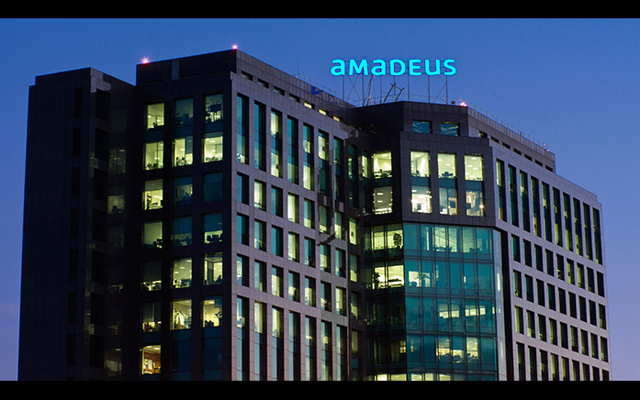
Reports say Madrid-based Amadeus IT Group is in talks to buy TravelClick
Amadeus IT Group SA is reportedly in discussions with Thoma Bravo to buy TravelClick which, if successful, will boost its new hospitality platform business.
TravelClick’s software is used by hotels for business analytics, reservations, guest management and marketing. Its products are used by hotel chains including the Hilton, Marriott, Langham, Mandarin Oriental, Radisson and Accor brands.
Reports say Madrid-based Amadeus IT Group is in talks to buy TravelClick
Bloomberg reported that TravelClick could fetch as much as US$3 billion in a sale and might attract other suitors, citing anonymous sources asking not to be identified because the deliberations were private. The talks were advanced, though no final decisions had been made and Amadeus could decide against the purchase.
Representatives for Madrid-based Amadeus and Chicago-based Thoma Bravo declined to comment.
Thoma Bravo bought TravelClick in 2014 for US$930 million. The software company then bought ZDirect, a customer relationship management platform, in 2015 for an undisclosed amount. This year, it said it purchased Dallas-based Digital Alchemy, said the Bloomberg report.
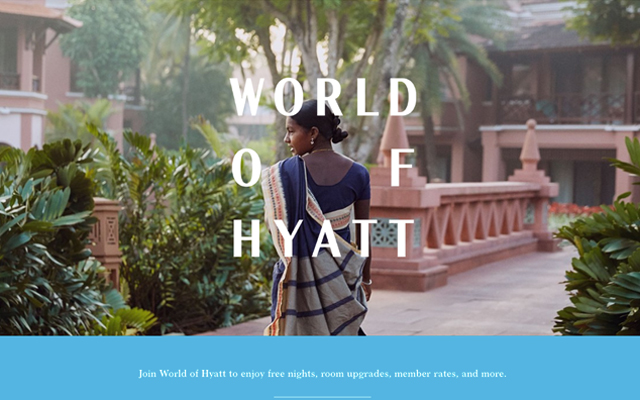
World of Hyatt programme members will be able to enjoy loyalty benefits at participating SLH hotels
Hyatt Hotels and Small Luxury Hotels of the World (SLH) are joining hands to allow members of the World of Hyatt loyalty programme to earn and redeem points during stays at participating SLH hotels.
Scheduled for launch at the end of the year, the loyalty alliance will apply only to bookings made via Hyatt channels.
World of Hyatt programme members will be able to enjoy loyalty benefits at participating SLH hotels
Mark Hoplamazian, president and CEO of Hyatt, said: “Our members will soon be able to earn and redeem World of Hyatt points in more places, including many new locations in Europe and Asia.”
Filip Boyen, CEO of Small Luxury Hotels of the World, foresees the partnership will help boost occupancy at SLH hotels given their exposure to the World of Hyatt programme’s more than 10 million members.
Hyatt has 700 properties worldwide, while SLH’s collection counts over 500 independently owned hotels.
Bangkok was the top tourist destination by arrivals for the third consecutive year
Asian cities outnumbered their counterparts in Europe and America in a ranking of destinations by international tourist arrivals in 2017, according to GlobalData.
In the top 10, Asia was represented by seven cities – Bangkok, Singapore, Tokyo, Hong Kong, Seoul, Kuala Lumpur and Shenzhen. In comparison Europe, the Middle East and America were limited to one city each – London, Dubai and New York City respectively.
Bangkok was the top tourist destination by arrivals for the third consecutive year
According to GlobalData, depreciation of most of the Asian currencies (except the Chinese yuan) played a vital role in attracting international visitors to Asian cities.
Bangkok remains the top international tourist destination globally for the third consecutive year, with 20.8 million international visitors in 2017. Tourism-friendly visa policies, strong promotional efforts and low cost connectivity drove Bangkok to the top spot.
London was the second most preferred destination with 20.4 million international visitors riding on the back of depreciation in the value of the British pound since the Brexit referendum, followed by Singapore, Dubai and Hong Kong with 17.4 million, 15.8 million and 14 million, respectively.
However, despite lower hotel costs, the occupancy rate in most of the Asian cities was around 70 per cent, lower than cities in Europe and America in 2017. GlobalData attributed this to the growth in hotel development in recent years outstripping the increase in the number of travellers.
Exception is seen in Tokyo, Singapore and Seoul, where business purpose tourists helped maintain occupancy rates at more than 80 per cent. In terms of average daily rate, New York City leads the pack, followed by London.
GlobalData expects Asian cities to continue to dominate the top 10 arrivals ranking, primarily due to reasons such as the advent of LCCs and the development of highways and railways in the region.
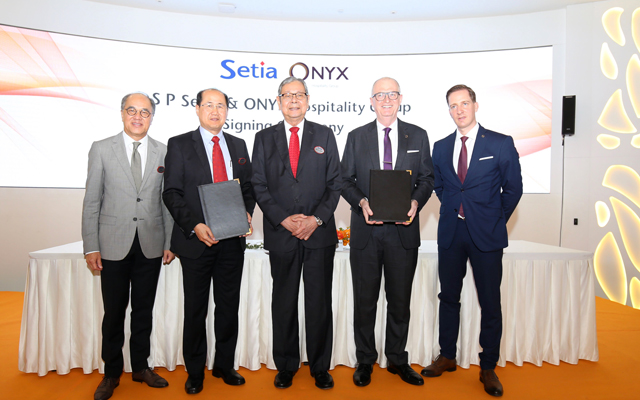
From left: SP Setia's Wong Tuck Wai, Khor Chap Jen and Mohd Zahid, with Onyx Hospitality Group's Douglas Martell and Markus Aklin
Onyx Hospitality Group has signed agreements with Malaysian developer SP Setia Berhad to launch Amari hotels in Kuala Lumpur and Penang.
Set to open within the upcoming KL Eco City mixed-use development in the capital’s Mid Valley district in early 2021, the 252-room Amari Kuala Lumpur will enjoy direct access to corporate office buildings, residential towers, a retail mall and integrated rail hub with inter-city and inter-state rail connections.
From left: SP Setia’s Wong Tuck Wai, Khor Chap Jen and Mohd Zahid with Onyx Hospitality Group’s Douglas Martell and Markus Aklin
Amari Penang, scheduled to open in late 2020, will offer direct connectivity to the Setia SPICE Convention Centre. The world’s first hybrid solar powered convention centre incorporates a 10,000-seat events arena, aquatic and sports centre, and a lifestyle and retail village.
The hotel is located in the Bayan Lepas district of Penang island, close to multinational corporate offices, Penang Golf Club, shopping malls and places of interest.
Both hotels will feature key Amari brand signatures including service from Amari Hosts, the street market-style Amaya Food Gallery, Cascade lounge, meetings facilities and gathering spaces. Other facilities include pools and terraces, as well as a fully equipped fitness centre.
Amari Kuala Lumpur and Amari Penang will join Amari Johor Bahru, which opened last year as the brand’s first in the country.
Onyx said it has five properties in the pipeline in Malaysia.
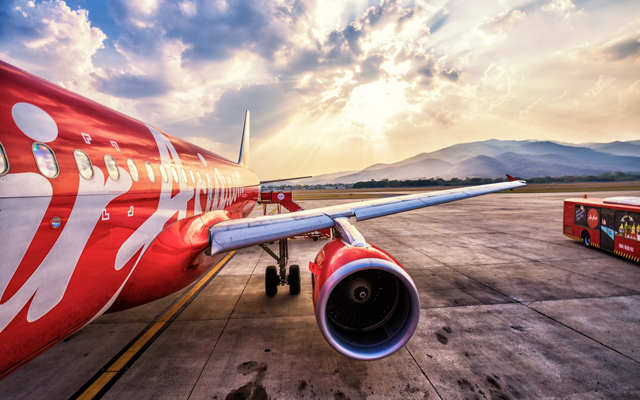
AirAsia to launch Chiang Mai-Taipei route
AirAsia will commence four-times weekly flights between Taipei and Chiang Mai on September 30. On Tuesdays, Wednesdays, Fridays and Sundays, flight FD243 will depart Chiang Mai at 13.55, touching down at Taoyuan International Airport at 18.45. The return flight will leave Taoyuan at 20.10 and arrive in Chiang Mai at 23.10.
Cathay Pacific to take off for Seattle
Come April 1, 2019, Cathay Pacific will become the only airline to fly nonstop between Seattle-Tacoma International Airport and Hong Kong. Operated with the airline’s Airbus A350-900 aircraft, CX 857 will depart Seattle on Monday, Wednesday, Friday and Sunday at 01.05, arriving in Hong Kong the following day at 05.25. The return flight, CX 858, will depart Hong Kong at 23.55 on Tuesday, Thursday, Saturday, and Sunday, arriving in Seattle at 21.00 the same day.
Qantas’ Dreamliner goes to Hong Kong
Qantas will deploy the Boeing 787-9 Dreamliner on select routes to Hong Kong, namely Brisbane to Hong Kong (from December 19), Melbourne to Hong Kong (December 13, 2018 to March 29, 2019) and Sydney to Hong Kong (from March 30, 2019).
Qantas’ Dreamliner carries 236 passengers across three cabins – the latest version of the airline’s business class, premium economy and an improved economy class with extra storage compartments and more legroom.
Hong Kong joins Los Angeles, New York, London and San Francisco as international destinations served by the Qantas Dreamliner, which is gradually replacing the Boeing 747 on key Qantas routes.
More hotel openings put pressure on Armani Dubai’s (pictured) rates
Market sentiments among hoteliers in the UAE are as bullish as the room pipeline in the country. Despite seeing rate pressure amid a heightened supply, industry executives expect improved inbound numbers and new products will keep the sector buoyant.
According to a report by Colliers International, hotel developments in the UAE significantly rose in 2017 with approximately 6,000 rooms added, up 8.2 per cent from 2016. The UAE is expected to have more than 170,000 hotel rooms by 2020.
Chris Hewett, director at TRI Consulting, estimated that RevPAR in 2018 could drop by as much as seven per cent.
More hotel openings put pressure on Armani Dubai’s (pictured) rates
However, hoteliers in the UAE remain unperturbed, confident that demand will continue to grow on the back of new feeder markets and stronger marketing efforts from the tourism board.
“The market is more competitive now as many new hotels have been added to the inventory. We are not seeing a decline, but a bit of pressure on rates because of the supply,” shared Mark Kirby, general manager, Armani Hotel Dubai.
“Overall, growth in the Chinese market has helped to absorb the pressure. We are also seeing an increase in demand from new markets like the US, Brazil, South Korea and Japan,” he added.
Positive market sentiments are also reflected in the robust expansion plans of hotel chains already operating in the region.
For instance, AccorHotels will debut the luxury So/Sofitel brand in the Middle East when So/Uptown Dubai opens in 2020, while UAE-based hospitality chain Rotana has opened two new hotels in Dubai this year, and is preparing to open up another in Abu Dhabi as well.
“With continuing investment in infrastructure and appealing tourism offerings, Dubai will continue to attract both business and leisure tourists,” stated David Prince, Rotana’s area vice president.
Sharing similar sentiments, Pradeep Kumar MG, corporate vice president finance, Roda Hotels & Resorts, commented: “The government of Dubai is doing a lot of promotion and we expect tourism inflow will grow strongly in the coming days. There has been a slight change in RevPAR but average occupancies remain strong.”
Meanwhile, hotels in Sharjah recorded a 70 per cent occupancy rate from January to June last year. The emirate is looking to add an additional 1,000 four- and five-star rooms and suites by end-2020.
The Ras al-Khaimah Tourism Development Authority aims to have 10,000 hotel rooms in the destination by 2020, up from the current 5,400.
AccorHotels is acquiring 85 per cent of 21c Museum Hotels in the US for US$51 million, a deal that will see the latter come under the MGallery collection of boutique hotels and mark the brand’s entry into the North American market.
Scheduled to be completed in 3Q2018, the deal includes a potential earn out payment, and excludes real estate.
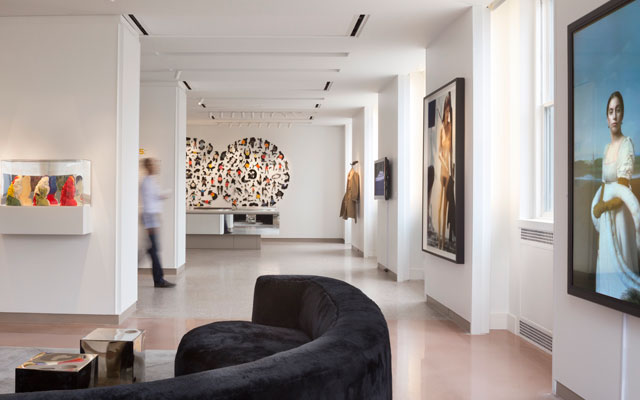
21c Museum Hotel Durham lobby
Founded in 2006 by philanthropists and contemporary art collectors Laura Brown and Steve Wilson, 21c combines a multi-venue contemporary art museum, boutique hotels and chef-driven restaurants, with 11 properties currently open or under development in the US.
Kevin Frid, COO, North & Central America, AccorHotels, said the acquisition “(strengthens) the group’s footprint in North America in a very unique and promising niche”.
Co-founders Laura Lee Brown & Steve Wilson will retain a 15 per cent stake in the company, and remain closely involved in providing creative guidance and support of the combination of art, design and hospitality concept.
21c Museum Hotels will continue to be led by president & CEO Craig Greenberg, and the corporate headquarters will remain in Louisville, Kentucky.
Inspired by the idea that art can ignite urban revitalisation and catalyse civic connection, Brown and Wilson had rehabilitated a series of 19th century warehouses in Louisville’s downtown arts and theatre district to open the first 21c Museum Hotel.
Today the company operates eight 21c properties in Bentonville, Cincinnati, Durham, Kansas City, Lexington, Louisville, Nashville and Oklahoma City, with three more in development in Des Moines, Miami and Chicago. 21c Museum is one of the largest contemporary art museums in the US and North America’s only collecting museum dedicated solely to art of the 21st century.
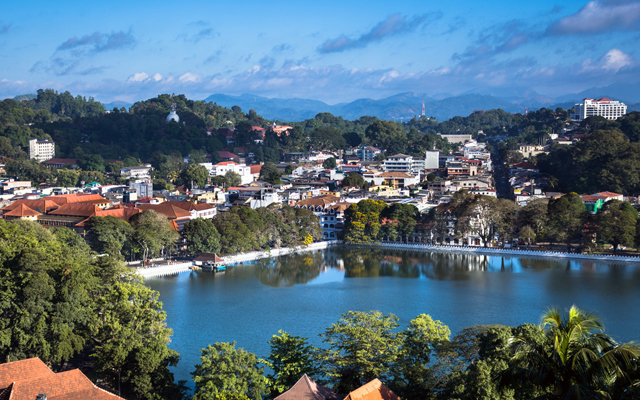
Kandy, a UNESCO World Heritage listed city in Sri Lanka
Three associations representing airlines, hotels and DMCs – along with Sri Lanka’s Tourism Promotion Bureau (SLTPB) – are banding together to spur off-season arrivals with discounted packages.
The authorities are hoping to increase arrivals by 30 per cent during the lean months of September-November and April-June, according to Sutheash Balasubramanian, managing director of the state-owned SLTPB.
Kandy, a UNESCO World Heritage listed city in Sri Lanka
The target markets are India, China and the Middle East.
As part of the campaign running between September and November, participating hotels will offer a 4D3N package at US$99 per person, Harith Perera, president of the Sri Lanka Association of Inbound Tour Operators, told TTG Asia.
Jetwing Hotels chairman Hiran Cooray said these rates are a 40-50 per cent discount on current rates. Officials at an international airline, who declined to be named, also confirmed that participating airlines including SriLankan Airlines, Emirates and Qatar were offering special rates.
While the industry has already begun promoting these off-season packages, the SLTPB is also calling for bids from advertising agencies to ramp up the campaign in time for launch. “We are going through the procurement process and hope to complete it by late August,” Balasubramaniam said. The promotion campaign would cost around 90 million rupees (US$565,000) and be rolled out on multiple platforms in the targeted markets.
Arrivals up to June rose 15.3 per cent to 1.16 million. India topped the list of arrivals followed by China, the UK, Australia and Germany.
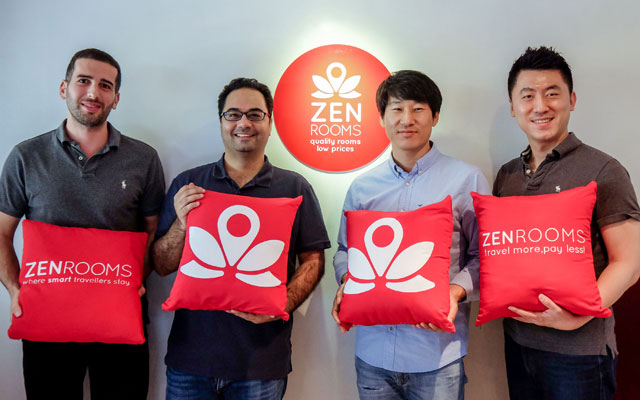
From left: Zen Rooms' Nathan Boubil and Kiren Tanna; and Yanolja's
South Korean accommodation platform Yanolja has invested US$15 million for a “significant” stake in Zen Rooms, with the right to acquire the South-east Asian budget hotel chain and online booking platform in full.
Founded in 2015 by former Foodpanda co-founder Kiren Tanna and Nathan Boublil, Zen Rooms said it is distinct from other hotel franchises in the segment in that it is vertically integrated, combining room booking, branding, sales and management with a self-developed online/mobile.
From left: Zen Rooms’ Nathan Boubil and Kiren Tanna; and Yanolja’s Lee Su-jin and Kim Jong-yoon
The company has presence in five South-east Asian countries: Indonesia, Malaysia, the Philippines, Singapore, and Thailand. Within three years, Zen Rooms said its business has grown to over 1,000 economy hotel franchisees and over 7,000-room inventory.
Zen Rooms plans to use the capital to expand its inventory base in current and new markets and continue to invest in technology.
For Yanolja, the investment marks its foray beyond South Korea and into the fast growing South-east Asian region.
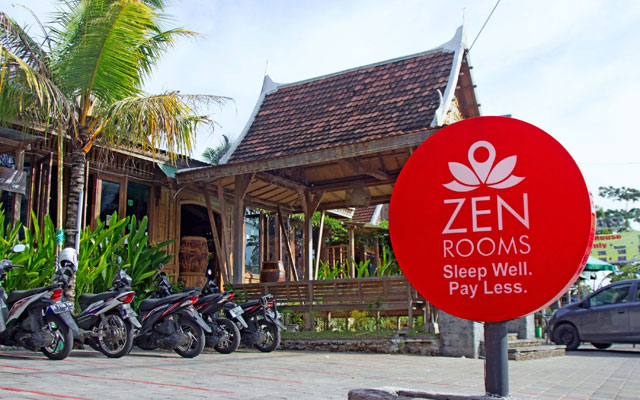
Zen Rooms signage at a property in Indonesia
Vice president of Yanolja, Jong-yoon Kim, commented: “Starting with this strategic investment into Zen Rooms, we shall seek to expand to become the most affordable hotel chain and first fully integrated booking platform for leisure activities as well as hotels, going beyond the domestic domain to around the globe.”
Kim added that the company intends to better cater to both domestic and foreign travellers by applying innovative technologies including the Internet of Things and Artificial Intelligence.
South-east Asia is a favourite tourist destination for South Korean travellers. Moreover, a sizeable 17 per cent of foreign travellers to South Korea comes from South-east Asia.
Shaharuddin expects there will initially be some guests who will refuse to pay the tax
After reviewing the tourism tax, Malaysia’s Tourism, Arts and Culture Minister Mohamaddin Ketapi has decided the flat rate of RM10 (US$2.47) per room per night on foreign tourists will be maintained.
In response, Malaysia Budget Hotel Association president, PK Leong, told TTG Asia that the three hotel associations, Malaysian Association of Hotels (MAH), Malaysian Association of Hotel Owners (MAHO) and Malaysia Budget Hotel Association (MyBHA), were not consulted before the ministry made its decision, and that the three hotel associations would jointly make an appeal.
The tourism tax is here to stay
Mohamaddin said in Parliament that the implementation of such a tax by countries such as the US, the Netherlands, Italy, Singapore and Thailand had brought positive growth to their tourism sector in the longterm, adding Japan and Saudi Arabia had also recently implemented the tourism tax.
This was Mohamaddin’s first major announcement after his appointment in early July.
MAHO executive director, Shaharuddin M Saaid, added that the three hotel associations would also raise the issue with the ministry about establishing a new mechanism so that hotels do not end up as collecting agents for the tax.
Leong said budget hotels stood to lose the most as these hotels charged an average of RM50 (US$12.33) per room per night, thus the tourism tax was equivalent to 20 per cent of the room rate.
He said: “Foreigners stay in budget hotels because they wish to save money. They have two choices if they decide not to pay the tourism tax. They could opt to stay in an Airbnb, which is unlicensed, or choose a different destination, instead of visiting Malaysia.”
Asutra Convex managing director, Azizi Borhan, suggested that local travel agencies include the tax in tour packages and the tour leader could then pay the hotel based on a pre-arrangement between the hotel and the tour operator.
He said: “Hoteliers should open their minds and find a creative solution to the tourism tax issue.”
He believed that four- and five-star hotels could also absorb the tourism tax as the amount was negligible compared with the room rate.