Archipelago International, which is among Indonesia’s largest hotel management groups, has joined forces with Grab to launch GrabWheels, an on-demand e-scooter sharing rental service in the country.
Dedicated pick-up and drop-off electrical charging stations have been installed across many Archipelago hotels, encouraging hotel guests and residents alike to rent the scooters through the Grab mobile app.
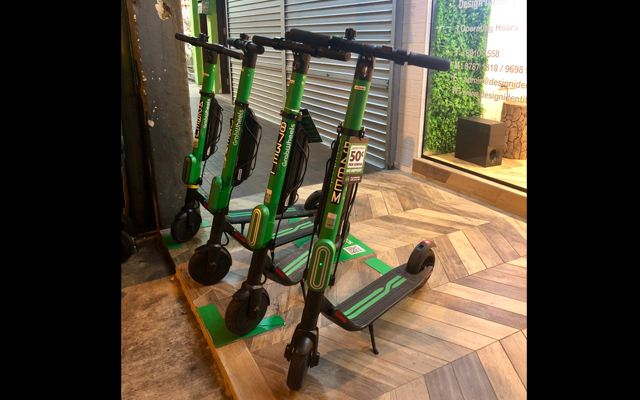
Archipelago International partners Grab to launch e-scooter sharing rental service GrabWheels across its hotels in Indonesia; Grabwheels mobile bikes parked along a corridor in Singapore pictured
E-Scooters, charging stations and safety helmets are provided and fully maintained by Grab, while the Archipelago hotels provide strategic locations for the stations.
Archipelago International’s president and CEO John Flood said that the partnership is aimed at “enhancing guest experience through technological advancement while reducing the impact on the environment and making a sustainable difference in the locations where we live and work”.
Norwegian Cruise Line Holdings (NCLH) – comprising Norwegian Cruise Line (NCL), Oceania Cruises (OCI) and Regent Seven Seas Cruises (RSSC) – has announced a new organisational realignment in the Asia-Pacific region.
The strategic move will provide a more distinct focus for each respective brand under the NCLH banner, and will be in alignment with the head office in Miami, following the recent appointment of Harry Sommer as president and CEO of NCL.
From left: Steve Odell, Ben Angell, and Felix Chan
The new direction will see Steve Odell spearhead the company’s upper-premium and luxury brands as senior vice president and managing director OCI and RSSC APAC, with Ben Angell as vice president and managing director NCL APAC.
Angell’s new appointment means that he will be overseeing the sales, marketing and passenger services functions for NCL across the APAC region. Reporting to Angell will be Felix Chan, vice president and general manager NCL Asia.
Meanwhile, Odell will oversee the sales, marketing and passenger services functions for OCI and RSSC across Asia-Pacific.
Odell has over 20 years of experience working with luxury brands across the Asia region. He was instrumental in establishing the luxury cruise business in Asia from his first tenure in the region in 2001 and has worked with travel partners in all the key regional markets. He was a founding board member of the Asia Cruise Association, prior to the establishment of CLIA in the region.
Reporting to Odell in Asia will be Constance Seck, director of sales OCI & RSSC South-east Asia and India; Chisato Morita, general manager OCI & RSSC Japan; and Holly Kong, director of sales OCI & RSSC North-east Asia.
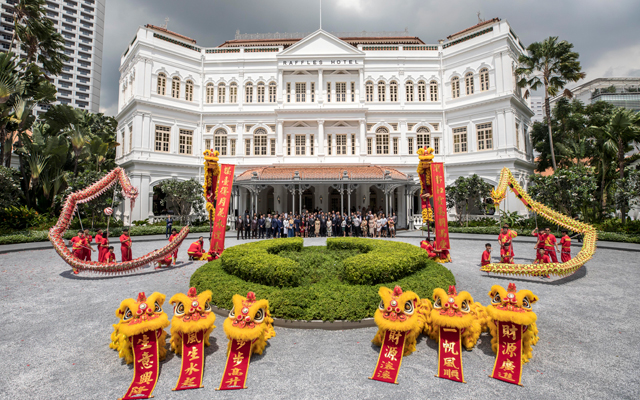
Lion and dragon dance display in front of Raffles Hotel Singapore
Raffles Hotel Singapore, Accor’s flagship property which already soft-opened in August, last Friday marked its official return to the city’s hospitality scene with a grand ceremony featuring a traditional lion dance ritual and a ribbon-cutting ceremony.
The official reopening of the iconic hotel, which is owned by Qatar-based Katara Hospitality, was graced by guests from Singapore’s business and cultural community.
Raffles Hotel Singapore Official Opening Ceremony
1 of 5
Lion and dragon dance display in front of Raffles Hotel Singapore
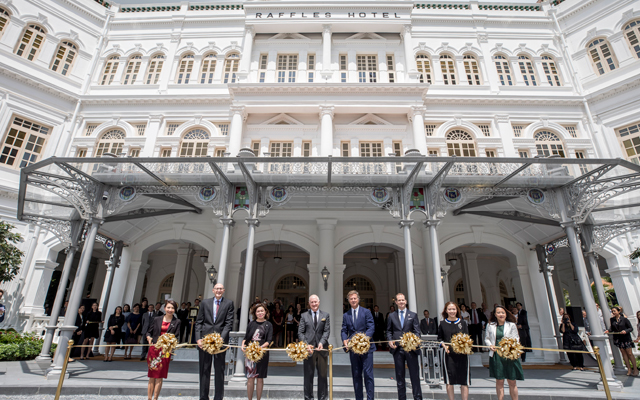
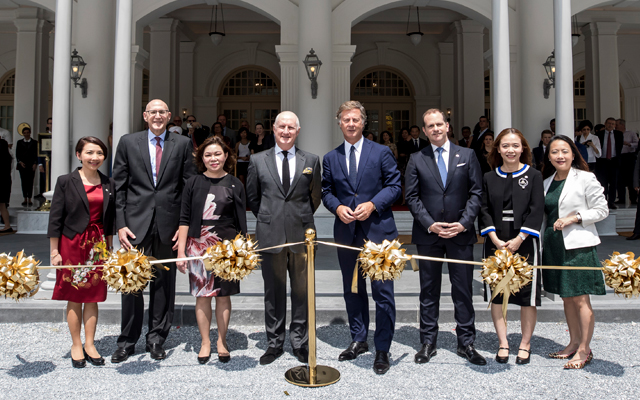
Raffles Hotel Singapore representatives cutting the ribbon at the hotel’s official opening ceremony
Raffles Hotel Singapore representatives cutting the ribbon at the hotel’s official opening ceremony (Pictured; from left: Raffles Hotel Singapore’s Amy Ang, Accor Asia- Pacific’s Michael Issenberg, Raffles Hotel Singapore’s Jennifer Tan, Katara Hospitality’s Andrew Humphries, Accor’s Sébastien Bazin, Raffles Hotel Singapore’s Christian Westbeld, Raffles Hotel Singapore’s Lyna Lim, and Raffles Hotel Singapore’s Jesmine Hall)
Dragon dance performance
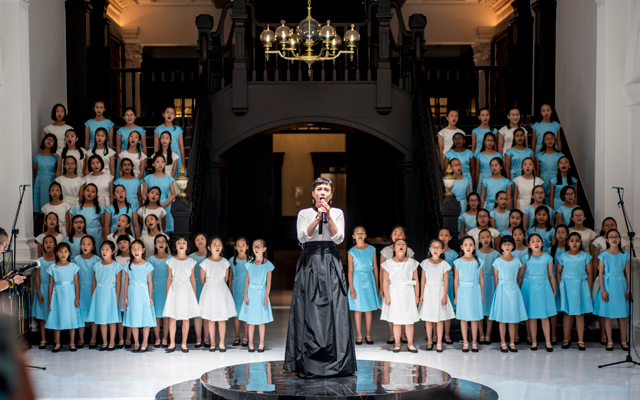
Homegrown singer, Kit Chan, performing with the children’s choir from CHIJ Kellock
As part of the hotel’s reopening celebrations, Raffles Hotel Singapore held a fundraising festival, with all proceeds going to non-profit organisation, Community Chest Singapore, benefitting about 80 charities.
The reopening event also featured performances by homegrown singer Kit Chan, indie-pop band The Sam Willows, singer-songwriter Inch Chua, and musician Jeremy Monteiro alongside a jazz quartet and singer Alemay Fernandez. Suite activities and curated culinary experiences also took place around the property.
Accor’s chairman and CEO Sébastien Bazin said that the return of this flagship property to Raffles Hotel and Resorts paves the way for the brand’s expansion to new destinations like Udaipur, London and Boston.
The restoration of the historic property, which was led by interior designer Alexandra Champalimaud and supported by architecture and design firm Aedas Singapore, sees the addition of new suite categories, lifestyle experiences and exclusive dining concepts to the hotel.
The revitalised Raffles Singapore, which sees the addition of 12 new suites, offers all-suite accommodations across nine categories: State Room Suites, Courtyard Suites, Palm Court Suites, Personality Suites, Residence Suites, Promenade Suites, Studio Suites, Grand Hotel Suites and Presidential Suites. Residence, Promenade and Studio suites are the latest additions to the hotel’s existing line-up.
The Raffles Arcade has been newly outfitted with Raffles Boutique and various bespoke retail brands. F&B options at the hotel include restaurants headed by Michelin-starred chef Anne-Sophie Pic; French master chef Alain Ducasse; and Singaporean chef Jereme Leung, known for his innovative Chinese cooking. The refreshed Long Bar also features the hotel’s most famous cocktail, the original Singapore Sling.
Its name may not ring a bell yet among Asian travellers and trade members, but Azerbaijan’s tourism leaders are keen to change that by launching a destination awareness campaign worldwide, including in South-east Asia.
Azerbaijan Tourism Board is making its debut presence at ITB Asia this year, led by CEO Florian Sengstschmid to explore collaborative opportunities with Asia’s travel agencies and encourage travellers to explore the country’s rich blend of modernity and antiquity through its ‘Take Another Look’ campaign.
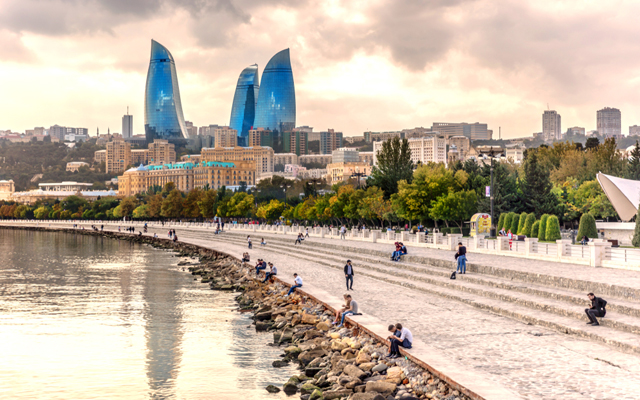
Azerbaijan is stepping up destination promotion efforts to attract more Asian travellers to the country; Flames Towers in Baku, Azerbaijan pictured
“Our main objective is to put Azerbaijan on the map,” Sengstschmid told the Daily. “After that, the second step is to activate events in Azerbaijan to increase trade engagement.”
In 2018, Azerbaijan welcomed 2.8 million international visitors, while the projection has been raised to four million by 2023. “This will put us at 10 per cent growth each year,” said Sengstschmid.
In Asia, China and India are biggest visitor source markets, while South Korea and Japan are posting strong increase in overnights. ATB is set to open a marketing office in Seoul later this year.
For South-east Asia, Singapore, Malaysia and Indonesia are on the radar for ATB, as outbound travellers from these three markets are on the rise and Singapore travellers, in particular, are keen to seek out new places, noted Sengstschmid.
Most recently, Azerbaijan implemented a simplified new electronic visa procedure to allow visitors to easily obtain a visa when travelling to the country. Singapore, Malaysia and Indonesia are eligible for visa upon arrival, while Thailand and Vietnam are eligible for the e-visa system.
However, Sengstchmid recognises that Azerbaijan is still “too new” to be promoted as a standalone destination, therefore a more effective strategy is to co-market the country in the Caucasus region with neighbouring Georgia.
Destination promotion efforts for Azerbaijan are still nascent, admitted the NTO chief, coming after the former Soviet state looked to tourism as a new economic revenue generator following sharp declines in global oil prices in recent years. ATB too, he said, was only founded a year and a half ago in 2018.
Despite being a newcomer on the global tourism scene, Azerbaijan’s transport and hospitality infrastructure and hospitality is already well developed, courtesy of its oil industry, said Sengstschmid.
The country is there already home to international luxury hotel brands like JW Marriott, Four Seasons and Hilton, although the country’s surging interest in tourism is also attracting hospitality players to invest in wider segments across the sector, according to Martin Kleinmann, president of Azerbaijan Hotel Association. “Everybody is there and eager to grow,” he said.
Spurred by increased connectivity and expanding attractions, Los Angeles (LA) Tourism & Convention Board has launched the LA Insider Specialist Program in Asia to equip trade agents with facts, products and updates on the destination. It also provides agents with incentives for completing courses, such as vouchers and attraction tickets.
Among the information provided are updates on LA’s upcoming attractions. The following years will see several new points of interest in the destination, including The Academy Museum in 2020; the LA Stadium, which will open in 2020 and host the 2022 Super Bowl; 30 new hotels in the next four years; as well as new and expanded airport terminals before the 2028 Summer Olympic Games.
LA Tourism & Convention Board rolls out the LA Insider Specialist Program in Asia to increase trade agents’ destination knowledge and to attract more longhaul travellers from Asia
Speaking to TTG Asia last week at a trade networking session in Singapore hosted by the tourism board, Craig Gibbons, regional director, Oceania & South-east Asia, said LA hit its 51 million visitor target last year, with more than 100,000 coming from South-east Asia. This number is expected to rise further with the help of Singapore Airlines’ direct service to LA, which launched in November 2018.
With Singapore being a key target market in the tourism board’s desire to attract more longhaul travellers from Asia, Gibbons said that the launch event in Singapore marked the first of its trade outreach efforts in the market, with plans to return “two to three more times”.
He explained: “We’ve seen great growth out of the South-east Asian region. We see some amazing growth opportunities here with new air service, and that’s one of the main reasons we’re launching our programming in Singapore.”
Despite global political tensions, LA remains optimistic about continuing to appeal to international travellers. Gibbons said: “Our tagline for Los Angeles is ‘Everyone is welcome’. We are the most culturally diverse city in the US where there isn’t a majority ethnicity. California really sets itself apart from what may be happening on the East Coast in terms of politics.”
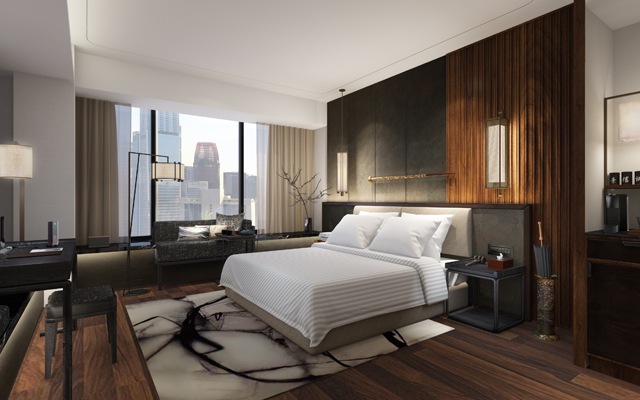
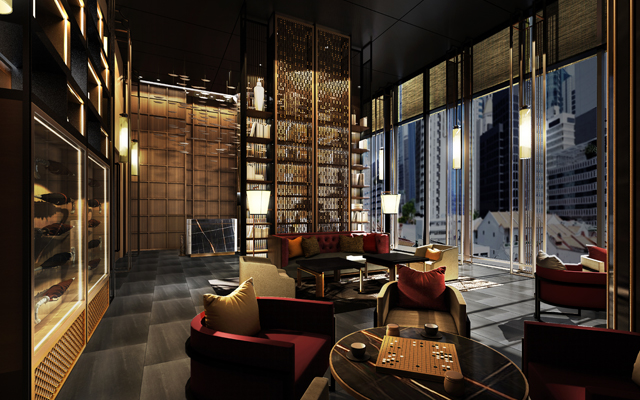
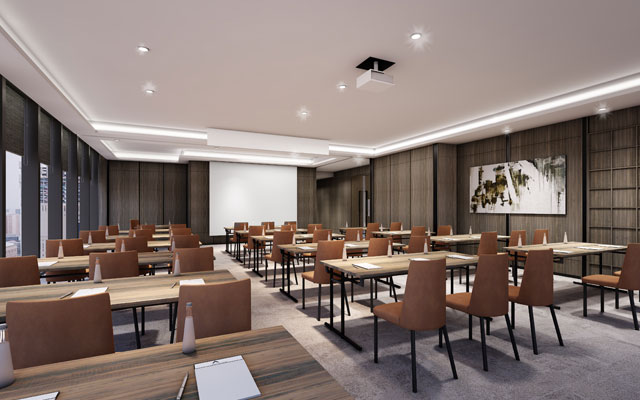
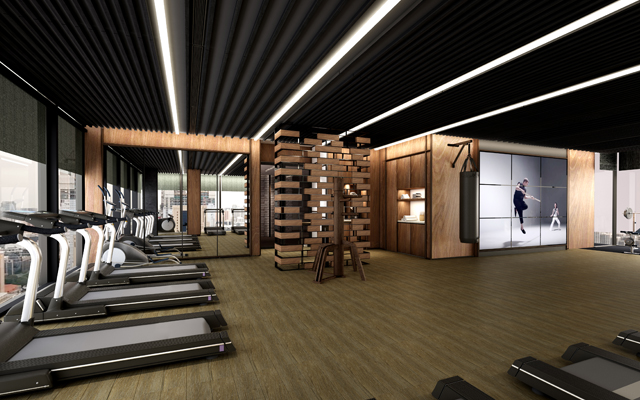
With millennial spending power on the rise, Far East Hospitality (FEH) has launched its latest Clan Hotel brand to redefine luxury accommodation for a new generation of travellers seeking differentiated stays.
The brand will make its debut with The Clan Hotel Singapore in 2Q2020, comprising four room types: Superior Room, Deluxe Room, Premier Room and Grand Premier Room.
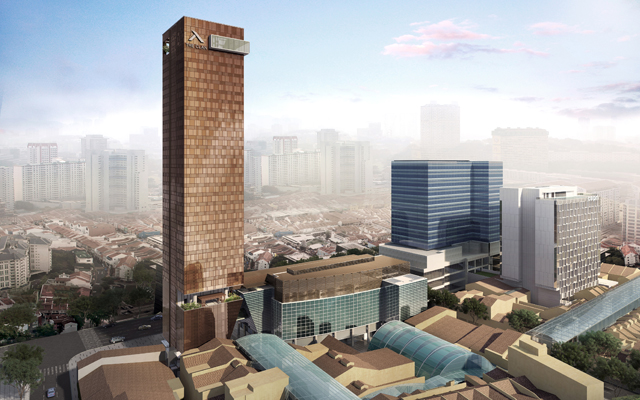
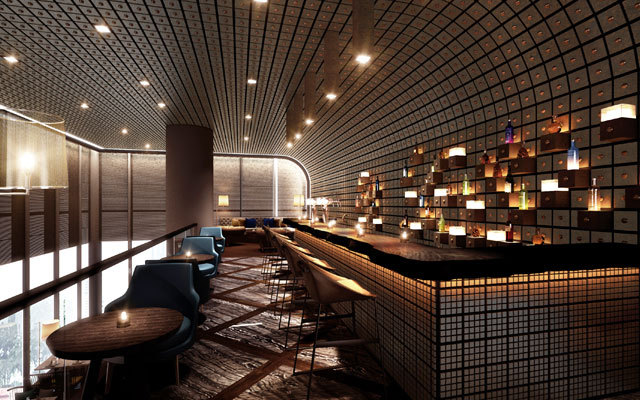
Artist Renderings of The Clan Hotel Singapore
1 of 6
Facade
Bar
Grand Premier Room
Lounge
Meeting Room
Gym
The 324-room luxury hotel targets travellers aged between 25 and 44 years old, which make up an average 41 per cent of international visitor arrivals in Singapore over the last six months.
Appealing to this segment is the concept of the hotel, which will draw inspiration from the concept of kinship, clans and community from Singapore’s pioneer days. Besides guest engagement and neighbourhood experiences with local craftsmen and precinct tours, the Premier Rooms and Grand Premier Rooms are part of the hotel’s Master Series rooms that offer highly customised services to inspire a sense of belonging in guests.
These include immediate room check-in services at the airport with limousine transfer or luggage forwarding, a welcome tea ceremony serving Chinese tea and traditional snacks, and turndown services with blooming flower tea and essential oil rollers.
“To meet the growing momentum of experience-driven travel, we challenged ourselves to introduce a new perspective on luxury with The Clan Hotel,” FEH’s CEO Arthur Kiong said, adding that the company wants “to connect more travellers to unique experiences that deliver both a deeper cultural connection and a strong sense of place”.
He added that FEH is working to open another five hotels in 2020, including one in Tokyo Olympics Village in June 2020, two in Ho Chi Minh City’s District 1, and one Quincy in Melbourne as a joint venture with TFE Hotels.
With Singapore rolling out a host of developments in the coming years, FEH is also eyeing other hotspots in the country such as Marina Bay and the revamping Orchard Road.
“We get a lot of requests for Malaysia, Indonesia and Thailand, so we will evaluate those opportunities as well,” continued Kiong.
With a total 175 million outbound Chinese travellers expected in 2019, emerging destinations in South America like Argentina and Brazil have joined hands to draw Chinese tourist traffic by easing visa restrictions.
Speaking at a press conference held at the recent Global Tourism Economy Forum in Macau, Argentina’s tourism minister Gustavo Santos and Brazil’s tourism minister Marcelo Álvaro Antônio revealed that they are in talks with China regarding visa-free travel to both countries, and details will be announced in late November.
Argentina and Brazil have joined hands to tap into China’s tourism bonanza by easing visa restrictions; Rio de Janeiro, Brazil pictured
Santos said: “Argentina currently offers electronic entry permits (with a 10-year validity) exclusively for Chinese who possess Schengen or US visa. With this proactive partnership, we hope the relaxation would bring more convenience and closer links to China.”
Since the Brazilian presidential inauguration took place early this year, it resulted in a more liberal policy with simplified bureaucracy. For instance, the Brazilian Tourist Board (Embratur) will take up an agency role next month with greater autonomy and bigger budget to push tourism.
Antônio said: “The new government also opened up the country’s investments for foreigners, i.e. infrastructures, theme parks and resorts, whereas public-private partnerships mean infinite opportunities ahead. China is our main economic partner so we want to get closer via tourism. (We are discussing with China) initial ideas to ease visa process, i.e. visa free or electronic visa for EU visa holders. Moreover, we have formed a working group focusing on China so hopefully, we can grow our existing visa centres in China from three to 12-15.
“Our air space is also opened up, so we hope to attract new investment to bring in more players, in addition to the existing three airlines (LATAM, GOL and Azul). We need at least eight (airlines) for international connections and improve connections with China.”
Statistics show that Brazil welcomed a mere 60,503 Chinese visitors in 2018, while Argentina recorded 72,000 Chinese tourist arrivals in 2017. Last year, about 70 per cent of Brazilians visit China for business and only 18.5 per cent for leisure.
Dinghong Tour International Travel Service’s general manager Luna Zhong said: “That’s good news for us. I started pushing South American trips in 2002 and at that time, visa application was a big problem but the situation improved in countries like Argentina over the last three to four years. But Chinese visitors to Brazil are currently required to apply for visas in person and the visa fee of about RMB1,200 (US$170) is not cheap – so visa-free access will drive more customers to the country.”
However, Guangdong China Travel Service’s deputy manager for America, Australia and New Zealand, Susie Qu, said that visa fees are not a key drawcard as clients heading to South America are mostly sophisticated travellers. She said: “What concerns this high-end segment of travellers is convenience. They will travel whenever they feel like it so a visa-free arrangement would save them from a tedious application process. I am optimistic this will drive more group tour businesses in future.”
She added: “Hopefully, there will be more air connections (between both countries) because currently, our groups can only depart from Hong Kong International Airport for better connecting flights or schedules.”
Global travel agency group Lufthansa City Center (LCC) and Israel-based NDC provider Atriis Technologies have launched the pilot operation of the international New Distribution Capability (NDC) aggregator, Lucy, for Singapore Airlines’ (SIA) content.
This new partnership sees SIA continuing to strengthen its commitment to the NDC game, following its first foray into NDC last year.
SIA strengthens its NDC commitment with Lucy
LCC’s Singapore-based agency, Citystate Ardent Travel, which ran the pilot operation, is the first South-east Asian agency to implement the Lucy NDC system.
Lucy is a NDC platform developed by Atriis Technologies and launched by LCC in 2018 to create new distribution opportunities. The multi-provider platform leverages technology to integrate and consolidate data of traditional GDS providers such as Amadeus, Sabre and Travelport.
Also available as a mobile and corporate booking engine, Lucy offers direct access to the content of dozens of travel providers, inclusive of hotel brands, mobility providers and global airlines. Its global marketplace functionality also allows agencies to purchase travel components from each other.
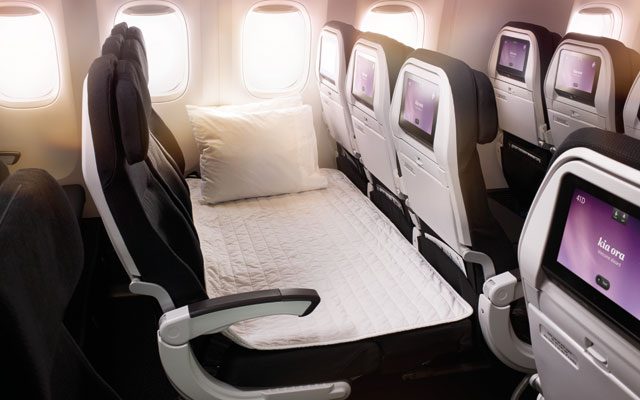
Air New Zealand will be introducing a new economy class product on its widebody fleet, offering customers extra legroom and perks on longhaul flights.
Economy Stretch features a roomy 35-inch pitch seat and amenities such as a premium headset and plush pillow.
The Skycouch pictured is one of Air New Zealand’s Economy class offerings
The airline is currently reconfiguring its Boeing 777-200, 777-300 and 787-9 aircraft to fit an Economy Stretch zone at the front of the Economy cabin, with up to 42 of these spacious spots.
Economy Stretch customers will also enjoy New Zealand wine and cuisine, gate-to-gate entertainment and free Wi-Fi on enabled aircraft.
The new product will be available for purchase from early next year and will be rolled out on all longhaul flights operated by the carrier from late 2020.
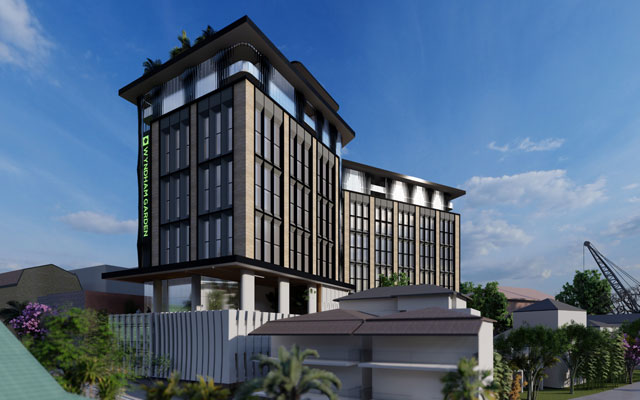
Wyndham Hotels & Resorts will be introducing its Wyndham Garden brand to Australia with the signing of a new hotel in Brisbane, as the company continues its strategic expansion across South-east Asia and the Pacific Rim.
The 120-room Wyndham Garden Suites Spring Hill Brisbane, which is set to open in September 2021, will be situated in Spring Hill, just two kilometres from Brisbane CBD and a 15-minute drive from Brisbane International Airport.
A rendering of the upcoming property in Spring Hill
Facilities at the all-suite hotel include a swimming pool, a fitness centre, an onsite restaurant, and two meeting rooms.
The new-build hotel is owned by Image Developments and will operate under a franchise agreement with Wyndham Hotels & Resorts.