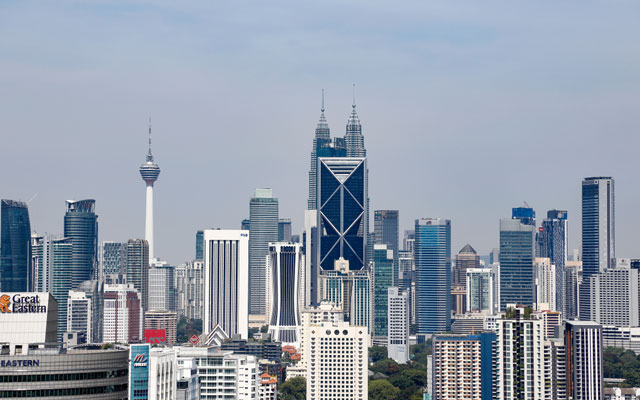
Hotels and accommodations in Malaysia have been included in the list of essential services under the nationwide movement control order which kicked in yesterday until March 31, but they will have to adhere to a set of guidelines in their operations during the lockdown period.
This is in accordance with a federal gazette issued by the Attorney-General’s Chambers today. The new regulations, known as the Prevention and Control of Infectious Diseases (Measures Within the Infected Local Areas) Regulations 2020, will take effect from today until March 31.
Malaysian hotels still allowed to operate partially during Covid-19 lockdown
As the priority is to contain Covid-19, the movement of people will be restricted. Hotels are to limit their services to only guests who have already checked in before March 18, while F&B services are limited to in-room dining. All other facilities and services of the hotel are to remain closed.
Hotels are also allowed to operate with skeleton staff on-site during this two-week period for critical needs such as security and engineering.
Kamaruddin Baharin, president, Malaysian Association of Hotels, said in a statement: “We are aware that many are confused with the situation and directives from the government, given that they have such short notice to prepare. But our advice is to look at the bigger picture and focus on containing the spread before the situation worsens. We should all do our part to stop people from moving unnecessarily at times like this.”
Malaysia reported 120 new Covid-19 cases on March 17, including its first two fatalities, raising the tally of infections in the country to 673.
Web-conferencing and instant messaging tools are seeing greater usage among travel and tourism trade players who are determined to keep business dialogue alive as the appeal of face-to-face meetings diminish against a backdrop of Covid-19 infection fears.
Sheryl Lim, founder of Singapore-based travel agency Travel Wander, found herself turning to online presentations to keep her regular clientele informed on new adventure tours and destinations as well as reach out to potential new customers.
Businesses turn to digital communication tools to continue operations remotely amid Covid-19
“Our usual marketing efforts involve conducting product presentations at specific venues but as soon as Covid-19 happened, people started to refrain from going out or meeting other people,” Lim recalled.
“We were in a fix because as a small company, we cannot stop moving and must keep up our marketing efforts. Out of sight, out of mind, as the saying goes, so we must maintain contact with our customers and the marketplace now so that when travel confidence returns, they will consider Travel Wander for their travel planning.”
With print or radio ads priced out of her budget, she turned to web-conferencing tools.
“The travel planning business is a very personal one, where clients prefer meeting face-to-face. But the pandemic has presented us with an unusual situation, and webinars are a good solution that enables us to keep up with sales and marketing communications,” she said.
Travel Wander conducted its first presentation two weeks ago, focusing on the joy of active holidays. The content, delivered through slides and a narration, explained what active holidays were all about, and dispelled myths around such tours. Six people attended it. A week later, a webinar on Sarawak drew 10 people.
Lim has planned a third on Kazakhstan this week, and aims to conduct a weekly session and is working on improving the format to facilitate conversations. The webinars are promoted to regular clients who then spread the word within their social circle.
The product webinars have allowed Lim to determine which destinations were more popular, based on webinar sign-up performance.
For other travel companies that are already utilising web-conferencing, the current pandemic has underscored the value of this mode of communications.
Adam Kamal, general manager of Malaysia’s Suka Travel, said his team is now working remotely from home, relying on WhatsApp video conferencing to address urgent matters, on top of their usual web-conferences with overseas suppliers and outstation agents.
The remote work arrangement was necessary as the government had on Monday evening issued an order to temporarily shutter businesses and restrict movement to fight against Covid-19.
Adam said he introduced and encouraged web-conferencing when he joined the agency last November, and applauded the convenience and cost savings it offers.
“Web-conferencing allows our partners to pull up documents, charts and pictures as they speak. (It also) saves time and costs as we can do meetings virtually. If it were face-to-face meetings, we would have to rent space to hold a seminar and pay for light refreshments,” he said.
Bayu Buana Travel Services Indonesia, which now has 50 per cent of its staff working from home, is encouraging continued reliance on web-conferencing tools to keep dialogues open with airline partners and clients during these trying times.
Agustinus Pake Seko, president director of Bayu Buana Travel Services Indonesia, said his team is familiar with web-conferencing, as there are regular online global meetings with BCD Travel, which the company is part of.
Laurens: companies are waking up to the benefits of digital transformation amid Covid-19
Laurens van den Oever, CMO at research firm ForwardKeys, opined that the “one good thing to come out of the coronavirus” is the emphasis on the value of “how to be savvier with our digital offerings, such as travel alerts, impact reports and newsletters”.
“In every business, you need to invest in the necessary tools and equipment for your team. Different time zones, cultural barriers, epidemics and pandemics should not impede the running of your business nor throw you into the Dark Ages,” Oever said.
The ForwardKeys team relies on a suite of communication services, such as Zoom, Slack, WhatsApp and webinars/web information sessions for internal interaction, and Zoom mostly by its analysts to connect with external clients.
“These have helped us a lot (in maintaining business communications, especially now) with all the travel limitations and tradeshow cancellations due to the (outbreak),” he added. – Additional reporting by S Puvaneswary and Mimi Hudoyo
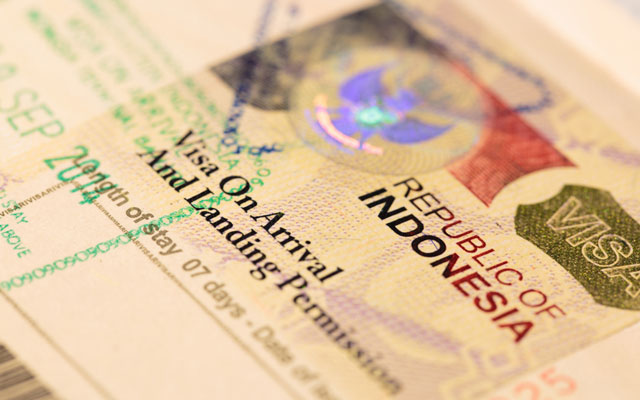
The Indonesian government has suspended the visa exemption policy for a short-stay visit, visa on arrival, and diplomatic/service visa-free facilities for all countries for a period of one month, starting March 20, to further curb the spread of Covid-19.
In addition, the government has denied entry or transit in Indonesia for visitors who have travelled to Iran, Italy, Vatican, Spain, France, Germany, Switzerland and UK in the last 14 days. Earlier measures taken for visitors from China, and South Korea’s Daegu city and Gyeongsang province remain in effect.
Indonesia to suspend visa-free and visa-on-arrival policies for one month
Retno Marsudi, Indonesia’s minister of foreign affairs, announced yesterday: “All foreigners/ travellers who wish to visit Indonesia must obtain a visa from Indonesian missions in accordance with the purpose of their visit. Upon permission, applicants must provide a health certificate issued by relevant health authorities in their respective countries.”
Upon arrival at an Indonesian airport, all visitors must complete and submit a Health Alert Card to the Port Health Authority.
“Should the travel history indicate that the person has travelled to the countries above in the last 14 days, such a person may be refused entry to Indonesia. For Indonesian citizens who have travelled to the countries above, additional screening shall be carried out by the Port Health Authority upon arrival.”
A 14-day observation in a government facility will be applied if the additional screening shows initial symptoms of Covid-19, otherwise, returning Indonesians are strongly recommended to have 14-day self-quarantine.
Travellers holding a Short Visit Pass which may have expired and who are already in Indonesia may request for an extension.
The entire Luzon island in northern Philippines – not just Metro Manila – is on a month-long lockdown which began on March 17, following the sharp increase in the number of confirmed Covid-19 cases in the Philippines.
The enhanced community quarantine measures now includes strict home quarantine for all households; suspension of mass public transport facilities and limited use of private vehicles; restricted land, air and sea travel; as well as temporary closure of establishments like malls and gaming; among other restrictions. Outbound passengers have also been given three days to leave.
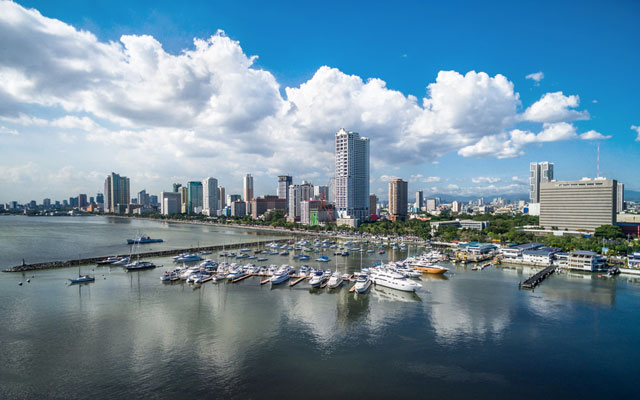
Luzon island has been placed on a month-long lockdown; aerial view of Port of Manila at Manila Bay in Luzon island pictured
Hotels and similar establishments are also to remain closed during the lockdown, the Department of Tourism (DoT) said yesterday, except those with foreign guests that have existing bookings as of March 17; those with long-staying guests; and those accommodating employees from exempted establishments.
However, foreign tourists, overseas Filipino workers, and visiting Filipinos will be allowed to leave any time during the Luzon lockdown provided they travel only to the airport within 24 hours of their departure time, the DoT added.
Tourist destinations in Luzon apart from Metro Manila include Tagaytay, Batangas, Clark, Zambales, Baguio, Sagada, Batanes, and Ilocos and Bicol regions.
But since the previous community quarantine was announced in Metro Manila on Monday – which didn’t include home quarantine and the suspension of mass public transport then – destinations like Visayas and Mindanao have followed suit.
As the situation becomes more dire with 142 confirmed Covid-19 cases, majority of which are in Luzon, the Tourism Congress of the Philippines (TCP) has listed seven additional recommendations to ensure the industry’s survival, one of the sectors hardest hit by the pandemic.
On March 6, TCP had already proposed to the DoT fiscal and other measures to help the tourism sector. On March 13, TCP’s president Jojo Clemente added six more proposals.
These additional recommendations are a minimum six-month moratorium on bank loan payment, credit card payments and corporate income tax fee reduction for accredited tourism industry stakeholders, subject to review of prevailing business conditions; grants, low-interest loans, subsidies and so on for tourism industry workers who will lose their jobs; and suspend for a minimum of one month the payments for water, electricity and Internet; office rental; and value-added tax on basic commodities.
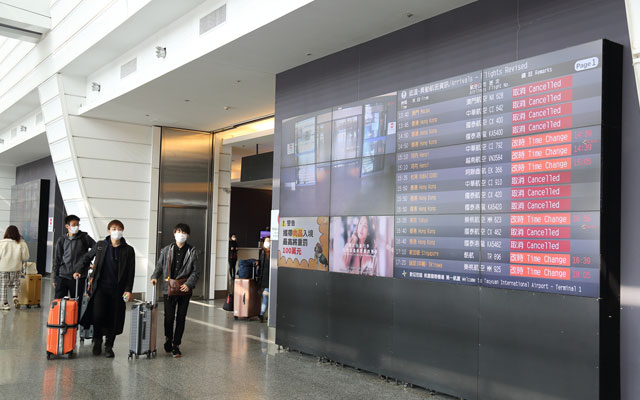
Taiwan has indefinitely banned the entry of all foreign visitors, excluding foreign resident permit holders and diplomats, from midnight on Wednesday as part of Covid-19 countermeasures, following a sudden surge in imported cases.
The new restrictions exclude foreign resident permit holders and diplomats, but all people entering Taiwan will have to serve a 14-day home quarantine.
Most foreign visitors will not be allowed to enter Taiwan starting today
The government has also urged its citizens to avoid any non-essential travel.
Taiwan has been lauded by health experts for its successful efforts to stem the spread of the virus since early January, but it is now seeing a sudden spike in cases to 77, mostly from people returning to the island from other countries, especially Europe.
Sri Lanka will be banning all incoming flights for two weeks starting Wednesday to stem the spread of Covid-19.
Flights already in the air will be allowed to land and passengers can disembark, said Mohan Samaranayake, a spokesperson for president Gotabaya Rajapaksa.
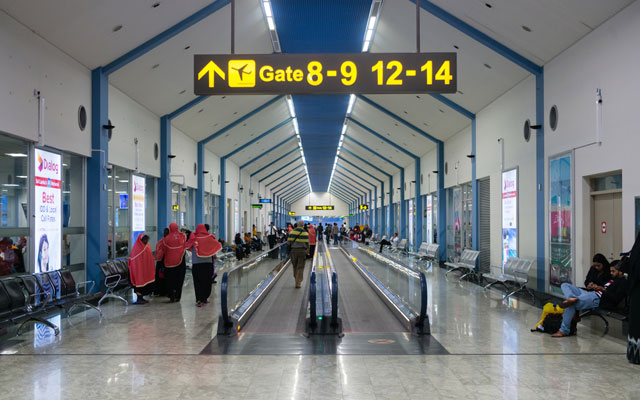
Sri Lanka bans all incoming flights for two weeks starting today; travellers in Bandaranaike International Airport pictured
The decisions were made at a meeting held by the Corona Prevention Task Force presided over by the president.
However, outgoing flights and incoming cargo flights will continue to operate at the country’s main international airport outside Colombo. Entry at the country’s ports have already been banned since last week.
The move is in response to a call by Sri Lankan tour operators on Monday for the government to heed locals’ cry for the banning of all tourist arrivals to the country, amid increasing cases of Covid-19 in the country.
“The Sri Lanka Association of Inbound Tour Operators, as a socially responsible organisation, has taken into consideration the increase in protests around the island by locals against foreign nationals, (as well as) the closure of wildlife parks and other tourist sites, and have decided that the relevant government authorities should consider restricting all foreign tourists from entering Sri Lanka from March 16-31,” its President Mahen Kariyawasam said in a statement on Tuesday.
Kariyawasam told TTG Asia that they had put forth the request to state-owned Sri Lanka Tourism chairperson Kimarli Fernando during a meeting on Monday, with the latter saying she would forward the request to the Task Force.
There have been several reports across the island of locals protesting against tourists visiting their areas. To date, Sri Lanka has reported 28 cases of Covid-19, all of which are Sri Lankans, with the majority having returned from Italy where they work.
Hotels and resorts have been reporting huge drops in occupancies over the past week, amid growing fears over contagion.
On Tuesday, the government added visitors from Qatar, Canada and Bahrain to the list of people banned from entering the country. The restriction also applies to visitors from Italy, South Korea, the UK, France, Belgium, Norway, Sweden, Switzerland, Spain, Germany, Austria, Netherlands, and Denmark.
As part of measures to curb the spread of the virus, the government has declared a three-day holiday till March 19, during which public gatherings are banned and schools and universities closed.
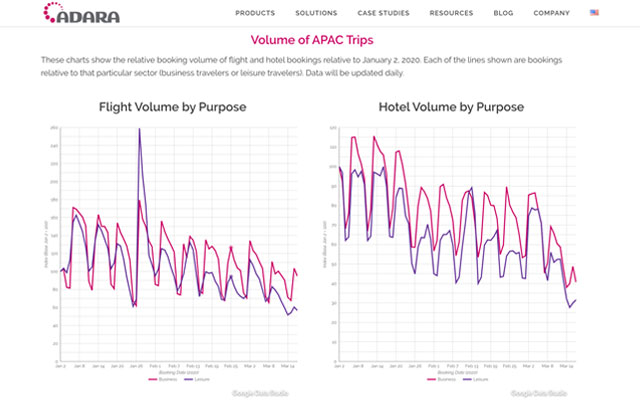
Travel intelligence company Adara has launched a real-time tracker of the impact of the ongoing pandemic on travel trends, under the Covid-19 Resource Centre on its website.
Using anonymised data on air and hotel bookings by consumers from more than 270 partners for 2020 year-to-date, the tracker presently monitors the virus’ impact on domestic US travel. Plans are in place to add Asia-Pacific travel data.
Adara releases Covid-19 tracker
The Adara travel trends tracker was developed to provide travel businesses with real-time consumer behaviour so they could make swift, informed decisions.
This is pertinent amid the continued progression of the virus worldwide and governments responding with border restrictions.
According to Adara, the existing data employed for US domestic travel trends has a moderately higher representation of unmanaged business travellers as well as leisure travellers.
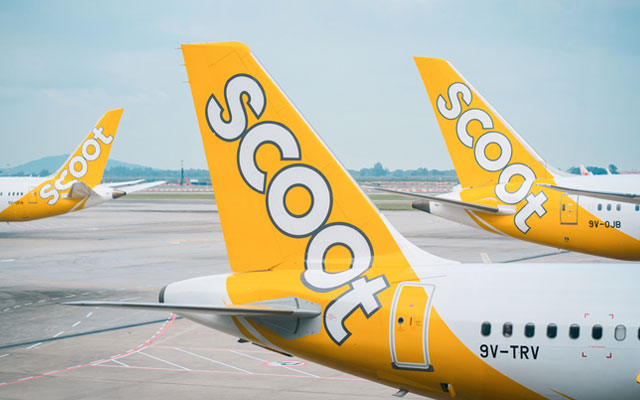
Scoot is extending voucher refunds and a one-time free date change to customers amid the Covid-19 pandemic.
With immediate effect, travellers can apply for voucher refunds for the full value of bookings made on or before March 15, 2020.
Scoot offers voucher refunds for flexible rebooking
The customer must have booked to travel on or before May 31, 2020. Vouchers can be used for future trips with Scoot for up to 12 months from the issue date.
Scoot said that an online portal for eligible customers to conveniently obtain voucher refunds will be up in a few days. The portal’s launch will be announced on Scoot’s website, social media pages and mobile app.
Customers flying off in the next 72 hours who wish to obtain a refund voucher are recommended to use the online feedback form or Facebook Messenger instead of the phone, due to the high volume of calls the carrier has been receiving.
Of course, those who booked through third-party channels are advised to contact the relevant channels or agents.
Between March 15 and May 31, 2020, customers who book flights on Scoot’s website, mobile app, or WeChat mini booking site are eligible for a one-time free date change.
The change has to be made at least four hours before departure. Fare differences still apply, and the latest date customers can change to is March 31, 2021.
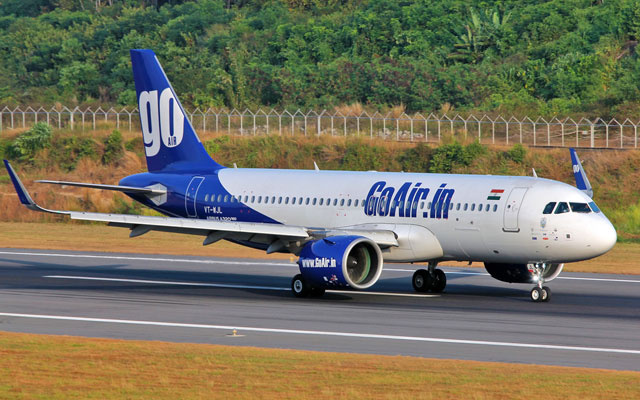
Indian LCC GoAir will be starting direct flights from Delhi and Bengaluru to Colombo, the capital city of Sri Lanka, from March 20, 2020.
The Delhi-Colombo route will be operated daily, except Wednesday. G839 will depart Delhi’s Indira Gandhi International Airport at 10.35 and arrive in Bandaranaike International Airport, Colombo at 14.10, while return flight G840 will depart Colombo at 15.10 and arrive in Delhi at 19.00.
As for the Bengaluru-Colombo route, G847 will depart Bengaluru’s Kempegowda International Airport at 20.05 on Monday, Thursday, Friday, Sunday and at 20.20 on Saturday and will reach Bandaranaike International Airport, Colombo at 21:55. The return flight G848 will depart Colombo at 23:00 on Monday, Thursday, Friday, Saturday, Sunday and arrive in Bengaluru at 00:30.
Bamboo Airways heads to Germany
Vietnam-based Bamboo Airways will be starting the first non-stop flights from the country to Germany.
The airline signed an MoU with Munich Airport for direct flights connecting Munich, Germany’s third-largest city, to Hanoi and Ho Chi Minh City.
Using Boeing 787-9 aircraft, the airline plans to operate once-weekly flights from Hanoi, and twice-weekly flights from Ho Chi Minh City.
The two direct routes is expected to operate from July 2020.
Etihad Airways links Abu Dhabi to Vienna
Etihad Airways will launch a new daily service to Austria’s capital Vienna, using a two-class Boeing 787-9 Dreamliner.
The UAE national carrier will start operating this service four times weekly between May 22 and June 30; then daily from July 1 to August 31.
Thereafter, the airline will fly this route five times weekly from September 1 to November 30, before resuming the daily service from December 1.
Etihad said that it is introducing the new service to provide greater choice and convenience for point-to-point business and leisure travellers between the UAE and Austria, and to promote direct inbound tourism to Abu Dhabi.
Steven Phillips has been appointed general manager to The Lux Collective’s flagship resort in Mauritius – LUX* Grand Baie Resort and Residences – scheduled to open 1Q2021.
Prior to joining LUX* Grand Baie Resort and Residences, Phillips served as area general manager for Joali Maldives, and was also the former general manager at Gili Lankanfushi for three years.
The UK native brings two decades’ worth of hotelier experience with various international brands, having overseen properties in London, Japan, Malta, Sri Lanka and Abu Dhabi.