TTG Asia
Asia/Singapore Sunday, 5th April 2026
Page 1385

Philippines’ TPB gets new chief

0
Marie Venus Tan

Veteran tourism official Marie Venus Tan is the new COO of the Philippines Tourism Promotions Board (TPB).

She replaces actor Cesar Montano whose short stint was plagued by scandals, including the shelved multi-million dollar Buhay Carinderia project.

Marie Venus Tan at the Food and Agriculture Organization of the United Nations headquarters in Rome, Italy. Photo credit: ©FAO/Roberto Cenciarelli

Tan was previously the Department of Tourism’s (DoT) regional director for the Cordillera Administrative Region. She also held various positions with the DoT and TPB – when it was still known as Philippine Convention and Visitors Bureau – both in the Philippines and abroad.

Review fraudster on TripAdvisor gets jail time

0
TripAdvisor said in a statement that it takes review fraud extremely seriously

A pivotal legal ruling in Italy saw a persistent online review fraudster sentenced to jail, prompting reviews site TripAdvisor to emphasise its stance against paid reviews companies.

The Criminal Court of Lecce ruled that writing fake reviews using a false identity is criminal conduct under Italian criminal law.

TripAdvisor said in a statement that it takes review fraud extremely seriously

The owner of PromoSalento, which sold fake review packages to hospitality businesses in Italy, was sentenced to nine months in prison and ordered to pay approximately 8,000 euros (US$9,294) in costs and damages.

Paid review fraud – when companies or individuals ‘sell’ fake reviews to business owners – is a violation of the law in many jurisdictions, but this is one of the first cases of enforcement resulting in a criminal conviction.

In a statement, TripAdvisor said it supported the prosecution of PromoSalento as a civil claimant by sharing evidence from its extensive in-house fraud investigations and providing support from its Italian legal counsel.

“Review fraud is something TripAdvisor takes extremely seriously, employing advanced tracking technology and a dedicated team of investigators to catch paid review companies and prevent them from operating on the site,” the statement read.

Brad Young, vice president, associate general counsel, TripAdvisor, said: “We invest a lot in fraud prevention and (are) successful at tackling it – since 2015, we’ve put a stop to the activity of more than 60 different paid review companies worldwide. However, we can only do so much alone, which is why we’re eager to collaborate with regulators and law enforcement authorities to support their prosecutions.”

The company last year published the World Committee on Tourism Ethics guidelines, with recommendations developed in collaboration with TripAdvisor, Minube and Yelp.

“We know that industry collaboration has an important role to play in tackling review fraud,” Young stressed.

TripAdvisor assures that all reports made to its Content Integrity team will be investigated and “any information, no matter how minor” can help.

TripAdvisor recently launched a new online information resource where people can learn more about how the company moderates reviews and protects its content. New articles will be added regularly addressing popular topics such as how TripAdvisor moderates reviews, or determines whether a review is biased.

Peak DMC sets up new Indonesia base in Bali

0

Peak DMC, operating brand for the Intrepid Group, is expanding in South-east Asia with the opening of Peak DMC Indonesia.

The Indonesia office marks Peak DMC’s 21st DMC globally, adding to its existing South-east Asia operations in Cambodia, Laos, Malaysia, Myanmar, Thailand and Vietnam.

Peak DMC’s tour leaders and staff celebrate the opening of a new branch

Since 2014, there has been a 47 per cent increase in travellers booking on Indonesian itineraries offered by Intrepid Group brands – including Intrepid Travel, Peregrine Adventures and other partner brands.

Peak DMC Indonesia will be located in Sanur and have nine local office staff, in addition to over 20 group leaders. The new office will also enable the company to better develop new trips that will not only relieve pressure on over-visited sites, but create economic benefits for local communities.

Peak DMC Indonesia country manager, Chris Hardy, says tourist dispersal is also a priority at the new office, aligned with the Indonesian government’s priority to encourage travel beyond Bali to lesser-visited destinations such as Lake Toba in North Sumatra and Mount Bromo in East Java.

While the office will be located in Bali, the country’s most popular destination, Hardy hopes travellers will use Bali as a launching pad to explore the rest of the country.

“When Australians think of Indonesia, they often think of fly and flop resort holidays in Bali. We want to show travellers that there is so much more to Bali and encourage them to discover different destinations within Indonesia. For example, not many people know that Sumatra is actually a better place to see wild orangutans than Borneo.”

Geoff Manchester, Intrepid co-founder, added: “Tourism in Indonesia has had its fair share of ups and downs, but the country has so much to offer that travellers keep coming back. The goal of our new business is not just to grow tourism, it’s to grow sustainable tourism.”

Cox & Kings’ self-driving trips hit the roads in India

0

As experience-led tours gain traction in India, Cox & Kings has created a host of new thematic journeys on localised and unique activities.

Yusuf Poonawala, senior vice president, Cox & Kings, shared with TTG Asia that the company is promoting the 101 Xperiential Tours series at PATA Travel Mart 2018, with itineraries centred on themes such as hotels, sightseeing and culinary offerings.

Curvy roads along the old trading route between China and India in Sikkim

Cox & Kings recently launched Self-Drive 365 for exotic road trips through India and the rest of the SAARC (South Asian Association for Regional Cooperation) region, which includes Afghanistan, Bangladesh, Bhutan, India, Nepal, the Maldives, Pakistan and Sri Lanka as member states.

“Self-drive is picking up in India, especially among the younger generation aged between 25-35 years old. The India self-drive car rental market is growing at an impressive CAGR and is poised to reach 14 billion rupees (US$200 million) by 2020,” said Yusuf.

He added that while perennial favourites like Delhi, Agra and Jaipur continue to be popular, demand for newer destinations are on the rise.

Yusuf observed: “Bekal and Kovalam in Kerala, Chikmagalur and Madikeri in Karnataka, Madurai and Rameshwaram in Tamil Nadu, as well as Sikkim and Guwahati in the north-east are (gaining popularity among) tourists from South-east Asia because of their landscapes, spiritual value and diverse cultures.”

To fan out across the market, Cox & Kings also launched a sustainable adventure travel vertical Trip 360, and India’s first accessible holiday specialist brand, Enable Travel.

Radisson Hotel Group expands China portfolio with three new signings

0

Radisson Hotel Group will be launching its Radisson Blu brand in both Hainan and Wuhan, with the latter getting another Radisson-branded hotel.

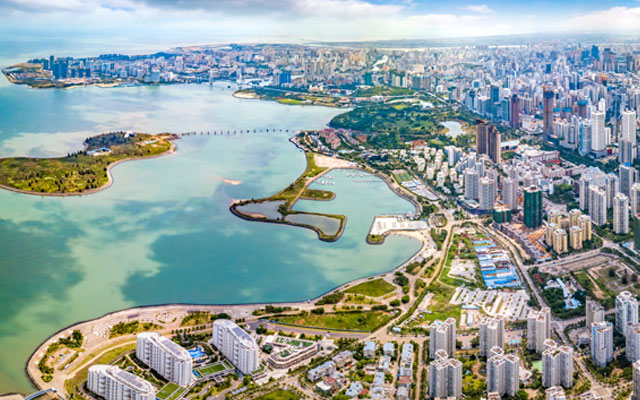
Located 30 minutes’ drive from Haikou Meilan International Airport, the 48-storey Radisson Blu Haikou is scheduled to open in 2Q2020 with uninterrupted views of the sea of Haikou Bay.

Radisson Blu Haikou will have uninterrupted views of the sea

The new-build will feature 301 guestrooms and suites, as well as three restaurants, a lounge, a pool and a fully-equipped fitness centre. The property will also provide flexible meeting and event spaces with state-of-the-art audio-visual facilities.

Over in Wuhan, the group has signed the Radisson Blu Wuhan ETD Zone and Radisson Wuhan Optics Valley in the city’s high-tech business and development zones.

Radisson Blu Wuhan ETD Zone will open in 1Q2020 in Wuhan’s Economic & Technological Development Zone. The eight-storey lakeside hotel will have 355 rooms, featuring amenities including several restaurants, an indoor swimming pool, spa, fitness centre and children’s playground, plus nine meeting rooms and a 1,600m2 grand ballroom.

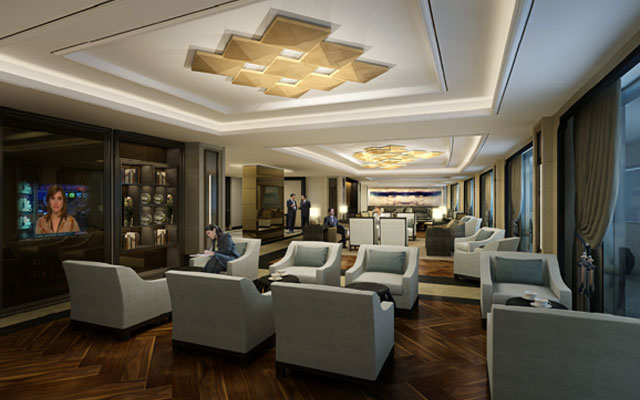
A rendering of the upcoming properties in Wuhan

Radisson Wuhan Optics Valley, located in the Donghu New Tech Development Zone, is scheduled for a June 2024 opening. The property will feature 220 contemporary rooms and suites, and an array of facilities including an all-day dining restaurant, a speciality Chinese restaurant, lobby lounge and fitness centre. There will also be a business centre, function rooms and a ballroom.

Both new hotels are easily accessible, with Radisson Blu Wuhan ETD Zone a 45 minutes’ drive from Wuhan Tianhe International Airport, and Radisson Wuhan Optics Valley just over an hour’s drive via major highways.

Aviation roundup: Norwegian, Qatar and more

0

Norwegian to ditch London-Singapore route
Budget airline Norwegian will axe its Gatwick-Singapore service after less than 18 months.

Flights will cease to operate from January 12, 2019, and a Norwegian spokesperson said that they will be using “this capacity elsewhere on our network”. The no-frills carrier started flying this route on September 28, 2017.

Customers who have booked to fly after this period will be offered alternative options to reach their destination or a full refund.

Qatar to fly to Danang
Qatar Airways will be launching direct flights to Danang from its Doha hub, beginning December 19. This is the airline’s third Vietnamese destination.

The four-times weekly flights will be serviced by a Boeing 787-8 aircraft, featuring 22 seats in Business Class and 232 seats in Economy Class.

The inaugural flight schedule for December 19 will see the flight departing Doha at 02.30, and arriving in Danang at 13.20. The return flight will depart Danang at 19.15, and arrive in Doha at 23.45.

The regular flight schedule will be as follows. On Mondays and Saturdays, flights will depart Doha at 07.15 and arrive in Danang at 18.05. The return leg will depart Danang at 19.35 and arrive in Doha at 00.50 the next day.

On Tuesdays and Thursdays, flights will depart Doha at 20.10 and arrive in Danang at 07.00 the following day. The return leg will then depart Danang on Wednesdays and Fridays at 08.30, arriving back in Doha at 13.00.

JAL adds Manila route; signs codeshare partnership with Garuda
Japan Airlines will be launching a new daily route between Tokyo Haneda and Manila starting February 1, 2019.

JL077 will depart Tokyo Haneda at 00.50 and arrive in Manila at 03.55, while the return flight JL078 will depart Manila at 23.50 and arrive in Tokyo Haneda at 04.55 the following day.

As well, JAL and Garuda Indonesia have signed a strategic partnership agreement, effective October 28, 2018.

The two airlines will first offer codeshare flights between Japan and Indonesia, and on domestic flights operated by Garuda Indonesia and Japan Airlines, respectively. Garuda Indonesia will also offer codeshare flights on select transpacific routes operated by Japan Airlines. Through this partnership, the two carriers will offer four daily flights between Japan and Indonesia.

The Datai Langkawi appoints new DOSM

0

Stéphanie Walters has joined The Datai Langkawi as director of sales.

She will be managing all the direct B2B transactions for the European market, as well as developing the golf segment of the business.

Walters brings with her almost 10 years of sales experience and a global outlook derived from living and working in Europe, the Middle East, North and South America, and South-east Asia, for international hotel management companies such as One&Only Resorts, Rosewood Hotels & Resorts and Jumeirah Hotels.

What’s next for China cruising?

0

Royal Caribbean International and Dream Cruises are two cruise lines that stand to benefit from Norwegian Cruise Line’s (NCL) decision to pull Norwegian Joy out from March 2019 and return to China to operate seasonally from summer 2020.

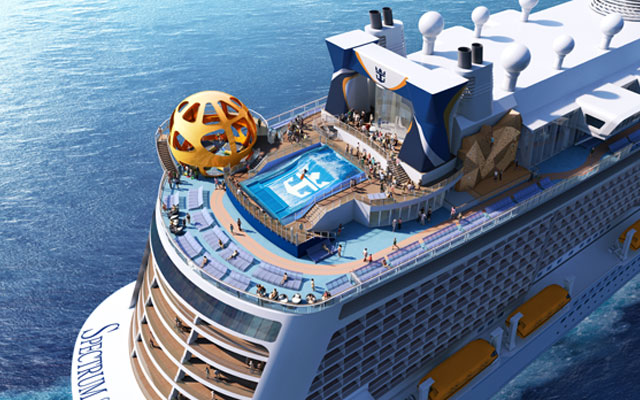
One successful ship which accommodates more than 4,000 guests is out of the way as the two companies ramp up on China homeporting. Royal Caribbean will introduce its first Quantum Ultra class ship, Spectrum of the Seas, which has room for 5,622 guests, from June 2019. By then, the line will be fully deployed in China with Spectrum in Shanghai, Quantum of the Seas in Tianjin and Voyage of the Seas in Shenzhen and Hong Kong. Royal Caribbean International’s president China and North Asia, Zinan Liu, said Spectrum would reach “new milestones in the luxury cruise sector in China”.
Dream Cruises will continue to dual-homeport World Dream in Hong Kong and Guangzhou’s Nansha next year while waiting for a new Global Class ship, which will debut in 2020. Not only will the third ship be 25 per cent larger and double the capacity of her sister ships, it will be “a pace setter” with “focus on Asia, and more specifically China”, said Thatcher Brown, president, Dream Cruises.

In the face of lower ticket prices as a result of explosive capacity increase during 2016-2017, both players have similar strategies: pump in more luxury, in the belief the Chinese consumer has evolved and will be swayed to cruise by more innovative products and destination experiences. They also vow to continue training and educating smaller agents to sell cruises, so they can break through the predominantly wholesale charter distribution that is also partly responsible for China having low repeat guests compared to the US. Both acknowledge the need to create more enticing and longer itineraries.

Royal Caribbean, for instance, has planned “a more diversified” line-up of cruise itineraries sailing from China homeports. Among 117 open-to-sail sailings, guests can choose from 27 unique itineraries, featuring 23 destinations across four countries, Liu said.

Without revealing details, he said: “The exciting sailings include 17 well-selected long ones – six or more nights – taking guests to their favourite Asian destinations; eight warm winter sailings bringing guests to subtropical and tropical destinations and providing an escape from the chilly winter weather; 12 weekend sailings, each of which lasts for three to four nights, tailor-made to meet millennials’ needs for a brief escape from the hustle and bustle of their urban life; and special holiday/festival sailings to discover new cultures and traditions.

“Instead of reducing the number of cruise ships or cutting down the sailing season, Royal Caribbean International has always sought a more sophisticated way to serve the Chinese customers, i.e. by offering new, groundbreaking and customised options such as top-choice staterooms, meals, entertainment, shops and even destination tours,” Liu said.

“Chinese consumers’ needs have already evolved from cursory travels to an in-depth vacation experience. They prefer more customised products and services (so cruise companies will go) for more segmentation, tailor-made service, innovation and user-friendly technology.”

Echoed Brown: “China’s long period of sustained growth has spurred and expanded the middle class rapidly, simultaneously growing the cruise industry with more affluent Chinese consumers pursuing cruising as a vacation choice that offers value, convenience and enrichment.

“As the cruise market continues to evolve and mature, so will the need to provide a variety of cruise products that will be able to accommodate the various needs and tastes of a new generation of travellers. We must continue to educate and support our industry partners so that they can help us grow our addressable cruise market in China.”

Geopolitical crises such as the spat between China and South Korea which affected some routes could of course happen. But overall, they believe the market will continue to grow and evolve. In just four years, the number of Chinese cruisers has grown five-fold to almost 2.5 million, a rate the cruise industry has never seen before. “With advancements in high-speed rail connectivity and the continued growth of value regional carriers, there is opportunity to reach new audiences throughout China,” Brown added.

Cruise experts observe that cruise lines with larger fleets, such as Royal Caribbean, have the ability to be patient as the market catches up, knowing the long-term result will be very strong. And though Dream Cruises has but only two ships at present, as an Asian company it might be more committed to the region while parent company Genting Hong Kong has more experience with Asia/China from a long history of building up the Asian cruise market with Star Cruises.

Still, it is unlikely cruise lines will be that patient if the market is a lost case, which China is not. Royal Caribbean Cruises during earnings call on July 26 said China sailings had “performed very well” and bookings were “nicely ahead” in both volume and rate for the rest of the year and into next year.

Genting Hong Kong’s 2017 financial results revealed that Dream Cruises, launched slightly more than a year ago, is “performing well with improving occupancies and net yields in both the Hong Kong/Guangzhou and Singapore markets”.

The Norwegian Joy too performed beyond expectations. Steve Odell, Norwegian Cruise Line Holdings’ senior vice president & managing director Asia-Pacific (including China), told TTG Asia: “Norwegian Joy was profitable in China and very well received by the local market in her first year of operation (ending June 27).  She has the highest occupancy and guest satisfaction ratings of any ship in our fleet.”

But demand and yield are stronger in the rest of the world, and the cruise company said it was monetising it and driving higher shareholder returns by moving the ship.

NCL wasn’t the first to stop homeporting a new made-for-China ship in China. Princess Cruises originally announced its China-centric Majestic Princess would be homeported in China, but that never happened.

“We found we could have more success if we complemented our peak summer season in China (July/August) with deployments from Taiwan (spring) and Australia (winter). “That’s what we’ve done this year and that’s what we plan to do again in 2019,” said Stuart Allison, Princess Cruises’ senior vice president, Asia-Pacific commercial & operations.

Ken Muskat, CEO of just-defunct SkySea Cruise Line, giving his personal opinion, said China is going through a period of “right sizing”, which is needed, and will remain a key strategic development market for the cruise industry, perhaps just at a slower pace than in the past.

“The market will benefit greatly from the newer and larger ships being deployed in China, the focus on finding new destinations, and offering longer itinerary choices. The business practices of the evolving trade distribution needs time to catch up and make an impact which is beginning to take place. The support of government entities is more prevalent than ever across China which continues to provide confidence to the cruise lines. These are all positive signs to the market becoming more mature and understanding what needs to happen for long-term success.”


HKTB, Cathay Pacific extend reach into tech-savvy India with Klook partnership

0
Hong Kong not as attractive to Indian toursts now with PAR

The Hong Kong Tourism Board (HKTB) and Cathay Pacific have partnered Klook, an in-destination travel booking platform giant, to woo Indian travellers.

This represents a significant step as the tourism players seek to gain more visibility with FITs in India’s smart tech-savvy populace. The country has an outbound market of around 23 million tourist departures.

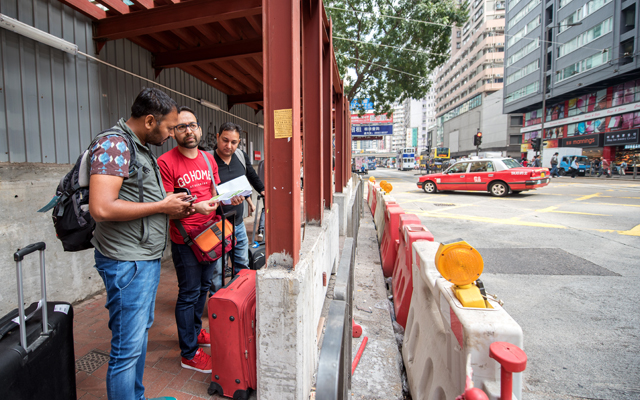
Indian tourists in Hong Kong

As part of the joint promotions, Klook is offering up to 60 per cent off on all Hong Kong products, ranging from attractions, tours, local transport, must-eats, and more.

Individuals can book through the free App (Android and iOS) or website, which is being made available till mid-October.

Travellers must book their flights with Cathay Pacific or Cathay Dragon, and use the booking number on the site to enable them to access discounts.

With the collaboration, Klook’s platform now houses a microsite featuring Hong Kong’s recent campaign theme – Discover Hong Kong Like A Local – where travellers can book experiences.

Puneet Kumar, senior manager, market development (India) of HKTB said: “Discover Hong Kong Like a Local focuses on promoting Hong Kong stories and experiences through authentic Indian voices to engage young and affluent Indian traveller… Our partnership with Klook and Cathay Pacific Airways allows Indian travellers to design their Hong Kong trip to explore Hong Kong like a local.

“This year we are introducing our living local culture through walking tours in rejuvenated districts like Old Town Central and Sham Shui Po, Great Outdoors through soft adventure activities such as hiking trails and cycling routes, dining & nightlife experience through roof top bars, Michelin star rated street food stalls, unique dining concepts and Hong Kong Wine & Dine Festival, etc.”

Commenting on the partnership, Anita Ngai, chief revenue officer of Klook, said: “Hong Kong continues to gain popularity and attract travellers from India. On Klook, 30 per cent of users (originate from) South-east & South Asia and have seen a tremendous growth from India where travellers are interested to experience different products that cater to their preferences.

Fun Sabah Tours to manage Russia visa applications from Malaysia

0
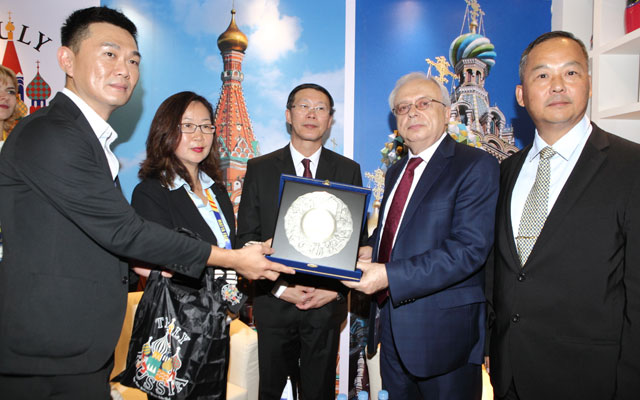
From left: Fun Sabah Tours' Clement Tsen; ATC Air Service's Vun Ling Ling; MATTA's Tan Kok Liang; ambassador of Russia to Malaysia Valery N. Yermolov; and ATC Air Service's Daniel Ho

Malaysians travelling to the Russian Federation can now avail a simplified visa application process offered by Fun Sabah Tours.

Fun Sabah Tours has obtained the authority to manage visa applications for all travellers from Malaysia. With this new one-stop platform, Malaysian travellers will be able obtain their visas easily when they purchase Truly Russia or Truly Islamic Russia Tour Packages (Ex Hong Kong) by Fun Sabah Tours.

From left: Fun Sabah Tours’ Clement Tsen; ATC Air Service’s Vun Ling Ling; MATTA’s Tan Kok Liang; ambassador of Russia to Malaysia Valery N. Yermolov; and ATC Air Service’s Daniel Ho

Clement Tsen, Fun Sabah Tours’ general manager, revealed that the platform currently offers two packages to Russia. Tours are conducted in English or Mandarin, and are priced from RM11,000 (US$4,200). Malaysian travellers who purchase either of these packages can submit their visa applications together with their booking deposit.

In addition, up to December 31, 2018, World Cup Fan ID holders will not need a visa to travel to Russia if they can provide their IDs when booking the tour packages with Fun Sabah Tours.

ATC Air Service’s Daniel Ho added: “Fun Sabah Tours is located in East Malaysia and we are expanding this facility to partner and authorise agencies located in Kuala Lumpur, Penang and Ipoh, among others.”