

Phuket eyes October reopening with private Covid-19 vaccination drive
Australian tourism businesses, facing “annihilation”, call for more state support
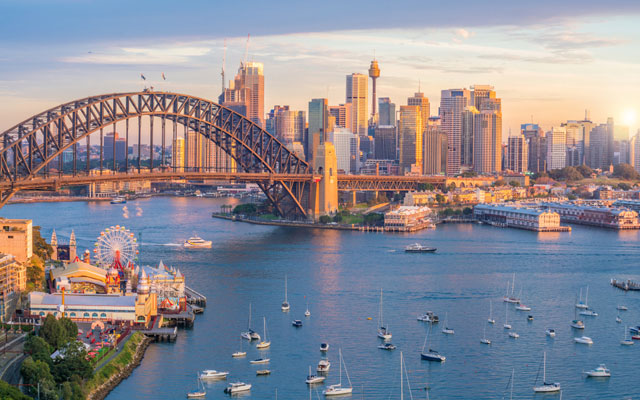
A survey by the Australian Tourism Export Council (ATEC) showed that 55 per cent of tourism businesses in Australia will not survive till September without some kind of government support, while international borders remain closed.
Against that bleak outlook for 2021, the ATEC is calling on the federal government to provide further financial support to the tourism industry, specifically, the export tourism businesses which are unable to operate at anywhere near their previous levels.
“Tourism businesses were optimistic that by now international borders would be open and they would be seeing visitors return, but all indications are that these businesses face yet another tough year,” ATEC managing director Peter Shelley said.
“State and territory governments need to provide certainty in the way they respond to Covid outbreaks and a clear path to reopening international travel that appropriately manages the health risk and effective rollout of vaccines in order to give our industry certainty into the future.”
While 75 per cent of export tourism businesses have been able to supplement some of their revenue with domestic visitors, this spend represents less than 20 per cent of income from overseas visitors, according to the ATEC’s industry ‘Pulse Check’ taken in January.
With borders closed and export tourism businesses unable to access their international markets, around 60 per cent are running at less than half of their staff and service capacity, with most only surviving with the support of the JobKeeper supplement.
“Australian tourism businesses have hung on with the support of JobKeeper but face annihilation once the programme ends next month if the government fails to provide further support,” Shelley said.
“Australia’s tourism industry has spent the past 12 months battling enormous setbacks, from bushfires to floods and the Covid crisis which has closed international borders and left tourism businesses with no customers.”
The ‘Pulse Check’, which looked at how Australia’s export tourism businesses have fared over the past 12 months, also revealed that 95 per cent of inbound tour operators (ITOs) – key tourism export intermediaries – have revenue of less than 10 per cent compared to 2019. Some 50 per cent of ITOs are unable to attract domestic business and for those who have, this represents less than 10 per cent of their international market.
Without some kind of government support, some 80 per cent of ITOs will be gone by September, making it much harder for the inbound tourism industry to restart.
Shelley concluded: “Through no fault of their own, successful tourism businesses from across the country have been decimated by a series of setbacks that culminated with the international border closures.
“These are the same businesses which were instrumental in delivering A$45 billion export revenue in 2019 and delivering thousands of jobs to regional communities throughout the country and they will be the ones which will provide future jobs and economic prosperity.
“Given the success of our export tourism industry over the past decade which saw international visitors contributing more than A$350 billion in our economy, we must ensure these businesses survive.
“Once the borders reopen, these businesses will quickly rebound and once again contribute significantly to our export earnings, support regional economies and build back Australian jobs.”
Park Hotel Group makes Room For Trees
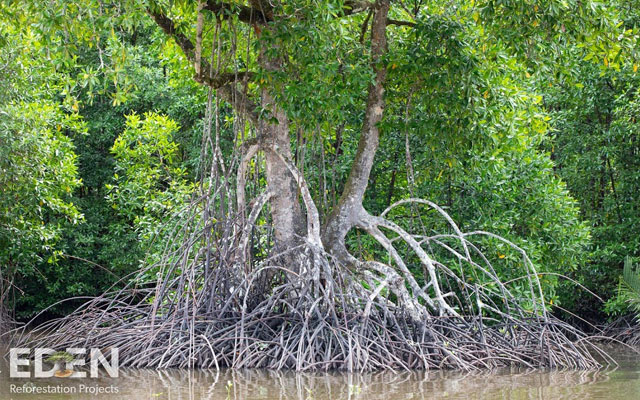
Singapore-based Park Hotel Group will plant a tree for every booking made across its portfolio of hotels, under its newly-launched Room For Trees initiative in partnership with Eden Reforestation Projects, a non-profit organisation that is committed to reforestation and ecological restoration.
The partnership with Eden supports the mangrove reforestation project in Biak Island, Indonesia, which involves collaborating with local villagers to replant, restore and protect their wetland ecosystems.
Allen Law, CEO of Park Hotel Group, said the group’s partnership with Eden will “contribute to the rehabilitation of the forests on our planet while supporting lives and livelihoods that depend on these vital ecosystems”.
“Our new Room For Trees initiative underlines our commitment to drive our triple bottomline. Despite the current pandemic, creating value on our environment and the people in our communities remains a key priority for Park Hotel Group to build a sustainable and resilient business as we continue our global expansion plans beginning with Asia-Pacific,” he added.
Over the last three decades, Indonesia has lost over 40 per cent of its mangrove forests and that has adversely affected the wetland ecosystems which supports the biodiversity of the region as well as the communities within it. Biak Island, located on the northern coast of West Papua, is prone to environmental disasters. The mangrove reforestation on Biak is important to reduce the effects of floods, tsunamis, and soil erosion. It also provides a safe nursery for schooling fish and increase livelihoods of the local villagers that rely on their environment for survival.
Over-70s play critical part in travel’s recovery: GlobalData

A reported spike in travel bookings from the over-70s shows that this demographic should not be overlooked when businesses make plans for post-pandemic recovery, said GlobalData.
Johanna Bonhill-Smith, travel and tourism analyst at GlobalData, commented: “Not only is this demographic one of the first to be vaccinated, they are also typically big spenders and less hindered by time constraints. This makes this a lucrative demographic to target in order to boost post-pandemic travel.”
Only 26 per cent of respondents from the Silent Generation (70+) declared they are ‘extremely’ or ‘quite concerned’ about their personal financial situation, as compared to 77 per cent of Millennials in GlobalData’s Covid-19 Recovery Survey, which polled 5,500 respondents in December 2020.
Feeling ‘hopeful’ was the second most common emotion felt by this demographic in the same survey, suggesting that the rollout of vaccinations is likely to accelerate future travel bookings.
Bonhill-Smith stressed that it is “critical” for travel companies to ditch dated stereotypes of the silent generation as being more brand loyal and less tech-savvy so as to effectively service their future travel needs.
She said this demographic is known for being loyal to one brand, making them a prime target for in-store travel agencies. However, she cited the aforementioned survey by GlobalData which painted a different reality.
Some 50 per cent of silent generation respondents ‘somewhat’ or ‘strongly’ disagreed they would buy products only from their favourite brands.
The same survey found that 30 per cent will now buy more products online rather than visiting a store, and 48 per cent consider supporting small or local businesses as more important than prior to this pandemic – suggesting more opportunity for brand development.
“While the silent generation will never rival the levels of digital engagement associated with the ‘digital natives’, Millennials and Gen Z – who spend more time at home which has led many to become more ‘tech-savvy’ – 47 per cent still declared they would opt to use card or mobile phones instead of cash,” Bonhill-Smith said.
“This poses an opportunity for app engagement, where simple, easy-to-use and personalised platforms may become more desirable.”
City breaks were the second most popular holiday type for the Silent Generation prior to Covid-19, according to GlobalData’s 3Q2019 Global Consumer Survey, which polled 29,744 respondents. This type of holiday, however, is likely to have lost its appeal as older tourists now desire holidays away from urban areas.
In a more recent survey, 31 per cent of silent generation respondents declared they had been experimenting with new cuisines and recipes during the pandemic. Experimenting more at home could boost the appeal of a gastronomic-themed holiday – or simply make it a greater consideration when booking a trip.
Bonhill-Smith concluded: “Millennials and Gen Z have typically been identified as leaders in travel demand post-Covid-19. Despite being labelled as the most vulnerable, the silent generation is the first to be vaccinated which will continue to accelerate future bookings among this demographic, thereby assuring they will play a critical part in the recovery of travel.”
New hotels: W Melbourne, JW Marriott Hotel Shanghai Fengxian, and more

W Melbourne, Australia
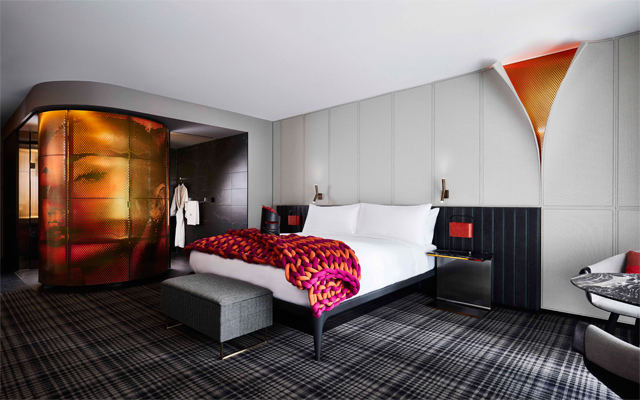
Billed as Melbourne’s first luxury lifestyle hotel, W Melbourne will mark W Hotels Worldwide’s second Australian property when it opens this month. Set at 408 Flinders Lane, the hotel will form part of Cbus Property’s A$1.25 billion (US$951.5 million) Collins Arch mixed-use precinct. W Melbourne will play host to 294 guestrooms and 29 suites, including four spacious Wow Suites; alongside the brand’s interpretation of the traditional presidential suite, the Extreme Wow Suite, featuring a 40m2 balcony with views of the Yarra River. Signature Japanese restaurant Warabi; all-day dining venue Lollo; late-night bar Curious; and Culprit, a café-meets-wine-bar experience, round up the F&B offerings. Leisure amenities include a fitness facility and a gold-roof adorned indoor pool with poolside bar and DJ booth. Additionally, MICE groups can avail of 830m2 of conference, meeting and event space, including a 426m2 pillarless ballroom.
JW Marriott Hotel Shanghai Fengxian, China
Located on Hangzhou Bay in the city’s Fengxian seaside district, just an hour’s drive south of metropolitan Shanghai, JW Marriott Hotel Shanghai Fengxian is home to 265 guestrooms and suites. Dining options include three restaurants and a bar: All-day dining outlet JW Kitchen offers local and international dishes at live cooking stations, while fine-dining restaurant Yan Xuan serves Cantonese and Shanghainese delicacies. Elsewhere, Shanghai Crab & Co. has a menu featuring its signature boiled king crab and seafood towers. On-site conference facilities include a 1,800m2 meeting area, a 900m2 grand banquet hall, a smaller 600m2 hall, alongside four multifunction rooms. An executive lounge and spa are part of the hotel’s leisure facilities, joining a 24-hour fitness centre, 25m heated infinity swimming pool, and kids’ club.
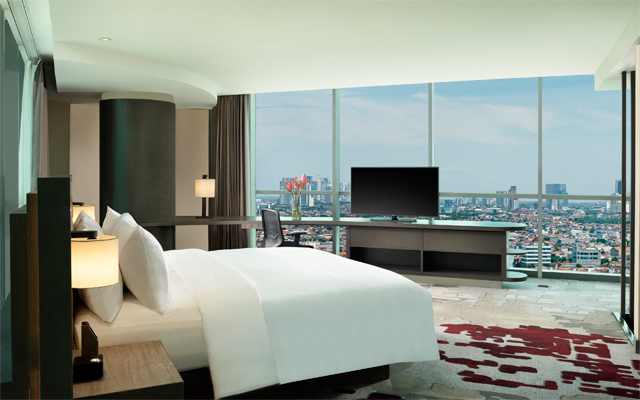
DoubleTree by Hilton Surabaya, Indonesia
Owned by PT. Indo Citra Eka Abadi and managed by Hilton, the 310-room DoubleTree by Hilton Surabaya marks the sixth property in Hilton’s Indonesia portfolio. Situated in the heart of Surabaya’s city centre, a 45-minute drive from the Juanda International Airport, the hotel features 310 guestrooms and suites, including the two-storey, 102m2 Loft Suites. Leisure options range from an outdoor swimming pool and a kids’ pool to a sauna and a 24-hour fitness centre. A kids’ zone within the hotel is home to a video games zone, outdoor terrace, play gym as well as a playroom.
Three dining outlets are on offer, led by Makan Kitchen, an all-day dining restaurant serving Indonesian, Chinese and Colonial cuisines. The Koffee Deli & More serves specially brewed coffee or tea and fresh juices, alongside light bites; while Cloud 22 Rooftop Bar provides nightly entertainment with DJs and bands playing upbeat lounge music. Offering a panoramic view of the city, the 360 Degree Function Room spanning 605m2 can accommodate up to 600 guests for meetings, weddings and social gatherings. In addition, the Tunjungan Grand Ballroom features 800m2 of meeting space, and 47m2 of built-in LED screens.
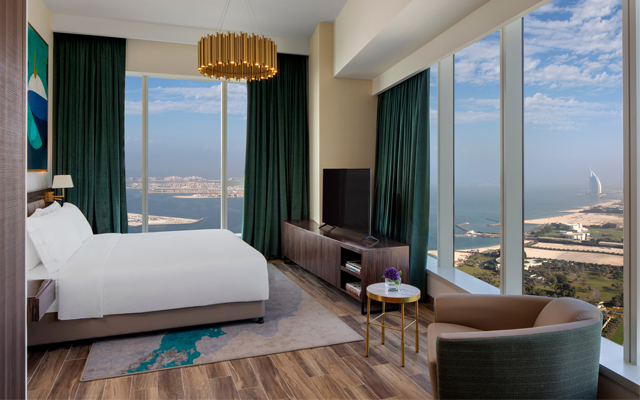
Avani Palm View Dubai Hotel & Suites, UAE
Overlooking the iconic Palm Jumeirah, the 48-storey Avani Palm View Dubai Hotel & Suites joins Avani Ibn Battuta Dubai and Avani Deira Dubai Hotel as the third Avani to open in the city. Catering to a mix of leisure, corporate and extended-stay guests, the property has 264 Avani Serviced Apartments. Designed by AECOM and developed by ALFAHIM, one of the UAE’s largest conglomerates, the suites and residences offer floor-to-ceiling windows, fully-equipped kitchens, as well as interactive living and private terraces. Guests can choose from eleven different room types, ranging from 41m2 studios, up to 165m2 three-bedroom units. A trio of restaurants and bar offer a variety of dining options: the all-day dining Seven Seeds; on-the-go café The Pantry by Avani; and Aqua pool bar. There is also a gym, and a dual-level rooftop infinity pool boasting spectacular views of the city skyline and beyond.
China to get another Steigenberger hotel in Kunming
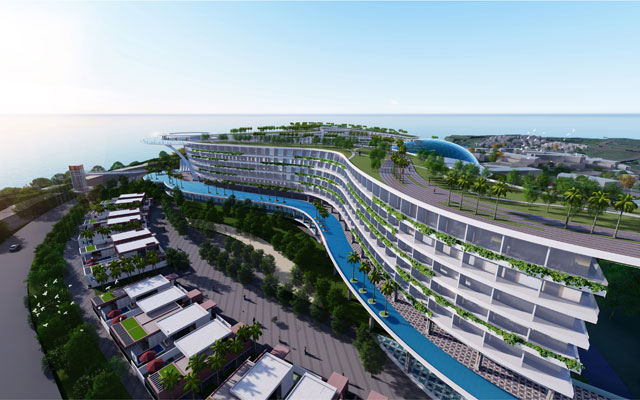
Deutsche Hospitality is planning a third hotel project in China in the form of a 300-key Steigenberger Hotel in Kunming, the provincial capital of Yunnan.
This latest move follows an earlier announcement that Deutsche will be opening a pair of Steigenberger-branded hotels in Haiyan on the South China Sea coast at the start of 2022.
Set to be operated by Huazhu, Deutsche’s shareholder, the planned Steigenberger Hotel in Kunming will form part of a new tourism centre called Lakeside Town, which is being developed on the banks of Lake Dian, situated just under an hour’s drive from Kunming Airport.
The basis for the Steigenberger Lakeside Town, Kunming, which is scheduled to open in 2024, was set out in an agreement signed by Marc Cherrier, COO of Steigenberger Hotels & Resorts at Huazhu; the Sunac Culture & Tourism Group’s general manager Zhang Yunshui; and Gao Xujiao, general manager of the Lakeside Town Project.
Singapore emerges as world’s most vacation-deprived country
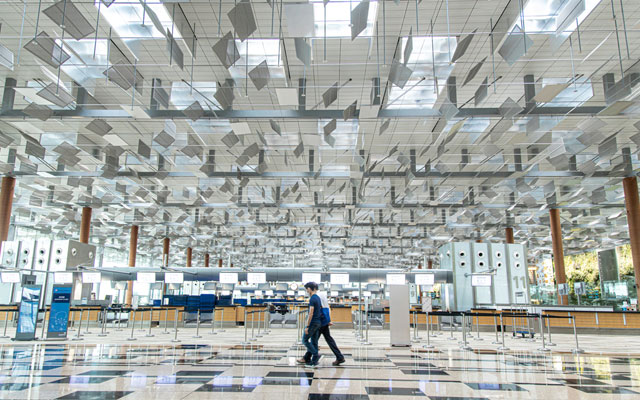
Singaporeans are longing for a return to travel more than anyone else in the world, with the country topping Expedia’s vacation deprivation rankings for the first time.
According to the latest edition of the annual study – which surveyed 9,200 consumers in 16 markets globally, including 300 in Singapore – vacation deprivation is on the rise in 10 out of the 16 markets surveyed across the globe. In particular, 71% of the respondents in Singapore and Italy said they were ‘very’ or ‘somewhat’ vacation-deprived, making them the most vacation-deprived countries in the world, ahead of South Korea (70%), France (70%) and Malaysia (68%).
For Singapore, this year’s finding marks a slight increase compared to the year before when 67% of Singaporeans said that they were vacation-deprived.

Of the Singaporeans surveyed, those aged 18-34 were found to be the most vacation-deprived group, with 85% identifying with vacation deprivation. This was followed by those in the 35-49 age range (68%), and those aged above 50 (51%). Interestingly, respondents who reside in the east of Singapore also appear to be more vacation-deprived (77%) than those residing in the west (69%).
“Singaporeans are some of the most avid travellers in the region, and when we consider the lack of options for inter-city travel within the country, it is of little surprise that they are the most vacation-deprived people globally this year. But they have adapted well while embracing the nationalistic spirit of rediscovering Singapore while supporting local tourism through staycations and local activities,” said Lavinia Rajaram, APAC head of communications, Brand Expedia.
According to the study, Singaporeans used five less vacation days in 2020 compared to the amount they would normally take in a typical year. Despite the average number of vacation days received remaining the same at 16 days annually in 2019 and 2020, Singaporeans only took an average of 10 vacation days in 2020, much lower than the 15 vacation days they would usually take in a year.
With the reduction in vacation days taken, Singaporeans also expressed a greater longing for the return to travel more than anyone else in the world. Some 90% of respondents in Singapore said that they now value vacations more than ever before, followed by 89% of South Koreans and 87% of Malaysians. In addition, 87% of Singaporeans believe that travel can help to create important memories and be one of the best things to come out of Covid-19.
Local employers have also been more accommodating of Singaporeans’ desire to travel. According to the study, 67% reported that their employees have been supportive of them taking vacation time, up from 60% in 2019 and 55% in 2018. As Singaporeans continue to look forward to the resumption of international travel in 2021, they are already planning to utilise 16 vacation days on average, six more than what they took in 2020.
To make up for missed travel time abroad, Singaporeans are also getting ready to fulfil their pent-up travel desires by splurging on vacations once it becomes safe to do so. Some 62% intend to spend more on their bucket list vacation than originally planned, while 67% said their travel bucket list budget for 2021 has increased because of the pandemic.
However, as enthusiastic as they may be about the return to travel, Singaporeans rank among the most cautious travellers in the world. Only 18% of Singaporeans have booked travel for 2021 – lower than the global average of 21%.
When asked about their approach to booking travel in 2021, 44% of Singapore respondents said that future travel planning will highly depend on the success of the Covid-19 vaccine – coming in only behind the Canadians, with 45% of them planning to do the same. In addition, 39% of Singapore respondents said they are waiting until the latter half of 2021 to travel, coming in only behind Hong Kong where 41% plan to do so.
In contrast, consumers in France, Germany, Japan and Thailand are much less concerned about travelling without a vaccine, with less than a quarter of the respondents highlighting the need to wait for a vaccine before they book travel.
There is no doubt that travel in the ‘new normal’ will require a significant mental and emotional shift. At the same time, travel booking behaviours have also evolved in response to the recent developments that have influenced their decision-making criteria.
Refundable travel options have become a pre-requisite for many travellers, with 33% of Singaporeans saying that they will only book travel that is fully refundable in case they don’t feel comfortable travelling. Some 21% of Singaporeans also said that they intend to book last-minute travel when they know that it is safe to do so, and 20% said they only plan to travel to places where they can remain socially distant from others.
Despite the cloudy climate, Singaporeans continue to show strong interest in travel. Searches for international destinations on Expedia.com.sg have increased in recent months, with Hong Kong, Bangkok, Tokyo, the Maldives, Shanghai, Guangzhou, Bali, London and Ho Chi Minh City making up the top destinations that Singaporeans are looking to travel to in 2021.
Agoda taps demand for last-minute hotel deals

Agoda has launched GoLocal Tonight across Asia-Pacific to help accommodation partners capitalise on the growing post-pandemic trend towards last-minute domestic bookings.
With the uncertainty of new outbreaks, changes in health protocols and last-minute travel restrictions, Agoda’s data reveals a shift towards searches for same day check-ins, and its GoLocal Tonight product looks to tap into this demand by offering even greater savings.

“Covid has created a new category of traveller, one who might previously have been content to hang out at home watching the latest Netflix blockbuster, but who is now so incentivised by the great last-minute deals that they act on impulse for a change of scene, deciding the same day to book an overnight stay,” explained Enric Casals, regional director Southeast Asia and Oceania, Agoda.
“The GoLocal Tonight product launching across Asia-Pacific helps hotel and accommodation partners to access these travellers and utilise inventory that would otherwise remain unused. In exchange, Agoda travellers receive further discounts of up to 30 per cent of their accommodation reservations.”
Already, more than 2,000 partners have signed up to Agoda’s GoLocal Tonight campaign in markets across Asia-Pacific, including Cambodia, Indonesia, Japan, Malaysia, the Philippines, Singapore, Thailand and Vietnam. Supported by a marketing campaign targeting customers via email marketing, PR and social media, plus in-app and a dedicated BLT, the GoLocal Tonight product will roll out from this month.
Agoda’s latest product is an extension of its GoLocal campaign which helped drive domestic travel uptake across the globe throughout last year.
MCO 2.0 plunges M’sia budget hotels into existential crisis
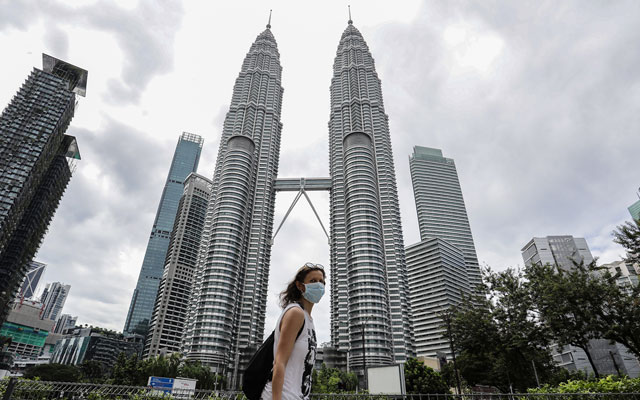
More than 40 per cent of budget hotels in Malaysia are on the verge of closing due to the ban on interstate travel coupled with the nearly year-long closure of the country’s border to foreign tourists.
Malaysia’s government on Tuesday extended by two weeks the country’s full second lockdown until February 18, as the country battles a surge in Covid-19 infections that has pushed the cumulative total past 200,000 cases.
Malaysia Budget Hotel Association (MyBHA) national deputy president, Sri Ganesh Michiel, said the association is preparing a letter of appeal to the Ministry of Tourism, Arts and Culture Malaysia to act fast on all issues that pose a threat to the survival of budget hotels in Malaysia. The document is expected to be sent out by next week.
A recent survey conducted last week revealed that many of its 2,300 members did not receive feedback from the government on the status of their applications for the since-concluded Wage Subsidy Programme 2.0, which ran from October to December 2020.
For the Wage Subsidy Programme 3.0, MyBHA is appealing to the government to extend the scheme from three to six months, and to increase the subsidy from RM600 (US$148) per employee earning below RM4,000 monthly to RM1,200, said Sri Ganesh.
The trade body is also asking the government to reduce electricity charges for hotels, and to increase and extend the 10 per cent electricity bill rebate until March this year as electricity is a high operating cost for hotels.
MyBHA’s appeal also calls on the government to keep to its promise of enforcing the Short Term Rental Act, which is a means of regulating short-term rental accommodations in Malaysia. Sri Ganesh explained: “Short-term rental accommodations are not regulated and are spoiling the market for hoteliers who are at a disadvantage as they have to adhere to many government regulations and licensing fees which hike the cost of doing business. There has been a long delay in enforcing the Act.”
In addition, MyBHA urged for an Act or law to restraint OTAs from charging high commissions on hotel bookings. Sri Ganesh said: “We are at their mercy as travel trends today see a growing number of bookings coming from OTAs. They charge hotels a commission of between 25 to 40 per cent on bookings made. We are asking the government to control the commission rates of OTAs and to not allow them to charge more than 10 per cent commission. Most OTAs are also based overseas, and this (practice) has a huge negative impact on our economy as our currency is going out of the country.”
With budget hotel rooms going for about RM60 to RM70 per night, coupled with sustained low occupancies amid Covid, a 40 per cent commission rate paid to OTAs will “make it very difficult for hotels to have the cash flow to maintain their facilities and sustain activities during these trying times”, Sri Ganesh added.
MyBHA will also reiterate its appeal to the government to mandate banks to automatically approve loan moratorium for six months, after their previous requests fell on deaf ears.
Sri Ganesh stressed: “We urge the government to take immediate action and to save the industry before it is too late, as many hotels are in the midst of retrenching employees as they are unable to pay wages and are struggling to pay utility bills, rental and bank loans.”
Sri Lanka finds a new travel bubble target in India
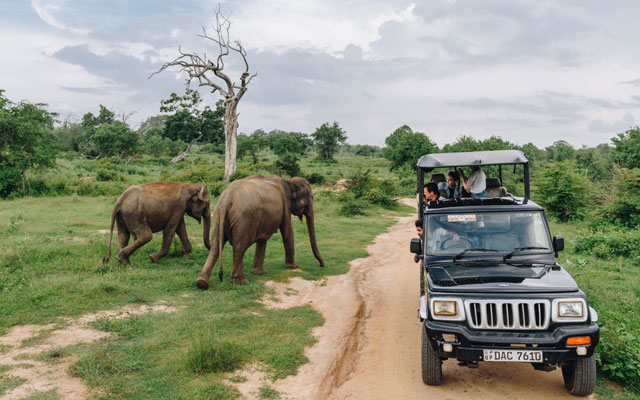
A travel bubble arrangement being worked out between Sri Lankan and Indian authorities could soon pave the way for a steady flow of Indian visitors back to Sri Lanka.
A Sri Lankan Tourism official told TTG Asia that once the plan has panned out, “there should be many visitors from India”, which is Sri Lanka’s largest tourist source market.
He said that so far about 500 tourists, mostly from Western and Eastern Europe, have visited the country since it reopened for commercial traffic under a travel bubble on January 21, following a 10-month suspension.
Some 1,700 passengers from Ukraine also visited the country between mid-December 2020 and mid-January 2021 under a pilot project to assess the country’s capability to manage tourism flows in a safe manner. While travellers are exempted from quarantine, they must have a pre-secured PCR negative test on arrival in addition to taking tests after the fifth day of their holiday.
Meanwhile, three charters have or are due to arrive at the Mattala international airport this week, carrying a total of 700 travellers from Turkey, Ukraine and Kyrgyzstan.
SriLankan Airlines CEO Vipula Gunatilleka said they were awaiting the confirmation of the travel bubble to revive cross-border travel between the country and India, as many inquiries from India were streaming in.
Since the national carrier’s reboot of operations after Covid-19, all flights operated so far were cargo flights with a limited number of 75 passengers per flight, according to Gunatilleka.
“We have been operating about 50 to 60 flights a month,” he said, adding that the airline has been flying to the UK, India, Germany, China, Japan, Australia, Middle East and the Maldives, among other sectors.
“We have also operated a few flights for the Australian government bringing their nationals from one destination to Australia via Colombo,” he said, noting that with the widespread rollout of vaccines across the globe, there would be more numbers travelling to Colombo.
Tourist Hotels Association of Sri Lanka president, Sanath Ukwatte, said they expected increased bookings from March onwards.
As of February 2, Sri Lanka has reported 64,983 Covid-19 cases with 323 related deaths.

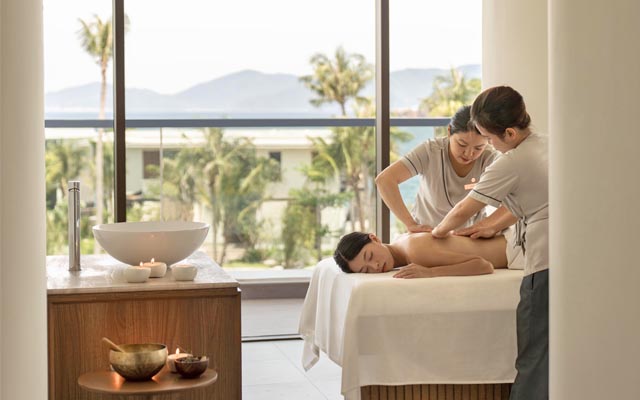






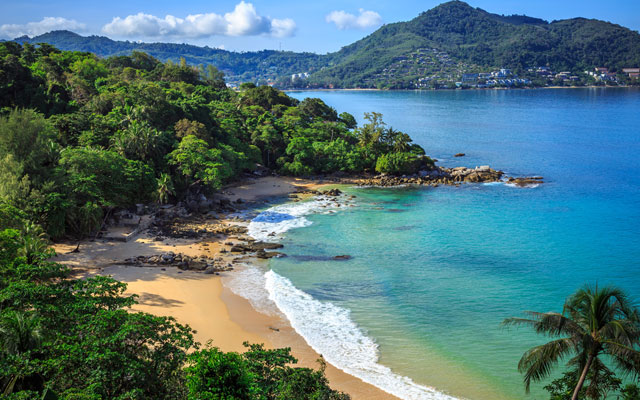
Thailand’s resort island of Phuket is planning private Covid-19 vaccinations for 250,000 residents, in hopes that the government will allow it to fully reopen to foreign tourists by October.
At least 10 Phuket industry associations including hotels, tourism and chambers of commerce will pool resources to carry out a private vaccination drive to inoculate at least 70 per cent of the island’s population to create sufficient immunity by October 1, according to a report by Channel NewsAsia.
The plan would cover most adults in Phuket before a nationwide government immunisation programme for the public starts in June, it added.
Phuket Tourism Association president, Bhummikitti Ruktaengam, was quoted by the report as saying that they are liaising with three major hospital networks to procure AstraZeneca and Sinovac vaccines. He also argued that vaccinated foreign tourists should be exempted from quarantine.
Of the nearly 40 million foreign visitors to Thailand in 2019, about 10.5 million visited Phuket. That number dwindled to 2.1 million arrivals in 2020 due to pandemic-induced border closures. It accounted for nearly one-third of the 6.7 million visitors which set foot in the country last year. In that same year, foreign tourism receipts in Phuket dived 78 per cent to 87.5 million baht (US$2.9 million).