TTG Asia
Asia/Singapore Wednesday, 15th July 2026

Accor, Sun Group sign Vietnam hospitality pipeline with 5,300 keys

0

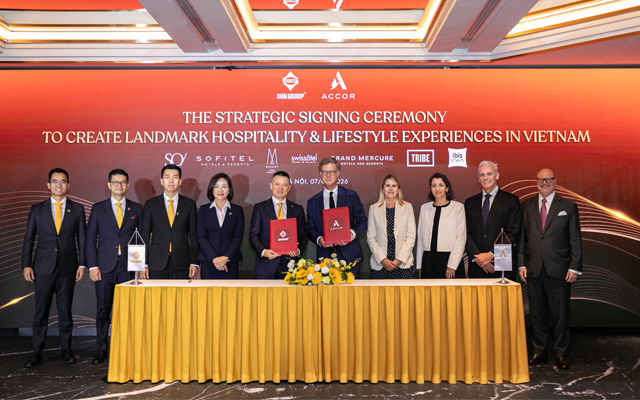
Accor and Sun Group have expanded their partnership with a strategic agreement to develop more than 5,300 hotel, resort and serviced residence keys across Vietnam over the next five years.

The projects, located in destinations including Phu Quoc and Danang, will introduce several Accor brands to Vietnam for the first time, including Sofitel Serviced Residences, Swissôtel Living, Tribe and Ennismore’s lifestyle brand SO/. The agreement will also expand the presence of MGallery, Grand Mercure and ibis Styles.
The agreement will see the development of more than 5,300 hotel, resort and serviced residence keys across Vietnam over the next five years

The first phase of the portfolio includes Bana Hills Hotel Danang – MGallery Collection (250 keys), Ruby Beach Hotel – MGallery Collection (180 keys), SO/ Phu Quoc Ruby Beach (300 keys), Grand Mercure Phu Quoc Ruby Beach (250 keys), Tribe Hon Thom Phu Quoc (321 keys) and ibis Styles Hon Thom Phu Quoc (588 keys).

Accor currently operates 45 hotels in Vietnam, making it the group’s third-largest market in Asia, excluding India and China. The new agreement will further expand its presence across the country’s hospitality market.

Sébastien Bazin, chairman and CEO, Accor, said: “We remain focused on expanding our network in destinations that offer travellers more meaningful ways to connect with the culture and natural beauty of the country. These developments will bring a diverse mix of brands and experiences to market, creating new opportunities for tourism and contributing to Vietnam’s continued growth on the global stage.”

Dang Minh Truong, chairman of the board of directors, Sun Group, added: “This landmark agreement with Accor marks an important step in that journey. By bringing Accor’s diverse hospitality ecosystems and new experiences to Vietnam, we are not only elevating hospitality standards but also enhancing the attractiveness and competitiveness of our destinations, generating economic opportunities, and contributing to the sustainable growth of Vietnam’s tourism industry.”
Ascott loyalty programme nears 10-million-member mark

0

The Ascott Star Rewards (ASR) loyalty programme, which debuted in 2019, is on track to reach 10 million members by the end of 2026, with strong interest and sign-ups largely driven by stay packages and rewards built around exclusive experiences.

Tan Bee Leng, chief commercial officer at Ascott, said special sporting event collaborations have contributed strongly to ASR’s double-digit membership growth.

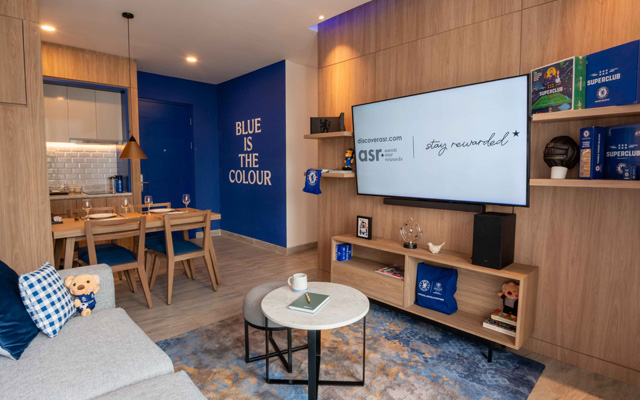
The Bridge Suite at Citadines Sudirman Jakarta is one of Asia’s first Chelsea-themed hotel suites, introduced by Ascott as the Official Hotels Partner of Chelsea Football Club

In tracking new sign-ups, Ascott has found that many new ASR members are drawn by the opportunity to access exclusive activities at high-profile sporting events.

Ascott has an ongoing partnership with Chelsea Football Club (CFC), with both parties curating special guest experiences centred on celebrity engagements and watch parties. In April, Ascott brought football legend Jimmy Floyd Hasselbaink to Hanoi for a two-day fan engagement event held across Ascott Tay Ho Hanoi, Oakwood Residence Hanoi and Somerset West Point Hanoi.

Ascott is now exploring possible CFC engagements in Jakarta next month when the club makes a pre-season tour of Asia, including a stop in the Indonesian capital.

Tan shared that Chelsea-themed suites across Ascott’s properties in Jakarta are now sold out, indicating an active Asian fanbase and strong appetite for sports-related travel.

Ascott has also conducted activations around the Wimbledon Championships and Roland-Garros, where guests could book room packages that included event tickets or gain access to invitation-only engagements with sporting celebrities.

While many Ascott guests can afford tickets to major sporting events, some face the challenge of securing seats for high-demand fixtures.

“So, we found access for them. We offer stay packages that include match tickets and quality hospitality – something that our affluent guests value,” said Tan, adding that access to “money can’t buy” experiences will build loyalty.

Tan added that some guests had joined ASR even though they were not sports fans, hoping instead to gain access to Ascott’s special events and packages for friends and family.

“Some are determined to stay and earn points for special event redemption for their loved ones to enjoy, while others enjoy collecting special merchandise (that are tagged to sports exclusives organised by Ascott),” Tan told TTG Asia.

Ascott’s ability to feature sporting personalities such as Hasselbaink and Chinese professional tennis player Zheng Qinwen at guest engagement events reinforces its reputation for creating exclusive moments for guests – something that existing and prospective real estate owners also appreciate.

When asked whether sports-related and celebrity-led perks were more popular than traditional points redemption for travel purchases, Tan said membership benefits are designed for different profiles of ASR members.

“Airline perks and points are more appealing to guests who are strategic with point accumulation and get a thrill out of scoring a free stay or flight. On the other hand, sporting event perks cater to guests who value exclusive experiences,” she explained.

Tripseed sets global first with Fair Tax Mark accreditation

0

Thailand-based Tripseed has become the first company in the world to be awarded the Fair Tax Mark under the UK-based Fair Tax Foundation’s new National Business Standard, launched during Fair Tax Week 2026 in June. The standard allows businesses outside the UK that operate in a single country, such as Tripseed in Thailand, to be awarded the Fair Tax Mark.

The certification recognises companies that transparently pay corporation tax in the right jurisdiction and at the right time. Tripseed pursued the standard to challenge the industry’s existing economic sustainability frameworks, arguing that tax conduct remains an overlooked dimension of local tourism benefit.

Tripseed is the first company globally certified with the Fair Tax Mark under the new National Business Standard, and the first travel company and Thai business certified under any Fair Tax Foundation standard; photo by Tripseed

Ewan Cluckie, co-founder and chief growth officer at Tripseed, said: “Over the last three years we tried to measure how much (of the economic benefit that we generate) is retained in the destination – and then we ran into a wall during that process. So much of this industry runs on offshore revenue recognition and opaque ownership structures that you often can’t tell from any public record how much a tour operator actually retains locally. The money may never even touch a Thai bank account.

“Tripseed was really founded on one core idea, and that’s that tourism should leave more behind in the places it touches than what it takes out. We measure how much of every trip stays in the local economy. We choose our suppliers on that basis. Our whole business is organised around local economic retention and the quality of the money that is retained.”

He added: “That was the moment tax moved to the centre of our thinking. Corporate income tax is one of the few parts of this picture that can be evidenced; it’s filed, it can be scrutinised, it can be independently assessed – so it became our way in. If you want one honest, verifiable signal of whether a company is really contributing to the places it profits from, look at what it pays in tax.”

To secure the accreditation, Tripseed aligned its independent tax disclosures with the global GRI 207 reporting standard before collaborating with the foundation to meet the new criteria.

Tripseed ultimately stepped away from several established industry sustainability certifications after finding they did not mandate domestic financial compliance.

“We realised that none of them asked the most basic question of all, which is: does this company actually comply with the law and pay its taxes where it operates?” Cluckie said.

“You could be a celebrated and certified tourism business here, yet still be using illegal ownership structures and still be routing all of your profits offshore.”

Tripseed is leveraging the milestone to urge travel industry certifiers to integrate tax conduct as a measurable pillar of economic sustainability.

Cluckie noted: “For a small DMC in northern Thailand, that’s not where you’d expect a global first to come from, but it’s something we’re extremely proud of. We also hope it doesn’t stay unusual for so long.”

Last week, Tripseed won Silver in the Local Economic Benefit category at the 2026 Responsible Tourism Awards Southeast Asia, presented during the 2026 International Conference on Responsible Tourism and Hospitality (ICRTH) in Miri, Sarawak, Malaysia.

Malaysia Airlines expands France connections through SNCF rail partnership

0

Malaysia Airlines is enhancing its intermodal network through a new codeshare partnership with France’s national rail operator, SNCF Voyageurs, giving passengers seamless rail connections from Paris Charles de Gaulle Airport (CDG) to 28 destinations across France.

Available through SNCF Voyageurs’ Train + Air product, the partnership integrates air and rail travel into a single itinerary, allowing Malaysia Airlines passengers arriving in Paris to continue their journey on France’s high-speed rail network.

Malaysia Airlines now offers seamless rail connections from Paris to 28 destinations across France

Tickets have been available through the airline’s website since July 10, 2026.

The partnership builds on Malaysia Airlines’ MHrail initiative, which integrates air and rail services through key international gateways, including Seoul and London Heathrow, as part of the airline’s broader network and customer experience strategy.

Under the agreement, Malaysia Airlines will place its marketing code on SNCF-operated rail services under AccesRail’s IATA code “9B”. Customers will be able to book rail segments as part of the same itinerary, with coordinated connections and simplified transfers to destinations including Lyon, Strasbourg, Rennes, Lille and Marseille.

Bryan Foong, CEO of airline business, Malaysia Aviation Group, said: “By integrating air and rail under a unified travel experience, we are extending our network reach beyond CDG to 28 destinations across France, enhancing connectivity, while offering customers greater convenience through seamless connections and a single itinerary.”

Star Voyager returns to Hong Kong for autumn cruise season

0

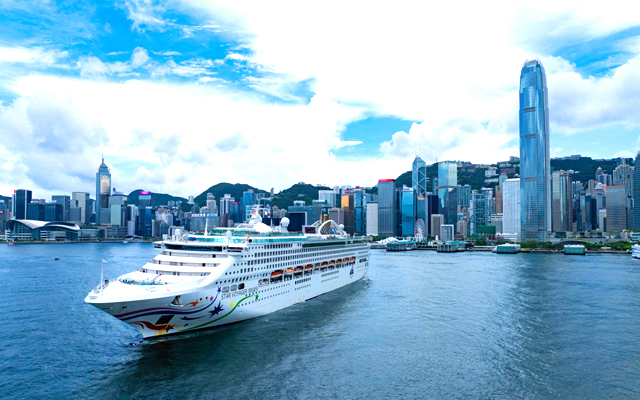
StarCruises will deploy Star Voyager in Hong Kong from September 30 to November 13, 2026, offering a series of two-, three- and five-night cruises to destinations across Asia during the autumn travel season, including Golden Week.

Sailing roundtrip from Ocean Terminal, the programme features itineraries to Xiamen, Sanya, Kaohsiung, Penghu and Okinawa, with calls at Miyakojima, Ishigaki and Naha. Travellers can also opt for two-night High Seas cruises departing every Friday at 20.00 and returning on Sunday, offering a short getaway without the need for flights.

Star Voyager will sail from Hong Kong between September 30 and November 13, 2026, offering autumn cruises across Asia

The season concludes with a five-night one-way repositioning cruise departing Hong Kong on November 15, calling at Nha Trang and Ho Chi Minh City before arriving in Singapore.

To mark the autumn season, bookings made by August 31, 2026, are eligible for savings of up to 30 per cent, with a third guest sailing free on selected departures under the Autumn Sales Promotion.

For more information, visit StarDream Cruises.

Millennium Hotels rewards longer stays with bonus loyalty points

0

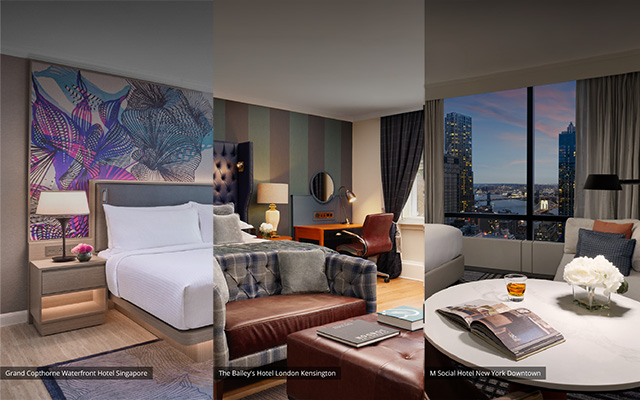
Millennium Hotels and Resorts (MHR) has launched a new Double Your Stay. Double Your Rewards campaign, offering MyMillennium members bonus loyalty points when they book direct and stay longer at participating hotels.

Members who book through the MHR website will receive 15,000 bonus MyPoints for stays of two consecutive nights and 30,000 bonus MyPoints for stays of four consecutive nights or more.

MyMillennium members can earn up to 30,000 bonus MyPoints by booking direct and extending their stay at participating Millennium Hotels and Resorts

The campaign applies across participating MHR properties worldwide, including destinations such as New York, London, Paris and Singapore. MyPoints can be redeemed for complimentary stays, room upgrades, dining discounts and other member benefits.

The promotion will run across two booking windows. Reservations made between August 13 and 18, 2026, are valid for stays until March 31, 2027, while bookings made from November 23 to December 3, 2026, apply to stays until June 30, 2027.

Bonus MyPoints are valid for three months from the transaction date. Members can earn rewards on up to two qualifying stays per calendar month, with one member per room reservation eligible for bonus points.

MyMillennium membership is complimentary and available through the MHR website.

For more information, visit Millennium Hotels and Resorts.

Japan taps longevity tourism as wellness market grows

0

Longevity offerings are the latest addition to Japan’s health and wellness tourism, a market expected to grow from US$37.5 billion in 2025 to US$71.2 billion by 2034, according to market researchers Imarc Group.

Companies are launching or expanding products and services, encouraged by increasingly health-conscious travellers and greater promotion of the country as a destination that promotes well-being.

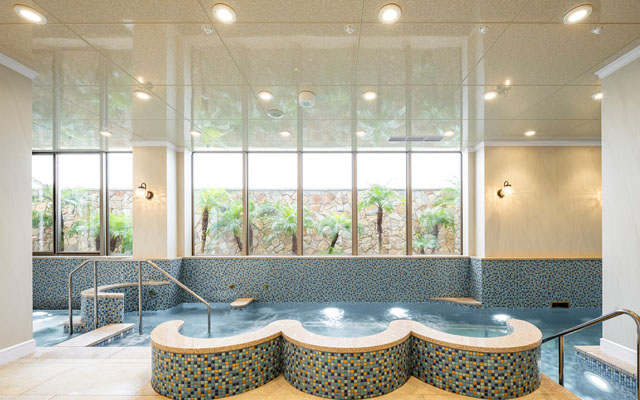
Japan is expanding its wellness tourism offering with a growing focus on longevity experiences, such as thalassotherapy, pictured

The Pasona Natureverse retreat, opened on Awaji Island, Hyogo Prefecture in June, offers a holistic regimen of nutrition, exercise and sleep, as well as personalised wellness programmes comprising thalassotherapy, yoga and zen meditation. The facility also boasts sensor-equipped beds, wellness facilitators and a medical support programme and on-site clinic developed in collaboration with Kobe University Hospital.

“As worldwide interest in health and well-being continues to grow, we expect increasing demand for such holistic wellness experiences,” a Pasona Group representative told TTG Asia. “The Pasona represents a new and uniquely Japanese approach to wellness, and a landmark for Awaji Island’s transformation into a haven of health and renewal.”

In Okinawa, a Blue Zone known for the exceptionally long lifespans of its residents, luxury resort Halekulani Okinawa will expand its longevity retreat in October to include curated, immersive experiences.

According to the property, the week-long package is designed to “help guests better understand how everyday environments and routines can support long-term well-being”.

Meanwhile, new market entrants include Saishunkan Pharmaceutical, which began a tourism division in April to bring its traditional Japanese medicine to travellers through partnerships with tour companies and hotels, including Hoshino Resorts.

“In the era of the 100-year life, what matters is not merely longevity, but the extension of healthy life expectancy,” said a Saishunkan spokesperson of the company’s move into tourism, adding that its aim is to create “new experiences that harmonise mind and body”.

Agoda, Taiwan Tourism Administration to promote destination across Asia

0

Agoda and the Taiwan Tourism Administration (TTA) have launched a destination marketing campaign to promote Taiwan to travellers in Singapore, Hong Kong, Japan and South Korea.

Running from July to December 2026, the campaign will use Agoda’s platform to target prospective travellers during the trip planning and booking process, with the aim of increasing awareness and consideration of Taiwan as a travel destination.

The new campaign aims to raise awareness of Taiwan’s diverse tourism experiences among travellers in key Asian source markets; Sun Moon Lake in Taiwan, pictured

The campaign will highlight Taiwan’s regions, festivals and hospitality offerings while supporting the destination’s tourism marketing objectives.

According to the partners, the initiative will also encourage more responsible tourism practices by helping travellers make informed decisions when planning their trips.

“This partnership with Agoda supports our mission to showcase Taiwan’s diverse regions, local festivals, and quality hospitality offerings to international travellers. Through this campaign, we hope more travellers will discover Taiwan and be inspired to visit and experience the beauty of Taiwan,” said Paul Shih, Singapore office director, Taiwan Tourism Administration.

GSTC introduces global sustainability standard for tourism F&B sector

0

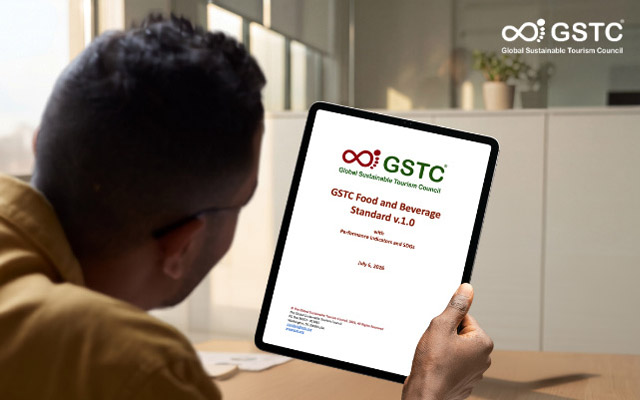
The Global Sustainable Tourism Council (GSTC) has published a new Food and Beverage Standard, providing tourism businesses with a global framework to improve sustainability across food and beverage operations.

The standard is the sixth in GSTC’s suite of sustainability standards, joining those for hotels, tour operators, destinations, MICE and attractions. It is intended to help food and beverage service providers adopt more sustainable practices in areas such as resource use, waste management, local sourcing, supply chains, cultural heritage and community well-being.

The GSTC has published a new Food and Beverage Standard to guide sustainable practices across tourism-related dining and hospitality operations

The GSTC Standards are used globally as a reference for sustainability in travel and tourism, supporting education, policy development, performance measurement and certification. They are structured around four pillars: sustainable management, socioeconomic impacts, cultural impacts and environmental impacts.

The new standard is designed to provide a common reference for businesses seeking to strengthen sustainability management, improve operational practices and support more consistent application of sustainability principles across tourism-related food and beverage services.

Development of the standard took 24 months, from June 2024 to June 2026, and included public consultations, a feasibility assessment and input from an advisory group representing public and private sector organisations. The Türkiye Tourism Promotion and Development Agency was a key contributor to the project.

GSTC said the standard also supports the United Nations Sustainable Development Goals by providing practical guidance for organisations seeking to improve environmental, social and economic sustainability.

GSTC CEO Randy Durband said: “The food and beverage service sector is everywhere in the tourism value chain, and the development of the GSTC Food and Beverage Standard marks another meaningful step in expanding the application of global sustainability standards across the tourism industry.

“This progress reflects the valuable collaboration and commitment of the many contributors involved and reinforces GSTC’s continued dedication to advancing sustainability throughout the sector, which now includes six sets of GSTC Standards.”

Travellers prioritise experiences despite rising costs: Klook

0

Travel demand across Asia-Pacific has remained resilient despite rising travel costs, with new research from Klook finding that 95% of travellers did not cancel or postpone a trip during the first half of 2026.

The survey of 1,020 travellers across 10 Asia-Pacific markets found that while higher travel costs and cost-of-living pressures influenced travel decisions, most respondents adjusted their spending rather than cutting back on trips or experiences.

Klook’s latest research found travel demand across Asia-Pacific remained resilient despite higher travel costs

According to the latest Klook Travel Pulse study, 64% cited travel costs, personal finances or broader cost-of-living pressures as the biggest factors shaping their travel outlook for the remainder of the year. Travellers were more likely to reduce spending on flights and accommodation (25%) or choose destinations closer to home (19%) than reduce spending on experiences (18%).

Klook found that travellers are also becoming more price conscious, with 47% actively seeking deals, discounts and bundled offers, while 42% are booking earlier to secure lower prices.

Experiences continue to play a growing role in travel planning. Nearly one-quarter of respondents said they now choose an activity before selecting a destination, reflecting a shift towards experience-led travel.

AI is also becoming part of the planning process, with 94% of respondents either using or open to using AI for travel planning. More than half (57%) have used AI to discover destinations or experiences, and 36% subsequently made a booking.

Despite increasing use of AI, travellers continue to rely most on verified reviews when making booking decisions – 58% cited reviews as their most trusted source of information, ahead of recommendations from friends and family (49%), content creators (35%) and AI suggestions (33%).

The research also highlighted growing interest in secondary destinations. 73% of respondents said they would visit a lesser-known city to attend a local event or festival, while 77% included a side trip to a lesser-known destination during their most recent holiday. For 34% , that detour became the highlight of their trip.

Based on Klook’s booking data, destinations showing strong demand for the remainder of 2026 include Beijing and Guangzhou in China; Penghu, Pingtung and Yilan County in Taiwan; Hanoi, Ho Chi Minh City and Danang in Vietnam; Busan, Sokcho and Jeonju in South Korea; and destinations in Italy, Switzerland and Germany.

Marcus Yong, vice president of global marketing at Klook, said: “Cost pressures across Asia-Pacific this year were real, but they have not stopped people from travelling. Instead, travellers are making more considered choices around where they go and how they spend, while continuing to prioritise the experiences that give a trip its meaning.”