TTG Asia
Asia/Singapore Friday, 26th December 2025
Page 1616

David Cameron speaks at WTTC Global Summit

0

WTTC 17th Global Summit kicked off in Bangkok yesterday, making the Thai capital the first country in South-east Asia to host the event. Following opening speeches by WTTC chairman Gerald Lawless and UNWTO secretary-general Taleb Rifai, WTTC president & CEO David Scowsill called for a more sustainable world in his opening speech, titled ‘Is It Too Much To Ask?’, followed by former UK prime minister David Cameron’s (pictured) keynote address on ‘Altered States – Has Globalisation Had Its Day?’

The two-day summit is hosted by the Ministry of Tourism and Sports and the Tourism Authority of Thailand. Over 900 leading figures and senior executives from the both the private and public sectors across the world’s travel industry are joining in the event. The summit continues today.

Myanmar’s beach destinations to watch

0

Myanmar’s four key beach destinations – Ngapali, Kawthaung, Ngwe Saung and Chaungtha – are emerging as up-and-coming tropical getaway spots in Asia, each with its own distinct characteristics.

According to C9 Hotelworks’ new Ngapali Beach Tourism Market Review, the impact of more airlift to Ngapali’s main gateway of Thandwe last year pushed growth up 28 per cent, leading to a total of 71,603 passengers arriving in Ngapali via domestic flights from Yangon, Bagan, Mandalay, Heho and Sittwe. Germany, the UK, France, Switzerland and Italy were the top five international source markets.

Ngapali beach

With Thandwe Hotel Zone recording a 31 per cent increase in visitors to 72,353 in 2016, the local government now plans to extend the zone and is “in advanced discussions to add direct international flights”, according to C9 Hotelworks’ Ngapali Tourism Market Review.

Sixty nine per cent of hotel demand in Ngapali comes from overseas travellers, but domestic tourism is rising fast. C9’s managing director, Bill Barnett, said: “Local travellers in tourist accommodations grew 79 per cent compared to 11 per cent by foreigners for the same period.”

With new demand, hotel occupancy levels on an annualised basis now exceed 60 per cent. Average room rates in upscale accommodation ranges from US$150-200. One key addition to the market has been the arrival of the Hilton brand.

Crowding in the Thandwe Hotel Zone has prompted the government to work on expanding the zone south by seven kilometres. The extension will be developed in two phases and add roadways, electricity and other public service to the area.

And due to limited land with beach access, new hotel establishments are now moving inland and south of Ngapali. Overall, there are only 26 hotel establishments in Ngapali hosting a total of 878 keys; 516 keys are currently under development.

With high room rate and mounting demand, C9 foresees Myanmar’s big four beach destinations (Ngapali, Kawthaung, Ngwe Saung and Chaungtha) would attract a significant amount of attention from both domestic and international hospitality players.

Kawthaung is rapidly evolving as a tourism hub for the Mergui Archipelago and the connection to the nearby Thai market of Greater Phuket via Phang Nga and Ranong has many synergies.

Ngwe Saung and Chaungtha, given their driving access from Yangon, clearly are more attractive to surging domestic numbers and more volume driven products.


MITA nudges Malaysian agents towards Chinese market

0

Malaysian Inbound Tourism Association (MITA) is encouraging more inbound agents to cater to the China market to ensure there are enough suppliers to support the expected influx of Chinese tourists this year, according to the association’s president Uzaidi Udanis.

“By getting new agents involved, we believe Malaysia can create niche itineraries and promote new destinations to encourage more repeat visitors,” Uzaidi said.


Uzaidi: working with Tourism Malaysia on B2B networking sessions in China

He added: “We are also trying to attract agents with non-Chinese speaking staff to enter this market as many Chinese travel agents these days are able to communicate in English. Mandarin is no longer an essential requirement.”

For a start, MITA is collaborating with Tourism Malaysia to organise a B2B networking session in Xiamen from May 22 to 25, following the Malaysian government’s announcement to open a new visa centre in the city to improve tourism numbers to one million from the Fujian province itself.

There are also plans to hold similar B2B networking sessions in other Chinese cities in 2H2017.

Uzaidi said: “MITA hope to keep costs below RM5,000 (US$1,138) per participant and this will cover airfare, ground arrangements and the B2B session. By keeping costs low, we hope to encourage new and small inbound agents to participate.

“We understand many are unable to promote at overseas travel trade events where a table at the Malaysia pavilion will cost anything between RM6,000 to RM20,000, (excluding) airfare and ground arrangements.”

Global travel defies numerous crises

0

Passengers from Europe, the Americas and the Far East are making more bookings and taking more flights despite recent terrorist attacks and ongoing geo-political wrangles, according to ForwardKeys.

The company revealed that Thailand is benefiting from the BRIC boom, which is helping to fill a gap left by a reduction in Chinese visitors after the Thai government discouraged cheaper tour groups from China since September 2016.

On the recovery of BRIC countries, ForwardKeys found that Brazil has been on the up since the end of its political crisis in 2016, and Russia had its first positive monthly performance, in December 2016, since its annexation of Crimea in March 2014. Both countries’ currencies are recovering in value – indicating more travel to come.

Forward bookings show that four out of five of the top rising destinations for Brazilians are in Europe; Indian travellers prefer Asia-Pacific; and Russians like Georgia, Czech Republic, the UAE and Italy.

Meanwhile, forward bookings to the US have picked up after the uncertainty that president Donald Trump’s travel ban introduced, mainly due to the Easter holiday shift.

Longhaul arrivals in Western Europe are starting to surge again, ForwardKeys said, reaching visitor numbers higher than those seen before the Paris attacks in November 2015.

China, the Netherlands, the UK, and Germany are fuelling the increase in forward bookings to Canada and Mexico, which are setting the pace for longhaul arrivals in North America.

ForwardKeys added that “China’s power to make or break a destination is demonstrated by the recent trend in visitor numbers to South Korea”. International arrivals in South Korea (for stays of four to eight nights) fell 10 per cent in 1Q2017 due to cancellations by Chinese tour groups in March, while forward bookings for the same category are currently lagging 28 per cent.

ASEAN countries are the most likely to benefit from South Korea’s visitor crisis as they have the increased capacity for visitors from China, the company stated.

The findings will be presented at the World Travel and Tourism Council’s Global Summit taking place in Bangkok today and tomorrow.

Pacific World joins hands with Singapore-based Aonia

0

Pacific World and Singapore-based boutique agency Aonia have entered a strategic alliance to enrich their offerings and cater to a global clientele.

“Bringing together (our) strengths will enable us to offer a holistic solution to clients across the Asia region,” said Selina Chavry, Pacific World’s global managing director.

“From event design and production to on-the-ground logistics and meeting execution to measuring ROI, no matter which country they choose to host their event, we’ll be able to accommodate our clients in a more distinct and impactful way.”

Commenting on the partnership, Daniel Chua, Aonia’s chief executive, said: “Together, we can now offer customised boutique service along with the power and presence of a worldwide destination and event management company with local staffing in more than 40 countries and 100 destinations around the globe.”

Sails unfurled for aqua luna II on HK Harbour

0

A new traditional Chinese wooden junk boat, aqua luna II, has joined the aqua luna family to offer harbour cruises of Hong Kong’s iconic skyline.

Commissioned by Aqua Restaurant Group, aqua luna II is the younger but larger brother to the iconic red-sailed junk aqua luna, which was launched over a decade ago by founder David Yeo.


aqua luna II

Measuring 29m in length and holding up to 80 guests on its two decks, aqua luna II boasts sails that feature an ornate blue-and-white dragon of the Ming Dynasty, often seen on antique Chinese porcelain.

In Chinese, aqua luna and aqua luna II are named after Hong Kong pirate Cheung Po Tsai, who sailed Hong Kong waters over 100 years ago and is said to have stored his stolen treasures in the caves of Cheung Chau. Aqua luna is Cheung Po Tsai and aqua luna II is Dai Cheung Po (big brother of Cheung Po) – indicating its greater size.

The aqua luna fleet, with its two traditional Chinese junk boats, offers 45-minute evening harbour cruises while in the day guests can explore locations around the harbour on the aqua luna’s hop-on/hop-off Harbour Discovery Tour.

From May 1, longer daytime cruises are available to a wider list of destinations including Stanley, Cheung Chau and Lamma Island for its nature trail.

A new offering is the Dim Sum Cruises, which allows guests to enjoy signature dishes prepared by Dim Sum Library, Aqua Restaurant Group’s dim sum and modern Chinese restaurant.

To celebrate the launch of aqua luna II complimentary rides will take place on May 13 and 14 for all Hong Kong ID holders (from 12.00 – 17.30). From now until May 31, all the restaurants in Aqua Restaurant Group will be randomly serving dishes and cocktails in Ming Dynasty plates and cups. Anyone lucky enough to be served the Ming Dynasty ceramic will get complimentary tickets for the new aqua luna II.

Rove launches Vietnam adventure tours

0

Specialist adventure tour operator Rove has now expanded into Vietnam, bringing its countries of operation up to a total of eight, in addition to Thailand, Sri Lanka, Mongolia, Indonesia, Cambodia, Myanmar and Laos.

The new tours explore the remote reaches of northern Vietnam, and include activities such as trekking, cycling and kayaking. Designed with both casual and enthusiast adventurers in mind, the trips are conceived to ensure that travellers are given the opportunity to engage with the local communities and experience the spirit of the country, the travel startup stated in a release.

Rove was established by co-founders Holly Richter, formerly of Backroads and Exo Travel, and Struan Robertson, formerly of SpiceRoads, last year.

What happens to tourism coalition when Scowsill, Rifai leave?

0

World Travel & Tourism Council (WTTC) president & CEO of six years, David Scowsill, is leaving this June after six years at the helm of the organisation. With Taleb Rifai, secretary-general of UNWTO, also ending his term this year, it is uncertain if the Global Travel Association Coalition which they founded will be able to remain as cohesive.

The other partners of the coalition are Airports Council International, Cruise Lines International Association, IATA, PATA and the World Economic Forum.

The coalition has been effective in representing the industry to governments with ‘one voice’ on the key issues such as travel facilitation, terrorism, infrastructure development and environmental sustainability.

A 15:40 session this afternoon, Partnerships for transformation – the power of working together, featuring Scowsill and Rifai, should set some light.

Scowsill worked particularly well with Rafai. Among the highlights of his time, the public/private partnership with UNWTO has produced 84 meetings with presidents and prime ministers, where messages about the importance of the sector have been directed to these key leaders.

A press statement said during his tenure as the third president in the 26-year history of WTTC, Scowsill had taken the organisation to new heights, championing the private sector views in high-level governmental discussions and promoting the sustainable growth of travel & tourism.

“It has been a privilege to lead WTTC, representing the global interests of the private sector of travel & tourism, through advocacy with governments around the world. The membership of the organisation has doubled in the last period, but more significant has been the work with governments at all levels on the key strategic issues for the sector,” said Scowsill.

“By making this announcement now, the Executive Committee has time to identify a successor and to work through a smooth transition in leadership. Working with a very talented team, we have consolidated the position of WTTC as the authority in the sector, whether through research, advocacy, or the impact of the global summits. I now look forward to focusing on new opportunities, knowing that I am leaving WTTC in great shape.”

North America, Europe higher up on APAC travellers’ radar: Sojern

0

Travellers from Asia-Pacific are venturing to North American and European destinations in 2Q2017 compared to local and regional ones in 1Q2017, bucking the global trend of fewer travellers planning to visit major US cities this spring, revealed performance marketing engine Sojern in its Q2 Global Travel Insights report.

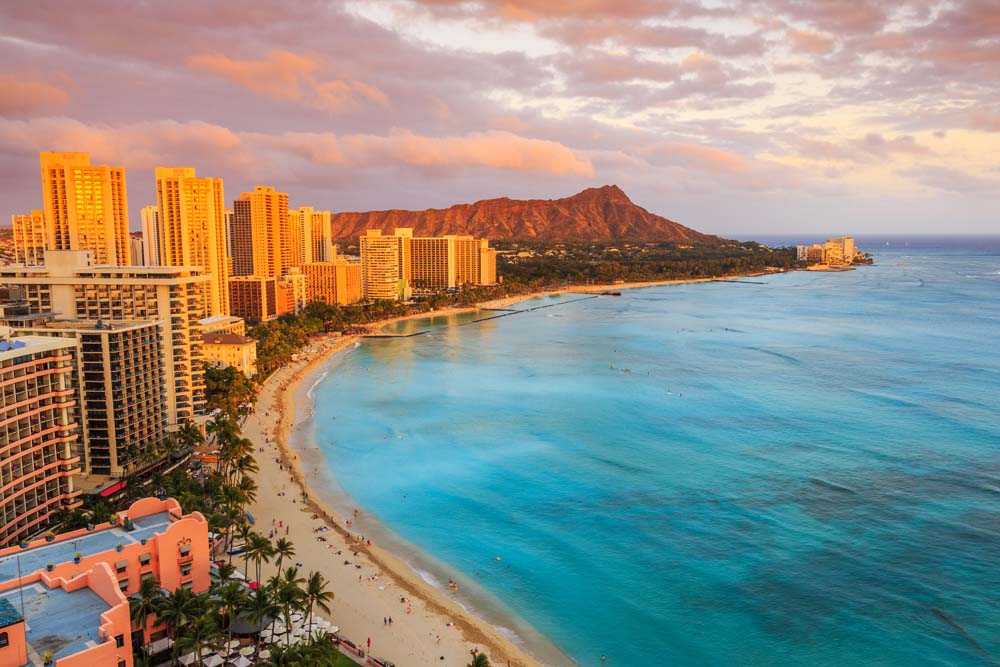
Singapore and Sydney moved out of the top five most searched beach destinations while Honolulu and Phuket entered the ranking, which according to Sojern demonstrates that early planners are open to new destinations as long as these offer the activity or sight they are looking for.


Waikiki beach, Honolulu

Retaining their placing in the top five are Barcelona, Denpasar and Melbourne.

Comparing the top metropolitan destinations, the company saw Seoul and Taipei drop out of the top five, replaced by Bangkok and Paris. Tokyo, Singapore and London are the other three in the top five.

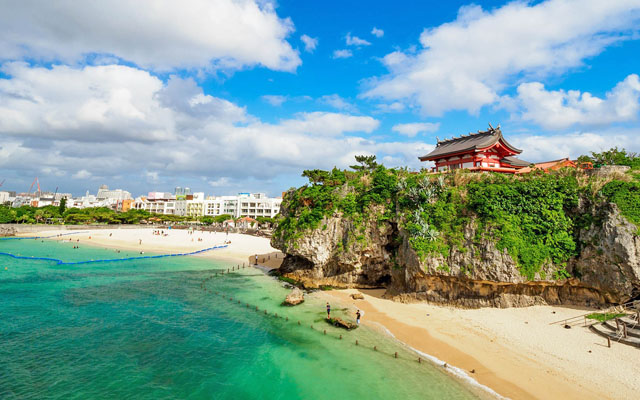
Sojern further observes that Auckland, Nagoya and Bangkok were edged out from the sightseeing/recreational top five by Okinawa, Rome and Melbourne.

Meanwhile, the company said that with June 23 topping the list of departure dates, “it is clear that Asia-Pacific travellers are looking to take a long weekend to celebrate” the end of Ramadan.

“Asian travel marketers know now that travellers are trying to decide just how long a long weekend they will take – with both the Thursday and Friday before Eid al-Fitr on the top departure dates list,” read a Sojern statement.

“This presents a prime opportunity to engage new customers and Sojern recommends targeting them with a combination of upper-funnel brand messaging to introduce them to your brand and mid-funnel engagement campaigns to nurture them through the funnel.”

World’s busiest airports revealed: ACI

0

The Airports Council International (ACI) has revealed its study of the world’s busiest airports in 2016, with Atlanta-Hartsfield-Jackson (ATL) retaining its top spot with over 104 million passengers and 2.6 per cent growth from 2015.

Beijing Capital International Airport, despite pundit expectations that it would reign supreme by 2015, held onto the second spot. Having grown five per cent to over 94 million passengers in 2016, China’s busiest airport saw subdued growth in previous years as it faced continuing capacity constraints.

In third position again is Dubai, with total passenger traffic growing 7.2 per cent in 2016. As a major connection point for longhaul international flights, the airport is also the world’s busiest in terms of international passengers ahead of London-Heathrow (seventh position).

Asian airlines continued to make inroads in the North American market on key international and trans-Pacific segments across airport pairs, particularly between North America and China. A major Chinese airports serving the trans-Pacific and other international routes is Shanghai Pudong International Airport (PVG), which moved up to ninth spot after growing 9.8 per cent in 2016 to over 66 million passengers.

The Chinese hub also serves the catchment area of Shanghai, one of the most populous city markets in the world and a major centre for trade and business. PVG, which represents over 60 per cent of Shanghai’s passenger traffic in 2016, and Hongqiao, the city’s sister airport, surpassed the 100 million passenger mark in combined passenger traffic.

Other fast-rising hubs is Seoul’s Incheon International Airport, now in 19th place, which experienced 17.1 per cent year-over-year increase in passenger traffic. Even after factoring in the effect of the outbreak of the Middle East respiratory syndrome, which depressed passenger figures during the summer of 2015, Incheon would still have achieved an estimated growth rate of at least 10 per cent.

The continued growth of LCCs on key segments and the start of A380 flight operations of longhaul routes have paved the way for traffic expansions, while another key contributor relates to the consolidating demand of Korean and Japanese international routes. Tokyo Haneda, the world’s fifth busiest airport and Japan’s largest, grew 5.5 per cent in total passenger traffic for 2016.