TTG Asia
Asia/Singapore Friday, 26th December 2025
Page 1615

Globalisation hasn’t had its day, says David Cameron

0

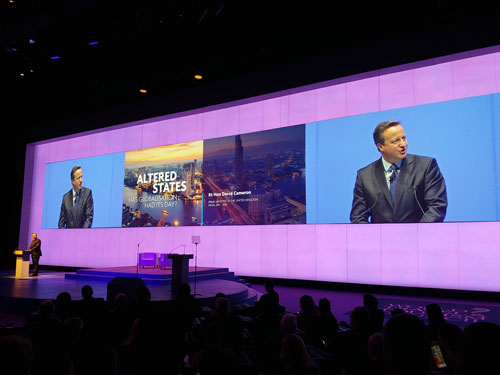
Cameron speaking during WTTC Global Summit’s keynote address Globalisation hasn’t had its day despite a year of complete, unexpected transformation that saw Britain vote for Brexit, Americans for Trump, but there are a few decisions to get right to stop its decline in its track, says former UK Prime Minister David Cameron who keynoted this year’s WTTC Summit which ended yesterday.

The world leader offered his perspective on three major corrections, the first to understand and address the current unease about globalisation.

Cameron speaking during WTTC Global Summit’s keynote address

“Do I think Brexit and Trump are proof that globalisation is irredeemably failed and will go into the reverse? No. The benefits of globalisation – the freedom to trade, to invest across borders, to share technological advances, to travel – these benefits are still plain to see,” he see.

But the economic effect of globalisation has left some people behind. “The rising tide has not lifted all boats, so we have to accept we can’t go on with people working harder and harder but finding the middle class lifestyle they aspire to is further and further away. And we can’t go on with companies trading across the world making vast profits but not paying proper taxes.

“We have to realise that this anti global sentiment isn’t just about the economy, but cultural issues too. In a lot of countries, mine included, the pace of immigration has been too fast, and people have felt a lack of control over that change. They are not being unreasonable.”

Added Cameron: “So two things to achieve here: to continue to enable people to trade, travel, experience new places and enjoy the world and, second, to ensure people are not able to go where they are not allowed to or stay somewhere long after they have meant to have gone home. So it does mean proper border control but, even more important, better technology when it comes to borders and enforcement, ie, clicks as well as bricks. Building walls not going to work. It’s vital to you we get this right.

“I understand that cheaper, more accessible visas, as well as visa-free travel where possible helps tourism. i recognise that and I took steps to help streamline the process as prime minister. But your industry has to understand the vast pressure governments are under to deal with illegal immigration and the rest of it. In a world transformed, one of the biggest issues is how to deal with the new attitudes towards free economies and movements. And the smartest thing we can do is to make sure businesses and governments, particularly your businesses, work together to preserve the benefits of globalisation. Take one example, why aren’t more countries using biometric data, and crucially, why aren’t more countries accepting each other’s biometric data when it comes overstaying? This is something governments should do and your industry can help (lobby).”

The second thing to get right is values – rule of law, open and free markets that have opened the world to travel, trade and tourism, he said.

“But today there’s a new argument some are making that I don’t think we should ignore, that you can somehow combine all the advantages of calling yourself a democracy, while having autocratic rulers that claim to be better at getting things done. We know (their) science – get rid of the independent institutions, of checks and balances, blame others for your country’s problems, use foreign policy not as a way to advance your country’s interest but as a way of satisfying your electorate, spin current issues as justification for shutting out the world. I don’t believe for a minute these systems will achieve longterm success…Corruption, cronyism, the lack of a genuine rule of law; these things aren’t just bad for human rights, they lead to bad governments. They are bad for business,” he said.

The third, which he described as “the biggest threat to our world and your industry” is the threat of extremism.

“The effect on tourism can be absolutely devastating. We must be clear this isn’t a byproduct of terrorists, it’s what they want to achieve, to plunge us into a sort of medieval world and oppression, to shut down travel and tourism. Of course defeating this extremism will include robust actions, sometimes military, but more than that it requires clear thought and understanding. It’s an area beset by wooly and weak thinking by both left and right. That Islamist terror is predominantly caused by poverty? No, many of them have come from comfortable middle class background. That it’s driven by reaction to Western policy? No, 9/11 happened before the invasion of Iraq and since when is foreign policy justification for murder? That only if we left them alone the terrorism will end? No, terror has claimed the lives of people from almost every country – east, west, north and south, ally and enemy.”

He added: “Some argue we shouldn’t emphasise the connection between the terrorism and the Islamism, as if the fact that all of the terrorists self identified as Islamists and quote verses of scripture before committing horrific acts is somehow irrelevant. Now of course Islam is a religion of peace, practised peacefully by over a billion people across our globe but Islamism in its extreme form is being used as a justification for slaughter. The fact is, we have to recognise what is really happening here. These terrorists and their apologists are trying to hijack a great religion and twist and pervert it for their own ends. We must not play into their hands.

“That to me is the biggest problem with president Trump’s travel ban. It would and could be seen as labelling whole countries as extreme and dangerous because they were predominantly Islamic. It’s not a clash between civilisations that we face; that’s what the extremists want us to think. This is if you like a war within Islam. Our job is to take the side of the moderates and defeat the extremists, not to combine them into one block. And we all must play our part in defeating it.

“So my plea to you and your industry is to work with the politicians to confound this scourge. Your industry has a huge amount to lose if we get this wrong and a lot to gain if we get this right.”

In the pink of health

0

The improving medical infrastructure across Asia has seen new destinations of choice emerge for tourists seeking treatments. Meanwhile, more hospitality players are entering into medical tourism to provide a holistic wellness experience. By Barathi Narayan, S Puvaneswary, Rohit Kaul and Xinyi Liang-Pholsena

A recent report by Visa and Oxford Economics projects medical tourism to grow 25 per cent annually in the next decade and the industry is estimated to reach US$3 trillion by 2025. In Asia, Thailand, Singapore and South Korea are expected to benefit from the growth in global medical tourism spending.
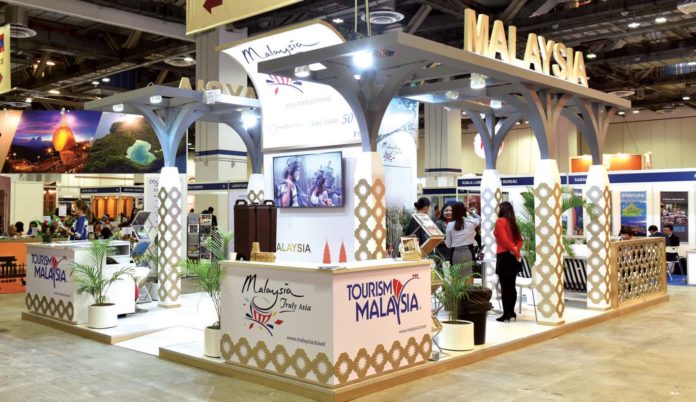
And as medical tourism becomes an industry hotspot for Asia, regional governments are pledging more efforts to drive this high-yield niche market.

The Thai government recently tripled the period medical tourists can stay in Thailand to 90 days, according to the Oxford Business Group, allowing them to undergo more extensive procedures and potentially combine treatment with leisure travel.

In India, the government formed a National Medical and Wellness Tourism Board in 2015 to address the challenges facing the segment and has expanded the e-tourist visa facility to include short-term medical treatments for 150 countries.

Malaysia: healthy demand from ASEAN
The outlook for medical tourism is also bright for Malaysia. The sector has grown from 643,000 medical tourists and a revenue of RM527 million (US$118.4 million) in 2011 to 860,000 medical tourists in 2015 and a revenue RM914 million.

The regional market is playing an increasing role in Malaysia’s medical tourism sector. Sherene Azli, CEO at Malaysian Healthcare Travel Council, said the bulk of travellers are from Indonesia, which contributes approximately 60 per cent of medical tourists to the country, while other major markets are Bangladesh, the Middle East, ASEAN nations and Australia.

She added: “Malaysia is known for its quality and affordable medical services. The types of procedures sought after chiefly depend on the profiles of the patients, but the top fields in demand are general health screening, orthopaedics, cardiology, in-vitro fertilisation, neurology and aesthetics (dental and cosmetic surgery). Malaysia also caters to a high number of international patients in urology, oncology and gastroenterology.”

For Dayangti Transport & Tours’ operations manager S Jayakumar, medical tourists to Malaysia represent a high-yield crowd that is willing to spend not just on medical procedures but also tourism products.

“Many will come with their family members, especially the elderly, to seek medical attention for chronic treatments.  If the treatment requires surgery, the caregivers will likely stay at a serviced residence near the hospital as it provides cooking facilities. They will also require a private vehicle and driver to take them to the hospital and back, on top of visiting attractions in the area,” he said.

Singapore’s hub status shaken
Promoting Singapore as an affordable destination for foreign medical tourists is becoming an uphill struggle, trade players in the city pointed out, particularly as regional rivals make marked improvements in their quality of healthcare services and pursuit of medical tourists backed by government marketing.

Said Tan Chien-Wei, director of Ulink Assist, a medical concierge provider in Singapore: “As we attend medical tourism exhibitions in the region, we are envious of how the medical tourism associations in Thailand and Malaysia, backed by their governments, are so proactive in courting Chinese patients. The Singapore government needs to contribute, even if it’s just a little.”

Tan further noted that intra-country medical travel is becoming popular especially in Indonesia, with many well-heeled medical tourists who once favoured Singapore now travelling to Jakarta for their treatments.

Both Tan and Melivon Martheo, business development manager of Anaya Tour and Travel, observed an increasing trend of medical tourists either being diagnosed or seeking a second opinion from health specialists in Singapore, but getting the suggested treatments elsewhere at lower costs.

Indicating the trend, Ulink’s outpatient numbers grew 15 per cent in 2016 whereas inpatient numbers fell by the same amount, shared Tan.

For India, affordability a shot in the arm
India is another destination that’s on the radar for its affordability. Arun Anand, managing director, Midtown Travels India, observed that Chennai is “hugely popular” among international medical tourists, with hospitals in the city offering procedures like cardiac bypass, bone marrow transplant and eye surgery at “very competitive prices”.

“In fact, medical procedures like stem cell transplant in India are said to be 65-90 per cent cheaper compared to markets like the US,” he noted.

Cities like Gurgaon in Delhi NCR region are known for medical procedures among international visitors especially from SAARC and Africa, added Ravi Gosain, managing director, Erco Travels, while those from CIS and Gulf countries, Europe and North America are also streaming into India for medical services.

Arun added: “Medical tourism offers huge opportunities to tour operators as recovery time of a patient after a medical procedure can be utilised in exploring the destination. The government’s interest to grow this segment should benefit all the stakeholders.”

Rajeev Kale, president and country head leisure travel and MICE at Thomas Cook (India), said: “India is indeed coming of age, not just as a potential medical tourism destination, but equally for alternative remedies like Ayurveda, Unani, yoga and meditation – through specific wellness programmes – in combination with conventional domestic vacations.”

While this segment was predominantly seen as an inbound driver, the domestic market is seeing a significant demand as well, he added.
Other traditional medical treatments like Unani and Naturopathy are also giving the country an edge over medical tourism destinations in Asia, according to some tour operators in the country.

Erco Travel’s Ravi added: “We are targeting mostly Europe and North America for customers who are looking for cosmetic surgeries and wellness treatments. At this moment this is not a huge market for India but it is growing.”

Resorts, hospitals partner up
Given the fast growth of wellness tourism in Asia, there has been a marked trend of integrating medical expertise with wellness and hospitality offerings.

Singapore last year gained its first integrated healthcare and hospitality complex, Connexion, encompassing the 250-key One Farrer Hotel & Spa, lifestyle retail strip Owen Link, Farrer Park Medical Centre providing specialist clinics and Farrer Park Hospital, the country’s newest private hospital.

The city’s leading private property developer Far East Organization (FEO) has also branched into providing holistic healthcare with its Novena Lifestyle and Medical Hub, two integrated developments comprising Novena Medical Center and Novena Specialist Center.

“The healthcare experience is further supported by Square 2 mall which provides retail therapy and essential services such as banks and supermarket while Oasia Hotel Novena offers restful convalescence to medical tourists,” shared Cheryl Huan, COO, corporate real estate business group, FEO.

Singapore is taking the holistic healthcare model a step further with ambitious plans to shape Novena into the nation’s largest medical hub by 2030. Health City Novena will bolster the existing medical cluster in Novena including Tan Tock Seng Hospital, Mount Elizabeth Novena Hospital, NMC and NSC.

Elsewhere in Asia, Indian conglomerate ITC, which operates luxury hotel chains like ITC Grand Bharat Gurgaon, will foray into the healthcare sector and take on players such as Apollo Hospitals, Fortis and Max Healthcare.

The company, in its notice to shareholders, highlighted that its experience in the hospitality sector can be utilised to grow medical tourism in the country. Besides multi-speciality hospitals, it plans to set up nursing homes, medical and healthcare centres, specialist clinics, medical and nursing colleges, and medical research centres.

Asian resorts are seeing good therapy in linking up with hospitals to provide medical packages, enabling travellers to receive holistic treatments while on holidays.

In Thailand, Amatara Wellness Resort recently signed an MoU with Bangkok Phuket Hospital to develop an integrative wellness programme. Among the packages offered is the Brain Health Enhancement Programme, which starts with brain function assessment and sleep test at the hospital, before customers continue with an intervention wellness programme focused on improving brain health at the resort.

“We foresee high potential growth in wellness market. GWI (Global Wellness Institute) reported that wellness travel has grown 74 per cent more than regular global travel,” said Prattana Punnakitikashem, director, Amatara A Destination Spa.

Europe make up the foremost market for wellness tourists at Amatara Wellness Resort, while Australia and Asia are showing great potential, Prattana shared.

Also advocating a preventive health approach is Como Shambhala Urban Escape in Singapore, which recently launched holistic wellness packages designed to help clients recover from current sports injuries and to prevent future injuries, with expertise from sports coaching, yoga and acupuncture practitioners.

Participation overseas takes a beating

0
A weak ringgit, uncertain ROI are making the trade more wary of attending trade shows abroad.

Trade players in Malaysia are taking a more prudent approach to participation in overseas trade shows, weighed down by the ailing ringgit that has lost about 39 per cent against the US currency since 2014.

M Manimaran, senior director of sales & marketing of Saujana Hotels & Resorts in Shah Alam, said: “In 2014 and 2015, we exhibited at 10 travel trade shows. This year, we cut costs and chose to exhibit at six shows in Asia. Where possible, we will join Tourism Malaysia’s pavilion as that helps to reduce our costs.”

While Berjaya Hotels & Resorts group director, business development & marketing, Irene Chew, sees branding and marketing value in trade shows, the ROI is less apparent and as such, the group has reduced its participation to alternate years.

Chew added: “Prior to 2015, we used to have representatives from most of our properties. Now, we have reduced the sales personnel. Those who attend will represent all our properties in Asia. With the advancement of technology, we now place more emphasis on digital marketing.”

For Anthony Wong, group managing director, Asian Overland Services Tourism & Hospitality Group, one way the company cuts cost at trade shows is by sharing a booth with another Malaysian exhibitor.

Wong added: “Times are hard and there is a slowdown in some major markets, but we believe marketing must never slow down during hard times.”

In such lean times, Tourism Malaysia tries to lend a hand to the trade by allowing inbound players to use its creatives free-of-charge to reduce their cost of promotions.

Tourism Malaysia’s senior director, international promotion division, Asia/Africa, Musa Yusof, said: “We give them the soft copy and they can further customise it by adding their travel agency name and package price. We also allow the local trade to use our commercials and tailor them for different markets.”

Meanwhile, Malaysian Association of Tour & Travel Agents’ (MATTA) vice president for inbound and domestic, KL Tan, is keeping an eye on the budget for member agents participating in its roadshows in India and China this year, an initiative the association rolled out last year. MATTA will also organise roadshows to the South Asian cities of Dhaka, Kathmandu and Colombo in July.

Said Tan: “The roadshows are organised in a cost-effective manner. We travel on budget carriers where possible and the meetings take place in a budget hotel. MATTA also subsidises part of the cost.”

Counting the cost of lost longhaul links

0

SriLankan Airlines’ Europe pullout is a setback but other carriers have moved to fill the gap.

Sri Lankan Airlines’ move to cease direct flights to Rome in May 2016, followed by Paris and Frankfurt in November, have been met with mixed reactions from the trade, even as Sri Lanka no longer boasts direct connections to Europe apart from London.

For Mahen Kariyawasam, managing director, Andrew the Travel, the pullout from Sri Lanka’s key European markets is the biggest issue that the trade has been grappling with over the past months. “We have lost 5,000 seats on these sectors.”

However, while admitting that the discontinuation of these flights is affecting inbound tourism, Sasi Ganeshan, a travel agency CEO, said “the national carrier’s share of traffic from Europe was marginal compared to airlines like Emirates or Qatar Airways”.

According to official data, SriLankan Airlines’ traffic from Germany accounted for 21.9 per cent of the market in 2015/2016, compared with 72 per cent by the Middle Eastern carriers; likewise for the Rome and Paris routes.

Furthermore, arrivals for January to February 2017, part of the peak season, picked up 6.4 per cent year-on-year. For this period, arrivals from Germany were flat at 27,183, France up 0.4 per cent to 24,575 and Italy grew 0.9 per cent to 7,808.

Industry observers pointed out that KLM and Austrian Airlines’ resumption of direct services to Colombo in winter 2016 and 2015 respectively have partly cushioned the blow of SriLankan’s departure from Europe.

Still, Paddy Withana, chairman of state-owned Sri Lanka Tourism Promotion Bureau (SLTPB) expressed that German arrivals are likely to take a hit as tourists prefer quicker connections.

SLTPB managing director Sutheash Balasubramaniam said the European markets had stayed robust for Sri Lanka and they continued to patronise the country even during the years of instability (1983-2009), but acknowledged the need for SriLankan Airlines to restructure.

Losses have been unbearable for SriLankan Airlines which reported an accumulated loss of Rs12.1 billion (US$80 million) in 2015-16. The airline’s rental cost (it doesn’t own aircraft) rose 23.4 per cent to Rs20.1 billion in 2015/16.

Exacerbating the national carrier’s woes is the closure of the country’s main gateway, Bandaranaike International Airport, from 08.30 to 16.30 daily, effective January to April this year.

The national carrier is now placing greater focus on short- to medium-haul routes with planned increases of flights to Delhi, Mumbai, Kuala Lumpur and Bangkok, as it started taking delivery of its six Airbus A320neo order in February this year.

Booking engine for business travellers now live

0

A new membership-based booking engine, BudgetBusinessTravel.com, was launched on April 27, hoping to “fill a gap in the world of OTAs” by catering to independent business travellers.

“Today close to 55 per cent of travellers book their trips online and this number has been growing around 12 per cent per annum in recent years. Independent business travellers (form) a large part but are often overlooked by the travel industry,” said Steve Harrop, founder of the company.

Apart from allowing business travellers to book their own trips, what sets BudgetBusinessTravel apart from other OTAs is the option for customers to request assistance from their personal account manager around the clock.

This will make it easier for business travellers to update their itineraries and change bookings quickly and without having to pay processing fees.


Harrop: addressing needs of independent business travellers

BudgetBusinessTravel also offers a seven-level rewards programme. Members can move up the levels and unlock additional concierge-like services and discounts by booking more trips on the website or through referrals.

Loyalty programme members would not lose their status after certain periods of inactivity and are guaranteed lifetime access to benefits.

Indian luxe market on ascent in Philippines

0

For a market that has traditionally been dominated by group tours, India is starting to show signs of maturing with more luxury travellers opting for the Philippines.

The “influx of luxury travel now especially to Cebu, Palawan and Boracay for short holidays and honeymooners” are being driven by discoveries of lovely locations and experiences in the Philippines, according to Arjun Shroff, managing director, Shroff International Travel Care Philippines.


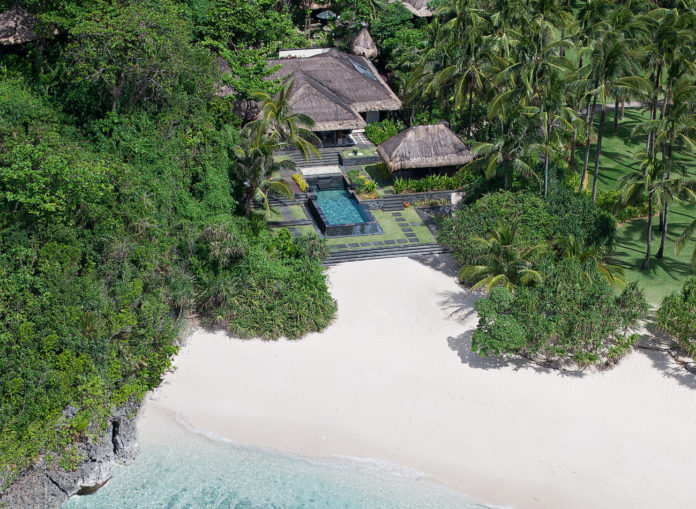
Beach villa at Shangri-La’s Boracay Resort & Spa

These travellers, Shroff said, are not only from major source markets like Delhi and Mumbai but also from secondary and tertiary cities like Hyderabad and Ahmedabad where there are affluent societies.

Indian luxury travellers are mainly made up of families, a smattering of FITs and honeymooners, he noted.

Validating the uptrend, Rajah Travel Corp’s senior sales executive Jaret Salac said that their Luxe Collection products are “doing well”, especially packages whose components include stay at The Farm at San Benito, an upscale wellness centre in Batangas; Shangri-La’s Boracay Resort & Spa, which is the toniest in the island; and the exclusive El Nido Resorts in Palawan.

The typical Indian luxury travellers fly Singapore Airlines to the Philippines (due to an absence of direct flights from India), stay in Makati hotels in Manila, and go further afield to destinations like Boracay, Kawasan Falls or Oslob for whaleshark interaction, Salac said.

Weddings and honeymoons are another segment that Philippine suppliers are keeping their eyes peeled for Indian luxury travellers, although honeymooners is still a bigger market than destination weddings, which is still considered a “very niche” by travel consultants.

Nevertheless, Shangri-La’s Mactan Resort & Spa is one of the few resorts that have successfully tapped the Indian weddings and honeymoons market.

Indian weddings are large-scale events requiring a varied selection of venues, the availability of Indian cuisine and Indian chefs, as well as an experienced team familiar with the nuances of Indian culture and traditions, explained Shangri-La’s Mactan Resort & Spa director of sales and marketing, Albert Lafuente.

Sri Lanka TPB still saddled with debt

0

Sri Lanka Tourism Promotion Bureau (SLTPB) still has millions of rupees owed to companies from transactions made under the 2010-2015 (up to January) administration, the payment of which had been delayed due to audits, said tourism ministry secretary Janaka Sugathadasa.

The inability to quickly pay off these debts will delay a campaign announced for launch in May.

Janaka, at a media briefing last week to announce hosting the annual PATA Conference in Sri Lanka next month, told reporters that the government owes US$500,000 to three TV stations – Al Jazeera, Bloomberg and Sky News – for a media campaign that ran from September 2014 to March 2015.

Some US$200,000 was paid under the previous administration, but the remaining debt lingered while an audit was carried out by the Tourism Ministry over these dues and other alleged irregularities up to 2015.

SLTPB has another 600 million rupees (nearly US$4 million) in unsettled liabilities that came out of sponsorships and promotions undertaken during the previous regime. The tourism secretary said the debt will be settled and the amount was being verified.

Taiwan startup launches tour guide platform

0

Observing growing demand for private guides especially in the business travel sector, new Taiwanese travel startup Wogogo has launched a platform that allows travellers to search and match with local professional tourist guides.

The goal is to enhance travellers’ experience by pairing them with a local who provides stories on the destination, said Wogogo COO Muse Fang. This will allow travellers to not only discover sights but also get an experience of the local lifestyle and culture.

Safety and service quality are key focus areas, Fang said. On top of being required to have tourist guide licences and pass a criminal record check, Wogogo-certified guides also need to complete a course instructed by flight attendants to improve service.

Over the past months, the Taipei-based platform has been interviewed by more than 1,000 individuals and already selected more than 300 guides at key locations all over the world to join the group, according to Wogogo.

The channel offers three service models – tour guides without transportation; those who are also drivers; and those with chauffeur. Prices of the services range from US$19.95 to US$39.95 per hour.

Wogogo was launched in February 2017 and currently covers tours in Taiwan. It plans to expand its business to other countries including Japan and the US in the near future.

Maldives’ first Movenpick resort slated for 2018 launch

0

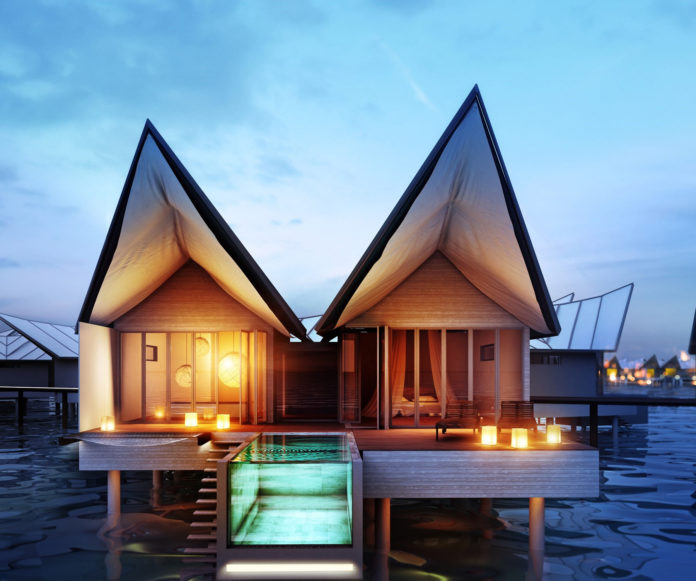
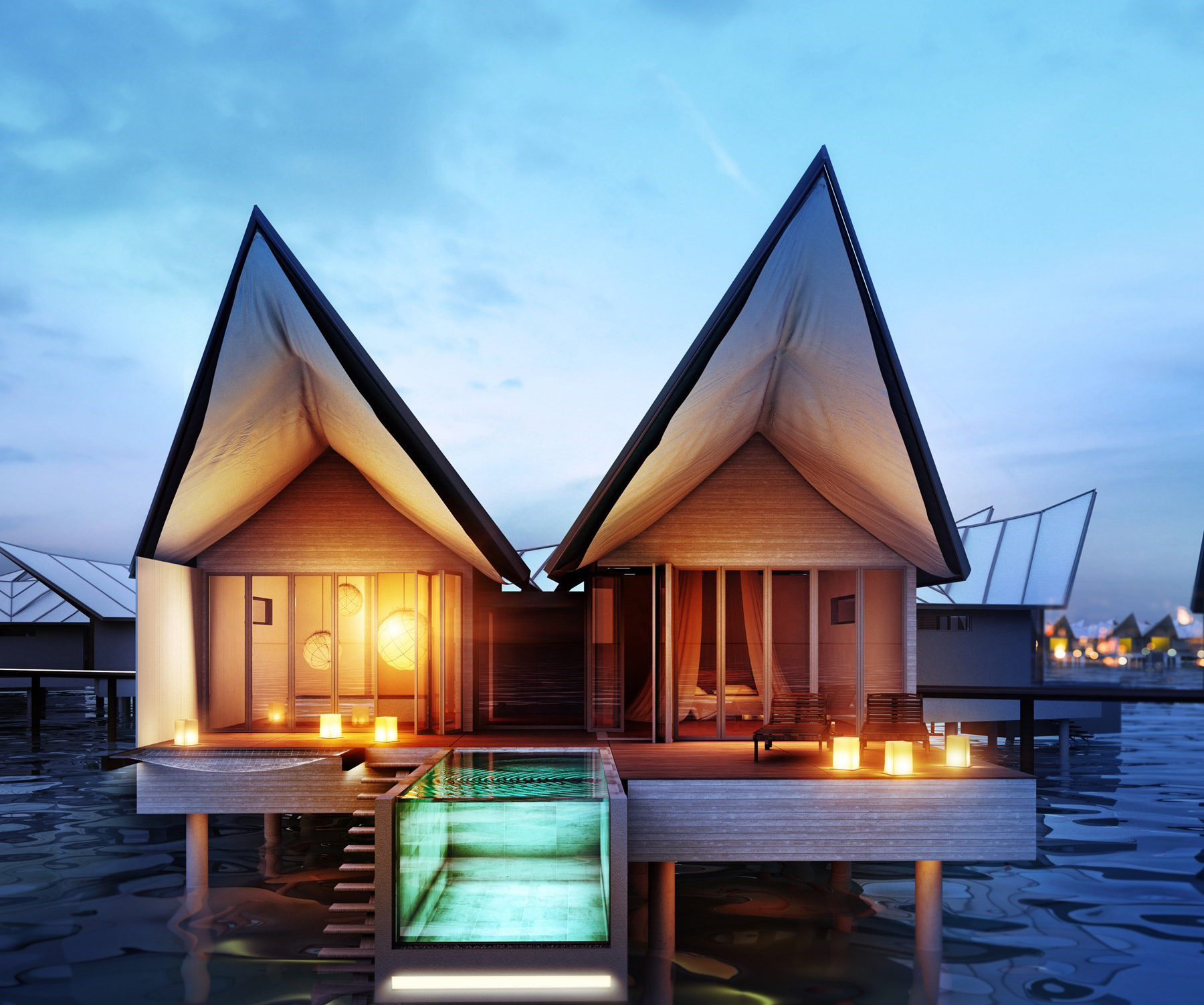
When the 105-unit Mӧvenpick Resort & Spa Kuredhivaru Maldives opens in 2Q2018, it will mark the first resort in the Maldives for Swiss hospitality company.

Situated on the remote Kuredhivaru Island in Noonu Atoll, in the exclusive northern part of the Maldives, the contemporary tropical resort will feature 33 beach villas and 72 over-water villas.

Resort facilities will include a luxurious spa with 14 private treatment rooms, a yoga pavilion, gym, volleyball and tennis courts, in addition to a business centre, library and retail boutique.

The resort will feature a comprehensive dive centre, beach sports activity centre, exclusive guest-only superyacht, as well as a small-scale marine research centre and private marina.

The first Marine National Park in the Maldives, which consists of a group of nine uninhabited islands commonly known as Edu Faru, is approximately 15 minutes from the resort via speedboat. The popular Christmas Tree Rock and Orimas Thila dive sites are also a boat ride away.

AirAsia connects Bangkok-Danang with daily flights

0

AirAsia will soon begin daily direct flights from Bangkok-Don Mueang to Danang from June 9.

FD636 will depart from Don Mueang at 10.10 and arrive in Danang at 11.30, while the return flight, FD637, will leave Danang at 12.00 and land in Don Mueang at 13.20.


Air Asia introducing Bangkok-Danang debut fare

The Danang route addition is another important step for the airline as it strengthens its CLMV network and makes AirAsia the first and only LCC to connect Bangkok with north, central and south Vietnam, the carrier said in a statement.