TTG Asia
Asia/Singapore Friday, 26th December 2025
Page 1617

Thai Airways takes delivery of third Airbus A350 XWB

0

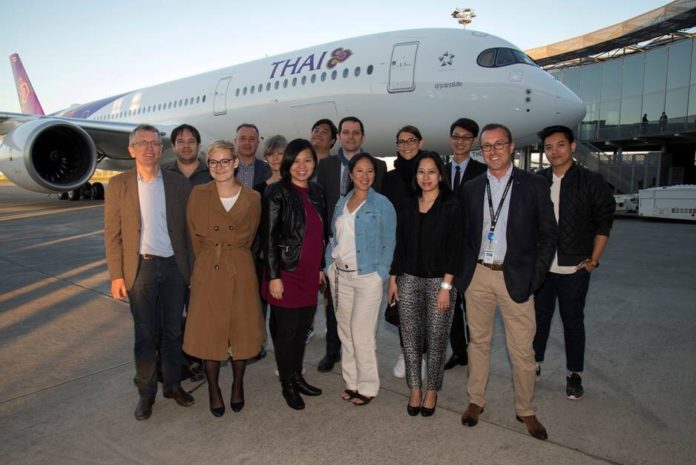
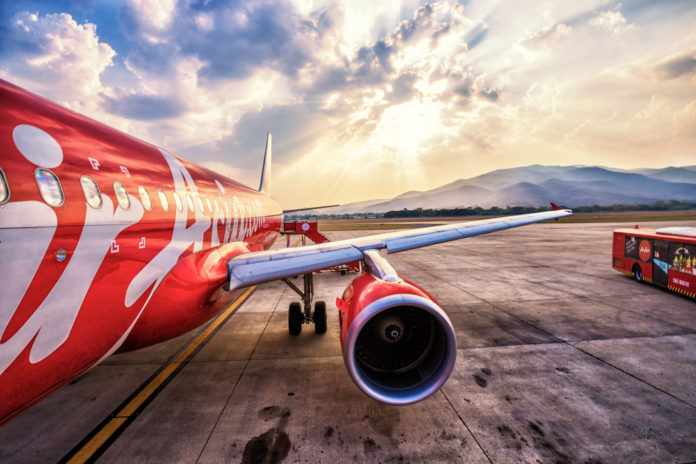
Thai Airways International (THAI) last Friday took delivery of its third Airbus A350-900XWB named Uthumphon. This new twin-engine widebody aircraft will enter into service on May 1 on the Bangkok-Frankfurt route. The Thai national carrier has ordered 12 A350s, with the first two already delivered last year.

THAI’s A350-900 is configured in a two-class layout with a total of 321 seats, comprising 32 in business class, convertible to fully flat beds, and 289 in economy class.


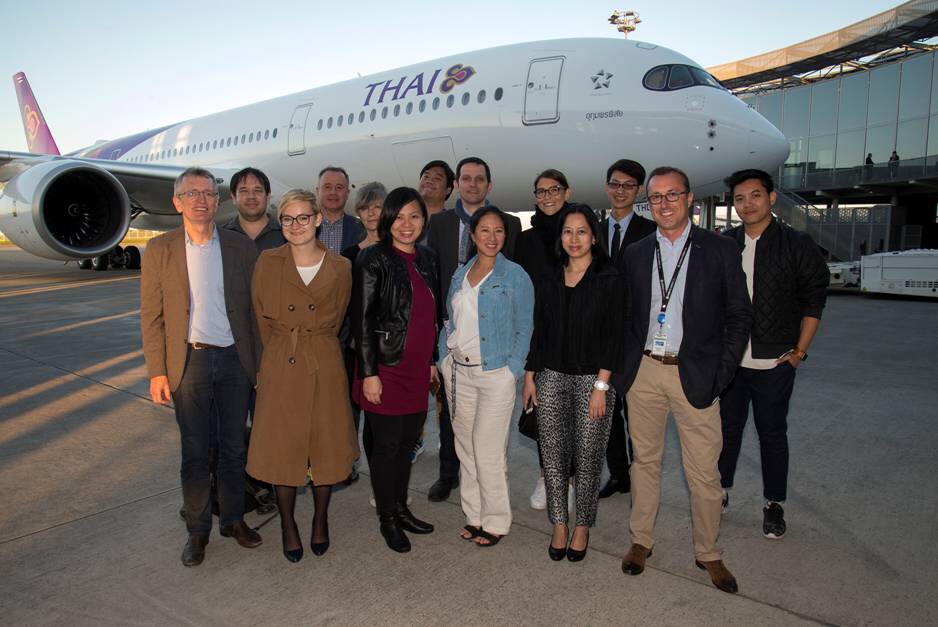
TTG Asia’s Xinyi Liang-Pholsena (first row, third from left); THAI’s Nuttavika Tamthai (first row, second from right) and Matthias Horn (second row, centre); and Airbus’ Sara Ricci (second row, third from right) and Arnaud De La Croix (first row, rightmost) were part of the delegation present at the delivery in Toulouse

Greater transparency for Muslim travellers with new hotel standard

0

Salam Standard has launched the Premium Hotel Classification scheme which rates hotels based on their number and standard of Muslim-friendly facilities and services, with an emphasis on rigorous hotel checks and audits.

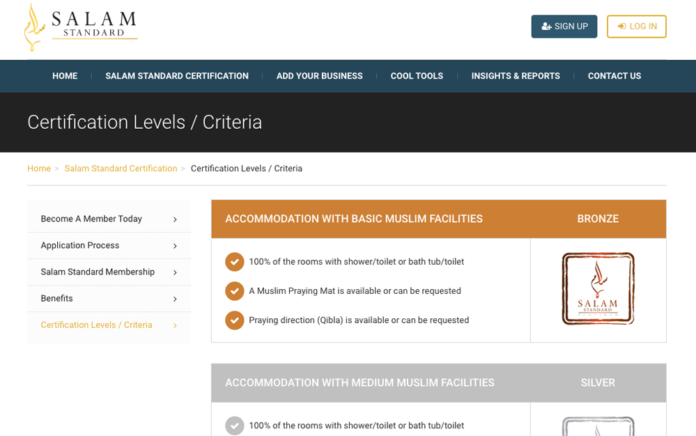
The scheme – which classifies hotels under Bronze, Silver, Gold or Platinum tiers – aims to improve quality, standards and transparency for Muslim travellers, while boosting the global visibility of accommodation that meet this demographic’s faith-based needs.

For example, at Bronze-rated properties, all rooms have a shower and toilet or bathtub and toilet and a prayer mat and praying direction (Qibla/Kibblat), or they are available on request, whereas Platinum-rated accommodation offers several additional benefits including halal food that is certified by a recognised body, while the entire premises is alcohol free.

Properties or hotel groups will be subject to checks to ensure they meet the required criteria, with audits conducted by a qualified committee of Islamic tourism experts, including Salam Standard representatives.

The committee reserves the right to reject applications if they do not meet the minimum criteria, and will also conduct regular inspections to ensure standards are upheld at Salam Standard-rated properties.

According Salam Standard, the four-tier system will simplify the user experience by providing Muslim travellers using the service or that of sister company Tripfez with clear guidelines on what is offered, safe in the knowledge it has been checked and audited.

Michelin Guide’s coming to Bangkok in late 2017

0

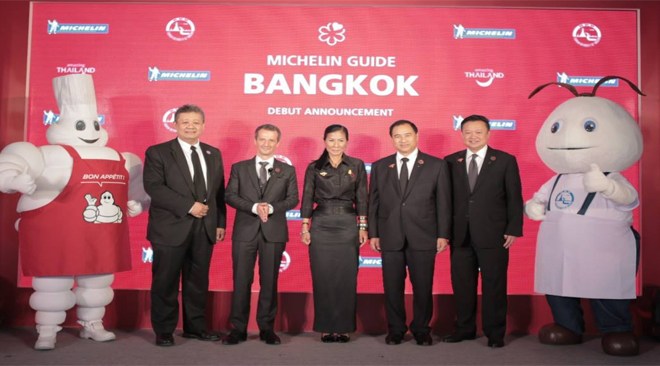
Following Singapore, Thailand will be the second country in South-east Asia to boast a Michelin guide, announced the Tourism Authority of Thailand (TAT) in a press conference last week.

TAT has entered into a partnership with Michelin Travel Partner to publish a Bangkok edition of the Michelin Guide. Expected to be released by the end of 2017, the Michelin Guide Bangkok will feature a bilingual Thai and English edition that is available in print and digital version.


(From left) Saksan Triukos, managing director of Michelin Siam; Lionel Dantiacq, president and managing director – East Asia and Australia, Michelin Group; Kobkarn Wattanavrangkul, minister of tourism and sports of Thailand; Kalin Sarasin, chairman of the board of TAT; Yuthasak Supasorn, TAT governor

The guide will be jointly promoted by TAT and is projected to boost overall food spending per head of tourists in Thailand by 10 per cent, the NTO said in a statement.

Yuthasak Supasorn, TAT governor, said: “We hope that this partnership between TAT and Michelin will boost high-quality tourism in Thailand, while helping visitors get more out of Thailand’s rich culinary scene. The guide will also inspire local restaurants to improve their quality and raise the bar in terms of gastronomic excellence.”

Bangkok will be the focus of the first Thailand based Michelin Guide, with restaurants and eateries from other Thai destinations to be included in later editions.

In Asia, the Michelin Guide is also available in China, Japan, South Korea, Hong Kong and Singapore.

Chinese travelling more in Japan but spending less

0

The number of foreign tourists arriving in Japan continued its upward trajectory in 1Q2017, although a sharp decline in per capita spending is attributed to Chinese visitors exercising more prudence with their cash.

According to Japan Tourism Agency, an estimated 6.5 million people visited the country in the first quarter, up 13.6 per cent on the same period last year. The total amount those visitors spent came to 967.9 billion yen (US$8.9 billion), up four per cent on the previous year, although the expenditure per person tumbled 8.5 per cent to 148,066 yen.


Souvenir shops at Senso-ji Temple, Tokyo

Significantly, while the number of Chinese arrivals climbed 25.2 per cent to nearly 1.7 million during the three-month period, they spent 14.9 per cent less per person.

“Last year, Chinese visitors’ main purpose for visiting Japan was to go shopping; this year, they are more keen to visit cultural and historic sights and see scenic spots,” said Nori Hayashi, director of sales for Tokyo Asean Service.

“Also, they are spending significantly less on accommodation than previously,” he told TTG Asia. “Before they were staying at big city hotels; now they are choosing cheaper business hotels or Airbnb-style accommodation.

“We are seeing this reduced spending most clearly in Chinese travellers, but also in arrivals from Taiwan, South Korea and Hong Kong,” he added.

Another factor has been the introduction of an import tax by the Chinese government on tax-free goods purchased in Japan, negating the savings.

Yukihiko Hashimoto, of the marketing division of Celebrity Cruises in Japan, agrees that the reduction in spending is most visible among Chinese travellers.

“We are hearing that stores in port cities are working harder to attract Chinese visitors and to encourage them to spend money,” he said.

Despite the reluctance of a large proportion of Japan’s inbound tourists to splash out – a trend that travel agents expect to continue – they say there has been no impact as yet on the price of Japan packages and tours.


Oakwood’s 11th property in Tokyo set for launch

0

Come May, Oakwood Asia Pacific will open its 11th property in Tokyo, its first in the region since Oakwood Worldwide was acquired by Mapletree in February.

Oakwood Apartments Azabudai’s 48 units, which range from studios to one-bedroom units, come fully equipped with a Western-style kitchen, household appliances and a home entertainment system. Services and facilities such as concierge and front desk, regular housekeeping services, high speed Wi-fi and a Residents’ Lounge are offered.

The new residence is located within Azabudai district of Minato ward, within three minutes’ walk to Tokyo Tower, 15 minutes to the Roppongi night life district and a stone’s throw from a supermarket. It also provides access to two subway lines minutes from the property.

Paying the price at national parks

0

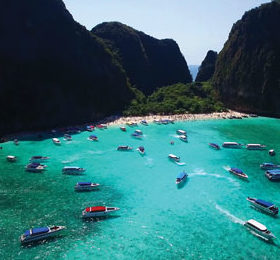
Tour operators in southern Thailand are adjusting their business strategies following The Department of National Parks, Wildlife and Plant Conservation’s (DNP) announcement that the admission fees to the Hat Noppharat Thara-Mu Ko Phi Phi Marine National Park will maintain its current rates for foreign tourists at 400 baht (US$11.50) for adults and 200 baht for children.

In February, some 500 tourist boats staged a protest at the park to demand a reduction of the admission fees for foreign tourists, citing the high charges as a deterrent for tourists to the destination.

However, DNP officials dismissed the claims and pointed out that foreign visitor numbers to Phi Phi Islands had surged on the contrary,  from 435,462 in 2015 to 1.4 million in 2016.

While it seems the park entrance fees are affecting the boat operators, some inbound agents in southern Thailand are feeling the heat too.

Nattakit Lorwitworrawat, managing director of SeaStar Andaman, said foreign tourists are not directly affected by the entrance fees as these charges are usually included in tour packages.

However, the high entrance fees weigh down on tour operation costs for inbound agents amid fiercer market competition. “We try to deal with it by introducing new products or services to our clients so that we can generate more income and survive during this difficult time” Nattakit said.

As well, the Seastar Andaman chief would like DNP to help tour operators to overcome this chronic issue by setting a more moderate price instead.

Worranuch Muangthong, sales manager of Love Andaman, said that its overseas agents had requested for the company to lower its tour package prices to the Phi Phi islands, as European  customers – which makes up around 20 per cent of its clientele – are showing a greater concern over the tour prices.

Similarly, Love Andaman has also been affected by the high entrance fees to Similan Islands (500 baht for foreign adults and 300 baht for children), and Worranuch would like the authorities to reduce the admission fees as the facility management and security on these islands still do not reach standards compared with other marine national parks.

“The measure to achieve quality tourism of the DNP is acceptable if the officials call on all tour operators to make an agreement to trade fairly by not (undercutting) tour package prices too much,” Muangthong remarked.

On the other hand, Sasina Kaudelka, general manager of Ancient Thai Travel, told TTG Asia that the entrance fees have not made a great impact on her company but she thinks entrance fees to all national parks in the country should not be raised in the future.

Moreover, she suggests that all tour operators should seek to find a solution together, control quality of services and avoid slashing tour prices. Tour operators should also adjust their business strategy to overcome unexpected obstacles and achieve sustainable business, she urged.


This article was first published in TTG Asia April 2017 issue. To read more, please view our digital edition or click here to subscribe.


Aviareps appointed as Deutsche Hospitality’s SE Asia sales rep

0

German luxury hotel chain Deutsche Hospitality has appointed Aviareps its representative in Singapore to head sales activities in the country as well as Malaysia and Thailand after recently signing its first hotel in South-east Asia.

“We are on an international growth path, and constantly expanding our portfolio by adding new markets. In the course of the expansion, South-east Asia is also moving into focus,” Marcus Cameroni, director leisure sales at Deutsche Hospitality, said.

“With the signing of our first hotel project in Thailand – the Steigenberger Hotel Riverside in Bangkok – an important step has been taken in order to gain permanent foothold in the region. We want this development to be perfectly supervised by local experts.”

Aviarep has 62 offices in 46 countries around the world.

Dusit forays into Bangladesh’s capital city

0

Dusit International will make its debut in Bangladesh with the opening of DusitPrincess Dhaka come end-2017 in the country’s capital.

The upper-midscale business hotel will open under Dusit’s newly developed franchising model – which is designed to give owners maximum returns while operating under a global brand – as part of a long-term arrangement with a subsidiary of Lakeshore Hotels.


Rendering of DusitPrincess Dhaka

Located in the north of the city, a five minutes’ drive from Hazrat Shahjalal International Airport, the 13-storey hotel will comprise 80 stylish guest rooms and 10 well-appointed suites. Facilities on-site will include an all-day-dining restaurant, a Grab ‘n’ Go outlet, a meeting room and recreational amenities such as a rooftop swimming pool.

Dusit International currently operates 29 properties in key destinations worldwide with a further 51 projects in the pipeline within the next three years.

AirAsia seizes 50% stake in travel planning startup Touristly

0

AirAsia is acquiring a 50 per cent stake in online travel planner Touristly Travel through an asset injection and loan deal valued at RM11.5 million (US$2.6 million).

Upon completion of the deal, AirAsia Group CEO Tony Fernandes will serve as chairman of the Touristly board.

AirAsia’s investment will comprise an injection of its digital Travel 3Sixty inflight magazine, valued at RM6.5 million, via AirAsia Investments and a RM5 million convertible loan for working capital and development.

Touristly, which will operate under the Travel 3Sixty brand following this deal, will gain reach via the 3Sixty digital platform and access to AirAsia’s offline advertising assets.

The transaction is expected to strengthen AirAsia’s ancillary portfolio by offering its guests on-ground activities such as restaurants, theme parks, attractions, spas and tours at more than 70 destinations that the airline operates to.

Fernandes said: “We see enormous potential in Touristly, which complements AirAsia’s existing travel offering. Our guests will be able to choose from thousands of activities when purchasing a flight and this brings us a step closer to becoming a truly one-stop digital airline.”

In May 2016, Touristly successfully raised an undisclosed pre-Series A round from Tune Group startup incubator Tune Labs, headed by Fernandes and other investors.

SriLankan Airlines revives leisure arm in Thailand

0

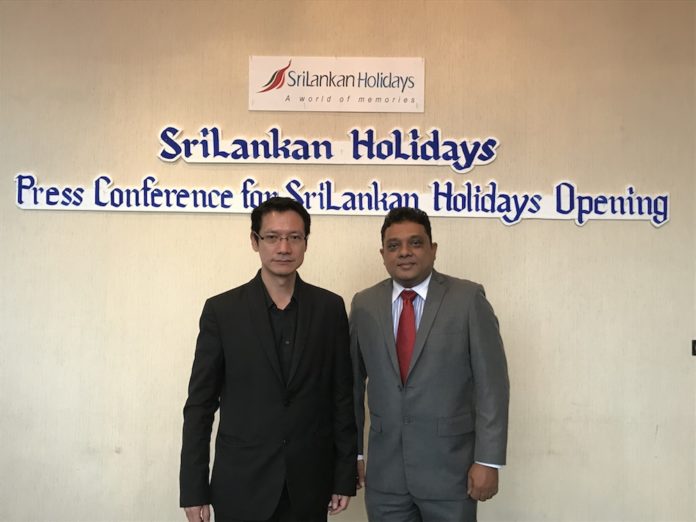
SriLankan Airlines has relaunched its SriLankan Holidays leisure arm in Thailand, with Pete Ratanachetkul, managing director of Billion Aviation, appointed to manage the business.

At a press conference last Thursday, Jayantha Abeysinghe, manager Thailand & Mekong Region of SriLankan Airlines, explained that airline is targeting to promote more offerings to Thai tourists beyond Buddhist tourism, especially in the face of increased competition from regional rivals like Japan and India.


New chief Pete (left) with Jayantha

The relaunch is expected to boost SriLankan Airlines passenger volume by 10-20 per cent in its first year.

SriLankan Holidays was tested in the Thai market in 2002. Though it met success, the project was suspended due to changes in the company.

Now, seeing the potential of Thailand as a key market to promote Sri Lanka’s tourism with the purchase of package tours soaring, SriLankan Holidays is bundling flight tickets, accommodation and tours to attract more Thais.

“Nearly 10,000 Thai tourists travel to Sri Lanka and the number increases every year. The main route from Sri Lanka to the Maldives for Thai tourists is showing continued growth,” said Pete.

SriLankan Airlines also plans to step up its frequency on the Bangkok-Colombo route from twice to thrice-daily starting July 15, 2017.

SriLankan Holidays targets six main routes – the Maldives, Sri Lanka, Seychelles, India, the Middle East and London.