Avani Hotels & Resorts has signed three new properties in Vietnam’s Vung Tau, Ho Chi Minh City and Cam Ranh.
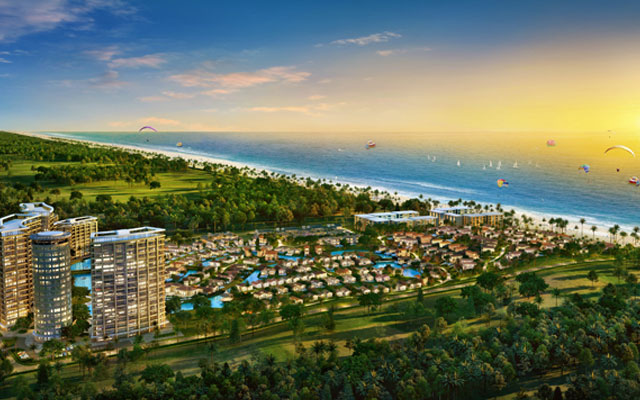
The Avani Vung Tau Resort in the port city of Vung Tau – two hours by car from Ho Chi Minh City – is scheduled to open by the end of 2019. The property will feature 149 oceanfront and hillside rooms, and will also boast a signature oceanfront dining experience.
Avani Cam Ranh Resort
Set for a end-2021 opening is Avani Saigon in the historic District 1 of Ho Chi Minh City, located a 30-minute drive from Tan Son Nhat International Airport. The 217-key property will be part of a 38-storey mixed-use complex including retail shops and residences. It will feature an all-day dining restaurant and an AvaniSpa.
Avani Cam Ranh Resort & Villas, opening at the end of 2022, sits on the south-central coast of Vietnam. The resort will feature 300 rooms and suites, as well as 315 private villas, an all-day dining restaurant, a speciality bistro, and a beach club, as well as 1,200m2 of meeting and banquet space.
The trio of signings will expand Avani’s portfolio to five properties in Vietnam, in addition to the two currently open – Avani Quy Nhon Resort and Avani Hai Phong Harbour View. In total, Avani currently operates 24 hotels and resorts in 15 countries, with another 15 hotels in the pipeline.
The Travel Corporation (TTC) has appointed Yan Kit Wong as AAT Kings and Inspiring Journeys’ senior sales manager.
Based out of Singapore, Wong is in charge of driving business growth and channel distribution for the company.
Wong was most recently part of the sales team for Insight Vacations, Luxury Gold and Uniworld Boutique River Cruise Collection, three of TTC’s luxury brands, after a 22-year career with car rental company Hertz.
Best Western Hotels & Resorts is celebrating the debut of Vīb Best Western Sanam Pao in Bangkok – the brand’s first in Asia-Pacific – with an opening offer.
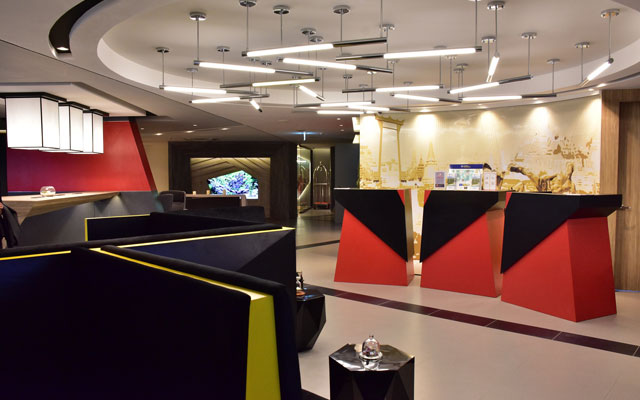
Reception area
Guests booking from now through April 10, 2019 can enjoy special rates, starting from 2,210 baht (US$70) nett per room per night, including breakfast for two people and complimentary in-room Wi-Fi. Best Western Rewards members will also receive double points when they book a stay between now and March 31, 2019.
Vīb Best Western Sanam Pao is located just steps away from the Sanam Pao BTS skytrain station. The hotel features 91 contemporary rooms equipped with Wi-Fi, smart TVs and e-concierge technology; as well as rainshowers and convenient work areas. Other facilities include a 24-hour gym, the Eye Bar, gaming pods and a cafe.
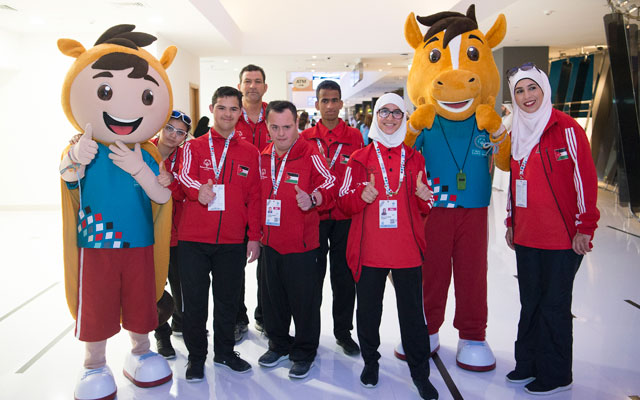
Team Jordan arriving at the Special Olympics MENA Games 2018
With the Special Olympics World Summer Games 2019 round the corner, Travelport has launched a campaign to improve awareness and use of the DPNA Special Service Request (SSR) code, which can be used by travel agents and others to alert airlines when a passenger has intellectual or developmental disability and needs assistance.
The campaign was initiated after Travelport observed “exceptionally low use” of the code on bookings made through its GDS. Despite registering more than 250 million flight bookings through its GDS globally in 2018, and an estimated 200 million people worldwide having an intellectual disability (2.6 per cent of the global population), the code was used just 4,309 times (approximately 0.0015 per cent of total flight bookings), according to Travelport. A poll of 136 of travel agents, conducted by Travelport, revealed just 24 per cent know the code exists.
Team Jordan arriving at the Special Olympics MENA Games 2018
Travelport’s six-month long campaign will reach more than 100,000 travel agents in over 30 countries. It features electronic direct mails (EDMs) as well as sign-on-alerts and graphical prompts delivered through the company’s flagship Travelport Smartpoint tool, which is used by travel agents, among others, to search and book airline seats, hotel rooms and more.
The EDMs and sign-on-alerts are being shown to its travel agent partners globally, while the prompts are activated when a consultant is at the booking stage of a flight to over 30 of the most popular destinations in the world such as London, New York, Sydney and Delhi.
The prompts are also being shown when any flight is about to be booked to or from the UAE, the country hosting the Special Olympics World Summer Games 2019 this month.
Travelport has also created a campaign webpage providing guidance for travel agents on talking to travellers about intellectual disabilities and associated assistance.
The digital media used to reach travel agents during the campaign is typically sold by Travelport to travel providers as advertising space. The company has allocated over US$100,000 worth of slots for the DPNA SSR code awareness campaign, which will run until August 31, 2019. Content from the campaign will be displayed to travel agents more than 3.5 million times, making it one of the biggest digital media campaigns the company has ever executed, the company said.
Gordon Wilson, president and CEO of Travelport, said: “Travel can be a particularly challenging time for people who require special assistance, so once we discovered such low use of the DPNA SSR code, we decided to take action… We hope this campaign will not only make a difference in the travel industry but act as a catalyst for other organisations to investigate how their industry or the industry they serve can better support people with intellectual disabilities and make improvements where needed.”
SSR codes are used in the airline industry to communicate traveller preferences or needs, such as requests for wheelchair assistance, to airlines. They are delivered through standardised four-letter codes defined by IATA.
Linda Ristagno, external affairs manager at IATA, said: “We introduced the DPNA SSR code to assist persons with intellectual and developmental disabilities. We are delighted that Travelport has launched this awareness campaign and encourage all our member airlines and travel agents to properly use this and all the other IATA disability codes to ensure that the appropriate support to our valued passengers is provided.”
Extending support to Travelport’s campaign, Asim Arshad, group CEO at Orient Travel and Tourism Agency, said: “We are happy to act on this initiative and ensure that all of our consultants, as a standard part of the booking discussion, ask customers if any of the travelling party has an intellectual or physical disability and needs special assistance from the airline. Asking the question is the first step to ensuring appropriate support is provided. We encourage all travel agents across the world to follow suit.”
Linda Celestino, vice president, guest service and delivery, Etihad Airways, the official airline partner of the Special Olympics World Summer Games 2019, said the airline will support the use of the DPNA Special Service Request.
She added: “In preparation for Special Olympics team travel across the Etihad network, our teams have received additional training on how to best support guests with intellectual disabilities.”
The Special Olympics World Summer Games 2019, which starts on March 14 and runs until March 21.
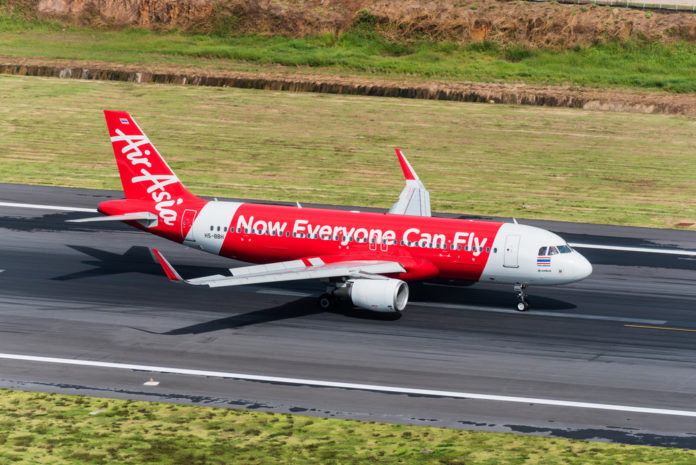
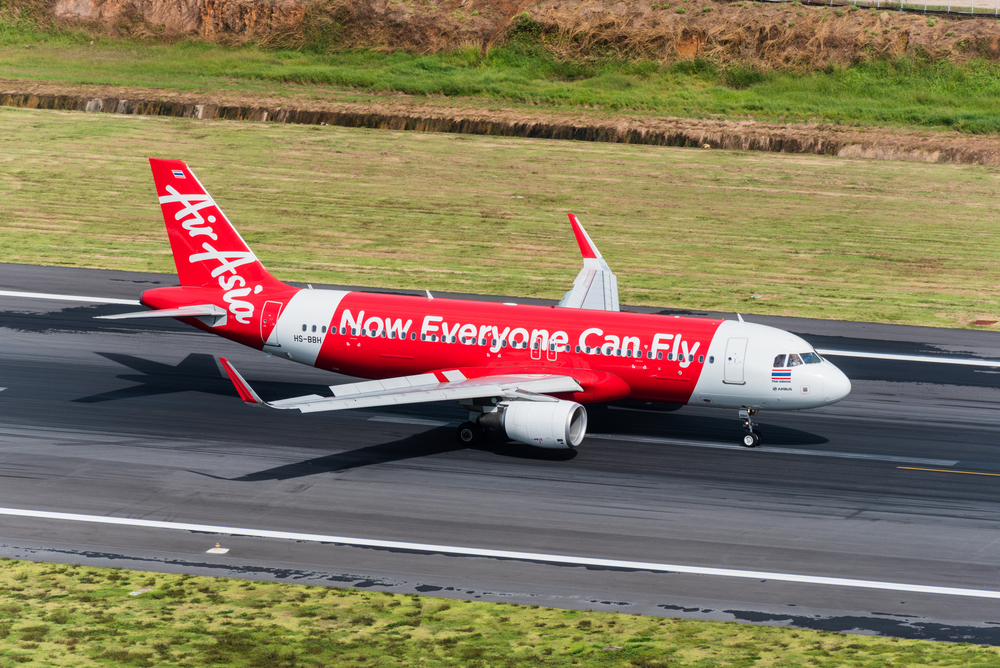
AirAsia has announced the permanent withdrawal of sales of all its flights from Traveloka, a move arising from the “unexplained disappearance”of AirAsia Indonesia flights from the OTA for the second time in the past two weeks.
AirAsia Indonesia president director Dendy Kurniawan said: “The omission of our flights has certainly hurt cooperation between AirAsia and Traveloka. Traveloka has not acted in good faith. They have refused to provide an official explanation despite our repeated attempts to seek their clarification.
AirAsia removed its flight listings from Traveloka after the latter was unable to explain how they disappeared
“The exclusion of several AirAsia Indonesia flights by Traveloka is a clear display of preferential treatment and an act of favouritism. We observed through social media messages how customers who enquired about the unavailability of AirAsia flights were recommended by Traveloka to book with other airlines instead. Therefore, in solidarity, AirAsia Group withdraws sales of all of its flights from Traveloka effective immediately.”
AirAsia is now advising travellers to book directly from the airasia.com website or the mobile app.
AirAsia said its flights first disappeared from Traveloka on February 14-17, coinciding with its network-wide system upgrade on February 16. Traveloka had cited the 13-hour system downtime as the reason for AirAsia flights disappearing from their website in response to queries from customers, according to the airline.
However, AirAsia flights disappeared from Traveloka for a second time on March 2 without clarification, well after the successful system upgrade by AirAsia.
Dendy added: “Competition should be free and fair to ensure consumers benefit from the best deals. We should not let monopolies kill competition at the expense of the travelling public.”
It is unclear which competitors AirAsia was pointing fingers at, but Dendy said: “Competitions should be free and fair so that customers get the benefits from better offers. Don’t let monopoly kills competition.”
In response, Traveloka spokesperson Sufintri Rahayu said in a statement: “As South-east Asia’s biggest travel and lifestyle technology company, we highly take priority in sustainable cooperations with all stakeholders, including business partners.
“Traveloka therefore regrets the decision made by one of our airline partners, AirAsia, to withdraw their ticket sales on our platform. We are making our efforts to enable clients to enjoy all airline choices which have been available again.
According to Sufintri, Traveloka has been requesting a dialogue with AirAsia since last weekend “to achieve the best solution for both parties”.
As a satellite programme partner of Singapore Design Week (SDW) 2019, Naumi Hotel is inviting local design students to create a new concept for one of its rooms every quarter.
Project #210, named after the room number at Naumi, the Singaporean-owned hotel will provide up-and-coming talents from local design institutions with a blank canvas to create their vision.
Singapore hotel Naumi partners with local businesses on new student design initiative
The initiative is supported by Goodrich Global, XTRA, Guerilla X and Matsushita.
The first team to win the opportunity is Nurul Hanis, Nia Astira, Nuri Khairiyyah and Tracy Lim, who are final-year Retail & Hospitality Design students from Temasek Polytechnic.
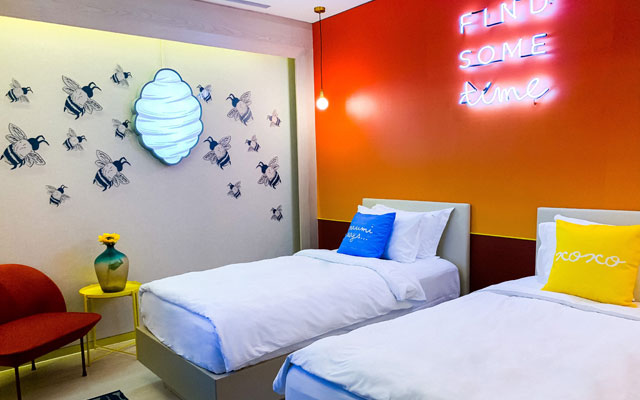
The opening concept for Project 210, which will launch during SDW, is inspired by Tyler The Creator, a creative personality in music, TV and fashion. The concept hopes to catch the attention of the next generation of travellers with its bold style using colour-blocking, lightings and designer furnishing from Muuto. Much of Tyler The Creator’s work is taken from 1970s street style, hip hop and skate culture, and a result the designers are looking to create a vibrant, and above all, playful space.
For the duration of SDW from March 4-17, 2019, the Project 210 room will be bookable at S$250++ (US$185) per night (inclusive of breakfast for two).
The pop-up room will join the current inventory of four designer-themed rooms available at the hotel.
IATA is calling on industry stakeholders and governments to work together more closely to keep aviation secure in the face of evolving security threats and the anticipated doubling of passenger demand to 8.2 billion by 2037.
“Flying is secure. But keeping it that way is not an easy task. Threats are evolving. The geo-political landscape is complex. Technology is rapidly changing. And the volumes of both cargo and travelers keeps growing. Global standards and collaboration – among governments and industry – is the bedrock of our continued success,” said Alexandre de Juniac, IATA’s director general and CEO, during a speech to the AVSEC World conference in Miami, Florida.
Cooperation is key to keeping aviation travel secure amid evolving threats and increase in passenger demand
IATA urged stakeholders to focus on global standards, information-sharing, risk-based analysis and emerging threats to secure aviation for decades to come.
“It’s been 45 years since Annex 17 was added to the Chicago Convention. Still, far too many states are struggling to implement the Annex 17 baseline requirements. A weakness anywhere in the system affects everyone. The goal is 100 per cent implementation. There is an urgent need for developed countries to provide more comprehensive assistance to developing countries to ensure the baseline security measures are met,” said de Juniac.
Stressing the importance of information sharing, de Juniac said: “Threats will continue to evolve and become ever more complex. Those wishing to do aviation harm have no state allegiance; they cross borders to share information and collaborate to refine their methods of causing chaos and destruction. The focus of governments must be on protecting people. And that cannot be done with insular thinking. We must get better at sharing information.”
Moreover, with investment in aviation security having grown exponentially since 9.11, de Juniac acknowledged that flying has “no doubt” been made more secure. However, he argued that the efficiency of the system needs to be constantly challenged. “Governments need to pursue risk-based security concepts that focus resources where the need is greatest,” said de Juniac.
Some critical areas in need of addressing include vetting the millions of airport and airline staff who have access to aircraft, ending extra-territorial measures that often require airlines to take on government responsibilities, and improving the security experience for passengers.
IATA further called for greater government and industry attention on emerging threats, including cyber threats.
“The digital transformation of the airline industry holds immense promise. But we must ensure that our aviation systems remain safe, secure and resilient against cyber-attack. Constructive dialogue and timely information-sharing among industry, technology providers and governments will be critical if we are to achieve this,” said de Juniac.
IATA is working with airlines, industry stakeholders and other sectors to deliver a strategy early next year that will be a step-change in how the sector addresses the cyberthreat challenge.
The 228-room Holiday Inn Express Don Mueang Airport is set to open in 2022 as the first international brand hotel directly connected to the airport, according to InterContinental Hotels Group (IHG).
The hotel will be built next to the Lak Hok Train Station, one stop away from Don Mueang International Airport and 20 km from the city centre. As part of the Thai government’s expansion plans, the new Terminal 3 at Don Mueang Airport is scheduled to open in the same year, and has been designed to service the growing number of passengers.
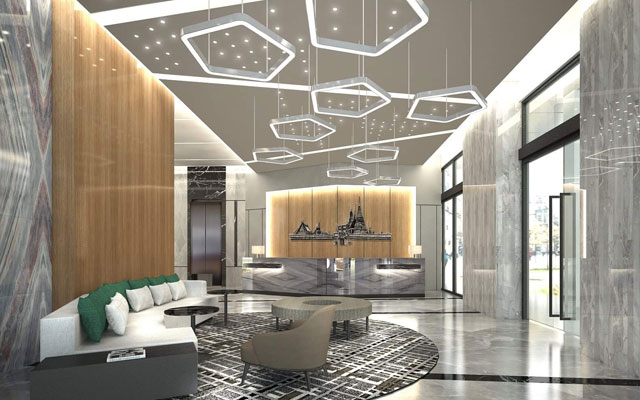
A rendering of the lobby
It will offer free Wi-Fi in guest rooms, Free Express Start Breakfast or a Grab & Go option, self-service laundry room, 24-hour fitness centre and a
meeting room.
The new Holiday Inn Express is the outcome of a management agreement with Ambience Rangsit U.
IHG now has six Holiday Inn Express hotels open in Thailand with 10 in the pipeline.
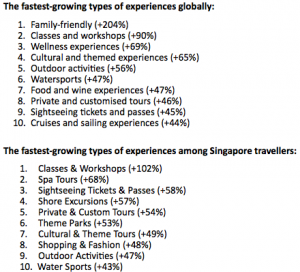
Classes and workshops, as well as wellness experiences, are the top activity categories global travellers are booking, according to TripAdvisor data.
TripAdvisor’s 2019 Experiences Trends Report revealed that globally, traveller bookings for classes and workshops grew by 90% year-over-year. This was even more so for travellers from Singapore, as bookings for classes and workshops doubled (+102%).
The Roman Gladiator School experience topped the charts last year
French travellers are leading the way worldwide, with bookings rising 137% over the previous year. A Roman Gladiator School: Learn How to Become a Gladiator became the world’s most booked class and workshop last year. Samurai School in Kyoto: Samurai for a Day, surf lessons at Sydney’s Bondi Beach and a Cambodian pottery class were also featured in the top 10.
Health and well-being is high on the list too. Global traveller bookings for wellness experiences jumped 69% year-over year, with New Zealanders leading the way in the quest for wellness, as bookings for wellness experiences by Kiwi travellers jumped a whopping 362% year-over-year.
Traveller bookings from Singapore for wellness experiences rose 68% over the previous year. A Széchenyi spa experience was the most booked wellness experience among global travellers, while a trip to Thermae-Yu Hotspring in Shinjuku and luxury spas in Phuket also ranked among the top 10.
TripAdvisor’s rankings
Sightseeing and iconic attractions are a mainstay, but experiences must cater to the whole family, TripAdvisor observed. Family-friendly activities have become a firm priority for travellers worldwide as bookings shot up over 200% year-over-year.
While tickets and tours to the world’s top attractions, like a Faster Than Skip-the-Line: Vatican, Sistine Chapel and St. Peter’s Basilica Tour, remain the most-booked experiences globally, there’s a growing focus among travellers to have such experiences cater to the whole family. Experiences like a Waitomo Glowworm Caves Guided Tour and Disney on Broadway Behind-the-Scenes Walking Tour are among the 10 most-booked family-friendly experiences.
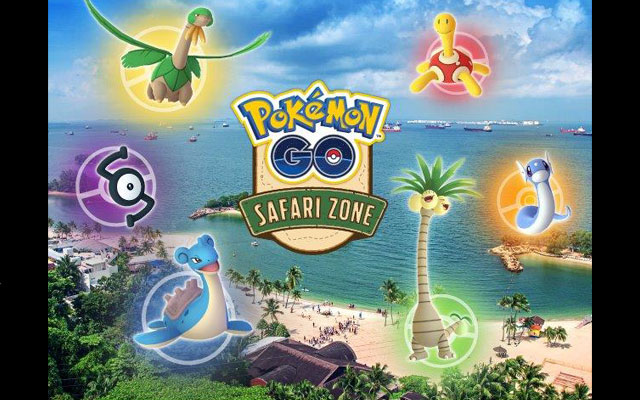
Limited time registration for South-east Asia’s first Pokemon Go Safari Zone – taking place from April 18-22, 2019 – is now open.
Interested players will need to register their interest and select their preferred date of play on the event website: safarizone.sentosa.com.sg from now till March 7. Fans can bid for places as an individual or in a group of up to three applicants. Over 100,000 places will be available for free across the five-day event, and a ballot will be held to select participants.
Here’s your chance to try and catch them all
Organised by the Sentosa Development Corporation in collaboration with Niantic and The Pokemon Company, Pokemon Go Safari Zone, Sentosa will see players hunting their favourite Pokemon, including region-exclusive Pokemon, through the island’s beaches and past the island’s attractions, from the Sentosa Boardwalk to Tanjong Beach.
In a statement, Sentosa said fans can expect multiple PokeStops where they can stock up on supplies, as well as rare Pokemon such as the region-specific Tropius, shiny Shuckle, Unown and more.
While on the journey to catch ’em all, players can snap photos with Pokemon at various photo points across the island. At team rest areas, they can mingle, swap tips, trade Pokemon with fellow trainers from Instinct, Mystic and Valor.
Selected trainers will receive a notification email from March 11, 2019, and another email on a later date containing a QR code that serves as a ticket to the event. Participation in the event is limited to the day stated in the confirmation email, in order to give as many trainers a chance to take part.
For trainers living in the Philippines, Malaysia, Indonesia and Thailand, travel agencies JTB and Panorama-JTB will be providing 3D2N Stay & Play tour packages which come with a guaranteed ticket to join Pokemon Go Safari Zone, Sentosa!
For each day of the event, 200 packages will be up for grabs on a first come first served basis. For more information on these packages, visit JTB Philippines, JTB Malaysia, Panorama-JTB, and JTB Thailand from March 7.
Trainers without a QR code can still enjoy normal gameplay at Sentosa during the event period.