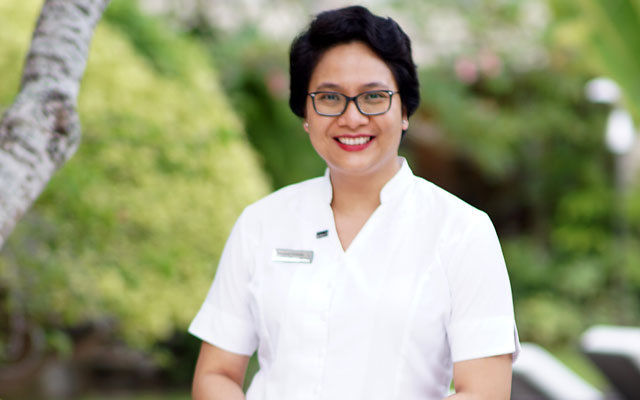
The Westin Resort Nusa Dua, Bali has promoted Saraswati Subadia to director of sales & marketing, after working in a parallel capacity for the past year as the resort’s assistant director of sales & marketing.
Saraswati first joined the resort in 2013 when she assumed the position as director of sales MICE, where she was significantly involved in securing a number of high-profile events such as the Annual Meetings 2018.
Balinese born and bred, Saraswati started out in the hospitality industry working as a guest relations officer, and then as an assistant tourism advisor for a division of the World Bank.
She then joined Tour East travel agency in 2001,followed by a succession of managerial appointments for international hotels, including Hard Rock Hotel Bali and InterContinental Bali Resort, as well as managing director MICE with Smailing Tour.
Kong: trends toward soft brands, plus access to Best Western's loyalty programme and customer base will fuel dramatic growth in Worldhotels portfolio
It’s not a long shot to expect a doubling of the Worldhotels portfolio in the next few years, without tradeoffs to its independent hotels-centric identity, Best Western CEO David Kong said following an acquisition of the company.
The US hotel chain giant last week bought over WorldHotels for an undisclosed sum, and the two are now part of a newly established parent company, BWH Hotel Group. WorldHotels properties will be positioned in the upper upscale end of the group, while Best Western will occupy the midscale.
Kong: trends toward soft brands, access to Best Western’s loyalty programme and customer base, and revenue improvements will fuel dramatic growth at Worldhotels
Combined resources under BWH Hotel Group
An alliance between the two companies was in talks three years ago, when “Worldhotels recognised that loyalty programmes is going to become more important and want to have access to that and our customer base”.
While an alliance did not pan out, what the two now have is “better than an alliance”, Kong remarked. “Now, we’re under one company, BWH Hotel Group. It’d be much easier for us to leverage the talent that work for both companies. There is so much knowhow and experience within the Worldhotels team here.”
Unlike some of the bigger mergers in the hospitality industry in recent times, Kong stressed that integration of the two companies is “not about streamlining the staffing, but about cross-pollinating ideas and leveraging talent”.
Kong added that Worldhotels brings value in the form of good sales relationships with corporate buyers and travel agents, on top of a relevant portfolio of luxury properties.
Perhaps, this is also a sign of Best Western’s Asian ambitions.
Roland Jegge, Asia-Pacific president, Worldhotels, pointed out that the company brings to the table a sizeable Asian presence as Best Western looks to increase its regional footprint – both in terms of hotels and sales offices. Some 80 out of Worldhotels’ global portfolio of over 300 hotels are in Asia, while Best Western has about 50 locations in the region.
A better proposition to agents, corporate buyers
While the merger brings together distinct midscale and upscale brands, there will be “no dilution, but synergy and added value”, Kong stated.
“Big companies have different travellers with different needs. Executives can stay at (more upscale) Worldhotels properties, but there could also be a lot of (travellers who would stay) at a Best Western. Bringing all those options and solutions to companies can make us more desirable as a one-stop shop. To present a travel manager with the ability to make a contract with one company while (taking care of different needs) is a very good selling proposition,” Kong explained.
Although the two will present a combined portfolio in B2B sales, WorldHotels properties will be separated from Best Western’s consumer-facing marketing efforts, allowing WorldHotel properties to retain their identity, Kong shared.
“Additionally, while WorldHotels will be part of our loyalty programme, it will be branded separately as WorldHotels Rewards.”
Under BWH Hotel Group, Worldhotels members will be held to the same criteria and inspection requirements to uphold standards as before, Jegge added. Hotels will continue to fall into a three-tier classification system, with Luxury at the top end, followed by Distinctive and Elite. Hotels will still have to meet independent LRA criteria to be classified in the Luxury tier, Jegge confirmed.
“Worldhotels’ (emphasis on) independence and self-identity is hugely important, so we have to protect that. It’s all about how we can create value for TMC customers and simplify the job of the travel manager. When we provide a whole suite (of distinct brands), that happens,” Kong stresed.
A hunger for soft brands
This is the latest in a string of soft brand activity in the hospitality industry involving companies that were traditionally focused on branded chains.
“The trend is there and the universe is huge for soft brands. Hotels are moving away from long term contracts with big hotel companies,” Kong observed.
Indeed, WorldHotels has seen accelerated expansion particularly in its Asia-Pacific portfolio in the past three years, said Jegge. The demand for a soft brand solution is coming both from owners de-flagging hotels when management contracts come to expiry, as well as from those wanting to independently brand new-builds.
Against this backdrop, synergies between large chains and soft brands are there for the taking, according to Kong.
While owners value their independence and don’t want the onerous branding requirements and exorbitant fees that come with being part of a chain, Kong pointed out that “they also need powerful revenue engines as an alternative to OTAs”.
“If they are independent, most business will come from OTAs – which is problematic. Hotels want to negotiate contracts, but OTAs do so much business that hotels (basically fall to) their mercy and the OTAs dictate the terms. (At the same time), more hotel companies are launching soft brands to attract independent hotels to be part of the revenue system as they need an alternate source of business.”
With its scaleable platform and over 40 million customers, Kong believes Best Western will be able to add to WorldHotels by driving revenue and savings for member hotels, which could contribute to “dramatic growth”.
“I have huge expectations of how much Worldhotels is going to be able to grow. Once hotels see the revenue advantages, more will join. Doubling the (number of member hotels) in the next few years is not far-fetched.”
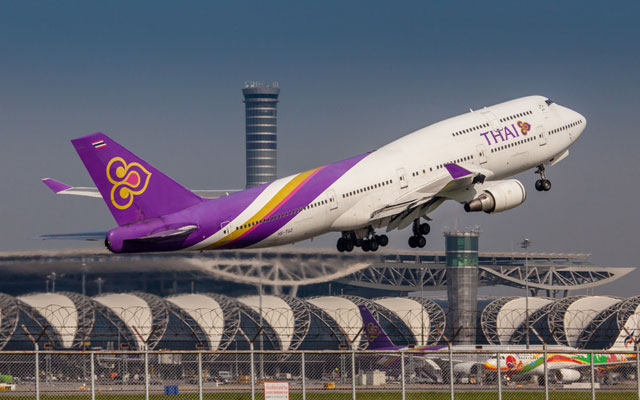
Thai Airways International (THAI) and its subsidiaries have recorded nearly 11.6 billion baht (US$364 million) in net loss for 2018, and will be continuing with the transformation plan implemented last year.
The group saw a 3.9 per cent increase in total revenue to 199.5 billion baht, coming from different revenue sources including passenger and excess baggage revenue.
Thai will press on with its transformation plan despite losses
However, total expenses increased 10.3 per cent to 208.6 billion baht, due to an increase in fuel expenses of 9.9 billion baht with 30.1 per cent increase in average prices. Non-fuel operating expense also went up by 9.8 billion baht due to the increase of aircraft maintenance and overhaul costs, lease of aircraft and spare parts, and depreciation and amortisation expenses.
Sumeth Damrongchaitham, THAI president, said that last year THAI took delivery of five Airbus A350-900 aircraft and decommissioned two Boeing 737-400 aircraft, resulting in 103 active aircraft as of December 31, 2018, three more compared to the figure as of December 31, 2017.
Aircraft utilisation was 12.0 hours, equal to the previous year. Production traffic increased by 2.9 per cent and passenger traffic increased by one per cent.
Average cabin factor was 77.6 per cent, lower than last year’s figure of 79.2 per cent. The total number of passengers carried was 24.3 million, a decrease of one per cent compared to the previous year.
This year, THAI changed the accounting treatment of the estimated residual value of aircraft and spare engines from 10 per cent to six per cent of the initial cost value, resulting in an increase of 3.1 billion baht in depreciation.
In addition, a review of the duration of sold but unused tickets, previously recognised as revenue over 24 months after the date of issue was changed to 15 months, leading to a one billion baht increase in passenger revenue in 2018.
Meanwhile, both production and passenger traffic increased while finance cost decreased by 215 million from cash management and ongoing financial restructure from last year.
THAI and its subsidiaries reported operating loss of 9 billion baht compared to 2.9 billion profit of the previous year.
In a statement, THAI said it implemented the transformation plan for the year 2018 in order to solve the negative retained earnings and enable THAI to generate future sustainable profit.
In 2019, THAI plans to “generate more aggressive revenues and make various improvements including modernised and competitive fleet, services enhancements from ground to sky, commercial strategies: digital marketing and ancillary revenues, business expansion such as maintenance eepair and overhaul at U-Tapao Airport as well as human resource improvement and appropriate financial restructuring”.
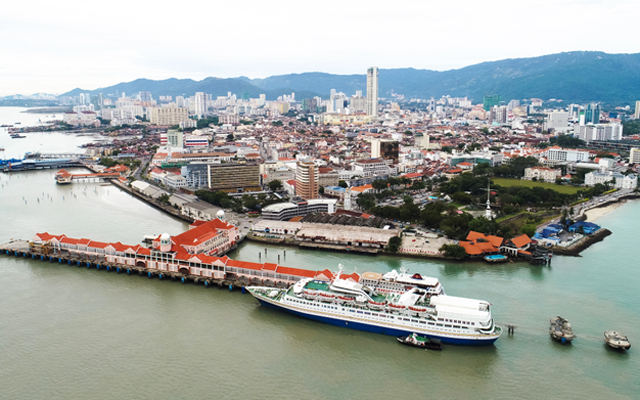
Cruise passengers could bring US$90 million in retail spend to Penang
Having joined forces with the Malaysian Association of Tour and Travel Agents in November 2018, Cruise Lines International Association (CLIA) Asia is stepping up its efforts to drive cruise education and awareness in Malaysia with its latest MoU signing with Malaysia Cruise Industry Association (MCIA).
“CLIA Asia’s mandate is to provide essential training, resources and support to travel agents in the region. Globally, we see that cruise markets with the highest market penetration have the most “cruise educated” travel agents,” Joel Katz, CLIA Australasia & Asia managing director said.
Cruise docking in Penang
The partnership with MCIA with provide CLIA with the opportunity to better equip members with better skills to promote and sell cruise holidays.
Meanwhile, MCIA will leverage CLIA’s expertise to educate their travel agent members and raise the profile of cruise tourism.
“(Cruising) has seen tremendous growth and interest in Malaysia, and our members are keen to market and sell more cruise holidays,” Rashid Khan, president, MCIA said in a statement.
According to CLIA’s Asia Cruise Trends 2018 report, Malaysia cruise source passenger count saw a 88 per cent year on year growth in 2017, but cruise penetration rate in the country is still comparatively low at less than 0.6 per cent.
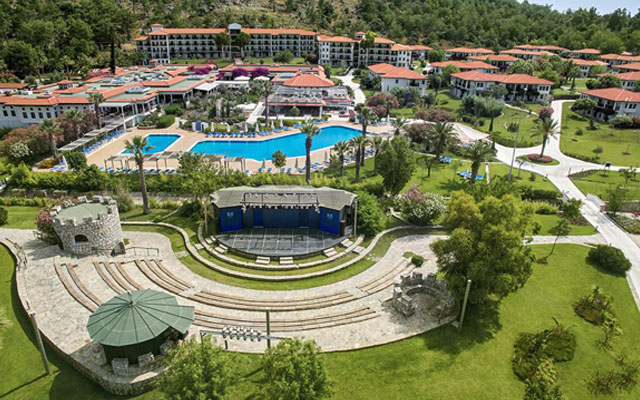
TUI Blue Sarigerme Park is the first hotel under the TUI Blue brand, opened in 2016
Tui Group will make Tui Blue its global flagship hotel brand, targeting portfolio growth from 10 to around 100 hotels by 2020.
From summer 2020, the group will cluster the tailored offerings of its hotel brands Tui Blue, Tui Sensimar and Tui Family Life under the Tui Blue flagship brand.
TUI Blue Sarigerme Park in Turkey is the first hotel under the TUI Blue brand, opened in 2016
Tui’s other hotel brands and concepts will not be affected. Alongside Tui Blue, Tui Group’s growth strategy will continue to focus on its traditional Riu brand, its two club brands Robinson and Tui Magic Life, and the five-star resorts run under the Tui Sensatori brand.
The expanded portfolio of Tui Blue hotels will enhance the visibility and relevance of the brand, the group said in a statement.
Apart from its already strong footprint in southern Europe and the Caribbean, Tui Group and its Hotels & Resorts segment will also focus on other growth regions including South-east Asia and the Indian Ocean, regions it has identified as having high potential for Tui Blue.
The strategy to further expand the group’s market presence is not only being implemented by Tui’s own hotel companies but also supported and driven ahead by partnerships with joint venture partners, including Atlantica and Grupotel, and third-party hoteliers, according to the group.
“Hotels remain a strong and attractive growth segment… What we were lacking was a hotel brand with a global presence incorporating Tui in its name,” said Fritz Joussen, CEO of Tui Group.
“Since the development and launch of Tui Blue three years ago, the Tui brand name has become part of the hotel experience. After the successful launch phase of the first 10 hotels, building the brand as our global flagship hotel brand is the consistent next step for us to significantly expand our hotel segment, go even more global with the brand and increase the target audience.“
The flagship brand will target particular segments, with Tui Blue For Two an adults-only concept in line with the previous Tui Sensimar hotel brand, whereas Tui Blue For Families has specifically been tailored to meet the needs of large and small families.
Meanwhile, individual services such as Select Your Room will be available to an even larger number of guests. The technology concept relating to the Blue app will also be launched in all hotels.
Indonesian unicorn and OTA Traveloka has expanded to Australia as it partners the tourism ministry on a campaign to boost arrivals into the country.
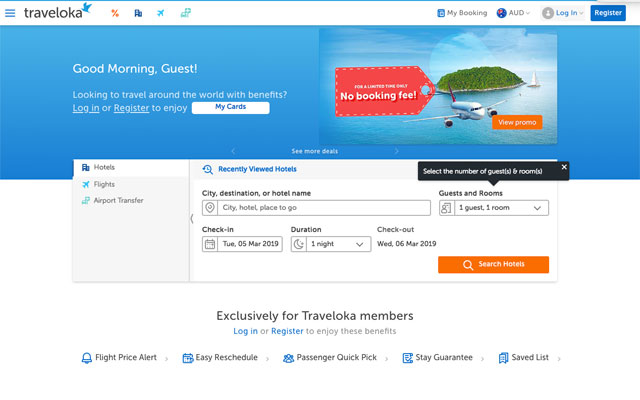
The online booking provider started operations in Australia last week, allowing Australians to access its five products; flight ticketing and hotel booking services, flight ticket and hotel packages, airport accommodation, entertainment and utility services through its website and application.
Traveloka global partnership head Yady Guitana as saying that Australia is relatively ahead of South-east Asian countries in terms of internet connection and penetration as well as payment infrastructure.
He said: “We hope that our digital presence in Australia can further enrich lives of our users by empowering them to discover the world around them by offering a various travel and lifestyle products in one platform.”
Traveloka has also partnered the Indonesian Tourism Ministry on the Wonderful Indonesia campaign, which is aimed at helping the government reach the target of 20 million foreign tourist arrivals this year, Yady said.
Edy Wardoyo, deputy of marketing development 1 at the Indonesia Ministry of Tourism said: “The government’s target to attract 20 million foreign tourists will not be achieved if it does not synergise with players in the industry. Together with Traveloka, we hoped this synergy can help our mission, and we will continue to support Traveloka to exist in this new market.
“The Australian market itself is one of the promising tourism markets, where foreign tourist visits from Australia to Indonesia continue to increase year on year. Traveloka’s decision to open in the Australian market is very important to help in facilitating travel access and answer the diverse travel needs of users,” added Edy.
Indonesia was the second-top travel destination for Australians after New Zealand in 2018, according to market research and business intelligence portal Statista.
Statistics Indonesia recorded 1.3 million Australian tourist arrivals in the country in 2018. The tourism ministry expects to see the number increase 15 per cent this year to reach 1.5 million.
The Ritz-Carlton, Pune is expected expected to open in September 2019 as the brand’s second property in India and one of three Ritz-Carltons in the pipeline for the country.
The hotel is the outcome of a long-term management agreement between the brand and Panchshil Corporate Park Private.
Rendering of Ritz-Carlton, Pune
With 198 rooms, The Ritz-Carlton, Pune will house an Indian, Japanese and all-day dining restaurant, a lounge, fitness facilities and a spa with eight treatment rooms. Additionally, there will be 3,344m2 of indoor and outdoor banqueting venues, and guests staying on the Club Floor will have access to a rooftop Club Lounge where five F&B presentations will be served daily.
Commenting on the city’s potentials, Paul Foskey, chief development officer, Asia Pacific, Marriott International, said: “Pune attracts a mix of business and leisure travellers and shows potential for continued growth in the luxury segment.”
The Ritz-Carlton, Pune is expected expected to open in September 2019 as the brand’s second property in India and one of three Ritz-Carltons in the pipeline for the country.
The hotel is the outcome of a long-term management agreement between the brand and Panchshil Corporate Park Private.
Rendering of Ritz-Carlton, Pune
With 198 rooms, The Ritz-Carlton, Pune will house an Indian, Japanese and all-day dining restaurant, a lounge, fitness facilities and a spa with eight treatment rooms. Additionally, there will be 3,344m2 of indoor and outdoor banqueting venues, and guests staying on the Club Floor will have access to a rooftop Club Lounge where five F&B presentations will be served daily.
Commenting on the city’s potentials, Paul Foskey, chief development officer, Asia Pacific, Marriott International, said: “Pune attracts a mix of business and leisure travellers and shows potential for continued growth in the luxury segment.”
Wyndham Acmar Klang will open in 3Q2019 as the first international upscale hotel in the Malaysian city of Klang.
Housing KLIA, Malaysia’s main international air gateway, and Port Klang, one of the world’s busiest container ports and Kuala Lumpur’s main cruise hub, Klang is an integral part of Malaysia’s national economy.
Rendering of the upcoming property
“As the commercial gateway to Malaysia and a highly connected urban centre, Klang is at the core of Malaysia’s economic success. The entire Klang Valley area is enjoying tremendous growth making this an (opportune time) to introduce a world-class hotel,” said Joon Aun Ooi, president and managing director, Wyndham Hotels & Resorts, South-east Asia and Pacific Rim.
Wyndham Acmar Klang will offer 488 guestrooms across two wings – from Deluxe Rooms to 188 suites. Guests staying in the suites can also make use of the Executive Lounge which provides private check-in, daily breakfast and all-day drinks and snacks.
For meetings and events, the hotel has a Grand Ballroom seating up to 2,200 guests. A selection of 11 other flexible spaces provides options for every type of event.
Facilities include an outdoor pool, spa, fitness centre, retail outlets and a selection of dining venues including Japanese and Chinese restaurants and an all-day dining outlet serving Malaysian favourites and Western cuisine. Also available are a lobby lounge; pool bar; and a sky lounge.
At present, Wyndham Hotels & Resorts has a portfolio of four hotels and resorts across Malaysia, including a Days Hotel & Suites property in Kuala Lumpur and Ramada-branded hotels in Kuala Lumpur, Melaka and Johor Bahru.
Gone are the days where travel agents are needed to plan and book simple beach vacations or run-of-the-mill packages, a trend that DMCs and tour operators are only too keenly aware of.
But the earlier prediction of travel agents going obsolete with the rise of the Internet and OTAs did not entirely come true. While some agents died out, quite a few remain in business and offer a stronger value proposition than before.
The growing demand for immersive, authentic experiences tailor-made to individual liking and preferences actually bodes well for travel expert, driving many tour operators to carve our clearer positionings and niche segments for themselves, anything from VIP services and expert-led itineraries to bona fide, once-in-a-lifetime voyages of discovery.
David Kevan of UK-based Chic Locations believes that “there is still good scope for tour operators but (they) cannot be all things to everybody”.
“For Chic Locations, independent experience-led touring holidays is the way to go, combining at least three different places and maybe using three different airlines – things that clients have neither the confidence or expertise to arrange themselves,” said Kevan.
The ability to curate and “find gems that (clients) can’t find on the Internet” is precisely how Asie Voyages’ Philippe Roussel sees his strengths as a French tour operator specialising in the Far East.
Particularly in South-east Asia, it’s “not easy to find gems” without guidance from a travel expert, he is quick to point out.
That is where the local destination knowledge and expertise of DMCs come in, said Stephan Roemer, CEO of Diethelm Travel Group.
“We cannot sell (standardised tours) anymore,” he said. “But what I can sell is a simple noodle shop, where locals sit on stools for lunch. It’s an authentic experience and (our clients) love it. It’s our job to find the best noodle shop (in a destination)… and that’s how we make a difference and create added value.”
Personalisation: harder work, but greater profitability
Travel players speak of the greater dividends found in customising tours, an area where many companies have devoted attention and efforts to.
Even though classic tours still make up business “volume” for Go Vacation Thailand, the demand for classic group series and SIT tours have declined over the years, shared business development director Tobias Fischer.
Growing demand for personalised travel has put a spotlight on the expertise of travel agents
In place, Fischer sees a clear pivot towards private group tours as traveller can better dictate what they want in their itineraries and elements adjusted to their liking.
Along with “bigger profit margins” that tour customisation has brought is “more work”, admitted Fischer, who added that Go Vacation has a tailor-made department to cater to such requests.
“But that’s precisely where the future of DMCs and travel agents lie. It’s the future of what the market wants, especially for repeaters,” he emphasised.
Likewise, Nicola Scaramuzzino, country manager of Panorama Destination (Thailand) noted that the tailor-made market, which is characterised by organic growth, has yet to deliver volume for the company. In the mean time, he asserted DMCs still need both segments to stay viable, with group series generating quicker cashflow while tailor-made tours offer bigger opportunities in profitability.
Complexity in ‘fitting puzzles’
The growing demand for customised travel has opened up several concerns for travel experts, including greater time, effort and knowledge needed to draw up a value proposition for their clients.
Creating a customised programme requires strong industry knowledge as well as interpersonal skills, pointed out Scaramuzzino, as travel designers “need to know the psychology of customers and ask a lot of questions in order to provide correct products”. “It’s like putting pieces of a puzzle together,” he opined.
At the same time, the growing tailor-made wave has opened up a more “interesting” career path for reservations staff, noted Scaramuzzino. As reservations staff acquire industry knowledge and hone their skills by “learning tricks to create the right package for the right people”, they can eventually rise up to become travel designers.
“You cannot be a chef without learning to chop onions,” he added, drawing the analogy to a professional kitchen.
Travel experts also spoke of constraints in delivering quotations for a customised itinerary within a short turnaround time, the result of consumers having constant access to information and their mobile devices in a hyperconnected world.
Said Scaramuzzino: “(In an age) when booking flights take longer than five seconds, replying (to clients) within 24 hours is considered a long time.”
The ever-shortening response time expected of travel agents is something Roussel is all too familiar with. “But a la carte tours don’t happen with clicks, it would take more time (for us) to get back (to requests),” he stressed. “(Furthermore), it takes about 10-15 requests to translate into one booking.”
That said, travel experts told TTG Asia said that totally fresh demands that require conceptualisation from scratch are far and in between, with most customised requests falling in an area where existing itineraries can be used and adjusted to customers’ preferences.
Scaramuzzino shared: “Anyone requesting for something entirely new are very few. You can classify customers into a few broad profiles – nature, beach and culinary – and from there send them sample standard programmes (according to their profile types) to gauge interest.
“There’s usually a 50-50 chance of acceptance,” he said.
Wither the DMC-tour operator relationship?
As more tourism players get into the personalisation game, the supplier-DMC-tour operator-retail agent-travel customer chain also comes under greater scrutiny.
Kevan argues that the need for a DMC is now lesser in a mainstream destination like Thailand, which has a high repeat visit factor and where clients’ itineraries are generally less complex – characterised by longer average length of stay, fewer stops and local sightseeing booked on the spur of the moment – than ‘newer’ destinations the likes of Vietnam and Sri Lanka.
“If you are established in (a destination), you probably have a direct rapport with your main hotel partners, so from a financial and operational view you have more control of the booking, which in turn leads to a better (and more seamless) experience for the clients,” said Kevan.
He added: “Most DMCs work to set office hours and (outside of that are) contactable via an emergency number, but that would not include booking tours. By contrast, the hotel concierge is available at least 18 hours a day and can arrange something totally personalised within 30 minutes.”
But hotels’ encroachment into offering personalised travel services could pose existential concerns to tour operators too, Kevan acknowledged, while stressing that competition is not new in the travel sector.
“The days of tour operators working in tight collaboration with airlines and hotels are gone; in many ways we are competing against each other,” he remarked.
While tour operators worth their salt would have built up personal relations with hotels and have some kind of data protection agreements in place to limit the scope that hotels can approach clients directly” the reality is that many of the hotels want direct bookings, he opined.
Ultimately, the best form of insurance for business survival will be “added value”, stressed Roemer.
“Any link in the value chain has to provide visible additional value, and that goes from the travel agent to the DMC and the provider. The client can nowadays book his hotel and transportation directly without travel agent. The added value however makes the difference and has to prove its value for money.”



 Traveloka global partnership head Yady Guitana as saying that Australia is relatively ahead of South-east Asian countries in terms of internet connection and penetration as well as payment infrastructure.