TTG Asia
Asia/Singapore Monday, 13th April 2026
Page 1207

Collinson invests in airport service apps in quest to redefine airport experiences

0

Global customer benefits and loyalty firm Collinson will inject an undisclosed investment in French airport retail and duty free ordering platform Inflyter as well as US-based airport e-commerce service platform Grab (not to be confused with Singapore-based Grab Holdings).

Collinson sees Inflyter as “a key investment to fast-track innovation for its own core products” including its airport experiences programme, Priority Pass, and create an incubator to drive joint R&D in the airport arena with this start-up. Collinson will also take a seat on Inflyter’s board, which will enable the start-up to leverage its global footprint, expertise and relationships to expand to new clients and markets.

Inflyter

Both the Inflyter and Grab investments form part of Collinson’s multi-million-dollar commitment to redefine the airport experience for passengers, coming on top pf its earlier significant investment in India and the US to fuel additional growth of Priority Pass.

Colin Evans, Collinson founder and chairman, said: “The travel retail business is experiencing tremendous change as it comes to grips with the increasingly digital passenger behaviour and their rapidly changing demands, such as pre-ordering and personalised experiences.

“For both Inflyter and Grab, we offer the ability to continue to innovate as a scale-up, taking advantage of their size and nimbleness, and provide access to the support of a US$1 billion turnover business with close relationships with airlines, airports and financial services partners.”

Genting Dream sails to Christmas Island, Belitung in 2020

0

Twin robot butlers invade YotelAir

0
Yoji and Airabella

A pair of capsule-shaped talking robots have recently joined YotelAir Singapore Changi Airport to serve guests at the futuristic-themed hotel.

The twin robot butlers, christened Yoji and Airabella, were named with the help of over 3,100 Instagram users as part of a month-long Instagram campaign in collaboration with local comic collective HighNunChicken.

Yoji and Airabella

These luggage-handling, sassy singing yobots, though smaller in stature than their Orchard counterparts, are intuitively interfaced with the hotel’s lifts and telephone systems. They can roam about the premises, deliver towels, toiletries and water bottles to the doorsteps of guests, and can even break out into a little ditty!

Word has it that the airport hotel will soon welcome one more robot butler, touting even more special capabilities. Watch this space.

Kerzner International appoints new COO, CCO

0
From left:

Kerzner International Holdings, the owner of Atlantis Resort and Residences and One&Only Resorts brands worldwide, has announced the promotion of two key executives.

Philippe Zuber is now COO, while Brett Armitage has been promoted to the newly created role of CCO. Both will report to Michael Wale, CEO of Kerzner International.

From left: Philippe Zuber and Brett Armitage

Aside from leading the operation of all Kerzner resorts, Zuber will oversee the company’s strategic growth and expansion plans of its resorts and F&B concepts.

Zuber joined the company in 2015 as president and COO for One&Only Resorts, where he launched the evolution of the brand beyond beach resorts to include Nature Resorts, Urban Resorts and One&Only Private Homes.

As CCO, Armitage, will lead all commercial functions of Kerzner International, overseeing global revenue, distribution, communications, marketing and sales. He is also responsible for the launch and integration of new resorts.

Armitage joined Kerzner International back in 2007 when he successfully launched the Atlantis and The Palm in Dubai. In 2013, his role expanded to oversee the entire portfolio, leading Atlantis and One&Only Resorts worldwide and driving the integration of new resorts into the Kerzner sales structure.

Visit Malaysia 2020 campaign takes shape as new logo is unveiled

0
Mahathir_launches_Visit_Malaysia_2020_campaign_logo_as_Tourism,_Arts_and_Culutre_Minister,_Mohamaddin_Ketapi_(right)_claps.jpeg

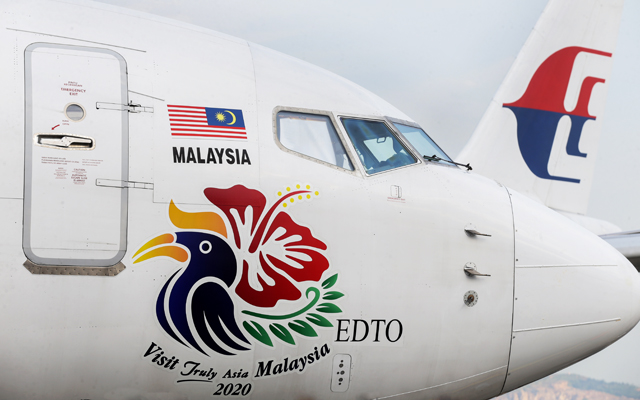
Malaysian prime minister Mahathir Mohamad officially launched the Visit Malaysia 2020 campaign logo yesterday at KL International Airport (KLIA), replacing the previous controversial version that received much flak for its amateurish design.

The new logo is inspired by the Malaysian batik, featuring icons such as the hornbill, the national flower of hibiscus, the wild fern, and colours of the Malaysian flag. They represent the diversity of Malaysia’s culture, heritage, flora and fauna, as well as experiences offered as a holiday destination, together with a Visit Truly Asia Malaysia 2020 campaign tagline.

Mahathir launching the Visit Malaysia 2020 campaign logo as Tourism, Arts and Culture Minister Mohamaddin Ketapi looks on; Photo credit: Bernama

Focusing on ecotourism, arts and culture, the Visit Malaysia Year 2020 campaign is targeting 30 million international tourist arrivals and RM100 billion (US$24.3 billion) in tourism receipts.

During his speech, Mahathir called upon the country to embrace the campaign, which has been conceived as a means to reach out to target high-yield markets namely South-east Asia, China, India, UK and Germany.

He reminded stakeholders that the success of the campaign depended on effective promotions, and that the tourism sector needed to “move in tandem with digital transformation” and emphasise on digital marketing with the help of social media platforms.

Mahathir shared: “Through this campaign, we will welcome visitors from all over the world to experience the uniqueness and beauty of Malaysia’s ecotourism attractions including our rainforests, mountains, islands and beaches. At the same time, visitors will have the opportunity to immerse themselves in our diverse culture, arts, heritage and history. This is in line with the campaign’s promotional theme – culture, nature and its people.”

The government also recently launched a new RM5 million tourism fund to help private-sector tourism industry players in their destination promotion efforts.

In addition, to bolster the growth of handicraft and homestay businesses, a RM500 million SME tourism fund will be made available by SME Bank for the government to subsidise interest rates by two per cent.

Furthermore, visa-on-arrival (VoA) facilities for Chinese and Indian tourists have also been expanded to 13 entry points in Malaysia, up from the previous six. The VoA can be given to Chinese and Indian tourists who enter Malaysia via Brunei, Indonesia, Singapore and Thailand.

Nigel Wong, secretary-general of the Malaysian Association of Tour and Travel Agents, said: “We applaud the government’s initiatives to assist the private sector and make Visit Malaysia 2020 a success. With just a few more months to go, both the government and private sector now need to step up promotional efforts.”

Uzaidi Udanis, president, Malaysian Inbound Tourism Association (MITA), opined: “The launch event at KLIA had a strong turnout from the private sector and government agencies, which is proof that government and private sector partnership is strong, and that the people are fully supportive of the Visit Malaysia 2020 campaign.

“As part of our efforts, MITA has conducted boot camps for inbound tourism players in almost all states, to help identify and develop new tourism products and packages,” he added.
Moratorium on new flights to Boracay gateways lifted

0
Boracay

The Philippines’ Civil Aeronautics Board (CAB) has lifted the moratorium on new and additional scheduled and chartered flights to Boracay’s gateways, Caticlan and Kalibo, following clamour from irate stakeholders over the loss in tourism earnings brought about by the flight ban.

Instead, CAB’s executive director Carmelo Arcilla said that the schedules of charters will “be spread out on certain days of the season”, depending upon the island’s carrying capacity.

CAB changes its mind, now allows charter flights to Boracay (pictured)

Arcilla also added that while scheduled flights will be maintained for IATA Summer Season 2019, “no new applications for new and/or additional flights, or revisions effectively (such as) adding new flights will be entertained”.

Charter operations also have to submit applications for chartered flights no later than 30 days to the intended flight date.

The CAB is also limiting all airline operators to use aircraft with a maximum of 200 seats.

The moratorium was imposed a month ago, when passenger arrivals to Boracay exceeded the 6,405 daily arrival cap in April and May. But the Department of Tourism (DoT) insisted that it didn’t breach the 19,215 tourist capacity that was imposed on Boracay at any given time. Instead, the DoT pointed to the need for better coordination between CAB and the DoT.

DoT’s secretary, Bernadette Romulo Puyat – who also sits on the CAB board – welcomed the lifting of the moratorium, saying it will “facilitate the stakeholders’ goal of ensuring a thriving and vibrant tourism industry in Boracay”.

“And with these (CAB) guidelines in place, we are assured that Boracay’s carrying capacity is strictly enforced by the authorities,” Puyat added.

Tourism Congress of the Philippines president, Jojo Clemente, said:
“We are happy that CAB’s moratorium of charter flights to Kalibo and Caticlan has been lifted. We also thank the DoT for intervening on behalf of the industry stakeholders and their concerns.

“We only hope that, in the future, similar actions be studied thoroughly before, and with consultation with affected stakeholders before implementation,” Clemente stressed.

HalalHoliday.com launches as Muslim-friendly OTA in Malaysia

0

Malaysian OTA HalalHoliday.com has recently soft launched as a Muslim-targeted portal offering Umrah and holiday packages – including both inbound and outbound tours – to more than 60 countries.

The company’s CEO, Abdul Rahman Mohd Ali, said that the portal aims to be the world’s only Muslim-friendly online travel marketplace when it fully launches in September. HalalHoliday.com will offer more than 500 flights, cruises offered by cruise partner Genting Dream, as well as instant online bookings at over 600,000 hotels across 180 countries.

An Umrah package as listed on the HalalHoliday website

The Umrah packages, which will launch in September, allow pilgrims to personalise their faith-based journey. They also offer flexibility in accommodation dates, destinations and transport arrangements.

At the platform’s recent launch in Kuala Lumpur, Abdul Rahman called on agents in Malaysia and beyond to collaborate and share their Muslim-friendly products with the platform. “We have a separate entity called Muslim International Travel Standard to vet the products and ensure compliance with requirements,” he said.

The director general of the Islamic Tourism Centre, Abdul Khani Daud, shared that Malaysia received an influx of 5.2 million Muslim tourists in 2018, making up 20.1 per cent of the 25.8 million visitors to the country that year.

He believes that HalalHoliday.com would assist Malaysia to further tap the Muslim tourist market, which is projected to reach 230 million travellers worldwide by 2026.

Four Asian markets account for 20% of global travel spend

0
The US remains the third most visited destination for travellers from mainland China; a Chinese tourist at the Grand Canyon pictured

Overnight visitors from mainland China, South Korea, Japan and Taiwan now account for 18.5% of global travel expenditure in the world’s top 200 cities, up from just 11% a decade ago.

This is according to Mastercard’s new breakout report, Global Destination Cities Index (GDCI): Origins, which ranks where the most international travellers originate, and the most popular destinations.

The US remains the third most visited destination for travellers from mainland China; a Chinese tourist at the Grand Canyon pictured

Business and leisure travellers from the top 10 origin markets comprise nearly half (49.1%) of all overnight international visitor arrivals to the 200 destinations and 48.4% of their total expenditure.

In 2018, the global travel industry contributed a record US$8.8 trillion and 319 million jobs, and these insights help drive decision-making on how to attract international travellers and better cater to their needs.

The top 10 origin markets are, respectively, the US, China, Germany, the UK, France, South Korea, Japan, Canada, Russia and Taiwan.

“What’s most fascinating for us from an Asia-Pacific perspective is the fact that, not only has this region’s spend contribution to global travel expenditure nearly doubled in the last decade, but we’ve barely scratched the surface in terms of percentages of the populations that are traveling overseas,” said Rupert Naylor, senior vice president, data & services, Asia-Pacific, Mastercard.

“This is particularly significant in mainland China, India and Indonesia – three of the most populated places on Earth – where only 1, 0.5 and 1.7 overnight international trips were made per 100 residents to the 200 destinations in 2018, demonstrating the vast and still emerging potential of tourism and travel from these markets. This represents significant opportunities for local governments and businesses to leverage these insights to better plan and promote their travel, tourism and retail offerings.”

The figures contrast sharply with Australia where 42.7 overnight international trips per 100 residents were made to the 200 cities in 2018.

The GDCI report also revealed other encouraging findings that illustrate the region’s potential economic growth from travel and tourism:

Asia-Pacific markets comprised 40% of the top 20 origins markets in the index with Australia coming in 11th, India 12th, Indonesia 19th and Malaysia 20th.

Residents of South Korea and Taiwan are travelling overseas more than ever – breaking into and recording the biggest jumps in the top 10, moving up six and four spots respectively since 2009.

While Indonesia, the world’s fourth most populous country, ranks 19th on the origins index (with a 4.6% CAGR), its travellers rank seventh in terms of travel expenditure growth over the past decade (9.7%), demonstrating their increasing and outsized purchasing power.

Travellers from Asia are still largely choosing to visit destinations within the region which bodes well for intra-Asia growth.

Meanwhile, the US remains the third most visited destination for business and leisure travellers from mainland China, and the number one most visited by residents of Japan and Australia (when adding up the sum of visitors to all GDCI cities within each market).

Amadeus rolls out new API with NDC capabilities

0
Amadeus Travel API. This NDC-enabled solution will give travel agencies worldwide access to new content and fares from our airline driver customers via an NDC connectivity.

Amadeus has launched a new enhanced version of its flagship Web Services solution called Amadeus Travel API, which integrates with travel agencies’ existing systems and allows agents to build their own customised travel booking applications.

Set to be rolled out globally on a gradual basis, this NDC-enabled solution – co-designed with Travix, a driver customer of Amadeus’ NDC [X] programme – will give travel agencies worldwide access to new content and fares from Amadeus’ airline driver customers via an NDC connectivity.

Amadeus Travel API will give travel agencies worldwide access to new content and fares from airline driver customers via an NDC connectivity

In addition, the solution will offer greater functionality for Amadeus’ travel agency customers in the following ways:

Access to new airline content and fares via an NDC connectivity, alongside content from traditional technology such as EDIFACT, and other APIs. NDC is an integral part of the Amadeus Travel Platform – a platform which brings together all travel content from multiple sources in one place.

  • Simplified workflow of shop, order, pay, ensuring a smoother experience which mirrors the consumer journey.
  • Cross-sell of ancillary services and up-sell of branded fares.
  • Change and cancellation functionalities to include refund, void or exchange options.
  • Acceptance of both credit card and cash payments with integrated reconciliation to mid and back office technology, ensuring NDC bookings are fully integrated in the down-stream processes of agencies.
  • Optimised to work across multiple interfaces so customers have the flexibility to start a booking on a mobile device and can choose to finish the booking on a desktop, or vice-versa.

Some early adopters include AERTiCKET, American Express Global Business Travel, BCD Travel, House of Travel, and TUI.

In the coming months, Amadeus will also be launching the NDC-enabled version of its leading cloud-based travel agency solution, Amadeus Selling Platform Connect.

Cross Hotels & Resorts picks up third management deal in Phuket

0

Cross Hotels & Resorts, recently rebranded from BHMA Hotels & Resorts, has signed a hotel management agreement with Three Land for its third Phuket property.

Set to open in mid-2021, the X2 Vibe Phuket Patong Center will offer 323 guestrooms, alongside facilities such as an all-day dining restaurant, gym, kids’ club, meeting rooms, and a swimming pool with underwater speakers.

Phuket Le Coral

It will be located in the centre of Patong Beach, a 50-minute drive from Phuket International Airport and a 10-minute walk to Patong Beach and Bangla Walking Street.

The latest signing follows the May 2019 announcement of Away Phuket Le Coral, which is currently undergoing renovation with completion scheduled for late this year. Located on the beachfront of Natai Beach in Phang Nga Province, the 58-suite hotel is a 40-minute drive from Phuket International Airport.

Cross Hotels & Resorts CEO Peter Lucas said the signing of three hotels in Phuket within the past 12 months is reflective of the company’s “development aspirations of acquiring quality hotels with large inventories in the world’s most popular visitor destinations and gateway cities”.

“Phuket has been clearly identified as a key target destination for Cross Hotels & Resorts now and into the future,’’ he added.

Cross Hotels & Resorts currently operates 25 hotels across three brands; X2, X2 Vibe and Away in Thailand, Vietnam and Indonesia.