TTG Asia
Asia/Singapore Friday, 3rd April 2026
Page 1162

What’s in a Thomas Cook name? Ask Madhavan Menon

0
Madhavan Menon

To keep or not to keep? Such is the quandary that is facing Madhavan Menon, chairman & managing director of Thomas Cook India (TCIL), as he mulls a brand name change for the India-based company in the wake of Thomas Cook’s fall announced earlier this week.

Calling the past few days one of the “toughest” days in his career due to the association with the iconic Thomas Cook brand, Menon had to embark on a communication blitz in the immediate wake of UK-based firm’s collapse to clarify and reiterate the separate ownership of TCIL since the latter’s acquisition by Fairfax Financial Holdings in August 2012.

Thomas Cook India’s Madhavan Menon faces a brand name quandary in the wake of Thomas Cook UK’s demise, even though the two entities are separate

“It’s been some of the toughest days that I’ve faced, because obviously by association (most people) will tie us to Thomas Cook UK. It’s very unfortunate but when I look at it, I think ‘thank god we got out seven years ago’,” said Menon, speaking to TTG Asia on the sidelines of yesterday’s TTG Travel Awards in Bangkok, where Menon was in attendance to receive an award for TCIL in the category of the best travel agency in India.

Yet, the contrast between the fortunes – not to mention future – of the two Thomas Cook entities could not be more stark.

While the beleaguered Thomas Cook Group needed to service a massive 1.7 billion pound (US$2.1 billion) debt pile until its ultimate liquidation early Monday morning, TCIL is in a “financially secure” position, the company said in a statement earlier this week.

Still, Menon sees the loss of iconic brand names from the global tourism industry as “a major disaster”. He said: “Thomas Cook is a name that is 178 years old and it’s suddenly gone. And in all probability, we will be the only Thomas Cook left.”

But that’s where the astute travel business leader also sees an opportunity, especially as other Thomas Cook subsidiaries in Europe hang in balance.

While challenging the last couple of days might had been for Menon, the days ahead are unlikely to be any easier for Menon as he evaluates the options of whether to keep the Thomas Cook brand name.

“The reality is that we have heritage and pedigree behind us,” he said. “I keep telling myself, with 138 years in India the brand equity is huge. In one month’s time, or perhaps even 10 day’s time, people will stop talking about Thomas Cook and maybe there’s an opportunity. I don’t know, but I don’t want to lose out on it.”

Menon recounts to TTG Asia why he senses an “opportunity” when he received the award from TTG Asia Media’s Darren Ng (left) and Pierre Quek (right) on stage. He said: “When Darren said to me, ‘you’re the *only Thomas Cook that survives!’, to me that’s a positive thing, that many people out there must be wondering the same thing. The reality is out there there is an opportunity.” [*Editor’s note: In Asia, there’s still Thomas Cook China]
The company, as a brand licensee, has use of the Thomas Cook name until 2024, but “a complete brand name transition plan” is already lying in wait for the past eight months, according to Menon, and that could be implemented any time a decision is made.

“So the decision we need to make today is whether to make the brand transition today, or do I wait one year to make the brand transition. I think there are a lot of factors that have to be evaluated – what’s the damage to the brand, how quickly will people forget it and move on, etc. We have to figure out all these things at the moment,” said Menon.

Whichever name that TCIL ultimately takes, Menon sees far greater importance – and opportunity – in how it “reprojects” itself from a legacy company into “an experiences company”.

He added: “Today’s travel is changing so fast with OTAs, the Oyos and Airbnbs of the world, but we believe we have a segment which is package tours and that is where we play our role. We’re in the DMC business, which is a little bit more uncertain because they depend on source markets to aggregate and give business for them, but I genuinely believe we sell experiences and don’t do anything else.”

So, for a businessman who prides himself on rational decision making, where does he stand on the Thomas Cook brand retention?

“My heart tells me hold me to hold on to the brand, but my brain tells me to research and not make a decision yet. I’ve got a market research company and brand evaluation company looking at it – this all happened in the last 48 hours,” Menon stated.

“I need data to tell me. If I get data and I make a decision, right or wrong I’ll never regret it. But if I make a decision on a hunch, I guarantee that if something goes wrong I’ll blame myself for it,” he added.

“Perhaps one or two years from now, you will still see us calling ourselves Thomas Cook India. Who knows?”

Jakarta trade calm but cautious after student protests take to streets

0

It’s been a week of apprehension for many inbound tourism players in Indonesia after demonstrations broke out in Jakarta to demand lawmakers to halt the passage of controversial bills.

Australia issued an official travel advice in response to the recent gathering of hundreds of thousands of Indonesian students to protest against changes to controversial bills including one that would criminalise extramarital sex – something seen by travel trade players as a potential threat to Indonesia’s tourism industry.

Street rallies led by student protestors in Jakarta have prompted safety concerns among foreign visitors to the city

On its official Smartraveller page, the Australian government wrote: “We’ve updated our travel advice to include new information about possible future changes to Indonesia’s criminal code… We haven’t changed the level of our advice – ‘exercise a high degree of caution’ in Indonesia, including Bali.”

The Australian government has advised its citizens to monitor the local media for information about possible new safety or security threats, to check with hotels, tour guides or employers about local safety and security concerns, and to avoid known flashpoints, such as protest areas.

Like Australia, the US has strongly advised its citizens to avoid protest areas where demonstrations are occurring and to exercise caution if unexpectedly in the vicinity of large gatherings or protests.

The US Embassy & Consulates in Indonesia’s official website also contains a warning to travellers to be aware of their surroundings and to keep a low profile.

In Jakarta, the rally resulted in clashes between the police and the protesters but the protest area was contained to the House of Representatives compound in Senayan, with the majority of the capital unaffected, without public facilities suffering major damages.

But the university student rally, which kicked off on Tuesday, caused anxiety among inbound travel agents. Anita Utami, sales manager of Dwi Tour Jakarta Branch, said that on that day, her travel agent partner in Japan called her continuously, bombarding her with questions about safety issues in Jakarta as her Japanese guests were scheduled to transit in Jakarta and stay in a hotel near the Soekarno-Hatta International Airport.

“I told them, ‘Don’t worry. It is safe as the protest area is very far from the airport’,” she said.

According to Dwi, 75 per cent of her inbound clients visit Indonesia for business and 25 per cent for leisure. None of them made cancellations due to the rally, she said. But she expressed concern that although the rally only took place in a small part of the city, it could potentially deter travel to the country due to misunderstandings caused by heightened media coverage over the student protests.

Hasiyanna Ashadi, managing director of Marintur Indonesia and chairman of the Association of Indonesian Tours and Travel Agencies (ASITA) Jakarta chapter, expects Tourism Ministry’s Tourism Crisis Center (TCC) to take action during the staging of rallies in Indonesia. According to her observation, the centre only operates in certain conditions, such as natural disasters and terror attacks.

She said that the TCC could assist inbound tourists and people from outside Indonesia in obtaining useful information about demonstrations, including the location of protests, so that they would not be misinformed that the political unrest is happening across the entire capital city.

“Jakarta is a big city. I don’t want the city’s tourism to collapse entirely because people think that rallies are (happening) everywhere,” said Hasiyanna.

With leisure travellers making up 80 per cent of total inbound arrivals to the country, Marintur’s guests stayed calmed this week, according to Hasiyanna. She, however, hopes that the Criminal Code rally will not persist like the anti-former Jakarta governor Basuki “Ahok” Tjahaja Purnama rallies two years ago.

Hasiyanna, whose clients are mostly from Europe, recalled that the Ahok rally made people scared to visit Jakarta because it happened several times, noting that it caused the number of her inbound visitors to decline by 10 per cent at that time.

Jongki Adiyasa, executive director of Ina Leisure Tour & Travel, said that Jakarta and Bandung were the most favourite destinations for his guests who were mostly families from the Middle East. The rally in Jakarta, however, did not cause them to postpone or cancel their trips.

“The tourism industry is facing difficult times right now, not only in Indonesia but also in other countries. Even our big brother like Thomas Cook collapsed. I hope (protestors) think twice before they take to the streets. If this rally continues, it will make potential inbound tourists reluctant to visit,” he said.

Pirantie Basa, director of sales of Harris Vertu & Yello Hotels Harmoni, said that the demonstrations did not affect her business as it happened far from her hotel.

She expects the rally to end soon. If it continues, she hopes that the protesters do not move to the areas around the State Palace, which is closer to her hotel.

“When post-presidential election protests escalated in the middle of this year, we lost residential meetings worth hundreds of million rupiah in one day just because of a rally in front of the Constitutional Court (MK) and General Election Commission (KPU). Streets leading to our hotel were blocked, and many made cancellations at that time,” she said.

Pirantie, therefore, welcomes President Joko Widodo’s plan to move Indonesia’s centre of administration to East Kalimantan and retain Jakarta as the financial capital. If it becomes a reality, business people in Jakarta will no longer be affected negatively by political rallies directed at the government or lawmakers, he said.

Correction: An earlier version of this story wrote that the students were protesting against changes to a corruption law, which is non-existent. They were protesting against controversial bills. 

Hyatt writes new Caption for lifestyle brand

0
Photo Avenir, Radical Galaxy

Hyatt Hotels has rolled out Caption by Hyatt, a new select service lifestyle brand “designed to inspire personal connection” through “comfortable, flexible and communal spaces”.

Caption by Hyatt hotels will be anchored by a distinctive F&B experience that will be a mash-up between café, market and bar. Hotels under this brand will feature all-day drinks and sharable snacks, spaces designed for guests to plug in anywhere, flexible and multi-purpose spaces for lounging and small events, as well as a rotating calendar of DIY and hosted events, from trunk shows to local beer tastings.

Distinctive F&B experiences will anchor hotels under Caption by Hyatt, a new select service lifestyle brand introduced by Hyatt

Hyatt’s vice president of global brands Heather Geisler said: “At Hyatt, we believe in the power of personal connection. By listening to our guests, we know that whether they are traveling alone or with a friend, they are looking to connect with others in an environment that is authentic and approachable.”

“We intend for the Caption by Hyatt brand to be a global growth driver domestically and internationally in dense urban markets, emerging neighbourhoods and high foot traffic areas,” said Jim Chu, global head of development for Hyatt.

“We believe the brand is primed for strong growth as it can flex and adapt to suit the needs of different locations and markets and can offer a more sustainable approach to design and operations.”

Nay to proposed tourism tax in Macau

0

The Macanese trade is casting doubt on the effectiveness of the government’s proposal to impose a tourist tax to tackle overtourism, instead seeing other ways to manage congestion in the city.

Cooper Zhang, director of inbound department at CITS (Macau), is worried that the proposed tax would undermine travellers’ desire to visit Macau. “There are a large number of same-day travellers to Macau who spend money and support Macau economy,” he said.

Inbound trade players are worried that the proposed tourism tax would make Macau less of an attractive destination to foreign travellers

Also opposing the proposed tax, Top Holidays – P & E International Travel’s general manager Paul Wong explained: “This violates what Macau has been doing – welcoming visitors with friendly hospitality – and may send an unpleasant signal to tourists.

“Overseas countries like Japan reinvest the tax income to improve domestic infrastructure rather than increasing income, but Macau’s resources are sufficient and I don’t see the need to copy the practice,” he added.

“The Chinese government is encouraging more integration, i.e. multi-destination travel, within the Greater Bay Area but the tax means a barrier,” Wong said, questioning too how the government would implement the collection of tax.

The city’s hoteliers are concerned that the proposed tax would impact the hospitality sector, which is already facing headwinds amid heightened trade tensions.

“The US-China trade conflict led to a decrease in visitors’ average spending. The tourist tax would directly affect low- to mid-tier travellers,” Macau Hotel S, general manager, Charles Huang opined.

“Five-star hotels are competing with three-star properties by offering discounted rates on weekdays. Therefore, traffic flows may be affected and lead to more pressure for hotels below three-star categories,” he added.

Huang does not think that Macau is suffering from overtourism. “In fact, Macau’s problem is not (overtourism) but that the government only focuses on traditional attractions.

“There are numerous ways to tackle overcrowding. For instance, the government could open up F&B in the Inner Harbour area by revitalising the many abandoned piers,” he proposed.

The Macao Government Tourism Office (MGTO) in mid-2019 conducted a feasibility study on the implementation of a tourist tax by surveying residents, visitors and travel trade members, with preliminary results showing varying opinions among the different stakeholders.

The overall report is targeted to be finalised by the end of this year, which MGTO will then submit the findings to the SAR government for further consideration and action.

India gains ground as key market for the Maldives

0

A combination of several positive factors including endorsement from Bollywood celebrities, growing air connectivity between the two countries, and aggressive promotion, has led to a surge in Indian arrivals to the Maldives, culminating in the powerful South Asian neighbour becoming its second largest source market.

While China reigns as the Maldives’ top source market, India in June overtook Italy as the second largest source to record 82,140 arrivals in 1H2019, compared to 41,082 in the same 2018 period and reflecting a near 100 per cent increase year-on-year from 90,472 arrivals for the whole of 2018.

India has risen to become the second largest source market for the Maldives, on the back of positive factors such as increasing affordable hotel supply and better air connectivity between the two countries

According to Thoyyib Mohamed, managing director of the Maldives Marketing and PR Corporation – the country’s main state tourism promotion agency – the appointment of the new government in the Maldives has brought about the launch of aggressive destination promotion campaigns in India and elsewhere.

As well, the commencement of new services from Indian carriers, IndiGo and GoAir, is another positive factor driving the spike in arrivals from the Indian market, he said, adding to existing scheduled flights to the Maldives operated by major airlines such as Air India and SpiceJet.

The country’s tourism marketing budget has tripled to US$6.7 million in 2019 from $2.2 million in 2018, following calls by the industry for greater destination promotion given the proliferation of new resorts opening in the past 18 months.

Dillip Rajakarier, CEO of Minor Hotel Group, which owns the Anantara and Niyama resorts in the Maldives, believes the increase in numbers from India is driven by increased air connectivity, which enhances the Maldives’ value proposition to budget travellers attracted by the growing room supply in the three- to four-star categories as well as local guesthouses.

“At the luxury end of the market we have also seen significant increases of 26 per cent in guests from India,” Rajakarier said.

A current major trend attracting more Indians to the Maldives, according to Andrew Ashmore, chief commercial officer at Coco Collection Hotels & Resorts/Sunland Hotels, is Indian travellers wanting to emulate Bollywood stars in their social media sharing of holidays in the Maldives.

Furthermore, there is also growing spending power among the Indian middle classes spending power, he observed.

Malaysia eyes inbound growth from Central Asia

0

Tourism Malaysia has outlined concrete plans – which include improving air links and building destination awareness – to grow inbound traffic from Kazakhstan, as the Central Asian country was among the fastest growing tourist source markets for Malaysia in 2018.

Arrivals from Kazakhstan surged 33.2 per cent from the corresponding period in 2018, from 6,385 tourists to 8,503 tourists. The length of stay of Kazakh tourists also increased by two nights over 2017 to 8.3 nights in 2018, while whole per capita expenditure grew 4.5 per cent in 2018 compared with the preceding year.

Shopping is a main drawcard for many Kazakh tourists to Malaysia

To improve the country’s accessibility, Tourism Malaysia is leveraging its joint international tourism development programme with Malaysia Airports, which provides cash incentives to attract more Central Asia Airlines to fly direct, as well as charter flights, to Malaysia.

Tourism Malaysia’s director-general, Musa Yusof, elaborated: “Our collaboration with Kompas Tour late last year resulted in three charter flights by Kazakhstan’s Sunday Airlines for the Almaty-Langkawi-Almaty sector in December 2018 and January 2019.”

He added that the NTO is in the midst of discussions with a few other airlines from Central Asia about the possibility of mounting more charter flights for the coming winter season.

Direct connections between the two countries are currently limited to Air Astana’s thrice-weekly flights between Almaty and Kuala Lumpur.

Meanwhile, to further increase per diem expenditure of tourists from Kazakhstan which averaged about RM534 (US$128) per person in 2018, Tourism Malaysia will be promoting multiple Malaysian destinations and encouraging expenditure on activities such as shopping.

Musa shared: “Currently, travellers from Kazakhstan prefer to stay at a beach destination for a few days before returning home. We would like to develop tour packages that combine multiple beach destinations and city attractions to encourage longer stays and higher expenditure. For example, Langkawi and Penang or Kuala Lumpur and Kota Kinabalu.”

Shopping also is a key element for this market, as travellers from Kazakhstan “love to buy electronic items and gadgets”, Musa revealed.

In addition to exhibiting at the recent PATA Travel Mart in Nur-sultan, Tourism Malaysia will be participating in the Tashkent International Travel Fair 2019 in November, and Kazakhstan International Travel Fair 2020 in April 2020 to promote Malaysia.

“I believe there will be many opportunities as well for us to explore possible collaborations with attendees such as tour operators from CIS countries to promote Visit Malaysia 2020 in tactical campaigns.”

Aside from Kazakhstan, the rest of Central Asia are emerging inbound source markets for Malaysia and have potential for growth.

Musa noted: “Our consistent marketing efforts and collaboration with airlines and tour operators in Kazakhstan has proven to be fruitful, resulting in strong growth in the market. We hope to continue the momentum and increase our marketing activities in the surrounding market areas.”

Dusit to open second Nepal hotel in Kathmandu

0

Thailand’s Dusit International has signed an agreement with Hotel Lhasa International to develop and operate Dusit Princess Kathmandu, Nepal, which is set to open in 3Q2020.

Operating under Dusit’s upper-midscale Dusit Princess brand, the new 108-key hotel will be located in the capital’s Lazimpat neighbourhood.

(From left) Dusit International’s Lim Boon Kwee and Suphajee Suthumpun, together with Hotel Lhasa International’s Dorje Gyaltsen Lama and Tenzin Zoepa Lama, officiated the deal in Bangkok

Hotel facilities will include an outdoor swimming pool and pool bar, a rooftop lounge-bar, a fitness centre, a spa, and meeting facilities. An all-day dining restaurant will serve daily buffet breakfast plus a variety of international and local cuisines.

Dusit Princess Kathmandu, Nepal is the second property Dusit International has signed to operate in Nepal. Dusit Thani Himalayan Resort & Spa, a luxury mountaintop resort in Nepal’s central region, is slated to open in 1Q2021 under a hotel management agreement.

New hotels: Hard Rock Hotel Maldives, Holiday Inn & Suites Saigon Airport, and more

0

Hard Rock Hotel Maldives
The Hard Rock brand has made its debut in the Maldives with the opening of the Hard Rock Hotel Maldives, located within the Emboodhoo Lagoon. The 178 keys comprise family suites, beach villas, overwater villas and overwater pool villas; the largest of which is the 460m2 Rock Star Villa sporting a private boat jetty and its own infinity pool.

A full range of facilities are available, such as Body Rock fitness centre, Rock Spa, Rock Shop, Hard Rock Roxity Kids Club and Teen Spirit Club. Dining options include all-day restaurant Sessions, as well as The Elephant and The Butterfly presents Latin American-inspired cuisine. There is also a Hard Rock Cafe at Crossroads Maldives, of which the property is part of.

Holiday Inn & Suites Saigon Airport, Vietnam
The first Holiday Inn-branded hotel in the country features 350 rooms, including 100 suites, alongside facilities like a 50m-long swimming pool, 24-hour gym, the Manja Manja Restaurant, and Déli Café and Lobby Lounge. Function spaces within the property include the Song Saigon Ballroom designed to welcome up to 600 guests for banquets, and four additional function rooms that can be combined to seat a further 270 guests.

ibis Styles East Perth, Australia
The 18-storey ibis Styles East Perth has added 252 guestrooms to city’s hotel supply. Each room includes free Wi-Fi, Chrome Cast, USB and HDMI connectivity and USB charging facilities; and families can avail inter-connecting rooms available with bunk beds – designed with children in mind. The Eastside Social Bar and Restaurant offers a super-food geared menu, while other hotel amenities include a 24-hour gymnasium, high-tech Urban Offices and a co-working space for business travellers.

Conrad Shenyang, China
Conrad Shenyang is perched on the top of the city’s tallest building, the Forum 66. There are 315 rooms including 37 suites, with generous space starting at 51m2in size. The property’s leisure amenities include a gym, heated indoor pool and whirlpool, and a wellness gallery. Event planners may avail the nearly 2,000m2 of meeting space which can accommodate up to 1,520 guests in total. There are also six F&B options, ranging from the speciality grill restaurant Link, to the all-day-dining Archive serving both a la carte options and an Asian and Western buffet.

Avani Sukhumvit Bangkok, Thailand
Situated atop a major retail complex in the On Nut neighbourhood is Avani’s latest opening. The 382-key property offers facilities like the all-day diner Greenhouse, an AvaniFit gym, AvaniSpa, as well as an outdoor pool and a pool bar. There are also several function spaces, where the largest, Grand Chambray Ballroom, can accommodate up to 300 pax banquet-style.

Master plan to reshape Singapore’s Sentosa, Brani islands revealed

0
Artist’s impression featuring a bird’s eye view of the developments on Sentosa and Pulau Brani, under the Sentosa-Brani Master Plan

Sentosa Development Corporation (SDC) has unveiled a comprehensive master plan aimed at redeveloping the Sentosa and Pulau Brani islands into “a game-changing leisure and tourism destination” in Singapore, as part of the upcoming Greater Southern Waterfront precinct announced earlier this year.

The Sentosa-Brani Master Plan will be implemented in phases over the coming two to three decades, which will see the introduction of world-class attractions and new spaces and concepts, including rejuvenated beaches and expanded nature and heritage trails.

The redeveloped islands will feature five zones – each delivering unique experiences, with the zones progressively taking on a more leisurely character as guests travel farther from the city into the islands: Vibrant Cluster, Island Heart, Waterfront, Ridgeline, and Beachfront.

Set to begin construction in 4Q2019 is Sentosa Sensoryscape, the first milestone project scheduled for completion in 2022. The new 30,000m² Sentosa Sensoryscape – which is about the size of 5.5 football fields – will link Resorts World Sentosa in the north to the island’s beaches in the south through a multi-sensory experience, replacing the existing pedestrian thoroughfare.

Sentosa Sensoryscape will also feature a series of vessel-like structures, measuring some 25m wide and 13m tall. Each of these will be framed by unique architectural features, and is set to pique and amplify one of the five senses through various elements such as polyphonic water features, mist, as well as fragrant flowers and plant species with unique scents.

The redeveloped precinct will incorporate universal design principles to ensure easy access for all guests, as well as feature breakout spaces and expanded vistas through new photo and lookout points. All of these features are designed to enhance the overall experience of guests strolling through the island in the day or night.

“The Sentosa-Brani Master Plan is one of our tourism developments to position Singapore as a leading destination for the next few decades. Sentosa Sensoryscape is the first project under this Master Plan. It will complement the expansion of Resorts World Sentosa and subsequent infrastructure enhancements on Sentosa and Pulau Brani,” said senior minister of state for trade and industry and education, Chee Hong Tat.

“Our tourism industry is doing well and still has plenty of scope for further growth and rejuvenation. It is one of our economic engines that can continue to create many good jobs for Singaporeans.”

At PHIST, hospitality sector sees sustainability as key to future growth

0

The travel industry needs to adopt sustainability measures that meet the growing demands of eco-conscious travellers to drive business into the future.

At the second edition of PHIST (Phuket Hotels for Islands Sustaining Tourism) conference, which took place this week, industry leaders said that introducing sustainable measures to operations is no longer an option if businesses want to thrive in the future.

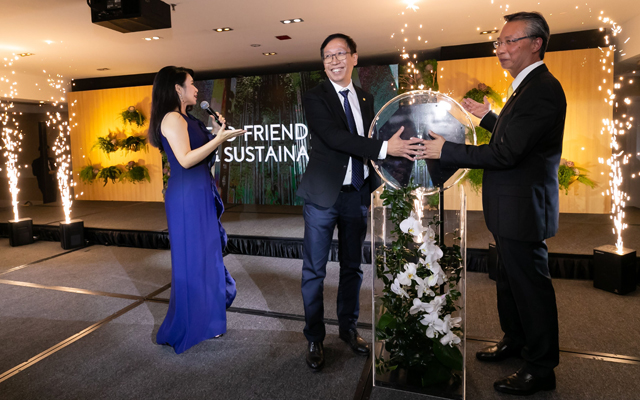
Industry leaders at the recent PHIST conference said that sustainability is key to future growth

Jeannie Kwok, Hilton’s director of corporate responsibility, said: “The next generation are passionate about sustainability and simply don’t want to stay somewhere full of plastic. They have the future spending power and they are making demands.”

The tourism industry’s sustainability is a key component that drives decision-making for the next generation, and businesses who fail to embrace it will lose out.

STR Global’s Jesper Palmqvist: Sustainability no longer an option in light of growing number of eco-tourists

Jesper Palmqvist, STR Global’s area director for Asia-Pacific, said: “We can see travellers and consumers are looking at sustainability more as a factor when making decisions about which destination or resort to stay at. It is no longer a choice.”

The costs involved and lowering profit margins are often seen as barriers deterring businesses from investing in environmentally-friendly alternatives and sustainable initiatives.

Mandarin Oriental Bangkok’s hotel manager Frank Droin said: “It can be off-putting investing in changing plastic to something more expensive, but it’s not just about generating revenue, it’s about saving costs.”

Six Senses’ sustainability and quality assurance manager Pimjai Doungnate said that the hotel management company saves “significant costs” every year from its water and waste management programmes, composting and energy conservation measures.

“If you get it right, you can save a lot of money on operational costs,” she said, adding that innovative initiatives can also double up as marketing tools to capture business from eco-savvy consumers.

Drion said that hotel owners who fail to invest in sustainable initiatives tend to lose out in the long run.

“To those owners who don’t want to make this investment, it’s only a matter of time before people don’t want to come to your hotel because you’re still using plastic bottles of shampoo or plastic water bottles in your limousines,” he said.