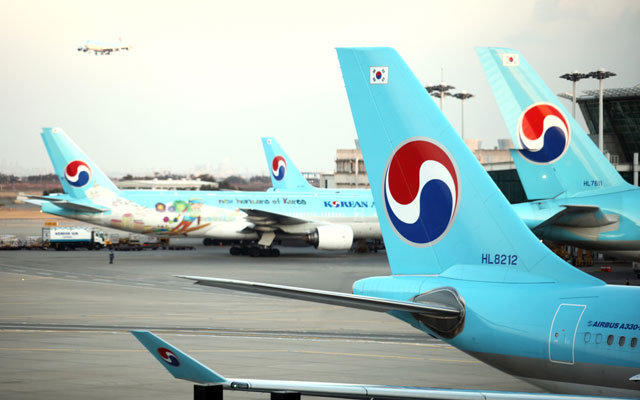
Hanjin Group, the parent company of Korean Air, is considering to sell all three of the airline’s core businesses – its inflight meal service, mileage programme and aircraft maintenance division, to raise roughly US$2.4 billion in funds as part of its self-rescue plan amid a liquidity crisis.
South Korea’s flag carrier, also the country’s largest airline, has been making painstaking self-rescue efforts to tackle the fallout from the coronavirus, since Korea Development Bank (KDB) and Export-Import Bank of Korea said they will inject roughly US$978.8 million into the flagging airline.
Cash-strapped Korean Air considers selling its core business units to tide through the coronavirus
On April 26, Hanjin Group said it had launched a full-fledged internal review on how to sell its key business units. Korean Air had recently announced that it would sell its land in Songhyeon-dong, Seoul, but creditors rejected the proposal saying that it is meaningless to sell the land that had been out on the market since last year and that the assets need to be “sellable”.
“We will procure a lot of funds through the sale of Korean Air’s business units,” Dae-hyun Choi, vice president of KDB, said, adding that the company will announce detailed measures soon.
Choi: Sale of Korean Air’s three business divisions will raise “a lot of funds” for the carrier
The carrier’s inflight meal business is expected to steadily generate cash once operations have normalised, and compared to the other two business units, is relatively easy to sell in instalments.
The mileage division has a market valuation worth millions, as the mileages can be sold to credit card companies for cash. Korean Air’s maintenance and repair division is also considered a valuable business that can steadily generate cash as long as inspections and repair of domestic planes are maintained at a constant level.
Market watchers say Korean Air will raise billions of dollars in funds if it successfully sells all three of its key business units. However, it is unclear whether the carrier will be able to carry out the entire deal smoothly.
A trio of hotels in Siem Reap have teamed up with a private museum on a meal scheme to provide more than 400 meals a day to individuals most affected by Cambodia’s lockdown due to the coronavirus.
Since April 20, Treeline Urban Resort, Mulberry Boutique Hotel, Jaya House Hotels and The Cambodia Landmine Museum have been doing the rounds on a daily basis, with the help of over 75 volunteers.
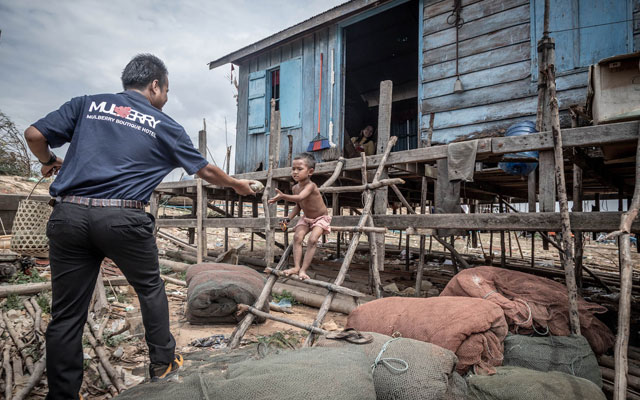
Mulberry Boutique Hotel among hotels in Siem Reap feeding the needy during the pandemic
The quartet started this initiative as unlike other countries, there are no social safety nets nor social support services in Cambodia to alleviate the effects of the virus crisis on the poor and vulnerable.
Under the food programme, all meals are nutritious, locally sourced and served in biodegradable packaging. They are also cooked locally, thus, generating income for local villagers and restaurants.
The quartet now hopes to raise over US$30,000 to keep this initiative going on for longer, and is calling on the public to join in their efforts to help feed the needy within the community during this crisis.
This initiative is entirely based on donations, and 100 per cent of the funds raised will go towards meal preparation and distribution. More information can be found on hotelsjoininghands.com.
Thien Kwee Eng, executive vice president of the Economic Development Board (EDB), will take over Quek Swee Kuan as CEO of Sentosa Development Corporation (SDC) on June 1, 2020.
Quek will be retiring from the public service on May 31 to pursue his personal interests, said the Ministry of Trade and Industry (MTI) in a press release on Wednesday (May 6).
Thien Kwee Eng will take over Quek Swee Kuan as CEO of Sentosa from June 1
Thien will also be appointed as a member of the SDC and Singapore Tourism Board (STB) boards, from June 1, while Quek will step down as a board member from both boards on May 31.
In her current role, Thien is overseeing EDB’s global customer experience, marketing and public affairs and investment facilitation activities. She was responsible for pioneering a new operating model that expanded EDB’s reach and engagement of companies, and laying the foundation for the board’s new marketing infrastructure.
During her time in EDB, Thien has also held leadership roles in investment promotion and industry development across various sectors, including consumer and lifestyle businesses, health and wellness, as well as infocomm and media.
Thien also serves on the board of the Singapore Food Agency, DesignSingapore Council, and Women’s Forum Asia. In 2017, she was conferred the Public Administration Medal (Silver).
Quek was appointed as the CEO of SDC on October 1, 2015. He has also served in EDB and STB in his 26-year career in the public sector.
Under his tenure, SDC underwent a comprehensive reorganisation and developed a strategic business framework to strengthen Sentosa’s value proposition and grow local and foreign visitor numbers.
He also spearheaded the development of the Sentosa-Brani Masterplan and other key initiatives, including a year-round calendar of offerings to transform Sentosa into a “day-to-night” destination.
Princess Cruises is extending its pause on global ship operations through the end of the 2020 summer season, due to reduced air flight availability, the closure of cruise ports in regions around the world and other factors caused by the Covid-19 outbreak.
This includes the following cruises and associated cruise tours: all remaining Alaska cruises on Emerald Princess and Ruby Princess; all remaining Europe and Transatlantic cruises on Enchanted Princess, Regal Princess, Sky Princess, Crown Princess and Island Princess; Summer Caribbean cruises and all Canada & New England cruises on Caribbean Princess and Sky Princess; Summer to Fall cruises departing from Japan on Diamond Princess; Australia-based cruises on Sapphire Princess and Sea Princess through end-August; July cruises sailing from Taiwan on Majestic Princess; as well as Fall cruises sailing to Hawaii and French Polynesia on Pacific Princess through November.
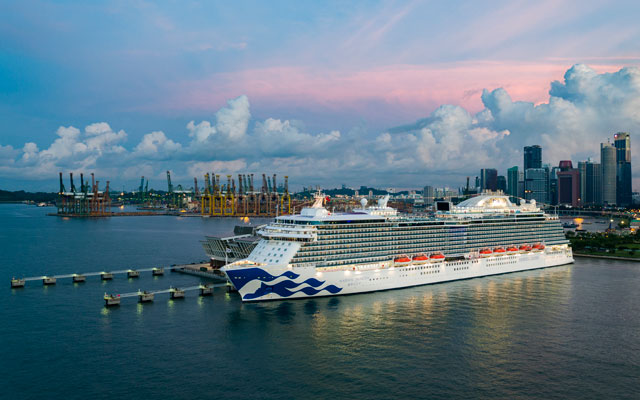
Princess Cruises extends pause on sailings for rest of 2020 summer season
“While prioritising health and safety, it is with much disappointment that we announce an extension of our pause of global operations due to the Covid-19 outbreak,” said Jan Swartz, president of Princess Cruises.
“Among other disruptions, airlines have limited their flight availability and many popular cruise ports are closed. It saddens us to think about the impact on the livelihood of our teammates, business partners and the communities we visit.”
Guests currently booked on these cancelled voyages, who have paid in full, will receive a future cruise credit (FCC) equivalent to 100 per cent of the cruise fare paid, plus an additional bonus FCC equal to 25 per cent of the cruise fare.
For guests who have not paid in full, Princess will double the deposit, providing a refundable FCC for the money currently on deposit, plus a matching bonus FCC that can be used on any voyage through May 1, 2022. The matching bonus FCC will not exceed the base cruise fare amount of the current cruise booked, and will have a minimum value of US$100 per person.
Alternatively, guests can request a full refund for all monies paid on their booking on the company’s website. Requests must be received by June 15, 2020, or they will receive the refundable FCC option.
Princess said in a statement that it will protect travel advisor commissions on bookings for cancelled cruises that were paid in full, in recognition of “the critical role they play in the cruise line’s business and success”.
A surge in domestic travel demand for Jeju island has encouraged local low-cost carriers (LCCs) to respond with increased flights.
From just two to three flights on the weekends between Gimpo and Jeju in March, Air Seoul has expanded operations to 32 a week since April 6 after seeing a 91 per cent surge in seat occupancy.
Domestic arrivals to Jeju at the start of the golden week holiday, on April 29, far exceeded the estimate of 24,600
An Air Seoul official commented that domestic flights were leading business recovery as “overseas travel is becoming difficult”, and added that seat occupancy was likely to be more than 85 per cent in April.
T’way Airlines also added a new domestic route between Cheongju and Jeju on April 25. T’way Airlines, which already flies out from Gimpo, Daegu, and Gwangju, will operate a total of four domestic routes through the launch of this new Cheongju-Jeju service.
A T’way Airlines official said the company will be expanding routes from various regions in South Korea.
As domestic travel picks up, the popular resort island of Jeju welcomed more than 35,000 Korean tourists on April 29 alone – the start of the country’s six-day golden week holiday, exceeding an initial estimate of 24,600.
The figure represents nearly 80 per cent of the total arrivals to Jeju in the same period last year.
In response, the Ministry of Health and Welfare and the Jeju Special Self-Governing Province are working together to step up measures to ensure visitors’ safety amid the pandemic.
As the number of new infections hovers at just around 10 a day, the government is relaxing social distancing measures and allowing some facilities, such as schools, parks, museums and libraries, to reopen in phases. – Reporting by Juyoung Lee
Stirrings of domestic travel in China have inspired some outbound agencies in Malaysia and Singapore to anticipate a return in travel demand for the Middle Kingdom soon.
Rejecting claims that the Covid-19 pandemic, which had originated in Wuhan city, has cast the destination in a poor light, travel agents told TTG Asia that the Chinese government’s tough actions to curb the spread of the outbreak have in fact resulted in positive impacts.
Travel agents intend to promote destinations in China that were less impacted by the coronavirus, such as Kunming, pictured here
Mint Leong, managing director of Sunflower Holidays in Malaysia, believes that travel demand remains for China and travellers’ perception of China has not been negatively impacted by the outbreak.
She explained: “China stands out because she was the first country to recover from the pandemic, and had sent her doctors and medical equipment to help many other countries, including Malaysia. This has (positively influenced) people’s perception and confidence in the destination.”
Shannon Hee, director of Singapore’s ASA Holidays, agrees. “China has received positive media coverage for the way she handled the pandemic and that has boosted her destination branding and travel confidence,” remarked Hee.
And with China just a short flight from Malaysia, Leong said travellers would continue to consider the destination for holidays.
Demonstrating confidence in China as a tourism destination, Joyee Lau, general manager (Mainland China), ICE Holidays, told TTG Asia that China packages have been created and priced attractively to get customers onboard.
Lau commented that China is a huge country, and there are opportunities for travellers to explore places other than Wuhan city and Hubei province should they still be concerned about the virus.
Also building up for a return in travel demand for China in 2021 is Kathryn Lee, managing director, De Kim Tour & Travel. While she expects travel in general to only return to normal after a vaccine is developed, Lee remains hopeful of organising group departures next year.
“We are looking at promoting the historical sites in Xi’an as well as scenic places in Harbin and Zhangjiajie,” Lee said.
ASA Holidays’ Hee said China, which was already popular with Singaporeans pre-pandemic, would attract “ardent travellers seeking value” as travel possibilities resume.
Fellow Singapore agent, Cathy Loh, director of Aveson Travel, added that China’s many “up and coming exotic locations” were bound to appeal to leisure travellers “who are deemed to be more spirited with their travel planning”.
On marketing China post-recovery, both agents said there was a need to proceed sensitively, by promoting the lesser-hit areas first.
Hee said: “To reassure our customers that China is a safe tourism destination, we will start with marketing places that have a low count of confirmed cases, such as Yunnan, Hainan Island, Xinjiang, Ningxia and Tibet.”
Added Loh: “Moving forward, we will re-introduce China starting with Kunming and Xinjiang in our series of mini fairs, dinner talks and online co-promotional activities with our Chinese tourism partners.”
While Sunflower Holidays’ Leong expects business travel to China for tradeshows to return strongly, fuelled by business opportunities in the vast country, she doubts corporate meetings will rebound as swiftly.
She explained that companies have become used to virtual meetings during the lockdown, and will likely approve trips for face-to-face meetings that are “absolutely necessary”.
James Chua, general manager, Global Travel Singapore, also noted that corporate travellers bound for China would have to contend with quarantine measures upon entering China and returning to Singapore.
He said: “Unless Covid-19 is completely eradicated – which the economy cannot hold out for until it does – inbound travellers to Singapore and a number of major cities in China will have to be quarantined. Even in recovery, it is uncertain how these (quarantine) measures will be adjusted and the norm for meetings to be taken online today has served as deterrence to business travel.
“The restoration of travel confidence to China will involve a concerted effort on transparency and vigilance between authorities and travel suppliers in moderating existing apprehension,” he added. – Additional reporting by Therese Tan
In the epicentre of the pandemic where stringent measures are vital and worry runs high, strong support from a hospitality brand and its management are crucial in maintaining the safety, morale and loyalty of residents and staff.
When Covid-19 first broke out, Modena by Fraser Zhuankou in Wuhan was Frasers Hospitality’s first property to be hit by the city’s lockdown. Despite the sudden crisis, its tale is one of kindness and accountability as its residents and staff remained the utmost priority.
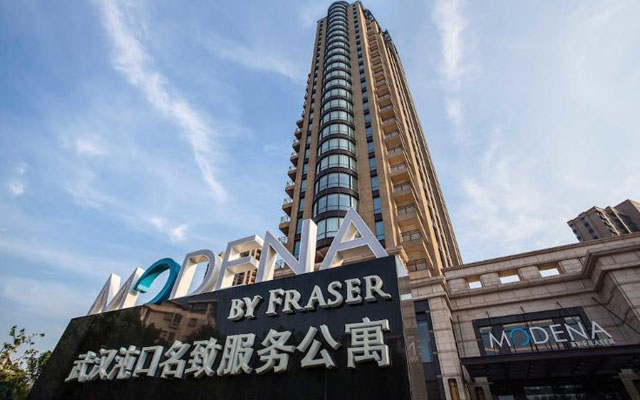
Modena by Fraser Zhuankou Wuhan was the first affected property in Wuhan, but the management took things into its stride
“One particularly heart-warming story is of Singaporean John Png, general manager of Modena by Fraser Wuhan, and his wonderful team who stayed behind in the city of Wuhan throughout the lockdown to ensure staff and residents were safe and secure,” shared Chew Hang Song, country general manager China, Frasers Hospitality.
“John, in particular, was given two opportunities to leave Wuhan on evacuation flights, however he declined the offers so that he could stay back and support his property and people.”
The property, as well of several other Frasers Hospitality properties in China, has since helped its residents and staff tide through the storm by celebrating occasions such as International Women’s Day, for which staff cooked tang yuan and exchanged gifts as a form of appreciation, and the group’s 22nd anniversary at the end of March.
Chew added: “Most importantly, our staff go the extra mile to support guest needs around the clock. For example, some families with children needed help with buying groceries to cook in the apartment, so our staff offered to make the trip so that parents could look after their children.”
The property also holds a calendar of activities, such as cooking challenges and fitness exercise videos online, as well as celebrates special events like Easter for younger guests to have fun indoors.
Chew: Frasers’ staff are going above and beyond to ensure guests are taken care of during this period
As China and the world looks towards recovery, a long-term change in consumers’ expectations of hospitality service is anticipated, particularly in the long-stay segment.
Tonya Khong, Frasers Hospitality’s senior vice president, head of regional operations, shared: “We believe guest expectations of what they want from serviced apartments and correspondingly, their service standards, will also be raised.
“Being flexible will also be a gamechanger for the industry, as the pandemic has compelled all players to revisit the way they structure their cancellation and postponement policies. Moving forward, consumers and guests will expect brands to commit to a certain level of flexibility.”
Frasers Hospitality has adopted a global policy allowing unconditional cancellation and postponement of all reservations, as well as reduced its Fraser World’s membership criteria. The group will soon launch a global campaign “to give back to the community”, revealed Khong.
“We are starting to see some light at the end of the tunnel, especially in places like Australia, China, South Korea and some parts of Europe. We are preparing ourselves for the upturn and recovery phase and look forward to welcoming all guests with open arms again,” she said.
Thailand has allowed domestic air travel to resume, with Nok Air, AirAsia, Thai Lion Air and Thai Vietjet Air returning to the air last Friday.
The flights were operated between 14 airports and Bangkok’s Don Mueang and Suvarnabhumi. The 14 airports are in Lampang, Mae Sot (Tak), Phitsanulok, Buri Ram, Sakon Nakhon, Nakhon Phanom, Roi Et, Khon Kaen, Ubon Ratchathani, Udon Thani, Trang, Nakhon Si Thammarat, Surat Thani and Krabi.
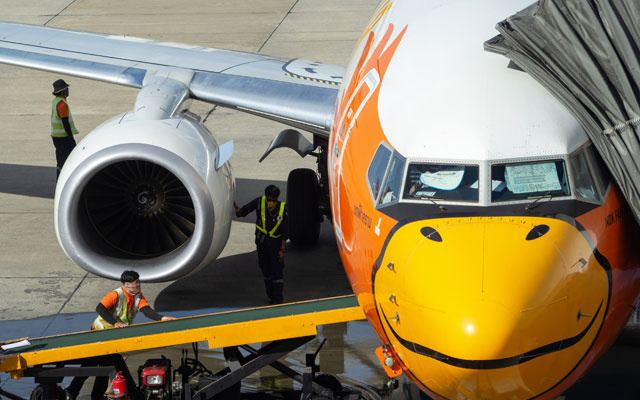
Nok Air (pictured) and other airlines flying domestic routes in Thailand have resumed operations
All domestic flights are operating under strict requirements, including social distancing (for example during embarkation and disembarkation) as well as compulsory face masks for all passengers and Personal Protective Equipment (PPE) gear for flight crew.
Nattapong Saengsirirattana, managing director of Thai Leisure Co., told TTG Asia that at this stage, there would still be little to no likelihood of domestic tourism.
“We haven’t reached that stage yet. With the current inter-provincial travel regulations, it’s too difficult,” he said, referencing the increased inspections and forced quarantines upon entry in provinces such as Buri Ram or Phitsanulok.
In those provinces, upon arrival, travellers wishing to remain in the province must self-quarantine for 14 days. Their identification documents will be withheld by the authority during the quarantine.
In Nakhon Phanom, non-Thais are altogether barred from entering unless permitted by the governor, and in Krabi, non-residents are barred from entering unless certified to be free from the coronavirus from the point of origin. Travellers without a health certificate will be quarantined at local quarantine centres at their own expense.
Non-residents, except those with proven work commitments in the province, are prohibited from entering Trang.
All provincial governors have been allowed to implement their own measures to prevent the spread of Covid-19, provided those measures are as strict or stricter than those prescribed by the national-level Centre for Covid-19 Situation Administration (CCSA).
Nattapong opined that airlines resuming operations would face costs challenges.
“With social distancing measures, small planes would most likely be able to fit a maximum of two passengers per row, seated at the window. Due to the new restrictions, they’re also losing income from in-flight F&B purchases,” he said, musing that airfares might rise to cover higher costs.
However, Nattapong believes that those with essential travel needs may be willing to pay higher fares.
Meanwhile, Phuket airport will remain closed until May 15. The tens of thousands stranded on the island wishing to leave by road must register online by May 8 to obtain fit-to-travel certificates. – Additional reporting by Anne Somanas
Airbnb is the latest travel and tourism casualty in the Covid-19-led business crisis, with 1,900 staff out of a global total of 7,500 being laid off.
The decision was revealed on May 5 in an open letter by co-founder and CEO Brian Chesky, published on the Airbnb Newsroom website.
Airbnb will refocus its business on home sharing
In the letter, Chesky acknowledged that decisions on layoffs were never “off the table” and the redundancy measure had to be taken as “Airbnb’s business has been hit hard, with revenue this year forecasted to be less than half of what we earned in 2019”.
He wrote: “We are collectively living through the most harrowing crisis of our lifetime, and as it began to unfold, global travel came to a standstill.”
Despite raising US$2 billion in capital and dramatically cutting costs across the company, Chesky said two “hard truths” – uncertainty around when travel will return and how travel will be when it does return – had made it necessary for the layoffs.
“While we know Airbnb’s business will fully recover, the changes it will undergo are not temporary or short-lived. Because of this, we need to make more fundamental changes to Airbnb by reducing the size of our workforce around a more focused business strategy,” he explained.
Along with the layoffs, Airbnb will reduce its investment in activities that do not directly support the core of its host community. As such, operations on Transportation and Airbnb Studios will be suspended while investments in Hotels and Lux will be scaled back.
The company has conducted “a comprehensive review of every team member and made decisions based on critical skills, and how well those skills matched our future business needs”.
“The result is that we will have to part with teammates that we love and value. We have great people leaving Airbnb, and other companies will be lucky to have them,” he wrote, adding that efforts were made to “take care of those that are leaving”.
Affected staff in the US will receive 14 weeks of base pay, plus one additional week for every year at Airbnb. Tenure will be rounded to the nearest year. Outside the US, afffected employees will receive at least 14 weeks of pay, plus tenure increases consistent with their country-specific practices.
Airbnb is also dropping the one-year cliff on equity for all staff hired in the past year so that everyone departing is a shareholder. Additionally, all departing staff is eligible for the May 25 vesting date.
The company will continue to cover affected staff’s health insurance – 12 months in the US and through the end of 2020 for staff elsewhere. Four months of mental health support through KonTerra will also be provided.
To help departing staff with new job opportunities, Airbnb will be launching a public-facing job website; creating an Alumni Placement Team with recruiters providing support to departing employees in job searches; providing four months of career services through RiseSmart, a company that specialises in career transition and job placement services; encouraging all remaining employees to opt-in to a programme to assist departing teammates find their next role; and allowing everyone leaving to keep their Apple laptops so that they can use it to find new work.
Chesky explained that with employees across 24 countries that have with their own laws and practices around employment, information around the layoff would not be immediately available.
However, he wrote that the final working day for departing employees based in the US and Canada would be May 11.
Chinese youths aged between 20 to 29 years old are likely to drive post-crisis travel to Vietnam once international travel resumes in the South-east Asian country, finds a survey by hospitality consulting group C9 Hotelworks and Delivering Asia Communications.
This follows the restart of domestic travel, as Vietnam was the first in South-east Asia to lift social distancing restrictions.
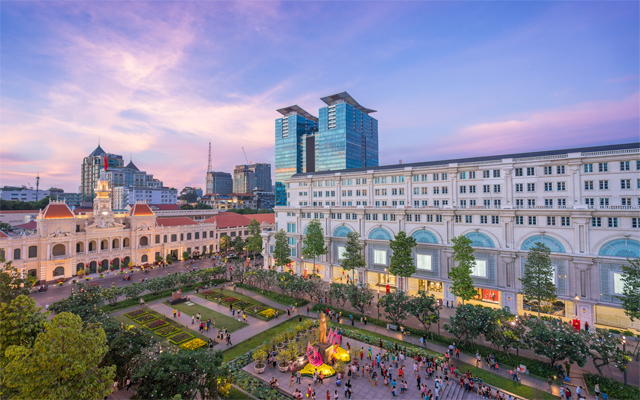
Nguyen Hue, downtown of Ho Chi Minh City, Vietnam
Carried out among 1,000 respondents across first-tier cities in China, the study in late April then honed in on the responses of the 450 respondents who gave a positive answer when asked if they would travel to Vietnam. One-third of these 450 respondents fell within the 20 to 29 age bracket.
The influence of this particular segment was also reflected in the preferred platforms for booking hotels among the 450 respondents, noted David Johnson, CEO, Delivering Asia Communications. Half of them expressed a preference for Ctrip, while 18 and 11 per cent of them were keen on booking through WeChat and Alibaba Group’s travel service platform Fliggy.
Other findings also seemed to reflect a strong influence of the age bracket. A significant majority (81 per cent) of the 450 respondents said they did not want to participate in group tours when visiting Vietnam.
Additionally, budget accommodation proved most popular (preferred by 39 per cent of respondents), while five-star accommodation came in second (the choice of 25 per cent of respondents).
The preference for budget accommodation also came through in the amount the 450 respondents planned to spend on a trip to Vietnam, where most (54 per cent) indicated they were looking at spending US$710 per trip, followed by 36 per cent of respondents, who said they would set aside US$1,400.
Interestingly, the study reflected the World Travel & Tourism Council (WTTC)’s predictions that recovery in the months ahead will begin first with staycations and domestic travel, followed by short- and long-haul travel, which the council stated in a press statement dated April 30.
After all, only about half or some 490 of the initial sample of 1,000 respondents said they would travel overseas this year. This means that the 450 who were looking to travel to Vietnam, a shorthaul destination, made up 90 per cent of these respondents.
Besides the favourable exchange rate between the RMB and the dong, the post-crisis ‘fear factor’ – likely to be manifested in a preference for short-haul, door-to-door flights and avoidance of extended air travel – are factors that are expected to make Vietnam a favoured destination among Chinese outbound travellers, noted said Bill Barnett, managing director, C9 Hotelworks.
When asked when they intended to travel to Vietnam, many of the 450 respondents (more than 30 per cent) did not indicate a fixed month. Among those who did, October and August proved the most popular, with more than 20 per cent and over 10 per cent of the 450 respondents saying they would travel in the two months respectively.
They also indicated a preference for well-known, established destinations like Ho Chi Minh City (preferred by 26 per cent of the 450 respondents), Hanoi (19 per cent), Nha Trang/Cam Ranh (17 per cent) and Halong Bay (13 per cent). Among emerging destinations, Sapa stood out, with eight per cent of the 450 respondents indicating interest in visiting.
While traditional activities such as sightseeing proved popular among the 450 respondents (32 per cent indicated interest), a growing number seemed to be interested in nature activities, with 25 per cent of the 450 respondents keen on such activities in Vietnam.
According to Johnson, this might be due to the change in values tied to travel following the Covid-19 crisis.
Barnett added that the study was done with the intention of guiding travel players to meet the needs of this very specific group of post-crisis travellers, and may not reflect sentiment in the broader travel market.