Agoda is debuting a new feature for longer-stay visitors, which allows reservation of rooms and properties for longer than 30 days and up to 90 days.
Launching first on Agoda Homes, the feature is set to be rolled out for Agoda’s other properties.
Agoda has stepped into the long-stay lodging space
It was designed in response to the growing market of long-term stay visitors, including those taking a gap year or planning for overseas assignments and relocations as well as retirees who have the budget and time to enjoy longer trips, said Agoda.
Travellers, such as working adults on a gap year — a rising norm, shared Agoda — have the option of making one reservation instead of “stitching together multiple bookings”, said David Salamon, director, product, Agoda Homes.
The National Association of Travel Agents Singapore (NATAS) has called off its annual travel fair after taking into consideration local and global government travel advisories as well as public health risk assessment and uncertain travel sentiments.
The event was initially postponed from February 21-23 to May 1-3.
After being moved to May, NATAS Travel 2020 will now be cancelled
According to a press statement from NATAS, the decision was also made in view of exhibitors’ responses to a poll conducted on March 13, where a vast majority of respondents supported the fair’s cancellation.
NATAS will offer a full refund of exhibitor’s booth rental.
At the same time, the association’s second travel fair, typically held in the second half of the year and scheduled for August this year, will be reviewed for continuity.
André Kretschmann – a pioneering GHM properties general manager – has rejoined the organisation to lead its flagship property in the Maldives, The Chedi Kudavillingili, later this year.
This new appointment will see Kretschmann’s 25-year career with GHM come full circle from his beginnings as general manager at The Financial Club Jakarta, then a GHM property. After two years, he took charge of The Chedi Phuket in Thailand, before opening The Chedi Muscat in 2003. He then moved to Sri Lanka for another two-year assignment on a GHM interest in Colombo.
During this time away from GHM, Kretschmann held stints as general manager with Leading Hotels of the World (Koh Samui) and Shangri-La Boracay. He was also director for hotel openings at LVMH Hotel Management for six years, where he managed the debut of properties in the Maldives, Oman and Egypt.
He returned briefly to GHM in 2015 for a one-year assignment in Bali and has worked since 2016 as the director of the Bangkok-based resort and villa operator, TempleTree International.
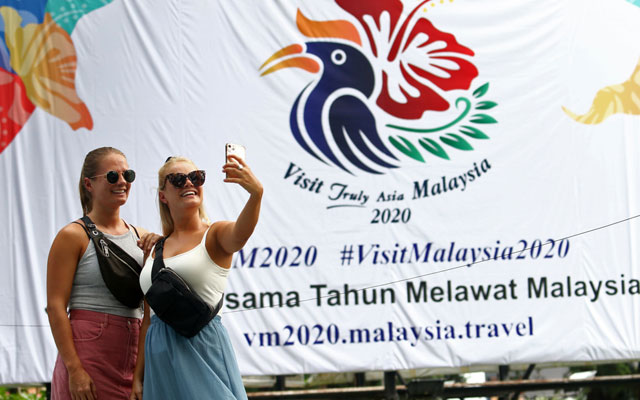
Visit Malaysia 2020 campaign has been shelved due to the Covid-19 outbreak; tourists posing against the backdrop of the campaign logo on a billboard in Kuala Lumpur pictured
In yet another blow to Malaysia’s tourism industry which has buckled under the pressure of the Covid-19 pandemic, the minister for tourism, arts and culture has ordered the immediate cancellation of the Visit Malaysia 2020 (VM2020) campaign.
Minister Nancy Shukri also announced on Wednesday that all over-the-counter and online services related to the ministry’s tourism licensing division would be frozen until the end of the Restricted Movement Order.
Visit Malaysia 2020 campaign has been shelved due to the Covid-19 outbreak; tourists posing against the backdrop of the campaign logo on a billboard in Kuala Lumpur pictured
The Malaysian Association of Tour & Travel Agents president, KL Tan, told TTG Asia: “It is a good move to call (VM2020) off as the pandemic has severely impacted the tourism industry in Malaysia and around the world. The minister’s decision is a pragmatic one.”
Tan added that the tourism ministry should now refocus its resources on “recovery measures and establishing healthier tourism fundamentals”.
Yap Sook Ling, managing director, Asian Overland Services Tours & Travel, believes that the funds set aside for VM2020 will be put to better use when travel confidence returns.
As Malaysia has one of the highest number of infections in South-east Asia, Yap suggested that communications be focused on rebuilding travellers’ confidence in the destination.
“We have to highlight the efforts we have taken to bring infection rates down and procedures in place by hotels and various attractions to prevent the spread of the virus,” she said.
Nigel Wong, director, Urban Rhythms Tours, Adventures & Travel, also regards the cancellation of VM2020 as a necessary move, adding that travel may only resume in 2H2020.
“When the situation normalises, the government and the travel trade should focus on growing the domestic travel market,” he opined.
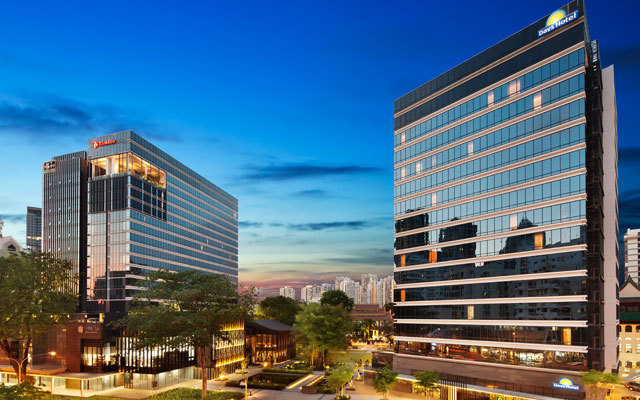
Ramada and Days Hotels by Wyndham Singapore at Zhongshan Park / Caption: Ramada and Days Hotels by Wyndham Singapore at Zhongshan Park saw a sudden upswing in hotel occupancy within 24 hours of Malaysia's declared closure
Malaysia’s surprise movement control order, enforced on Wednesday at the stroke of midnight, has brought struggling Singapore hotels some relief from the current business gloom.
Singapore employers, desperate to retain their Malaysian staff and not have them return home where they would remain behind a closed border until the end of this month, have urgently sought short-term accommodation solutions.
Ramada and Days Hotels by Wyndham Singapore at Zhongshan Park saw a sudden upswing in hotel occupancy within 24 hours of Malaysia’s declared closure
Shin Hui Tan, executive director of Park Hotel Group (PHG), told TTG Asia that a flurry of enquiries on hotel rooms and rates came as soon as the lockdown was announced.
“We understood the predicament companies are in and wanted to help them as quickly as possible. We activated our housekeeping teams to turnaround rooms swiftly for immediate check-ins,” said Tan.
Of the Group’s six properties in Singapore, Park Hotel Alexandra on the edge of the city centre has been the busiest. Its city-centre sister property, Grand Park City Hall, is also enjoying an increase of around 40 per cent in its reservations.
Jeane Lim, general manager of Grand Park City Hall, said: “These guests are mainly Malaysian employees lodged by their Singapore employers, whereas some of these are employees of our corporate clients. They are mainly from companies in the oil and gas industries, and most are working in the local plants as technicians, or equivalent.”
Tony Cousens, general manager of both Ramada and Days Hotels by Wyndham Singapore at Zhongshan Park, saw a sudden upswing in hotel occupancy within 24 hours of Malaysia’s declared closure.
“Particularly, Days Hotel Singapore is favoured among Malaysian bookers due to the in-house Halal-certified restaurant, 21 on Rajah,” he said, adding that his properties are also providing shelter for his own affected Malaysian staff.
“The temporary spike in demand due to the lockdown was a reversal of the plummeting occupancy trend that local hotels have been facing amid the dynamic Covid-19 situation. However, with such severe restrictions on global travel, market recovery will only gradually happen when there is stabilisation and containment of the virus,” Cousens said.
While Singapore hotels are seeing a turnaround in fortunes, they have little intention of making a quick buck out of companies’ misery.
Tan revealed that PHG properties have dropped their rates “to levels never ever put up publicly so as to minimise the financial burden on affected companies”.
While she has shied away from specifying how low her room rates are, she said they are “nowhere near five-star rates” and will sufficiently “help minimise out-of-pocket expenses for companies”.
Tan: hotel rates are kept minimal to ease burden on companies
The Singapore government has pitched in to provide S$50 for each affected Malaysian worker having to stay on in Singapore for work, with the amount going to his/her Singapore employers to help subsidise urgent accommodation.
“We have made our rates affordable so that companies can house their employees in a comfortable environment. I imagine dormitories will be the first choice of some employers, as rates can go as low as S$35 per person per day, but it is six people to a room,” she said.
PHG properties are able to offer single and twin-share arrangements, as well as limited triple-share.
Gilbert Madhavan, general manager of the luxurious One Farrer Hotel, remarked: “While we do not believe in profiting from the situation, this has provided some relief in offsetting our operational costs which will put us in a better position to provide for our employees and tide over this crisis.”
The hotel has about 100 guestrooms taken up by Singapore companies for their Malaysian staff, boosting occupancy by more than 30 per cent.
Madhavan added: “We have rolled out an attractive accommodation package for affected Malaysians in Singapore, and have worked closely with our corporate clients and government bodies to reach out to those in need of lodging.”
The Urban Escape Room Package is valid for Malaysians only and for bookings until April 30.
According to various corporate sources, three- to four-star hotels at the city fringes are charging about S$100 (US$69) to S$160 per night for single occupancy, some with breakfast and most with the opportunity for reduced rates should they extend their stay beyond April 1 when the Malaysian government is expected to lift the movement control order.
However, one general manager of a marine company has had to fork out about S$129 for a single-occupancy standard room per day for each of her three staff across 12 days in a budget hotel. – Additional reporting by Pamela Chow
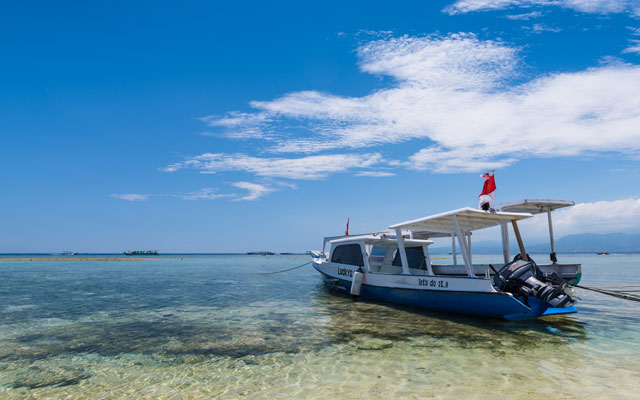
Tourists from Bali will no longer be able to travel to Gili Islands by fast boat; a boat at the coast of Gili Meno pictured
The West Nusa Tenggara (NTB) provincial government has closed direct access by fast boat from Bali to popular tourist spot Gili Islands (Gili Trawangan, Gili Meno and Gili Air) off the northwest coast of Lombok, as part of efforts to stem the spread of Covid-19.
The new regulation is in response to a surge in confirmed cases of the virus in Indonesia, which jumped to 309 on Thursday, with 25 fatalities, the highest death toll in South-east Asia to date.
Tourists from Bali will no longer be able to travel to Gili Islands by fast boat; a boat at the coast of Gili Meno pictured
Lalu Bayu Windya, head of NTB Transportation Agency, issued a circular to close Pemenang Harbour and harbours in the three Gilis, as well as Senggigi Harbour in West Lombok Regency, from March 17-30 due to the lack of thermal scanners. However, Bangsal Harbour will remain open.
NTB governor Zulkieflimansyah explained that the three Gilis will remain open for travellers, but they need to go through Lombok either via air to Zainudin Abdul Madjid Airport or via sea to Lembar Harbour, both of which are equipped with thermal scanners, before taking land transport to Bangsal Harbour.
He said the three Gilis as well as the aforementioned airport and harbour have been disinfected and “are safe to visit”.
Awan Aswinabawa, managing director of A&T Holidays and chairman of NTB Chapter of The Indonesian Travel Agents Association, is in favour of the circular but said the new measures would inconvenience many tourists from Bali as direct access taking 1.5 hours was no longer available; the trip would now last nearly 2.5 hours.
“However, if we do more anticipatory actions (at points of entry), they will feel safer and more secure (after they arrive in Gilis),” he said.
The stricter access measures would raise travel cost by 50 per cent, to around one million rupiah (US$63), because travellers have to take a flight from Bali to Lombok, rent a car and then to pay for speedboat service to reach the Gilis, according to Dewantoro Umbu Joka, the head of NTB chapter of Association of Indonesian Tours and Travel Agencies.
Having said that, Dewantoro observed that domestic travellers were still keen on visiting the Gilis despite the central government’s call for Indonesians to stay at home.
Therefore, he hopes that the government can provide incentives, such as exemption of boat service fee from Bangsal to the three Gilis, to ease the transport cost so that they can entice travellers to keep visiting NTB in spite of the higher cost and longer travel times.
Dewantoro said that facilitating visitorship would mean the world for people in NTB who rely on the tourism sector for a living.
Arival CEO Douglas Quinby calls on Google and Facebook to carry forward advertising credit to help tourism businesses stay afloat during the Covid-19 crisis
The head of Arival, the global research authority of the tour, activity and attraction sector, has called on Google and Facebook to take the long view and help their tourism advertisers who are trying to survive the business fallout of the pandemic.
Douglas Quinby said Facebook’s March 17 announcement of a US$100 million initiative to help small businesses was “a welcome but small first step on a long journey”.
Arival CEO Douglas Quinby calls on Google and Facebook to carry forward advertising credit to help tourism businesses stay afloat during the Covid-19 crisis
“Google and Facebook have become incredibly important partners to the travel industry worldwide. They have profited handsomely from the risk-taking of these enterprises over the past decade,” he said.
“Now it’s time for them to step up and pay it forward by crediting the accounts of these at-risk advertisers (for future advertising).”
Arival said the sector, valued at US$254 billion in 2019 and with one million tour, activity and attraction operators worldwide, is now in deep crisis.
According to an Arival study of nearly 600 tour, activity and attraction operators worldwide, conducted between March 9 and 13, 2020, 28 per cent of operators surveyed are at risk of business failure within three months; 46 per cent are at risk of failure if travel does not begin to recover within six months; 37 per cent of total 2020 bookings have been cancelled; 73 per cent of operators report a decline in 2020 bookings vs 2019; and the average decline is 52 per cent.
The sector is comprised mostly of small businesses, micro-entrepreneurs and part-time operators. Most have started within the past five years. Arival’s research shows that 86 per cent of operators generated less than US$250,000 in gross sales in 2019.
By comparison, Google and Facebook are two of the largest companies in the world, generating combined advertising revenues of US$204 billion in 2019.
Crediting the accounts of all tour and activity operators, attractions, experience hosts, ground transfer providers, and third-party resellers for advertising spend on their platforms for the period of January 15 to March 15, 2020 “would be a much needed step to help many small operators get back on their feet when travel demand begins to return”, urged Quinby.
Arival has launched a petition to make the point, calling on operators, distributors, technology companies and all individuals working in tours, activities, attractions and experiences to sign their name. Arival will present the petition to representatives of Google and Facebook.
Meanwhile, Quinby will present findings from Arival’s study as well as the impact of coronavirus on tours, attractions and activities in a live online event on March 31.
The company has also launched Arival Online, a series of live online events through April to help tour, activity and attraction operators weather the unprecedented times and prepare their business for the future.
Trip.com Group donated face masks to various countries like Canada (pictured) with words of encouragement
Trip.com Group will be donating one million surgical masks to support the fight against the Covid-19 pandemic.
Led by the company’s co-founder and chairman of the board James Liang, the initiative has as of March 18 seen the delivery and allocation of surgical mask supplies to Japan, South Korea, Canada, and France, among others.
Trip.com Group donated face masks to various countries like Canada (pictured) with words of encouragement
Liang said in a press statement that “it is crucial at this moment in the global fight against the epidemic that all countries come together and support each other, to secure a victory for humanity”.
The move to donate masks is the latest in a series of actions taken by the online travel services provider to counter the impact of the pandemic.
As the situation continues to develop, the company has provided daily updates on travel restrictions via its platforms, and extended the scope of its cancellation policies to include medical workers as well as those unable to travel due to restrictions and infection.
Liang hopes that his company’s donation would motivate others to do the same.
“We are faced with a great challenge, but amid these hardships, we’ve learnt that we are all part of a larger entity, and we’re all in this together. We are moved by Trip.com Group’s generosity in, of its own volition, extending its support,” said Canadian ambassador to China Dominic Barton.
Covid-19 has cut flight capacity to China by 80 per cent
Four-fifths of flight capacity between China and the rest of the world has been cut back due to the Covid-19 outbreak, according to a new report by ForwardKeys.
In response to emergency government regulations put in place to contain the virus outbreak in China, seat cancellations began in early February and by the third week of the month, only 20 per cent of seats remained in service.
Covid-19 has cut flight capacity to China by 80 per cent
Looking at the different regions of the world, Asia has experienced the greatest impact in terms of the total number of seats lost, at around 5.4 million in March.
In percentage terms, travel to North America is worst affected: American, United, Delta, and Air Canada cancelled all their flights to mainland China; and Chinese carriers cut their capacity by 70 per cent.
Between China and Europe, over 2,500 flights have been axed in March: the three major Chinese carriers cut capacity by 69 per cent; while BA, Lufthansa and Finnair ceased their services completely.
Qantas and Air New Zealand also stopped flying to China, which left only about 200 flights in March to Oceania, provided by Chinese airlines.
Capacity between China and the Middle East & Africa is also substantially down but less in both percentage and absolute numbers. Most flight suspensions are currently due to remain in force until March 28, the end of the winter season.
During the third week of March, 72 destinations in 38 countries had direct air links to China, which is around a third of the pre-crisis level, according to China’s Civil Aviation Authority.
Olivier Ponti, vice president insights, ForwardKeys, said: “At the start of the year, we were looking at another year of healthy growth in air travel from China. But now, we are witnessing the grounding of aircraft on an unprecedented scale. The loss in seats is more than the entire outbound market from the five Nordic countries combined.”
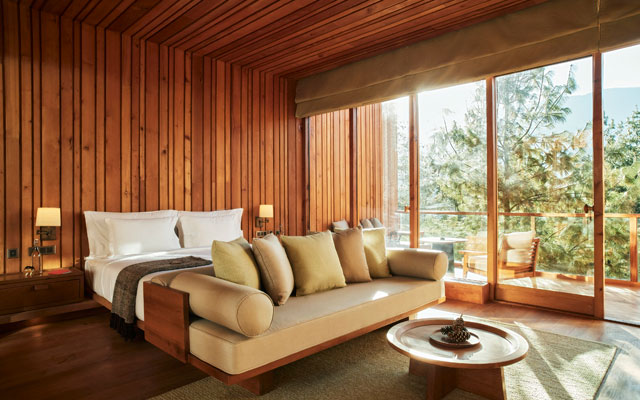
Six Senses Bumthang, Bhutan
This is the fifth and final lodge to open under the Six Senses Bhutan umbrella. In total there are eight suites with balconies and views of the forest valley, as well as a 2,422 two-bedroom villa. Tongtshang, or Pine Forest, the lodge’s restaurant with an al fresco area, features local dishes such as buckwheat and barley are combined with seasonal ingredients. A traditional dotsho hot stone bath or the Bhutanese-inspired signature Hingsangsa Zoni bathing ritual can also be arranged for guests.
Activities the property can arrange include half- and full-day treks to the valley’s most important Buddhist pilgrimage sites, hiking and biking through fields lined with prayer flags, visits to local villages, a palace tour, archery lessons and mushroom foraging. There is also a stop at the Red Panda brewery for a taste of locally brewed barley beer.
Mövenpick Resort Waverly Phu Quoc & Mövenpick Residences Phu Quoc, Vietnam
Mövenpick Hotels & Resorts has opened a resort complex – comprising the Mövenpick Resort Waverly Phu Quoc and Mövenpick Residences Phu Quoc – along Phu Quoc’s Ong Lang Beach.
Mövenpick Resort Waverly Phu Quoc features 305 guestrooms, and rooms range from the lead-in 35m2 to the 72m2 Junior Suite. Meanwhile, the adjacent Mövenpick Residences Phu Quoc offers 329 apartment-style residences with kitchenettes and 79 pool villas.
Complex amenities include a beach club, four F&B options, kids’ club, six swimming pools, Elements Fitness Center complete with a yoga studio, and the Elements Spa & Salon featuring 15 treatment rooms, a sauna and a jacuzzi. Event planners may avail the 720m2 Coral Ballroom with a 6.8m-high ceiling and a 324m2 foyer that can hold up to 860 guests.
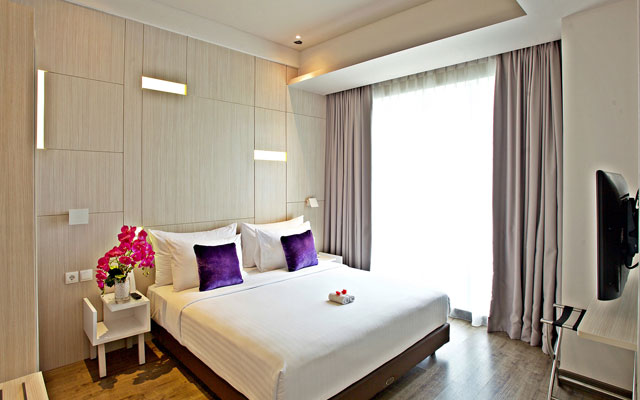
Swiss-Belinn Cikarang, Indonesia
The three-star property in Jababeka, Cikarang offers 138 rooms and suites. Facilities on-site include the all-day dining restaurant Swiss-Bistro; Hanatomi Izakaya which serves Japanese cuisine; a rooftop swimming pool; a kid’s pool; sauna; and fitness centre. There are also seven meeting rooms and a ballroom on-site, available for a range of events from training seminars up to gala dinners for up to 500 guests. Nearby attractions include Lippo Cikarang Mall, Waterboom Lippo Cikarang, and the Puri Nirwana Waterpark.
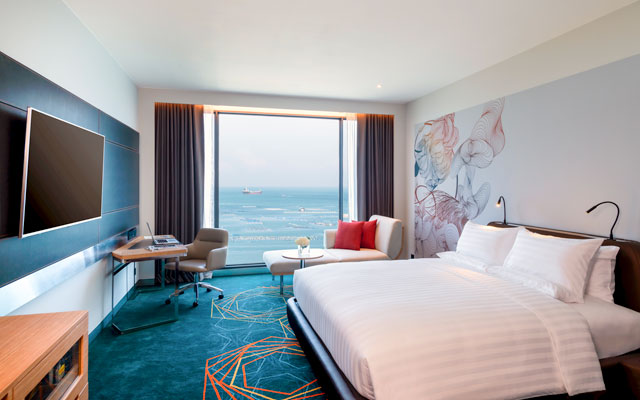
Novotel Sriracha & Koh Si Chang Marina Bay, Thailand
This 275-room hotel comprises the main Ocean Building in Sriracha and Island Building on Koh Si Chang. The main hotel building in Sriracha comprises 235 rooms is now open, while another 40 guestrooms and 16 villas will open on Koh Si Chang soon. There are two restaurants and three bars on-site, aside from other facilities such as a 24-hour fitness centre, seafront swimming pool, spa, kids room, and Premier Lounge for guests staying in the Premier Deluxe rooms and suites.
For events, Novotel Sriracha features five meeting and event spaces that can host up to 250 guests, while Koh Si Chang has a 50m2 room that can host up to 30 guests. A private pier and speedboat services will also be made available to shuttle guests between the two locations.