TTG Asia
Asia/Singapore Monday, 9th February 2026
Page 1001

Zentis brand to debut in Osaka

0

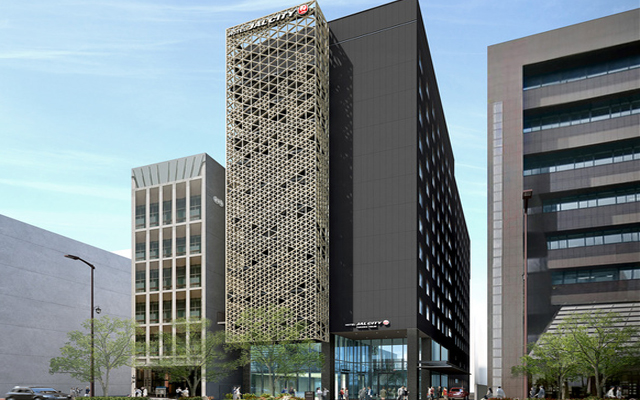
Palace Hotel Management Company will be launching the first property of its new hospitality brand, Zentis, in Osaka, come 3Q2020.

Sharing a pedigree similar to that of the renowned Palace Hotel Tokyo, Zentis Osaka claims to boast aesthetics that rewrites the playbook for lifestyle brands.

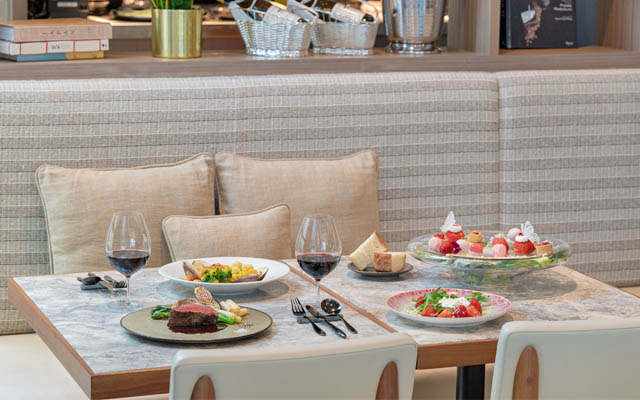
Located in riverside Dojimahama, the 16-storey property will house 212 guestrooms, a 24/7 fitness centre, a bar and main dining area, as well as a lounge and outdoor terrace.

Sri Lanka restarts economic engine

0

Hotels and restaurants in Sri Lanka reopened on Tuesday, following a two-month coronavirus lockdown and island-wide curfew.

The round-the-clock curfew which has been in force in the capital city Colombo since mid-March was lifted on Tuesday, and henceforth, will be in force only between 22.00 to 04.00 daily.

Sri Lanka resumes economic activities, but some hotels are not yet accepting reservations due to the lack of tourists, Sigiriya Fortress in Sri Lanka pictured

While some hotels have begun accepting room reservations, others have only opened on-site restaurants and bars to outside guests. “We have a few in-house guests, while our restaurants and bars are open from (Tuesday),” said a spokesperson for the five-star Kingsbury Hotel in Colombo, adding that they were accepting bookings.

Dileep Mudadeniya, a vice president at Cinnamon Hotels, which runs a chain of hotels across Sri Lanka including large properties in Colombo, said their restaurants were open from Tuesday but they were not accepting room bookings.

Other hotel owners said they were maintaining a skeleton staff at the properties for maintenance purposes, and it would not be viable to open it fully as yet just to house a few local guests.

Sri Lanka has been on an islandwide lockdown since mid-March, with some districts being allowed to lift the curfew.

Even as most businesses and commercial establishments resumed operations on Tuesday, while observing social distancing and health and safety norms, the country’s top health official said Covid-19 is still prevalent and urged the public not to let down their guard.

Health services director general Anil Jasinghe was quoted by local media as saying that despite the relaxing of curfews, the country has not returned to full normalisation and that measures should be taken to prevent virus transmission.

Health authorities have said public events like weddings are permitted in hotels, but restricted to 100 per event with a key requirement – no kissing of the bride. At restaurants and bars, social distancing rules are to be maintained, while waiters and stewards are required to wear face masks.

Meanwhile, the country’s main international airport remains open only to service repatriation and cargo flights. A presidential task force on Covid-19 has recommended reopening the country’s main international airport from August 1, according to a government announcement on Wednesday.

ASEAN ministers moot “travel bubbles” to kickstart tourism

0

South-east Asian countries are considering creating “travel bubbles” with their neighbours to safely resume travel ahead of a vaccine.

At the latest meeting of the Mekong Tourism Advisory Group, members discussed the use of “travel bubbles” as a way to kickstart regional tourism.

South-east Asian tourism leaders propose creating “travel bubbles”, such as one between Myanmar and China, to encourage regional travel, a Chinese tourist sightseeing at Mingun Pahtodawgyi temple in Myanmar pictured

Hla Myint, director (promotions department) at Myanmar’s Ministry of Hotels and Tourism, said at a recent meeting of ASEAN ministers, a series of strategies to revive tourism were discussed.

These include the need to develop standardised measures for issues such as health insurance. Introducing “travel bubbles”, similar to what has been implemented with China and South Korea, was also mooted.

On May 1, a bubble was opened for business travellers moving between 10 Chinese regions and South Korea. The conditions are that they must test negative for Covid-19 prior to departure and upon arrival.

Said Hla: “Travel bubbles will probably start with neighbouring countries, for example, Myanmar and China, Laos and Thailand. The most important thing is we don’t have to have a quarantine, so we need to discuss more details and develop a system between neighbouring countries.”

Xu Jing, former UNWTO director, added: “In the medium-term, we need to look at bubble travel, this is point-to-point. We can use China as an example because domestic travel within China is like international travel distance-wise. We can use this to adapt to neighbouring countries.”

With hundreds of thousands of non-natives living and working across the region, tourism leaders were urged to include in these bubbles those without citizenship or an ASEAN passport who have not crossed any borders during the Covid-19 outbreak.

Steven Schipani, senior specialist at Asian Development Bank, noted: “There are a lot of third party nationals that would be eager to cross borders, so if countries do come up with a travel bubble concept, I certainly think that is something they should consider.”

Changing face of Chinese travellers

0

Klook plugs stay-home experiences

0

Travel activities booking platform Klook has kick-started its global recovery efforts with the launch of a home-based experiences initiative, Klook Home, across 14 markets within Asia-Pacific and Europe.

Designed to tackle the new normal of travel, Klook Home offers nearly 200 home-based experiences such as DIY craft and cooking kits, online workshops, and free virtual tours.

Visitors can tour Casa Batllo virtually with an expert guide, with Klook’s new home-based experiences initiative

Klook said in a statement that its multi-stage recovery efforts will be rolled out based on the unique needs and conditions of each market, starting with local experiences to capture local demand first, followed by offerings based on intra-regional travel corridors.

Based on Klook’s search data in April across Asia-Pacific and Europe, about 60 per cent of the total number of searches are related to domestic experiences, showing a rise in local interest for such experiences.

Markets with stay-home regulations such as Singapore and the Philippines will be able to tap into home-based activities from Klook Home, while markets that have eased stay-home orders such as Taiwan and Hong Kong can leverage Klook’s list of local activities within the city or other cities.

As travellers across the globe increasingly seek more hyper-local and unique experiences, the curation of local experiences for domestic travellers will help pave the way in providing a wider range of offerings for both intra-regional and overseas travellers in the future, said Klook.

Klook’s expansion into local experiences is a natural extension of its existing overseas travel offerings. Earlier this April, Klook piloted a curated list of local, unique experiences ranging from outdoor tours and activities in South Korea and mainland China.

Furthermore, the company also launched its private car rental page in May, allowing users who prefer to explore the open road in small groups to better access, browse, and book their own private cars.

New virus fears cloud Indonesia’s tourism reopening

0

As Indonesia readies to reopen parts of its economy under strict health protocols, the travel trade is battling feelings of anxiety, fearing that the move could give rise to new outbreaks.

State-owned enterprises minister Erick Thohir issued a circular in mid-May stating that malls, retail shops, restaurants, and hotels can resume operations by June 1, while tourist destinations, by June 8.

Indonesia’s travel trade fears that the rebooting of economic activity will lead to an uptick in new virus cases, an woman wearing a face mask to protect against coronavirus in Ubud, Bali pictured

According to the circular, online ticket reservation will take place in the destinations, while operating hours and the number of visitors will be limited at the four aforementioned spots. In addition, people are allowed to gather in outdoor areas, but have to keep a two-metre distance from one other.

That is part of a new normal that the Indonesian government has asked the public to brace for, which sees the enforcement of health protocols, such as the wearing of masks and practising physical distancing.

However, these health measures are insufficient to allay the fears of tourism players.

Hasiyanna Ashadi, managing director of Marintur Indonesia and head of Association of Indonesian Tour and Travel Agencies (ASITA) Jakarta chapter, raised doubts as to whether the health protocols are adequate to guard against virus transmission when businesses resume operations.

To date, the number of deaths and infections from Covid-19 in the country are still on the rise, despite the implementation of large-scale social restrictions (PSBB) in some cities, including Jakarta, she noted.

“We are worried that (travel companies) will be blamed if travellers get infected with Covid-19 after visiting the destinations. This will make us afraid to offer these destinations, although we have already implemented health protocols in our services,” she said.

Based on her observations, health protocols such as physical distancing were still not adhered to by many individuals, and she feared that the reopening of businesses may pose dire risks.

Echoing her concern, AB Sadewa, corporate secretary of Panorama Destination, raised the possibility that Bali and other cities with low virus cases could become the country’s new epicentres of Covid-19 due to the government’s weak enforcement of physical distancing.

He suggested that the Ministry of Transportation, airlines, and local governments can team up to devise a plan to limit the number of travellers visiting a city or regency as part of crowd control.

“Local governments know the normal capacity of tourists in their areas. If the normal capacity is, for example, two million tourists, they can slash it to one million during the new normal. If the quota is already full, the local governments have to stop more travellers from entering their city,” he said.

Sadewa also hopes that the government would create an app that will enable travellers to track the real-time crowd density of a location.

“This will help the public make informed choices on where and when to visit a destination, and maintain safe physical distancing as they are less likely to visit spots that are very crowded or that have reached maximum capacity,” he said.

Aiming to boost tourism recovery, the Ministry of Tourism and Creative Economy will also implement the CHS (Cleanliness, Health, and Safety) programme in all tourist destinations across the archipelago, with the pilot project to launch in Bali, due to its relative success in containing the virus.

As of May 20, the island has reported four Covid-19 deaths – a much lower fatality count compared to 228 deaths in its neighbouring province, East Java, and 472 deaths in Jakarta, the country’s epicentre.

Bambang Sugiono, director of marketing and overseas promotion of Bali-based RD Tours, hoped that the government will walk the talk by improving sanitary facilities in tourist destinations across the island.

Bambang shared he was bracing for the new normal, stocking up on masks and hand sanitisers for his guests, as well as disinfecting the company’s cars and buses.

All the vehicles will halve their capacity, in observance of physical distancing protocols, he added.

He said that he was teaming up with 10 hotels in Ubud, including The Royal Pita Maha and Hanging Gardens of Bali, to craft a new product dubbed Relaxing Package for tourists seeking to ease the mental and emotional strain stemming from the government’s stay-home order.

Meanwhile, in its preparation to open up for tourists, the Bali regional government has recently stipulated that airline passengers are required to take the polymerase chain reaction before travelling to Bali. Passengers must be able to show the negative test result which is valid for seven days from the date of issuance. That is one of the requirements as part of the new health protocol to enter Bali, which at press time, is being set up.

Update, May 27, 18.00: On Tuesday, the central government stated trialing new health protocols. Police and army personnels will be stationed at malls and other public venues to prevent overcrowding and ensure customers adhere to physical distancing. Other measures include limiting capacity by 50 per cent, temperature checks upon entry to a mall, and the placement of hand sanitisers in many locations. These protocols will be fully implemented alongside the resumption of business operations.

Japan injects US$12.5 billion to restart domestic tourism

0
Japan plans to subsidise domestic travellers' expenses to stimulate economy; Shirakawago in central Japan pictured

The Japanese government has unveiled a plan to stimulate domestic tourism by offering financial aid for residents to travel when the coronavirus subsides.

The 1.35 trillion yen (US$12.5 billion) programme, run by the Japan Tourism Agency, is aimed at reinvigorating the country’s ailing tourism industry, which has sustained massive blows from anti-virus efforts.

Japan plans to subsidise domestic travellers’ expenses to stimulate economy; Shirakawago in central Japan pictured

A ban on arrivals from 100 countries and territories, coupled with a government request for the public to stay home – both introduced since early April – have left businesses in the sector struggling. Of the 51 bankruptcy cases filed in April, most were in the hotel and restaurant industries, according to Tokyo Shoko Research.

Furthermore, Japan welcomed a mere 2,900 international travellers in April, down 99.9 per cent year-on-year, according to official figures.

With no fixed end to the arrivals ban, the government is looking towards domestic travellers to inject some much-needed cash into travel agencies, hotels, attractions and eateries, following the lifting of its lockdown.

The state-run Go to Travel Campaign will slash 50 per cent off air, sea and land transport, and halve the costs of overnight stays. Covering these “big expenses” are vital to get people moving again, an agency staff member responsible for the campaign told TTG Asia.

Most details on implementation have yet to be set, he said, adding that both its launch and phased rollouts will be slow, and dependent on how the pandemic unfolds in each prefecture.

He elaborated: “We will closely monitor the coronavirus situation throughout the campaign. The campaign might first be made available for travel to nearby prefectures, moving on to travel within regions and, finally, nationwide.

“The campaign will be available through large and small travel companies. We are starting with this large-scale support, before moving on to also help local areas host events, such as summer festivals, for locals and visitors.”

The Japan Tourism Agency, which is an agency of the Ministry of Land, Infrastructure, Transport and Tourism, is delivering the campaign using know-how from the Japan National Tourism Organization.

Singapore’s latest Fortitude Budget supports longer recovery for aviation, tourism sectors

0

While most businesses in Singapore will reopen by July, its aviation and tourism industries face a longer wait to reopen fully, predicted deputy prime minister Heng Swee Kiat in a parliament session yesterday.

To support these affected businesses, the Singapore government has rolled out its fourth budget, dipping into another S$33 billion (US$23 billion) of the country’s reserve.

Singapore has rolled out a fourth support budget to aid affected businesses during the country’s Circuit Breaker period; a scene of Merlion Park (above) taken in April shows the popular tourist site emptied of visitors

The Fortitude Budget will provide another S$3.8 billion to augment its Job Support Scheme for businesses. Under the scheme, it will extend the duration of payouts to August 2020, and continue to provide 75 per cent of wage support until August 2020 to businesses that cannot open after the Circuit Breaker measures end on June 1.

As well, it will increase the level of support for sectors that have been severely impacted. For instance, workers in the offshore, marine and retail industries will now receive 50 per cent wage support, up from the previous 25 per cent. The payouts will be made by July 2020.

Heng urged firms to use this support to “retain staff and train workers”. For the aviation and tourism sectors, he added, the government “will consider providing additional help depending on the situation and longer-term shape of these industries”, as well as the reopening plans for the economy.

SMEs affected by rental concerns will also receive support as the government will pass a bill mandating landlords to grant rental waivers to tenants with significant revenue loss. Further, the government will provide S$2 billion in cash grants to offset the rental costs for qualifying SMEs over one to two months.

Other tenants, including hawkers and commercial, can now receive up to five months’ rental waiver.

For unemployed workers, the government also slated the creation of 100,000 job opportunities in the public and private sectors for first-time and mid-career job seekers under a trio of SGUnited incentive packages.

The Fortitude Budget also includes another S$285 million in financial support to promising start-ups, as well as more than S$500 million to encourage businesses to embark on digital transformation during this period.

Finally, the government has launched a series of National Innovation Challenges, which urge inter- and intra-industry partnerships to develop solutions for the safe reopening of the economy.

In total, Singapore’s four Covid-19 support budgets have amounted to nearly S$100 billion, or almost 20 per cent of the country’s GDP. In addition to this, the government anticipates that a total of S$51 billion will be withdrawn from the country’s past reserves in this financial year.

It will also bolster its Contingencies Fund – from the usual S$3 billion set aside every year to S$16 billion this year – in order to respond quickly to “unforeseeable developments” that may arise, said Heng.

Japan readies for tourism as state of emergency is lifted

0

Japan’s regions are preparing to welcome tourists again following the lifting of the state of emergency for Tokyo and four neighbouring prefectures, imposed last month to curb the spreading coronavirus.

The move brings the nationwide “soft lockdown” to an end, and sees the resumption of economic activity.

Japan lifts nationwide state of emergency, allowing businesses to reopen

Officials continue to appeal for social distancing, but travel restrictions, at least within or across prefectures, are expected to be relaxed. The government is also set to fully reopen the economy by August, and plans to use the interim to promote new lifestyles without compromising on safety.

Tour agents and local tourism bureaus are developing campaigns, as well as new experiences and activities, to ensure they are top-of-mind when visitors decide their next destination. Many are also adapting to secure income in the short-term until Japan reopens its borders to international visitors.

The Hidden Japan, which operates largely in Yamagata, Akita and Miyagi prefectures, is developing options for domestic customers.

“Prior to the crisis, we were focused on international travellers. Now, we are creating new programmes for Japanese tourists or tailoring to them by making small modifications,” said Derek Yamashita, co-founder of the agency.

Yamashita is also creating new tours under the themes of the outdoors, food and adventure.

“We think people will want to get outdoors as much as possible once this crisis is over, so we’re developing hiking, fishing and meditation programmes. We also plan to offer catch and cook adventures, building on Tsuruoka’s status as a UNESCO Creative City of Gastronomy,” he said.

In Tottori, the Tourism and Exchange Bureau has launched the #WeLoveTottori campaign to raise awareness of the prefecture’s offerings.

Keiji Fukuoka, subsection head of the bureau’s Tourism Attraction Division, said they plan to work alongside the anticipated national government tourism campaign.

Okayama City is adopting a staggered approach in its marketing efforts, according to Mika Masuda, a member of the Tourism and MICE Promotion Division. For starters, it will target prefectural residents, followed by potential visitors in neighbouring prefectures, Japan and abroad.

Japan’s rural areas are expected to appeal as travel destinations post-crisis, thanks to their lower population density and few or zero cases of Covid-19.

Hong Kong’s tourism chief floats idea of “travel bubbles” to prop up industry

0

Hong Kong Tourism Board (HKTB) has announced the launch of the second stage of its three-phase recovery plan to restore visitor confidence, as the pandemic situation in the country stabilises.

The recovery plan will kick-off with HKTB promoting domestic tourism in mid-June, before setting up “travel bubbles” to allow arrivals from low-risk countries, and finally, full resumption at the international level.

Hong Kong embarks on a three-phase recovery plan to reinvigorate its ailing tourism industry, which has suffered the double whammy of social unrest and the pandemic; a near-empty Tsim Sha Tsui Promenade in Hong Kong this April pictured

According to HKTB executive director, Dane Cheng, the city is ahead of the curve in containing the pandemic and should now move to create “travel bubbles” with neighbouring countries that share Hong Kong’s success in containing the coronavirus.

He explained that bilateral or multilateral agreements can be formed between cities and countries to set up standards and protocols on how to facilitate such travel in the region. “Any arrangements will depend on the quarantine, travel and immigration measures (imposed by) Hong Kong and the respective markets,” he said.

Cheng added that the Hong Kong government will conduct discussions with other markets, based on analysis and advice from HKTB.

“The Board and the Hong Kong government are closely monitoring the situation in different visitor source markets,” he shared. “Some potential destinations within the region are Macau, South Korea, Thailand and China. But for longhaul markets, it will take a longer time to rebound as the US and Europe are still in different stages of lockdowns and border closures.”

In fact, the HK$40 million Hello Hong Kong campaign sets out to encourage locals to travel around their hometown and explore the city from new perspectives.

Cheng explained that they are focusing on domestic tourism as there are no inbound visitors at the moment, and locals are restricted from travelling out of the city. If domestic tourism thrives, he added, it will send a positive message to international travellers that the city is a safe destination.

The campaign boasts three main features. Firstly, the “Tips on in-depth, immersive travel” recommends six thematic and immersive itineraries of lesser-known tourist activities, such as forest bathing in Tai Po and boat rowing in Tai Mei Tuk.

Secondly, a one-stop dining, shopping and entertainment platform has been launched, featuring more than 11,000 attractive offers, including “Spend-to-Redeem Free Local Tours” from merchants across the city.

Though the Hello Hong Kong campaign targets locals, HKTB will extend offers available under the campaign to foreign visitors, and launch special tour packages for them when international travel resumes in the city.