

Trafalgar’s new tour spotlights Singapore’s arts and culture
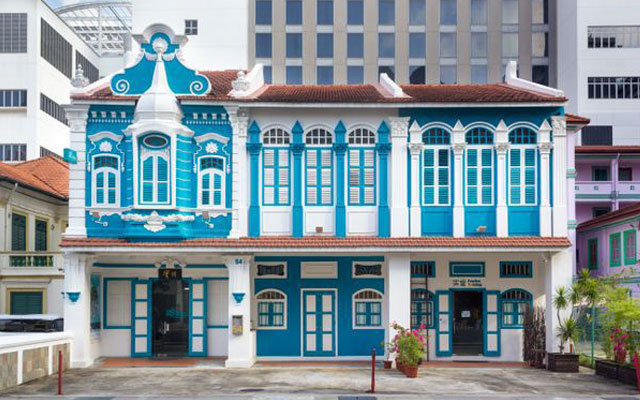
Singapore’s arts and cultural heritage are the focus of Tralfalgar’s new series of placemaking tours to explore the “heartware” of the city-state.
The tour operator has launched the Singapore Arts and Cultural Gems, a six-hour discovery tour around the Bras Basah, Bugis and Tiong Bahru precincts, including Waterloo Street, one of Singapore’s oldest streets.
Presented as a day tour, guests will explore the stories of two vibrant cultural enclaves tying Singapore’s past with its present. With insights by local insiders, the tour explores Singapore’s sociocultural history and delves into what has formed the “heartware” of its communities.
Two different themes are available for its guided walking tour of the Bras Basah and Bugis precinct.
Crossroads Alive! is a one-of-a-kind tour organised in partnership with local bilingual theatre institution The Theatre Practice. With historical anecdotes compiled during the creation process of Practice’s Four Horse Road 2020 production, guests will learn about the diverse communities that once populated Waterloo Street and its neighbouring streets.
The tour includes lunch at Practice Tuckshop, and a tasting of the Practice 54 tea, created specially for the arts group by Pek Sin Choon Tea Merchants.
Organised in partnership with Singapore Council of Women’s Organisation and Singapore Women’s Hall of Fame (SWHF), the Tapestries of the Heart tour presents the stories of Singapore’s pioneer women who have played an instrumental role in shaping Singapore’s history. Guests will discover how the various landmarks around the neighbourhood are linked to the changemakers featured in SWHF.
The tour includes lunch at Awafi Restaurant, and a Be My Guest experience with Chef Asai at Bincho @ Hua Bee, Tiong Bahru’s dual-concept restaurant with over 70 years of history. Trafalgar’s Be My Guest experience allows passionate hosts to open up their homes and businesses to share stories with travellers.
Prices for Singapore Arts and Cultural Gems tour are from S$228 (US$170) per person, and SingapoRediscovers Vouchers can be used to offset tour prices from December 1, 2020 to June 30, 2021.
Thailand taps Agoda to sell hotel quarantine packages online
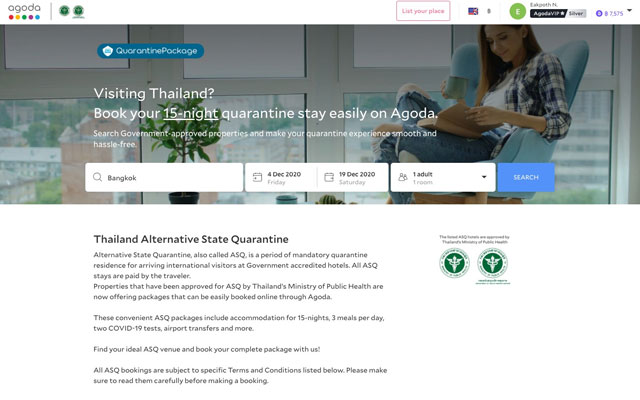
Thailand’s Ministry of Public Health (MOPH) and Department of Health Service Support (HSS) have teamed up with Agoda to ease the process of booking Alternative State Quarantine (ASQ) packages for Thai repatriates and inbound travellers amid Covid-19.
This collaboration makes Thailand one of the first countries in the world to digitalise the booking process.
Returning Thais and inbound travellers can now search for and book MOPH-approved ASQ properties via a dedicated booking platform (www.agoda.com/quarantineTH) that allows the user to search availability, room type, and pricing in real-time. Initially, the listed ASQ properties on the platform include those in Bangkok, Chonburi, and Phuket, with more partners expected to join the programme in the coming months.
Quarantine hotel package bookings are required as part of the process to obtain approval from the local Thai embassies to enter Thailand.
Tares Krassanairawiwong, director-general of the HSS, said the ASQ programme is an important mechanism that aims to benefit Thailand in two ways: first, in curbing the spread of Covid-19, and second, as a stimulus to help drive the economy by generating income for entrepreneurs.
“ASQ helps to promote the country’s economy with the 113 hotels participating as ASQ properties generating 1.2 billion baht (US$39.6 million) revenue for Thailand to date. ASQ facilities, which allow (travellers the) flexibility to choose where to stay for quarantine, can be one way to attract foreign tourists again from all over the world and generate income for the country,” he said.
To qualify to be part of the ASQ programme, hotels must pass strict standard checks in six categories from the Ministry of Public Health and the Ministry of Defense.
Mandarin Oriental set to debut in Saudi Arabia
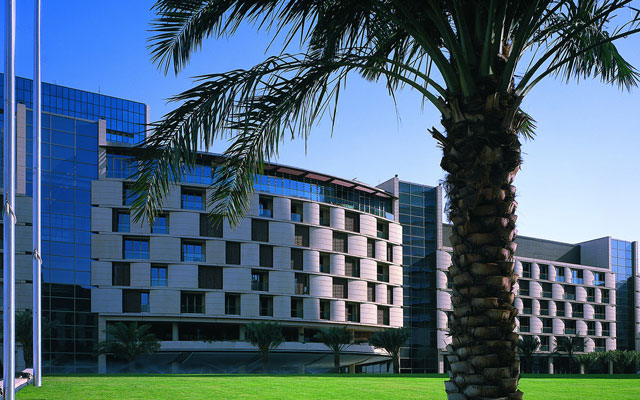
Mandarin Oriental Hotel Group has signed an agreement with the Al Khozama Company to manage and rebrand the Al Faisaliah Hotel, Riyadh, marking the group’s entry into Saudi Arabia.
Come 1Q2021, the group will take over the management of the 20-year-old property, which will be rebranded as Mandarin Oriental Al Faisaliah, Riyadh at the end of 2021, upon the completion of an extensive renovation.
Situated in the heart of Riyadh’s CBD, the Al Faisaliah Hotel forms part of the mixed-use Al Faisaliah Centre, and comprises 321 guestrooms and suites, with new interiors designed by New York’s Adam Tihany Design.
Following the refurbishment, the hotel will feature a variety of refreshed restaurants, lounges and bars. Revitalised function spaces will cater to social events and business meetings, while an indoor swimming pool, male and female spa areas and a fitness centre complete the leisure facilities.
Christian Baudat takes on new role with Oakwood

Oakwood has appointed Christian R. Baudat to the dual role of general manager of Oakwood Suites Yokohama, and director of operations for Japan and South Korea.
In his new capacity, he is responsible for directing corporate initiatives, driving operational excellence and achieving financial performance for 14 properties across Japan and South Korea. He will lead Oakwood’s growth strategy by building a robust development pipeline, while strengthening the brand presence in these two key markets.

Prior to his Japan move, Baudat served as Rotana Hotels’ area vice-president in-charge of 16 properties in Abu Dhabi, Ai Ain, Oman and Morocco.
The Swiss national has acquired over three decades of hospitality experience during his professional journey across the Middle East, Singapore, Europe and Japan.
His hospitality career began as an F&B management trainee with Hilton Tokyo in 1985, eventually working his way up to general manager of Hilton Fukuoka Sea Hawk.
Christian Baudat takes on new role with Oakwood

Oakwood has appointed Christian R. Baudat to the dual role of general manager of Oakwood Suites Yokohama, and director of operations for Japan and South Korea.
In his new capacity, he is responsible for directing corporate initiatives, driving operational excellence and achieving financial performance for 14 properties across Japan and South Korea. He will lead Oakwood’s growth strategy by building a robust development pipeline, while strengthening the brand presence in these two key markets.

Prior to his Japan move, Baudat served as Rotana Hotels’ area vice-president in-charge of 16 properties in Abu Dhabi, Ai Ain, Oman and Morocco.
The Swiss national has acquired over three decades of hospitality experience during his professional journey across the Middle East, Singapore, Europe and Japan.
His hospitality career began as an F&B management trainee with Hilton Tokyo in 1985, eventually working his way up to general manager of Hilton Fukuoka Sea Hawk.
Mixed reactions among Hong Kong’s tourism players to deferment of SG-HK travel bubble
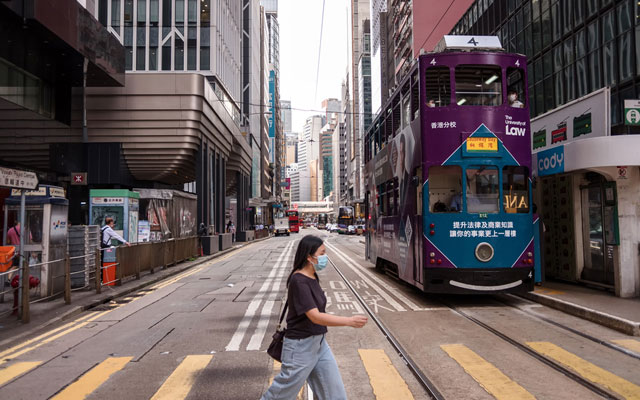
The two-week deferment of the launch of the Singapore-Hong Kong air travel bubble (SG-HK ATB) have not only frustrated many would-be travellers, but have cast a shadow over hoteliers in the city as well.
Hotel groups like Wharf Hotels expressed disappointment at the postponement of the SG-HK ATB. Its president, Jennifer Cronin, revealed that between their three hotels – Marco Polo Hongkong Hotel, Gateway Hotel and The Murray, Hong Kong, a Niccolo Hotel – they had received approximately 100 room nights of bookings.
She added: “As a matter of fact, our cluster general manager for the three Marco Polo Hotels, Dalip Singh, has been developing some great travel stories exploring the hidden secrets of Hong Kong during our border lockdown this year, initially, for his Singapore compatriots.
“With his communications team, he created a Facebook page titled ‘Shiok Steady Singh’, to keep our Singapore visitors even more informed and provide them with a range of new options when they next visit.”
As the first travel bubble of its kind, the SG-HK ATB will serve as a “template for other ATBs to operate”, Cronin said, adding that “a Hong Kong-Japan ATB is highly sought after by our Hong Kong colleagues.”
However, while hoteliers are seeing a boost in bookings from the the SG-HK ATB, the bilateral pact has had little impact on the business of inbound tour operators in Hong Kong, given that Singapore has been a small source market dominated by FITs. As such, travel agents’ ultimate hope is for the city to form more bubbles with other regional countries in the near future.
Still, Holiday World Tours, managing director, Paul Leung, hailed the SG-HK ATB as a positive move to restart the regional tourism engine.
Despite receiving only a “handful” of group bookings, he said that the arrangement “sets a good example for other destinations to follow suit and open up more possibilities, if the concept is successfully run”. “Frankly, it’s way better than just giving subsidies to us,” he added.
Noting that the government is currently in talks with about 10 countries including Japan, Germany and France to establish ATB arrangements, he opined: “Frankly, I don’t see longhaul traffic from Europe and the US bouncing back next year. Hence, China is on the top of our wishlist given the volume of visitors, followed by South-east Asian countries.”
On the other hand, Destination China has seen nary a ripple of impact on its business since the announcement of the bilateral air bubble pact. Its general manager and owner, Gunther Homerlein, told TTG Asia: “Before Covid, the traffic between Hong Kong and Singapore was not that high. Frankly speaking, the cities don’t excite one another’s citizens that much.
“Travel bubbles are a start and it may help tourism, but it isn’t going to do much for corporate and business travel until there are several countries on board and there is a ‘green card’ or ‘travel code’ that allows business people to travel more easily and more frequently.”
According to the Hong Kong government’s release, the ATB has a built-in mechanism whereby the number of designated flights may be increased, decreased or even suspended, depending on the situation. If the latest seven-day moving average of the daily number of unlinked local cases exceeds five for either Singapore or Hong Kong, the ATB arrangement will be suspended after two days (including the day on which the exceedance of the threshold is announced) for a two-week period.
Norwegian Cruise Line rolls out double deal to support agents
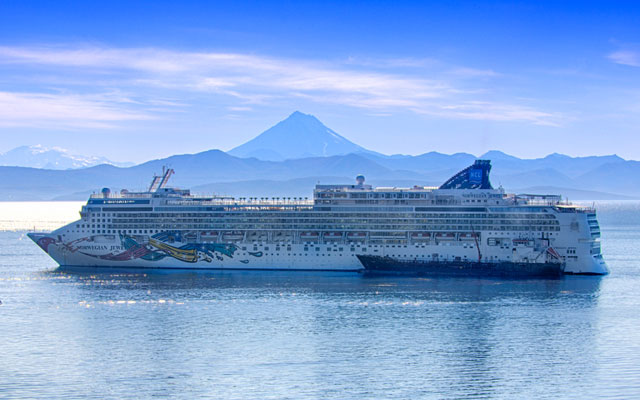
Norwegian Cruise Line (NCL) has launched a double promotion designed to benefit loyal cruisers and help trade agents secure future business.
One of them is its Best Deal of the Year where guests can enjoy 30 per cent off the total voyage fare for bookings made from now until December 10, 2020. The offer applies fleetwide across all cabins and travellers can choose from hundreds of voyages departing in 2021 or 2022.
Secondly, NCL has also introduced CruiseFirst, its new flexible programme designed for loyal cruisers. With every purchase of a US$150 certificate, cruisers will receive an extra bonus of US$150 applied to their Latitudes account, the cruise line’s loyalty programme. The offer is combinable with other existing promotions such as the Best Deal of the Year, and deposits are valid for three years, allowing greater flexibility for customers.
Ben Angell, NCL vice president and managing director, Asia Pacific, said the CruiseFirst programme is designed to help its travel agent partners “secure future business, boost commissions and build stronger relationships with their clients”.
For the duration of the promotion, guests will also receive all five choices from NCL’s Free at Sea offer, including a beverage package, shore excursion credit, specialty dining package, and Wi-Fi package. On select sailings, they can also enjoy NCL’s ‘3rd and 4th guests sail at a reduced rate’ promotion, as well as the ‘Buy 1st Guest and Get the 2nd Guest 50% Off’ offer.
Itinerary highlights for NCL’s 2021/22 sailing season include the 11-day Hawaii cruise from Honolulu to Vancouver on Norwegian Jewel (departing April 29, 2021), 17-day cruise from Singapore to Sydney on Norwegian Spirit (departing December 6, 2021), and a 10-day cruise from Bali to Hong Kong on Norwegian Spirit (departing April 9, 2022), among others.
Vietnam’s third New World hotel to open in Phu Quoc
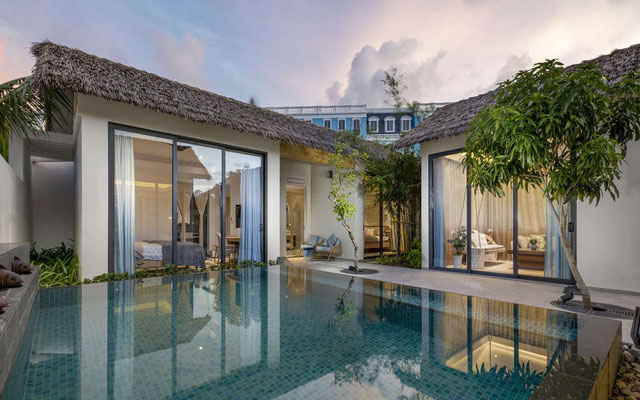
New World Hotels & Resorts has signed an agreement with Sun Group to rebrand and manage a new all-villa resort on Vietnam’s southern Phu Quoc island.
Formerly known as the Sun Premier Village Kem Beach Resort, the rebranded New World Phu Quoc Resort is scheduled to open its doors in 2021. Situated on the southwestern tip of Phu Quoc, the resort sits on nearly 60ha of tropical landscape facing acclaimed Kem Beach.
Guests can select from 375 villas in seven configurations starting from 124m² in size to the grand 414m² Sun Beach Front Villa. Every thatched-roof villa, which is composed of three separate areas, houses a private swimming pool. Recreational options include an outdoor swimming pool, fitness centre and studio, a 16-treatment-room spa and kids’ club.
An all-day café, specialty restaurant, pool bar and beachside restaurant offer a variety of island, regional and international cuisines.
The New World Phu Quoc Resort will be the 11th property and second resort to join the brand’s portfolio across Asia, and also, the third in Vietnam after the New World Saigon Hotel and the upcoming New World Hoiana Hotel.
APAC NTOs most online ready to tap halal travel market
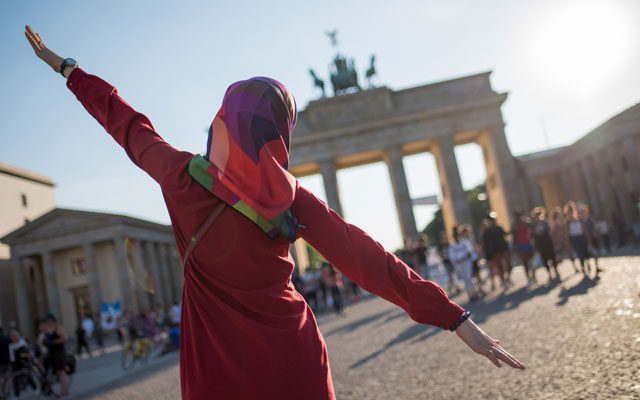
When it comes to the availability of Muslim-friendly online travel resources provided by NTOs globally, those in Asia-Pacific continue to set a shining example, according to a recent study by travel consultancy Pear Anderson.
Some 60 per cent of the top 10 ranked NTOs are from Asia-Pacific in Pear Anderson’s report titled How Online Ready are NTOs for Muslim Travellers in 2020?.
This is the second year of the report, which examines the online resources that NTOs from the top 50 most visited non-Muslim countries worldwide have created to support Muslim-friendly travel, including information about Muslim-friendly food, prayer spaces and hotels.
Of the top 50, 46 per cent now have some form of online resource available for Muslim travellers, an encouraging increase of 21.7 per cent from 2019.
Hong Kong, Taiwan, South Korea, Australia and Slovenia all saw significant increases to their scores in 2020, as they sought to create new content, and made it more accessible to Muslim travellers.
Six countries also scored their first points in the 2020 edition of the report: Germany, Greece, India, Macau, South Africa and the UK.
Hannah Pearson, director of Pear Anderson, said: “It’s exciting to see NTOs starting to put more focus on Muslim-friendly travel. However, European NTOs have a long way to go to catch up to their Asia-Pacific peers, who are dominating the top rankings.
“The Hong Kong Tourism Board and the Taiwan Tourism Bureau have put serious emphasis on developing Muslim-friendly online resources, and their efforts have paid off by scooping the top spot. Their jump in rankings shows that it’s not enough for an NTO to create Muslim-friendly online resources as a one-off project – there needs to be continuous innovation to keep the messaging fresh.”
The report also features cases studies from the Hong Kong Tourism Board and Tourism Australia, as well as industry best practices for online Muslim-friendly tourism resources.
Muslim travel spend is a significant and fast-growing sector, increasing to US$194 billion in 2019, according to the State of the Global Islamic Economy Report 2020/2021.







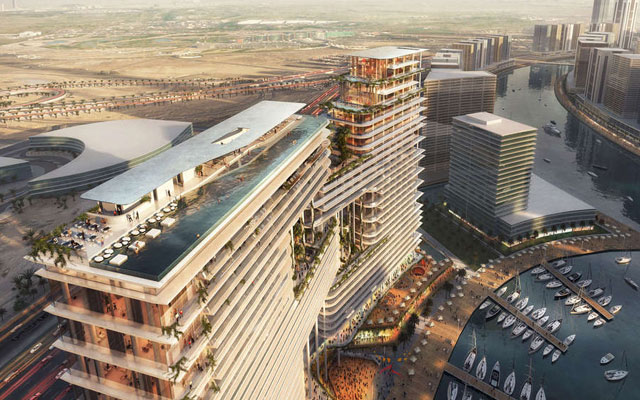
Dubai-based property developer Omniyat will be bringing a “landmark of opulence” to the banks of the Dubai Canal in the form of The Residences, Dorchester Collection, Dubai.
Slated to open in late 2022, the property has been over 60 per cent completed, with a total value standing at more than 2.5 billion dirhams (US$680.6 million), including retail areas as well as F&B outlets.
Managed by hospitality brand, Dorchester Collection, and designed by architects Foster and Partners, the development will boast two interconnected towers, one housing the Dorchester Collection hotel and the other a residential tower.
The 32-storey residential tower will include 39 fully furnished residences, ranging from362m² to a 938m², with two-, three- and four-bedroom apartments. Additionally, situated on the 30th to 32nd floor, The Residences, Dorchester Collection, Dubai, will offer six four- and five-bedroom penthouses, each covering 1644m² with its own swimming pool overlooking Dubai Canal and the Dubai cityscape.
With fully equipped kitchens, as well as cooking and cleaning appliances, each residence will also be fitted with instant filtered, sparkling and boiling water and modern tapware. Each apartment will also feature wide-screen televisions, audio systems, home automation system and dressing rooms.
Amenities will include a private gym and yoga studio, an outdoor pool with a view of Dubai and a 200m wide untouched water frontage on the Dubai Water Canal. There will also be a residents lounge and private dining space on the 24th floor spilling out onto the Sky Garden with outdoor seating, tranquil water features, luscious greenery and views of the capital.
Residents will also be able to enjoy full bespoke lifestyle services provided by Dorchester Collection. For example, homeowners will enjoy access to the One at Palm Jumeirah Beach Club managed by Dorchester Collection and their facilities.
The Residences, Dorchester Collection, Dubai, will also be home to a curated mix of boutique retail, fine-dining restaurants, beauty and luxury lifestyle shops, speciality cafes and gourmet providers.