Although South Korea’s borders have not completely reopened, its capital, Seoul is actively preparing for tourists’ eventual return.
Its top-of-mind initiatives include promotional videos by famous South Korean boyband BTS, where the seven members presented the city’s charms, hidden spots and activities. This is how Seoul Tourism Organisation (STO) brings Seoul to the global audience, instead of waiting for visitors to come to them. The videos are a hit, reaching 100 million views in the first 10 days.
Seoullo 7017, an elevated, linear park
Meanwhile, attractions such as museums and theatres are taking the virtual route, with many creating online tours, exhibitions and performances to remain connected with audiences globally.
As business survival is crucial to weathering Covid-19, STO is financially supporting travel agents, adding on to assistance offered by the central government. STO also continues to support industry stakeholders through the Discover Seoul Pass.
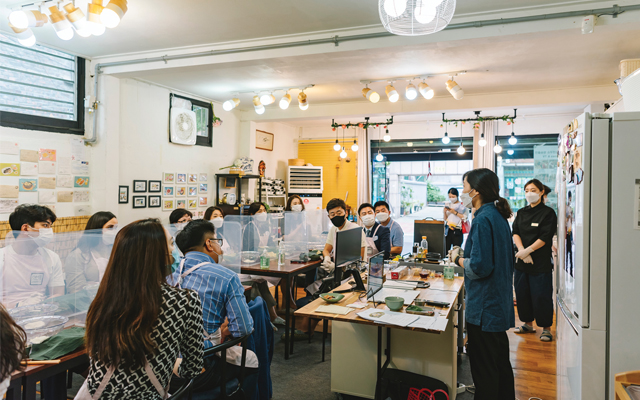
On the MICE front, Seoul has added Nodeul Island – an island in the middle of the Han River that has been transformed into an Ecological Park – to its unique venue list. A Jamsil MICE complex is also under development, set for completion in 2025.
Seoul Convention Bureau (SCB) currently offers two types of support – international conferences, and corporate meetings/incentives. In light of the current crisis, support for hosting online or hybrid events has also been shifted to the top of the revised PLUS Seoul programme.
SCB has lowered the minimum number of participants for corporate events from 50 to 20. A Discover Bleisure Charms of Seoul was also recently published, to help corporate groups inject local experiences into itineraries.
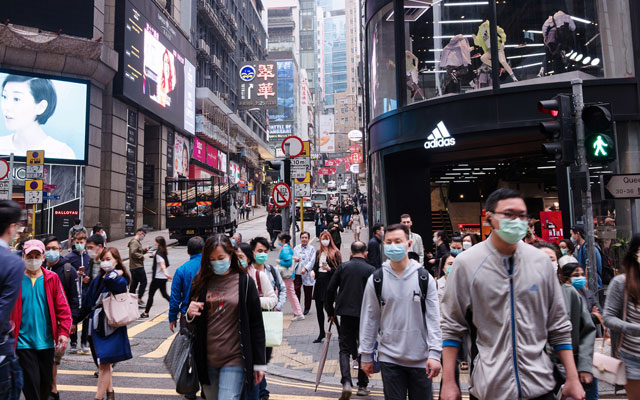
Singapore and Hong Kong have further deferred the launch of their bilateral air travel bubble (ATB), amid a surge in Covid-19 cases in the Chinese city.
Given that the number of local unlinked cases in Hong Kong is still high, both cities have decided to defer the commencement of the Singapore-Hong Kong ATB to “beyond December 2020”, the Civil Aviation Authority of Singapore (CAAS) said in a statement on Tuesday (December 1).
Singapore-Hong Kong air travel bubble put on hold as the Chinese city battles a coronavirus surge
The exact start date of the ATB arrangement will be reviewed late this month.
This is the second postponement of the ATB, following an earlier decision to defer the launch of the ATB by two weeks, after Hong Kong saw a surge in Covid-19 cases. Flights under the ATB arrangement was originally scheduled to start on November 22.
Under the ATB, travellers between Singapore and Hong Kong will be subject to Covid-19 tests, in lieu of quarantine or stay-home notice. There will be no restrictions on the purpose of travel and no requirement for a controlled itinerary or sponsorship.
Passengers should contact their airlines regarding their travel plans, CAAS said, adding that the Singapore and Hong Kong authorities have been in close discussion and will update when there are further developments.
Tourism players near and far are clamouring for a slice of Asia-Pacific’s ultra-wealthy pie, as the luxury market looks set to be among the first to rebound when travel resumes.
Gearing up to tap into that market, destinations are drawing up exclusive itineraries, re-packaging products and launching marketing campaigns targeting the region’s luxury travellers.
Luxury market poised to be at the forefront of recovery when travel rebounds
Speaking at the virtual ILTM World Tour Asia Pacific, Winston Chesterfield, director and founder of Barton Consulting, said: “Asia-Pacific is the fastest-growing region in terms of population, number of high-net-worth individuals (HNWIs) and total wealth. Given this, and their overall spend on luxury travel, there is going to be very strong growth from the region in the future.”
According to ILTM APAC and the Global Travel Recovery Report 2020, while HNWIs only form 0.15 per cent of Asia-Pacific’s overall population, they contribute 48 per cent to total global luxury travel universe (GLTU) spend.
Additionally, research carried out in 3Q2020 by luxury and wealth researcher ALTIANT revealed that Asia is home to the most HNWIs who claim money remains no object at 34 per cent. Meryam Schneider, vice president of marketing and partnerships, referred to this psychology as “revenge spending”. She noted: “These may be the most carefree spenders in the coming months.”
Schneider added in the short- to mid-term, the region’s HNWIs will travel within Asia. Rural areas with exclusive curated packages designed for families and small groups are predicted to be popular. She advised: “There needs to be customised marketing for the highest end of clients, with a special focus on Asians.”
Noting the potential, destinations across the globe are putting in place plans to lure this prime market to their shores.
Tourism Ireland has launched a luxury travel strategy to attract ultra-high-net-worth individuals (UHNWI) and HNWI travellers. Additionally, it has procured industry experts to advise on how to capture high rollers and prepare Ireland’s wealth of products for the world’s most wealthy.
Aisling McDermott, Tourism Ireland’s Middle East and Asia manager, said: “We know this market will come back first and we need to be ready. We have invested very heavily and are very much focused on targeting luxury travellers.”
McDermott added prior to Covid-19, 80 per cent of the country’s HNWIs came from the US, 15 per cent from Australia and New Zealand, and the remaining five per cent from the rest of the world. She said: “It is this five per cent I am targeting right now.”
In Japan, the private and public sector have been working together to form the Fujisan Luxury Tourism Consortium (FLTC). The initiative will officially launch in April and has curated a series of exclusive itineraries in and around Mount Fuji.
Tatsuya Masubuchi, CEO of HNWI consultancy Root and Partners which helped form the consortium, said the aim is to focus on small groups of less than 10 HNWIs. Activities include luxury hikes to previously unvisited parts of the area, helicopter transfers and exclusive wellness programmes that tap into the revered mountain’s sacred springs.
With Japan slated to form travel bubbles with various Asian countries first, Masubuchi is confident itineraries that offer pristine nature away from the crowds in spiritual surroundings will appeal to Asia’s big spenders.
In October, Luxury Travel Vietnam rebranded and expanded its services offering high-end, tailor-made tours across Vietnam, Cambodia, Laos, Thailand and Myanmar. Operating as Lux DMC Travel, its products now cover all of South-east Asia, Japan and Korea.
Pham Ha, CEO, said: “It’s forecast there will be an increase in high-end tourists who have a demand for travelling after Covid-19. Therefore, our expansion will help us offer more choice. After Covid-19, attracting more customers from the luxury market will help us to recover our business quicker.”
In the wake of the pandemic, the company has recruited travel experts, changed its marketing strategies, and designed a raft of itineraries to cater to the shift in demand from high-end travellers and new markets.
In spite of this appetite for Asia’s elite, Nick Ray, product director at Hanuman Travel which predominantly works with Europe and the US, said switching direction during Covid-19 times is far from easy.
He explained: “Everyone would like to pivot towards this market but it doesn’t happen overnight as there are already many companies with established partnerships. This can take a long time and is usually done by attending trade shows or visiting a country to have face-to-face meetings. Obviously, we can’t do that right now.”
However, he predicts that when borders start to reopen, there will be a surge in tourism companies switching from B2B to B2C. He said: “This will happen quickly as there will be a massive pent-up appetite for travel to tap into.”
Despite prevailing domestic and international travel restrictions, the majority of Asia-Pacific travellers are determined to resume leisure travel before the end of 2020, according to data from Amadeus.
In the latest Destination X: Where to Next report, which polled 1,050 respondents across Asia-Pacific, 27 per cent of travellers expressed a strong desire to travel immediately once travel restrictions lift, with 37 per cent planning their next trip one to three months after they lift.
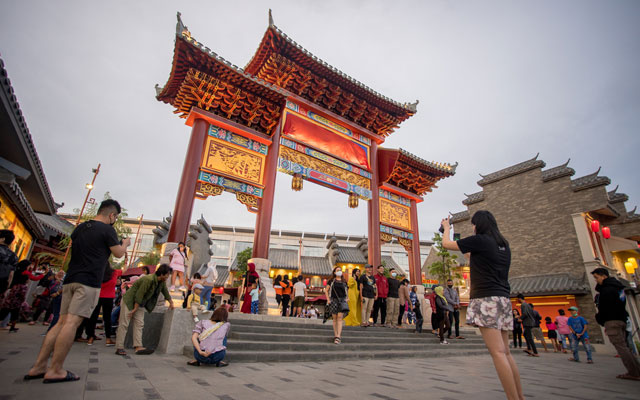
Majority of Asia-Pacific travellers seek curated travel experiences over pre-packaged options: Amadeus study; people taking photos in front of a Chinatown-style gate in a tourist spot in Pantai Indah Kapuk, Jakarta, Indonesia this November pictured
While there is a strong preference to go farther from home, 70 per cent of Asia-Pacific travellers are ready to travel domestically. In fact, the average time spent on holidays will not change, with half of travellers seeking a trip duration of 14 days or more.
Reconnecting with family and friends is the predominant reason for 55 per cent of Asia-Pacific travellers planning their next leisure trip in the coming months. At the same time, travellers are also seeking a sense of adventure to satisfy their pent-up wanderlust, with 34 per cent opting to explore unfamiliar destinations for ‘new travel experiences’ and 32 per cent desiring to ‘reconnect with the outdoors’.
Ramona Bohwongprasert, senior vice president, retail in travel channels, Asia Pacific, Amadeus, said: “The data tells us that travel demand is there. Across Asia-Pacific, travellers are energised and ready to holiday within their own shores this festive season, to reunite with family and friends or explore new destinations that offer outdoor getaway experiences.
“However, their behaviours have changed, with travellers not willing to commit to holiday plans too far in advance and Covid-19 factors such as on-site cleanliness and testing measures now weigh in when travellers evaluate accommodation and transit options. Travel sellers and operators will need to cover new ground to provide the experience that domestic tourists are seeking this coming holiday season.”
Customised travel experiences win out over pre-packaged leisure travel options, with 70 per cent of Asia-Pacific travellers preferring to curate their own holidays and/or with the help of a travel agent. Group and guided tour packages have dramatically declined in popularity, with only eight per cent of travellers considering a holiday package cruise of more than 50 people.
Travel spontaneity is also a thing of the past, with travellers spending more time researching before booking their next getaway. ‘Price tailored to my needs’ and ‘severity of the Covid-19 health crisis at the destination’ are the most influential factors for purchasing decisions. More than two-thirds of travellers believe that upfront knowledge of Covid-19 prevention measures is ‘very important’.
Gaurav Bhatnagar, director at Travel Boutique Online, said: “To help travellers rediscover their cities, and regions and support local tourism experiences, travel agents will need to get creative on ‘what to sell’. The domestic travel market will be highly competitive this holiday season, so offers must be eye-catching and personalised. Travel agents will need to reimagine how they sell and package domestic travel experiences by adding flexibility and identifying new segments that are less explored.”
Convincing travellers that it is safe to travel via airlines will be a priority for travel sellers, with Asia-Pacific travellers more likely to say they are ‘less than comfortable with flying but will continue to do so’. New features such as touchless kiosks that use QR codes and mobile boarding passes, combined with new policies such as mask compliance and removal of middle seats, could help to boost confidence.
Insurance is now an integral part of the travel purchase, with 47 per cent of Asia-Pacific travellers likely to purchase travel insurance for every trip, where once it was an afterthought. Another important factor to the traveller journey this holiday season is the travel agent. One-fifth of travellers expect to lean on travel agents for their next domestic trip, for recommendations, problem-solving and support.
In interviews conducted by Amadeus with travel agency executives across Asia-Pacific including Australia, India and the Philippines, 38 per cent believe the way they sell travel will change this year. Travel agents are looking to get ‘more creative’ in their selling strategy, to shape and tailor travel offers to specific traveller personas, as well as highlight added flexibility and insurance coverage.
Kit Sananwathananont, managing director of G.M. Tour & Travel, said: “Travellers will demand a higher level of personalisation, reassurance and empathy this holiday season. Travel agents that combine technology with a ‘human touch’ can deliver excellent customer service that will have a positive impact on travellers’ trust and loyalty, and ultimately help jump-start the travel industry for 2021.”
A fresh set of restrictions imposed by several state governments across India amid a Covid surge is threatening the green shoots of recovery that have emerged in the country’s hotel sector over the last few weeks, driven by the growth of leisure tourism and the onset of the country’s festival and wedding season, according to a new report published by HVS.
The report, authored by Mandeep S Lamba, Akash Datta and Dipti Mohan, noted that occupancy in most major markets were showing “fledgling signs of improvement”, with leisure destinations seeing “a strong rise in occupancy” as people started to hit the road again.
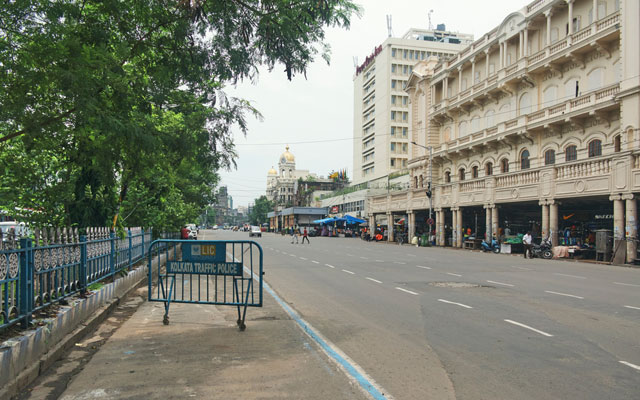
As India battles rising Covid cases, several states across the country have reimposed fresh guidelines; a near-empty street before the iconic The Oberoi Grand, Kolkata hotel during an earlier lockdown in July pictured
Overall, hotel occupancy in India has improved from approximately 10 per cent in April 2020 to nearly 30 per cent in October 2020.
In the absence of corporate travel, most branded hotels were relying on the upcoming wedding and holiday season in most part to bridge their revenue shortfall, said the report. However, fresh state restrictions to curb the Covid spread is expected to dampen the spirits going forward.
While urgent action is vital to keep the virus in check, “a reasonable notice instead of rampant execution of lockdowns will certainly help the industry as well as its people to prepare for the eventuality, especially during such destabilising periods,” the authors wrote.
To back their case, they cited the example of the recapping of wedding guests by some state governments to 100 or even 50 in some cases, from the earlier cap of 200, with the new guidelines being implemented almost overnight.
“This sudden change in guidelines has left the events and its planners in disarray,” the authors wrote. “Not only are hotels woefully impacted, their customers are left with dirty laundry running pillar to post trying to make fresh arrangements – from scouting of new venues to informing their guests about the change in plans, all the while trying to cope with the nuances of the ongoing pandemic and surrounding regulations.”
They concluded: “Most of the labor-intensive sectors, including hospitality, are already highly distressed and vulnerable and these sudden changes in regulations are only adding to their woes. Coherence between central and state government policies is needed to ensure that the impact on the economy and livelihood of people is limited going forward, especially in the absence of sector specific packages.”
Radisson Hotel Group has plans to more than double its serviced apartments portfolio across the EMEA (Europe, Middle East, and Africa) region by 2025.
Planned openings are underway for Paris, Amsterdam, Dubai, Istanbul, Larnaca, Cortina, Cairo and Riyadh, with further openings lined up in Germany.
Radisson aims to double its serviced apartments portfolio across EMEA over the next five years
The group will develop its serviced apartments either as a standalone project or a mixed-use development in combination with a traditional hotel operation, designed to cater to different segments ranging from midscale to luxury.
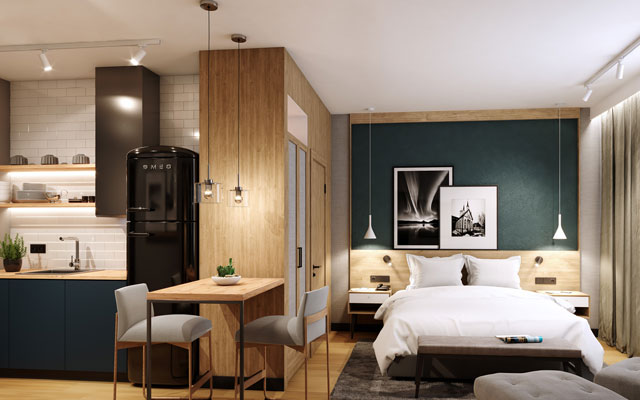
It will offer studios as well as one- and two-bedroom apartments with fully equipped kitchen, en-suite bathroom, 24-hour reception, housekeeping services, social and communal spaces, F&B options, and a range of leisure facilities tailored to its location.
Elie Younes, executive vice president and chief development officer, Radisson Hotel Group, said: “For many years, we have explored the strong demand for serviced apartments and extended stay products by recognising it as an attractive risk-adjusted investment proposition that has considerable growth potential.
“Given its relevance to the current economic climate, this value proposition has recently been further defined in our portfolio, offering a holistic concept with more opportunities for our investors and more possibilities for our guests.”
Currently, serviced apartments represent around 10 per cent of the group’s EMEA portfolio, with 45 properties and more than 5,400 units in operation and under development.
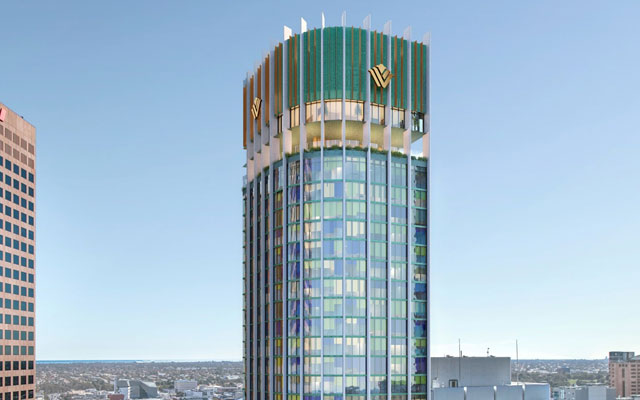
Wyndham Hotels & Resorts is ramping up its plans for expansion in Australia with the announcement of Wyndham Grand Adelaide, set to become one of the tallest hotels in South Australia and the first Wyndham Grand hotel for the country when it opens in 2024.
Poised to rise 120m from King William Street in Adelaide’s CBD, the estimated A$150 million (US$110.5m), 34-story skyscraper is being developed by Equinox Property and designed by Loucas Zahos Architects.
Wyndham Grand Adelaide will rise as a 34-story tower in the heart of Adelaide’s CBD come 2024
Wyndham Grand Adelaide will comprise some 347 rooms and suites and an array of facilities, including an infinity pool with a sun deck and a bar offering panoramic city views, a day spa with sauna and treatment rooms, and a fitness centre. The five-star property will also offer a range of dining experiences with an upscale restaurant, a wine bar, a hills-facing sky bar with alfresco seating, as well as a rooftop restaurant.
Wyndham Grand Adelaide will be managed by Resort Management by Wyndham, a subsidiary of Wyndham Destinations, which manages a portfolio of 54 properties across Asia-Pacific.
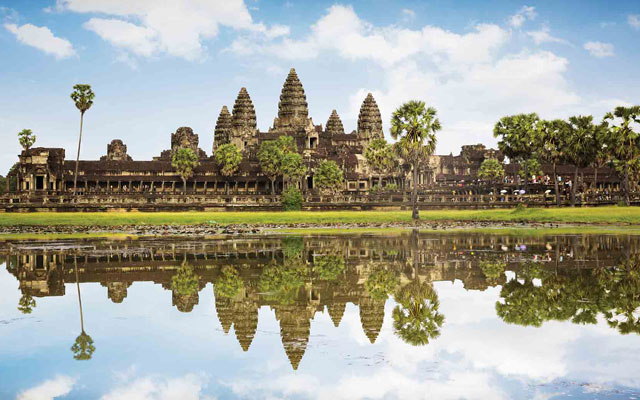
The ASEAN Tourism Forum (ATF) 2021, originally scheduled to take place in Cambodia from January 17-23, has been postponed until January 2022.
In a statement announcing the shift of the event, Cambodia’s Ministry of Tourism said: “While some countries have successfully contained the virus, resurgent cases have also been observed in other countries. With the evolving situation of the Covid-19 pandemic, Cambodia and countries worldwide are still imposing restrictions on large-scale events and travel.
Cambodia moves ASEAN Tourism Forum to next year
“Proceeding with ATF 2021 in this climate will be challenging as foreign delegations, media, sellers, buyers and trade visitors have expressed concerns about travelling.”
Highlighting that its top priority is the health and safety of all the participants of ATF 2021, the ministry called the postponement “a difficulty but necessary decision”. Revised dates will be announced as soon as possible, it added.
The annual travel trade show rotates annually between the 10 ASEAN member states – Brunei, Cambodia, Indonesia, Laos, Myanmar, Malaysia, the Philippines, Singapore, Thailand and Vietnam.
ATF 2021 was expected to attract more than 2,000 participants from across 25 countries, including government ministers and officials, sellers, buyers, media as well as trade visitors in the tourism industry.
Abercrombie & Kent has appointed Martin Froggatt as executive vice president, destination management and member of the Global Management Board.
This new role encompasses global leadership across A&K’s DMCs; of over 55 offices in more than 30 countries, and its luxury riverboat and lodges brand, Sanctuary Retreats.
Froggatt joins the business with over 25 years experience in the travel industry with brands such as Walt Disney Attractions, TUI and Travelopia in both the UK and the US.
The Hong Kong government’s recent announcement of a further HK$600 million (US$77.4 million) in additional relief to tide the tourism industry through the protracted Covid-19 crisis have drawn mixed feedback from industry players.
The announcement, which was made by the city leader Carrie Lam during The Chief Executive’s 2020 Policy Address last week, came as a surprise to the trade, given that government officials have made it clear that there would be no further provision of subsidies as the last three rounds of anti-pandemic funds had already depleted the city’s fiscal reserves.
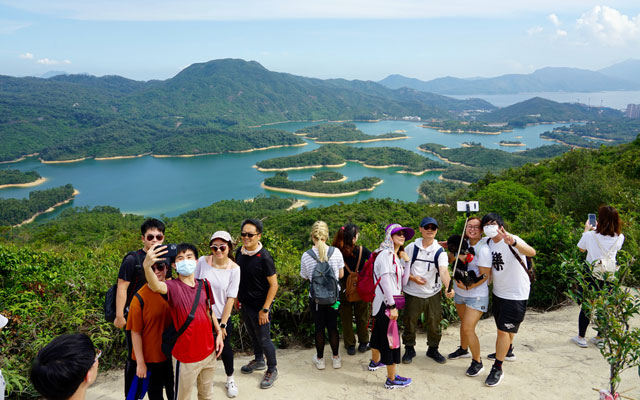
The government’s fresh round of relief measures for the tourism industry garners varying reactions; tourist taking photos at the Reservoir Islands Viewpoint in Hong Kong this May pictured
Under the latest scheme, each licensed agent will receive a cash subsidy. The subsidy level for agents with 10 or less staff members will be at a flat rate of HK$100,000 each; while those with 11 staff members or more will receive a subsidy rate that is directly proportional to their number of staff, using a subsidy level of HK$10,000 per staff member as the basis of calculation. This plan is expected to benefit some 1,700 travel agents.
A one-off subsidy of HK$15,000 will also be given to each agent’s staff and freelance accredited tourist guide and tour escort, with about 19,000 persons expected to benefit from this initiative. In addition, for the first time, a one-off HK$6,700 subsidy will be given to each driver of a tour service coach mainly serving tourists, with about 3,400 drivers set to benefit.
The reversal of fortune hinges upon not sheer luck, but the trade’s persistence and collaboration over the last few months in petitioning for government economic assistance to the industry, sparked off by insufficient coverage in the latest and third round of Anti-epidemic Fund announced in September.
The HK$397 million support funding was a marked decrease from the HK$761 million stimulus in the second round, drawing various agent associations and stakeholders to voice their concerns.
For instance, the Travel Industry Council (TIC) hosted a joint press conference with 13 travel trade associations to highlight that less than one per cent of the total funding was channelled to tourism. This was followed by numerous trade actions urging for more government support publicly, including a coach bus demonstration, an unprecedented full-page advertisement in the form of an open letter to Lam in local newspapers, and meetings with government officials by respective associations.
TIC chairman Jason Wong expressed gratitude for the government’s additional support this time, calling it a “timely move” to reinforce stakeholders’ confidence to continue forging on.
Hong Kong Travel Agent Owners Association president, Freddy Yip, who took the lead in striving to obtain more subsidies for the industry by organising face-to-face meetings with legislative councillors and top officials, said he is “thrilled” at the outcome, attributing it to “various joint actions and lobbying that exerted pressure on the government”.
“Frankly, the industry involves the livelihoods of 1,700 agents, and about 17,000 full-time and part-time staff. I found this modified subsidy a better coverage for both big and small agents as well as coach drivers serving tourists,” he added.
However, not all trade players are in favour of government handouts. Suggesting that the move is but a stop-gap measure, Destination China general manager and owner, Gunther Homerlein, said that with most sector players facing mounting losses and exhausted funds, “the government cannot do much more then put a band aid on an open wound”.
He elaborated: “There simply isn’t enough money. The fact that they specify that the money will be to support staff, guides, etc. is a good thing. Many, many people have already lost their jobs, so that may prevent more losses.
“What may be better though, to build revenue and domestic demand, is a proactive scheme like that offered by Singapore, where each citizen is given S$100 (US$74) to spend on local tours, hotel stays (and attractions). That actually is better than another handout. It requires creativity and it spreads the funds among a wide variety of recipients. Just giving money out won’t work. There really needs to be better ideas and options.”
To date, the government has rolled out three rounds of Anti-epidemic Fund totalling around around HK$1.76 billion to mitigate the Covid-19 fallout on the tourism industry. Coupled with other measures including the Travel Agents Incentive Scheme and the Green Lifestyle Local Tour Incentive Scheme, alongside this latest round of measures, the government has provided a total of about HK$2.6 billion to support the tourism industry.








Singapore and Hong Kong have further deferred the launch of their bilateral air travel bubble (ATB), amid a surge in Covid-19 cases in the Chinese city.
Given that the number of local unlinked cases in Hong Kong is still high, both cities have decided to defer the commencement of the Singapore-Hong Kong ATB to “beyond December 2020”, the Civil Aviation Authority of Singapore (CAAS) said in a statement on Tuesday (December 1).
The exact start date of the ATB arrangement will be reviewed late this month.
This is the second postponement of the ATB, following an earlier decision to defer the launch of the ATB by two weeks, after Hong Kong saw a surge in Covid-19 cases. Flights under the ATB arrangement was originally scheduled to start on November 22.
Under the ATB, travellers between Singapore and Hong Kong will be subject to Covid-19 tests, in lieu of quarantine or stay-home notice. There will be no restrictions on the purpose of travel and no requirement for a controlled itinerary or sponsorship.
Passengers should contact their airlines regarding their travel plans, CAAS said, adding that the Singapore and Hong Kong authorities have been in close discussion and will update when there are further developments.