TTG Asia
Asia/Singapore Sunday, 14th December 2025
Page 977

Destinations lift travel curbs cautiously: UNWTO

0

Tourist destinations across the globe are taking the first tentative steps towards easing Covid-19-related travel restrictions, new research by UNWTO has shown.

Amid the UN agency releasing its global guidelines for reopening tourism, three per cent of all global destinations have now taken steps to ease travel restrictions.

Travel restrictions starting to ease, but caution remains, says UNWTO

The recently-released fourth edition of UNWTO’s COVID-19 Related Travel Restrictions: A Global Review for Tourism report, looked at the measures of 217 destinations worldwide as of May 18, 2020.

Seven destinations have eased travel restrictions for international tourism purposes, while several other destinations are engaged in significant discussions about the reopening of borders, showed its research.

Still, caution remains, with the report noting that 100 per cent of all destinations worldwide continue to have some form of Covid-19-related travel restrictions in place.

Furthermore, as of May 18, 75 per cent continued to have their borders completely closed for international tourism. In 37 per cent of all cases, travel restrictions have been in place for 10 weeks, while 24 per cent of global destinations have had restrictions in place for 14 weeks or more.

UNWTO secretary-general Zurab Pololikashvili said: “The timely and responsible easing of travel restrictions will help ensure the many social and economic benefits that tourism guarantees will return in a sustainable way. This will contribute to the livelihoods of many millions of people around the world. The sector is a driver of sustainable development and a pillar of economies. UNWTO stresses the need for vigilance, responsibility and international cooperation as the world slowly opens up again.”

Pololikashvili also welcomed the growing confidence in the global tourism sector, noting it stands ready to return to growth.

Zooming in on global travel restrictions, the UNWTO research showed that the more important tourism is to the economies of individual destinations, the more likely they are to have introduced complete border closures.

In the case of SIDS destinations (Small Island Developing States), 85 per cent continue to have their borders completely closed for tourism purposes.

All UNWTO regions have more than 65 per cent of their destinations completely closed to tourism: Africa (74 per cent), Americas (86 per cent), Asia and the Pacific (67 per cent), Europe (74 per cent) and the Middle East (69 per cent), found the report.

Scott Dunn Singapore gets new GM

0

Luxury tour operator Scott Dunn has appointed Mike Harlow to head its Singapore office as general manager.

In his new role, Harlow is responsible for devising strategies for business growth and managing the day-to-day operations of the Asia team, including Singapore, Hong Kong, and the wider South-east Asia and Australasia markets.

Harlow moved to Singapore in April 2019 as head of sales and service, bringing with him an in-depth knowledge of business management and experience, having built and managed sales teams in the UK.

With nearly a decade’s worth of industry experience, he has held hospitality and service roles in both Val D‘Isere, France and Oxfordshire, in the UK.

Safe distancing on aircraft won’t fly, says Emirates’ Clark

0

Social distancing on airplanes is not a sustainable option, and to attempt it would be an exercise in futility, according to Emirates Airlines’ president.

Speaking during a webinar at this week’s inaugural virtual Arabian Travel Mart, Tim Clark said proposed measures such as removing middle seats and cutting capacity by up to 50 per cent on aircraft are “pointless”.

Emirates’ chief calls removal of middle seats on planes in the name of social distancing “pointless” 

“There’s no point leaving the seat next to you empty because if someone in the seat behind you coughs, then it makes no difference as it will still travel 20 feet down the cabin,” he said.

He added the move would also be detrimental to the business model of low-cost and long-haul airlines who rely on high volumes of passengers to make routes financially viable. Noted Clark: “It doesn’t stack up for anyone to do that.”

Until there is a vaccine or anti-viral therapeutic medicines, Clark said it is essential passenger confidence and safety is built both on the ground at airports and in the air. Dubai airport, for example, has been readying itself for transit passengers by meticulously disinfecting public spaces.

Dubai-based airline Emirates has put in place strict protocols, including PPE (personal protection equipment) uniforms for cabin crew, and the distribution of personal hygiene kits containing gloves, masks and sanitiser to passengers. Cabin service attendants from the 380 have been relocated to 777 aircraft to sterilise toilets every 30 minutes during flights. Additionally, air filtration systems change the air every two minutes.

Said Clark: “I’m hoping eventually given the things being done on planes, (including) asking passengers to wear masks and gloves, and at airports, there will be a paradigm shift in thought until there is a vaccine.”

Clark remained optimistic that travel will resume some form of normality by summer 2021 – but only if a mass global inoculation programme is rolled out during 1Q2021. He added: “I think we have a fighting chance of that, and we will start to see by the summer of next year quite a large uptick in demand for travel, both on short-haul and airlines such as ourselves.”

He added that Emirates is working towards resuming business to pre-coronavirus levels by 2023/24.

Social distancing, in-flight cleanliness top concerns in pandemic-era air travel

0

Tech-approved cabin cleanliness, in-flight social distancing and personal protection equipment (PPE) emerge as top concerns and priorities among air passengers in the wake of the pandemic, according to a recent survey.

Conducted by Honeywell Aerospace, the survey taken by more than 700 passengers across North America and Asia, showed that a majority of travellers (72 per cent) were more concerned with the environment on an airplane than in an airport (28 per cent).

Frequent flyers demand more personal protective equipment, technology to improve cabin cleanliness: Honeywell; an airline worker conducting deep cleaning of aircraft’s interior cabin as part of preventive measures pictured

Respondents are frequent flyers for either business or pleasure, with the majority (75 per cent) aged 25-44.

Nearly 60 per cent of respondents cited social distancing as their top priority during travel, while about half of respondents cited air quality (51 per cent) and PPE such as masks (47 per cent) as top priorities. Passengers’ most-desired safety items during travel were masks, hand sanitiser and alcohol wipes.

Cleanliness validation via technology was by far (60 per cent) the most important way to bolster passenger confidence in cleanliness around their seating area, according to the survey. Other considerations included providing cleaning supplies directly to the passenger (23 per cent), followed by being informed and updated by the cabin crew (12 per cent).

“This survey demonstrates that passengers want high-tech solutions to best validate the entire travel experience as it relates to health and safety,” said Kevin Suits, vice president, user experience, Honeywell Aerospace.

From an airport perspective, survey respondents were most concerned with the cleanliness of common areas, followed by the ability to social distance and fellow travellers’ use of protective equipment.

Airport security to intensify, may impact speed to travel recovery

0

• Complex custom clearance may now take three hours prior to flight
• Technology can speed up processes and encourage people to fly again
• Destinations with efficient immigration clearance will be most favoured among travellers

As governments begin to lift barriers to cross-border movement during the pandemic, attention to immigration clearance procedures at airports come to the fore.

In Malaysia, passengers have been advised to arrive at the airport three hours before their flight – compared to the usual two – to complete new safety and clearance procedures, which include temperature screening.

Travellers departing from airports may need to begin custom clearance three hours ahead of their flight

The extent of security and health screening processes to be expected at Singapore’s Changi Airport remains uncertain, as the citystate begins its phased resumption of business and public activities only today (June 2).

Manila in the Philippines has more tedious immigration clearance procedures for arrivals than for departures, but as of press time, it is yet unknown whether these procedures will be retained once the airport is reopened to commercial flights.

Departing passengers are only required to have their temperature taken, while arriving passengers must undergo a swab test and a 14-day quarantine which could be shortened to three to five days should the test result prove negative.

In an online joint business assembly of PATA Philippine Chapter and Philippine IATA Agents Travel Association (PIATA), Ed Monreal, general manager of Manila International Airport Authority, said it could take passengers three hours now to be cleared for international flights.

There have been talks in the travel industry that airport security clearance in a post-Covid-19 world could take between four and six hours. A Forbes report published on May 10 suggested that the process, which could in the near future include sanitation of passengers and luggage, would take up to four hours.

Monreal emphasised that milling around the pre-departure area must be prevented, as that violates social distancing requirements. As such, a three-hour airport security clearance should suffice and be made possible by fully-manned check-in counters and reliance on online processes to minimise interaction between passengers and airline staff.

Grifton Medina, port operations division chief, revealed that paper arrival cards would be replaced with digital versions, allowing the Philippine immigration system to see in real time when the passenger checks in from the port of origin and use the data for faster contact tracing.

It isn’t just the responsibility of airports and immigration authorities to develop smooth clearance procedures for passengers. Airlines have a role to play too, at the ticketing and check-in as well as embarking and disembarking stages.

To minimise cross-contamination during airport check-in and clearance processes, AirAsia has implemented a fully contactless check-in procedure that allows passengers to use their smartphones to interact with self-check-in kiosk via QR codes to print their boarding passes and bagging tags.

Santisuk Klongchaiya, CEO of Thai AirAsia, said: “We’ve also made it possible so that after immigration, travellers do not have to come in contact with anything else before they get on the plane; at the boarding gate, they only need to show the code on their smartphones to the staff.”

Tech assistance
Digital technologies and automation deployed by airports and airlines for arriving and departing passengers may well be the key to a smoother return to travel in the post-Covid world.

Real-time data, biometric check-in and other contactless solutions may climb in priority, as they could shorten total passenger clearance time; a much-needed compensation when aviation hubs may have to account for lengthier health and safety protocols.

Patel: passengers will demand easy-to-use solutions from airport operators as custom clearance gets complex

Sumesh Patel, SITA President, Asia Pacific, predicts that when faced with increased complexity in customs clearance, passengers will “increasingly demand easy-to-use solutions” from airport operators, who should be ready to harness real-time data that includes “knowledge of where a ticket was bought, the nationality of a passenger, purpose of travel, past travel, transit and embarkation information”.

Not only will automated and contactless processes be able to fulfill the new need for social distancing in airports, but they will also serve to shorten what is likely to become a longer journey for passengers.

Patel described: “Digital technologies and automation will play a critical role in meeting these new requirements. Contactless, self-service technologies at every step will facilitate passenger flow, cutting queues while ensuring a social distancing-friendly passenger experience.”

A possible obstacle to travel rebound
While industry players are unanimous about the need for safe and efficient measures at airport clearance to encourage travel recovery, they baulk at possible lengthy waits to clear immigration procedures.

Laurent Kuenzle, CEO of Asian Trails, said lengthy processes would “not be conducive for travel”.

Should this become the norm, he predicts people will travel less and stick to annual holidays.

Kuenzle said: “Personally, I think four-hour airport clearances are ridiculous and there must be a more efficient way to make passengers feel safe.”

Stephan Roemer, CEO of Diethelm Travel, said how destinations handle the immigration and clearance procedure would play a huge role in revitalising their tourism sector.

He noted: “Those who are able to handle tourism adequately will be the ones where tourists will like to travel to. It is in the hands of the countries how they want to welcome tourists.”

Kuenzle agrees, and said that tourism authorities must lobby for the most efficient airport clearings.

He said: “The challenges will come if one country handles procedures fast and efficiently, and another doesn’t. The efficient airport and country will have a clear advantage. People will want to feel safe or they won’t travel, but there must be an efficient way to implement it.”

Roemer added that clear communications, timelines and outlooks from authorities are also essential for recovery, while Raaj Navaratnaa, general manager, New Asia Holiday Tours & Travel believes that travel agents will also be expected to detail to customers the health and safety measures enforced in destinations they sell.

A poll conducted among the audience at the Aviation Discussion for Business Events Industry webinar, organised by the Thailand Convention and Exhibition Bureau on May 21, found that respondents were least looking forward to the longer airport procedures (55 per cent) and the requirement to wear masks throughout the flight (25 per cent), no food or drinks served throughout the flight (11 per cent), and not being able to select seats due to social distancing requirements (10 per cent).

At the same time, 50 per cent voted overall hygiene standards as the key factor that will revive air travel the fastest.

A majority (48 per cent) said their next fight would be for a domestic leisure trip while only 19 per cent would take a domestic business trip right away. – Additional reporting by Anne Somanas, Rosa Ocampo, Marissa Carruthers and S Puvaneswary

S’pore, M’sia defer High Speed Rail project

0
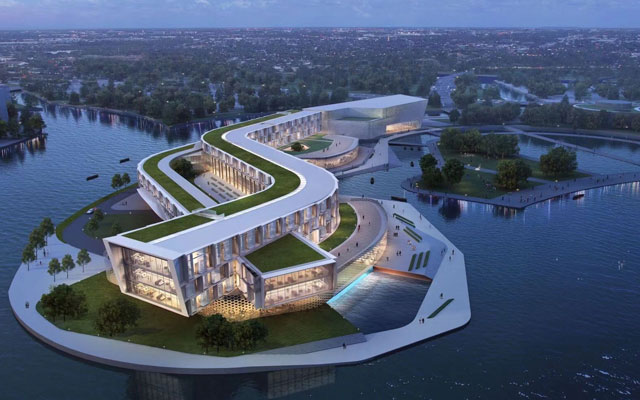
Artist’s impression of the HSR terminus in Jurong East

Singapore has agreed to Malaysia’s request for a seven-month extension to the High Speed Rail (HSR) project suspension, till year-end.

The construction of the HSR project linking Singapore and Kuala Lumpur has been suspended since two years ago.

Artist’s impression of the HSR terminus in Jurong East

Singapore’s transport minister, Khaw Boon Wan said in a Facebook post on Sunday (May 31) that Malaysia’s senior minister Azmin Ali wrote to him to request the extension to discuss Malaysia’s proposed changes to the project.

“As any project change requires our agreement, the extended suspension will allow both countries to assess the changes that Malaysia has in mind,” he said, adding that both parties have “agreed to a final extension of the suspension period to 31 December 2020”.

He further said: “This should provide sufficient time for Malaysia to clarify its proposal and for both sides to assess the implications of the proposed changes.

“The key is joint commitment to the project’s vision and mutual trust. Nevertheless, the HSR is a complex project, and both sides have to be convinced that the changes do not undermine the original intent of the project.”

Previously, in early September 2018, both sides had agreed to suspend the construction of the bilateral project until May 31, 2020 to determine the best way forward for the project. On Malaysia’s part, the government had been reviewing the project to identify ways to reduce costs.

Commenting on the project, Johor’s chief minister Hasni Mohammad expressed hopes that the HSR project will continue as it would benefit the economies of both countries and open many job opportunities, reported The Star.

“Besides workers, the project will also help the people and traders in the districts due to the economic impact that will be spurred along the HSR route,” the report quoted him as saying. “This project will also help improve connectivity around the country.”

Digital Travel APAC presents industry insights report and five hot trends in travel technology to note in 2020

0

Brought to you by Digital Travel APAC

In order to better understand how the industry is reacting to this shift in consumer demographics and behaviour, the insights team at Digital Travel APAC spoke to hundreds of travel brands across Asia-Pacific.

The study uncovers the following key trends as top priorities for travel operators in 2020:

• Perfecting Personalisation
• Mastering the use of messaging platforms and bots
• Mastering travel distribution
• Leveraging the use of alternative payment
• Increasing ancillary revenue

Also included in the published report are in-depth conversations with senior executives from some of the region’s biggest names in travel, including Line Travel and Trip 101, Grab, Tujia and Tourism New Zealand. These leaders behind their respective organisations walk the floor, and offer insights on how their organisations are responding to the new travel preferences, what their challenges are, and their thoughts on moving forward.

Uncover how apps have expanded in the travel space (and which of them have gained the largest traction in our region), how combining big data with travel technology translate into an astronomical growth and why an NTO has elected to dedicate more than 50 per cent of its resources to its digital destination marketing campaign.

To download the report, click here

Philippine tourism’s halt stands as virus count continues to soar

0

Already 2.5 months in hiatus, Philippine tourism is still barred from reopening, although metro Manila and nearby destinations have shifted from extreme to a more relaxed general community quarantine (GCQ) from June 1 to 15.

Under the GCQ guidelines, businesses in the tourism sector, including airlines, hotels, and tourist attractions, are not allowed to operate. Employees from other industries may return to work, but subject to limitations, while certain public transport, as well as specific services and facilities, are permitted to restart.

Tourism businesses in the Philippines are barred from operating, even as metro Manila and nearby destinations ease lockdown measures, a volunteer stands guard at the entrance of a public market to spray disinfectant onto visitors’ hands amid the virus outbreak pictured

The cautiousness about lifting restrictions too quickly comes as, despite most of the Philippines being placed under strict quarantine in the past months, the number of coronavirus infections in the country continue to soar, especially in metro Manila, the country’s epicentre of the pandemic.

Nationwide cases soared to 18,086 on Sunday, including 16 new cases and 846 late cases arising from testing backlogs. Deaths totalled 957, and recoveries, 3,909.

But if domestic tourism’s reopening were to depend on the flattening of the Covid-19 curve, it’s going to be an indefinite waiting game as the country still has no mass testing and contact tracing.

The impact of zero tourism has far-reaching consequences as this is an industry contributing to over 12 per cent of the country’s GDP, and employed an estimated 4.5 million workforce, not counting those in support establishments.

“We will die not of Covid-19, but of hunger,” wailed those rendered jobless who are entitled to only up to 13,000 pesos (US$230) worth of government financial assistance, comprising a one-time receipt of 5,000 pesos from the Department of Labor and Employment (DOLE) and between 5,000 and 8,000 pesos from the Social Security System/Department of Finance (SSS/DOF).

In a joint business assembly of PATA Philippine Chapter and Philippine IATA Travel Agencies Association on Zoom, DOLE officer-in-charge-assistant secretary Dominique Tutay disclosed that the accommodation and food service sector – tourism in general – is the third most affected by the pandemic, after wholesale and retail trade, repair of motor vehicles and other service activities.

Tutay said 81 per cent or 13,833 of tourism companies hiring a combined 222,424 employees were closed temporarily during the lockdown, which was enforced on March 18, while the remaining 19 per cent or 3,328 companies with a combined 88,910 workers have flexi work arrangements. Majority of them are classified as SMEs and micro-enterprises.

She said that out of the 1.6 million employees, hailing from all industries including tourism, who applied for the 5,000 pesos cash assistance, the cash-strapped DOLE could afford to pay only 650,000 of them. The SSS/DOF is said to have aided 500,000 in the tourism workforce.

From investors in airlines, integrated resorts and hotels to owners of travel agencies and tour operations, all are bleeding from zero business, but it’s not yet known which of their recommendations for fiscal and other government support will be granted and when.

Even if they are allowed to open, they will need fewer employees since under the new health and hygiene protocols, hotels, for instance, will be allowed only 50 per cent occupancy to maintain social distancing.

Hoteliers said a 50 per cent occupancy means operating at a loss, but it will help with cash flow and jumpstart tourism.

Having adopted stringent health and hygiene protocols in keeping with local and international standards, the tourism industry is longing and ready to open anytime.

But until health authorities get their act together in slowing down Covid-19 infections, it will be tough regaining travellers’ trust and confidence.

Thailand eyes lifting of lockdown by July 1

0

As Thailand enters the third phase of its lockdown on June 1, moderate-risk businesses including boxing stadia, massage parlours, spas and convention venues have been allowed to reopened, while the country observes a shortened curfew from 23.00 to 03.00.

Inter-provincial travel will also be permitted, although not yet encouraged, and provincial-level restrictions may be enforced.

Tourism attractions, such as the Ayutthaya historical park, have reopened, as Thailand enters the third phase of its lockdown

On May 26, Thailand’s emergency state was extended by another month until end-June, but the government is also in the midst of charting a possible course to completely end the lockdown by July 1, should there be no further outbreaks. That would entail the removal of the emergency state and curfew, stimulation of domestic travel and re-instigation of international travel, albeit with restrictions.

The National Security Council chief general Somsak Rungsita said that “the government has set July 1 for the lifting of all business and activity lockdowns” imposed to curb the Covid-19 spread, reported The Bangkok Post.

Prime minister Prayut Chan-o-cha has also announced plans for a cautious reopening to international tourists.

“If the country reopens to foreign travellers too quickly and they bring the virus with them, Thailand will have to go back into lockdown, which will be catastrophic,” the prime minister was quoted as saying by the report.

International travel has already been lifted in stages to specific groups of foreigners who must cover the costs of their own 14-day quarantines and medical certifications. The first group has been announced as those holding Thai work permits. There is no official word on when the quarantine requirements will be lifted, or when foreign tourists will be allowed back into the country.

The government is, however, turning its focus to domestic travel. With the launch of the Amazing Thailand Safety and Health Administration (SHA) certification, the Tourism and Sports Ministry intends to lift the domestic lockdown.

On May 26, the price of Thai hotel stocks including that of The Erawan Group, Minor International and Central Plaza Hotel PCL briefly surged more than 11 per cent each, following the National Economic and Social Development Board’s announcement that it would likely issue coupons in July to help reduce accommodation costs by 40 to 50 per cent. The move is hoped to stimulate domestic tourism, under a proposed 400 billion baht (US$12.6 billion) loan framework authorised by Royal Decree to the Ministry of Finance.

Post-lockdown, the three most popular activities among Thais have been having haircuts, travelling and eating out, according to global market research firm Ipsos. “The survey suggests the travel industry should bounce back after the lockdown due to demand among those with an income of more than 50,000 baht a month,” Aitsanart Wuthithanakul, a senior client officer at Ipsos, told the Bangkok Post.

Many of Thailand’s travel attractions are slowly reopening. Over the past week, thousands of domestic tourists visited the Ayutthaya historical park, according to official data. Elsewhere, the Temple of the Emerald Buddha and the Grand Palace will reopen to the public from June 4, and Damnoen Saduak Floating Market in Ratchaburi, from May 30.

Bangsaen beach in Chonburi will possibly reopen on June 1, pending a decision from the Chonburi Communicable Disease Control Committee. Phuket beaches remain closed indefinitely, but the open beaches in Hua Hin and Rayong are drawing scores of Thai and expat travellers indulging in self-drive holidays and social-distancing-friendly water sports like kitesurfing.

Over the past month, restaurants, shopping malls, businesses and venues in “white” and “green” low-risk categories throughout Thailand have reopened. Individuals use the Thai Chana app to check in and out of malls and shops to help with contact tracing.

Pubs, bars and night entertainment venues fall into the “red” or high-risk category of businesses that will be the last to reopen.

This article has been updated. An earlier version of this story incorrectly misstated the curfew time is from 21.00 to 03.00.

Dubai hotel world’s first to get Bureau Veritas’ safeguard stamp

0

Jumeirah Al Naseem, a luxury hotel in Dubai, United Arab Emirates, has become the world’s first hotel to be certified with a Safeguard Label from Bureau Veritas, a leading testing, inspection and certification provider.

The five-star resort received the certification after Bureau Veritas ensured that it has achieved the appropriate safety standards, training and cleaning protocols.

Jumeirah Al Naseem’s rigorous health protocols have earned it the Safeguard Label from Bureau Veritas

Remote and field audits were also carried out to ensure that the property efficiently implemented protective measures, including usage of protective masks, daily temperature checks and extensive hygiene training for all staff, strict social distancing across all areas of the hotel, tripling fresh air in public areas, sanitisation fogging – up to three times a day, depending on footfall – and strict lift etiquette to ensure guests are travelling alone.

In guest rooms, housekeeping services take place daily, and the resort provides sanitising and hygiene amenities including face masks, sanitiser gel and disinfectant wipes. Pillows and duvets undergo a thermal hygiene process, while pillow and mattress protectors are changed after each checkout.

Additionally, rooms are left vacant for three days after each stay as an additional safety measure and, where this is not possible due to high occupancy, the room undergoes a complete sanitisation fogging process.

On-site dining venues also feature additional precautionary measures, including full restaurant sanitisation before each service, buffets redefined as á la carte, table distancing and hygiene amenities placed on each table for guests to utilise.

José Silva, CEO of Jumeirah Group, said that the luxury hotel chain will be working with Bureau Veritas to certify its wider portfolio.