Mercure hotel rebrands as Mantra Gladstone
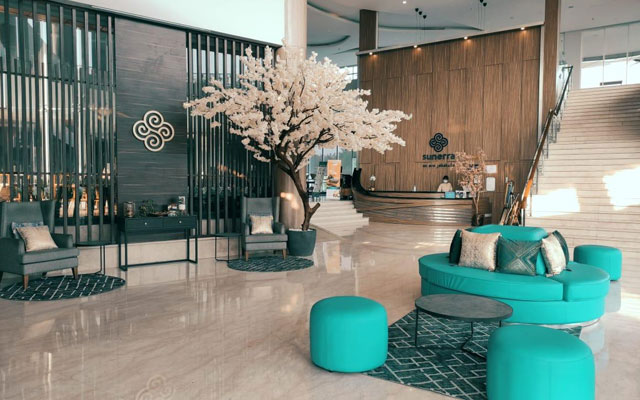
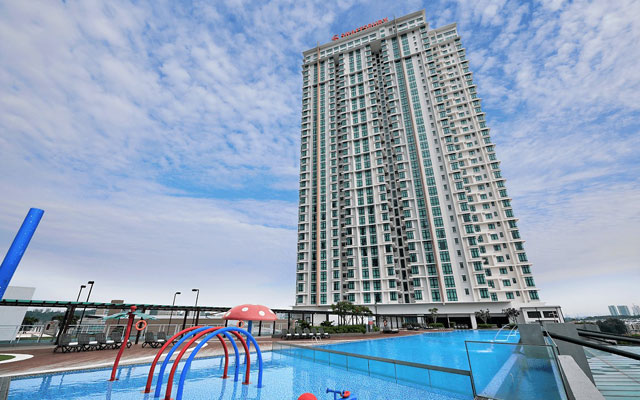
Mantra has added another property to its Australian portfolio, following the rebranding of the Mercure Gladstone situated on Queensland’s Capricorn Coast.
The refurbishment of Mantra Gladstone, as part of the rebrand, includes transforming 33 of its 60 guestrooms into spacious open plan self-contained apartments.

Located just minutes from the CBD, the hotel features a fitness centre, F&B options, meeting rooms, a soon-to-open swimming pool, and a gym at the adjoining Yaralla Sports Club complex.
Since acquiring Mantra in 2018, Accor has continued to grow the brand with five new Australian hotels opening in the past two years.
SITA rolls out health data sharing solution
SITA has launched Health Protect, a solution to help airlines, airports, governments and passengers share information on health tests or vaccinations needed during travel.
Successful trials have already been undertaken with travellers to the UAE, and will soon start at Milan Malpensa Airport.

SITA’s Health Protect allows airlines and passengers to submit required health-related documents such as PCR test results or vaccination history safely and securely to authorities, in line with specific government requirements.
A key benefit of Health Protect is its ability to seamlessly integrate with multiple travel pass or health passport schemes, bridging the gap between these schemes and aviation and border processes. By incorporating Advance Passenger Processing, the solution enables authorities to make an informed decision on whether a passenger can travel at the point of check-in, improving the safety of all passengers and avoiding costly return flights.
Passengers without the required documentation, or are considered high-risk, will be unable to check in for their flight, ensuring they do not travel to the airport. By facilitating the inclusion of health pass schemes into passenger processing systems, Health Protect minimises the operational and technical impact on carriers and ports. As well, it provides passenger certainty that they have the right documents before departure, vitally at a time when borders regulations change regularly.
At the airport, Health Protect also integrates with the existing airport passenger processing systems to verify the health status of the passenger at each point in the process using SITA Flex touchless passenger flow monitoring technology.
David Lavorel, CEO of airports & borders at SITA, said Health Protect will “bridge the gap between airlines resuming normal operations and governments’ strong focus on keeping control of Covid-19. Recovery from Covid-19 will take time and is complex but we believe that SITA can play a key role in enabling a safer, simpler travel experience for passengers.”
Uncertain travel recovery for 2021 plagues Indian stakeholders

Amid less-than-rosy prospects for a significant rebound in international tourism for 2021, Indian tourism stakeholders continue to keep their eyes trained on the domestic segment to stay afloat this year.
Since the pandemic outbreak curtailed international travel in March 2020, domestic tourism has been the only source of relief for the industry.

“India’s inbound tourism market will take some more time to recover, and it all depends on factors like the beginning of international flights and the coronavirus situation in India and our source inbound markets,” said Arun Anand, managing director, Midtown Travels.
“Already, a large number of inbound companies have laid off the majority of their staff and many companies have closed their offices because of zero business. I think that we can’t expect some growth in inbound tourism before October or November this year. I hope the demand for domestic tourism in India would create confidence among inbound tourists too.”
Confidence in the domestic market has spurred the Association of Domestic Tour Operators of India to push ahead with its annual convention scheduled to take place in Gujarat this month.
Even the hoteliers in India foresee weak inbound demand for 2021.
Sarbendra Sarkar, founder and managing director, Cygnett Hotels and Resorts, said that the domestic segment will be its “key market” this year. When inbound travel eventually resumes, he expects corporate travel to lead the recovery “as physical meetings are important for corporates”.
As for leisure outbound travel, he foresees that regional markets like South-east Asia and South Asia will gain prominence “as Indian leisure tourists may prefer to avoid longhaul destinations”.
To encourage domestic travel, the Ministry of Tourism launched the Dekho Apna Desh (See Your Country) initiative in January 2020 to spotlight the country’s rich heritage and culture. The initiative was in line with the 2019 Independence Day address made by the prime minister, Narendra Modi, where he urged every citizen to visit 15 tourist destinations within the country by 2022.
“Domestic tourism has restarted and is helping to mitigate the impact on jobs and businesses in some destinations. However, real recovery will only be possible when inbound tourism returns,” said K Vijay Mohan, managing director, Holiday World.
“This requires global co-operation and evidence-based solutions so travel restrictions can be safely lifted. Tourist movement between neighbouring countries will be very important and the key to rebuilding tourism. There will be greater demand for regional travel (this year) as travellers will not look at longhaul markets well into 2021.”
Indian tourism and hospitality stakeholders had high hopes for this year’s union budget that was announced on February 1, expecting measures to boost both inbound and outbound international tourism. However, there was no announcement made by the government to support the industry that is reeling under severe pressure.
“For an industry that is a crucial contributor to India’s GDP and a powerful force multiplier, priority tourism-related announcements – an imperative to revival and sustenance – were clearly missed. We are looking at a long road to recovery and the union budget has not provided the helping hand that was expected of it,” said Madhavan Menon, chairman and managing director, Thomas Cook (India).
“The inbound tour operators, hotels, restaurants and transport operators are on their knees in the absence of any support from the government. Now is the time for the revival of inbound tourism, and the government can at least step in (to aid the sector) through measures like offering soft loans, GST exemption for two years, and discounted entrance fees at the Archaeological Survey of India monuments.”
Phuket eyes October reopening with private Covid-19 vaccination drive

Thailand’s resort island of Phuket is planning private Covid-19 vaccinations for 250,000 residents, in hopes that the government will allow it to fully reopen to foreign tourists by October.
At least 10 Phuket industry associations including hotels, tourism and chambers of commerce will pool resources to carry out a private vaccination drive to inoculate at least 70 per cent of the island’s population to create sufficient immunity by October 1, according to a report by Channel NewsAsia.

The plan would cover most adults in Phuket before a nationwide government immunisation programme for the public starts in June, it added.
Phuket Tourism Association president, Bhummikitti Ruktaengam, was quoted by the report as saying that they are liaising with three major hospital networks to procure AstraZeneca and Sinovac vaccines. He also argued that vaccinated foreign tourists should be exempted from quarantine.
Of the nearly 40 million foreign visitors to Thailand in 2019, about 10.5 million visited Phuket. That number dwindled to 2.1 million arrivals in 2020 due to pandemic-induced border closures. It accounted for nearly one-third of the 6.7 million visitors which set foot in the country last year. In that same year, foreign tourism receipts in Phuket dived 78 per cent to 87.5 million baht (US$2.9 million).
Australian tourism businesses, facing “annihilation”, call for more state support
A survey by the Australian Tourism Export Council (ATEC) showed that 55 per cent of tourism businesses in Australia will not survive till September without some kind of government support, while international borders remain closed.
Against that bleak outlook for 2021, the ATEC is calling on the federal government to provide further financial support to the tourism industry, specifically, the export tourism businesses which are unable to operate at anywhere near their previous levels.

“Tourism businesses were optimistic that by now international borders would be open and they would be seeing visitors return, but all indications are that these businesses face yet another tough year,” ATEC managing director Peter Shelley said.
“State and territory governments need to provide certainty in the way they respond to Covid outbreaks and a clear path to reopening international travel that appropriately manages the health risk and effective rollout of vaccines in order to give our industry certainty into the future.”
While 75 per cent of export tourism businesses have been able to supplement some of their revenue with domestic visitors, this spend represents less than 20 per cent of income from overseas visitors, according to the ATEC’s industry ‘Pulse Check’ taken in January.
With borders closed and export tourism businesses unable to access their international markets, around 60 per cent are running at less than half of their staff and service capacity, with most only surviving with the support of the JobKeeper supplement.
“Australian tourism businesses have hung on with the support of JobKeeper but face annihilation once the programme ends next month if the government fails to provide further support,” Shelley said.
“Australia’s tourism industry has spent the past 12 months battling enormous setbacks, from bushfires to floods and the Covid crisis which has closed international borders and left tourism businesses with no customers.”
The ‘Pulse Check’, which looked at how Australia’s export tourism businesses have fared over the past 12 months, also revealed that 95 per cent of inbound tour operators (ITOs) – key tourism export intermediaries – have revenue of less than 10 per cent compared to 2019. Some 50 per cent of ITOs are unable to attract domestic business and for those who have, this represents less than 10 per cent of their international market.
Without some kind of government support, some 80 per cent of ITOs will be gone by September, making it much harder for the inbound tourism industry to restart.
Shelley concluded: “Through no fault of their own, successful tourism businesses from across the country have been decimated by a series of setbacks that culminated with the international border closures.
“These are the same businesses which were instrumental in delivering A$45 billion export revenue in 2019 and delivering thousands of jobs to regional communities throughout the country and they will be the ones which will provide future jobs and economic prosperity.
“Given the success of our export tourism industry over the past decade which saw international visitors contributing more than A$350 billion in our economy, we must ensure these businesses survive.
“Once the borders reopen, these businesses will quickly rebound and once again contribute significantly to our export earnings, support regional economies and build back Australian jobs.”
Park Hotel Group makes Room For Trees
Singapore-based Park Hotel Group will plant a tree for every booking made across its portfolio of hotels, under its newly-launched Room For Trees initiative in partnership with Eden Reforestation Projects, a non-profit organisation that is committed to reforestation and ecological restoration.
The partnership with Eden supports the mangrove reforestation project in Biak Island, Indonesia, which involves collaborating with local villagers to replant, restore and protect their wetland ecosystems.

Allen Law, CEO of Park Hotel Group, said the group’s partnership with Eden will “contribute to the rehabilitation of the forests on our planet while supporting lives and livelihoods that depend on these vital ecosystems”.
“Our new Room For Trees initiative underlines our commitment to drive our triple bottomline. Despite the current pandemic, creating value on our environment and the people in our communities remains a key priority for Park Hotel Group to build a sustainable and resilient business as we continue our global expansion plans beginning with Asia-Pacific,” he added.
Over the last three decades, Indonesia has lost over 40 per cent of its mangrove forests and that has adversely affected the wetland ecosystems which supports the biodiversity of the region as well as the communities within it. Biak Island, located on the northern coast of West Papua, is prone to environmental disasters. The mangrove reforestation on Biak is important to reduce the effects of floods, tsunamis, and soil erosion. It also provides a safe nursery for schooling fish and increase livelihoods of the local villagers that rely on their environment for survival.
Over-70s play critical part in travel’s recovery: GlobalData
A reported spike in travel bookings from the over-70s shows that this demographic should not be overlooked when businesses make plans for post-pandemic recovery, said GlobalData.
Johanna Bonhill-Smith, travel and tourism analyst at GlobalData, commented: “Not only is this demographic one of the first to be vaccinated, they are also typically big spenders and less hindered by time constraints. This makes this a lucrative demographic to target in order to boost post-pandemic travel.”

Only 26 per cent of respondents from the Silent Generation (70+) declared they are ‘extremely’ or ‘quite concerned’ about their personal financial situation, as compared to 77 per cent of Millennials in GlobalData’s Covid-19 Recovery Survey, which polled 5,500 respondents in December 2020.
Feeling ‘hopeful’ was the second most common emotion felt by this demographic in the same survey, suggesting that the rollout of vaccinations is likely to accelerate future travel bookings.
Bonhill-Smith stressed that it is “critical” for travel companies to ditch dated stereotypes of the silent generation as being more brand loyal and less tech-savvy so as to effectively service their future travel needs.
She said this demographic is known for being loyal to one brand, making them a prime target for in-store travel agencies. However, she cited the aforementioned survey by GlobalData which painted a different reality.
Some 50 per cent of silent generation respondents ‘somewhat’ or ‘strongly’ disagreed they would buy products only from their favourite brands.
The same survey found that 30 per cent will now buy more products online rather than visiting a store, and 48 per cent consider supporting small or local businesses as more important than prior to this pandemic – suggesting more opportunity for brand development.
“While the silent generation will never rival the levels of digital engagement associated with the ‘digital natives’, Millennials and Gen Z – who spend more time at home which has led many to become more ‘tech-savvy’ – 47 per cent still declared they would opt to use card or mobile phones instead of cash,” Bonhill-Smith said.
“This poses an opportunity for app engagement, where simple, easy-to-use and personalised platforms may become more desirable.”
City breaks were the second most popular holiday type for the Silent Generation prior to Covid-19, according to GlobalData’s 3Q2019 Global Consumer Survey, which polled 29,744 respondents. This type of holiday, however, is likely to have lost its appeal as older tourists now desire holidays away from urban areas.
In a more recent survey, 31 per cent of silent generation respondents declared they had been experimenting with new cuisines and recipes during the pandemic. Experimenting more at home could boost the appeal of a gastronomic-themed holiday – or simply make it a greater consideration when booking a trip.
Bonhill-Smith concluded: “Millennials and Gen Z have typically been identified as leaders in travel demand post-Covid-19. Despite being labelled as the most vulnerable, the silent generation is the first to be vaccinated which will continue to accelerate future bookings among this demographic, thereby assuring they will play a critical part in the recovery of travel.”
New hotels: W Melbourne, JW Marriott Hotel Shanghai Fengxian, and more

W Melbourne, Australia
Billed as Melbourne’s first luxury lifestyle hotel, W Melbourne will mark W Hotels Worldwide’s second Australian property when it opens this month. Set at 408 Flinders Lane, the hotel will form part of Cbus Property’s A$1.25 billion (US$951.5 million) Collins Arch mixed-use precinct. W Melbourne will play host to 294 guestrooms and 29 suites, including four spacious Wow Suites; alongside the brand’s interpretation of the traditional presidential suite, the Extreme Wow Suite, featuring a 40m2 balcony with views of the Yarra River. Signature Japanese restaurant Warabi; all-day dining venue Lollo; late-night bar Curious; and Culprit, a café-meets-wine-bar experience, round up the F&B offerings. Leisure amenities include a fitness facility and a gold-roof adorned indoor pool with poolside bar and DJ booth. Additionally, MICE groups can avail of 830m2 of conference, meeting and event space, including a 426m2 pillarless ballroom.

JW Marriott Hotel Shanghai Fengxian, China
Located on Hangzhou Bay in the city’s Fengxian seaside district, just an hour’s drive south of metropolitan Shanghai, JW Marriott Hotel Shanghai Fengxian is home to 265 guestrooms and suites. Dining options include three restaurants and a bar: All-day dining outlet JW Kitchen offers local and international dishes at live cooking stations, while fine-dining restaurant Yan Xuan serves Cantonese and Shanghainese delicacies. Elsewhere, Shanghai Crab & Co. has a menu featuring its signature boiled king crab and seafood towers. On-site conference facilities include a 1,800m2 meeting area, a 900m2 grand banquet hall, a smaller 600m2 hall, alongside four multifunction rooms. An executive lounge and spa are part of the hotel’s leisure facilities, joining a 24-hour fitness centre, 25m heated infinity swimming pool, and kids’ club.

DoubleTree by Hilton Surabaya, Indonesia
Owned by PT. Indo Citra Eka Abadi and managed by Hilton, the 310-room DoubleTree by Hilton Surabaya marks the sixth property in Hilton’s Indonesia portfolio. Situated in the heart of Surabaya’s city centre, a 45-minute drive from the Juanda International Airport, the hotel features 310 guestrooms and suites, including the two-storey, 102m2 Loft Suites. Leisure options range from an outdoor swimming pool and a kids’ pool to a sauna and a 24-hour fitness centre. A kids’ zone within the hotel is home to a video games zone, outdoor terrace, play gym as well as a playroom.
Three dining outlets are on offer, led by Makan Kitchen, an all-day dining restaurant serving Indonesian, Chinese and Colonial cuisines. The Koffee Deli & More serves specially brewed coffee or tea and fresh juices, alongside light bites; while Cloud 22 Rooftop Bar provides nightly entertainment with DJs and bands playing upbeat lounge music. Offering a panoramic view of the city, the 360 Degree Function Room spanning 605m2 can accommodate up to 600 guests for meetings, weddings and social gatherings. In addition, the Tunjungan Grand Ballroom features 800m2 of meeting space, and 47m2 of built-in LED screens.

Avani Palm View Dubai Hotel & Suites, UAE
Overlooking the iconic Palm Jumeirah, the 48-storey Avani Palm View Dubai Hotel & Suites joins Avani Ibn Battuta Dubai and Avani Deira Dubai Hotel as the third Avani to open in the city. Catering to a mix of leisure, corporate and extended-stay guests, the property has 264 Avani Serviced Apartments. Designed by AECOM and developed by ALFAHIM, one of the UAE’s largest conglomerates, the suites and residences offer floor-to-ceiling windows, fully-equipped kitchens, as well as interactive living and private terraces. Guests can choose from eleven different room types, ranging from 41m2 studios, up to 165m2 three-bedroom units. A trio of restaurants and bar offer a variety of dining options: the all-day dining Seven Seeds; on-the-go café The Pantry by Avani; and Aqua pool bar. There is also a gym, and a dual-level rooftop infinity pool boasting spectacular views of the city skyline and beyond.
China to get another Steigenberger hotel in Kunming
Deutsche Hospitality is planning a third hotel project in China in the form of a 300-key Steigenberger Hotel in Kunming, the provincial capital of Yunnan.
This latest move follows an earlier announcement that Deutsche will be opening a pair of Steigenberger-branded hotels in Haiyan on the South China Sea coast at the start of 2022.

Set to be operated by Huazhu, Deutsche’s shareholder, the planned Steigenberger Hotel in Kunming will form part of a new tourism centre called Lakeside Town, which is being developed on the banks of Lake Dian, situated just under an hour’s drive from Kunming Airport.
The basis for the Steigenberger Lakeside Town, Kunming, which is scheduled to open in 2024, was set out in an agreement signed by Marc Cherrier, COO of Steigenberger Hotels & Resorts at Huazhu; the Sunac Culture & Tourism Group’s general manager Zhang Yunshui; and Gao Xujiao, general manager of the Lakeside Town Project.


Dream Cruises will spice up its cruises to nowhere aboard World Dream with a new series of Super Seacations from February to May, featuring traditional and pop culture experiences from South Korea and Thailand.
At the same time, the cruise line has announced the extension of World Dream’s Super Seacation itineraries to June 27, 2021, to mark its milestone 100th day of safe sailing on World Dream coming up in mid-February.
The new Korean and Thai-themed programmes have been launched in partnership with The Embassy of the Republic of Korea in Singapore, Korea Tourism Organization, and Tourism Authority of Thailand Singapore.
Rhythm of Korea (February 21 to March 31)
Guests can enjoy a Hanbok fashion runway show, featuring the iconic garment embodying the vibrant culture and colourful representation of historic Korea. They can also unwind like Joseon nobles with old-time, outdoor games like Jegichagi, which challenges players to kick and keep the Jeji from hitting the ground for as long as possible; and Tuho & Arrows, which requires players to throw arrows into a pitch pot vase.
Catch up on Korean blockbuster movies at World Dream’s Cinema at Sea, learn about the latest K-Beauty trends during Flawless Beauty Talks and “Hair-ppiness” Styling Workshops, and groove to the greatest K-Pop hits at Hallyu K-Pop Dance 101 Classes. Those who consider themselves to be Hallyu Inssa and savvy of all things Korean can put their Kugo to the test with Basic Conversational Language Classes, or even challenge themselves with the K-Culture Trivia quiz for a chance to win great prizes.
For culinary cruisers, learn classic recipes well-loved by Koreans of multiple generations, such as kimchi and kimbap, and feast on trendy Korean street food delights like tteokbokki rice cake, japchae, haemul pajeon seafood pancake and Korean fried chicken. Guests can also treat themselves to a selection of Korean snacks, including Jeju chocolates and Korean abalones.
Amazing Thailand (March 31 to May 28)
Set the mood for the Thai New Year, better known as Songkran, as you experience themed activities ranging from traditional and pop Thai music, to a movie marathon of Thai blockbusters. For the physically inclined, enjoy a hit of adrenaline with basic Muay Thai training; or a fun game of Sepak Takraw, a hybrid sport of football, volleyball and gymnastics; before partaking in Water Gun Tag or the Pitch Burst Challenge.
Relax and rejuvenate with a massage with tropical Thai products at Crystal Life Spa, complete with a tropical beverage of one’s choice. Then, head to the Thai Street Market at Sea and tuck into world-famous Thai street food. Enjoy regional delicacies from the North and South of Thailand, as well as signature Thai desserts at the complimentary restaurants of the cruise ship.
Insta-worthy photos are only a click away at the Tuk Tuk and Big Bowl Noodle pop-up displays, as well as in front of stunning backdrops of Thai umbrellas and lanterns found throughout the ship. Guests may bring a piece of Thai culture back home at the Thai handicraft workshop, where the traditional arts of soap carving, tie dying and paper umbrella painting will be taught.