Marriott International is expanding its regional footprint across Asia-Pacific excluding China (APEC) by utilising a flexible, conversion-led development model to steadily expand its regional footprint.
This approach has resulted in a development pipeline of over 400 hotels and 86,000 rooms as of end-2025.
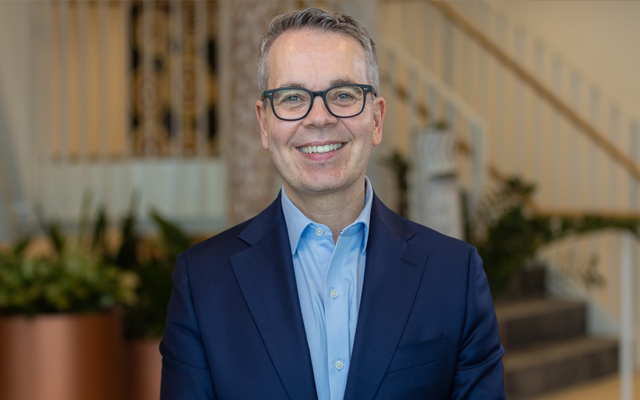
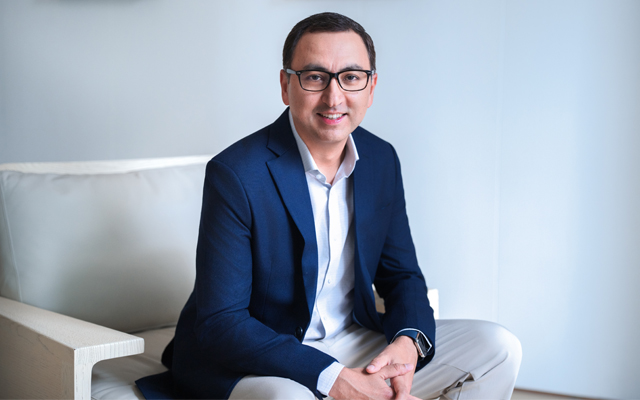
Gautam Bhandari, Marriott’s chief development officer for APEC, revealed that 35 to 40 per cent of signed deals were conversions, and that conversions are “here to stay”.
Bhandari said conversions offer a highly compelling proposition for local owners looking to welcome a greater share of international travel demand. By joining the Marriott network, independent owners gain instant integration into global distribution networks, exposure to higher-spending international source markets, and elevated long-term asset value.
He sees vast opportunities in conversion deals, as 80 per cent of properties in the region are either run by local companies or individual owners.
To facilitate this conversion wave, Marriott relies heavily on flexible “soft brands” like Autograph Collection, Tribute Portfolio, and The Luxury Collection, which allow hotels with unique architectural identities to join the system without losing their local character. This approach was executed in Singapore recently when the former InterContinental in the Bugis district was converted into The Luxury Collection.
“That was a perfect fit for The Luxury Collection because of the Bugis story, and how we would weave it in,” Bhandari explained, adding that properties with local character are “rare gems”.
Conversely, converting a property into a “hard brand” like a standard Marriott or Sheraton requires closer alignment with specific structural and functional guidelines. In such cases, Marriott will evaluate these deals through intensive feasibility research, noting there is no point in making massive capital investments “if the rates would not support it”.
To broaden its reach in the highly competitive upscale and midscale spaces, Marriott also unveiled a newly-created soft brand, Series by Marriott, at the end of 2025. Debuting via a sweeping multi-property conversion deal in India with Concept Hospitality, the brand allows regional properties to keep their home-grown identities while being powered by Marriott.
This model has served as a strong vehicle for expansion, with Marriott planning to introduce the concept into Japan, South Korea, and wider South-east Asia markets in the near future, Bhandari told TTG Asia.
This conversion-focused momentum feeds directly into Marriott’s primary regional growth engines: India, Vietnam, and Thailand. Driven by macroeconomic strength and structural stability, India stands as Marriott’s top market in APEC. The company recently hit a milestone by signing 99 deals – representing 12,000 keys – in India alone, pushing its footprint past 200 open hotels with nearly 200 more in the pipeline.
Vietnam continues its upward trajectory, highlighted by a landmark 10-hotel, 4,500-key agreement with Sun Group, while Thailand continually demonstrates excellent market resilience.
Marriott is also establishing an early-mover presence in several destinations well before they hit mainstream maturity, a strategy driven by a “really long-term vision” that is backed by 25-year contracts.
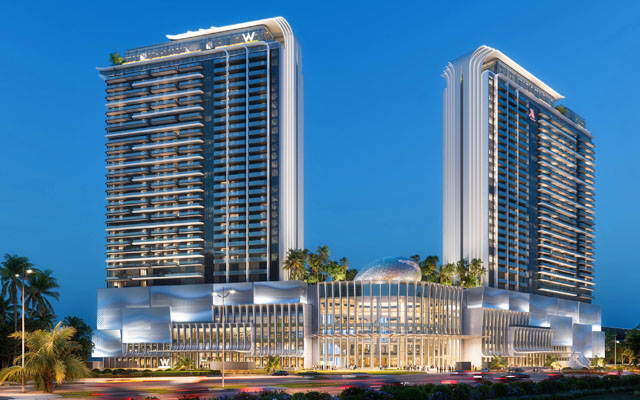
This strategy has manifested in an ambitious expansion in Nepal, where three luxury properties are tracking toward a 2031 debut. The Ritz-Carlton Kathmandu and The Westin Kathmandu are being developed in partnership with CG Hospitality Global, while a separate agreement with the MS Group will introduce the JW Marriott Hotel Kathmandu Valley. Beyond Nepal, this long-term plan has driven new conversions for The Luxury Collection in Laos and Cambodia, alongside resort agreements like Le Méridien in Australia’s Whitsundays and a St. Regis in Queenstown, New Zealand.
In addition, the acquisition of CitizenM in July 2025 has integrated a design-led, tech-savvy product into Marriott’s APEC portfolio. Future regional pipeline infrastructure for the brand will be tailored for Asian sensibilities, shared Bhandari. For instance, new room configurations will feature slightly larger dimensions and twin-bed options to accommodate travelling families, while F&B concepts will be dialled up to include full buffet breakfasts.
Simultaneously, Marriott is tapping into the growing global demand for health and longevity through a joint venture with Lefay, an Italian family-owned wellness resort brand. Slated to sit in the luxury tier next to the Ritz-Carlton and St. Regis, Lefay properties will be built entirely around comprehensive wellness concepts, boasting massive spa footprints often exceeding 3,000m².
For Bhandari, this continuous pipeline evolution is vital for maintaining market relevance.
“Today’s customers and future customers are going to be very much focused on wellness and longevity. Bringing in new brands where it makes sense keeps the development wheel going and keeps the owners interested,” he said.