Metaverse travel service provider ANA NEO has teamed up with stakeholders in Hokkaido to promote digital and in-person travel to the northern Japanese prefecture.
The Tokyo-based company aims to offer new travel experiences in the metaverse and has announced its plan to build the Hokkaido content following its successful digitisation of Kyoto on its digital platform, ANA GranWhale, earlier this year.
ANA NEO aims to promote tourism in Hokkaido using the metaverse; Otaru Canal pictured
ANA GranWhale allows users “to see and study cities and regions in Japan, as well as make online purchases from the localities they explore”, said a spokesperson of ANA Neo, adding that other regions are set to be launched on the platform.
The Hokkaido content is designed to introduce users to the island’s unique nature, culture and cuisine by showcasing various cities, each with their own distinctive appeal. One key focus will be on seasonal tourism content, so potential visitors can better understand which time of year would best suit their travel plans.
Short-term, the aim is for more people to enjoy the wonders of Hokkaido and promote the prefecture via word of mouth, while the long-term goal is to increase in-person visitors throughout the year.
“Our effort will focus on promoting tourism in Hokkaido and will benefit the revitalisation of various regions in the prefecture by allowing first-time visitors to experience online the regions’ benefits and beauty,” the spokesperson explained.
Selected digital destinations range from the well-known cities of Sapporo, the prefectural capital, and Hakodate, Hokkaido’s south-eastern port, to the more remote coastal city of Abashiri, home to drift ice in the Sea of Okhotsk and native Ainu culture, and Lake Akan, where its Akan Mashu National Park is home to some of the rarest plant species in the world.
To bring the places to life, Hokkaido Broadcasting Co. is contributing images and video materials from their archive, while Hoshino Resorts’ Risonare Tomamu and other companies will support the development of online attractions.
Pan Pacific Hotels Group will introduce its next flagship hotel, Pan Pacific Orchard to Singapore’s commercial district of Orchard Road. The new luxury destination hotel is slated to open in May 2023.
The hotel is one of the 13 new properties in the group’s global expansion plan.
Pan Pacific Orchard will feature four high-volume, open-air terraces when it opens in May next year
The 347-key property showcases four high-volume, open-air terraces – Forest, Beach, Garden and Cloud – brimming with more than 7,300m² of foliage that covers more than 200 per cent of the hotel’s land area.
The Forest Terrace greets guests at the lobby with rich greenery and a 120m-tall green column featuring curling vines and flora that spans the first three storeys of the hotel, with the hotel’s signature restaurant on the second and third floors.
The fifth to tenth storeys will transport guests to the Beach Terrace comprising an outdoor pool across the fifth floor, sandy shores, tropical foliage and a pool bar – complete with an overhead mirrored ceiling extending across the entire terrace to create the effect of the sky.
The Garden Terrace is from Levels 11 to 16, featuring private cabanas and an outdoor lawn that stretches beneath the guest rooms. Here, guests will discover Pan Pacific Orchard’s specialty destination bar.
At the highest levels, the Cloud Terrace occupies the 18th to 23rd storeys, boasting the city’s only space for “meeting in the clouds”. On the 18th floor is the pillarless ballroom with a 420-seat capacity.
Driven by the sustainability agenda of the group, Pan Pacific Orchard is BCA Green Mark Platinum-certified for its sustainability features, such as a renewable solar panel technology, an in-room filtered water system, and a bio-digester system transforming food waste into cleaning water.
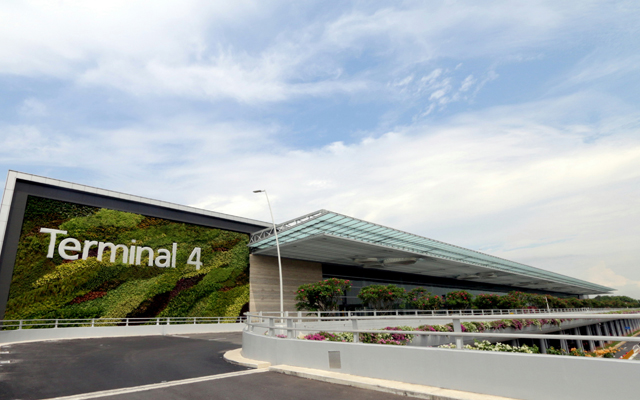
Jetstar Asia (3K) and Jetstar Airways (JQ) have confirmed they will operate from Singapore Changi Airport’s Terminal 4 (T4) from next year.
The first Jetstar Asia flight to arrive at T4 will be from Manila at 00.40 on March 22, 2023, with the return flight taking off at 06.15.
On the same day, the first Jetstar Airways flight to operate out of T4 will be depart Singapore to Melbourne at 22.10, while the return flight will arrive in Singapore the following day at 20.10.
Jetstar Asia and Jetstar Airways will operate from Changi Airport’s Terminal 4 from March 22, 2023
Jetstar Asia will initially operate more than 200 weekly services in and out of T4, to and from key destinations in South-east Asia including Bali (Denpasar), Bangkok, Jakarta, Kuala Lumpur, and Phnom Penh.
Jetstar Airways will continue to fly between Singapore and Melbourne up to six times a week.
For easy connection, Changi Airport provides free shuttle bus services between T4 and the other terminals. Passengers transferring to or from T4 can approach the transfer desk for assistance.
Night Safari has unveiled a brand-new amphitheatre and a refreshed version of its popular Creatures of the Night show.
After a year’s transformation, the 1,000-seat amphitheatre is now in a new fully sheltered location near the park entrance, and boasts enhanced stage features like an LED wall, surround sound and lighting, as well as water features and thematic trees to bring out the natural behaviours of the animals.
The new amphitheatre offers a more immersive and multi-sensory Creatures of the Night experience (Photo: Mandai Wildlife Group)
The renewed Creatures of the Night will include new animal species additions, such as an Indian Crested Porcupine, Raccoon Dog and Bearded Pigs. There are daily 19.30 and 21.00 shows, and guests are advised to reserve their seats online – bookings are open two hours prior to the presentation time.
Dao by Dorsett has promoted Roy Liang to vice president of operations.
In his new role, he will head all Dao by Dorsett properties worldwide operationally as well as assist the owners in growing, developing and building the Dao by Dorsett brand and operational guidelines.
Liang will continue his role as general manager of Dao by Dorsett AMTD Singapore.
Your title is very interesting. What do you do at Japan Airlines (JAL)?
We have a human resource department that takes care of staff welfare. But because the JAL board has promised the company to enforce a much stronger wellness culture, my role was created to shape that culture, and promote and execute the programmes that the human resource department develops as a result of my directions.
How would you define wellness at the workplace?
As you know, our company went bankrupt in 2010 and we had to rebuild the entire group from scratch. It gave us a chance to rewrite our company policy and bring back to focus our key promise, which is employee first, followed by passengers and society.
With our employees in mind, we considered what mattered most to them. We determined that their health and well-being must be the priority. The wellness focus that JAL takes is not limited to just our employees; it is extended to their families too because their loved ones must be taken care of for them to be happy and be able to work in peace. Happy employees make happy customers, and that makes the company happy.
You raised a good point about caring for families to ensure staff can work without worries. Does this approach mean JAL has made changes to work arrangements so that your employees have a better work-life balance?
JAL has been offering a flexible work arrangement even before Covid came along, so our IT system has always been able to support and facilitate remote work.
However, it was due to Covid that more people started to evaluate work and life, and they realised the importance of spending time with their family, or by themselves away from the city. Many people saw the value of slowing down in the countryside. As a result, our flexible work arrangement became much more appreciated by our staff, as it allowed them to work in the countryside should they wish to.
Can building a wellness-centric work environment improve JAL’s hiring potential at a time when rebuilding the travel and tourism workforce is so challenging?
Of course. Employees’ mentality has changed as a result of Covid. People in general are now watching their health very closely, and they expect their employers to provide a caring work environment.
JAL is well-positioned to deal with this change, as the company has always put its people first. Furthermore, the company has a chief wellness officer paying attention to staff well-being.
JAL also assigns a wellness leader to every department who does not just take instructions from the top. This leader works with his/her colleagues to develop wellness initiatives that are agreeable with everyone. These initiatives may be hiking or group gymnastics, for example. The company may then subsidise the cost of the activity, or sponsor the prizes for participants.
Can you tell me more about these wellness initiatives? What interesting programmes have been conducted in the past two or three years?
We have a lot of flexibility in our wellness initiatives. Departments can create their own programmes. However, JAL has one or two company-wide fitness events every year to involve everyone in the company.
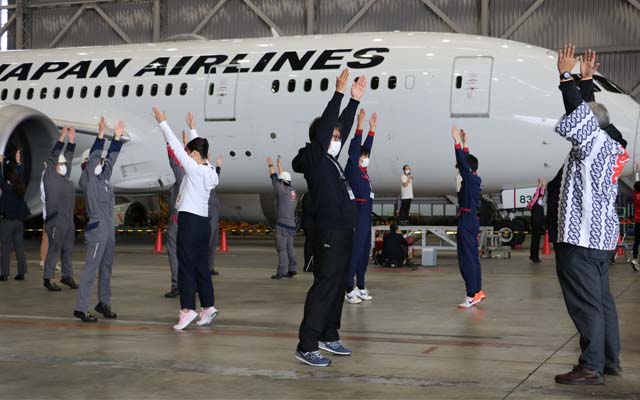
Last year, when Japan hosted Tokyo 2020 Summer Olympics, I brought some of our athletic staff together to lead 27 groups on radio callisthenics. Radio callisthenics is a traditional Japanese group exercise.
Since we could not get together for this event due to Covid, we made videos of our exercises to share with everyone. Every group around the world did their workout in different locations. The maintenance team, for instance, did their video in the hangar, with an aeroplane in the background. Our team in Paris did (the video) in their office.
At the end of the activity, we chose one team as the Master of Exercise and rewarded the group. The Paris team won.
It was an international effort that was rather interesting. The idea for this was born out of group discussions.
This year we will have the JAL Honolulu Marathon on December 11. JAL has been sponsoring this public event since 1985. We will be sending a number of wellness leaders to the marathon this year. I will be running too, as my way of supporting the event. We have invited our staff to join in as well.
JAL typically sponsors a number of marathons around Japan and in some parts of the world.
JAL organises company-wide fitness events every year to involve everyone in the company
Let’s backtrack and talk a little more about JAL’s state of recruitment. How active is JAL with recruitment, and are there still many roles to fill?
We implemented a series of secondments in the summer of 2020, during the pandemic. It was with the primary intention of contributing to the community and society. The management wanted to encourage employees to give back to society at a time when flights were suspended.
At that time, we were sending more than a thousand employees – at a maximum of 1,800 – every day to other industries. Among these, some 800 flight attendants were supporting other industries every day.
Now that we are getting very busy, most of them have returned to JAL.
There is always some staff attrition every year. We did not hire replacements for those vacated roles in the last two years, but now, we are beginning to hire for the first time in three years. We’ve started accepting applications for flight attendants to join the company for the first time in four years, in fiscal 2023.
JAL is reforming its business structure for sustainable growth and development based on the three pillars of its management strategy – ESG Strategy, Business Strategy, and Financial Strategy. We are working to develop talents who, after gaining sufficient flight attendant experience, can also be active in other areas by taking advantage of their individual abilities and strengths. They will then become professionals who can provide the highest level of service and safety to our customers.
The International Air Transport Association (IATA) revealed that the recovery in air travel continued in October 2022, with total traffic rising 44.6% compared to October 2021.
Globally, traffic is now at 74.2% of October 2019 levels.
Air travel recovery for domestic markets continued in October 2022
Domestic traffic for October 2022 slipped 0.8% compared to 2021 as stringent Covid-related travel restrictions in China dampened global figures. Meanwhile, the total October 2022 domestic traffic was at 77.9% of the October 2019 level – domestic forward bookings remain at around 70% of pre-pandemic level.
Next, international traffic climbed 102.4% versus October 2021. October 2022 international RPKs (revenue passenger kilometres) reached 72.1% of October 2019 levels with all markets recording strong growth, led by Asia-Pacific. Forward bookings for international travel increased to around 75% of pre-pandemic levels, following the re-openings announced by multiple Asian economies.
“Traditionally, by October we are into the slower autumn travel season in the Northern Hemisphere, so it is highly reassuring to see demand and forward bookings continuing to be so strong. It bodes well for the coming winter season and the ongoing recovery,” said Willie Walsh, IATA’s director general.
International passenger markets
Asia-Pacific airlines had a 440.4% rise in October traffic compared to October 2021, easily the strongest year-over-year rate among the regions, but off a very low 2021 base. Capacity rose 165.6% and the load factor climbed 39.5 percentage points to 77.7%.
European carriers’ October traffic climbed 60.8% versus October 2021. Capacity increased by 34.7%, and load factor rose 13.8 percentage points to 84.8%, the second highest among the regions.
Middle Eastern airlines saw a 114.7% traffic rise in October compared to October 2021. Capacity increased 55.7% versus the year-ago period, and the load factor climbed 21.8 percentage points to 79.5%.
North American carriers reported a 106.8% traffic rise in October versus the 2021 period. Capacity increased 54.1%, and the load factor climbed 21.4 percentage points to 83.8%.
Latin American airlines posted an 85.3% traffic rise compared to the same month in 2021. October capacity climbed 66.6% and the load factor increased 8.7 percentage points to 86.0%, the highest among the regions.
African airlines’ traffic rose 84.5% in October versus a year ago. October 2022 capacity was up 46.9% and load factor climbed 14.5 percentage points to 71.3%, the lowest among regions.
Domestic passenger markets
Australia almost tripled its October domestic traffic from last year (+292.9%); and air traffic now stands at 15.8% below pre-pandemic levels.
China’s domestic RPKs fell 58.7% in October and is now 69.4% below October 2019 levels.
With people now enjoying the freedom to travel, businesses are also recognising the importance of air transport – a recent survey of European business leaders doing business across borders showed that 84% could not imagine doing so without access to air transport networks, and 89% believed being close to an airport with global connections gave them a competitive advantage.
“Governments need to pay attention to the message that air travel is fundamental to how we live and work. That reality should drive policies to enable aviation to operate as efficiently as possible while supporting the industry’s 2050 Net Zero emission goals with meaningful incentives to encourage the production of Sustainable Aviation Fuels,” said Walsh.
Traveloka has launched a new tagline Life, Your Way, reflecting its mission to enable consumers to discover travel experiences that cater to their unique preferences.
Kicking off with a one-minute video on December 1, 2022, the new tagline also reiterates Traveloka’s commitment to delivering tech-driven customer experiences through its range of services.
Life, Your Way aims to enables consumers to discover travel experiences that cater to their unique preferences
Traveloka’s data revealed that as of 3Q2022, when compared to the year before, there has been more than five times increase in travel bookings for international destinations, more than 30 per cent uplift in bookings for domestic destinations, and overall flight bookings have jumped four-fold.
Recognising a big change in consumer trends and preferences over the past few years, Traveloka has refreshed its tagline to reflect its ability to cater to an individual’s travel preferences.
“The needs of travellers have changed, and we are seeing a big trend whereby they want to personalise their experiences more than ever before. We want travellers to know that by choosing Traveloka, they will be able to fulfil their travel aspirations in a convenient, efficient, and secure manner,” said Shirley Lesmana, chief marketing officer, Traveloka.
Traveloka has a strong foothold in Indonesia, Malaysia, Singapore, Thailand, Vietnam and the Philippines, with its platform offering consumers a choice of over 1.8 million accommodations around the world, more than 110,000 experiences in 60 countries, over 200 airlines, and over 30 payment options to suit their preferences.
Thai Airways International Public Company Limited (THAI) and Singapore Airlines (SIA) have signed a Memorandum of Understanding (MoU) to form a new strategic partnership.
This will result in the airlines progressively code sharing more extensively on each other’s service, and exploring wide-ranging commercial collaboration that provides their customers with more options and value, as well as greater benefits and an enhanced travel experience.
From left: Thai Airway’s Suvadhana Sibunruang and SIA’s Goh Choon Phong at the Association of Asia Pacific Airlines 66th Assembly of Presidents event held in Bangkok, Thailand
THAI and SIA will initially codeshare on each other’s services between Singapore and Bangkok. THAI will also codeshare on SIA’s services to Cape Town and Johannesburg in South Africa; Houston, Los Angeles, New York, San Francisco and Seattle in the US; as well as Vancouver in Canada, by 1Q2023, subject to regulatory approval.
Additional codeshare arrangements to destinations in both airlines’ networks will be explored to support increased air connectivity to Thailand and Singapore, as well as destinations in Europe, India, and South West Pacific routes.
Accor will be expanding its portfolio in Australia and New Zealand for 2023, as the company unveils fresh concepts and new properties in both destinations.
In New South Wales, Australia, new hotels include Hotel Morris and Manly Pacific – MGallery, both launching in January 2023, as well as Pullman Sydney Penrith, which will welcome guests in 4Q2023.
The Sebel Wellington Lower Hutt will open 2Q2023
Up north, Mercure will debut in Tropical North Queensland with Mercure Hotel Cairns, opening in January next year.
For New Zealand, The Sebel Wellington Lower Hutt, which is a short drive from Wellington International Airport, will open 2Q2023, while Jo&Joe Auckland Fort Street, Tribe Auckland Fort Street, Hyde Queenstown will launch in 3Q2023.
Later in 4Q2023, Pullman Auckland Airport is set to open its doors in Aotearoa New Zealand.






 Liang will continue his role as general manager of Dao by Dorsett AMTD Singapore.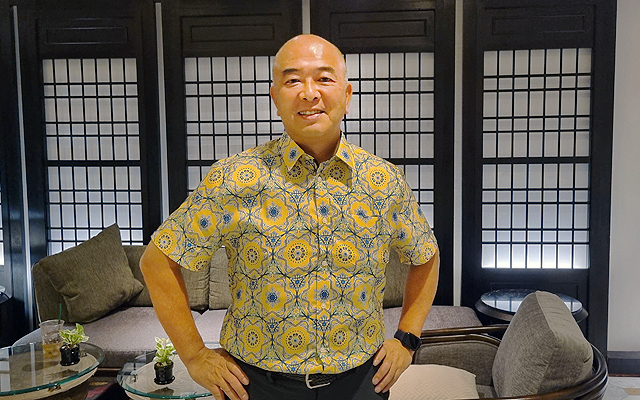
 Your title is very interesting. What do you do at Japan Airlines (JAL)?