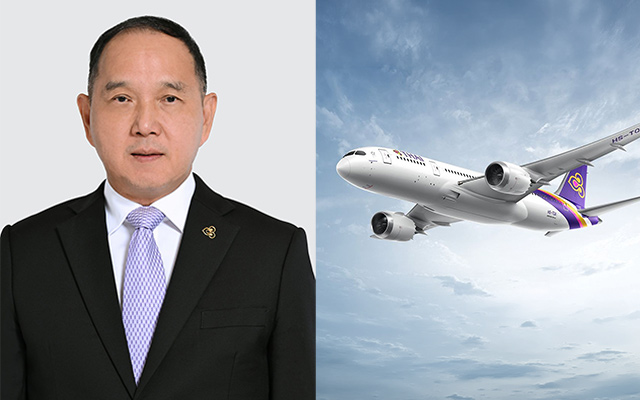
The board cited persistent operational failures, from extensive flight delays to breakdowns in baggage handling and wider ground services, and said the problems have prompted a formal enquiry into the accountability of senior executive management.
Chai Eamsiri is dismissed as CEO of Thai Airways International
More than 10,000 bags accumulated over the past week at the airport, drawing intense public scrutiny of the multiple service roles THAI manages at Bangkok’s main international gateway.
The board appointed Samrit Samniang, a THAI board member and former executive of PTT Exploration and Production, as full-time acting chief executive officer, tasking him with stabilising operations and clearing the backlogs.
Chai’s departure comes despite the airline’s recent financial turnaround after years of court-supervised rehabilitation. However, the carrier’s status, no longer a fully state-owned enterprise yet not entirely a private entity, continues to subject its management to heightened public accountability and political pressure.
Chai’s contract was due to end on January 31, 2027, and THAI had been recruiting a new CEO, with applications closing on September 30
THAI said after the board meeting that it will re-examine its management structure to prevent a recurrence of the disruption.
The increase in fuel surcharges for domestic and international flights from October 1 is expected to have an impact on travel demand, particularly for international and longhaul trips, according to Philippine travel industry players.
The Philippines’ Civil Aeronautics Board (CAB) has raised the allowable fuel surcharge to Level 17 for October 1 to 15, from Level 14 during the second half of September. Airlines may impose surcharges ranging from 559 pesos (US$9) to 1,635 pesos for domestic flights and 1,846.10 pesos to 13,726.58 pesos for international flights, one way per passenger, depending on distance. The applicable exchange rate is 62.71 pesos to US$1.
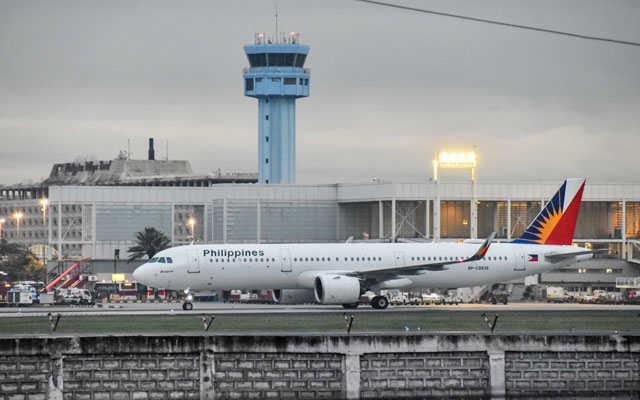
Higher fuel surcharges on domestic and international flights are expected to add to travel costs from October 1; credit MJX Studio
Level 20 is the highest under the CAB’s fuel surcharge matrix. The agency is currently reviewing passenger and cargo fuel surcharges every 15 days based on changes in aviation fuel prices.
Marlene Insigne, general manager of Chase Wonder Travel Atelier, said: “Fewer people will likely travel while those who had initially planned trips may choose to postpone or reconsider their travel plans. The impact will be more pronounced on longer routes, where the additional surcharge can substantially increase the overall cost of the trip”.
Corporate travel and MICE are also being affected.
Insigne cited a Japan-based international organisation that regularly sponsors seminars and workshops in Asia and Europe, which has had to reduce the number of sponsored delegates and workshops.
“The organisation is also considering concentrating more of their (events) within Asia, as travel to Europe and other longer haul destinations has become significantly more expensive due to the combination of higher airfares and fuel surcharges.”
Rising fuel surcharges have become a concern for the travel industry amid higher aviation fuel prices, at a time when Philippine tourism is also facing slower growth and other challenges.
Jojo Clemente, who heads Rajah Tour, said in a Facebook post: “Sometimes I wonder if all the effort we put into tourism is still worth it with these kinds of developments. It’s always an uphill battle for one reason or another with no help or assistance to be expected.”
PATA and Travel and Tourism Research Association (TTRA) have signed a Memorandum of Understanding (MoU) to increase cooperation on tourism research, knowledge exchange and professional engagement.
The agreement will connect PATA’s Asia-Pacific tourism network with TTRA’s community of tourism researchers, practitioners, academics and industry professionals.
PATA and TTRA have partnered on tourism research, knowledge exchange, events and professional engagement
Under the partnership, the two organisations will support relevant events and activities, including providing speakers for programmes and enabling representatives to attend selected events.
They will also exchange knowledge on travel and tourism research, planning and development, and promote relevant events and activities through member newsletters and other digital channels.
The MoU will provide further opportunities for members and representatives of both organisations to share expertise and engage on developments affecting the travel and tourism sector. PATA and TTRA may also identify other areas for cooperation.
PATA CEO Noor Ahmad Hamid said: “Research and reliable tourism intelligence are increasingly important to understanding how our industry is changing and to supporting better-informed decisions across destinations and the wider tourism sector.”
TTRA CEO Kathleen Palmer added: “Our partnership with PATA creates exciting opportunities to connect our communities and expand the reach and impact of the work being done across both organisations.”
Accor will team up with Reve Group to operate a 143-room Novotel within the Nova Rêve mixed-use development in Castle Hill, Sydney.
Scheduled to open in early 2029, Novotel Sydney Castle Hill will have restaurants, cafés and bars, a fitness centre, swimming pool, and conference and events facilities.
Novotel Sydney Castle Hill will form part of the Nova Rêve mixed-use development and is scheduled to open in early 2029
The hotel will form part of Nova Rêve, a mixed-use development in Castle Hill town centre comprising 253 apartments across three towers, more than 1,600m² of ground-floor retail and dining space, and almost 0.4 hectares of communal gardens.
Located within walking distance of Castle Towers and Castle Hill Metro Station, the property will target corporate and leisure travellers, conference and events delegates, and project teams.
The agreement adds to Accor’s development pipeline in the Pacific, where the group currently operates more than 420 hotels, resorts and extended-stay properties. Novotel has more than 620 hotels across 70 countries.
Adrian Williams, COO of Accor in the Pacific region, said: “The signing of Novotel Sydney Castle Hill reflects our confidence in the future of the Hills District and the growing opportunity for hotels to play an important role within mixed-use precincts, bringing together accommodation, dining, meetings and social spaces that serve visitors and local communities alike.”
Singapore Airlines (SIA) is updating its in-flight dining programme with more than 100 new and refreshed dishes across all cabin classes, alongside changes to beverages, service ware and meal presentation.
The airline has begun progressively rolling out dishes under SIA Chefs’ Selection, a new menu category developed by its in-house and guest chefs with catering partners. The remaining dining changes will be introduced from November 2026.
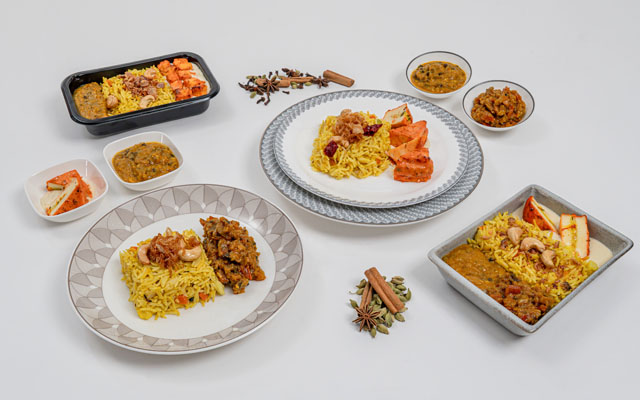
Tandoor Roasted Paneer is among the dishes offered in different variations across SIA’s cabin classes
Menus span appetisers, main courses and desserts, with dishes ranging from regional favourites to international options. Among them are Beef Short Rib Sambal Percik with Nasi Kerabu and Poached Maine Lobster with Champagne Sauce in Suites and First Class, Char Siew Wonton Noodle in Business Class, Irish Lamb Stew in Premium Economy Class and Roasted Chicken Breast with Black Pepper Sauce in Economy Class.
SIA’s guest chefs include Monica Galetti from the UK, Nandu Jubany from Spain, Sanjeev Kapoor from India, Sid Sahrawat from New Zealand, Yoshihiro Murata from Japan and Zhu Jun from China.
The airline is also adding wine labels in Suites, First Class and Business Class and spirits across all cabin classes. New options range from an SIA-exclusive blended whisky from Japan’s Komoro Distillery in Suites and First Class to new Scotch whisky, gin and vodka selections in other cabins.
Suites, First Class and Business Class meals will be served on custom-designed Christofle serviceware incorporating a reinterpretation of SIA’s batik motif. Suites and First Class will also receive Christofle glassware.
Selected dishes in Suites and First Class may receive additional presentation touches, while cabin crew may recommend beverages to accompany meals. Companion dining will also be available with SIA’s forthcoming First Class cabin products, allowing customers travelling together in selected seats to dine face-to-face.
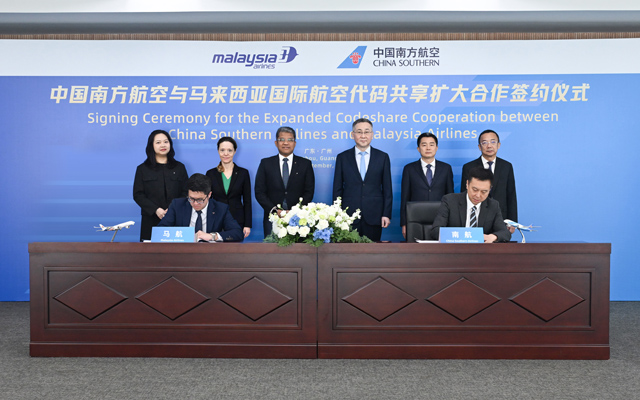
Malaysia Airlines and China Southern Airlines extend their codeshare cooperation
Malaysia Airlines, China Southern widen codeshare
Malaysia Airlines and China Southern Airlines will expand their codeshare partnership to five more Malaysia-China routes from October 25, 2026.
The additions cover Kuala Lumpur-Shenzhen, Kuala Lumpur-Changsha, Kuala Lumpur-Xiamen, Kuala Lumpur-Chengdu Tianfu and Zhengzhou-Kuala Lumpur.
The expansion means all routes linking Kuala Lumpur with Guangzhou, Beijing Daxing, Shanghai Pudong, Shenzhen, Changsha, Xiamen, Chengdu Tianfu and Zhengzhou that are operated by the two carriers will be covered by the codeshare agreement.
Under the arrangement, the airlines will place their respective flight codes on eligible services operated by either carrier.
Malaysia Airlines and China Southern began their codeshare partnership on the Kuala Lumpur-Guangzhou route in July 2023. It was extended in July 2024 to Kuala Lumpur-Beijing Daxing, Kuala Lumpur-Shanghai Pudong and Penang-Guangzhou.
Malaysia Airlines has also added services from Kuala Lumpur to Chengdu, Shenzhen and Changsha in 2026, while China Southern has increased capacity on its Kuala Lumpur-Guangzhou and Kuala Lumpur-Shenzhen routes.
Fiji Airways
Fiji Airways restores Nouméa-Nadi flights
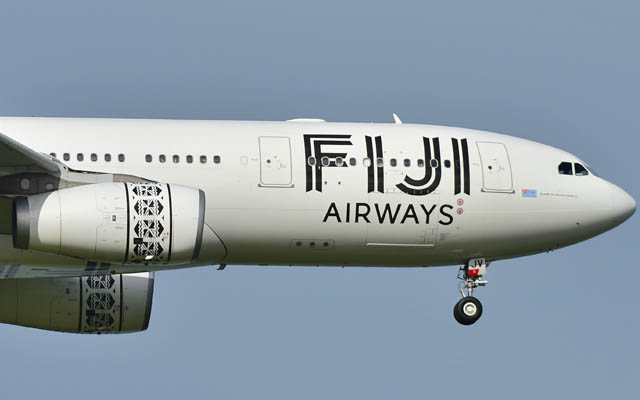
Fiji Airways has reinstated direct flights between Nouméa, New Caledonia, and Nadi, Fiji, restoring a link between the two Pacific destinations.
The service resumed on September 22, 2026 and operates twice weekly on Tuesdays and Fridays using Fiji Link’s ATR 72-600 aircraft, adding more than 10,000 seats annually between New Caledonia and Fiji.
The route also provides connections via Nadi to Singapore and other destinations across the Fiji Airways network, including Australia, New Zealand and North America.
Air Astana
Air Astana grows South-east Asia network
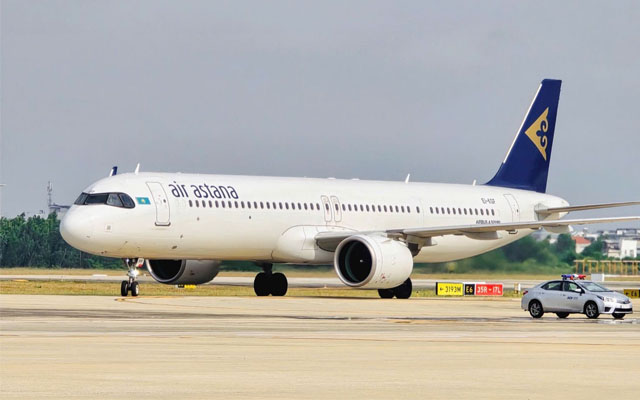
Air Astana is adding two South-east Asian services to its network, with flights from Almaty to Langkawi and Astana to Bangkok starting in December 2026.
The seasonal Almaty-Langkawi service will operate three times weekly on Tuesdays, Fridays and Sundays from December 25, 2026 to March 27, 2027, using an Airbus A321LR.
The carrier will also begin non-stop flights between Astana and Bangkok on December 11, operating twice weekly on Tuesdays and Fridays with an Airbus A321LR.
The Astana-Bangkok route will complement Air Astana’s existing daily flights between Almaty and Bangkok.
Philippine Airlines
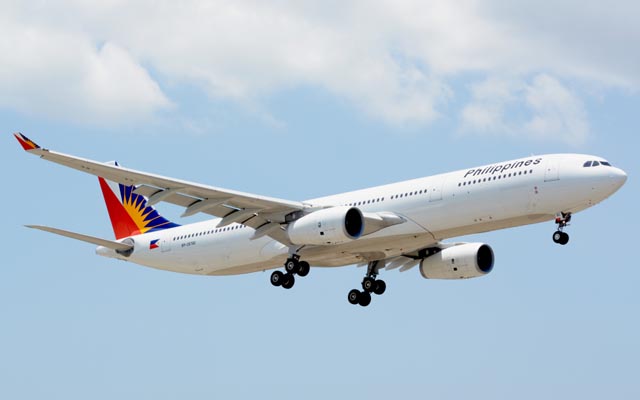
Philippine Airlinesadds Delhi, Mumbai routes
Philippine Airlines (PAL) plans to begin non-stop services from Manila to Delhi and Mumbai in December 2026, subject to Indian government approval.
The Manila-Delhi service will operate three times weekly, on Mondays, Wednesdays and Fridays, with return flights on Tuesdays, Thursdays and Saturdays.
PAL will serve Manila-Mumbai four times weekly, on Tuesdays, Thursdays, Saturdays and Sundays, with return services on Mondays, Wednesdays, Fridays and Sundays.
Both routes will be operated with 168-seat Airbus A321neo aircraft, configured with 12 Business Class and 156 Economy Class seats.
Emirates is offering complimentary access to three Dubai attractions for travellers booking eligible return flights to the city as part of its winter campaign.
The offer applies across all cabin classes to eligible return tickets purchased between September 21 and October 11, 2026, for travel from September 24 to December 13, 2026.
Emirates is offering complimentary Dubai attraction passes with eligible return flights
Eligible passengers receive attraction passes valued at 535 dirhams (US$146), covering Atlantis Aquaventure Waterpark, Lost World Aquarium and a Dubai City Sightseeing hop-on, hop-off bus tour.
Travellers can also use My Emirates Pass for discounts and benefits at participating shops, restaurants, spas and other venues across the UAE by presenting an Emirates boarding pass and valid identification.
Emirates’ Dubai Experience platform allows customers to book hotels, dining, attractions, activities and tours as part of their trip.
Passengers travelling to Dubai can also make unlimited date changes across all cabin classes, hold a fare without charge for 24 hours and receive reduced refund fees, subject to applicable conditions.
The Seed, a villa estate in Candidasa, East Bali, has appointed Amy Lingga as CEO as the company prepares to expand to other destinations in Indonesia.
Lingga has more than 20 years of hospitality experience spanning guest services, public relations, sales and marketing, general management and multi-property leadership.
A native of Bali with family roots in Karangasem, she has worked across independent and international hotel properties.
The third edition of the Wonderful Indonesia Tourism Fair (WITF) will take place from October 15 to 17, 2026, at the Grand Ballroom of Jakarta International Expo Kemayoran in Jakarta.
Organised by the Indonesian Tourism Industry Association (GIPI) in partnership with the Jakarta provincial government, this year’s event is branded Jakarta WITF to mark the city’s upcoming 500th anniversary.
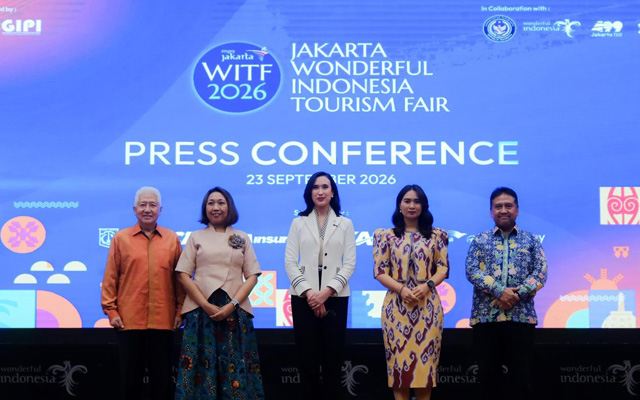
WITF 2026 will bring together more than 300 domestic and international buyers from 35 countries in Jakarta from October 15 to 17; photo by MoT
WITF 2026 steering committee chairman Budi Tirtawisata commented: “Jakarta is not only a point of arrival. Jakarta is a meeting point.”
The event comes amid global tourism challenges, including geopolitical tensions, rising energy prices and changing travel patterns.
GIPI chairman Haryadi Sukamdani noted continued engagement with international markets remained important despite these conditions.
“We cannot just wait for global conditions to get better. We still must promote, we have to keep selling, and we have to keep building good relationships with our buyers,” he said.
Working through industry networks, embassies and airlines, GIPI has secured more than 300 domestic and international buyers from 35 countries across the leisure and corporate travel segments.
Participating sellers include tour operators, hotels, transport providers and attractions.
Alongside B2B sessions, the three-day programme will feature panel discussions, talk shows and a Top Leaders Forum.
The Ministry of Tourism (MoT) will also organise post-event fam trips from October 18 for international buyers to visit destinations including Belitung, East Java, North Sulawesi and West Java.
Ni Made Ayu Marthini, deputy for marketing at the Ministry of Tourism, said the programme aims to introduce buyers to destinations beyond Bali.
Giving Belitung as an example, she said: “Connectivity from Singapore to Tanjung Kelayang is opening up, and we have seen a significant increase in visitors, which is a positive development.”
Singapore-headquartered travel agency Chan Brothers Travel has rolled out Journey Within, a new series of travel experiences based on positive psychology, with a focus on personal growth and traveller well-being.
Unlike wellness retreats centred on spa treatments or mindfulness programmes, the series applies positive psychology practices and facilitated activities to different parts of the travel experience.
Chan Brothers Travel’s new series combines travel experiences with positive psychology practices to support personal growth and well-being, with Bhutan among its first destinations
“Every moment in the journey is deliberately designed to support specific psychological states: awe in the presence of extraordinary landscapes, gratitude and savouring at the table, genuine connection through structured conversations between travellers,” Chen Jingkai, general manager of strategy, transformation & people at Chan Brothers Travel, told TTG Asia.
The programme responds to evolving demand among travellers facing burnout, disconnection and the rapid pace of everyday life.
“Travellers today are looking beyond the destination itself, with greater emphasis on what they hope to gain from the journey; not in photographs, but in personal growth and well-being,” Chen stated.
Following consultations with positive psychology academics and practitioners, Japan and Bhutan were selected as the first destinations. According to Chen, both countries were chosen because “their culture, philosophy, and way of life do a significant part of the work for us”.
In Japan, one experience involves spending time at the edge of a mountain lake early in the morning as a facilitated activity rather than a conventional sightseeing stop. Bhutan was selected in part for its Gross National Happiness philosophy. The itinerary culminates in an ascent to the Tiger’s Nest monastery after several days of activities intended to develop greater attention to the surroundings and experiences.
All departures are facilitated by tour leaders without AI-assisted tools. Chen said human facilitation is an important part of the programme, requiring someone who can “read the group, know when not to speak, and be able to bring the group together”.
Journey Within operates with smaller groups and a slower itinerary, alongside a well-being assessment framework that records outcomes through a personalised Wellbeing Dividend Report. Chan Brothers also holds discussions with prospective customers before booking to assess group compatibility, which the company considers important for both individual travellers and the group. Journey Within tours will therefore be priced at a premium to the company’s standard packages.
Chan Brothers plans to expand the series selectively to other destinations and experiences. Chen shared that the company does not intend to roll out the format quickly or widely, with future locations selected where “landscape, heritage, and a certain quality of human pace intersect in ways that support what the science asks of them”.






 A native of Bali with family roots in Karangasem, she has worked across independent and international hotel properties.