TTG Asia
Asia/Singapore Friday, 1st May 2026
Page 1670

Mega Maldives suspends all flights, leaves tour operators scrambling

0

Mega Maldives Airlines earlier this week announced the temporary suspension all operations as part of a “restructuring and recapitalisation” effort while its management and administrative functions remain unaffected.

As a result of the surprise announcement, officials from other airlines said that they are currently fielding seat queries from tour operators for Chinese clientele who were supposed to fly on Mega Maldives.

Established in 2010, Mega Maldives is largely dependent on the Chinese market and has been hit by falling arrivals from the country. Arrivals from China, Maldives largest inbound market, fell 7.8 per cent to 73,135 in 1Q2017 and 9.8 per cent in 2016.

In an effort to seek other market sources, the airline launched weekly flights to Colombo and Delhi in 2H2016. Initially operating to nine destinations, the airline cut weekly flights to just Beijing and Shanghai, and thereafter to Colombo and Delhi. It also reduced its staff count and aircraft from five to three in 2016.

As well, strong competition from Maldivian, the country’s national carrier, also increased losses for Mega Maldivian, as both airlines were plying the same routes.

Vowing to restart, its founder and CEO George Weinmann, said in a May 2 announcement: “We will look forward to returning to flying very soon with a renewed fleet that can service established, under-served and emerging markets.”

However, industry observers think it is unlikely the airline would resume operations as it is heavily indebted. Three of its aircraft have been sent back to the lessor, according to an industry source.

Thailand’s Singha to bring Spanish beach club to Maldives

0
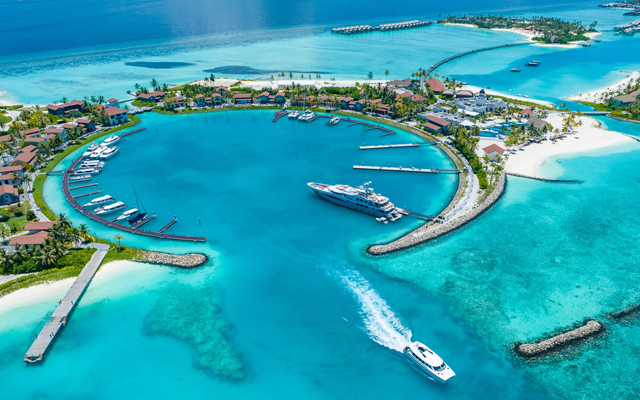
Thailand-based real estate developer Singha Estate has revealed its latest collaboration with Ibiza beach club operator Café Del Mar to open a mega project in the Maldives.

The Café Del Mar beach club will be the flagship and the largest of its kind in the Indian Ocean with a space of over 5,000m2.

The Café Del Mar beach club will be the flagship in the Indian Ocean with a space of over 5,000m2. Singha’s mega project will also feature names such as the Hard Rock Hotel Group, with phase one set for opening next year to include a yacht marina, retail outlets, hotels and stretch of white sand beach.

Thiti Thongbenjamas, chief investment officer of Singha Estate, said: “The club is popular among its fans thanks to its high creativity. They have created their own music tailored made for each event or activity. Many of the music creations by celebrity DJs like Roger Sanchez, Dimitri, Boy George and Paul Oakenfold are familiar faces among fans.”

While staying true to familiar Café Del Mar components, the new club in the Maldives will also include “new elements such as modern cooking technique using only premium local ingredients together with exotic components sourced by Singha Group”, Café del Mar’s director, Domenic Zappia, added.

MakeMyTrip’s war chest grows with fresh US$330m funding

0

MakeMyTrip has raised US$330 million in its latest round of funding, which will be used to fund business expansion, strategic investments, technology and product development, marketing and promotions, working capital and general corporate purposes, the Indian OTA said in a statement.

Some US$165 million is expected to be generated from unnamed investors for placement of over 4.5 million ordinary shares at US$36 per share.

The company also entered into share purchase agreements with existing backers Ctrip.com International and Naspers subsidiary MIH Internet SEA, estimated to translate into another US$165 million.

The former will see 916,666 ordinary shares issued at a price of US$36 per ordinary share, and the latter over 3.6 million Class B Shares convertible to ordinary shares on a one-to-one basis.

MakeMyTrip has agreed to file a registration statement with SEC covering the resale of the foregoing securities, except those sold to Ctrip and MIH, which are subject to the registration rights granted to MIH and Ctrip.

Mariner of the Seas’ SE Asia season brought forward

0

Royal Caribbean International’s Mariner of the Seas will start her upcoming South-east Asian season on September 10 instead of October as originally scheduled, adding 10 round-trip sailings from Singapore in September 2017.

Sailings include the nine-night one-way cruise from Shanghai to Singapore on September 1, with calls at Xiamen and Ho Chi Minh City plus an overnight in Hong Kong; and a mix of three- to five-night South-east Asian itineraries.


Voyager of the Seas

Sales for these itineraries are now open.

The 3,807-guest ship ship will then be deployed to Miami, Florida in April 2018, after having homeported year-round in Asia out of Singapore and China since 2013.

Since Wednesday, the 4,269-guest Voyager of the Seas began a new season from Singapore that will run till June, featuring 13 sailings of three to five nights to Phuket, Penang and Kuala Lumpur (Port Klang) and an eight-night one-way cruise to Hong Kong, with stopovers at Bangkok (Laem Chabang), Ho Chi Minh City (Phu My) and Nha Trang.

Voyager of the Seas will return to Singapore in October 2018, bringing more capacity to the region as she swaps places with sister ship Mariner of the Seas. Itineraries for her 2018/19 winter/spring season will be revealed later this month when the season opens for sale.

New hotel openings: May 2-5, 2017

0
The latest hotel openings and announcements made this week

X2 Vibe Bangkok Sukhumvit Hotel
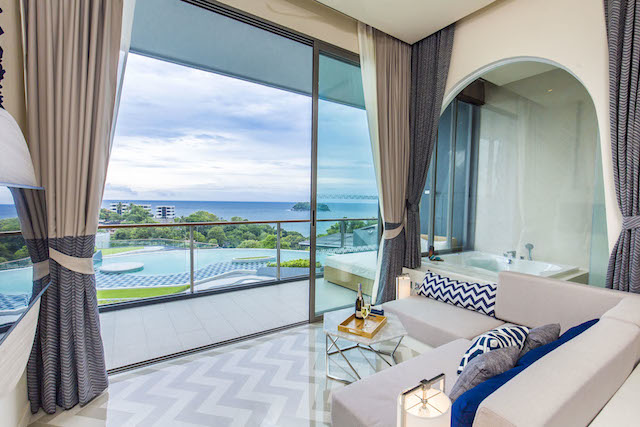
Comprising two buildings located on Soi Sukhumvit 52, the X2 Vibe Bangkok Sukhumvit Hotel offers 145 guestrooms and 121 suites across three-configurations – each comes with a pantry/kitchen. Amenities on the property include a Japanese onsen, day spa, pool bar, café, gym, outdoor swimming pool and putting green for golfers.

Best Western Premier Panbil
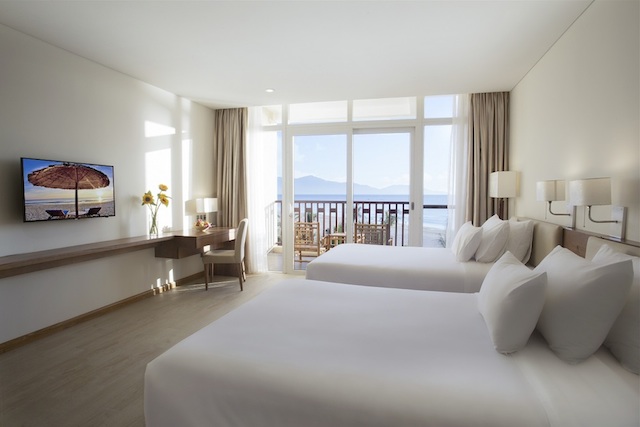
Standing in Batam’s Panbil Industrial Estate is Best Western Premier Panbil, with all 233 rooms offering free Wi-Fi, and floor-to-ceiling windows with views of the Indonesian island and the Malacca Strait. Recreational facilities include an outdoor pool, spa, fitness centre and karaoke room. Other amenities include a function space, large ballroom, as well as two restaurants – one on the ground and the other on the rooftop.

Four Points By Sheraton Hakodate
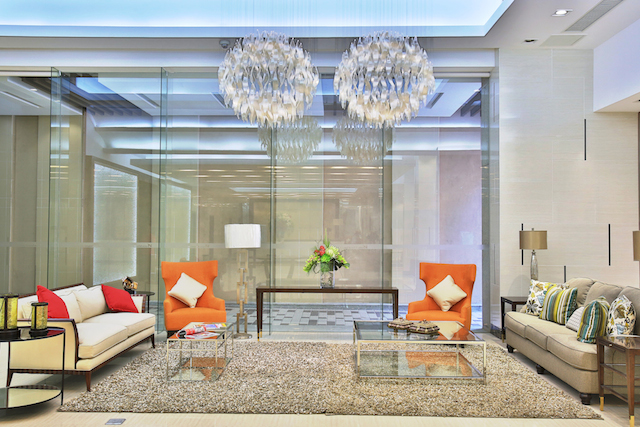
The first Four Points hotel in Japan is located within walking distance of the Hakodate JR Station. Offering 199 keys, rooms come with the Four Points plush signature bed, flatscreen TV and free Wi-Fi. Facilities on the property include an all-day dining restaurant, bar, and spa, along with 1,200m2 of versatile meeting facilities that include a grand banquet hall.


Menjangan Dynasty Resort
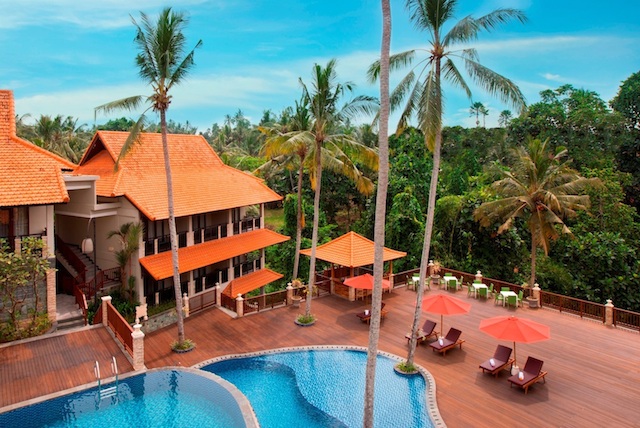
The 16ha resort in Bali boasts safari-style tented accommodation – 24 Beach Camp Tents, two one-bedroom Cliff Tent Villas and two two-bedroom Cliff Tent Villas. All rooms come with air-conditioning and a TV with international channels and DVD player, but Cliff Tent Villas have an added bathroom fitted with a tub, sundeck and private infinity pool. Recreational facilities on the property include a spa, infinity swimming pool, and PADI dive centre.

Jin Jiang’s Louvre affair

0

Louvre Hotels Group’s CEO Pierre Frédéric Roulot tells Raini Hamdi how Jin Jiang International’s acquisition of the French chain changes his life, in an interview on the sidelines of the International Hotel Investment Conference in Berlin recently

What does the new ownership mean for Louvre Hotels Group?
It’s a big change. Before, the owner was Starwood Capital. As with all funds, it’s natural that the investments are short-term, they want to increase the value and exit. Jin Jiang is a strategic, long-term player. It does not want to exit but to keep and improve the quality of the product. For example, we put a lot of money in renovations in the last two years to improve the products and make each of our brands interesting.

Were you not able to do that before?
No, we didn’t have the financing. When Jin Jiang came on board, it gave me a credit line to not only invest in existing properties but to acquire hotels. The chairman asked me to do a strategic plan. I did it seriously even though I did wonder if it was just for fun or he was just testing me. I was surprised when he approved my plan and gave me the green light to follow it through immediately.

What’s the plan?
It’s called Plan to Win. To quickly increase the number of hotels in the big European countries through organic development and small acquisitions. That’s what we did in Poland, Germany and India (Sarovar Hotels). It’s for strategic reasons.

How are Poland, Germany and India strategic?
Let’s take Germany. We want to have a strong presence in the three big European markets, the UK, France and Germany. We are are strong in France – number two with more than 850 hotels. We focused on Germany first as acquisitions are harder in a more mature market like the UK, plus Brexit has created some uncertainties. India is strategic as the Chinese government aims to create infrastructure along the Silk Road belt.

Why did Jin Jiang buy Louvre?
We already had a relationship. I was looking for innovative ways to grow Louvre and was interested in the Chinese market but in China, you have the big local players.
In 2012, I decided to do a partnership and talked to many local players. Finally in 2013 we started a partnership with Jin Jiang, something that’s simple, easy-going. We chose 15 hotels in Paris and 15 in Shanghai. Chinese visitors who came to our hotels had everything in Mandarin – TV, newspapers, signages – and we changed the food to soup, congee, etc. We were also famous for providing Chinese guests with a hotline they could call when they were not in the hotel, then someone would translate for them if they were lost or needed something. French guests who stayed in Shanghai would get French newspapers, French TV channels, Bordeaux wines, croissants at breakfast.
Step by step, our relationship grew and in 2014, we even shared the same booth at ITB Berlin. We even crossed jobs between the two companies.
My wife is Chinese and I could speak a bit of Cantonese and Mandarin, so I guess they perceive me as someone who understands their culture.
They know how we work, they think we are professional – the fact that we have lots of success everywhere in the world from Indonesia to India which all have different cultures, currencies, IT systems, etc.  They can see we have the expertise and can adapt the product to the market.
So it started from just a small idea, but it changed my life.

So you aren’t worried that new ownership may change things?
No, we are lucky that Jin Jiang respects our DNA. They said manage the company as before and if you need help, we will help you. Now they’ve asked me to manage Jin Jiang in China and we’ve created a new entity for this, Jin Jiang Louvre Asia, to grow the brands in China and Asia (http://bit.ly/2oIXtyf).

Are you planning to buy more hotel companies after Sarovar?
Some small platforms perhaps but for now, the main message is integration, getting synergies from our acquisitions, so that we’re ready for the next cycle. There is enough to do already.
I think too that we will have to rationalise the brands a bit and have fewer brands. If you rationalise, you save costs. It costs a lot to market on the web, or if you work with OTAs and have so many brands you lose SEO (search engine optimisation).
It’s not the number of brands but brand differentiation. You could have as many brands if each brings something really special, a brand for women, millennials, cats, whatever it may be.

What are your current thoughts on industry consolidation?
There are only two big OTAs, Priceline and Expedia. In front of them are a lot of hospitality groups. Now you have two hotel giants against lots of small companies but even the biggest, Marriott International, covers only seven per cent of total hotels worldwide. So that’s why we’ve seen the consolidations in the past couple of years – Marriott with Starwood, Accor with Fairmont, Jin Jiang with Plateno – because you need to be a bit bigger to face the digital competition like OTAs and Airbnb. You have no choice. You could be very small or very big. In the middle, you lose. We choose to be big.
(Jin Jiang Louvre Asia has a portfolio of 2,500 hotels in 52 countries. It comprises a range of hotels from one to five stars. The brands from Louvre are Première Classe, Kyriad, Campanile, Tulip Inn, Golden Tulip, Royal Tulip and brands Sarovar Hotels which it acquired recently. The four Chinese brands from Jin Jiang are Metropolo, Jin Jiang Inn, Bestay and Goldmet Inn. The plan is to open more than 1,200 new hotels in Asia within the next three years.)

Will the whole company be called Jin Jiang Louvre one day?
Let’s take it step by step and keep it simple. We have quite enough to do as it is.

Qatar offers transit passengers free hotel stays in Doha

0

Qatar Airways and Qatar Tourism Authority (QTA) have jointly launched a stopover package in Doha that offers transit passengers free luxury hotel stays and complimentary transit visas.

The package – available throughout the summer – gives Qatar Airways passengers a free one-night stay at a four- or five-star hotel in Doha, with a second night costing just US$50. Hotel choices include The Four Seasons, Marriott Marquis, Radisson Blu and Oryx Rotana.

To be eligible for this offer, passengers have to book their flights on www.qatarairways.com, select ‘multi-city’ and choose their hotel once they receive their flight confirmation.

The online transit visa application is also free and will be eligible for those in transit between five and 96 hours. This offer, part of a broader campaign called +Qatar, is available to all passengers across all classes of travel.

In addition, visitors can also explore additional stopover packages offered by Discover Qatar, Qatar Airways’ DMC.

Malaysia, Singapore once again top Muslim travel index

0

Malaysia and Singapore have topped the list of Organisation of Islamic Cooperation (OIC) and non-OIC markets respectively for the third consecutive year, according to the Mastercard-CrescentRating Global Muslim Travel Index (GMTI) 2017.

The GMTI, which covers 130 destinations, saw Malaysia keep its top spot while Indonesia moved up to third place in the overall rankings.

Meanwhile, Singapore retained its pole position for the non-OIC destinations, followed by other Asian countries in the top five: Thailand (2nd), Hong Kong (5th) and Japan (6th).

On the combined overall list, Singapore remains the only non-OIC destination in top 10. A number of non-OIC destinations in Asia also moved up the rankings, a result of their concerted efforts to adapt their services to cater to and attract the Muslim travel market.

Indonesia, Japan and Taiwan made the biggest improvements in the overall top 10 ranking.

As a whole, Asia remains the world’s most attractive region to Muslim tourists with an average GMTI score of 57.6, followed by Africa (47), Oceania (43.8), Europe (39.9) and the Americas (33.7) respectively.

As well, research also showed that the Muslim travel sector is estimated to grow to US$220 billion in 2020 and US$300 billion by 2026.

From the estimated 121 million in 2016 – up from 117 million in 2015 – Muslim visitor arrivals are forecasted to grow to 156 million visitors by 2020 to represent10 per cent of the travel segment.

Fazal Bahardeen, CEO of CrescentRating and HalalTrip, said: “We are definitely seeing the influence of a new breed of young travellers, millennials and Gen Z who are combining technology with a real desire to explore the world while still adhering to their faith-based needs. They will be the driving force for the next phase of growth.”

Safdar Khan, Mastercard’s division president, Indonesia, Malaysia & Brunei, added: “With an overall expenditure of around US$155 billion in 2016, the Muslim travel market remains a strong driver for the continued growth in travel across the world. It’s constantly evolving with major forces such as changing demographics and digitisation shaping the way the industry is progressing.”

Sarawak shoots for the stars to boost tourism

0

Sarawak hopes to bolster tourism by creating greater awareness and appeal of the destination through the film industry.

Acting CEO at Sarawak Tourism Board (STB), Mary Wan Mering, said: “(Promotion efforts through) trade fairs, trade missions and consumer billboard marketing will still continue. But we must think out of the box to capture the market of travellers who are interested in entertainment.”


Wan: thinking out of the box

Citing the success of South Korea leveraging its pop culture and technology in tourism, she added: “They don’t spend on big billboards to create awareness. They use K-pop and Korean dramas. They get big corporations such as Samsung to promote the destination and their products using K-pop.”

Earlier this year, the STB set up a Filming Support Unit to facilitate international film production houses to obtain film permits, and provide them with ground support and hosting during location scouting in Sarawak.

The board is currently reviewing requests from several production houses in China and South Korea, Mary Wan revealed.

A Chinese romantic movie, Blue Tears, will air in Chinese cinemas later this month, featuring scenes such as the beach, longhouses and Mulu National Caves shot in Miri.

As well, White Rajah, a Hollywood movie with investment from the Sarawak State Government through the STB, will start filming in the state in mid-2018. The movie is based on the adventures of James Brooke in Borneo in the 1840s, and will be directed by Oscar-nominated director Sergei Bodrov.

Tokyo Disney attendance dips as Universal numbers go up

0

Tokyo Disneyland and DisneySea are expecting a fall in visitor numbers for a third straight year in FY2017 to 29.5 million – dipping under 30 million for the first time in five years – despite an increase of foreign guests to both parks in recent years.

Given that DisneySea marked its 15th anniversary last year with special events, an official of Oriental Land, operator of both parks, attributed the overall visitor decline typically “seen in the year after an anniversary year”.


Tokyo DisneySea

Attendance may also have been hurt by the closure of a number of rides to make way for new attractions – work is under way at DisneySea on Nemo’s Undersea Rider, while a Beauty and the Beast attraction will open in Disneyland in 2020.

According to media reports, however, visitors have been put off by the crowds and long lines for rides, while entry prices were also raised in April 2016.

It’s a contrasting picture at other popular theme parks in Japan though.

“Visitor numbers increased by around 700,000 in the year to this April to 14.6 million,” said Johta Takahashi, a spokesman for Universal Studios Japan, which recently opened the Minion Park attraction.

Meanwhile, visitors to Sanrio Puroland were up 14 per cent to 1.8 million in fiscal 2016, while Yomiuriland saw an 11 per cent increase in guests to 1.9 million.

The biggest decline in attendance, however, was seen at Huis Ten Bosch, a Dutch-themed park in Kyushu, where arrivals dipped 6.9 per cent to 2.9 million and foreign guests contracted 19 per cent to 205,000, after Kyushu was struck by a series of major earthquakes in April 2016.