TTG Asia
Asia/Singapore Monday, 15th December 2025
Page 1414

Luxury stay deal at Bangkok’s Centara Grand

0
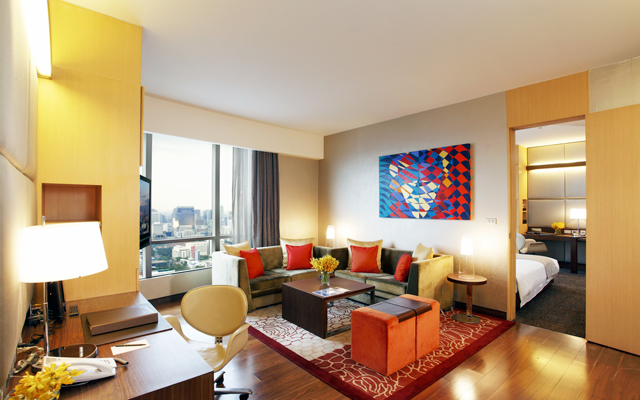
World Executive Suite

From now until 23 December 2018, Centara Grand at CentralWorld in Bangkok is offering Luxury Stay privileges for one- or two-bedroom executive suite bookings.

As well as complimentary access to Centara’s The World Executive Club, some of the other perks include a complimentary bottle of sparkling wine, free daily buffet breakfast, free-of-charge (and re-stocked daily) mini-bar, late check-out at 16.00 (on request), 20 per cent off all spa treatments, and access to the hotel’s private library and meeting rooms.

The package also entitles guests wishing to extend their stay at the hotel to a complimentary night’s stay when booking two consecutive nights.

Prices for the Executive Suite (one-bedroom) start from 8,000+++ baht (US$251) per room night, while World Executive Suite (two-bedroom) are priced from 11,500 baht.

Swiss-Belhotel Karimun to launch in Riau Islands in 2019

0
XXXXXX

Swiss-Belhotel International is expanding to Karimun, an emerging industrial and tourism region in Indonesia’s Riau Islands.

Due to open in 2019, Swiss-Belhotel Karimun, Riau Islands will provide 134 rooms, a lounge, a restaurant, meeting facilities, a swimming pool, a gym and a spa.

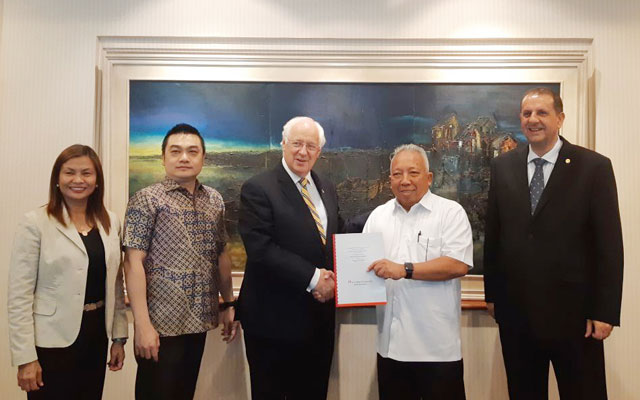
(From left) Swiss-Belhotel International’s Linie Cortez Palacio, Soma Jaya Sakti’s Franky Yason, Swiss-Belhotel International’s Gavin M. Faull, Soma Jaya Sakti’s Benny Soetrisno, Swiss-Belhotel International’s Emmanuel Guillard

Karimun is a free trade zone located to the south-west of Singapore. The island is 90 minutes from Singapore and 60 minutes from Batam, accessible by ferry.

Gavin Faull commented: “Karimun is fast becoming an important industrial and tourism region so it’s important to provide visitors to the island with quality facilities and services. Easy access from Singapore and Batam means more and more visitors are arriving on the island for trade, investment and tourism.”

Aviation roundup: Ukraine International, Thai AirAsia and more

0

India gets new connection from Ukraine
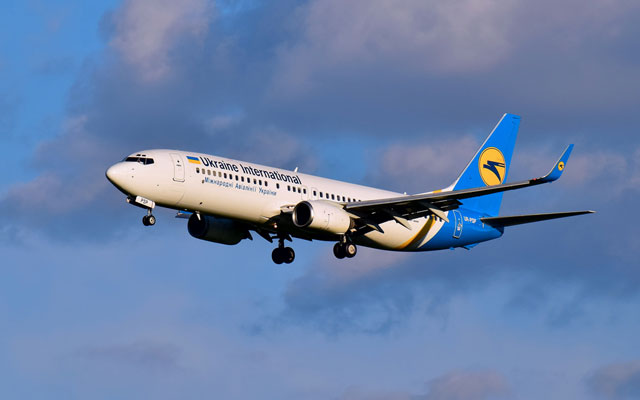
Ukraine International Airlines has commenced direct flights from Kiev in Ukraine to New Delhi in India, the fifth route that was added to its longhaul network.

PS391 departs Kiev at 20.55 and arrives in New Delhi at 06.20 the following day. The return leg will depart New Delhi at 10.00 and land in Kiev at 15.20.

Flights will be operated thrice weekly utilising the Boeing 767-300 with a three-class cabin configuration. A fourth frequency will be added on June 7.

Thai AirAsia increases domestic flight frequency
Thai AirAsia is stepping up the frequency of several domestic flights from May 25.

The Bangkok-Udon Thani route will be increased from five daily flights to six, while the Bangkok-Phitsanulok route will be upped from two flights a day to three.

Vietjet opens two more international routes
Vietjet will begin flights from Hanoi to Taichung in Taiwan, and from Danang to Daegu in South Korea this June.

The Hanoi-Taichung route will be operated with five return flights per week on every Monday, Wednesday, Friday, Saturday and Sunday from June 22, with flight time per leg taking 2.5 hours. Flights will depart Hanoi at 13.00 and arrive in Taichung at 16.30. Return flights will take off at 17.30 in Taichung and land in Hanoi at 19.20.

Meanwhile, the Danang-Daegu route will be operated on a daily basis from July 19, with flight time per leg taking approximately four hours and 15 minutes. Flights will depart Danang at 00.15 and arrive in Daegu at 06.30. Return flights will depart Daegu at 07.30 and land in Danang at 10.00.

Thai Airways to serve new Islamabad International Airport
With the closure of Pakistan’s Benazir Bhutto International Airport, Thai Airways has begun landing in the newly-constructed Islamabad International Airport.

The airline currently operates four round-trip flights weekly on Mondays, Wednesdays, Fridays and Saturdays. TG349 will depart from Bangkok at 19.00 and arrive in Islamabad at 22.10 hours, and TG350 will depart Islamabad at 23.20 and arrive in Bangkok at 06.25.

Cosmo Hotel Kuala Lumpur has a new GM

0

Susan Carlos is now the general manager of Cosmo Hotel Kuala Lumpur.

Prior to her appointment at Cosmo Hotel Kuala Lumpur, she was attached to Dorsett Grand Subang before her move to Dorsett Grand Labuan.

Giving credit where it’s due

0

The IATA implemented the New Generation of IATA Settlement Systems (NewGen ISS) in Singapore on April 16, the first market in Asia-Pacific to see the roll-out, which will be followed by Australia, Cambodia, India, South Korea and the Philippines later this year.

The NewGen ISS represents the “most extensive and ambitious modernisation” of the IATA Billing and Settlement Plan (BSP) since it was created in 1971 to facilitate the global distribution and settlement of passenger funds between travel agents and airlines, according to IATA.

What’s the deal?
“The thrust of NewGen ISS is aimed at safer selling accompanied by greater choice and flexibility of accreditation models and payment methods,” said Ian Lorigan, director of IATA’s Global Delivery Center in Singapore.

NewGen ISS has four main pillars, he stated. First, IATA now offers a choice of three different accreditation for travel agents, versus the previous one-size-fits-all model.

EasyPay, the new voluntary pay-as-you-go e-wallet solution will offer a secure and cost-effective payment transfer method.

Agents can expect safer selling with the introduction of the Remittance Holding Capacity (RHC), which strengthens the prudential integrity of the BSP trading environment for all participants, said Lorigan.

A new voluntary financial security system, Global Default Insurance (GDI), will be a cost-effective and flexible alternative to bank guarantees and other types of security.

With the exception of RHC, the major precepts of NewGen ISS are opt-in, he pointed out.

Assessing benefits for agents
A check with travel agents across Asia on their reception of the IATA NewGen ISS threw up differing opinions.

Crystal Sim, president & CEO, Albatross World Travel & Tours Singapore, “looks forward” to the RHC and Easypay features in the new model.

She elaborated: “The GDI is also an added alternative feature which gives us choice in arranging our financial security options with IATA. This may release more cash for the business, which are currently used as security for banker’s guarantee (BG) if the cost is affordable.”

Charming Holidays Hong Kong’s general manager David Chau, on the other hand, is concerned about having to fork out extra cash for BG, which could affect SMEs’ cash flow.

“Since the BG amount is based on the volume of tickets, so the more tickets issued, the more BG for agents to bear. Big agencies like us only paid the corporate guarantee in the past, so our cost will be jacked up by the agent’s BG. Additionally, we are not sure if airlines will also request BG from agents in future. If so, it means double BG payments.”

K Thangavelu, managing director of Grandlotus Travel Agencies in Malaysia, meanwhile, sees merits in the greater payment flexibility that the NewGen ISS will bring.

“It also means a more transparent system where the agent’s handling fee will also be revealed to the customer if payment is made from the customer’s credit card,” he noted.

However, greater transparency for customers does not necessarily translate into better benefits for travel agents though, noted Thangavelu.

“If airlines give agents a commission on air tickets sold, then this new system is all right. In the current scenario, where there is no commission and agents need to do a mark-up for their services to the customer, then I don’t see how it benefits the travel agent,” he explained.

“Personally, I like using the current system where the agent’s handling fee is not revealed to the customer,” Thangavelu continued.

“(The new system) means faster settlement of payments to the airlines”, he remarked. “This is the whole crux of the matter – both the airlines and IATA want to get the money earlier.”

Sharing similar sentiments, Luxury Tours Malaysia’s director, Arokia Das, said he would appreciate getting more information from IATA  to overcome misgivings about the new system. “Today, whatever is happening in the ticketing industry is all geared towards helping the airlines, not so much the travel agent.”

A ‘balanced’ system
In response to the agents’ feedback, Lorigan stated that the NewGen ISS will bring “a balance of benefits for all participants”.

“For the vast majority of travel agents, NewGen ISS will have no impact on the financial security requirement. Agents can choose to provide additional financial security to increase their RHC on a voluntary basis. Agents that reach their RHC still have the option of using IATA EasyPay or a customer card,” he added.

As well, Lorigan insisted that travel agents need not worry that NewGen ISS would reveal their handling fees to their customers.

The NewGen ISS was developed in consultation and communication with industry stakeholders at both the global and individual market level, he said. In the lead-up to the programme launch in Singapore, IATA had engaged in detailed communication with travel agents and airlines, culminating in on-site workshops for the participants.

“Industry engagement and communication will continue in the same vein as we roll out (NewGen ISS) in markets throughout Asia Pacific and around the world,” Lorigan said.

The full roll-out is expected to be completed in 1Q2020.

Reporting by Xinyi Liang-Pholsena, S Puvaneswary, Prudence Lui and Pamela Chow

Why Asia is shaping the future of travel

0

Traditionally when people think ‘tech hub’ or ‘innovation hotspots’, San Francisco, Seattle, London or Berlin are likely to spring to mind. It is no secret that the West has been strong on tech superiority for decades. Historically we have seen developed economies in the West lead on technology innovation, and then introduce it to the East for adoption.

However, the early to mid-2000s heralded an extraordinary shift. Many Eastern markets, particularly China, transitioned from “cheap and cheerful manufacturers” to markets producing quality technology to rival or outclass that of its Western counterparts. Today, Asian countries are spearheading new technologies to solve contemporary challenges.

The rise of the Asian traveller
With the shift to service-based economies, emerging and developing countries in Asia are seeing some of the strongest GDP growth globally. They are forecast to grow at around 6.5 per cent over 2018-19, and continue to contribute to more than half of global growth annually.

Strong economies and Asia’s increasing wealth have led to the rise of an affluent middle class. The travel industry has been a clear beneficiary: Today, China is the largest travel market globally and by 2020 two in every five travellers will be Asian.

Accelerating innovation capacity
Along with its increased wealth, Asia’s capability to innovate has accelerated and will push digital transformation in the travel industry forward. The region is already ahead in several critical factors that support tech advancement. Four out of the top 10 countries boasting the fastest Internet speeds globally are in Asia; South Korea is leading the charge with the highest average connection speed in the world, followed closely by Hong Kong, Singapore and Japan.

Meanwhile, China is leading the push for 5G mobile technology, and is shaping up to have the biggest 5G market by 2022. By 2025, China will account for more than 40 per cent of the world’s 5G connections. Companies in Asia are also truly ‘mobile-first’, developing for mobile before desktop. Finally, but increasingly importantly, the cost of maintaining cloud infrastructure in Asia is much cheaper than in the West, helping them to push ahead.

There’s also an abundance of STEM skills coming out of Asia, coupled with an entrepreneurial spirit. Notably, Asia was home to more than 47 per cent of all international patents filed in 2016, almost the combined total from North America and Europe. We launched the travel tech startup community Amadeus Next for Asia-Pacific to support the thriving ecosystem of ‘next gen’ travel technologies in Asia, and to learn from some of the region’s most innovative travel startups.

Simon Akeroyd

Asia also has a strong commitment to investment in research and development (R&D). China’s R&D investment will surpass that of the US by 2020, with companies dedicating phenomenal amounts to research. For example, 40 per cent of Chinese ICT solutions company Huawei’s 170,000 staff is purely focused on its research efforts. Even Amadeus, despite being a European company, has a large R&D centre in Bengaluru with nearly 1,800 employees.

Asia needs to innovate for itself
A large part of Asia’s success is, and will increasingly be, a result of its ability to address its own market needs. A lot of what happens in the West isn’t relevant, therefore the region must develop its own ideas and technologies to solve its unique challenges.

Examples of Asian innovations include travel and expense management company Baoku, among the first to develop a SaaS solution to cater to China’s growing business travel market, which surpassed the US in 2016 and is now worth upwards of US$300 billion. Another is 12GoAsia, which supports ASEAN’s complex transportation networks on both the B2B and B2C sides by providing online ticketing services for inter-city bus, train, ferry, transfers, flights and hotels.

BorderPass was developed to enable the large number of business travellers that frequently cross Asia’s borders to ‘pre-clear’ airports’ immigration check-points, speeding up the passage for frequent travellers. In India where travellers often have to book a long-distance rail ticket up to four months in advance for confirmed travel dates, ConfirmTKT shortens the time between booking and confirmation of rail tickets and assists travellers to identify alternative travel routes using its app.

Companies in emerging Asia are also actively pursuing opportunities to capitalise on the rise of the Asian traveller. One example is air ticket, hotel reservation and car rental platform Flymya.com, founded to capitalise on Myanmar’s emerging tourism industry and help travellers plan trips to the country. Another is startup Huangbaoche, which provides tour packages and travel guide booking services for outbound Chinese tourists, processing more than 1.5 million transactions in its first two years of operation.

We’re also seeing robotics being rolled out at a terrifying pace in Asia. In Singapore, M Social was the first hotel to have a front-of-house autonomous service chef robot that prepares perfect eggs for guests. In Japan, H.I.S Co employs more robots than humans in some of its hotels.

Chinese travel platform Mafengwo, popular among younger travellers for the ‘independent’ information available through its traveller communities, is developing a concept for world’s first intelligent travel robot Mafeng. This robot will accompany travellers throughout their trip and use the big data to provide users with personalised travel experience. For instance, the robot will create itineraries and recommend activities based on a user’s past trips and personal preferences.

Asian innovators have also been quick to put blockchain into travel technology. Singapore Airlines’ KrisFlyer has launched the world’s first blockchain-based digital wallet, which will allow its membership base to use digital KrisFlyer miles for point-of-sale transactions at participating retail merchants. A Chinese project, Go Globe Chain, is applying blockchain technology to build up decentralised B&B booking systems to avoid false trading and credit risks. These blockchain developments have the possibility to revolutionise the travel industry.

It is impossible to speculate where the next Uber or Airbnb will come from, but it is clear that Asia has been bitten by the “tech bug”, and is on the cusp of a tech boom. The innovation we are seeing is almost overwhelming, and highlights just how agile Asia is when it comes to developing new technologies to address unique market challenges and explore new ideas. Asia’s relatively young tech environment, which is not weighed down by legacy systems, coupled with a rising tech-savvy middle class, all point to a future where Asian travel innovations will thrive.

New Philippine tourism secretary named as Wanda Tulfo Teo resigns

0
Bernadette Romul-Puyat (in pink) will replace Wanda Tulfo Teo as tourism secretary

Philippine president Rodrigo Duterte has appointed agriculture undersecretary Bernadette Romulo-Puyat as new tourism secretary, replacing Wanda Tulfo Teo who has resigned amid a tourism advertising controversy.

The daughter of former senator and foreign affairs secretary Alberto Romulo, Romulo-Puyat is an economist who taught in her alma mater, the University of the Philippines, and has been with the Department of Agriculture for 12 years.

Bernadette Romulo-Puyat (in pink) will replace Wanda Tulfo Teo as tourism secretary (photo credit: Department of Agriculture)

Tulfo Teo, formerly a travel agent based in Davao where Duterte also hailed from, fell from grace with accusations of conflicts of interest and nepotism when the Commission on Audit earlier flagged a 60 million peso (US$1.2 million) deal paid by the Department of Tourism (DoT) for ad placements on the TV show produced and hosted by her brothers Ben and Erwin Tulfo.

Controversies have marred Tulfo Teo’s stint as tourism secretary, including alleged corruption issues and her support for Boracay’s closure without concrete plans for its rehabilitation.

Tourism Congress of the Philippines’ president Jojo Clemente commented: “We hope whoever takes over has learned from what has (happened). We look to genuine and objective leadership.”

Clemente explained that “there were too many distractions which prevented us from continuing with the gains of the previous administration, and we look forward to moving on and getting back to the basics and hopefully continue to improve the Philippines as a prime destination”.

Cesar Cruz, president, Philippine Tour Operators Association, added: “We welcome the appointment Berna Romulo-Puyat as the new Secretary of the Department of Tourism. Her experience as a civil servant and exposure on marketing and promotions provide a sigh of welcome relief to the industry stakeholders whose industry has been subjected to corruption scandals, lack of direction on policies, marketing and promotion and more. This will hopefully bring back the high morale in the industry and move on to more substantial undertakings for the success of the Philippine tourism industry.”

STB awards honour the stars of Singapore tourism

0
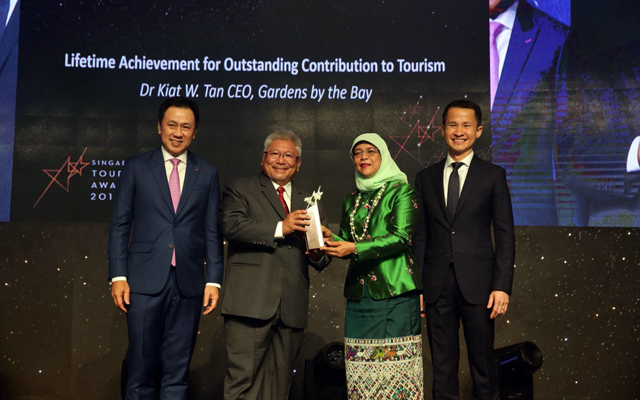
Green city visionary Kiat Tan receiving the lifetime achievement award from the president of Singapore, Halimah Yacob

Last night, 29 individuals and organisations were recognised at the Singapore Tourism Awards 2018, organised by the Singapore Tourism Board (STB) and graced by president Halimah Yacob.

At the awards presentation ceremony held at Fairmont Singapore, Kiat Tan, founding CEO, National Parks Board and Gardens by the Bay, received the highest accolade of the evening – Lifetime Achievement for Outstanding Contribution to Tourism. Tan was instrumental in the development of Gardens by the Bay and redevelopment of Singapore Botanic Gardens, both of which have become world-renowned attractions.

Green city visionary Kiat Tan receiving the lifetime achievement award from the president of Singapore, Halimah Yacob (photo credit: Twitter/@stb_sg)

Taking home the Special Recognition award was JTB Corporation. The agency was recognised for its commitment to and efforts in promoting Singapore as a key destination to Japanese travellers. In its first partnership with an overseas NTO, JTB Corporation partnered STB on a joint year-long Closeup Destination of the Year Campaign from April 2017 to March 2018, which attracted 128,479 Japanese visitors to Singapore, above the initial target of 90,000 visitors.

The other organisation that received the Special Recognition award was ION, which was recognised for enhancing the attractiveness of Orchard Road as a lifestyle and retail destination.

Besides the Top Awards and Special Recognition recipients, 26 other individuals and organisations were honoured across categories of Customer Service, Experience Excellence and Enterprise Excellence.

In particular, Chew Ghim Bok, Singapore’s bid chair for the Rotary International Convention 2024, which is expected to be attended by 25,000 Rotary members from around the world, was recognised as Best Business Event Champion under the Experience Excellence (MICE) award category.

The Exceptional Achievement Awards were awarded to Halloween Horror Nights, Resorts World Sentosa, and Marina Bay Sands Expo & Convention Centre for receiving the Best Leisure Event and Best Business Event Venue respectively for the past three consecutive years (2015 – 17).

It was also announced at the ceremony that the Best Shopping Experience Award will be split into two new categories – Best Shopping Mall Experience and Best Retail Store Experience – so as to recognise new gems in the tourism sector, including smaller local establishments.

Indonesia casts lures to attract ASEAN weekend visitors to Jakarta

0

Following the success of the Batam-Bintan promotion last year, Indonesia is set to offer Jakarta Weekend Hot Deal as part of Visit Wonderful Indonesia’s (VIWI) Hot Deal campaign in hopes of growing visitor volumes during the weekends and increasing the length of stay in the destination.

Explaining the new programme, Khrisnadi, chairman of the Indonesia Hotel & Restaurant Association (IHRA) – Jakarta chapter, told TTG Asia the packages are created to sell Jakarta as weekend getaway to ASEAN countries, as the city is busier during weekdays and sees lower room rates on weekends.

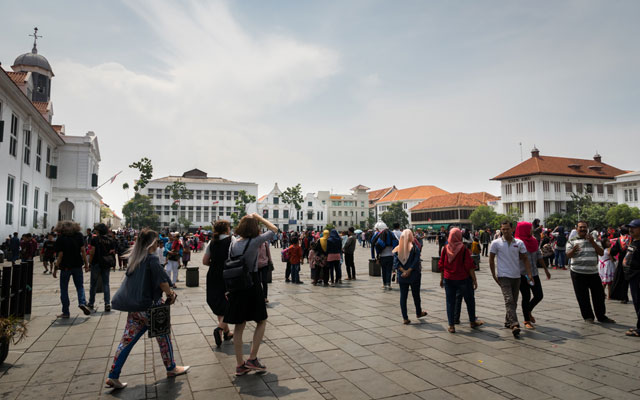
Tourists milling about Jakarta’s Old Town Square

Khrisnadi said the average hotel occupancy in Jakarta in 2017 was 63 per cent, while the weekend occupancy was below 50 per cent. With the Jakarta Weekend Hot Deals package, IHRA hopes that hotel occupancy on weekends can match that of the weekdays at around 70 per cent.

“We are targeting South-east Asia countries, especially Singapore and Malaysia. They already know Jakarta as a shopping and culinary destination, but the city has others attractions as well. We believe the hot deals will attract them to visit Jakarta during the weekends,” he added.

Raymond Djani, committee member of VIWI, hopes the campaign will also help drive overnight stays and increase length of stay, as the latest data showed a decrease in average length of stay from the previous year. Visitors on average stay less than three days in the city.

Raymond said: “There were over 3.9 million international arrivals to Jakarta last year. However, only 2.6 million stayed overnight in the city, while the rest were in transit.

“We expect travellers will extend their stay in Jakarta after their business is completed and enjoy city tours during the weekend,” he added.

To offer greater choice of packages, VIWI and the Ministry of Tourism have signed MoUs with 16 hotels and 15 travel companies.

Hasiyanna Ashadi, chairman of Association of Indonesian Tour and Travel Agencies (ASITA) Jakarta Chapter, said the price of packages offered is quite competitive, ranging from one million rupiah (US$72) for two nights in a three-star hotel and up to 1.8 million rupiah for a stay in a five-star hotel.

“This is just a basic package. Depending on the travel company, it is possible to opt for (enhanced) packages. For example, travellers could take a Weekend in Jakarta city tour and continue with golfing in Bandung or Bogor on Monday,” Hasiyanna elaborated.

Similarly, travel companies may combine the package with other destinations, like a Batam-Bintan tour.

However, the package does not include airfare, so the total price may vary from weekend to weekend, Yana reminded, while assuring that that prices will still be competitive as airlines offer best rates to agents.

The campaign has seen support from regional airlines such as Garuda Indonesia, Scoot and Malaysia Airlines, added Raymond.

The Ministry of Tourism projected Jakarta Weekend Hot Deals will sell more than 400,000 packages, or 15 per cent of the total target of VIWI Programme.

Arief Yahya, Indonesia’s tourism minister claimed that the Riau Islands hot deals packages saw success, bringing in 500,000 arrivals.

“If the Batam-Bintan hot deals (which have been extended into this year) and Jakarta one combine, it is not impossible to increase the number of tourist visits, especially from the ASEAN countries. The packages may seem simple but it will be a hit because of the huge discounts,” Arief Yahya said.

Aitken Spence to plant first overseas Heritance in the Maldives

0
Rendering of an overwater suite; the resort will offer a mix of overwater and land accommodation

Sri Lanka’s Aitken Spence Hotels is set to launch its first Heritance property overseas with the introduction of Heritance Aarah in winter 2018.

This is part of the group’s plans to expand the brand, currently with a footprint of five hotels, all in Sri Lanka.

Rendering of an overwater suite; the resort will offer a mix of overwater and land accommodation

When open on Aarah island in Raa Atoll, 40 minutes from the Male international airport, Heritance Aarah will operate as an all-inclusive resort offering 26 luxury duplex ocean suites, 56 sunset ocean villas and 68 land villas.

For food and spirited concoctions, guests can choose from six restaurants – with flavours from France and Italy to the Middle East, Sri Lanka, India, Turkey, Mexico and Japan – and three bars including a space exclusively for Ocean Suite guests, a poolside bar and an open-air rooftop venue.

The resort will also offer facilities and activities such as a dive and water sports centre, a range of excursions and adventures, a kids club and a spa with six treatment rooms set over the lagoon with views of the island’s eastern coast.

Aitken Spence Hotels’ Adaaran brand is already established in the Maldives, where it has been operating for 25 years, making it one of the longest-standing brands there.

With five resorts in the Maldives – namely Adaaran Prestige Vadoo, Adaaran Select Meedhupparu, Adaaran Club Rannalhi and Adaaran Select Huduranfushi – Adaaran is also one of the largest chains in the destination.

“We want both Heritance as well as Adaaran to grow here,” Suresh Dissanayake, assistant vice president – sales and marketing at Heritance Aarah and Adaaran Resorts, told TTG Asia at the recent International Travel Trade Show of Maldives in Malé, adding that there are also plans to take the Adaaran brand beyond the shores of the Maldives to other destinations.

Aitken Spence Hotels, apart from its Sri Lanka and Maldives operations, owns and manages a five-star, 143-room hotel in Chennai and six other properties in Oman, including a tented property with 30 Bedouin-style tents.

The company is planning its sixth resort on Raafushi Island on Noonu Atoll, and Dissanayake said they were looking for a partner – either an investor or tour operator.