TTG Asia
Asia/Singapore Wednesday, 24th December 2025
Page 1394

What’s new in Singapore’s luxury hotel scene

0
Singapore Luxe Hotels video

From the new to the freshly refurbished, here’s a look into four hotels in Singapore for those who enjoy the finer things – plus a touch of je ne sais quoi.

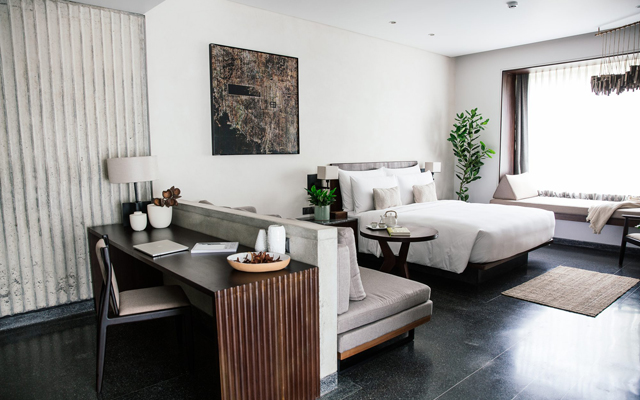
Watch this special video by TTG Asia Luxury and discover how hotels are elevating your stay from comfortable to unforgettable, from new guestrooms and suites redesigned with smart features at Conrad Centennial to an in-house art collection and urban garden at One Farrer Hotel & Spa, to stunning panoramic views at the new InterContinental Robertson Quay.

Also, Singapore’s grand dame, Raffles Hotel, will soon enough start welcoming guests again, after an extensive restoration of its rooms and facilities. Guests can expect to be greeted with heritage elements that make this hotel a beloved icon in the city, but also a fresh “transformed elegance”.

Wanda on mission to bring mega theme parks to Chinese in their own backyard

0
Clockwise from top left:

As China’s burgeoning middle class and travel demand fuels growth of the domestic theme park industry, Chinese conglomerate Wanda Group is pursuing an aggressive expansion of its mega cultural tourism projects across the country.

A significant catalyst in the growth of China’s theme park industry, the Wanda Group is already operating 10 cultural tourism projects in secondary cities like Wuhan, Nanchang, Hefei and Harbin, with is expected to have 18 mega projects by 2021.

Clockwise from top left: Renderings of Wanda Group’s upcoming Guangzhou Theme Park, Wuxi Theme Park, Hefei Theme Park and Nanchang Theme Park

Wanda Travel Culture Innovation Group, senior vice president and Beijing Wanda Themed Entertainment, president, Andrew Kam, said: “We hope to create a one-stop shop resort for mainland Chinese so they could enjoy leisure and entertainment culture without going overseas.

“Opportunities came knocking when China started promoting short holidays other than traditional week-long golden weeks. This opens up opportunity for domestic travellers to venture into close-by areas for holidays.”

Wanda has intentions to plant an integrated resort in each key provincial cities like Wuxi and Kunming, with projects in Chengdu, Guilin and Chongqing already in the design stage.

The sixth Wanda City – a mega cultural tourism project – debuted in Harbin last year with a gross floor area of 900,000m2, combining a mall, an outdoor theme park in Russian architecture style, three hotels, a stage show and the world’s largest indoor ski park at 80,000m2. Wanda City Qingdao, featuring the world’s biggest movie studio, opened in April 2018.

The flagship US$78 million Guangzhou Wanda City, scheduled to open on June 15, 2019, will mark the group’s first foray into the tier-one city of China.

Kam added: “As a key development for Southern China, we estimate about 20 million visitors for the first-year operation in Guangzhou and would be able to break even in second year. Rather than competing with existing operators head to head, we are going to make the pie bigger by focusing on (new types of) products i.e. world’s second largest indoor ski park and indoor water park.”

China’s entertainment industry development might have taken off much later than the US, but Wanda Group’s general manager of sales and marketing Tony Duan pointed out that stiff competition in China has driven the enrichment of park content as well as partnerships to enhance experience.

“We make sure to have many different formats in theme park to meet users’ diversified and sophisticated demands,” he explained, citing the example of the Han show available in Harbin and Xishuangbanna, which combines technology with dance, acrobatics, wushu (martial art), gymnastics.

In addition to the 4,000m2 Han Show theatre in Wuhan, Wanda is also planning one for the Guangzhou Wanda City.

Technology shaping tomorrow’s travel

0

The travel industry is in the throes of unprecedented change, as technology make travel quicker, easier and more integrated than ever before. These new technologies are seeing swift uptake from consumers, driven by consumers’ growing digital impatience and expectation for instant responses, answers and solutions to their queries and purchasing requests, Expedia noted in its recent 2018 Travel Tech Trends and Industry Opportunities report.

Travel companies are likewise adopting various technologies at every stage of their journey to improve operational efficiencies and meet customers’ expectations, according to data and analytics company GlobalData.

“Increasingly, people are coming to understand that the travel business is really a technology business,” said Philip Likens, director of Sabre Labs. “Even the simplest journey generates huge amounts of data. Collecting, indexing and understanding that data – and how we apply that understanding to improve every traveller’s experience – is what will drive real innovation across the entire travel ecosystem.”

Here, TTG Asia takes a look at some key technologies shaping and transforming the travel industry.

Artificial intelligence
Making rapid inroads into the travel and hospitality sectors is artificial intelligence (AI), which automates computer processes to understand and mimic human behaviour through natural language processing (NLP) and machine learning. NLP helps computers understand human speech or typing, while machine learning refers to computer programmes that learn from new information or data without having to be explicitly programmed. Together, they enable computers to respond to specific questions or requests, and improve the relevance of responses over time.

Some 62 per cent of global consumers are comfortable with AI applications responding to their queries, according to Expedia. Said Arthur Chapin, senior vice president – global product and design, Expedia Group: “By better knowing each customer and intuitively providing them with the information they want, we’re freeing up time, and starting off their travel experience with right with frictionless discovery, search and booking process.”

Chatbots, offshoots of AI, are becoming ubiquitous and are especially prevalent in customer service, programmed to resolve simple issues that previously required the mitigation of a real-time agent.

For example, Chan Brothers Travel’s implementation of a Webchat system on its website has helped to relieve the load on its hotlines and is capable of holding up to 65 per cent of the conversation with customers before requiring human intervention, if at all Likewise, Air New Zealand’s Oscar chatbot has reportedly enabled the airline to answer 75 per cent of questions in Australasia, freeing up its customer service agents to focus more on handling complex queries.

However, with growing automation, human intuition and engagement skills are expected to become even more valuable. In contrast with algorithms which rely on access to extensive personal data to customise recommendations, human staff can be trained to provide excellent, personalised service without needing much prior context.

Internet of things
The Internet of Things (IoT) is the network of physical devices connected by electronics in conversation, and the travel industry has emerged as the frontrunner in IoT spending.

Airlines are using IoT to impove all aspects of the passenger experience, from baggage handling to safety monitoring and checking the efficiency of the planes themselves. Lufthansa is using IoT to enable passengers to track their baggage via a link found on their mobile boarding pass in the Lufthansa app.

Travel pundits are also expecting to see the IoT take off in the hospitality landscape, enabling hotels to completely personalise the guest experience through in-room smart devices to a network of controls.

Through the innovative use of several sensing and data processing strategies, Singapore-based Drop Positioning Systems has created an all-encompassing Smart Hotel Eco-System to simplify the process of storing and locating guests’ luggage, manage inventory and even tracking of lost & found items, enabling hotels to save on manpower while boosting workflow efficiency at the same time.

Augmented and virtual reality
Virtual reality (VR) and augmented reality (AR) technologies have an easy fit with the travel and tourism sector.

VR, which makes users feel as though they are physically present in a digitally created environment, has seen progressive adoption in the travel and tourism industry, with VR headsets becoming a mainstream consumer product in recent years.

VR applications in the travel industry are numerous. Travel companies such as Thomas Cook, Flight Centre and Virgin Holidays are already experimenting with VR in-store to give potential customers tours of the destinations they’re selling.

Shangri-La Hotels was an early adopter of VR in its marketing efforts, rolling out in 2015 Samsung Gear VR headsets across all its global sales offices and produced 360-degree VR tours for its properties worldwide.

Immersive VR experiences are now touted in Asia’s theme parks, may it be dungeon crawling amongst the undead at The Rift in Midvalley, Kuala Lumpur, or battling dragons, living alongside aliens and visiting different planets – all in one place – at Oriental Sci-Fi Valley in Guiyang city in China’s Guizhou province, said to be the world’s biggest VR sci-fi theme park in the world.

These technologies, while unlikely to replace tourism completely, have potential to improve and inspire travel experiences. Pokemon Go, an AR game promoted by Niantic to get people moving, was used by many tourism authorities to promote their destinations at the height of its popularity.

Travel suppliers are constantly thinking up novel ways to enhance the travel experience. A case in point is Asiatravel, which through its B2B division TAcentre, is linking arms with Yaturu 5800 Israel to bring “Hollywood theatrics” to tourism with the launch of Israel tours staged using AR technology and scripted audio-dramas of the destinations’ history. After Israel, Asiatravel and Yaturu will jointly develop similar AR tours in major tourism destinations in Asia, with the first Asian tour to be ready by this year-end.

Voice technology  
A relatively newer concept on the market, voice-enabled devices are expected to see significant uptake in an increasingly time-sensitive world. What Siri started doing for iPhone users several years back has evolved into an entire industry, with the mainstream success of devices such as Amazon Echo and Alexa.

Developing markets are also driving the next wave of voice-powered technology. While North America accounted for 95 per cent of Alexa and Google Assistant users in end-2016, Travelport projects that over 47 per cent of device users will be in Asia and Ocean by 2021. Furthermore, recent Travelport research has found that 72 per cent of Chinese travellers use voice search compared to just 33 per cent in the UK.

Voice search currently presents the greatest opportunity in hotels. According to Travelport Digital Mobile Travel Trends Survey 2017, 31 per cent of travel brands intend to invest in voice technology in 2018.

Blockchain
The value underlying blockchain technology has often been overshadowed by headlines on the huge volatility in the price of cryptocurrencies, according to Sabre Labs in its latest Emerging Technology in Travel 2018 Report, as the global technology provider sees blockchain as among the technology trends that will define the future of travel.

Sabre recommends travel agencies to start learning about blockchain so that they could understand and strategise how business can benefit from data that should be scarce, shared and permanent.

“Blockchain isn’t magic, it’s just a new tool to put in the toolbox of transaction and data storage solutions,” the report stated. “That said, as a tool, it’s distinct from other tools, so it makes new kinds of solutions possible.”

While other industries have been quick to adopt cryptocurrencies, the travel industry isn’t far behind as a growing number of companies and businesses is now accepting digital cash as a form of payment.

Bangkok-based luxury adventure specialist Smiling Albino has started accepting bitcoin payments for all its trips to Thailand, Cambodia and Vietnam to “improve clients’ experience and utilise innovative ideas”.

Airlines such as Singapore Airlines has opened the door for cryptocurrencies, with plans to launch a digital wallet for its frequent flyer KrisFlyer programme that will be powered by a private blockchain.

Meanwhile, Brisbane airport became the world’s first aviation hub to accept Bitcoin as well as a selection of virtual currencies – Dash, Steem, Litecoin and Ethereum – following an agreement with TravelbyBit Australia.

Taiwan cracks down on unlicensed rentals

0
Taiwan Tourism Bureau

Taiwan’s tourism stakeholders are on a relentless campaign to clamp down on the unlicensed rentals, with “non-supportive platforms” facing fines – and now also the prospect of being named-and-shamed on a tourism bureau website.

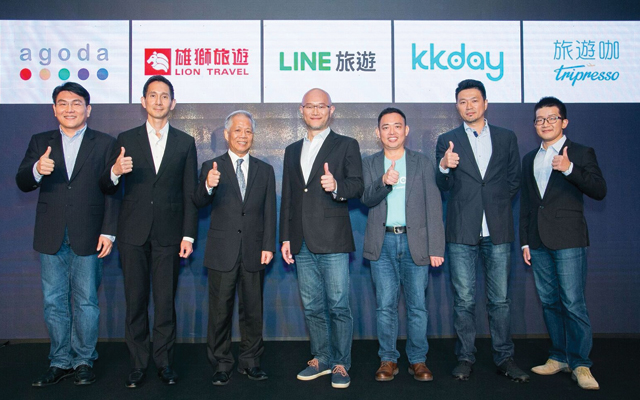
Earlier this week, over 500 tour operators from around Taiwan gathered at a Taiwan Tourism Bureau (TTB) press conference in support of the government’s stance against unlicensed rentals, which they believe compromise the safety of travellers and Taiwan’s image.

Tour agencies gather to show support against unlicensed rentals

“Taiwan has more than tens of thousands of legal hotels and B&Bs, which means that there is enough hotel supply in the travel market,” Ez Travel said in a statement.

“The responsibility of travel agencies should be actively developing and cooperating with legal hotels, thereby creating a win-win situation for the tourism industry. The consumer disputes arising from the sales of cheap and unlicensed rentals would create a negative impact on the image of the travel agencies and cause a great loss for them.”

At the press conference, the TTB announced that the government will conduct stringent inspections on property owners of unlicensed rentals in an effort to provide safe accommodation for international tourists.

The TTB added that it will publish the names of non-supportive platforms on TaiwanStay.net and issue news releases.

In addition to working with local governments in the implementation of fines, punishments and business closures, the bureau’s travel and accommodation department shared that the government has “actively controlled the sales of unlicensed rentals from travel agencies”.

Meanwhile, the bureau has also imposed heavy taxes and hefty penalties on the sale of unlicensed rentals provided by overseas travel e-commerce companies.

The bureau also shared a list of some approved travel service providers that oppose unlicensed rentals – including Ez Travel, Cola Tour, Star Travel, Ezfly International Travel and Lion Travel – and assured the general public that making reservations on their travel sites is safe.

Though absent from the event, foreign OTAs issued statements saying they were not in support unlicensed rentals in Taiwan. Rakuten promised that it will proactively review and oppose unlicensed rentals, while Booking.com and Agoda both committed to acting on reports of violations.

Pullman to make Singapore debut in 2022

0

The first Pullman-branded hotel in Singapore is slated to open on Hill Street in 2022, the outcome of a partnership between AccorHotels and property developer EL Development, which through this deal makes its first foray into hotels.

Pullman Singapore will join a range of flagship addresses worldwide

The 342-room hotel will feature a rooftop bar, a health and fitness centre and pool, as well as an executive lounge with sweeping views over Fort Canning park, the Singapore River and St Andrew’s Cathedral.

There are currently over 120 Pullman hotels in 33 countries worldwide, and Asia-Pacific accounts for more than 70 hotels and resorts and over 21,000 rooms.

Royal Caribbean unveils new features in first Quantum Ultra ship

0
An aerial view of Spectrum's rendering

The first ship in Royal Caribbean International’s new Quantum Ultra Class will arrive in Asia next year, with sailings from Singapore, Shanghai and Hong Kong.

Spectrum of the Seas has a total capacity of 5,622 guests and is 347m long, which will overtake sister ships Quantum and Ovation of the Seas, both currently Asia’s largest.

An aerial view of Spectrum’s rendering

She will come with first-at-sea features such as Sky Pad, a virtual reality, bungee trampoline experience and the two-level Ultimate Family Suite with an in-room slide, as well as new dining concepts.

Debuting on the forward end of the ship is the cruise line’s first private enclave for suite guests. Guests booked in the suites will be able to enjoy card key access, a private elevator and outdoor space, as well as a dedicated restaurant and lounge.

Another highlight is the two-level, 261m2 Ultimate Family Suite for up to 11 guests. The three-bedroom suite will include a master bedroom with an ensuite bathroom that extends above the sea level providing ocean views, and two additional suites. The ship will also come with an in-room slide and a recreation room, complete with surround sound equipment.

The ship will be the first among its sister ships to feature a karaoke venue. This will join returning features such as the North Star elevated glass capsule, RipCord by iFly skydiving simulator, the FlowRider surfing simulator, Bionic Bar, Seaplex, the largest indoor activity space at sea with new augmented reality walls and floors, and Two70 – a “high-tech entertainment venue” offering 270 degree panoramic views out of the back of the ship.

F&B options include a three-level main dining room serving a variety of international and Asian a la carte options, imaginative cuisine at Wonderland, Jamie’s Italian by celebrity chef Jamie Oliver, Izumi Japanese cuisine, a new speciality restaurant Sichuan Red, and a traditional tea room concept, Leaf and Bean.

Spectrum of the Seas will debut in April 2019 in Barcelona with segmented cruises on the Global Odyssey to Singapore before continuing on to Shanghai, taking guests to 13 countries.

She will sail the following itineraries from Singapore: a three-night cruise to Kuala Lumpur (Port Klang) on May 18; a four-night cruise to Penang on May 21; a nine-night one-way cruise from Singapore to Shanghai, calling at Ho Chi Minh City, Nha Trang and Hong Kong (with an overnight stay) on May 25.

For her Shanghai season from June 2019, she will introduce new itineraries with visits to new ports, such as Hakodate and Niigita, Japan; Ilocos, Philippines; and Vladivostok, Russia.

In winter 2019, the ship will reposition to Hong Kong to offer special holiday cruises.

Aviation roundup: AirAsia, Air Belgium and more

0

AirAsia announces two new routes linking Thailand
AirAsia has announced two new routes, one between Kota Kinabalu and Bangkok, and the other between Chiang Mai and Yangon.

The thrice-weekly route between Chiang Mai and Yangon will begin on August 11, operating on an Airbus A320 on Tuesdays, Thursdays and Saturdays.

FD802 will depart Chiang Mai at 13.15, and arrive at 13.45, while the return leg FD803 will depart Yangon at 14.45 and land in Chiang Mai at 16.30.

The Kota Kinabalu-Bangkok service will begin on August 16, and will be operated thrice-weekly on Tuesdays, Thursdays and Saturdays.

FD471 will depart Kota Kinabalu at 15.00 and arrive at Bangkok’s Don Muang Airport at 17.05. The return flight FD470 will depart Bangkok at 09.30 and arrive in Kota Kinabalu at 13.35.

Air Belgium’s first Hong Kong flight finally takes off
Air Belgium’s inaugural flight from Brussels South Charleroi Airport touched down at 07.40 on June 7, 2018, at Hong Kong International Airport, marking the start of its international operations.

The launch of this four-times weekly service to Brussels South Airport was initially announced for April 30, but it was postponed to June.

Every Monday, Wednesday, Thursday and Sunday, flights leave at 14.00 for arrival in Hong Kong at 07.30. For the return sector, flights depart Hong Kong on Mondays, Tuesdays, Thursdays and Fridays at 11.30 and arrive in Brussels South by 18.30. The route will be operated on the Airbus A340 with 257 seats – 32 business class, 21 premium and 212 economy.

Air Belgium will operate two flights per week to Hong Kong departing from Brussels Charleroi, three per week as from July and four flights per week from October onwards.

Finnair begins codeshare with Cathay Dragon
Finnair and Cathay Pacific Airlines have entered into a new codeshare partnership on the routes operated by Cathay Dragon – Cathay Pacific Airline’s affiliate – between Hong Kong and selected destinations in Asia.

The new codeshare agreement adds four new destinations to Finnair’s network in Asia. Starting June 15, Finnair customers can connect with Cathay Dragon’s flights from Hong Kong to Hanoi, Danang, Yangon, Phnom Penh and Siem Reap.

In addition, subject to regulatory approval, from July 11, Finnair customers can connect from Hong Kong to Kuala Lumpur. Flights to Kuala Lumpur can be booked from June 28 onwards.

Finnair customers can also enjoy oneworld privileges, and earn and redeem frequent flyer points also on Cathay Dragon’s flights.

Air China launches new service to London; signs JV with Air Canada
Air China has started a new, non-stop service between Chengdu and London operated by an Airbus 330-200.

The Chengdu-London route is operated under flight numbers CA423/4 on Tuesdays, Fridays and Sundays every week. Outbound flights depart from Chengdu at 15.45 and arrive in London at 20.00; return flights depart from London at 22.00 and arrive in Chengdu at 15.40 the following day.

The airline has also signed a joint venture agreement with Air Canada that will be implemented in phases over the next six months. It promises flexible flight choices, optimised flight schedules, aligned frequent flyer privileges, reciprocal lounge access, and joint sales including corporate and marketing programmes.

The carriers’ recently expanded codeshare increases the number of Canada-China connecting flight opportunities for customers by 564 each day. The two carriers now operate up to a total of 52 trans-Pacific flights per week between Canada and China from Toronto, Vancouver and Montreal to and from Beijing and Shanghai.

TTG Asia takes break for Hari Raya Puasa

0

TTG Asia e-Daily will be taking a break on Friday, June 15, for the Hari Raya Puasa public holiday.

News will resume on Monday, June 18.

From all of us at TTG Asia Media, Selamat Hari Raya Aidilfitri to our Muslim friends!


Bridging the connectivity gap

0

The 42km Hong Kong-Zhuhai-Macau Bridge (HZMB) is promising to open the floodgates to new source markets and travel segments when it kicks off later this year, linking three of the most prosperous centres in the South China region.

A Macao Government Tourism Office (MGTO) spokesman said: “The new competitive advantage (HZMB) provides lies in its ability to offer visitors a new option for travelling to Macau from neighbouring mainland cities and Hong Kong.

HK-Zhuhai-Macau Bridge (Photo from Government Information Bureau of Macau)

“This will be strongly bolstered in terms of connectivity with many international flights operating from the Hong Kong International Airport (HKIA), where the constraint of having a single mode of transportation to HKIA by sea would soon become liberated.”
The new bridge will present an additional option linking Hong Kong and Macau. “Some visitors find the existing ferry connection complicated so we’re hoping the bridge will offer greater convenience,” said Manuel Wu, managing director of Macau Explorer Cultural Travel.

Besides further integrating the three regions physically, the bridge is also expected to change visitor profiles, travel patterns and average length of stay in Macau and Zhuhai.
The Macao Tourism Industry Development Master Plan projects that by the year 2025 the average stays of visitors will be 2.3 days, compared with only 1.2 days in 2017.

Wu said: “I am sure it will stir up demand for lengthier visits here.  The bridge may also help divert the traffic from China which currently jams up the existing cross-border gates.

“Also it may further intensify and promote the established multi-destination travel concept across the Pearl River Delta.”

He believes the bridge will also bring more FITs and day-tripper traffic, especially for longhaul travellers arriving at HKIA.

“In the past, they treated Hong Kong as the main destination while Macau was only a getaway escape. Hopefully, the fact that the Hong Kong side of the bridge is adjacent to HKIA will change this perception.”

Beyond improving access, the bridge will also be treated as an attraction in itself.
MGTO is looking into working with partner travel agencies and airlines to develop commemorative and themed tours incorporating the bridge as a novel component in their Macau and multi-destination tour packages.

In addition to repackaging the “Hong Kong and Macau twin cities” tour products, Wu has also observed more frequent requests to charter a boat and tour around the mega-project, which is deemed an engineering marvel.

The launch of the bridge is likely to enhance Macau as a business events destination as well.

Wu added: “While both (Hong Kong and Macau) prove capable of hosting mega groups, Macau’s transportation services remain a stumbling block owing to limited international air connections, as well as flight and ferry capacity. This makes it difficult to mobilise big groups and drives event planners to choose (Macau over) other destinations.”

However, Sands China, marketing and brand management, senior vice president, Ruth Boston believes it’s probably too early to tell the full scope of how the bridge will affect travel to Macau. Still, she acknowledged that convenience of travel is a primary motivating factor for people booking holidays, and the new bridge which links up several key Chinese cities in Guangdong will substantially reduce overall travel time.

Meanwhile, Macau’s air connections keep improving. In July 2017, Beijing Capital Airlines inaugurated flights between Lisbon in Portugal and Macau via Beijing. Last November, AirAsia commenced the first Malaysian connection to Macau from Johor Bahru, which was followed by Thai AirAsia’s Phuket-Macau service in January 2018.

Homegrown and flourishing

0

The hospitality industry in Indonesia is flourishing on the back of the country’s brisk tourism sector. Not only are more global hotel companies coming in and growing their presence beyond the major destinations, homegrown hotel brands too have been hard at work.

Larger homegrown groups like Santika Indonesia Hotels & Resorts, Archipelago International and Tauzia Hotel Management have consistently been growing their portfolio, while smaller players, such as Sahid International Hotel Management and Consultant, have been steadily scaling up in recent years.

The Samaya Ubud Resto

New names such as Jambuluwuk Hotels & Resorts, Dafam Hotel Management, Artotel Group and Sudamala Resorts have also entered the hospitality space in the last decade to grab a piece of the huge domestic travel pie and the growing international market.

Launched in 2011, Artotel Group currently operates five properties with five more to open this year and six next year, the majority of which will be under its midscale Artotel brand. The group also has an upscale (Curated Collection) and economy brand (Bobotel).

“We are collaborating with rising young talented artists and art galleries. Artotel strives to enhance guest experience while promoting local contemporary art to the world,” said Erastus Radjimin, CEO of Artotel Group.

Meanwhile, Jambuluwuk Hotels & Resorts’ properties combine traditional elements with a modern touch. The group currently owns and operates five properties in Yogyakarta, Bali, Puncak, Batu and Gili Trawangan, and is reaching out to international wholesalers as well.

Jambuluwuk Malioboro hotel lobby

Mella Purwanaika, Jambuluwuk’s vice president marketing, commented: “We have surveyed some of the governments 10 New Bali’s such as Morotai. We find (the locations) beautiful but it would probably be some time before we enter these markets, as we want to concentrate on destinations that are more ready (to welcome tourists).”

Jambuluwuk’s owning company Arcs House is hence planning to open outposts in Labuan Bajo, Ubud and Bandung, tourist destinations that are growing in popularity. The group is also seeking to expand its management service into existing and new hotels.

Family-owned Sudamala Resorts launched its first property, Sudamala Suites & Villas, in Bali’s Sanur in 2015, and now has properties in Lombok and Labuan Bajo (Komodo), with another one coming soon in East Bali.

Sudamala’s owning company, Griya Usaha, is committed to developing bespoke boutique resorts with strong local cultural characters.

Emily Subrata, director of Griya Usaha, told TTG Asia: “My father is a great art collector so there are many artistic masterpieces adorning our properties. Each suite has its own unique interior design, and we are careful to make our properties blend in with the environment, particularly its local culture.”

Sahid International Hotel Management & Consultant, which for many years was content with maintaining its existing properties, has now adopted an aggressive strategy to plant its brands around Indonesia.

Said Sahid’s director of sales, marketing and business development, Vivi Heelambang: “Our aim is to have a hotel in every city in the country, whether (through new-builds) where we get involved from scratch or taking over existing hotels.”

In the last couple of years, Sahid Hotels has acquired management of existing properties in Maumere, Kupang, Wakatobi and Banyuwangi, while new hotels will be opening on Bangka Island, Gili Trawangan, Serpong and Bandung. In the pipeline are properties in Pangandaran, Timika and Yogyakarta.

“There are nice hotels with good locations in exotic destinations managed by individual owners, which have not been very successful in operations. We take over the management of such hotels that we believe have the potential; most of them did not perform merely because of the lack of management skills,” Vivi elaborated.

Most of the hotels, within months of the takeover, have seen their occupancy and revenue increased by 200-300 per cent, according to Vivi.

“Some hotels needed renovations, while others needed additional amenities and our sales marketing channels to make them visible to markets,” she added.