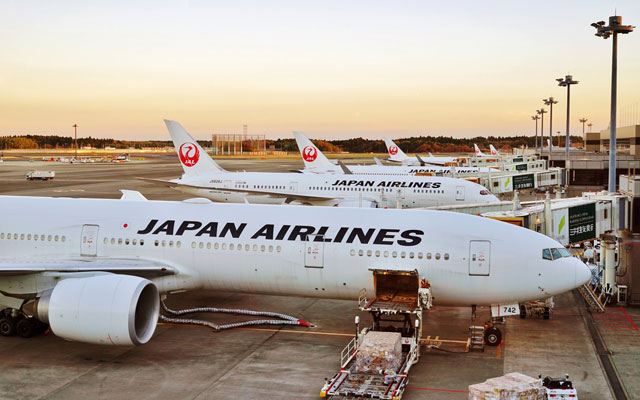
Japan Airlines (JAL) will change the reservation start date for international flights from the conventional 330 days to 360 days prior to departure.
The change will be in effect from April 1, ahead of the 2020 Tokyo Olympics in July-August next year, expected to bring a significant increase in arrivals to the country and contribute to the visitor boom Japan has seen in recent years.
Japan Airlines will allow international flights to be booked 360 days prior to departure
JAL said the move will help meet the needs of overseas visitors who wish to plan their trips to Japan in 2020, including hotel bookings, as early as possible.
The carrier is able to extend the advance booking time beyond the conventional 360 days because of a renewal of its passenger service system that was completed in November 2017.
The airline said “equal efforts will be carried out for domestic flights going forward”.
Property Perfect has unveiled a masterplan to transform Kiroro, a mountain village in the heart of Hokkaido popular with ski and board enthusiasts, into a year-round alpine destination for vacationers of all types.
Having acquired the Kiroro Resort in 2012, the Thailand-listed property development company is investing 100 billion yen (US$900 million) over the next decade to create a destination encompassing hotels and residences, a restaurant and bar scene, shops and other mountain amenities.
Yu Kiroro, a collection of exclusive ski-in ski-out private residences
“We knew when we discovered Kiroro that we had an opportunity to create something unique and special,” said Chainid Adhyanasakul, CEO of Property Perfect. “We are redefining the Asian alpine experience by building a connected and cohesive mountain community with easy access to the world’s best ski powder, outstanding mountain experiences and the seaside towns of Hokkaido.”
Over the next 10 years, Property Perfect will develop a valley village at the base of the mountain with a range of luxury villas, townhomes and apartments centred around the Gateway, a ski club and centre with ski-in and ski-out access to shops, restaurants, services and a kids centre.
The village offers dining and shopping areas, alpine amenities and access to outdoor activities and local attractions.
Property Perfect has already renovated and rebranded two existing hotels within the Marriott portfolio. The Sheraton Hokkaido Kiroro Resort offers 140 guestrooms right at the base of the slopes, while the Kiroro, A Tribute Portfolio Hotel offers 282 guestrooms and suites, each with mountain views.
By the end of 2019, Property Perfect will complete Yu Kiroro, a collection of exclusive ski-in ski-out private residences at the base of the mountain. Yu Kiroro offers 108 one-, two- and three-bedroom and penthouse freehold luxury private residences fully furnished with premium services such as ski valet, a natural indoor-outdoor onsen, 24-hour concierge, fitness centre and lounge, and all-day dining.
A dining district with 11 restaurants and bars has also opened up in the village offering an array of cuisines from Hokkaido sushi to Italian to international buffets. Kiroro’s bar and lounge scene will be built out over the next decade with additional venues.
The resort has curated a host of year-round, outdoor activities that take full advantage of Kiroro’s environs and Hokkaido’s cultural attractions. The Kiroro ski season, the longest in Japan, runs from late November through early May.
The ski resort features two peaks with 22 groomed runs and expanses of ungroomed, off-piste powder and tree skiing, accessible by nine lifts and a gondola.
An additional combination gondola/ski lift will open in late 2019 and connect the two hotels and Yu Kiroro to the ski runs. The resort’s Mountain Center can coordinate activities on and off the mountain, which include a snow park, guided snow cat and snowshoeing tours and more. In the summertime, the resort can coordinate golf, fishing, hiking and tours to nearby seaside towns.
For the first time, ITB China 2019 will feature a dedicated Adventure Travel Trade Association (ATTA) pavilion.
The show organiser announced that ATTA has been confirmed as the official adventure travel partner for the upcoming show, taking place May 15-17, 2019 in Shanghai.
Shannon Stowell, CEO of ATTA
The association will make a first appearance at the B2B travel trade show with a dedicated ATTA pavilion supporting its members, international destinations and tour operators in doing business with Chinese buyers.
Established in 1990, ATTA now serves more than 1,000 members in 100 countries worldwide, comprising tour operators, tourism boards, speciality agents and accommodation providers.
ITB China has identified customised and themed travel as overarching trend topic covered in its 2019 edition. Adventure travel will hence be one of the focus topics jointly developed with ATTA, which will also be hosting a dedicated adventure travel session at the ITB China Conference.
In a statement, ITB China organisers said it will help Chinese professional travel buyers discover adventure travel products through more international channels, including recommending them to participate in ATTA’s global events.
Singapore-based Park Hotel Group is extending its Park Rewards loyalty programme to guests and dining patrons, touting many ways to earn, no expiry of points, and no blackout dates.
Members earn points, named PARK$, on every qualified spend when they dine, stay or book at participating hotels, restaurants and bars.
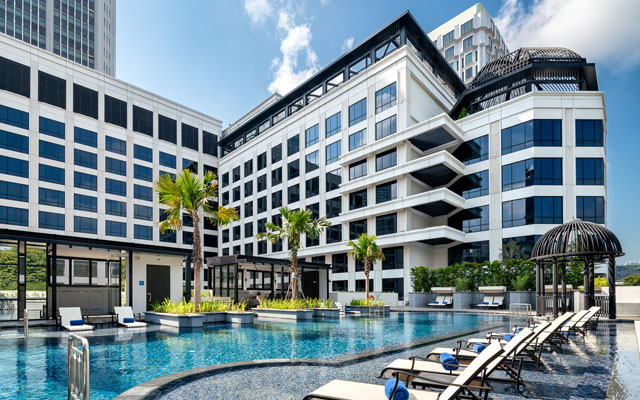
Grand Park City Hall in Singapore
Members will soon also be able to earn PARK$ when they refer friends and family to Park Rewards and when they review any participating restaurant or bar.
As long as members keep their account active by earning or redeeming every 12 months, PARK$ will not expire, the group shared in a statement.
Members have more choices to use their PARK$ to redeem rewards, which are offered through collaborations with retail, entertainment and lifestyle partners of the group.
Moreover, redemption for Park Hotel Group e-vouchers are instant and with no blackout dates, so members can book their rooms and use these e-vouchers even during peak travel dates and holiday seasons subject to availability.
“Our customers have been requesting for a loyalty programme for a while now. We wanted to make sure that if we had one, we would avoid all the pet peeves that come with most of the programmes out there. Park Rewards had to be simple to understand, convenient for the customer and engaging. With instant ‘earn and burn’ feature, members staying or dining with us can redeem and use their vouchers any time before the bill is settled. Doing without lengthy lead times and blackout dates will provide our members the freedom of being spontaneous,” commented Shin Hui Tan, executive director, Park Hotel Group.
Park Rewards offers one-tier corporate membership and three-tier lifestyle membership. Members who have both lifestyle and corporate memberships need to manage only one account, and can earn and accumulate PARK$ under a single account.
In the lifestyle category, Member is the entry level tier, followed by Insider, the second tier, and Ambassador the topmost tier. To qualify for a status upgrade, members have to meet the minimum qualified stay or spend criteria at participating hotels, restaurants or bars.
Members with higher statuses enjoy up to three times the earn rate on qualified spend as the basic Member alongside other perks including priority room upgrade, priority late check-out, as well as complimentary daily mini bar.
While lifestyle membership is open to all, eligibility criteria apply for corporate membership, although qualifying details were not made known in the group’s announcement.
Rosmalia Hardman has been named the new director of revenue, sales and marketing for Wyndham Destinations Asia Pacific’s managed properties across South-east Asia.
From the company’s corporate office in Singapore, Rosmalia will lead a team focusing on building strategic marketing campaigns, strengthening revenue channels and driving sales growth at Wyndham’s collection of properties in South-east Asia.
The Singaporean joins Wyndham with more than 30 years of experience driving revenue improvements and creating cross-sector partnerships in a range of industries including hospitality, business services, property development and education across Asia and the Middle East.
Prior to her appointment, Rosmalia was chief brand and marketing officer at SIS Group of Schools in Indonesia.
Previously, she developed experience in marketing and sales in the hospitality industry through senior executive roles in companies like Starwood Hotels & Resorts, Mandarin Oriental Hotel Group, Melia Hotels, Pan Pacific Hotels and Resorts and Kempinski Hotels.
She also worked as the chief marketing officer at property developer, Lippo Karawaci, where she oversaw the expansion of Aryaduta Hotel Group.
Organisers of the Digital Travel APAC event (1 – 3 April 2019, Resorts World Sentosa, Singapore) have increased the speakers’ list by 20 on last year’s podium turnout.
The line up of more than 80 speakers represents some of the world’s most innovative and disruptive travel companies.
In the latest brochure release, the organisers estimate more than 400 Heads of eCommerce, Digital Marketing and Customer Experience in travel, hospitality and leisure are heading to Digital Travel APAC 2019.
Event highlights include presentations on delivering a seamless travel experience, and how to meet the needs of the domestic and outbound travellers with AI, big data and intelligent hardware.
Social media’s influence on ‘experiential’ travellers and how to adapt and profit from this new global trend in order to boost conversions will also be gaining stage time.
Here’s a snapshot of the speaker faculty in 2019:
Jerome Thil, VP Digital Innovation, Singapore Airlines
Candice Iyog, VP of Marketing & Distribution, Cebu Pacific
Michael Perera, Head of Loyalty & Product Owner of Go-Points, GO-JEK
Yuki Huang, Chie Marketing Officer, KKday
Rotsen Quispe, Head of International Marketing, Traveloka
Spencer Lee, Head of Commercial, AirAsia
Mindy Teo, VP of Brand, Marketing & Digital Innovation, The Ascott
Azran Osman-Rani, TEDx Speaker, Ex-CEO, iflix & AirAsia X
What makes Digital Travel APAC different?
NEW! Hotel Power Panel
Hear from heavyweight hoteliers on how they are rebooting their thinking to keep up with changing customer preferences, increased competition, new technologies and alternative accommodation to own the experiences they deliver to their guests 24/7. Then you’ll have the opportunity to ask questions important to you.
NEW! OTA Keynote Panel
OTAs are in a constant cycle of change and innovation. Hear from the leaders in the OTA space as they demonstrate how to create that seamless experience, localise and diversify their offering to become a dominant market leader. Then you’ll have the opportunity to ask questions important to you.
NEW! Airline Only Think Tank
In this airline only gathering, you’ll join your fellow attendees in an intimate environment. The private setting means you can discuss your challenges openly with peers and make new friends based on common interests.
NEW! Asian Low-Cost Airline Panel
Don’t miss the low-cost airline panel where our all-star line-up of speakers from Scoot, AirAsia, Cebu Pacific, HK Express and Lion Air will discuss how they have been at the forefront of innovation in the digital space.
Taiwan Tourism Bureau (TTB) is stepping up its marketing and trade efforts in India as it sets a 20 per cent growth target from this part of the world by 2020.
The tourism bureau has come up with a new strategy for the Indian market termed ‘2 20:20’. By targeting two per cent of the high-income population in India as well as cooperate with the country’s top 20 top tour operators, TTB aims to increase tourist arrivals from India by 20 per cent by 2020.
Sixty Stone Mountain in Hualien, Taiwan
“Our main objective is to create awareness about Taiwan as a leisure destination in India. For example there are about 268 mountains in Taiwan higher than 3,000m, while in a destination like New Zealand there are only 10 such mountains. Taiwan is also very popular for its food tours. So, we will be promoting such sides of Taiwan through outdoor advertising and partnering with seven-star multiplex chain Inox,” said Trust Lin, director, TTB Singapore Branch.
TTB last year increased its marketing budget for India by six times, taking it to US$1.2 million annually. “We are looking to further increase the budget for the Indian market going ahead,” added Lin.
Taiwan’s growing interest in the Indian market also comes amid dwindling tourist arrivals from mainland China, Taiwan’s traditional main source market.
This is also in line with Taiwan’s new Southbound policy, which focuses on the 18 international markets making up 25 per cent of the destination’s international arrivals. India, with its base still relatively low with 38,000 arrivals, will be the main target market.
“Taiwan is still a new market to India. A market like Singapore which has almost same flight time from India as Taiwan receives 1.3 million Indian tourist arrivals, while our numbers are very low. We will also collaborate with other destinations like Singapore to have twin city tours to promote Taiwan in India,” said Lin.
“A lot of Indians opt for cruise holidays. We are the number two cruise destination in Asia and every year we have more than 600 ports of call to visit Taiwan. So, we will be promoting Taiwan as a cruise destination in India as well,” Lin further said.
TTB is also keen to promote Taiwan for film and television serial shoots in India which it believes will go a long way in promoting Taiwan as a leisure destination here. It plans to introduce this year a new online training programme for Indian travel agents which will provide certificates to agencies who successfully complete the training and a chance to win complimentary trip to Taiwan. TTB will also promote its incentive scheme aimed at Southbound countries in India.
“If one is handling a group of more than 50 pax staying in Taiwan for more than three nights, they qualify (for an incentive of) US$26 per pax. In addition we can cooperate with PCOs for joint marketing. We are keen to project Taiwan as a new incentive destination in India,” said Lin.
“The challenge still remains of the perception about the destination and awareness among travellers. Taiwan will have to constantly engage and work closely with the tour operators and on the other hand continue with marketing initiatives promoting Taiwan as Asia’s best kept secret,” said Vineet Raina, founder & managing director, Pink Elephant Sport & Pink Elephant Journeys.
Automated immigration check in New Zealand (photo credit: Facebook/ NZCustoms)
Starting today, Singaporeans and New Zealanders will be able to utilise the automated immigration facilities when travelling to each other’s country.
This was announced by the Singapore’s Immigration & Checkpoints Authority (ICA) yesterday on February 11.
Automated immigration check in New Zealand (photo credit: Facebook/ NZCustoms)
Eligible Singaporeans will be able to use New Zealand’s eGate passport control facility, if they are 12 years old and above and hold an ePassport. Automated eGates are available at Auckland, Wellington, Christchurch and Queenstown airports, according to the New Zealand customs service website.
Similarly, holders of New Zealand passports aged six and above, with more than six months’ validity will be eligible to apply for Singapore’s Frequent Traveller Programme (FTP). Applicants must have visited Singapore at least twice in the past two years to be eligible to apply for the FTP. The programme allows eligible travellers to clear immigration via automated clearance facilities.
Those interested can apply for the FTP at the enrolment centres located at Terminal 3 Changi Airport, the visitor services centre at the ICA Building, as well as at Woodlands and Tuas checkpoints. Enrolment in Singapore’s FTP is voluntary and free for New Zealand nationals.
The mutual extension of such automated immigration clearance facilities comes as part of the Singapore-New Zealand Enhanced Partnership, which is aimed at boosting trade, business and tourism links between the two countries.
Aviation industry pioneer Fred Reid has joined Airbnb as global head of transportation, as the homesharing giant unveils its ambitions to build an end-to-end travel platform combining accommodation, activities and transfer options.
Tasked to focus on building partnerships and services to make travel seamless in his new role at Airbnb, Reid said: “I’m excited to work with (Airbnb) to tackle the third part of the travel experience: how you get there. Whether in the air or on the ground, there are tremendous opportunities to create products and forge partnerships with other companies that make travel easier and even fun.
“Realising those opportunities will take years and require constant experimentation, and I’m truly honoured to have the chance to take on such an audacious challenge with this team,” he added.
However, Airbnb’s co-founder, CEO and head of community Brian Chesky said the homesharing company is “not interested in building our own airline or creating just another place on the Internet where you can buy a plane ticket.
“We’re going to explore a broad range of ideas and partnerships that can make transportation better. We haven’t settled on exactly what those will look like… but there is a tremendous opportunity to improve the transportation experience for everyone,” he stated.
Reid is a global aviation expert with more than three decades of experience. He joins Airbnb from his role as president of the Cora Aircraft Program, a division of Kitty Hawk, where he oversaw the development of autonomous electric vertical takeoff and landing aircrafts. Prior to that, he was president of Flexjet, an independent operating unit of Bombardier.
Reid’s long list of credentials include being the founding CEO of Virgin America; president of Delta Airlines who led the formation of SkyTeam global alliance; president and COO of Lufthansa German Airlines in 1996; and was the co-architect of Star Alliance.
The newly released Mastercard-CrescentRating Halal Travel Frontier 2019 (HTF2019) Report has identified top trends expected to shape the next phase of development in the fast growing halal travel sector.
The report predicts that more millennials and Gen Z travellers will book “instant noodle trips” – affordable, impromptu short trips.
‘Rising authority’ of women when planning travels one of the trends that will change Muslim travel, report says
Another trend with the potential to “dramatically change the Muslim-friendly narrative” is the rise in popularity of non-OIC destinations, such as South Africa, Japan and Taiwan. Competition and dynamism are expected lead to innovations and developments that will benefit both destinations as well as Muslim travellers, according to the report.
In addition, heightened awareness on social causes and the rising authority of female influencers when planning trips, are expected to change how Muslims travel.
Finally, the report foresees the consolidation of Muslim travel service providers that will potentially result in the emergence of stronger Muslim lifestyle and travel brands.
The global Muslim traveller expenditure is projected to reach US$220 billion in 2020 according to the Mastercard-CrescentRating Global Muslim Travel Index (GMTI) 2018. It is expected to grow a further US$80 billion to hit US$300 billion by 2026.
In 2017, there were an estimated 131 million Muslim visitor arrivals globally – up from 121 million in 2016 – and this is forecasted to grow to 156 million visitors by 2020, representing 10 percent of the global travel segment.