Customers’ preferences are shifting towards self-service, amid the growing trend of super apps and a change in content retailing, according to a new report by Travelport highlighting the trends that may shape travel experiences in 2020.
Customers in control
Several trends highlight that customers are moving towards self-service options, with 55 per cent of those surveyed preferring to hear about travel disruption via digital communications rather than speak with a person on the phone. This is especially important when it comes to Gen Z, the future business traveller, and managing their high expectations through technology.
Growing demand for self-service among travellers in 2020: Travelport
Mobile takeover
Super apps are spreading west from their established base in South-east Asia. Super app tech giants such as WeChat, Grab and Go-Jek give their users a one-stop shop to communicate, shop online, book travel, bank, find a date, get food delivery, and pay for anything within a single, unified smartphone app. Travel brands that want to deliver holistic mobile customer experiences need to think about how they engage travellers within these super apps as well as in their own mobile channels.
Retail accelerated
In 2020, research shows that there will be an accelerated rate of change in the way travel is retailed and purchased online. This includes wider and more complex multi-content reach, more enriched and comparable offerings, more focus on relevance than magnitude, and increase in automation that enables customer self-service.
Commenting on the trends, Fiona Shanley, chief customer and marketing officer at Travelport, said: “These insights into the forces which will shape travel experiences as we start a new decade show we’re seeing rapid change in content retailing, particularly online, and an evolution of mobile travel as we all increasingly depend on our devices to help us navigate the world.
“It’s clear to see customers are driving change across the travel industry with new topics, such as the environmental impact of travel. And when an agency could successfully employ a ‘bot’ show, the 2020s will be another era of rapid change for travel.”
Philippine tourism and transportation officials met on Tuesday (January 7) to strengthen the tourism infrastructure convergence programme which is meant to boost the country’s tourism industry with enhanced tourism infrastructure and increased connectivity.
The conference saw the signing of an MoA titled Institutionalized Leveraging of Infrastructure Program for Airport Development (iLIPAD) between the Philippine Department of Tourism (DOT) secretary Bernadette Romulo-Puyat and Department of Transportation (DOTr) secretary Arthur Tugade.
Tourism secretary Bernadette Romulo-Puyat delivering her keynote address on DOT’s measures to enhance Philippines’ tourism infrastructure and connectivity
The institutionalised convergence programme primarily aims to synchronise efforts to boost airport and route development programmes.
In her opening remarks, the tourism chief said the Tourism Infrastructure and Enterprise Zone Authority (TIEZA), the implementing agency and infrastructure arm of the DOT, is currently working with the DOTr on the possibility of funding several airports in the country to equip them with night-rating capabilities.
Tugade stressed that “all commercially-operating airports in the Philippines have to be night-rated in order that they make sense and the efficiency desired can be achieved”.
“Funding amounting to 1 billion pesos (US$19.6 million) is set for approval by the TIEZA Board in their next board meeting. We must make sure that it’s not only more fun in the Philippines, but much safer too,” Puyat said.
Puyat noted that the convergence programme leverages on the existing partnerships between DOT and the Department of Public Works and Highways (DPWH) for tourism roads, DPWH and DOTr for access roads to airports, as well as those between other agencies and the private sector.
The DOT chief touted her agency’s partnership with DOTr and Civil Aviation Authority of the Philippines in facilitating the construction of new airports such as the Mactan-Cebu International Airport and the Bohol-Panglao International Airport.
In line with the Duterte Administration’s Build, Build, Build programme and as part of the efforts to decongest the Ninoy Aquino International Airport, Puyat said that in the works is the construction of a new international airport in Daraga, Albay, as well as the expansion plans for Davao, Iloilo, Kalibo, Puerto Princesa and Laguindingan international airports.
Auckland Tourism, Events and Economic Development (ATEED) and WeChat have launched the Auckland WeChat Mini Program in Guangzhou, China, to provide a way for Auckland’s Chinese-speaking community to recommend the best of the destination to Chinese visitors in a real-time, live chat environment.
The ATEED-developed Mini Program, which was first piloted in February 2019 in Auckland, is aimed at connecting Chinese locals with visitors, thereby providing the latter with “a more local and authentic experience”, said ATEED general manager destination Steve Armitage.
Auckland launches tourism app with WeChat to connect Chinese travellers to locals; AJ Hackett Bungy New Zealand attraction pictured
Developed in partnership with an Auckland-based software developer, ATEED publishes user-generated content by locals and visitors that highlights their experiences around the region.
New Zealand tourism minister Kelvin Davis said: “As more and more Chinese tourists choose to travel New Zealand as FITs, the Auckland WeChat Mini Program will become an important platform for connecting these tourists with all that Auckland has to offer.”
“Considering there are over a billion monthly active users on WeChat/Weixin, this is a great opportunity for Auckland to raise its profile and promote its tourism offerings to the Chinese market.”
China is New Zealand’s second largest visitor market, and for Auckland, Chinese visitors are the highest spenders, contributing more than NZ$960 million (US$639 million) in tourism spend annually.
Armitage said the number of Chinese FITs visiting Auckland continues to grow and these visitors are moving away from traditional ways of finding out more about places they want to visit.
“Travellers nowadays want recommendations of what to do and where to go at their fingertips and this mini programme allows for that interaction between visitors and locals,” he said.
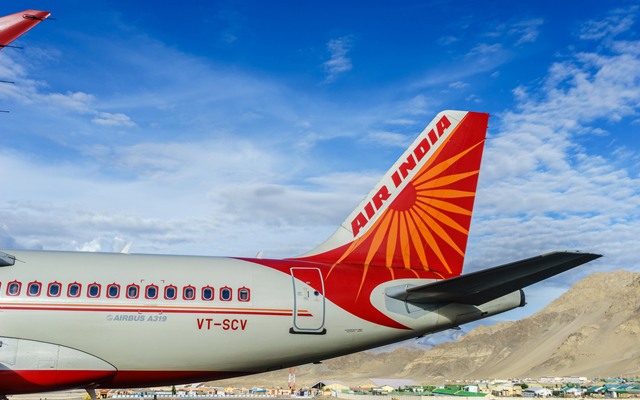
Amadeus and Air India have signed a new distribution agreement that will give travel sellers in and outside of India access to the airline’s full content.
The airline will benefit from “the world’s largest and most diverse travel seller community”, using professional sales technology, underpinned by the Amadeus Travel Platform, said the companies in a joint statement.
Air India and Amadeus sign new distribution agreement
Working with Amadeus will help accelerate Air India’s growth in 2020 and beyond, an important step in the airline’s vision and renewed relationship with Amadeus.
Cyril Tetaz, executive vice president, airlines, Asia Pacific, Amadeus, said: “Amadeus’ simple, open and agile system will allow Air India to innovate, experiment and collaborate to create new products which will add value to customers and create upsell or cross-sell opportunities.”
Air India’s strengthening of partnership ties with Amadeus comes at a time when the airline has decided to discontinue distributing its content through Sabre GDS, after a 20-year relationship.
Digital marketing solutions provider Sojern has made available the same enterprise-grade technology powering marketing campaigns for some of the world’s biggest travel brands to independent hotel and chain properties.
Sojern’s Pay On The Stay has been popular with hotel customers for some time. Offered as a direct booking alternative to a hotel’s distribution deals with OTAs, the digital marketing solution delivers highly personalised advertising to consumers across multiple devices and digital channels such as Facebook and Instagram, video, display ads, and search, said the company in a statement. The targeted ads and content then drive potential customers to the hotel’s website to book directly, it added.
Sojern now makes available its digital marketing solutions to smaller hotels via commission or subscription basis
Sojern claims the platform solves the problem of hoteliers’ over-reliance on OTAs for bookings by helping them to identify in-market travellers, and using advertising to drive direct bookings and increase web traffic on the hotel’s own website, while fostering direct customer relationships for the hotel.
Additional programme benefits include complimentary ad creative, A/B creative testing, translation services, and local market and competitive insights.
With Pay On The Stay, customers work with Sojern as part of their overall distribution strategy to drive direct bookings through digital channels. In the commission model, Sojern takes on the risk of running digital media campaigns and hotels only pay for completed stays.
The other solution is Pick Your Plan, priced at a fixed monthly fee. Customers pull from their marketing budgets to leverage Sojern’s branding and performance marketing solutions to drive web traffic, build brand awareness, and overcome seasonality.
“Today, it’s easier and cheaper than ever for a hotel to build a website and accept bookings online, but attracting qualified in-market travellers to their site is an ongoing challenge. Which hotelier has the time, budget, or expertise to master marketing across search, Facebook, Instagram, display, video, mobile, native and the next big thing – particularly when they’re competing with multi-billion-dollar ad budgets from the OTAs?” said Kurt Weinsheimer, Sojern chief solutions officer.
“Sojern has been looking at travellers’ behaviour across the mobile and digital web since 2007, and providing solutions to the biggest travel brands on the planet to increase their share of direct bookings and meet their performance KPIs. We realised there was an opportunity to turn this expertise into simple solutions for hoteliers with smaller budgets who didn’t want to take on the risk of a traditional media insertion order model.”
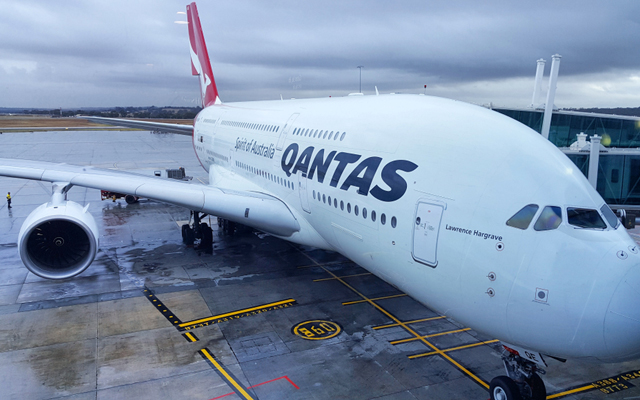
Qantas has become the first airline to launch non-stop flights between Melbourne and Tokyo’s Haneda International Airport.
The year-round flights to Haneda, which will operate daily from March 29 March, 2020 with an Airbus A330 aircraft, will replace the airline’s existing service between Melbourne and Tokyo’s Narita International Airport.
The flights are expected to save travellers more than an hour commuting into the city and complement Qantas’ existing daily flights from Sydney to Haneda which the Australian national carrier has operated since 2015.
Qantas has also made improvements for customers flying from Haneda Airport, allowing eligible customers to access the Priority Lane at the airport’s security checkpoint, as well as Japan Airlines’ Sakura Lounge.
Customers already booked to travel from Melbourne to Narita will be automatically transferred onto these services or can make alternative arrangements.
As well, the airline has launched new seasonal flights from Sydney to Sapporo, coinciding with the busy ski season in Japan.
Qantas is the only airline to connect Australia directly with the Hokkaido region and the service is the national carrier’s fifth route between Australia and Japan.
The carrier will also extend its seasonal service to Sapporo for another year, with the flights operating thrice weekly during the 2020-21 ski season from December 14, 2020 to February 27, 2021. It will utilise an upgraded A330 to offer more than 10,000 seats on the route.
Vietjet links Ho Chi Minh City and Pattaya
Vietjet has commenced direct flights between Ho Chi Minh City and Thailand’s coastal destination of Pattaya, via U-Tapao International Airport.
The Ho Chi Minh City–Pattaya route operates four times per week on Monday, Wednesday, Friday, and Sunday. The flight takes off from Ho Chi Minh City at 13.25 and arrives in U-tapao at 14.40, while the return flight departs from U-tapao at 11.25 and arrives in Ho Chi Minh City at 12.55.
SIA to boost Kolkata services
Singapore Airlines (SIA) will introduce a fifth weekly flight to Kolkata, India, from March 29, 2020. On the same day, the airline’s regional wing SilkAir will cease services to the city.
From March 29, 2020 to October 24, 2020, the Singapore-Kolkata route will be available five times weekly on Monday, Wednesday, Friday, Saturday, Sunday. SQ516 will depart Singapore at 21.00 and arrive in Kolkata at 22.35, while return flight SQ517 will depart Kolkata at 23.50 and arrive in Singapore at 06.40.
Currently, SIA operates four weekly flights and SilkAir operates three weekly flights to Kolkata.
SIA’s Kolkata services will continue to be operated by the Airbus A350-900 medium-haul aircraft, which features 40 business class and 263 economy class seats.
Customers with existing bookings on SilkAir’s Kolkata flights on and after March 29, 2020 will be re-accommodated on SIA’s flights.
SIA to fly direct to Brussels
Singapore Airlines (SIA) will launch non-stop flights from Singapore to Brussels, starting October 25, 2020.
Operated on a Airbus A350-900 aircraft, flight SQ304 will depart Singapore on Wednesdays, Thursdays, Fridays and Sundays at 23.55 and arrive in Brussels at 06.50.
The return sector, operated as flight SQ303, will depart Brussels on Mondays, Thursdays, Fridays and Saturdays at 11.20 and arrive in Singapore at 06.55. SIA will operate the Airbus A350-900 on these flights.
Jetstar enters codeshare partnership with Air France and KLM
Jetstar Asia will be launching a codeshare cooperation with both Air France and KLM for 12 selected routes in South-east Asia, while Jetstar Airways will partner with KLM.
The codeshare partnerships will allow Air France and KLM customers to connect in Denpasar and Singapore.
Customers who book with Jetstar Asia, Jetstar Airways, Air France or KLM will benefit from an expanded network of travel options as well as a seamless travel experience with single ticket itineraries and through-checked baggage.
Meals and refreshments are included for Air France and KLM customers booked on a single itinerary when travelling on a Jetstar Airways or Jetstar Asia flight.
Air France and KLM customers will also enjoy access to a wider range of destinations in South-east Asia by connecting onto Jetstar Asia flights in Singapore, as Air France and KLM place their KL/AF codes on 12 destinations operated by Jetstar Asia.
KLM is also planning to implement its KL code on select Jetstar Airways routes, which will provide KLM customers with itineraries beyond Denpasar to four destinations in Australia operated by Jetstar Airways: Adelaide, Melbourne, Perth, and Sydney.
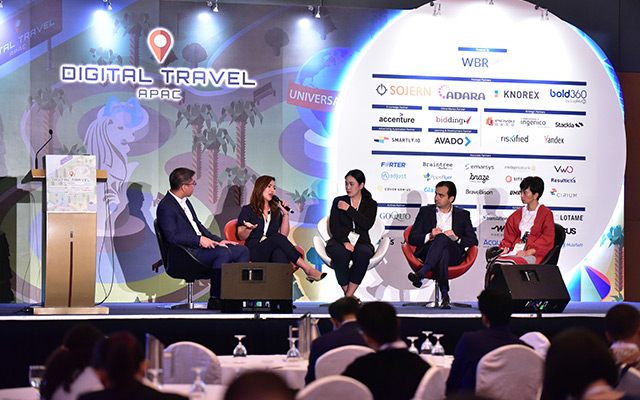
Digital Travel Summit APAC, a leading gathering of top travel professionals across various verticals in Asia is returning for a fifth run this year, with its Perfecting Travel Personalisation central theme being delivered through new conference formats and an even stronger line-up of speakers.
The three-day conference will see eCommerce, Digital Marketing and Customer Experience leaders coming together to make strides in the biggest movement of the travel industry – Perfecting Personalisation for digital savvy travellers.
Taking place from April 20 to 22 April at the Resorts World Sentosa, Singapore, Digital Travel APAC 2020 will connect top minds from Asia’s most successful airlines, hotels, OTAs, meta-search platforms, tours and activities, car rentals, cruise lines and tourism boards. The myriad of travel verticals, coupled with a strong profile from the attending delegates will enable high-level peer-to-peer discussions throughout the event.
A turnout of over 700 travel professionals is expected for the event this year.
Personalisation at the core
Leveraging digital technologies to deliver highly personalised travel experiences continue to be the definitive key to success for travel businesses in the new decade. With this in mind, Perfecting Travel Personalisation takes centre stage at Digital Travel Summit APAC 2020.
The programme on Day 1 is focused on achieving personalisation at scale, while the future of CX (Customer Experience) takes over on Day 2.
As with previous years, the Technology Evaluation Roundtables will be held one day ahead of the conference (April 20) for travel brands to benchmark their technologies against their peers, and to meet next generation travel technologies and their providers.
Excellent takeaways
Attendees of Digital Travel Summit APAC 2020 have much to gain from the high quality discussions and actionable insights expected of the annual event. With powerhouses such as Singapore Airlines, Shangri-La, and Grab representing the speaker line-up, the audience is guaranteed to not only learn from the best of their category, but also get the unique opportunity to cross-learn from relevant case studies, all in the convenience of a single location.
New features to look forward to
Digital Travel Summit APAC 2020 will debut several fresh features, one of them being new sub-categories for the speaker panel.
A new panel focusing on Tourism Boards will join the programme, focusing on these organisations that take the lead in destination marketing and are often a key driver in increasing demand for a travel service at a given location. Tourism Boards that will share their success stories include Spain, Japan, and New Zealand – all of which are speaking at the event for the first time.
To cater to delegates looking for focused discussions on a specific area of interest, two new track sessions have been added to the conference agenda. Country clinic sessions dedicate themselves to increasingly lucrative markets such as India and Indonesia, while “How to” roundtable sessions see attendees forming small groups to engage in discussions on a set of hot travel challenges.
“We’re very excited to come back to Digital Travel in 2020. The travel industry has gone through a paradigm shift, travellers are much more tech-savvy than ever. They expect digital experiences to be incorporated into their travel experiences, so digital personalisation is more important now than ever. I think the new formats we are introducing will help travel businesses of all sectors to find the solutions they are looking for.”
– Gladys Caligagan, Conference Director, Digital Travel APAC
Event fast fact: Digital Travel APAC 2020
April 20 – 22, 2020
Resorts World Sentosa, Singapore.
Readers of TTG Asia can use the code ‘TTG20’ for 20% of prevailing rates.
Visit www.digitaltravelapac.wbresearch.com for more information. This event is organised by Worldwide Business Research, the world’s biggest large-scale conference company and part of the PLS group, one of the world’s leading providers of strategic business intelligence with 16 offices worldwide.
Qantas makes three fare classes available only on its Qantas Distribution Platform (QDP), accessible only to travel agents registered with the new programme
Signing up for QDP voids existing agency contracts with GDSs, removes financial support
Qantas Hong Kong asserts that agencies need a mindset change to see the benefits of NDC-powered bookings
Qantas faces stumbling block over NDC adoption among Hong Kong travel agents
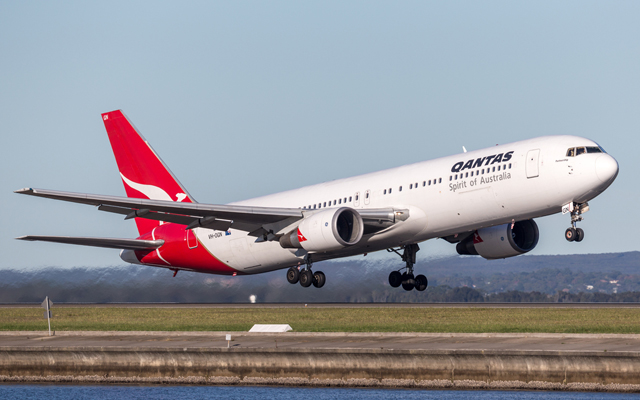
Following in the footsteps of other flag carriers such as Lufthansa, British Airways and American Airlines, Qantas Airways has jumped on the New Distribution Capability (NDC) bandwagon with the global launch of its first-phase Qantas Distribution Platform (QDP) on August 1, 2019.
However, Qantas has hit a roadblock in its implementation in Hong Kong as more than half of the Society of IATA Passenger Agents (SIPA) membership are not onboard the programme.
According to SIPA’s chairman Larry Lo, agents have to sign up for QDP in order to access fare classes N, Q and O on Australian domestic flights. Agents that do sign up for QDP are required by the GDSs to revise their original contracts which will no longer include segment fees, thereby hurting agents’ income.
“If we were to sign the agreement, incentives offered by the GDSs, such as commercial support and (financial) benefits, would no longer be available. If we were to refuse the agreement, we would have to face a channel fee of A$17.50 (USD$12) per sector levied on Australian domestic flights. This puts us agents in a difficult position,” Lo explained.
Lo told TTG Asia that a meeting was held between SIPA and Qantas to highlight members’ concerns and convey a request to suspend the policy until the QDP is publicly launched, but it came to nought.
“Despite multiple letters sent to its Hong Kong office to express our concerns and suggestions over the last couple of months, Qantas didn’t care. We will not give up without a fight,” he said, adding that most SIPA members are against the QDP and would rather book from the Qantas website should clients request specifically for the airline.
Lo suggested that agents could also choose to exclude the three distinct fare classes from their GDS contract, as there were no incentives attached to booking these through GDSs in the first place.
When asked if this issue was unique, Lo said Qantas was the first airline to implement such a practice and that none of the other existing NDC-compliant carriers had such “limitation and unfair arrangement”.
Treading slow and cautiously
Xpert Holidays, an IATA member, is one of the Hong Kong agencies that have yet to get on QDP. Sales manager Icy Yip said the firm relies on Amadeus, which offers financial incentives that help to cover her monthly fees.
For now, her business is unaffected by Qantas’ latest distribution decision, as most of her clients favour Cathay Pacific Airways for flights to Australia. However, Yip worries that as NDC takes further root in the marketplace and airlines continue their trek towards direct sales to consumers, bypassing GDSs and the middlemen, agents have no choice but to accept change.
Another agent who has requested for anonymity, said he has adopted a wait-and-see approach, much like many of his peers.
He compared Qantas’ approach to NDC roll-out in Hong Kong with that of Lufthansa, and said that the strong resistance to QDP here could be due to Qantas’ lack of a strong local brand presence.
“Lufthansa has a strong brand positioning in Hong Kong. Perhaps Qantas has not really built such a presence here, which is crucial for agents especially in such turbulent business times,” he said.
The anonymous agent added that while the theory of NDC “makes a lot of sense, many agents just don’t fully understand what it is about”.
When contacted by TTG Asia, Qantas Airways’ general manager for Hong Kong, Wyn Li, refuted the agents’ accusations that the airline wanted its own direct channel and cease its reliance on GDSs.
Li clarified that Qantas is the only airline to-date that continues to cooperate and work with legacy systems.
Explaining the QDP, Li said the programme utilises NDC standards to feed fares, schedules and availabilities via all major GDSs, namely, Sabre (and Abacus), Amadeus, Travelport (Galileo, Worldspan, etc.) and ETerm (Travelsky), to travel agencies globally. In contrast, all other airlines product platforms have established independent intranet access, bypassing GDSs.
He said: “Travel agencies can (bypass GDSs to) establish direct links with QDP if they find it commercially viable to do so. The vast majority of our travel agency partners use GDSs to access QDP, instead of direct links which involve material costs. Most of our key agency partners have already registered and verified, while there are ongoing discussions with other travel agencies.”
A new mindset is needed
Qantas’ Li told TTG Asia that the inertia to replace traditional GDS sales with NDC-powered bookings is similar to the switch from analog to digital broadcasting, or from mobile phones using analog radio signals to smartphones.
“The analog phone is still useful for phone calls and text messages, but the smartphone can provide access to WhatsApp, WeChat and LINE,” Li said, drawing an analogy for the more consistent and richer airline content NDC standards seek to bring.
“The current CRS/GDS analog system has been around for more than 60 years. The communication structure has been very successful and is likely to remain useful for a little while. However, modern digital technology is forcing paradigm change to the distribution of all players (GDSs, airlines, hotels, etc.). The IATA proposed NDC, apart from suggesting a standard of communication, also promulgates the advancement from analog to digital format,” he elaborated.
He admitted that getting business partners to understand the NDC concept was the “most challenging aspect of the whole NDC (adoption) process”.
“How can we convince consumers and business partners to adapt to new technology when the analog TV is still working, the 2G mobile phone can still be used to make calls, and the traditional GDS system can still be used to place bookings?” he asked.
According to IATA, NDC adoption has been faster than expected.
An IATA spokesman said: “The interim target for the NDC Leaderboard airlines set at eight per cent for 2019 was achieved in September, which is a positive sign on the journey to achieving 20 per cent by the end of 2020. The NDC Leaderboard comprises 22 airlines, varying in size and weight, as of January 1, 2022.”
UOL Group’s Liam Wee Sin, and PPHG’s new CEO Choe Peng Sum at the launch of Parkroyal Collection brand
UOL Group and hotel subsidiary Pan Pacific Hotels Group (PPHG) unveiled the new Parkroyal Collection Hotels & Resorts brand yesterday (January 7), cementing their commitment towards sustainable hospitality.
Parkroyal Collection carries a strong sense of responsibility towards the environment and self with eco-friendliness, sustainability and care for overall well-being as its brand ethos.
UOL Group’s Liam Wee Sin, and PPHG’s new CEO Choe Peng Sum at the launch of Parkroyal Collection brand
Sitting under the new brand are Parkroyal Collection Pickering (previously Parkroyal on Pickering) and the latest addition to the family, Parkroyal Collection Marina Bay (previously Marina Mandarin).
Liam Wee Sin, group chief executive, UOL Group, explained that the brand launch comes at a time when environmental challenges are becoming more prominent and there is a growing eco-consciousness among travellers who want to do their part to protect the Earth.
Recounting the journey from when the first seed of a green hotel product was planted a decade ago with the birth of Parkroyal Collection Pickering, Liam said: “When we developed Parkroyal on Pickering – now known as Parkroyal Collection Pickering – we knew we wanted a hotel with real green attributes, not just one (filled) with lots of plants. So, we made sure it has eco-friendly operation practices, zero-energy skygardens, 200% Green Plot Ratio, and more.”
Parkroyal Collection Pickering’s green credentials have won it many awards, including being named as one of the 50 Most Influential Tall Buildings of the Last 50 Years by The Council on Tall Buildings and Urban Habitat, as well as the World’s Leading Green City Hotel and Asia’s Leading Green Hotel at the World Travel Awards 2019.
“Last year, we gained full control of Marina Mandarin through the shares of Marina Centre Holdings. With UOL wholly-owning this hotel, we have the opportunity to rise above what we have done with Parkroyal Collection Pickering. While Parkroyal Collection Pickering has a lot of green on the outside, for Parkroyal Collection Marina Bay, we will bring green inside,” he added.
Embarking on a year-long progressive renovation from March 2020, Parkroyal Collection Marina Bay will be transformed into a garden-in-a-hotel, sporting many new features such as a 13m landscaped vertical wall flanked by raised planters, lush indoor gardens with birds’ nest-inspired pavilions, a skybridge across the atrium on level four to provide guests with a treetop experience, and more.
Parkroyal Collection Marina Bay Level 4 Atrium Birds’ Nest Pods
In terms of sustainability, the hotel will use UV-treated glass to allow in natural light, guestrooms will be fitted with water filters to discourage the use of disposable plastic water bottles, and premium bath amenities that are paraben- and cruelty-free will be provided to guests.
“The launch of Parkroyal Collection brand marks an important milestone in PPHG’s journey. This launch is exciting and timely because we are building on what Parkroyal Collection Pickering has achieved,” Liam said.
Liam said the group “will not stop at two”, and added that PPHG’s new CEO Choe Peng Sum has a mandate “to go out and find us more properties”.
Choe, who also addressed the audience at the launch, described the new brand as consumer-centric “with a sense of purpose and responsibility at heart” and which “demonstrates that sustainability and modern lifestyle can co-exist through conscious design and efforts”.
Asia-Pacific is the fastest growing region for travel and tourism, with 80% of the top fastest growing cities in the region, and contributing US$915 billion (33%) in direct travel and tourism GDP, according to a report by the World Travel & Tourism Council (WTTC).
The Cities Report for 2019 focuses on 73 major tourism city destinations, providing estimates of the GDP and employment directly generated by the travel and tourism sector; and highlights successful initiatives, strategies and policies that have been implemented to support this growth.
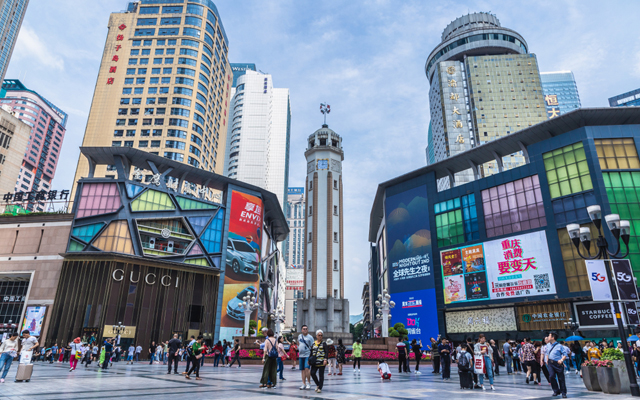
Asia-Pacific emerges fastest growing region for travel and tourism, with Chinese cities like Chongqing making up half of those cities; popular tourist spot Jiefangbei Pedestrian Street in Chongqing pictured
Chinese cities continue to mature rapidly, making up five of the 10 fastest growing cities in direct travel and tourism GDP over the last decade: Chongqing, Chengdu and Shanghai ranking first, second and fourth, and Guangzhou and Shenzhen coming in eighth and tenth.
International visitor spending is usually more important to cities than it is to countries as a whole, WTTC said in a statement. Six out of the top 10 cities for international visitor spending for 2018 were in Asia-Pacific, including Bangkok, Singapore, Tokyo and Shenzhen, found the study. This highlights the importance of revenues from international visitors which in some cases pay for major city infrastructure projects and services that improve the quality of life for residents, it added.
Notably, six out of the top 10 cities for domestic visitor spending are also in Asia-Pacific, and five of them are in China, with Shanghai taking the number one spot at US$79 billion, followed by Beijing at US$75 billion.
However, cities with an over-reliance on domestic or international demand can be more exposed to economic and geopolitical shocks, according to WTTC. For example, large cities which are highly reliant on domestic demand could be exposed to changes in the domestic economy.
On the other hand, cities which are more reliant on international demand and/or particular source markets may be vulnerable to external disruptions. The report highlights several cities which demonstrate a more balanced split between domestic and international demand, including two Japanese cities: Tokyo and Osaka.
The report also reveals that all but one of the 10 global cities with the highest direct travel and tourism growth over the past decade, are in emerging and developing economies, seven of which are in Asia-Pacific, such as China, Vietnam and the Philippines.
Infrastructure development and prioritisation of tourism has been a key driver of travel and tourism growth. The projected trends for 2018-2028 continue in this way, with all 10 coming from emerging and developing countries, and all but one located in Asia-Pacific, for example, India, Vietnam and Indonesia.
Spotlight on Oceania
Cities in Oceania make up a large portion of their respective countries’ travel and tourism GDP, with Brisbane and Sydney making up more than 30% of Australia’s direct travel & tourism GDP, and Auckland making up over 40% of New Zealand’s.
When considering the visitor impact of these cities, Sydney maintains the most even split between domestic and international, with domestic visitors contributing 56% towards the total visitor spend, and domestic contributing 44%. Brisbane’s split is similarly balanced with domestic visitors contributing 67%, and international visitors contributing 33%.
In terms of employment, Auckland contributes the most towards its respective country’s travel and tourism direct employment, offering 36.9% of all jobs in this sector, and 9.9% of total employment in Auckland. Additionally, Sydney and Brisbane collectively contribute 32.6% of direct travel and tourism employment to Australia.
The Global Picture
With over half (55%) of the world’s population living in urban areas, which is set to increase to 68% over the next 30 years, cities have become the hubs for global economic growth and innovation, while also attracting more people who want to live and do business there.
The report reveals these 73 cities account for US$691 billion in direct travel and tourism GDP, which represents 25% of the sector’s direct global GDP and directly accounts for over 17 million jobs.
Additionally, in 2018, direct travel and tourism GDP across the cities grew by 3.6%, above the overall city economy growth of 3.0%. The top 10 largest cities for direct travel and tourism contribution in 2018 offer diverse geographic representation, with cities such as Shanghai, Paris, and Orlando sitting in the top five.
WTTC president & CEO, Gloria Guevara said: “Asia-Pacific has been, and as shown by this important research, will continue to be a crucial region for travel and tourism. We are seeing an exciting amount of growth and development in the region and there is an opportunity to create sustainable change that will translate in further benefits for the local communities.
“Achieving sustainable growth in cities requires reaching far beyond the sector itself, and into the broader urban agenda. To drive true economic impact that can translate seamlessly into social benefits, a city must engage with all stakeholders, across the public and private sector, in order to establish the cities of the future.”








 “We’re very excited to come back to Digital Travel in 2020. The travel industry has gone through a paradigm shift, travellers are much more tech-savvy than ever. They expect digital experiences to be incorporated into their travel experiences, so digital personalisation is more important now than ever. I think the new formats we are introducing will help travel businesses of all sectors to find the solutions they are looking for.”