TTG Asia
Asia/Singapore Monday, 26th January 2026
Page 1141

Hilton names global head for LXR Hotels & Resorts

0

Hilton has appointed Feisal Jaffer as global head of LXR Hotels & Resorts, the company’s newest luxury brand launched in 2018 as a collection of independent hotels worldwide.

In his new role, Jaffer will be based in Hilton’s global headquarters in McLean, Virginia, and will report directly to Martin Rinck.

Jaffer possesses nearly 20 years of global experience growing businesses and brands across the hotel, real estate and technology sectors in Asia-Pacific, the UK and the US.

Prior to this, Jaffer served as senior vice president, business development, of Singapore-based Capella Hotel Group – which is part of Pontiac Land Group – where he was responsible for originating and executing new hotel management and investment opportunities. He was also part of the core team that incubated a new premium lifestyle brand and forged strategic partnerships to augment guest experiences.

In addition to this role, he also served as senior vice president, acquisitions & development at Pontiac Land Group to lead the international expansion of marquee hotel developments in Australia, the Maldives and the US.

Jaffer has also held investment and business development roles with Host Hotels and Fairmont-Raffles Hotels International respectively.

New hotels: SAii Lagoon Maldives, lyf Funan Singapore, and more

0
SAii Lagoon Maldives

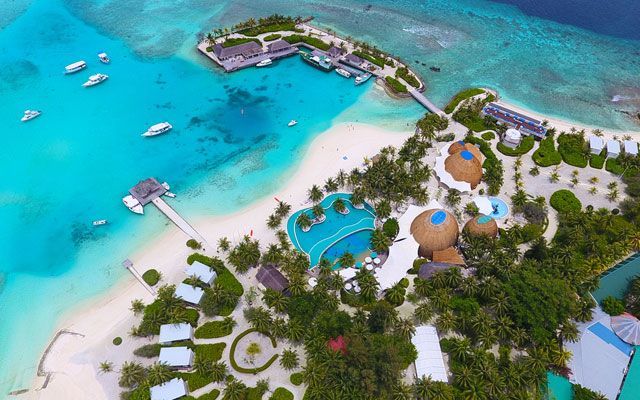
SAii Lagoon Maldives, Curio Collection by Hilton

Nestled within the Emboodhoo Lagoon a 15 minutes’ boat ride from Malé International Airport, SAii Lagoon Maldives forms part of Crossroads Maldives, the country’s first and only integrated resort. With a total of 198 rooms and villas, including over-water pool villas, the resort will be Hilton’s third property in the Maldives, and marks the first Curio Collection by Hilton in South Asia.

F&B offerings include Miss Olive Oyl, a poolside Mediterranean seafood grill and bar; Mr. Tomyam, a Thai fusion eatery with an open kitchen and alfresco dining areas; bean/Co, which serves fresh coffee, premium tea and grab and go snacks; and the Café del Mar beach club.

For recreation, the resort has an ocean-view infinity pool and fitness centre, the PADI-certified Watersports & Dive Center, the Marine Discovery Centre, the Lèn Be Well Spa, and Junior Beach Club and Camp. A wide range of water sports and recreational facilities is available at The Marina @ Crossroads, a 30-berth marina and lifestyle centre that also houses the Crossroad Event Hall, which can be accessed directly from SAii Lagoon Maldives via a footbridge.

lyf Funan Singapore

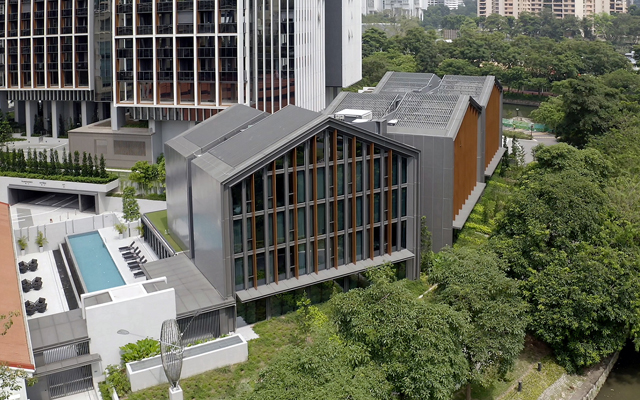
The Ascott has opened lyf Funan Singapore, the largest co-living property in South-east Asia. Located in the heart of Singapore’s civic and cultural district, it is also the world’s first property under Ascott’s new ‘lyf’ co-living brand targeted at millennials and the millennial-minded.

Spanning about 11,241m2, lyf Funan Singapore houses 412 rooms across 279 apartments. The nine-storey co-living property offers easy access to City Hall MRT, and is located near shopping mall Raffles City Singapore and the National Gallery Singapore.

lyf Funan Singapore is an integral part of CapitaLand’s Funan integrated development, which also comprises two office blocks and a mall offering retail concepts, co-working spaces, urban farm, theatre, cinema, artisan shops, craft workshops, gymnasium, rock climbing and futsal facility.

Park Hyatt Shenzhen, China

Hyatt Hotels has opened Park Hyatt Shenzhen within a 48-story skyscraper that is located in the heart of the Futian CBD in Shenzhen. Designed by the New York-based architectural firm Kohn Pedersen Fox Associates, the 195-key hotel resembles a dynamic glass and steel butterfly with its wings spread against the Shenzhen city skyline.

Park Hyatt Shenzhen will launch a collection of bars and restaurants. On Level 33 are the Living Room, which offers afternoon tea or evening drinks, and the Garden Pavilion, specialising in Cantonese, Sichuan and Jiangnan cuisine. The Glasshouse on Level 47 is a contemporary European restaurant and bar, whereas the Attic, located on Level 48, serves as a penthouse bar with a large marble counter bar. The hotel also boasts more than 1,500m2 of event space, a spa, a 25m indoor lap pool and fitness facilities.

Brady Hotels Jones Lane, Melbourne

Melbourne’s new Brady Hotels Jones Lane offers sleek styling and laneway setting in the heart of the city’s theatre, cultural and shopping precinct.

Tucked down Little Lonsdale Street on the corner of Jones Lane, the 4.5-star boutique hotel is located near attractions like Her Majesty’s Theatre, Comedy Theatre, Old Melbourne Goal, Royal Exhibition Building, Melbourne Museum, Chinatown, Lonsdale Street’s Greek precinct, as well as shopping malls Melbourne Central and QV Melbourne.

The hotel’s 153 rooms contain king beds and openable windows, and 96 of the rooms also boast balconies. Hotel services and amenities include a 24-hour reception, round-the-clock room service, cardio gym, self-serve laundry and bike storage room.

Holiday Inn Express Pattaya Central, Thailand

Located just a two-hour drive from Bangkok’s Suvarnabhumi International Airport, the new 241-room hotel is located a stone’s throw away from retail options Terminal 21 Pattaya, Central Festival Pattaya Beach, Pattaya Night Bazaar and Mike Shopping Mall.

Holiday Inn Express Pattaya Central is designed around the needs of smart travellers. Guests can start the day with Free Express Start Breakfast, which offers the option of taking their breakfast to-go if they need a faster break. Hotel’s facilities include a rooftop swimming pool, parking onsite, a 24-hour fitness centre, free Wi-Fi and internet stations.

Have tech, will travel: can travel startup unicorns fly in SE Asia?

0

In just a few years since its 2012 launch in Malaysia, Singapore-based ride-hailing giant Grab has expanded to eight countries and become South-east Asia’s most valuable unicorn at US$14 billion. Its keenest rival in the region, Go-Jek, is also Indonesia’s first decacorn after its valuation hit US$11 billion, and continues to attract attention from investors (the latest? Amazon).

These ride-hailing ventures have grown to become super-apps, engaging consumers on multiple fronts from trip planning to food delivery and mobile groceries as they clamour for a piece of South-east Asia’s 650 million and increasingly tech- and travel-savvy population.

Other notable unicorns in the Asian travel sector include Klook, after the Hong Kong-based travel booking platform secured US$200 million in Series D funding last year, and Indonesia’s Traveloka, whose recent fundraising efforts reportedly valued the OTA at US$2 billion.

In this hospitality space, Singapore-based hotel chain startup Reddoorz has raised US$70 million from investors, including Japanese e-commerce leader Rakuten, putting it on collision course against Indian rival Oyo, which has scaled up its expansion in South-east Asia with the appointment of a CEO for the region.

The blossoming of ride-hailing apps, flight tracking and hotel booking solutions are just some of the ongoing metamorphosis of South-east Asia’s travel tech sector.

In the words of Simon Akeroyd, Amadeus’ vice president corporate strategy & business development, the quality of travel startups was still “very poor” in 2015, when Amadeus Next programme was set up as a community to incubate tech start-ups which provide travel-related services.

In the four years since, South-east Asia’s startup scene quickly turned “much more vibrant and mature”, Akeroyd noted, as entrepreneurs have gotten a “better grip” of the gaps in the regional travel market.

But Akeroyd also urges budding travel tech startups to focus less on achieving unicorn status and more on solving problems. This view is also echoed by Blanca Menchaca, CEO of BeMyGuest, who remarked that the B2C space appears sexier to budding entrepreneurs, in part due to their connection with the masses and the high-profile success stories in the consumer space, when in fact growing investment is being poured into the B2B sector.

As Facebook founder Mark Zuckerberg famously said, a product is not truly a compelling business until it has one billion users. Few startups will achieve trailblazing status in the consumer space like Grab, let alone achieve massive global reach like Facebook or Google.
But in a diverse region such as South-east Asia, where tourism is a fast-growing market, there remains plenty of pain points – not to mention opportunities – in the travel business sector that are still awaiting solutions.

I’m definitely putting my bets on the B2B travel space.

John Slosar steps down as Cathay Pacific chairman

0

Cathay Pacific yesterday announced that John Slosar “will be retiring” from his role as chairman on November 6. He will be replaced by Patrick Healy, a long-time executive at the Swire Group conglomerate that is the airline’s majority shareholder.

Slosar became the latest high-profile executive to exit Cathay Pacific, after Rupert Hogg resigned as chief executive just weeks earlier. The flagship carrier and its staff members have come under greater scrutiny by the Chinese aviation regulator amid ongoing anti-government protests in Hong Kong.

John Slosar resigns as chairman of Cathay Pacific Airways, ending his 39-year career with Swire Group

Slosar ends a prolific 39-year career with Swire Group, which included as CEO of Cathay Pacific from 2011 to 2014 and then as chairman since 2014.

Healy, currently managing director of Swire Coca-Cola, is also a director of John Swire & Sons (H.K.) and a non-executive director of Swire Properties. He first joined the Swire Group in 1988, spending 14 years with the group’s beverages division in mainland China, followed by four years as CEO, HAECO Xiamen.

“Despite current challenges, I am confident in the future of Hong Kong and Cathay Pacific will remain fully committed to this great city as Asia’s key aviation hub,” Healy said in a statement.

Korea Tourism Organization Marketing Manager

0
KTO logo HQ

Korea Tourism Organization (KTO) is the National Tourism Organization of the Republic of Korea, with offices located worldwide to promote and boost tourism to Korea, so as to make it one of the top destinations in the world.

The KTO Singapore Office is looking for enthusiastic and hardworking individual for the following position:

Korea Tourism Organization Marketing Manager

1-year contract (including 2-months probation) | S$4,200 (commensurate with experience)

As a Korea Tourism Organization Marketing Manager, Your key responsibilities on the job include :

1. Public Relations / Media

  • Offline and Online (ex. bloggers) Media
  • Contact point for media relations
  • Press Tour – Select and invite media, contact point for media throughout. Follow up with media upon return from trip to ensure publicity from trip.
  • Decide storyline for bi- weekly press releases
  • Answer all media enquiries in a written and dated format
  • Track published PR articles generated by us, calculate ad value and update into TMS (calculation and uploading done by Tourism Officer)
  • Local film production in Korea – Go through all proposals and provide recommendation on KTO’s level of participation. Contact point for production crew throughout.
  • To maintain and ensure cordial relationship with all media
  • Solicit free tourism publicity

2. Trade / Airlines

  • Contact point for trade with regards to advertising and promotions
  • Decide storyline for bi-weekly trade releases
  • Regular contact with product planners and marketing managers to explore new opportunities to promote Korea.
  • Execute and follow through advertising subsidy campaigns including campaign completion reporting and documentation.
  • Arrange regular meetings with top agents
  • Monitor travel agents product offer/pricing through press ads and usage of logos
  • Monitor competitor destinations product offer/pricing.
  • Manage NATAS or other ad hoc consumer travel fairs
  • Encourage travel trade to improve itineraries through adding new festivals/events/destinations
  • Invite and arrange travel agents for FAM trips
  • Arrange and execute presentations to trade.
  • Monthly sales forecast.
  • Solicit new travel agency partners.
  • To maintain and ensure cordial relationship with all trade partners (travel agencies and airlines).

3. Advertising & Promotions

  • GIT Event and special interest (e festival, farm stay) execution and promotion
  • Offline (newspaper, print), Online (SNS, online portals), Outdoor (MRT station etc) advertising planning, execution and reporting.
  • Maintain constant update with various advertising mediums.
  • Manage and upload information to KTO Singapore Facebook account.
  • Recommend right advertising platform.
  • Work with GM or Manager to develop and execute promotions with business partners.

4. Business Development 

  • Co-work with Singapore official partners. e STB, NATAS, etc
  • Solicit business opportunities with 3rd parties to promote Korea e Working with event companies to promote K-pop concerts, non-verbal performances, Korea Festival, etc
  • Ensure KTO’s brand is visible in the event collateral.
  • Co-promote event with 3rd party (EDM, Facebook etc)
  • Participate in the event; if necessary

5. Others

  • Ad-hoc tourism research work
  • Arrange ad-hoc business appointments between visitors from Korea (HQ, Province) to Singapore tourism bodies
  • Other ad-hoc duties (assisting Director, General Manager and Manager).

Applicants should possess at least the following requirements:

  • Diploma in tourism or any related fields
  • At least 5 years experience in Tourism fields
  • Excellent written and spoken English language
  • Basic skill in conversational and written Korean would be an added advantage
  • Service-oriented, quick learner, team player, IT-savvy
  • Knowledge of Tourism Industry in Korea would be an added advantage
  • Able to commence employment in October 2019

Recontract opportunities are available based on assessment after 1 year.

Send your detailed resume with a recent photograph of yourself to us at kto.recruitment@gmail.com by 17 September 2019. Only shortlisted candidates will be notified for an interview. Overseas applicants will be interviewed via video conferencing.

India sets sight on growing leisure and business travel from Indonesia

0

Indian travel experts are firming their grip on Indonesia, a market which is viewed as a fast-rising source of leisure and business arrivals on the back of visa-free entry and a soon-to-launch direct connection between the two countries.

Ambassador of India to Indonesia Shri Pradeep Rawat, who attended the Incredible India roadshow in Jakarta last week, said connectivity between India and Indonesia would be enhanced when a direct flight service connecting Delhi, Chennai and Bali launches on October 27, although he declined to name the carrier.

Ambassador of India to Indonesia’s Shri Pradeep Rawat (left), Indonesia’s lawmaker Satya Widya Yudha (centre) and The Westin Jakarta’s Arun Kumar celebrates India and Indonesia’s bilateral relationship during the Incredible India roadshow held at the Westin Hotel in Jakarta (Photo credit: Kurniawan Ulung)

Economic advisor to Indian Ministry of Tourism Shri Gyan Bhushan, who spearheaded the Incredible India roadshows, hopes that the upcoming service would offset the imbalance in tourist traffic currently seen between the two countries.

While tourist arrivals from Indonesia to India increased from 43,973 in 2017 to 46,867 in 2018, the number of Indians who visited Indonesia grew from 422,000 to 536,000 in the same year.

Bhushan said he was “not impressed” with the Indonesian inbound numbers, as Indian arrivals to Indonesia is “10 times more”.

Meanwhile, the soon-to-launch flight is definitely music to the ears of agents in both countries, as the lack of direct connectivity has been singled out as a key challenge for Indian tour operators in attracting more Indonesians to the country.

Amir Kumar, director of sales and marketing at Bodh Gaya-based Dharma Steps, lamented that Garuda Indonesia’s termination of Jakarta-Mumbai direct flights earlier this year has dampened Indonesian outbound demand for India.

Despite the connectivity issue, Kumar is confident that the number of Indonesian tourist arrivals in India would continue to grow. He shared that the number of Indonesian guests the company receives has increased by five per cent since last year, thanks to India’s free e-visa policy for Indonesians.

Also anticipating the direct flight to boost Indonesian arrivals is Sanyog Gupta, president of New Delhi-based Sanyog Tours, who has already created partnerships with seven Indonesian travel agents.

“We saw an eight per cent increase (in the number of Sanyog Tours’ Indonesian customers) from last year,” he said, adding that his company had been penetrating the Indonesian market since 2008.

Sanyog is also eyeing business travellers from Indonesia, given that 60 per cent of his Indonesian clients visit India for business and 40 per cent for leisure.

Similarly, South Tangerang-based Safa Tour & Transport, which is traditionally reliant on the Chinese market, has partnered New Delhi-based Magadh Travels & Tours to bring more Indonesians to India, owner Khairul Gumay said.

“We will bring groups from oil and gas company Pertamina and Saudi Arabian Embassy to visit India early next year,” Mumin said, adding that both groups are expected to stay in India for at least a week.

That India is a strong contender for business travellers from Indonesia is not unnoticed.

Kumar said that Dharma Steps targets business rather than independent travellers because India boasts not only art and culture festivals, but its hotels and resorts are ideal MICE venues that can accommodate large groups.

While India has no lack of attractive destinations, its merit is often eclipsed by perceived images of its poor sanitation and hygiene issues.

“What we sell first is tourist attractions. We then promote the country. If we mention the word ‘India’ first, what comes to mind is a bad image,” Gumay said, adding that he was aware of India’s environmental issues.

Like Gumay, Kumar thinks that the gaps in awareness of India as a destination needs to be addressed. “A lack of communication is the problem. We need to step up promotional efforts to raise awareness about (India). If we do not tell people, they will not know what we offer and they will not be interested to go there.”

Give secondary school students exposure to vocational training, urges association

0

Malaysian Association of Hotels (MAH) is lobbying for the introduction of technical and vocational education and training (TVET) into the country’s secondary school education to build greater awareness and understanding of hospitality as a career choice among schooling youths.

A proposal has been sent to the Ministry of Human Resources and Ministry of Education in July, according to MAH’s CEO Yap Lip Seng, among the other initiatives that the association has undertaken to develop the talent pool for Malaysia’s hospitality sector.

MAH’s CEO Yap Lip Seng wants people to change their perception of a career in the hospitality industry as “dangerous, dirty or difficult” to “a stable long-term career that promotes life-long learning and development”

This development follows a cabinet meeting in May chaired by Malaysian prime minister Mahathir Mohamad, who had expressed the government’s intention to drive youths’ involvement in TVET and subsequently increase the skill levels of Malaysia’s workforce.

This led to the formation of a cabinet committee on TVET empowerment, chaired by the minister of education Maszlee Malik. In July, MAH was appointed to the TVET technical sub committee for industry cluster to contribute and assist the government in building TVET capacity for the hospitality industry.

“With the appointment, MAH was invited to present the hospitality industry’s TVET needs and proposal and how the industry can play a major role in training as well as placing youths into jobs within the hospitality industry,” said Yap.

He added: “One of the main formats was to adopt the employee-student model by placing youths into hospitality jobs that provide needed training for the job. At the same time, this will contribute to the government’s effort to reduce unemployment among graduates and youths as well as address human capital shortage in the industry.”

Yap said that MAH is ready to provide industry expertise and exposure through its strong network of hotel members, as part of TVET hospitality training courses, as well as to place trainees into jobs upon completion. It also recognises the need of communication and attitude grooming as crucial components of hospitality industry.

With more than a thousand hotel members in the country, MAH expects stronger demand for skilled workers at all levels of the hotel industry and foresees TVET as the way forward in fulfilling job demands.

However, Yap also urged for a change in the perception of the hospitality industry. “It is not the (commonly) perceived dangerous, dirty or difficult job, but rather a stable long-term career that promotes life-long learning and development. TVET will groom awareness and interest of youths while the industry will ensure they succeed,” he said.

Sam Cheah, advisor & immediate past president of MAH, said that despite technological advancements within the industry, people remain a key asset to success. “Whether it is innovation or technology, we need passionate people in the hospitality industry, and we are ready to train them and keep them updated to current trends and best practices,” he said.

China still dominant, as South Korea, Japan and India become bigger origin markets in APAC

0

Asia-Pacific’s five most popular destinations for international travellers – Bangkok, Singapore, Kuala Lumpur, Tokyo and Seoul – captured more than one-quarter, or 25.2 per cent, of total international travel spending in the region, based on findings from Mastercard’s 2019 Asia Pacific Destinations Index (APDI).

Primarily driven by explosive growth in outbound travel from mainland China, these five cities also accounted for one-fifth, or 22 per cent, of all overnight visitors to the region’s top 161 cities and regional centres last year.

Bangkok, Singapore, Kuala Lumpur, Tokyo and Seoul remain APAC’s most popular cities among international travellers, with Japan emerging as the region’s most visited market, according to Mastercard’s 2019 Asia Pacific Destinations Index (Pictured: Shinjuku in Tokyo, Japan)

In 2018, Asia-Pacific hosted travellers making 342.2 million business and leisure trips, up from 159.1 million in 2009, representing an 8.9 per cent compound annual growth rate (CAGR) over the nine year period. During the same period, travel spending in Asia-Pacific more than doubled, rising from US$117.6 billion to US$281.1 billion, equating to a compound annual growth rate of 10.2 per cent.

Mastercard’s 2019 APDI highlights four key trends that are shaping the future of travel in the Asia-Pacific region:

1. Mainland China continues to exert the greatest influence over travel patterns and expenditure flows. Overnight arrivals of mainland Chinese travellers in Asia-Pacific markets surged from 10.5 million in 2009 to 62.4 million in 2018 – a 21.9 per cent CAGR over the period. Notably, mainland China is amongst the top three source markets of outbound travellers for 82 cities in Asia-Pacific, or more than half of the 161 destinations in the APDI.

2. Japan is now the hottest destination in Asia. For the second year in a row, Japan is the only market in the APDI to command 25 per cent of Asia Pacific’s top 20 destinations, with Okinawa nudging out Kyoto to join the list for the first time, alongside Tokyo, Osaka, Hokkaido and Chiba. Okinawa is one of the region’s fastest-growing destinations, skyrocketing 109 places since 2009. Less-travelled cities such as Oita, Hiroshima, Fukuoka, Kyoto, Gifu and Nagano have also seen significant jumps in the rankings, all earning a spot in the list of the region’s 10 fastest-growing cities by number of visitor arrivals. This overall uptick in travel to Japan is set to grow further, with Tokyo forecasted to benefit the most from the 2019 Rugby World Cup and 2020 Olympic Games.

3. Vacation destinations prevail over the fastest-rising cities. While Japanese cultural centres top the list of the 10 fastest rising cities, the bustling industrial hub of Ludhiana in India’s northern state of Punjab claims the second spot, having jumped 78 places in the index since 2009. Dubbed the “Manchester of India” for its production of textiles and hosiery, Ludhiana is the only industrial city in this list of fast-risers. Sri Lanka’s coastal getaway Galle ranks ninth, having climbed 54 places in the rankings since 2009, while China’s panda capital Chengdu rounds out the rankings, coming in tenth after jumping 50 places in the last nine years.

4. While many Asia-Pacific destinations are basking in the growth led by mainland Chinese travellers, South Korea and Japan are also noteworthy as the next biggest Asian origin markets fuelling rising travel expenditure and overnight arrivals across the region. Top contributor mainland China accounts for 18.2 per cent of international overnight arrivals within the region, while South Korea contributes 9.1 per cent and Japan makes up six per cent. Another source market to watch is India, home to the world’s second largest population. In 2018, India waved off 14.9 million outbound travellers, of which 49.3 per cent visited destinations in Asia-Pacific. Their most favoured Asia-Pacific destinations were Singapore, Bangkok, Kuala Lumpur, Pattaya and Bali. With its growing middle class, and population of 1.3 billion people, India’s potential to shake up future APDI rankings cannot be overlooked.

Rupert Naylor, senior vice president, data & services, Asia Pacific, Mastercard, said: “While mainland China serves as a focal point for Asia-Pacific’s top destinations, there are also bright spots in South Korea, Japan and India. As travellers from these markets continue to increase by remarkable percentages year over year, it is imperative that we bring together resources from both the public and private sectors to help tourism partners better understand commerce patterns and deliver attractive experiences for eager travellers from across the region.”

MGTO partners WebBeds to boost Indonesian arrivals to Macau

0

WebBeds has penned a major new agreement to promote Macau to the travel trade in Indonesia, as part of the Macao Government Tourism Office’s (MGTO) efforts to attract more visitor arrivals from South-east Asia’s largest and most populous country.

Under this exclusive new partnership, WebBeds and the MGTO will embark on a nationwide promotional campaign from August 1 to December 31, 2019.

WebBeds partners MGTO to promote Macau to Indonesia’s travel trade (Pictured; from left: WebBeds’ Yuniar Putri, MGTO’s Viona Maliki and Yohanes Tarigan, and WebBeds’ Risa Supena)

The campaign kicked off with a recent Jakarta workshop hosted by WebBeds for its key travel agency clients in Jakarta. Held at DoubleTree by Hilton Hotel Jakarta – Diponegoro, the event enabled MGTO representatives to meet with local travel agencies and showcase Macau’s attractions to Indonesian travellers.

In addition, WebBeds has also partnered several prominent hotels in Macau, including MGM Cotai and Hotel Lisboa, to offer exclusive rates through this campaign to attract more Indonesians to the city.

WebBeds will also offer triple FIT Points for all bookings of Macau hotels made by its Indonesian clients during the campaign period, as part of its popular FIT Rewards programme.

In 2018, 173,836 Indonesian travellers visited Macau, which makes it the city’s 10th largest source market. However, the MGTO believes there is strong potential for future growth due to rising affluence in Indonesia and the country’s vast population of 264 million people.

Oyo snaps up data science firm specialising in dynamic pricing

0

India-based Oyo Hotels & Homes has acquired Danamica to leverage the Copenhagen-based data science company’s machine learning and business intelligence capabilities, particularly in dynamic pricing, in its expansion of business in Europe.

Earlier in August, the company had invested €300 million (US$330 million) in the vacation homes business in Europe, with a special focus on strengthening the relationship with homeowners and enabling them with the resources, including technology investments, required to deliver chic hospitality experiences.

Oyo Hotels & Homes has acquired data science business Danamica (Pictured: Kim Holmsted, COO, Dancentre, Oyo Vacation Homes (middle) with Danamica’s founders Mads Westberg and Rune Larsen)

With the acquisition of Danamica, Oyo says it will be able to drive top-line growth by leveraging dynamic pricing across all its brands – Oyo Home, Belvilla and DanCenter. Additionally, Oyo and its real estate partners around the world will benefit using data sciences for improved yield. Starting with Europe, Danamica’s technology innovations will benefit Oyo’s global vacation homes business.

Maninder Gulati, global head, Oyo Vacation and Urban Homes, & chief strategy officer, Oyo Hotels & Homes, said that the Danamica acquisition “will help us be more accurate with pricing, leading to higher efficiencies and yield for our real estate owners and value for money for our millions of global guests”.

He added: “Data sciences across pricing, AI, and imaging sciences have been a cornerstone of Oyo’s proprietary revenue enhancement technology. It is also a huge missing piece in the way traditional vacation rentals industry is run. We are glad to have found Danamica, which has built expertise in these areas.”

With the implementation of Danamica’s machine learning-enabled pricing and revenue management, customers will be able to book a vacation home at the best price.

Similar to airlines and ride-sharing companies, Oyo has introduced dynamic pricing in the hospitality industry to create a level-playing ground even for an independent or small hotelier or homeowner. Oyo’s pricing, inventory allocation and revenue management are driven by a machine learning-based algorithm for prediction and dynamic pricing.

The algorithm analyses 144,000 data points every hour and makes 60 million price changes every day with a prediction accuracy of 97 per cent. It allows each hotel to drive max RevPAR based on its micro-location.

It allows pricing to adjust dynamically to supply and demand. In peak times, pricing adjusts to deliver high RevPAR, and in low times, it goes down to allow for maximum customers to experience the product while increasing overall yield for owners.