The Malaysia Budget Hotel Association (MyBHA) has called on the government to draft an act to protect hoteliers amid the pandemic.
Its national deputy president, Sri Ganesh Michiel, said in a statement that the association had received negative feedback from its members that the Special Relief Fund (SRF) rolled out by the government was “not friendly” to the industry.
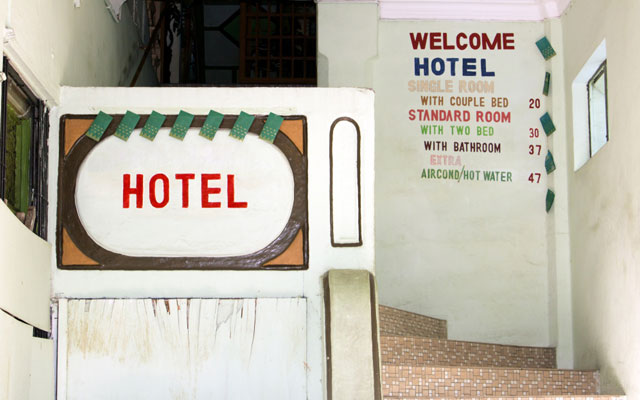
Malaysia Budget Hotel Association urge government to pass law to protect hoteliers; a budget hotel in Penang pictured
“The banking and financial institutions (have been) avoiding the hotel industry as they misunderstood (it to be) a high-risk industry,” he said.
The government has set aside RM5 billion (US$1.1 billion) under the SRF to provide financial relief for SMEs affected by Covid-19.
Sri Ganesh, who is also MyBHA’s national legal and information and communications technology bureau chairman, said: “Most of the hotels are on a rented property where the government had announced that all the property owners shall give a discount for the rental of their properties.”
However, he alleged that the property owners were taking advantage of the situation by refusing or being reluctant to waive or reduce rent for their tenants who had invested in converting the property into a hotel.
He also noted that the owners are currently enjoying the moratorium periods in their property loan facility, adding that it wasn’t fair to its members who are making losses. He opined that tenants risked losing possession of their hotels, as they were unable to pay rent to the landlord.
Sri Ganesh added that this situation could result in hotel closures, and the rise of legal cases, as well as bankruptcies and retrenchments.
The former tourism secretary of the Philippine Department of Tourism (DOT), Ramon “Mon” Jimenez, Jr has passed away this week at the age of 64.
The DOT’s present chief, Bernadette Romulo Puyat, has issued a statement, paying tribute to the “immeasurable contributions of secretary Jimenez who laid down the foundation for the country’s most famous tourism campaign, It’s More Fun in the Philippines”.
Puyat added that he was also behind many DOT policies that helped shape the National Tourism Development Program (NTDP) for 2016-2022.
“Today, we mourn the loss of Mon Jimenez but we will be forever grateful to him for the growth of the tourism sector, and for promoting the Philippines as a place that is wonderful, joyous and fun,” said Puyat.
With metro Manila still on lockdown, friends and former colleagues from the Hotel Sales and Marketing Association as well as other tourism sectors have arranged for a virtual eulogy in remembrance of Jimenez.
The virtual eulogy will be held on Facebook on April 29, 19.30 local time, right after the virtual mass on Jimenez’s Facebook account.
The United Arab Emirates (UAE) has made an official request to postpone the Expo 2020 Dubai until next October due to the coronavirus, announced The Bureau International des Expositions (BIE) on Saturday (April 4).
The Paris-based organisation said in a statement that the decision was made following consultations with the BIE, participating countries and key stakeholders. UAE’s proposed opening dates of Expo 2020 Dubai are from October 1, 2021 to March 31, 2022.
UAE proposes one-year delay for Expo 2020 Dubai
The UAE has also requested to continue using the name Expo 2020 Dubai for the event, despite the change in dates.
The BIE said that the Executive Committee will hold a virtual meeting on April 21 to discuss the options for a change of dates. For the proposal to be green-lit, it requires the approval of two-thirds majority of BIE member states, with the final decision expected in June.
The Executive Committee of the BIE is formed by delegates from 12 member states. They were elected by the BIE’s General Assembly.
Expo 2020 Dubai was expected to attract about 25 million visitors to the six-month event, which was slated to launch this October.
Although there had been talks of lifting the state of emergency at the end of this month, Thailand’s Centre for Covid-19 Situation Administration (CCSA) on April 27 announced it will extend its emergency decree until the end of May.
Amid low numbers of new coronavirus cases, CCSA considered the measures effective in flattening the curve.
A proposed colour-coded venue-categorising system will indicate when businesses and public areas could reopen
Therefore, under the executive order, the six-hour curfew from 22.00 to 04.00, prohibition of mass gatherings, inter-provincial travel restrictions and ban on travel into Thailand will continue for another month, while the Civil Aviation Authority of Thailand (CAAT) also announced incoming non-essential international flights will be suspended until May 31.
The cabinet is also in talks about whether to postpone all public holidays in May and move them to a later date, including Labour Day, Coronation Day, Visakha Puja Day and the Royal Ploughing Ceremony, a decision which is expected to be announced today.
Meanwhile, Suvarnabhumi Airport, which used the past month’s hiatus to repair and renovate, is prepared for the gradual resumption of domestic flights. Thai AirAsia and Thai Lion Air have announced they will resume flights on May 1, and will enforce compulsory measures from the CAAT such as social distancing between seats, and no drinks or food served on flights.
The CCSA has also floated a potential venue-categorising system that would see businesses and public areas divided under white, green, yellow, and red codes based on associated risks. Under the proposed coding system, Thai businesses shut down since March 22 will reopen in stages, starting with the White category – those deemed low-risk and essential to everyday life, and situated in the open air, including street hawkers and vendors – in the first week of May.
These would be followed by public parks, exercise facilities in the open air and small shops, both air-conditioned and non-air conditioned, under the Green category in mid-May.
Mid-risk venues with more crowding are categorised Yellow and could reopen beginning of June – fresh markets, street markets, food centres, malls, salons, dental and beauty clinics and swimming pools.
Red “high-risk” businesses would only be able to resume mid-June. These include pubs, gyms, movie theatres, massage parlours, stadiums, exhibition halls and meeting facilities.
Social distancing and hygiene measures would continue to be enforced in all situations. Hotels are not on the list as their closures were ordered on a provincial basis; provinces such as Bangkok and Chiang Mai do not have hotel closure orders.
Airbnb will roll out in May the Enhanced Cleaning Initiative — the first standardised protocol for sanitisation and cleaning in the home-sharing industry.
Guests will be able to search for homes certified under the programme, which have met expert-backed guidelines and cleaning procedures.
Homes of hosts who adhere to and perform the recommended level of cleaning will be listed under a special collection on the Airbnb website
Experts contributing to the programme include Vivek Murthy, former surgeon-general of the US, who helmed the country’s responses to the Ebola and Zika outbreaks, and employees from hospitality and medical hygiene companies, including Ecolab.
The programme will also incorporate published standards of the Centers for Diseases Control and Prevention (CDC) in the US.
As part of the programme, hosts will receive detailed cleaning guidelines that recommend the use of disinfectants approved by authorities and protective gear. Hosts are required to enforce a 24-hour buffer between guest stays.
All hosts will be encouraged to adhere with detailed guidelines on cleaning each room in their homes. Those who adhere to and perform the recommended level of cleaning will have their homes placed under a special collection on the Airbnb website.
Hosts who are not able to commit to the enhanced cleaning protocol can opt into a separate Booking Buffer feature, also backed by experts. This feature stipulates that homes must be kept empty for a buffer period between stays. Currently, the default buffer period is set at 72 hours.
Even under this separate label, hosts are urged to follow cleanliness guidelines from local governments and the CDC.
The initiative reflects the home-sharing company’s recognition that the future of travel will be tied very much to health, safety and prevention, said the company in a press statement on April 27.
Airbnb also hopes the cleanliness standards can provide reassurance to governments as they weigh whether to reopen their destinations to travellers.
Reservation trends have led the home-sharing giant to believe in the recovery of the home-sharing industry and travel as a whole. A recent Airbnb survey showed that 92 per cent of hosts wanted to host as often as before Covid-19, or more often, after the pandemic wanes.
As at late-March 2020, the number of bookings on the home-sharing platform with an arrival date of at least six months later were found to be higher compared to the same period last year, noted Airbnb.
The home-sharing giant also said that most guests have been satisfied with the cleanliness of the Airbnb homes they stayed in, and this cleaning initiative is a continuation of that. As of March 31, 94 per cent of reviews showed a cleanliness rating of four to five stars, said Airbnb.
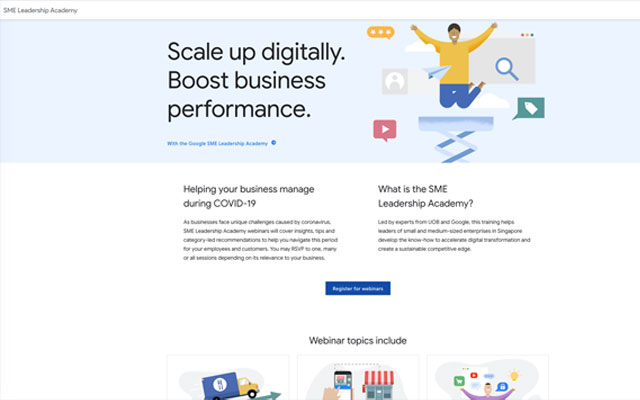
Google and Singapore-headquartered United Overseas Bank have come together to expand the capacity of the SME Leadership Academy training programme and revise the online curriculum to help small- and medium-sized enterprises (SMEs) tackle immediate business challenges during this crisis.
The programme supports SME business leaders from the retail, tourism and F&B sectors.
The SME Leadership Academy courses are now online, with new curriculum to help business owners be more digitally-savvy
Given the pressing need for SMEs across different industries to be able to transform their businesses digitally, the SME Leadership Academy will expand its capacity to help 4,000 SMEs by end 2021, a ten-fold increase from the initially projected 400 SMEs.
In collaboration with the Economic Development Board and with the support of the Singapore Tourism Board (STB) Marketing College, Enterprise Singapore and Singapore Retailers Association, the training programme for retail and tourism SMEs will be conducted online through six to eight webinars, each lasting an hour, starting on April 28.
Previous training sessions were conducted through in-person seminars.
The revised and online curriculum now teaches SMEs how to use digital solutions, including online collaboration tools, to be more effective when managing their businesses from home. SMEs will also gain insights into effective people and business management during crises, which can then be turned into practical steps they can take to tackle their own immediate challenges.
UOB will guide SMEs on how to apply for Covid-19 financial relief assistance to help tide them over the difficult period.
The bank, through its innovation accelerator The FinLab, will also connect SMEs with suitable technology solution providers that can help implement digital solutions that will see them through the current situation and ensure they are well-positioned for better times.
On Google’s part, the company has introduced a more streamlined path to learning for SMEs under Grow with Google to promote digital transformation and upskilling on an organisational level. Grow with Google provides free training, tools such as Google My Business and Market Finder, and events to support businesses in their digital upskilling journey.
Ben King, country director of Google Singapore, said: “The considerable disruptions of Covid-19 has made this a tough time for businesses at all levels – doubly so for SMEs who need to accelerate digital adoption and quickly move their business online to adapt to the evolving situation. It is critical that we support them in whatever way we can.”
Lawrence Loh, head of group business banking, UOB, said: “At UOB, we have been helping SMEs overcome their business challenges and deepen their capabilities for more than 80 years. We understand that during these especially challenging times, the priority for SMEs, especially those in the retail, tourism and F&B sectors, is to keep their business afloat.
“Through the customised curriculum and online webinars, we want to make it easier for SMEs to address the business constraints resulting from the pandemic and to be ready for recovery. They can do so by gaining relevant market insights and learning how they can make use of digital solutions to create new revenue streams and to manage their costs more effectively.”
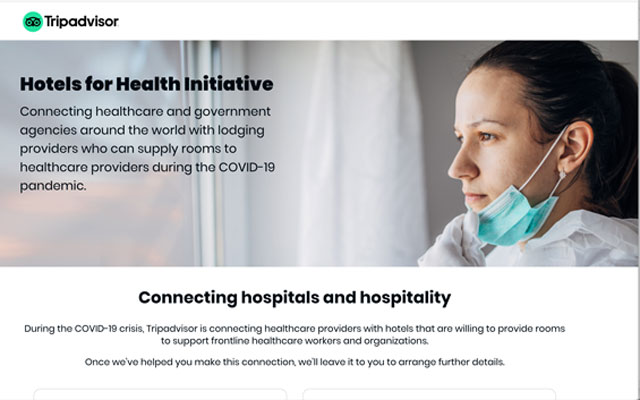
Following a trial in England, Tripadvisor will now launch its Hotels for Health programme globally to connect healthcare and government agencies with lodging providers that can supply rooms during the Covid-19 pandemic.
Tripadvisor explained that many frontline healthcare providers have been unable to return to their homes after their shift due to a variety of reasons, such as close interaction with positive Covid-19 patients, and therefore needed accommodation elsewhere.
Hotels for Health programme helps connect healthcare professionals with accommodation providers anywhere in the world
The Hotels for Health site allows healthcare providers to advise that they need rooms, and hotels to advise that they have spare rooms available. The teams at Tripadvisor will then connect the hotels and healthcare providers.
“At this challenging time, we know can play a unique role in helping to support the accommodation needs of frontline medical workers who seek out temporary housing, and we’re pleased to ask our hotel partners to do the same,” said Kanika Soni, chief commercial officer, Tripadvisor.
“We know so many frontline medical workers can’t simply return home after work because they live with someone with a compromised immune system, so Tripadvisor is proud to offer help where possible.”
Tripadvisor will use its extensive database of over two million accommodation properties worldwide to help target bespoke lists in specific areas where there is an urgent need for beds.
Tripadvisor connects healthcare institutions with willing accommodation partners. After making this connection, the logistics and details of the lodging experience are then managed directly by those two parties (excluding Tripadvisor).
The trial was conducted with the UK’s National Health Service and select hotels in the south of England.
WIthout a domestic travel market to rely on for the post-pandemic tourism rebound, Maldives will need to sharpen its destination marketing efforts in accessible regional markets, opined industry leaders during a webinar organised by PATA and the Maldives Marketing & PR Corporation (MMPRC) on Monday.
Speakers at the COVID-19 Crisis and Maldives Tourism webinar were Thoyyib Mohamed, managing director, MMPRC; Mario Hardy, CEO, PATA; and Sarah Mathews, group head of destination marketing APAC, TripAdvisor.
The Maldives has shifted her marketing campaigns to digital and online platforms, focusing on empathy
All speakers agreed that domestic travel would be the first to take off, with Hardy projecting the domestic market dominance will run for an extensive period before individual travel and eventually, mass market travel returns.
Damian Cook, CEO of E-Tourism Frontiers, expected the mass market to take a long time to recover due to health risks and higher travel costs driven up by stringent health checks, certification and longer turnarounds for aircraft needing disinfection.
On a positive note, Mathews said people would be eager to travel again after being cooped up indoors for so long.
“People are planning their next trip, doing research and seeking advice,” she shared, adding that travellers will book their next trip based on quality (value for money) and not cheap offers.
However, without “a domestic tourism product”, Cook said the Maldives would have to look at attracting travellers from the region and on short-haul flights.
Cook opined that destinations without a domestic market back-up would need a proper communication plan and show a lot of digital content to entice travellers to return.
MMPRC’s Mohamed revealed that while the destination’s Visit Maldives campaign was severely disrupted at the onset of the crisis, the team had chosen to “re-adopt and re-strategise our campaigns in our source markets”.
“We have shifted to digital and online campaigns, focusing on empathy. Our content is light-hearted and our ‘visit later’ message is for people to see and dream about the Maldives,” he explained.
Mohamed acknowledged that the Maldives would have to address public health in marketing, specifically the quality of the health measures and social distancing norms.
He emphasised that the Maldives’ one island, one resort concept has helped to contain the outbreak.
The Maldives has 214 Covid-19 infections as of April 27 and no fatalities.
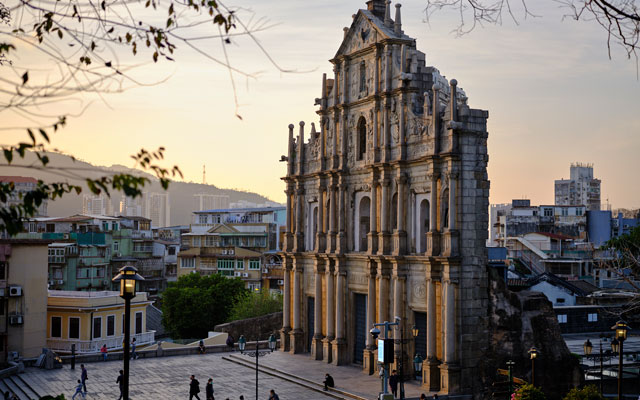
The Macau Government Tourism Office (MGTO) India is taking the travel downtime to train Indian travel partners in Macau’s tourism products, using online platforms such as WhatsApp.
Destination videos, presentations, voice notes and brief text messages will be sent out on live online platforms as well as text and voice messaging platforms like WhatsApp to Indian travel agents.
Online training during the current downtime will ready Indian travel agents for a sales rebound later
The content will include updated information on the city’s tourism offerings and points of appeal as an outbound destination.
Arzan Khambatta, head, MGTO India, said in a press statement that the country lockdown as a result of the pandemic has presented MGTO India a chance to “educate and connect with our travel trade partners virtually”, especially with travel agents it wasn’t able to reach out to earlier.
He said MGTO India is able to cater to a wider base of travel agents across India with this exercise.
Khambatta shared that he expects the travel industry to recover in a few months’ time.
“When the travel bands are lifted, we want to make sure agents are equipped with accurate information about Macau and can promote (the city) to discerning Indian travellers,” he said.
MGTO is also set to roll out a Macau Specialised Online Training Program for travel trade partners in India, complete with accreditation. Through completing and passing the modules in the specialist programme, agents in India can be certified as Macau Specialised Agents.