While most businesses in Singapore will reopen by July, its aviation and tourism industries face a longer wait to reopen fully, predicted deputy prime minister Heng Swee Kiat in a parliament session yesterday.
To support these affected businesses, the Singapore government has rolled out its fourth budget, dipping into another S$33 billion (US$23 billion) of the country’s reserve.
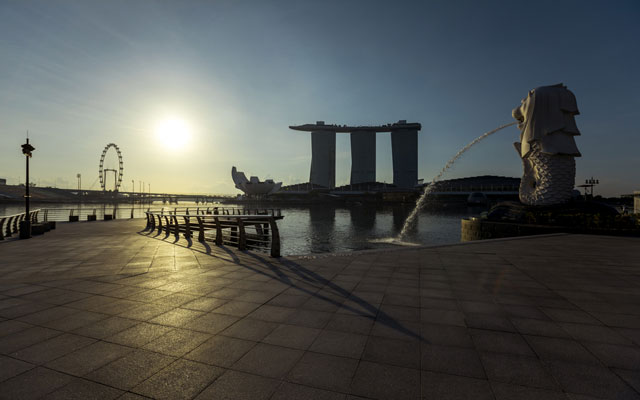
Singapore has rolled out a fourth support budget to aid affected businesses during the country’s Circuit Breaker period; a scene of Merlion Park (above) taken in April shows the popular tourist site emptied of visitors
The Fortitude Budget will provide another S$3.8 billion to augment its Job Support Scheme for businesses. Under the scheme, it will extend the duration of payouts to August 2020, and continue to provide 75 per cent of wage support until August 2020 to businesses that cannot open after the Circuit Breaker measures end on June 1.
As well, it will increase the level of support for sectors that have been severely impacted. For instance, workers in the offshore, marine and retail industries will now receive 50 per cent wage support, up from the previous 25 per cent. The payouts will be made by July 2020.
Heng urged firms to use this support to “retain staff and train workers”. For the aviation and tourism sectors, he added, the government “will consider providing additional help depending on the situation and longer-term shape of these industries”, as well as the reopening plans for the economy.
SMEs affected by rental concerns will also receive support as the government will pass a bill mandating landlords to grant rental waivers to tenants with significant revenue loss. Further, the government will provide S$2 billion in cash grants to offset the rental costs for qualifying SMEs over one to two months.
Other tenants, including hawkers and commercial, can now receive up to five months’ rental waiver.
For unemployed workers, the government also slated the creation of 100,000 job opportunities in the public and private sectors for first-time and mid-career job seekers under a trio of SGUnited incentive packages.
The Fortitude Budget also includes another S$285 million in financial support to promising start-ups, as well as more than S$500 million to encourage businesses to embark on digital transformation during this period.
Finally, the government has launched a series of National Innovation Challenges, which urge inter- and intra-industry partnerships to develop solutions for the safe reopening of the economy.
In total, Singapore’s four Covid-19 support budgets have amounted to nearly S$100 billion, or almost 20 per cent of the country’s GDP. In addition to this, the government anticipates that a total of S$51 billion will be withdrawn from the country’s past reserves in this financial year.
It will also bolster its Contingencies Fund – from the usual S$3 billion set aside every year to S$16 billion this year – in order to respond quickly to “unforeseeable developments” that may arise, said Heng.
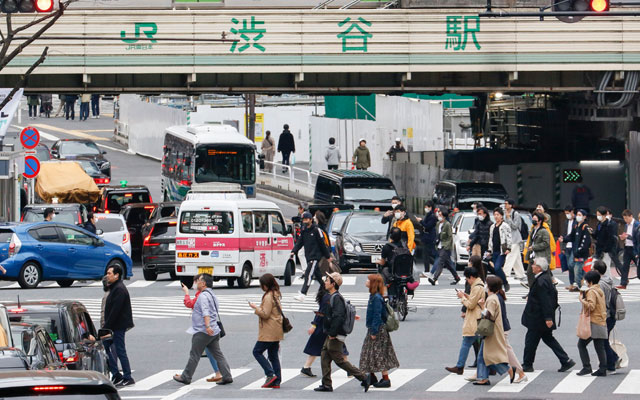
Japan’s regions are preparing to welcome tourists again following the lifting of the state of emergency for Tokyo and four neighbouring prefectures, imposed last month to curb the spreading coronavirus.
The move brings the nationwide “soft lockdown” to an end, and sees the resumption of economic activity.
Japan lifts nationwide state of emergency, allowing businesses to reopen
Officials continue to appeal for social distancing, but travel restrictions, at least within or across prefectures, are expected to be relaxed. The government is also set to fully reopen the economy by August, and plans to use the interim to promote new lifestyles without compromising on safety.
Tour agents and local tourism bureaus are developing campaigns, as well as new experiences and activities, to ensure they are top-of-mind when visitors decide their next destination. Many are also adapting to secure income in the short-term until Japan reopens its borders to international visitors.
The Hidden Japan, which operates largely in Yamagata, Akita and Miyagi prefectures, is developing options for domestic customers.
“Prior to the crisis, we were focused on international travellers. Now, we are creating new programmes for Japanese tourists or tailoring to them by making small modifications,” said Derek Yamashita, co-founder of the agency.
Yamashita is also creating new tours under the themes of the outdoors, food and adventure.
“We think people will want to get outdoors as much as possible once this crisis is over, so we’re developing hiking, fishing and meditation programmes. We also plan to offer catch and cook adventures, building on Tsuruoka’s status as a UNESCO Creative City of Gastronomy,” he said.
In Tottori, the Tourism and Exchange Bureau has launched the #WeLoveTottori campaign to raise awareness of the prefecture’s offerings.
Keiji Fukuoka, subsection head of the bureau’s Tourism Attraction Division, said they plan to work alongside the anticipated national government tourism campaign.
Okayama City is adopting a staggered approach in its marketing efforts, according to Mika Masuda, a member of the Tourism and MICE Promotion Division. For starters, it will target prefectural residents, followed by potential visitors in neighbouring prefectures, Japan and abroad.
Japan’s rural areas are expected to appeal as travel destinations post-crisis, thanks to their lower population density and few or zero cases of Covid-19.
Hong Kong Tourism Board (HKTB) has announced the launch of the second stage of its three-phase recovery plan to restore visitor confidence, as the pandemic situation in the country stabilises.
The recovery plan will kick-off with HKTB promoting domestic tourism in mid-June, before setting up “travel bubbles” to allow arrivals from low-risk countries, and finally, full resumption at the international level.
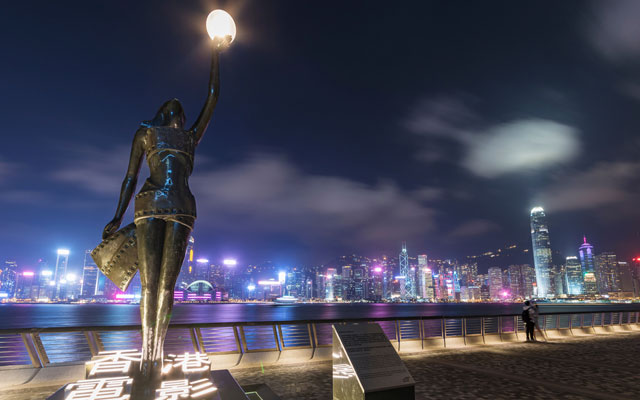
Hong Kong embarks on a three-phase recovery plan to reinvigorate its ailing tourism industry, which has suffered the double whammy of social unrest and the pandemic; a near-empty Tsim Sha Tsui Promenade in Hong Kong this April pictured
According to HKTB executive director, Dane Cheng, the city is ahead of the curve in containing the pandemic and should now move to create “travel bubbles” with neighbouring countries that share Hong Kong’s success in containing the coronavirus.
He explained that bilateral or multilateral agreements can be formed between cities and countries to set up standards and protocols on how to facilitate such travel in the region. “Any arrangements will depend on the quarantine, travel and immigration measures (imposed by) Hong Kong and the respective markets,” he said.
Cheng added that the Hong Kong government will conduct discussions with other markets, based on analysis and advice from HKTB.
“The Board and the Hong Kong government are closely monitoring the situation in different visitor source markets,” he shared. “Some potential destinations within the region are Macau, South Korea, Thailand and China. But for longhaul markets, it will take a longer time to rebound as the US and Europe are still in different stages of lockdowns and border closures.”
In fact, the HK$40 million Hello Hong Kong campaign sets out to encourage locals to travel around their hometown and explore the city from new perspectives.
Cheng explained that they are focusing on domestic tourism as there are no inbound visitors at the moment, and locals are restricted from travelling out of the city. If domestic tourism thrives, he added, it will send a positive message to international travellers that the city is a safe destination.
The campaign boasts three main features. Firstly, the “Tips on in-depth, immersive travel” recommends six thematic and immersive itineraries of lesser-known tourist activities, such as forest bathing in Tai Po and boat rowing in Tai Mei Tuk.
Secondly, a one-stop dining, shopping and entertainment platform has been launched, featuring more than 11,000 attractive offers, including “Spend-to-Redeem Free Local Tours” from merchants across the city.
Though the Hello Hong Kong campaign targets locals, HKTB will extend offers available under the campaign to foreign visitors, and launch special tour packages for them when international travel resumes in the city.
Car rental company Hertz will continue operating in Asia Pacific, amid news reports that certain of its US and Canadian subsidiaries have filed for Chapter 11 bankruptcy protection.
Eoin MacNeill, Hertz’s vice president, Asia Pacific said that it is business as usual for the company in Asia, and that “the decision by Hertz Global Holdings and certain of its US and Canadian subsidiaries to voluntarily file for reorganisation under Chapter 11 in the United States Courts has no material impact on Hertz operations in Asia which each operate under franchise arrangements.”
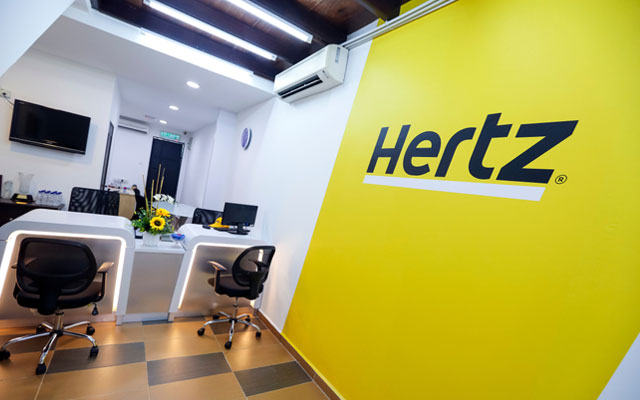
Hertz continues to operate in several countries across Asia; Hertz customer service centre in Penang, Malaysia pictured
MacNeill said that Hertz continues to operate in the following regions: Singapore, Guam, Saipan, Thailand, Malaysia, Taiwan, Hong Kong, Brunei, Pakistan, Cambodia, Vietnam, Macao, Japan, Philippines, Korea, India and Mainland China.
He added that the company has put enhanced cleaning protocols in place, and that Hertz loyalty programme points and rewards will not be affected.
“Since the pandemic began, we have undertaken a range of measures to reduce costs and ensure we keep the business as robust as possible in both markets,” he said.
“We have cut all discretionary spending, reduced labour costs and sought new rental agreements with landlords. We have also been de-fleeting our network, and de-registering unused vehicles.”
He added that they are now preparing their operations for the recovery phase, as lockdowns are lifted and travel resumes.
ACI and IATA are exhorting governments to ensure any new measures rolled out for airports and airlines post-pandemic are scientifically backed and globally consistent, in order to drive a balanced and effective restart for the aviation industry.
The trade associations have jointly issued a paper laying out a pathway for restarting the aviation industry, titled Safely Restarting Aviation – ACI and IATA Joint Approach. Airlines and airports have cooperated to build a roadmap for resuming operations which reassures the travelling public that health and safety remain the overall priorities.
Collaboration between governments necessary to drive recovery of aviation sector: ACI, IATA
The joint approach proposes a layered approach of measures across the entire passenger journey to minimise the risk of virus transmission at airports and onboard aircraft. ACI and IATA said such measures should be globally consistent and subject to continued review, improvement, and removal when no longer required, to ensure an even recovery.
ACI and IATA are both central members the COVID-19 Aviation Recovery Task Force (CART) being led by ICAO. CART enables the collaboration – among governments and between governments and industry – that is vital to ensure a unified response to restoring air connectivity and passenger confidence in air travel.
“Airports and airlines have come together with ICAO and the wider aviation industry to address the biggest challenge ever faced by commercial aviation in restarting a global industry while continuing to halt the spread of Covid-19,” ACI World director general Angela Gittens said.
“There is currently no single measure that could mitigate all the risks of restarting air travel but we believe a globally-consistent, outcome-based approach represents the most effective way of balancing risk mitigation with the need to unlock economies and to enable travel.”
IATA director general and CEO Alexandre de Juniac said: “Safety is always our top priority and that includes public health. Restoring air connectivity is vital to restarting the global economy and reconnecting people. Our layered approach of measures recommended by airports and airlines safeguard public health while offering a practical approach for a gradual restart of operations.
“It is important to remember that the risk of transmission on board is very low. And we are determined that aviation will not be a significant source of reinfection. We are working continuously with governments to ensure that any measures put in place are done so consistently and with scientific backing. That is key to restoring public confidence so the benefits of safely restarting aviation can be realised.”
Indonesia’s Ministry of Tourism and Creative Economy (MTCE) will be implementing the CHS (Cleanliness, Health, and Safety) programme in every destination across the archipelago linked to the tourism and creative industries, in a bid to speed up the sector’s recovery post-pandemic.
As part of the nationwide move, Bali is set to become the pilot project. During a meeting with Bali’s vice governor Tjokorda Oka Artha Ardhana Sukawati on May 14, MTCE secretary Ni Wayan Giri Adnyani said that the Ministry is currently preparing recovery measures including compiling SOPs relating to health, cleanliness, and safety standards.
Bali’s triumph over the virus will see it serve as the pilot project for Indonesian tourism ministry’s new health-centric programme
“Our Ministry collaborates with the Ministry of Health and related institutions in conducting surveys, verifying the implementation of the CHS SOPs properly and correctly, in accordance with the established standards,” said Ni Wayan Giri Adnyani, who is also head of Center for Tourism and Creative Economy.
She added that the initiative aims to rebuild visitor confidence and encourage tourists to return to Indonesia in the wake of the pandemic.
In general, Giri explained, the concept of CHS refers to health protocols issued by the Ministry of Health and the concept of sustainable tourism development, as well as the implementation of Sapta Pesona, which is the soul of Indonesian tourism.
In the initial stage, the CHS programme will be implemented in Bali, due to its relative success in containing the virus, despite being a tourist hub.
Giri said that the results from the CHS trial in Bali will become a point of reference for local governments and other tourism and creative economy stakeholders. “The next steps are verification, audit, and certification of CHS by involving certification institutions,” she concluded.
• Squeezed by fiscal woes, travel providers across Asia turn to diversification
• Revenue from pivots stands in stark contrast to tour sales, but proving a lifeline in uncertain times
• Pivots poised to outlast pandemic, say agents
To diversify or not to diversify has become less of a luxury and more of a necessity for tour operators across Asia, as the travel halt spurs them to forge new money-making roadmaps.
From selling produce to providing proxy shopping services, these innovative pivots in the face of the pandemic are raking in vital income, while at the same time, surfacing long-term growth opportunities.
Philippines-based tour agency MAD Travel’s employees packing bottles of honey sourced from local farmers for delivery to consumers across metro Manila, as part of their pivots amid the travel slump
For South Korean agency, Trazy – Travel Crazy Korea, it has opted to cast the net wide, offering since March a diverse range of services such as proxy shopping, food and grocery deliveries, as well as interpretation and translation.
Kristine Um, co-founder and CMO at Trazy, said those diversifications came about as the pandemic paused travel, adding that it was a breeze to pivot into these fresh revenue streams as they already had the basic infrastructure and skillsets in place, not to mention the necessary platforms to market these services to their target customers worldwide.
Though she declined to reveal income numbers, Um let on that these services are “gaining some traction, leading to actual sales”. A quick browse on Trazy’s website show that their food delivery service has grabbed some 2,600 eyeballs, while their proxy-buying service which ships internationally have been checked out by nearly 4,000 users.
Trazy’s staff leverage the agency’s social media platforms to plug their pivots, including their proxy shopping services. While foreigners may not be able to travel to South Korea during this time, via Trazy’s proxy shopping service, they are still able to snag everything from popular Korean snacks to Starbucks Korea’s coveted Cherry Blossom collectibles.
Um said the bulk of their customers hail from South-east Asia – Singapore, Indonesia, and the Philippines – and North America, with a smattering of Europeans.
As well, the agency is offering food delivery services in select cities across the country, targeting foreigners seeking to skirt the hassle of conversing in Korean and the complex Korean payment system. More recently, the agency has rolled out translation and interpretation services, facilitated by its English and Korean bilingual staff.
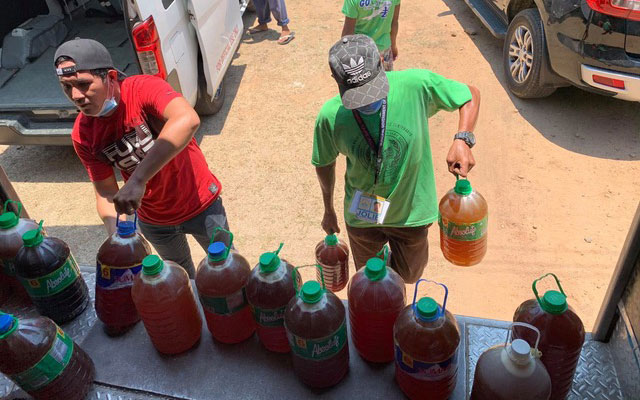
Over in the Philippines, eco-tour operator MAD Travel has started the MAD Market, an online marketplace that sources from local farmers and SMEs, while delivering fresh produce to doorsteps across metro Manila.
“This new service came about when people in the metro were searching for means to have fresh fruits and vegetables delivered to their doorstep. So, we did what we’ve always done – bridge farmers and communities to guests – just this time, through an online delivery market instead of tourism,” said MAD Travel co-founder Rafael Dionisio, adding that the initiative partners 60 farmers, four small businesses, and 10 market vendors.
“At the MAD Market, we’ve started selling some of the produce from our partner communities – earning them income critical at this time. We plan to continue our MAD Market even when travel bounces back as it’s another channel to pump up village economies and engage even more tribes and communities.”
Additionally, MAD Travel has expanded their online social enterprise courses, which were first started in 2019. These online courses offer experiential learning to students by connecting them with social entrepreneurs, explained Dionisio.
“With travel currently off the agenda for most schools around the world, we had to rethink our approach to service learning by ensuring experiential, inspiring and thought-provoking experiences without compromising student safety,” he said.
“We do this through virtual tours, where students will have authentic interactions with local communities and social entrepreneurs which broaden horizons and enhance understandings of what constitutes impactful service. Once travel lifts, we plan to fuse online and on-ground learning.”
Already, their pivots are bearing fruit. Since its April launch, the MAD Market has chalked up more than 600 orders, while the agency is catering custom-made online courses to over a dozen school partners.
Dionisio said: “We have already begun running programmes with international schools and universities in Europe and South-east Asia, especially for our existing partners.”
“Fortunately, we have in our team foreigners who are equally passionate about the Philippines, and this enables us to connect to new markets in Australia, France, Malaysia and the UK, to name a few.”
For Japan-based Joy Paradise Solution, the pandemic saw the Malaysian tour agency pivoting to commercial food exports. Its co-founder, Dominic Teh, said the idea was born when a movement control order (MCO) disrupted the travel plans of their returning Malaysian clients, who began asking the agency to send some Japanese goods their way.
He said their export business which launched in March has since grown from word-of-mouth and social media publicity including livestreams, and the company now has a distribution warehouse in Osaka. The firm’s main markets for its exports are Malaysia and Singapore, but it also services customers in Hong Kong, Taiwan, and China, according to Teh.
The company exports mainly food items like Japanese instant ramen, and Calbee’s breakfast cereals and snacks, but also Japanese anti-virus products like surgical masks and sterile hand sanitisers that have become coveted commodities in the pandemic’s wake.
Dominic Teh, co-founder of Japan-based tour agency Joy Paradise Solution, promoting Japanese instant ramen, which are among the food items exported by the company, on its Facebook page
Teh claimed that their products are sold at lower prices from those found on the local online market. Moreover, he noted, there is a shortage of food items across Asia due to supply chain disruptions, and that they ship their goods by air, the swiftest mode of transport.
Building on that demand for Japanese goods, the company has recently started pushing Japanese luxury watches to its Malaysian clients, citing a surge in interest from local watch enthusiasts.
Silver, long-term lining to coronavirus
The short-term downturn may have thrown up long-term growth prospects, with tour operators adopting a far-sighted perspective in their pivoting strategies, even as they tackle short-lived headwinds posed by the pandemic. As businesses are driven to pad up their portfolios, reinventions made in light of evolving realities could prove long-lasting, including a greater focus on e-commerce and virtual experiences.
For MAD Travel, Dionisio said that the agency’s diversifications form part of its long-term strategy, and are poised to outlast the pandemic.
“Through offering virtual tours, an online marketplace and, eventually, on-site tours once more, we hope to be able to support communities in different ways. They are actually part of a long-term plan to diversify our income streams, and also to support our communities in a more holistic manner,” he said.
“All our plans are flexible or can be done online as we don’t know how long it will be before people feel comfortable to travel again – and that’s a big part of what we considered with our strategy.”
That deeper dive into virtual engagement has necessitated the reskilling of their workforce, which may very well be a linchpin to thrive in a new normality.
Dionisio elaborated: “For online education, we are focused on training the travel team to market virtual experiences instead of on-site ones. The team learning how to become teachers and facilitators online is a challenge. After all, what works in person doesn’t necessarily work online.”
Also thinking long-term is Teh, who stressed that the seven-person company plans to continue its newfound venture even after travel resumes, especially since business has grown by 30 per cent over the past two months. “At most, we will hire more staff to continue maintaining this business,” he said.
On the other hand, Um said it remains to be seen how long her company’s pivots will persist, as uncertainty abounds.
Still, she sees a silver lining amid the Covid-19 cloud. “(These pivots are) a way to see things in a new perspective. Perhaps, it may be a great opportunity for us to expand and diversify our business,” Um said. “We’re at a stage where we’re trying to increase awareness (of our new services) so as to provide something beyond the travel industry.”
Short-term losses, long-term gains
Though agents reported that the revenue from their pivots so far pale in comparison to their tour sales, they claim that it is still vital income nonetheless.
Teh called the company’s export sales a “far cry” from its pre-pandemic tour business income, matching only 10 per cent of the former. But he said that the earnings are helping to cover their losses during the MCO period, especially given Japan’s high living costs.
Likewise, Dionisio shared that MAD Travel’s pivots are raking in merely 20 per cent of the agency’s travel revenue before the crisis hit, but declined to reveal the actual numbers.
Still, he is optimistic about the future outlook of the market. “In times like these, 20 per cent is plenty, and much better than zero. It has allowed us to keep parts of the company operational, in a world where most travel companies are at zero. We think that we can get back on track within a year,” he said.
Joy Paradise Solution’s Teh (left) and fellow co-founder Hugo in talks with their local supplier partner for luxury watches, which they plan to market to Malaysians during the travel downturn
Looking ahead, both Dionisio and Teh reported that this diversification of revenue streams feeds back into their core travel business.
Dioniso said: “Long-term, we see that the education programme can feed into the travel programmes, and that the online marketplace allows us to continuously connect with customers before or after they travel.”
Similarly, Teh said that the company’s export venture has raised awareness about its main tour business. He added: “We tap into new markets for our export enterprise. Occasionally, we will also distribute some tour vouchers with our products, so more people come to know that we are in the travel business. This is to pave the way for our future recovery.”
One of Malaysia’s many adventure spots, Kiulu River, Sabah, is suitable for families and amateurs with its gentler Class One to Two rapids
A decade ago, adventure tourism used to be associated with Europeans on holiday seeking an adrenaline high through adventurous pursuits such as bungee jumping, rock climbing or a hiking expedition.
This trend is changing. Over the last couple of years, the travel trade in Asia has seen increasing demand from Asians looking for soft adventure activities as well as authentic experiences in destinations off the beaten track.
Natasha Martin, a freelance consultant on adventure travel based in Cambodia, reckoned that the trend is motivated by an increasingly mature Asian traveller market. Unsatisfied with the typical shopping and sightseeing, the market is eyeing more meaningful experiences.
That is where adventure travel comes in. Travellers are given the opportunity to explore new places and learn about new cultures – two elements which make for “a memorable holiday”, noted Martin.
Where nature meets culture
It is that emphasis on not just nature and adventure, but education and culture that sets Asian adventure travellers apart.
Irshad Mobarak, founder of JungleWalla Tours – a tour operator specialising in taking groups to eco-tourism destinations in Langkawi – has seen that with his company.
He noted a rise in the number of participants from Singapore, South Korea, Japan and the domestic Malaysian market over the last five years. “Most (of them are) FIT nuclear and multigenerational families, who appreciate an educational element in the programme,” he shared.
Unlike European travellers, the Asian market prefers soft adventures. “They seek activities such as birdwatching, wildlife spotting and kayaking, as well as the opportunity to, say, trek to a waterfall and enjoy a home-cooked meal at a local’s residence on the way back,” revealed Mobarak.
In comparison, guests from France and Germany tend to engage JungleWalla Tours for hardcore adventures.
Where dollars make sense
Given the high-risk and specialised nature of adventure tours, travellers in this niche sector are more likely to engage professional services – including that of guides and tour operators – than the traditional travel market, noted Martin.
Uzaidi Udanis, general manager, Eyes Holidays, agreed and noted that, in fact, travellers were ready to fork out more than usual for such services. This was evident when his company took FIT travellers from neighbouring countries to Gopeng, Perak, for a two-day, one-night whitewater rafting trip.
“(The travellers) were willing to pay US$500 for the unique experience of being in an all-natural, pristine setting where rapids were of Class One to Class Four,” he shared.
Paul Landgraver, co-founder of Wicked Adventures, said travellers were willing to pay for his packages, which are priced at the higher end of the market. Wicked Adventures draws an increasing number of working professionals from Singapore, Bangkok and Kuala Lumpur, aged 25 to 35.
Wicked Adventures takes travellers to remote Indonesian destinations, such as Komodo, Flores and Sumbawa, where they can engage in active adventures.
Where sustainability matters
Landgraver shared that a percentage of his company’s revenue is channelled to the local community through the Wicked Good Foundation. The latter provides on-the-job training for locals interested in the tourism industry, and funds turtle conservation camp Pante Hera in the Savu Sea Marine Protected Area.
Run by volunteers and operated through donations, Pante Hera camp works to protect endangered hawksbill sea turtles and raise environmental awareness among local villagers.
Considering the close relationship between nature, culture and adventure travel, making genuine efforts to engage with and give back to the local community – while taking on the responsibility of environmental conservation – seems the natural course of action for players in the sector.
Where community is key
This brings to mind another niche sector where adventure and experiences of local culture can meet: community-based tourism (CBT).
Guam, located in the western Pacific Ocean and nearest to the Philippines among ASEAN nations, is a choice location for CBT travellers, with culture dating back to neolithic times. Latte stone structures on the island are testament to the culture of her indigenous people – the Chamorros – which dates back to the Latte Period of 2000BC.
Currently, the US island territory receives mostly tourists from Japan and South Korea, which are a few hours’ flight away. However, Guam is looking to promote CBT on the island to South-east Asian markets.
Mark Manglona, marketing manager, Guam Visitors Bureau, shared that his team is looking to set up marketing representation in either Singapore or Malaysia.
One of the island’s key eco-tourism destinations closely tied with the community is The Valley of the Latte Adventure Park. Locals are involved in the tours offered, which feature an adventure riverboat cruise on the Talofofo and Ugum Rivers, kayaking as well as stand-up paddle-boarding.
After all the action, visitors go on a tour of the Latte Stones and an ancient Chamorro village. They are also invited to witness fire-starting and basket-weaving demonstrations and learn about the culture of the Chamorros.
Within South-east Asia, CBT is also thriving. Local communities have been able to benefit from tourism while visitors get to appreciate the heritage of the places they visit. And for this authentic exchange to happen, local communities find value in preserving their environment and way of living.
Where they get the word out
Tapping on the potential of adventure travel and CBT is inevitably tied to responsible promotion.
In mid-February, 347 delegates from 33 countries gathered in Sabah, Malaysia, for the 2020 run of the PATA Adventure Travel Conference & Mart to promote their destinations, network, and better understand the adventure travel market.
Sabah took the opportunity to bring some of the delegates to the renowned Kinabalu National Park, where they learnt about local culture and myths amid unspoiled nature.
Considering Sabah’s status as a key eco-tourism spot in Malaysia, the local tourism office continuously emphasises to CBT players the need to market their products online, Noredah Othman, general manager, Sabah Tourism, told TTG Asia.
They are also encouraged to follow Sabah Tourism on overseas roadshows and tradeshows for promotions.
OTA Insight, a cloud-based data intelligence platform for the hospitality industry, is introducing several new product features to its business intelligence tool Revenue Insight to support hotels’ Covid-19 recovery plans.
As lockdowns lift, hotels’ PMS data will become an even greater source of insights to understand the market and demand shifts at the property level.
Revenue Insights rolls out new features to help hoteliers anticipate demand and plan recovery
To make the most of the rebound and business recovery, it’s critical that hoteliers and revenue managers can easily visualise pick-up and pace insights, analyse business mix trends, rapidly adjust forecasts, and most importantly, quickly spot segments that are showing signs of recovery.
“Hoteliers are relying on Revenue Insight more than ever to help navigate unpredictable market conditions,” Sean Fitzpatrick, CEO of OTA Insight, said in a statement.
“We’re working closely with hotel and cluster level users to quickly innovate and deliver features and insights based on the ‘new normal’ versus relying on historical trends.”
In addition to monitoring each property’s performance, cluster managers can now manage their hotel portfolio to monitor trends and track data on a granular level. This is increasingly critical as the onset, pace, and intensity of the recovery differs by market, region and customer segment, said OTA Insight.
Revenue Insight multi-property delivers instant access to portfolio performance data to make faster and better decisions suitable for each hotel, as well as comprehending where each property stands in the recovery phase.
Emerging as the first business intelligence solution to remove manual Excel reporting and fully harness the power of detailed PMS data, Revenue Insight empowers multi-department commercial teams to achieve better cross-functional alignment.
Revenue Insight unique property-level features include:
● Custom date period comparison – the same period last year is no longer relevant. The new compare features enables comparison with last week, last month or any custom periods to make better planning assumptions.
● Make quick forecast adjustments – as restrictions are lifted and market conditions change rapidly. Hoteliers will be able to adjust, compare and keep their enterprise team up to speed. Budget and forecast targets can easily be uploaded directly into the dashboard to monitor performance.
● Business breakdown details – track data by segment, agency, channel and company as the onset, pace, and intensity of the recovery will differ by region and by customer segment.
● Rate Insight’s rates integration – evaluate how rate positioning impacts hotel business, and take immediate actions to optimise performance.
This is in addition to portfolio-level features, including aggregated KPIs, which allow users to monitor hotels’ overall performance and momentum, as well as a dynamic business mix dashboard to predict the recovery, and monitor which locations start picking up and on which channels to refine pricing and distribution decisions.
Marriott International will be marking the return of its W brand to Australia, with the opening of its second property in Melbourne this December, following a delay of its original June launch.
Forming the centerpiece of Cbus Property’s A$1.25 billion (US$816 million) Collins Arch mixed-use precinct, W Melbourne is touted as the city’s first luxury lifestyle hotel with a “rebellious luxury” edge.
W Melbourne will open its doors to guests this December
Located at 408 Flinders Lane, W Melbourne will feature 294 guest rooms, including 29 suites. Hotel facilities include four F&B outlets, starring a Japanese fine dining restaurant, an all-day dining venue, as well as two bars including a hybrid café-meets-wine-bar.
Other amenities include a fitness facility, a gold-roof adorned indoor pool with poolside bar and DJ booth, as well as 830m2 of conference, meeting and event space, including a 426m2 pillarless ballroom.