Luxury hospitality management group, The Lux Collective, has signed four retreats along Yunnan’s legendary trade route, Tea Horse Road, with Lijiang Yulong Tourism Corporation.
The new retreats, to be located in the Chinese province’s most picturesque areas of Jibeike, Sangushui, Daju Village and Baoshan Stone Town, will complement two existing LUX* properties in Lijiang and Benzilan.
They will open in September 2020.
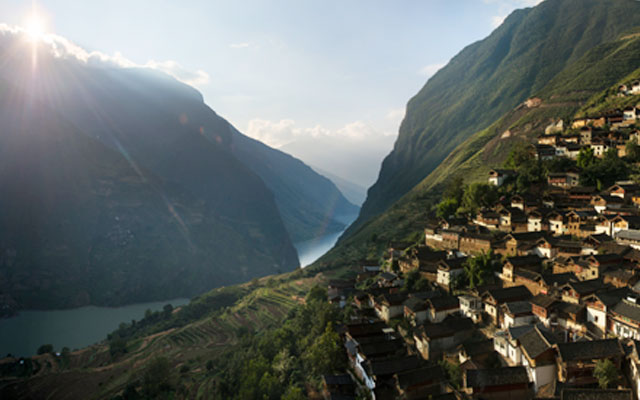
The remote Baoshan Stone Town will welcome a LUX* retreat this September
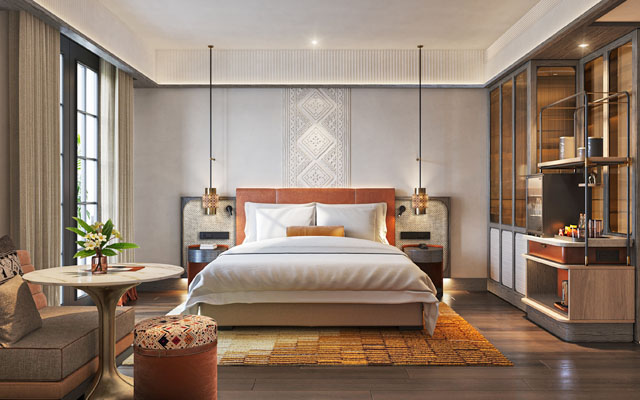
Tucked away in a valley of rolling hills and peach orchards, 2,642m above sea level, LUX* Tea Horse Road Peach Valley will be a 17-room boutique retreat that takes the surrounding rustic farmland into its chic design.
The six-room LUX* Tea Horse Road Stone Town sits in a remote village on a rocky cliff hanging over a river and the heart of Naxi culture. Its communal area promises striking views of the river and mountain peaks.
Located centrally in Sangushui village, LUX* Tea Horse Road Sangushui is a 15-room retreat that offers a peek into one of the world’s oldest living cultures.
The modern LUX* Tea Horse Road Daju Village is an 18-room sanctuary that blends mindful living with nature immersions. Surrounded by lush fields of grain and vegetables, the wild and beautiful Daju Village is the gateway to one of the world’s deepest canyons.
Commenting on the development, Karen Lai, The Lux Collective’s senior vice president – global business development, said: “We are confident that our strong collaboration (with Lijiang Yulong Tourism Corporation) will not only further enhance the group’s presence along the ancient passageway but will also offer the culturally curious a once-in-a-lifetime transformational journey along the mystical trade route.”
A further two more hotels, LUX* Tea Horse Road Dali and Pu’er, are anticipated to open in 1H2021.
Philippine travel agents are finding their current financial strain exacerbated by domestic airlines’ continued refusal to refund unfulfilled air tickets, revealed speakers at a Philippine Tour Operators Association webinar this week.
Money from paid up but unused air tickets are instead stored by airlines in a travel fund that can be used to book flights within a certain time period.
Philippine travel agents are struggling with airfare refunds which are said to be not forthcoming
This is tantamount to airlines getting interest-free financing from smaller players, said former tourism undersecretary Alma Rita Jimenez.
“If your money is tied up there (for) somebody else (to use), and that somebody happens to be richer than you are, it’s unjust,” Jimenez said.
Lax Junnel Mendoza, forced by the pandemic to close his 10-year old company, VYGR International Travel, said that Cebu Pacific had previously issued a statement that it would be giving cash refunds for air tickets to flights cancelled by the pandemic. However, that did not happen, and refunds were channelled into a travel fund for later use.
Mendoza said millions of pesos are parked with Cebu Pacific and other airlines, and the travel fund is useless now to passengers as it is uncertain when airlines will resume service.
He added that it was not always easy for passengers to understand that their refund was stuck with the airlines and not the travel agency.
This also causes agencies’ liquidity problems because the money is “sleeping with airlines” instead of being used by struggling agencies to invest or divest for survival, according to Mendoza.
Jimenez: airlines should be financed by government loans and not refunds meant for travel agencies and passengers
Elusive refunds are not unique to airlines, as travel agents revealed that some hotels and resorts are doing the same.
Mary Ann Ong, general manager inbound, Bridges Travel and Tours, said there were Chinese tour operators who paid in advance for Chinese New Year tour packages that never happened.
“Hotels in Boracay, Bohol and Cebu are not paying us back due to cash flow problems,” Ong said.
Jimenez, currently president of ASEAN Society Philippines, Management Association of the Philippines, recommended that a part of the 36 billion peso (US$713 million) soft loan portion of the proposed 58 billion peso tourism stimulus package be converted into a revolving fund that will reimburse all airline refunds.
She explained that it made better sense for the big airline companies to owe the government money, rather than the smaller travel agencies.
“We understand that airlines have liquidity problems but it’s unjust (to) borrow from much smaller companies,” she added.
The recommendation, which earned support during the webinar, will be part of the position paper that Jimenez is preparing to help the micro and small and medium tourism industries that are most affected by the pandemic.
Thailand’s second-stage airline relief will include indefinite waivers of parking fees as well as discounted takeoff/landing fees for all airlines operating on Thai soil.
The latest round of assistance, revealed by Civil Aviation Authority of Thailand’s (CAAT) director-general Chula Sukmanop during the Civil Aviation Committee (CAC) meeting on Tuesday, joins an existing 50 per cent discount on both aircraft parking fees and takeoff/landing fees for 11 countries in the region until the end of the year, introduced earlier in March.
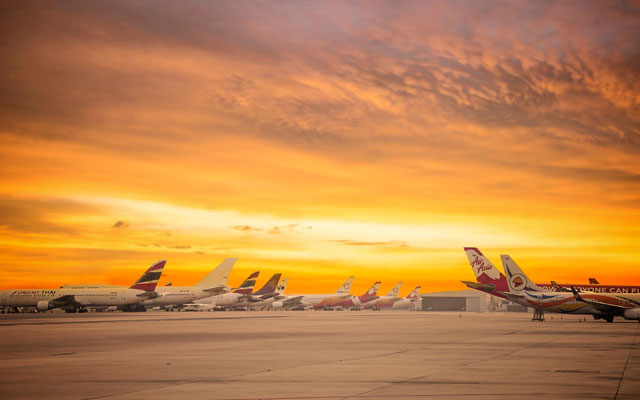
Grounded aircraft at Don Mueang International Airport
CAAT has also extended deadlines for airlines to pay the 15-baht (US$0.50) per passenger handling fee from 15 to 90 days with no late payment surcharge.
The Happiness Sharing Trips subsidy for domestic transportation – comprising two billion baht out of the 22.4 billion baht stimulus released last week – is intended to benefit domestic airlines as well; it will cover up to 40 per cent of fares capped at 1,000 baht per tourist.
The pandemic has placed Thai domestic airlines and national aviation organisations in a tight spot, especially as the country is further delaying the resumption of international tourism.
Bangkok’s Suvarnabhumi and Don Mueang international airports now see only 17,000 passengers a day from domestic flights. The plan to let in some international travellers starting July 1 is limited to around 50,000 travellers altogether.
Several agencies, such as the Department of Airport, which oversees 29 airports in the country, and Aeronautical Radio of Thailand, which draws its revenue from air traffic control fees, have requested financial aid or low-interest loans from the government.
Eight domestic airlines have requested soft loans totalling 24 billion baht from the Thai government.
Nok Scoot yesterday announced it will lay off over 50 per cent of its staff, scale down its fleet from five jets to three, and stop operations in Thailand altogether, stating that demand may not return to pre-Covid-19 levels until 2022 or 2023. Air Asia X plans to take over many of its routes.
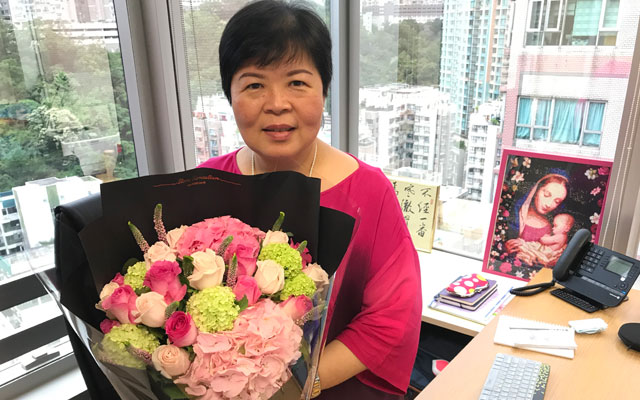
Jebsen Holidays has appointed Lily Agonoy as managing director.
In her new role, she will oversee all existing Jebsen Holidays teams – Virtuoso, Leisure, Cruises, MICE and Inbound; and will report directly to COO & CFO Alvin Miu and the MF Jebsen Board of Directors.
No stranger to the industry, Agonoy was managing director of BCD Hong Kong, and was formerly part of MF Jebsen Group before the BCD divestiture.
Agonoy first joined MF Jebsen in 2012 to lead the BCD Hong Kong Corporate travel business. Prior to that, she was with Farrington American Express Travel.
Maldives will reopen her borders come July 15, welcoming travellers with neither compulsory quarantines nor swab tests upon arrival.
The announcement came on Tuesday from the country’s president Ibrahim Mohamed Solih, who also said that prayers in congregation are expected to resume, students will return to classrooms, and restaurants and cafes will reopen for dine-in service.
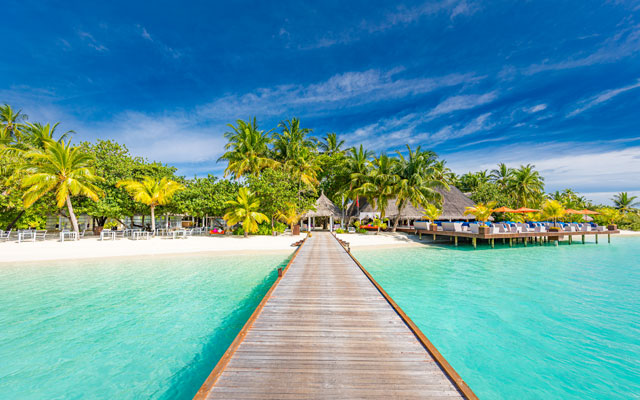
The Maldives has lowered barriers to travellers’ entry and established a fast lane with China
According to guidelines issued by the Ministry of Tourism on Tuesday, visitors will be given a free 30-day visa-on-arrival document, and will not be needed to undergo Covid-19 test and compulsory quarantine.
However, travellers displaying Covid-19 symptoms will need to take a polymerase chain reaction (PCR) test on arrival.
To enter the Maldives, travellers will need a confirmed booking in a registered tourist establishment, and must book their entire stay with only one resort or hotel. Exemptions will be made for transit arrangements.
While hotels and resorts on uninhabited islands will reopen on July 15, guesthouses and hotels on inhabited islands will only resume business in August when the country moves into her second phase of reopening.
According to local media reports, seven resorts in the destination will reopen in July while others will have staggered openings between August and October.
Meanwhile, airlines including SriLankan Airlines, Qatar Airways, Etihad Airways, Emirates, IndiGo, Singapore Airlines, SilkAir and Turkish Airlines have agreed to resume flights starting from July, paving the way for a return to tourism.
The president’s announcement was a relief for the local tourism industry, which is heavily dependent on foreign arrivals. As a result of the pandemic and near global lockdown of international borders, arrivals to the Maldives this year are projected to drop to 98,000, down by from the earlier target of two million and a record 1.7 million in 2019.
Soneva’s founder Sonu Shivdasani and Heritance Aarah & Adaaran Resorts – Maldives’ assistant vice president – sales and marketing, Suresh Dissanayake, have expressed delight at the progress.
While Dissanayake acknowledged that the tourist pick-up would not be immediate, the news positioned the Maldives as being back to “welcoming visitors”.
So far, Heritance has bookings for its Maldives properties from this September into 2021, with 60 per cent of them coming from the UK.
In a further demonstration of the Maldives’ determination to return to tourism normalcy, the government will launch a fast lane for Chinese travellers from July 15. China is the country’s biggest tourism source market.
Dissanayake: ready to welcome visitors again
President Solih explained that the fast lane would allow Chinese travellers to fly home from the Maldives without having to serve quarantine back in China. They will, however, need to take a swab test 48 hours before departing from the Maldives and when they land in China.
To support the relaxed border restrictions, all resorts in the Maldives will abide by the government’s guidelines for their guests. Compulsory measures include standard health and safety checks, designated isolation rooms for suspect Covid-19 cases, and a certified doctor onsite.
In an exception to the official rule, Soneva will conduct its own rapid swab test for all guests upon arrival at the airport. Thereafter, guests of Soneva Fushi and Soneva Jani will be escorted to their villa and asked to remain there until the test results are out – between six and 24 hours – and found to be negative.
Janice Tan has joined Vakkaru Maldives as director of sales and marketing.
The hospitality veteran has been in the industry for 20 years, having first embarked on her career at the Mandarin Oriental.
Her experience includes launching luxury resorts in the Maldives including Anantara Naladhu, during her tenure as Anantara Group’s cluster director of public relations; as well as Velaa Private Island and Accor’s Raffles Maldives Meradhoo, where she served on both occasions as director of sales and marketing.
She also spent time as regional director of sales and marketing for Como Hotels and Resorts’ Como Maalifushi and Como Cocoa Island.
She is currently based in both Singapore and the Maldives.
Suncity Group Holdings will be opening Hoiana, its integrated resort project in Vietnam, for preview this Sunday.
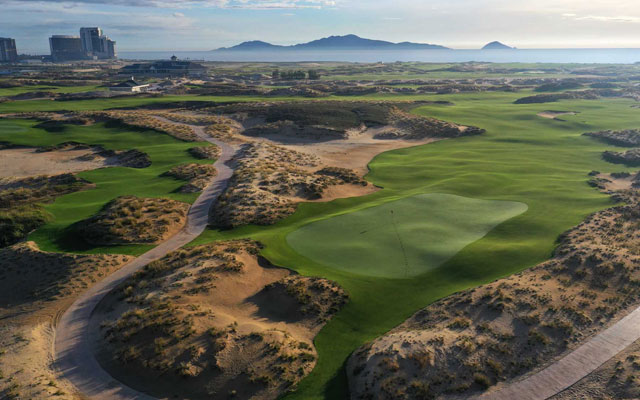
Located in Hoi An in central Vietnam, Hoiana is four years in the making. During the preview period – the timeline remains unspecified – guests can enjoy entertainment and gaming facilities by Hoiana Suncity; play at the resort’s 18-hole golf course, Hoiana Shores Golf Club, designed by architect Robert Trent Jones Jr.; or indulge in the Hoiana Hotel & Suites, the first of four luxurious hotels managed by Rosewood Hotel Group.
During Hoiana’s soft opening, guests will be able to make use of some of the resort’s facilities, include the Hoiana Shores Golf Club (above)
Upon completion of its phase one development, Hoiana will showcase four hotels offering over 1,000 rooms, suites and villas; New World Hoiana Hotel & Residences catering for both short-term and long-term stays; and KHOS Hoiana, a brand-new hospitality concept that combines guestrooms with social hubs. Slated to open at a later stage is the Rosewood Hoi An.
Phase one also includes a 4km coastline where a beach club is being built, as well as a wide array of F&B and retail brands.
Hoiana is slated to hold its grand opening in 2021.
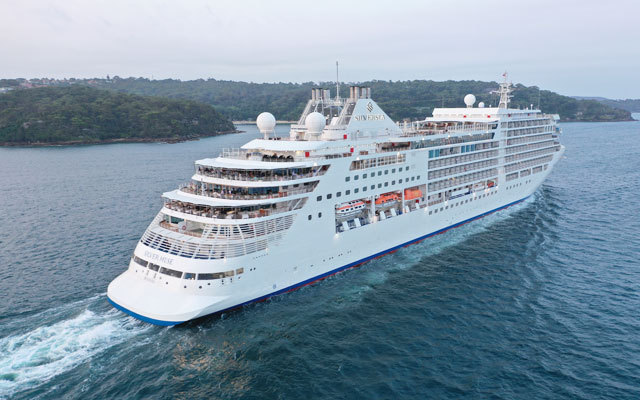
Silversea Cruises has unveiled 86 new itineraries for summer 2021/22 which will call at 222 destinations across 67 countries, with eight maiden calls, including three in Asia – Miyako, Japan; Makassar, Indonesia; and Vigan-Salomague Port, The Philippines.
Departing between October 2021 and April 2022, the new programme features voyages in Asia, Australia & New Zealand, South America, Galapagos, the Caribbean and the Middle East. An expanded programme of sailings in the Asia-Pacific region will see the brand new Silver Moon and the reimagined Silver Shadow join flagship Silver Muse as the third Silversea vessel to offer voyages in Asia.
Silversea has unveiled 17 new sailings in Asia, with three ships based in the region for the first time, as part of its new itinerary release
Maiden calls in the global programme are Miyako, Japan; Makassar, Indonesia; Vigan Salomague, the Philippines; Phillip Island and Geelong in Australia; Manama, Bahrain; Puerto Bolivar, Ecuador; and Kingstown, St. Vincent.
Key highlights include a diverse range of voyages across Asia, such as an enhanced offering in Japan, deep discovery of Vietnam, and new itineraries to Indonesia and Papua New Guinea. As well, Silver Shadow will offer four itineraries including the opportunity for extended stays in both Yangon and Ho Chi Minh.
The new programme also features the most extensive Australia & New Zealand itineraries to date, offering 12 new voyages aboard two Silversea ships. Other highlights include a 74-night circumnavigation of South America aboard new ship Silver Dawn, with a exploration of the Amazon River; and 30 Galapagos voyages aboard new 100-guest ship Silver Origin.
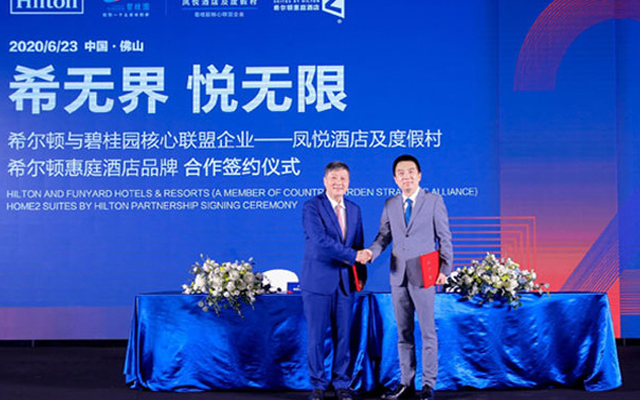
Hilton has signed a management license agreement with Chinese real estate giant Country Garden to introduce and develop the Home2 Suites by Hilton brand in China.
The agreement with Funyard Hotel Investment (Asia), a subsidiary of Country Garden, further strengthens cooperation between Hilton and Country Garden. Home2 Suites by Hilton is an upper midscale lodging brand that caters for both short-term and long-term stays.
Hilton signs new deal with Country Garden to debut the Home2 Suites by Hilton brand in China
Hilton currently manages six Country Garden-owned hotels now operating or in the pipeline, according to Qian Jin, area president, Greater China and Mongolia, Hilton.
“In light of the current climate, we expect domestic tourism to be a key pillar of China’s economy and hospitality market,” he said, adding that Home2 Suites by Hilton aims to provide consumers with “a well-trusted product that is market-relevant”.
Home2 Suites by Hilton currently has approximately 400 operating hotels and over 450 hotels in the pipeline across the US and Canada, and its introduction to the Chinese market represents the first major extended stay play for the brand outside of North America.
WTTC has launched its third phase of safety protocols to aid the reopening of global attractions, car hire companies and short-term rentals, in a bid to rebuild consumer confidence, reduce risk and encourage safe travels.
WTTC said it held detailed discussions with key stakeholders and organisations to ensure maximum buy-in, alignment and practical implementation. The measures help to set clear expectations of what travellers can experience in the ‘new normal’ which offer safe environments as travel restrictions are eased.
WTTC has released a set of health and hygiene protocols which provide consistency to destinations and countries as well as guidance to travel providers operating in the post-Covid-19 world
Backed by UNWTO, the WTTC protocols also take into account WHO guidelines, and the WTTC Safe Travels stamp recognises destinations, countries, businesses and governments worldwide which have adopted them.
WTTC divided the new guidance into four pillars: operational and staff preparedness, delivering a safe experience, rebuilding trust and confidence, and implementing enabling policies.
Measures include:
Attractions
• Encourage guests to buy advanced tickets online if possible, and considered timed entries and smaller groups
• Identify realistic capacities for attractions based on queue length, waiting areas, pre-shows and vehicle capacity; and adjust accordingly to allow for physical distancing
• Use of virtual queue systems, contactless touchpoints and payment where possible
• Personal protection equipment (PPE) available for all customer-facing staff
• Enhanced cleaning at high-frequency touchpoints
• Sanitise strollers, electric buggies and wheelchairs between every use if applicable
• Make available hand sanitisers in high-traffic areas such as entry, key walkways, F&B locations, merchandise shops and exits
• Consider increasing the number of performances and an end-of-show announcement to encourage guests to take their time exiting
• For water parks, evaluate closing or removing hands-on interactive features within play structures if they aren’t covered in treated pool water
• Encourage guests to reduce the number of personal items they bring into the venue
Car Rental
• Pre-arrival health declaration via email, if required and in accordance with GDPR
• Enhance cleaning to all offices, including check-in, counters, desktops, washrooms and any high-frequency touchpoints
• Encourage use of curb side pick-up and drop-off. Consider moving to a fully digital process including payments and limit physical interaction with staff
• Health/temperature checks, if recommended by legislation, and sanitation stations for customers through hand sanitisers in high-traffic areas
• Limit the number of people allowed per vehicle collection, as well as decreasing the number of people allowed in the car rental establishment at any one time
• All cars to be cleaned with a focus on high-frequency touchpoints
Short-Term Rentals
• Use of contactless technology to enable automation at check-in and payment where possible
• Minimise physical interaction when providing guests with keys, ideally in a contactless manner by offering self check-in and check-out, where possible
• Enhance sanitation, disinfection and deep cleaning practices as well as increasing their cleaning/disinfection frequency with a focus on high-frequency touchpoints
• Provide guests with physical distancing etiquette, including in elevators if relevant, through signage
• Make available hand sanitiser to guests at entrance of short-term rental