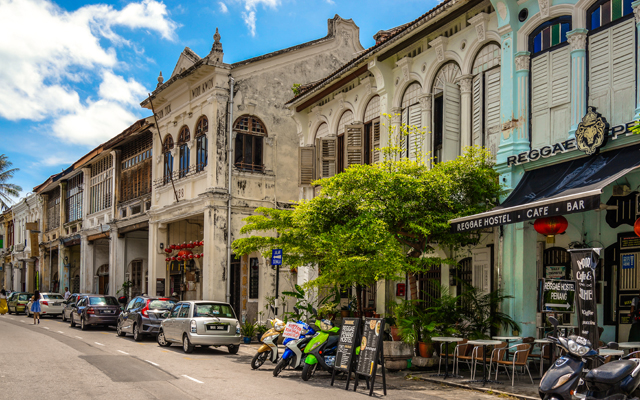
China is proving a valuable source market for Vietnam amid surging international arrivals, and tourism players claim that the country has the right ingredients to tap into China’s top tier of travellers.
According to the latest figures from Vietnam National Administration of Tourism (VNAT), nearly four million Chinese visited Vietnam in the first nine months of 2019, marking a 4.4 per cent year-on-year increase.
Ha: Chinese travellers enjoy multimodal connectivity to Vietnam, which share many cultural similarities with China
With this figure expected to continue to rise, the country’s tourism sector is gearing up to welcome a new wave of affluent travellers, and is preening its products to ensure it stands out from neighbouring countries.
Pham Ha, founder of Luxury Travel Vietnam, said: “Vietnamese culture has many similarities with China, and as a neighbouring country makes it easy to travel from China by road, sea or air. Vietnam also has a workforce that is good at Chinese and capturing the tourist psychology.”
A recent Bloomberg report highlighted the huge potential that Chinese tourists hold for the country, with the projection that a 30 per cent increase in spending by Chinese tourists would boost Vietnam’s economic growth by almost one per cent.
A VNAT spokesman said that a 2018 survey carried out by the organisation revealed the average daily spend by Chinese in Vietnam has steadily climbed from US$119 in 2014 to US$130 last year. This compares with US$183 in Indonesia and US$180 in Thailand.
VNAT has been carrying out targeted roadshows in key Chinese cities in a bid to boost this figure further. The organisation remains confident that the continued promotion in these cities will help drive interest and position Vietnam as a prime South-east Asian destination for Chinese.
However, Nguyen Thi Tuyet, Asia DMC Indochina managing director, said that further investment needs to be ploughed into infrastructure and suppliers to operate deluxe travel experiences, as well as producing a masterplan for the management and training of tour guides.
She added: “The country also needs to improve its presence internationally as a luxury destination. It’s obvious that Vietnam needs to invest more in marketing activities with creativity and professionalism.”
Marriott International and Indian real estate firm Prestige Group have signed agreements to open six new hotels across India.
Under these agreements, Prestige Group will build new hotels bearing the W, JW Marriott, Tribute Portfolio and Moxy brands across India’s Southern belt, representing nearly 1,000 rooms.
Marriott and Prestige Group sign deal to open six hotels in India, including the W Bengaluru in 2025, which will be India’s third W-branded property after W Goa (pictured) and the slated opening of W Mumbai in 2022
The six properties in the pipeline include the 185-key W Bengaluru (opening in 2025), the 102-room Tribute Portfolio Resort Bengaluru (opening in 2021), the 32-key Tribute Portfolio Hotel Kochi Maradu (opening in 2022), the 299-room resort JW Marriott Bengaluru Prestige Golfshire Resort & Spa (opening in 2022), as well as the 125-room Moxy Chennai and 200-room Moxy Bengaluru (both opening in 2024) – of which the latter two will mark the millennial-oriented Moxy brand’s debut in India.
“This agreement marks a new chapter in our plan to expand in India, a critical growth market for Marriott International where we currently have 120 hotels across 16 brands. We are especially thrilled to have signed two Moxy locations – which will introduce our 17th brand in South Asia,” said Rajeev Menon, president, Asia Pacific (excluding Greater China), Marriott International.
Singapore’s Carlton hotel will be expanding to Thailand, with Carlton Hotel Bangkok Sukhumvit set to open come 1Q2020.
Located in the heart of Sukhumvit Road, the 34-storey Carlton Hotel Bangkok Sukhumvit will comprise 338 rooms and suites, an outdoor pool, a kids’ play area, fitness centre, spa, gym, and a range of dining options, including the signature Wah Lok Cantonese Restaurant and a rooftop bar.
Carlton Hotel Bangkok will be opening in Bangkok come 1Q2020
With over 1,200m2 of meeting and event space, the hotel can also cater for boardroom meetings and grand banquets for up to 600 people.
In conjunction with the hotel’s upcoming opening, guests can enjoy a special offer which features any room category at 15 per cent off the hotel’s best available rate along with daily breakfast. The offer also includes 20 per cent off at the hotel’s F&B outlets (excluding Wah Lok restaurant), one glass of Chandon Brut sparkling wine, and complimentary late check-out.
This special offer is valid for bookings made now to March 31, 2020 for stays throughout March 2020.
The Reverie Saigon is spicing up its bespoke foodie offerings with the launch of guided excursions designed to help travellers navigate Ho Chi Minh City’s food scene through a four-hour exploration of the city’s streets.
Launched in partnership with tour company Hidden Saigon, A Taste of Hidden Saigon introduces guests to the evolution of Vietnamese cuisine – from street-food stalls and local markets, to sidewalk vendors and contemporary fine dining.
A Taste of Hidden Saigon
1 of 4
More than just an opportunity to taste authentic Vietnamese dishes, the experience takes guests on a journey through the progression of Saigon’s rich and varied culinary landscape, through the eyes of someone who has been living it for over a decade.
Led by Linh Phan, a Vietnamese-Canadian creative producer whose work over the past 11 years has focused on highlighting the lesser-known side of Vietnam, the tour will bring guests to sample dishes and visit places that have shaped the country’s culture.
“So much of modern Vietnamese cuisine is inspired by what’s happening out on the streets and in the little eateries tucked into this and that corner of the city,” said Linh. “These vendors are going strong, but unless you know where to look, they’re all but invisible.”
Visitors can opt for a morning tour that concludes after lunch, or an afternoon excursion that wraps up with dinner.
The morning outing will feature a typical breakfast of popular eats, an introduction to Vietnamese coffee at a popular java joint, stopovers at a local eatery and a traditional food market, before culminating with a meal at Vietnam House, the first restaurant in Vietnam by Australian-Vietnamese celebrity chef, Luke Nguyen.
Guests who book the evening excursion can skip the coffee fix and opt for a cocktail instead with a visit to mixologists who infuse their own range of gin, or a stop at the tap room of one of the first local craft beer brewing companies in the country.
A Taste of Hidden Saigon is an optional add-on to The Reverie’s Sampling Saigon foodie package, which invites guests to take in the hotel’s own culinary offerings, including exquisite Chinese fine dining at The Royal Pavilion, or upscale Italian at R&J.
The two-night package includes round-trip airport transfers, the choice of buffet breakfast at Café Cardinal or in-room dining, and a $US200 dining credit for use at The Royal Pavilion or R&J.
Sampling Saigon rates start at US$410++, exclusive of off-site excursions.
A Taste of Hidden Saigon starts at US$280 per pax, for a minimum of two pax and a maximum of six pax.
Princess Cruises has christened its newest and fourth Royal Class ship Sky Princess in tribute to the pioneering women of the US Space Programme.
The godmothers of Sky Princess – captain Kay Hire, and engineer Frances “Poppy” Northcutt – were honoured for the key roles they played at NASA at the naming ceremony which was befittingly themed Reach for the Sky.
From left: Frances “Poppy” Northcutt; Sky Princess’ captain Heikki Laakkonen; Princess Cruises’ Jan Swartz; and Kay Hire at the naming ceremony
The duo recited the traditional cruise ship blessing before pushing a NASA-style “launch” button, releasing and smashing a 15-litre bottle of champagne, officially naming Sky Princess.
During her 30-year career at NASA, Hire first helped to launch more than 40 space missions as a mechanical systems engineer. Then, as an astronaut, she logged 700 hours in space, flew over 12 million miles, and orbited the earth 475 times. She was also the first female to be assigned to a military combat flight crew while serving in the US Navy.
Poppy Northcutt served as the first female mission control engineer during NASA’s historic moon landing mission 50 years ago. She was also part of the team that brought the crew of Apollo 13 back home safely when they became stranded in their service module.
“As we celebrate our newest, most technologically advanced ship – one whose spirit of adventure and discovery match the grandeur of her name, Sky Princess, we also applaud the groundbreaking women of the US Space Program,” said Princess Cruises’ president Jan Swartz. “Our godmothers, captain Kay Hire and Poppy Northcutt, remind us all of what we can achieve when we reach for the sky.”
The debut of the 143,700-ton, 3,660-guest Sky Princess marks the first MedallionClass new build. Powered by the OceanMedallion, a wearable technology device, MedallionClass vacations deliver personalised service through enhanced guest-crew interactions, while eliminating friction points and enabling interactive entertainment.
Sky Princess, which recently completed her inaugural season in Europe, is now sailing on voyages to the Caribbean through spring 2020.
South-east Asia is becoming a global hotspot for tech startups, thanks to the explosive growth in commercial innovation and investment activity which have risen in recent years to meet the needs of rapidly developing markets like Indonesia, Vietnam and Thailand.
The level of sophistication now seen in the regional travel tech startup ecosystem is also a far cry from barely a few years back, when Amadeus Next was initiated in 2015 as a programme to support the growth and development of startups by offering technology building assistance, expert advice, customer reach and funding referral, observed Matt James, senior manager, corporate strategy & business development at Amadeus Asia Pacific.
South-east Asia’s tech startup ecosystem is thriving, thanks to rapid growth in commercial innovation and investment activity
“We’ve an increase in the volume of startups, and we’ve seen an improvement in the maturity of the startups in Asia,” James noted. “When we first started Amadeus Next, startups were trying to replicate what’s already been done, and their focus was very much on B2C as many aspire to be the next big B2C player.”
Fast forward to 2019, Amadeus Next is now seeing more B2B startups at play in the region, a line that the travel technology company has been advocating to entrepreneurs in order to scale up their ventures. “We’ve been saying for a while – B2B is really the area which startups should focus on,” said James. “They should focus on those problems that companies can’t or won’t do themselves, and aim to be a niche player for companies, and have a B2B approach.”
The development of more polished travel tech startups in the region is in part due to a thriving ecosystem that has also grown bigger and richer with more venture capitalists, advisors, as well as accelerators and incubators, he added.
Since Amadeus Next’s founding, a number of major travel companies have also joined the fray to establish their own accelerators or incubators for startups, with notable ones including Lufthansa Innovation Hub, Ctrip’s Oasis Lab and the Changi Airport Group Living Lab.
At the same time, James said the Amadeus Next programme is no longer purely focusing on travel technology players but has also evolved to bring in other verticals including fintech, insurtech and healthtech.
The Amadeus Next programme doesn’t just benefit budding entrepreneurs but also offers takeaways for the Madrid-based travel giant.
Funding, for instance, is not the only thing that newcomers to the business seek, James told TTG Asia, but also “industry connections”, “domain expertise” and “technology”.
“The idea was that we could provide a lot more value to startups by orchestrating this community approach to bring together other stakeholders within that startup ecosystem,” he said, referencing Tune Labs, Chinaccelerator and the Malaysian Global Innovation & Creativity Centre (MaGIC) as some of the accelerators and organisations that are also part of Amadeus Next.
And in a highly fragmented region like South-east Asia, the community element is critical to the startup ecosystem, James stated, unlike serious tech startup hubs like the Silicon Valley, Tel Aviv and Berlin where there is greater support from venture capitalists, entrepreneurs and advisors.
Furthermore, the ecosystems in South-east Asia are also distinct across the regional countries, with “different government regulations in every single market”, James noted. Singapore is a regional standout in its many startup-friendly initiatives and low-friction government; Thailand, while lagging behind, has seen a great movement in providing support to startups under the country’s 4.0 strategy.
Meanwhile, China’s startup scene, which is backed by tech giants the likes of Baidu, Alibaba and Tencent, offer many advantages to startups with its big ecosystem. And Japan, despite its less entrepreneurial and startup-friendly spirit, is finally starting to see more entrepreneurs experimenting with ideas – and whose startups boost a higher success rate than elsewhere in the region.
James: Communities a boon to startup ecosystem in highly fragmented region like South-east Asia
Moving forward, James affirmed that the future looks bright in Asia-Pacific, where growth is primed to continue. “I think there’s a lot of opportunity to tap in South-east Asia, China and Japan. And our focus will remain on Asia-Pacific to compete, operate and orchestrate this community.”
“There’re lots of opportunities in the travel space that we’re in. If you look at the projected increase of travellers in general in Asia, growth is coming from mainly two markets (China and India), but Indonesia, Vietnam and Thailand are part of that as well. We’re in a very interesting space,” he noted. “And when you have that convergence, plus the opportunities and the money coming in and the technology, I think we’re going to see some very big things coming, with AI, biometrics and 5G.”
Any advice to budding startups in South-east Asia? James is placing his money on the two niche areas of airport and hotel, where there exist abundant friction points, and likewise, opportunities, to improve the traveller experience for a seamless travel journey.
The Indonesian trade is urging the government to establish a special visa regime that would give preferential treatment to elderly travellers, in the hopes that such a move would provide the backbone for the development of retirement resorts within the country.
Allowing elderly inbound tourists extended stays in the country is “an additional facility” that would stimulate the emergence of retirement resorts across the archipelago, according to Hariyadi Sukamdani, chairman of the Indonesian Hotels and Restaurants Association (PHRI).
Indonesia trade proposes special visa scheme for senior travellers for development of retirement resorts within the country; resort against the backdrop of Rinjani mountain scenery in Lombok, Indonesia pictured
“Developed countries in Europe and Japan have many retired people. Could we assign them privileges so that they can stay (in Indonesia) for over 30 days? This is an optional action (on the government’s part) to boost arrivals. But for us, it’s necessary,” he said.
“Whether it is one year or just six months can be discussed. This is a good target market because their spending is big. There are many things that they can do in Indonesia, including joining a social charity,” he added.
For Hariyadi, Bali and Bintan Island are among the potential retirement tourism destinations in Indonesia.
For its upcoming national gathering on February 8-10, 2020 in Karawang, West Java, PHRI will review president Joko Widodo’s signature free-visa policy for the nationals of 174 countries. The association’s members will select some of those countries which they deem “premium” and deserving of the special treatment visa.
“We will probably choose Germany; the Netherlands, which has historical ties with us; or Japan, as we know that Japanese people are well behaved and disciplined,” Hariyadi said.
The idea to develop retirement resorts in Indonesia had been mooted in the past, but it faded away in the absence of free-visa policy in the country, according to Hariyanna Ashadi, managing director of Marintur Indonesia and head of Association of Indonesian Tours and Travel Agencies.
The development of retirement resorts is aligned with the president’s recent mission to attract more premium tourists to the country, she posited, as elderly tourists were largely premium travellers.
However, her top-of-mind concern is the readiness of business players in providing premium services and facilities for the elderly tourists staying in such communities for long periods of time.
As senior travellers face various physical and mental health challenges, they have complicated needs, such as standby assistance by a caregiver, which premium resort players should pay attention to early on.
“Is there any cooperation between the retirement resorts and nearby clinics or hospitals? If yes, do they have sophisticated medical equipment? If yes, is it portable? This is important to ensure so that it can be easily carried to the resort if the hospitals are full (so that the resort’s residents need not) queue to get medical service,” she elaborated.
Hasiyanna, who has had extensive experience in handling senior tourists from Europe, said that although Bali was well-placed to be a retirement tourism destination, she hoped that such resorts would be located in Ubud or other cities that were not only less busy but also boasted cooler climates.
She added: “Sentul in Bogor and Lembang in Bandung are also suitable for the development of retirement resorts.”
The second edition of Further East, a luxury travel trade show organised by Beyond Luxury Media, took place from November 11-14, 2019.
A 400-strong community of exhibitors and buyers from Asia-focused luxury travel brands, as well as the media, gathered by the beach in Alila Seminyak to celebrate the region’s rich heritage and drive its future innovation.
Further East
1 of 6
Doing business by the Alilia Seminyak pool
Acoustic networking evening
Barefoot business
Discuss stage featuring Nihi Hotels’ James McBride, Sumba Hospitality Foundation’s Inge De Lathauwer, and The Mango Agency’s Andrea Seifert
Jemma Uglow, head of Further East
Sunset drinks at AWAKEN, Potato Head Beach Club
Exhibitors are hand-selected for their high-end prestige, progressive outlook and uniquely Asian aesthetic, meeting buyers with luxury credentials and a global, high-net-worth clientele dedicated to Asia.
Proceedings kicked off at Potato Head Beach Club, where three stages of curated content hosted both hospitality titans and fascinating minds from outside the industry. From Tony Fadell (inventor of the iPod) to Elora Hardy (bamboo designer and creative director of IBUKU), Doris Goh (Alila Hotels and Resorts) and James McBride (Nihi Hotels), the focus was firmly on the future of luxury, sustainable hospitality, entrepreneurship, wellness and tech, to name but a few of the themes explored.
Delegates left Further East’s un-conference AWAKEN armed with multiple insights to drive their hospitality businesses forward, including why every hotel should have a human chatbot, why they should integrate nature as much as possible into their hotel design, and how to use literally every waste product creatively (including coasters with a former life as flip-flops).
Alila Seminyak was the home of the Further East marketplace for a second year, while Potato Head Beach Club hosted AWAKEN. Other collaborators included official airline partner Singapore Airlines, The Mango Agency, TTG Asia Media, the Japan National Tourism Organization, and Lifestyle Retreats; as well as five-star hotel partners Katamama and W Bali – Seminyak.
“As Further East goes from strength to strength proving itself to be Asia’s most innovative travel event, we will be back on the beach in 2020 pushing the boundaries of creativity with exciting brand collaborations and new developments that go beyond the marketplace,” said Jemma Uglow, head of Further East.
Next year’s Further East takes place from November 9-12, 2020. Exhibitor sales launch January 6 and buyer applications from February 1, 2020.
China’s growing domestic demand for cruising holidays has spurred a slate of developments and enhancements to domestic cruising facilities, championed by the China Cruise Tourism Development Demonstration Zone (CCTDDZ), the operator of the Wusongkou International Cruise Terminal in Shanghai.
The port is gearing up to receive a spike in volumes of cruise passengers, with Switzerland-based MSC Cruises launching its newest flagship MSC Bellissima there in June 2020. Set to be the largest cruise ship deployed in Asia, the vessel will sail a maximum of 5,686 guests across 35 trips from its homeports in Shanghai, Tianjin, Qingdao and Shenzhen, starting with its maiden call from Shanghai.
Cai: China’s flourishing cruise market is ripe with opportunities for Shanghai and other Chinese port cities, with Wusongkou Terminal seeing an increase in international passenger traffic
In 2021, Wusongkou Terminal will then welcome a larger ship, Royal Caribbean International’s Wonder of the Seas, which has a capacity of more than 6,000 pax.
This ripe cruising landscape presents many opportunities for Shanghai and other Chinese port cities, as Wusongkou Terminal is already seeing “more and more” international passengers making the cruise journey from as far as Europe and the US, shared Eric Cai, deputy general manager, Shanghai International Cruise Tourism Service Centre.
He added that the fly-cruise market is also growing for China, as visitors from Europe prefer to land in Shanghai and spend a week in the city before hopping on a cruise to Japan.
“Currently, the terminal will take about four hours to complete passenger check-in for the average cruise ship. With more sailings and bigger ships calling at Wusongkou Terminal, we have to ensure a faster and smoother check-in process,” expressed Cai.
In anticipation for the greater demand for seamless travel, CCTDDZ has begun installing AI-powered kiosks for passengers to check in using facial recognition data instead of manual passport checks.
“The AI intelligent system will allow passengers to enjoy a fast and contactless check-in, and skip the complex documentation process at embarkation,” said Cai.
This system can reduce the total check-in time to about 2.5 to three hours, enabling Wusongkou Terminal to become a “frictionless port” by 3Q2020, confirmed Cai.
The organisation is also pumping in more value-added services to enhance visitors’ off-ship experience. For instance, it has introduced an airport chauffeur service with luxury cars and a VIP lounge.
Openings in November pushed Australia’s hotel inventory above 300,000 open rooms, with the country now ranked 12th in the world in total room count and fourth among countries in the Asia-Pacific region, data from STR revealed.
According to most recent figures in STR’s AM:PM platform, the country features 5,600 hotel properties and 300,229 rooms. STR defines a traditional hotel on three exclusionary criteria: 1) generates revenue on a nightly per-room basis, 2) has 10 or more rooms and 3) is open to the public (excludes those properties requiring membership, affiliation or club status).
Australia’s hotel room supply surpasses 300,000 as of November; aerial image of Brisbane CBD and South Bank in Brisbane, Australia pictured
“Australia has been on a progressive development path since 2016 with more than 26,000 rooms added to the marketplace,” said Matthew Burke, STR’s regional manager – Pacific. “That is not counting the more than 5,000 rooms that were closed during that period and converted for alternative commercial usage. This uptick in investment reflects the country’s strong performance, especially in major markets. As a whole, Australia’s occupancy has been at or near 75 per cent for each of the last five years, and average daily rate has consistently ranged around A$185 (US$135).”
The 10 largest STR-defined markets in Australia represent 57.1 per cent of all rooms in the country, led by Sydney with 43,841 rooms. While each hotel class is well-represented in the country’s overall numbers, the largest percentage of rooms sit in the upscale (24.2 per cent) and midscale (23.6 per cent) segments. The upscale class has seen the largest influx of new supply, with 10,931 rooms opened since 2015.
Among branded inventory only in the country, Accor represents the largest market share with 32.1 per cent of rooms while the Ascott comes in a distant second at 7.6 per cent.
Australia also has 94 projects and 18,294 rooms in construction as well as 216 projects and 36,005 rooms in the two planning phases of the pipeline.
“Australia is not likely to hit its construction peak until next year, and we don’t expect a substantial slowing in development anytime over the next several years. Melbourne, Hobart and Adelaide are projected to see the largest increase based on their existing room counts, and the two highest-tiered segments (luxury and upscale) will combine to welcome 35 per cent of the new rooms in the pipeline,” Burke said.
“As we have seen in the data this past year, all of this new supply has put some pressure on occupancy levels, and subsequently, hotelier pricing confidence. Moving forward, we anticipate demand growth in almost all markets, but with sustained supply increases, we’re still forecasting occupancy declines in the short term,” he added.
“Room rates will of course be weighed by the additional competition in the market, but that is not likely to become a long-term trend as many markets trade at high absolute occupancy levels with the ability to absorb new supply.”