G Adventures has created three different funds to support its ecosystem of local tour guides, Inca Trail workers and local community projects that typically rely on tourism to survive and flourish.
Aiding its chief experience officers (CEOs) is the CEO Wellbeing Fund, which will channel gratuities from travellers to G Adventures’ guides in need of financial support. While G Adventures has typically helped its CEOs on an ad-hoc basis, the pandemic has prompted the creation of this permanent, long-term fund, which will support guides affected by an accident, natural disaster, illness or difficult circumstances. It will be managed by G Adventures’ non-profit partner, Planeterra.
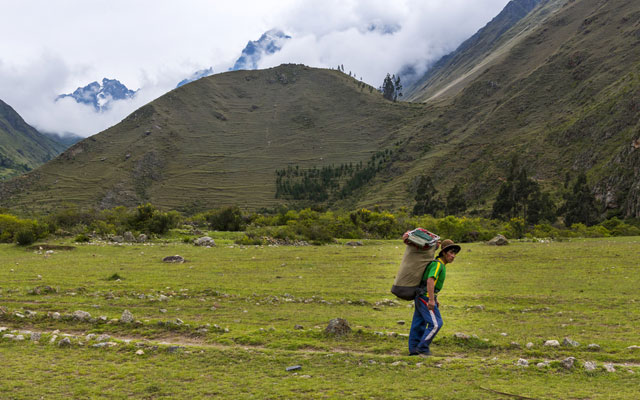
G Adventures launches funds to support local communities, including Inca Trail porters; porter carrying a backpack on the Inca Trail trek to Machu Picchu pictured
Secondly, the Porters Support Fund will aid Inca Trail porters, cooks and horsemen whose livelihoods have been impacted by Covid-19. These workers play an essential part of treks through the Sacred Valley, and many live in remote villages that have lost their primary income stream from tourism. This fund enables travellers who have hiked the Inca Trail, Lares Trek, Salkantay Trail or Choquequirao Trek to give back to these local communities.
Lastly, the Planeterra Impact Fund will help local enterprises in Planeterra’s 85 projects. Located in more than 50 countries, social enterprises in these projects rely on passing visitors to earn an income.
The three funds were launched in response to requests pouring in from travellers wanting to help communities that have been impacted by the effects of the ongoing pandemic.
Bruce Poon Tip, founder of G Adventures, will match the first US$50,000 of donations to both the CEO Wellbeing and Planeterra Impact Funds.
He shared: “I’ve had hundreds, if not thousands, of letters asking me how to help. We transcend travel when our collective humanity extends support during difficult times. It is one of the most heartwarming movements I’ve witnessed in my 30 years of building G Adventures. These new funds represent our commitment to community tourism by offering the opportunity to make a positive change at a time we can’t do that through travelling.”
Travel brands that leverage loyalty through subscriptions are building on solid foundations and are much better placed to survive downturns, say experts on the subscription economy.
Having a subscription business model during the Covid tourism downturn has been a lifeline for many tourism brands. A loyal base paying regular fees keeps cash coming in even though travel grinds to a halt.
Hotels can leverage on subscriptions to survive downturns, say experts
More than a commercial transaction, subscriptions create a relationship with value added implicit. The under-40 demographic today particularly puts trust in the subscription model. They want personal recognition and immediate fulfilment. They don’t want to wait for points to build up. They they want engagement in real time. They want a memorable experience. They want to belong.
Outside of travel, Amazon Prime, Netflix and Spotify are subscription giants. In travel, subscription and loyalty models have been around in the airline and hotel industries since the 1980s, championed by the likes of American Airlines, United Airlines, Holiday Inn, Marriott and Hilton.
However, we are witnessing a new spurt of subscription growth based on millennial consumption patterns.
During a recent I Meet Hotel webinar on loyalty, organised by Bidroom, Amy Konary, vice president at The Subscribed Institute at Zuora in Boston, said that the subscription economy has seen 350 per cent growth in the last 7.5 years, growing at an average of 26 per cent per annum, far outstripping the regular economy.
“The emphasis is now on creating outcomes and memorable experiences that your subscribers will remember,” she said.
The under 40s – and younger – are also much more open to the idea of paid loyalty. And it’s not just about money. Analysts say the hallmarks of success for subscription travel businesses are measured by member retention, perception of real value and levels of engagement.
“Subscribers today don’t really care about points, tiers and levels,” said Claudia Scharf, director of customer success at Loyalty Prime in Munich.
After subscribers sign up, engaging them isn’t always easy. She said that a 2019 report showed that the average consumer belongs to 14.8 loyalty programmes, but is active in only 6.7 of them. A 2017 survey showed that 54 per cent of loyalty memberships were inactive.
Points and tier-based programmes also create financial liabilities on corporate spreadsheets. For example, the three leading America-based airlines all had loyalty liabilities in excess of US$5 billion at the end of 2019. Ironically, in the US, valuations of airline loyalty programmes often exceed the value of the airline itself.
So what can hotels learn from airline loyalty programmes? Mark Ross-Smith, CEO of Loyalty Data, told the I Meet Hotel webinar that there were 10 points to consider:
1. Price is mostly irrelevant
Frequent travellers want value more than the lowest price.
2. Real upgrades are essential
Fake upgrades disengage frequent travellers.
3. Don’t treat all guests the same
A family of four have very different hotel needs from a solo business traveller. Don’t waste time trying to upsell the wrong product to the wrong segment.
4. Don’t give out elite status for free
Retain elite status value through positive discrimination.
5. Create partnerships and leverage other brands’ loyalty
Work with credit card companies, even local restaurants; use them as a backdoor customer acquisition channel. “Whatever the shiny card is in your wallet or purse, that’s the travel brand you’ll book as long as the price isn’t outrageous,” said Ross-Smith.
6. Partner with airline loyalty programmes
Use their brand. This will give you access to new customers that are otherwise unreachable.
7. Create your own mini-loyalty proposition
Leverage travellers’ pre-qualified activity with other hotels or airlines.
8. Think about ‘share of wallet’
For example, track and target the business traveller who is making 50 business trips a year; he may already be staying with you on 30 of those trips; so there’s 20 more to target, unlike a business traveller who only travels four times a year, but always stays with you.
9. Create small moments of joy
Segment your database so that your staff knows how to greet each guest by name and wow them with little things such as their favourite brand of wine or newspaper in the room.
10. Revenue management and loyalty need to work together
Using forecasts, government research, city event calendars and more, you can target the right set of potential customers with the right price at the right time.
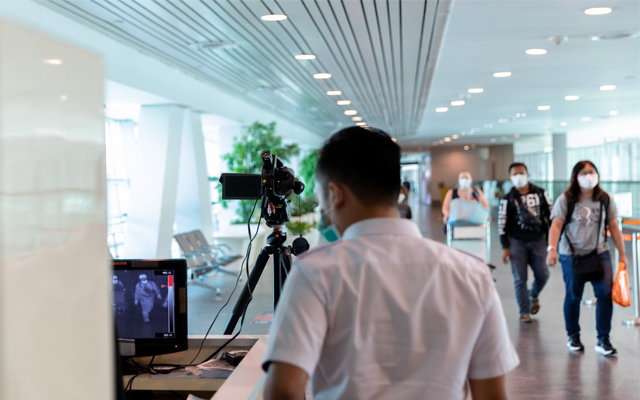
Kuala Lumpur, Malaysia, February 06 2020: Airport medical staff detect incoming passengers body temperature with thermal camera equipment prevent the spread of the coronavirus outbreaks
Malaysia will partially reopen its borders to allow medical tourists to enter the country, while permitting its citizens to leave the country for medical, education or other specific purposes.
Foreigners seeking medical treatment in the country will need to register with the Malaysia Healthcare Travel Council and undergo a Covid-19 screening test in their home country ahead of their arrival in Malaysia.
Malaysia will now allow medical tourists to enter the country; airport staff scanning arriving passengers for fever using thermal imaging in Kuala Lumpur, Malaysia pictured
“Those entering under medical tourism need not undergo quarantine as they will be taken directly to the hospitals of their choice,” said senior minister (security cluster), Ismail Sabri Yaakob.
Similarly, Malaysians who need to travel abroad for medical, emergency or specific purposes can now do so without seeking prior approval from the immigration authorities.
In addition, international students at private and public institutions of higher learning as well as international schools in Malaysia are now allowed to return to the country to resume their studies. However, they would need to register with the Education Ministry or the Higher Education Ministry. They can choose to either undergo the Covid-19 screening in their own countries or upon arrival in Malaysia.
Similarly, Malaysians who need to travel abroad for study purposes must produce letters to prove that they need to go overseas to continue their studies or sit for exams before departing the country.
As well, Malaysians with foreign spouses and non-Malaysian children can now apply for the passes from the Immigration Department before entering Malaysia.
The government will also allow expatriates under the employment pass category one, as well as holders of professional visit and resident pass talent passes to enter the country. But they must undergo Covid-19 swab tests either at their home countries or as soon as they enter Malaysia.
Ismail Sabri said that if their test results is negative, they need not undergo the mandatory 14-day home quarantine if they are from countries that have been classified by Malaysia as Covid-19 green zones. However, those travelling from countries in the red zone will need to undergo the 14-day compulsory home quarantine. The Health Ministry is still fine-tuning the list of countries that could be listed as green zone countries.
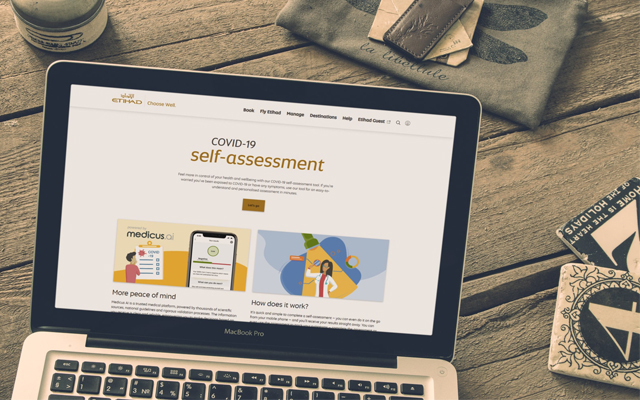
Etihad Airways is partnering Austrian-based healthcare technology company Medicus AI to launch a Covid-19 risk assessment tool that will empower guests to make informed decisions about travelling.
Powered by Medicus AI’s technology, the risk assessment tool will guide Etihad’s guests in evaluating their probability of having contracted Covid-19 by responding to a set of 22 questions. The self-assessment, which takes less than five minutes to complete, is based on daily updated WHO guidelines. The tool will also contain advisories and recommendations.
Etihad Airways ramps up safety measures further with launch of Covid-19 risk assessment tool
Frank Meyer, chief digital officer, Etihad Airways, said: “We know that health and wellbeing will be a major factor impacting the travel decisions of our guests and are committed to ensuring their continued safety and peace of mind when they choose to travel with Etihad Airways.”
Baher Al Hakim, CEO, Medicus AI, added: “Our initial efforts at the start of the pandemic were to help provide assessment and monitoring tools, and as needs shift, our efforts have evolved to help our partners bring people back to their day-to-day life in a safe manner.”
The tool is now available to guests on Etihad.com, and soon on the Etihad Airways mobile app on the Apple iOS, Android and Huawei platforms, and will be accessible in English, with additional language editions such as Arabic, French, German and Portuguese being added in phases.
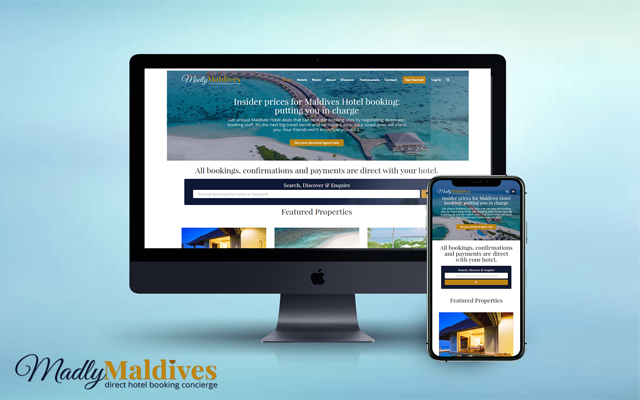
Maldivian tour operator Splendid Asia has launched the Madly Maldives, a hotel booking platform that allows accommodation providers to sell their packages directly to travellers, bypassing travel agencies.
Madly Maldives offers a “one-stop solution for tourist establishments of all types in the Maldives to promote their holiday offerings to hundreds of potential guests from around the world – all the while retaining the control of the booking experience from start to finish”.
Madly Maldives by Splendid Asia offers seamless link between hoteliers and travellers
On Madly Maldives, travellers can search and compare different holiday options available and make a booking enquiry for the accommodation of their choice. This instantly begins a direct relationship between the traveller and the establishment’s reservations department. The reservations team is free to offer any rate, incentive, or experience to the guest without having to go through a third party.
Abdulla Naseer, managing director of Splendid Asia, said: “Madly Maldives is a new and improved way for tourist establishments in the Maldives to connect with travellers. Our aim is to empower our travel trade partners and guests to make smarter choices in a manner that is highly efficient and secure in today’s changing world.”
With over 30 per cent of hotels and resorts in the Maldives already part of the Madly Maldives experience, Splendid Asia is inviting all resorts, hotels, guesthouses and liveaboards in the Maldives to join the platform.
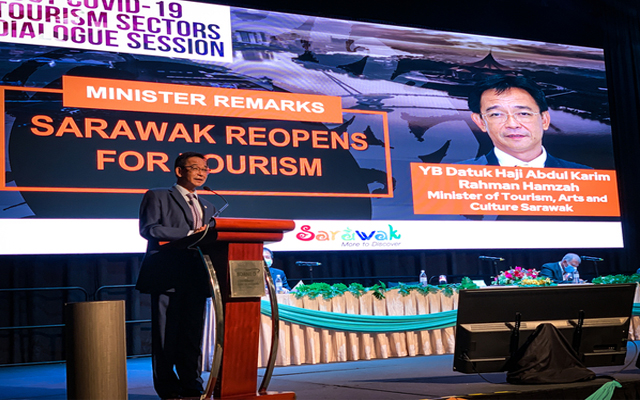
Sarawak's tourism, arts and culture minister Datuk Haji Abdul Karim Rahman Hamzah announcing incentives for Sarawak's tourism businesses at the "Post Covid-19 Tourism Sectors Dialogue Session – Sarawak Reopens for Tourism" event
Sarawak tour specialists have criticised the state government’s fiscal incentives, deeming it insufficient to support the tourism sector’s recovery from Covid-19.
The two initiatives, which are the Visitors Incentive Package (VIP) and the Sarawak Tourism Online Ecosystem Fund, total RM2.25 million (US$530,000), according to media reports.
Sarawak’s tourism, arts and culture minister Abdul Karim Rahman Hamzah announcing incentives for Sarawak’s tourism businesses at the “Post Covid-19 Tourism Sectors Dialogue Session – Sarawak Reopens for Tourism” event
The incentives were announced by the state’s tourism, arts and culture minister Abdul Karim Rahman Hamzah at the “Post Covid-19 Tourism Sectors Dialogue Session – Sarawak Reopens for Tourism” held at the Borneo Convention Centre Kuching on Monday, which was attended by over 100 industry partners including Sarawak Tourism Federation, Association Sarawak Inbound Agents, and Sarawak Tourism Board (STB).
For the VIP package, travel agencies in Sarawak will receive support for tour packages sold that has a minimum of 4 pax and a maximum of 15 pax at any one time, excluding children under the age of two.
For 3D/2N packages sold, the agent will receive RM30 (US$7) for each of the first four tourists, and an additional RM20 for each subsequent tourist.
As for 4D/3N packages, the agent will get RM40 for each of the first four tourists, and an additional RM25 for each subsequent tourist.
Lastly, for 5D/4N packages, the agent will receive RM50 for each of the first four tourists, and an additional RM30 for each subsequent tourist. The incentives for all three packages are capped at 15 pax.
The second initiative, Sarawak Tourism Online Ecosystem Fund, is a catalytic programme to expand Sarawak tourism’s digital footprint and share of voice, in collaboration with industry partners.
For this incentive, STB will grant up to RM5,000 per tour operator for website development and maintenance, content production and digital advertising promoting Sarawak tourism. In addition, digital roadshows will also be conducted in Kuching, Sibu, Bintulu, Miri, Bakalalan and Bario.
“The Sarawak Tourism Online Ecosystem Fund seeks to align all industry players, with its key objective being the enhancement of digital economy within the tourism sector. It also aims to support and enhance the use of e-commerce to drive more traffic within the ecosystem,” said Datuk Karim.
The incentives, which are available on a first-come-first-served basis, will run from July 1, 2020 to December 31, 2020.
However, local tour operators said that the subsidies are insufficient to stimulate tourism demand and encourage interstate travel.
Kuching-based Cat City Holidays managing director, Mok Venia, shared that domestic travel demand is still very low, and that the subsidies under the VIP package are too meagre to excite a domestic tourists to travel to Sarawak, especially when airfares are still high.
Citing examples, she said the 3D package in Kuching sold by the company is RM400 per person, while a 3D/2N Mulu excursion package costs RM1,300 per person. As such, she doubted a RM30 subsidy is going to excite a traveller to purchase either package. Instead, she proposed a subsidy of 80 per cent of the tour cost, which she said would really help to stimulate the tourism sector in Sarawak.
Mok said the state government could refunnel the funds intended for familiarisation trips for overseas agents and media this year into such purposes instead, as such trips would be cancelled due to Covid-19.
Another inbound operator based in Sarawak, Ashweein Narayanan, director, Amogha Tours & Travel, also agreed that the government should give more financial support to make the tour packages compelling.
But he warned that it had to be kept to a short time period “otherwise it would be difficult to raise the prices back to normal”.
He also opined that financial support should be given to tour operators and agents before the tours commence, to help ease cash flow issues.
Digital travel platform Trip101 is joining the host of vacation rental sites who are reporting a surge in demand amid the pandemic.
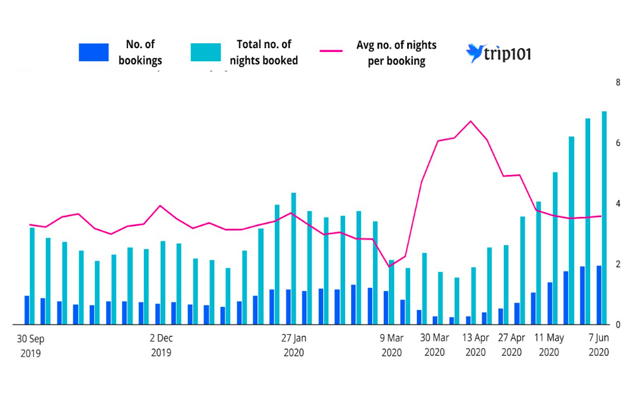
May saw a record number of vacation rental bookings for Trip101, with a 300 per cent year-on-year growth. The initial growth could be due to people like key workers and those at risk looking to self-isolate, as well as those who wanted to escape urban hotspots of the virus, said Trip101.
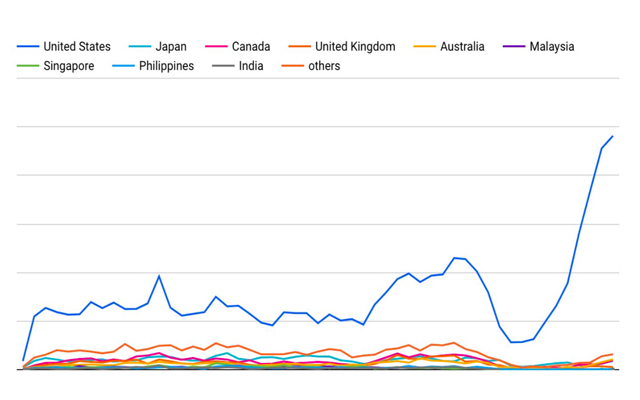
Trip101’s latest data also shows that the US is leading in the recovery for vacation rentals. Data showed the impact of Covid-19 on the vacation rental market, with bookings bottoming out at the start of March 2020. Recovery began from mid-March, with April seeing a sharp growth in bookings, reaching pre-Covid levels by the end of the month. Moreover, between the start of the recovery and end-May, there was a 700 per cent increase in bookings per week.
Several online booking sites are reporting surge in demand for vacation rentals
Other countries are also following a similar trajectory. Canada leads the recovery with 880 per cent more bookings by the end of May compared to the start of April, Australia with 550 per cent, and Japan with 150 per cent. These countries have not bounced back to pre-Covid levels of bookings, but the data indicates a promising recovery.
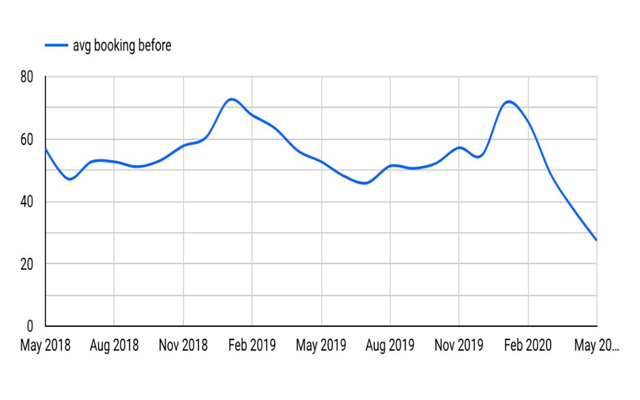
Trip101 also reports that booking lead time for vacation rentals around the world decreased substantially during the height of the pandemic. May 2020 saw the shortest booking time ever, with people booking an average of 29 days in advance – a stark difference from 2019’s average booking time of 50 days.
For vacation rentals in the US (see graph), findings show a 62 per cent decrease in booking time, from 72 days at the start of the year, to 27 days in May. Trip101 also found a further seven per cent decrease in booking time from April to May.
The trends coincide with the announcement that states are starting to reopen for business. While people still have the desire to travel, continuing travel restrictions and uncertainty means that they can only plan their trips a few weeks in advance, Trip101 said, adding that vacation rental owners can expect to see their summer calendars begin to fill up.
beautiful lake and cliffs in central java, wonosobo, indonesia. This place named Lubang Sewu photo was taken December 24 2019 at 15:37, including the most popular tourist area
Plans to establish a travel bubble between Malaysia and Indonesia is being mooted, but the countries’ tourism bodies say that would first necessitate a series of measures to be implemented by both sides.
A Malaysia-Indonesia travel bubble would aid bilateral tourism between both countries in the post-Covid-19 era as both sides are highly dependent on tourism traffic from each other.
Malaysia should implement travel bubble with Indonesia, says Malaysia’s tourism minister; tourists exploring Lobang Sewu in Central Java, Indonesia pictured
Malaysia is Indonesia’s top inbound market for 2019, while Malaysia received 3.6 million tourist arrivals from Indonesia last year, putting Indonesia as the second largest inbound market after Singapore.
Speaking at a recent webinar presented by Travel Industry Network on the collaborative opportunities between Malaysia and Indonesia post-Covid-19, Malaysia’s tourism, arts and culture minister, Nancy Shukri, expressed hopes that Malaysia and Indonesia would start bilateral discussions to enact a travel bubble with each other.
She said: “Consideration is placed on the aspects of health, immigration, data tracking and continuous monitoring by respective agencies in both countries.”
At the same webinar, Nia Niscaya, deputy minister for marketing, Ministry of Tourism and Creative Economy, Indonesia, described Malaysia as a “low-lying fruit” ripe with opportunities for further growth when the country reopens its borders to international travellers.
For now, there is no indication on when Malaysia and Indonesia will reopen their borders to foreign tourists, and the focus for both countries right now is on strengthening domestic tourism, with safety and hygiene protocols in place.
Nia shared that it was important for Indonesia to show that it had contained the Covid-19 pandemic well, and had maintained health, hygiene and safety measures in order to restore confidence among travellers from Malaysia and other international communities.
Last week, Malaysia’s health director-general, Noor Hisham Abdullah, told a press conference that they were in very early stages of discussions on the implementation of a travel bubble with Singapore, Brunei, Australia, New Zealand, Japan and South Korea.
“We need to finalise the standard operating procedures and reach an agreement among the countries on several matters. The agreement has to be mutual and reciprocal,” the New Straits Times quoted him as saying. “This is to ensure that all countries that enter into the agreement follow the same protocol.”
China-based OTA giant Trip.com has announced an industry-wide initiative that will support the drive for new safety and hygiene standards for aviation, hospitality, tourism and retail companies.
The Travel On Initiative, launched yesterday evening (June 22) at a ‘live’ virtual event, sees Trip.com collaborating with its many partners in the travel trade to implement new procedures, including the Safe Travels protocols developed with WTTC.
Okinawa Tourism Board, one of the destinations to have come onboard Trip.com’s Travel On Initiative
New industry standards to be set include pre-arrival risk assessment and boosted biometric checks for airports and airlines, a possible redesign of immigration procedures in consultation with governments and airports, optimisation of boarding and limiting cabin movement on planes, pre-allocated transport seating and partnerships with verified restaurants and venues on tours, as well as providing complimentary Wi-Fi to encourage retail outlets to adopt contactless and paperless payment solutions.
Accompanying this, the group also launched a series of enhancements to its services under its new International Travellers’ Guide, which provides users with features such as travel advisories and help, cancellation guarantees and a Green Map.
The Green Map is a ‘live’ model of countries, their border restrictions and their quarantine policies. For instance, “green” areas signal countries where users can travel freely without being quarantined, while “yellow” destinations would require traveller information that will be specified on the page.
Travellers can also subscribe to an alert service for up-to-date information or advisory changes during their journey.
Under its new product roll-out, Trip.com will also launch campaigns with airlines to provide discounts, flexible bookings, and safety information “on a granular level”, described Trip.com Group COO Schubert Lou; touchless booking features and marketing support provided to tour and attraction partners; as well as live broadcasts offering pre-sales, discounts and free cancellations.
Ten live-streams have been planned starting today.
An endless honeymoon is not as wonderful as it seems, discovered a South African couple recently in the Maldives. The duo went viral after a New York Times report revealed that they were stranded at a luxury resort due to border closures.
Widespread travel restrictions have led several industry players across popular wedding and honeymoon destinations in Asia, including Japan and Bali, to report a sharp decline in business.
A wedding at Capella Singapore
Capella Singapore, known for its upscale weddings, saw nuptial bookings dwindle to zero over the last two months as the local government introduced a “circuit breaker”, which prohibited people from gathering with those outside of their immediate household.
“We (used to have) an average of two to three weddings every weekend, and (even) more during peak months,” said Dora Wong, the hotel’s creative style director.
Over in Japan, Tomoko Yagi, general manager, Aman Tokyo and regional director, Aman Japan, shared with TTG Asia that the hotel “used to welcome at least four to five couples a week on honeymoon”. Those numbers have since dropped off.
A property in Bali – a favourite destination among couples – has also been affected. Hemal Jain, general manager, Alila Villas Uluwatu, said that the resort hosted up to 250 weddings a year prior to the pandemic. Now, a small number of weddings have been cancelled, though many have been postponed to next year.
Moving the date forward appears to be the way to go for several clients of bespoke travel agency Lightfoot Travel. Co-founder and director Lucy Jackson shared that “a couple of honeymoon bookings for this summer” had been moved to summer 2021.
A couple at one of Alila Villas Uluwatu’s three-bedroom cliffside villa
Flexibility in demand
Wong recalled how two weddings at Capella Singapore across the weekend of March 28 and 29 were impacted, when a series of new social distancing measures kicked in on March 26. Wedding planners and hosts were advised to keep total participants and attendees to ten persons and under, and ensure minimal social interaction.
“We had to entirely reconfigure our ballroom setup and seating plans to ensure we were complying with the new measures,” Wong recalled.
As decor and florals had to be reconsidered, her team worked “round the clock to ensure the wedding day was “(one) to remember” even amid the restrictions, she added.
Due to the new restrictions, guests were offered the flexibility to postpone or cancel the celebrations, she shared.
Challenges and outlook
Having been monitoring the progression of the pandemic, many players seemed hopeful that couples would begin making reservations again in 4Q2020.
Of course, travel restrictions continue to present a challenge to businesses. Recovery at the Fivelements Bali, for instance, could be partly contingent upon European guests being allowed back into the province, noted John Nielsen, general manager.
Other industry players gave their predictions on when numbers would start to rebound. Nielsen believes it will gradually occur in or around October and November, and initially involve Indonesian couples hosting small, intimate celebrations; Yagi, more optimistic, reckoned it may happen by September.
Despite the uncertainty, Wong shared that her team has been receiving new enquiries for celebrations to be held next year and beyond.
Goh Wan Qi, wedding planner, Beautiful Gatherings, remains positive. While she acknowledged that couples are less likely to spend on travel or wedding planning services in the current downturn, she reckoned there might be a boom in both industries once the pandemic is over.
Think local and regional
Wong predicted an increase in staycation honeymoons after the pandemic, sharing that couples who want to “spend some time away together” but are not yet comfortable to travel overseas are likely to choose the option. Jackson agreed that couples would probably consider travel within their country or to nearby nations.
Jain added that couples could come out of the pandemic with a greater appreciation of their country’s “charm”, which could contribute towards making domestic travel a more compelling option.
Eco-conscious retreat Fivelements Bali
Think intimacy and personalisation
When asked about business outlook post-Covid-19, several industry players reckoned there would be a greater demand for private and intimate settings, including more unconventional options such as villas and a chef’s table celebration.
Meanwhile, mega weddings – traditionally popular in Asian countries – could fall out of favour, shared Nielsen.
For Jain, this is an opportunity for destinations and resorts in Asia to improve on their offerings and services. They would likely need to deliver personalised and authentic wedding experiences of a variety of sizes, he said.
He predicted that unique regional traditions, such as Fivelements Bali’s healing Agni Hotra fire ceremony, could prove prove increasingly sought-after for small celebrations.
Think health and sustainability
Besides a new focus on the local and the intimate, industry players expect the pandemic to bring home concerns over health and well-being.
According to Yagi, couples might opt for serene locations or look to places offering programmes with a focus on fitness and wellness.
Meanwhile, Jain predicted that the renewed focus on health would extend to concerns over the source of ingredients. He reckoned that sustainability-driven accommodation, such as Alila Villas Uluwatu, would have a competitive advantage, as such a business model would involve sourcing food responsibly.
Goh shared couples might also come out of the crisis with a greater appreciation of nature, borne out of the need to stay indoors. This could lead them to scout for nature-based travel options.
Slow travel could also be the new normal, posited Malik Fernando, owner, luxury Sri Lankan resort Resplendent Ceylon. Couples might choose to combine their wedding and honeymoon into one longer trip to more remote locations, Fernando added.




 Trip101 also reports that booking lead time for vacation rentals around the world decreased substantially during the height of the pandemic. May 2020 saw the shortest booking time ever, with people booking an average of 29 days in advance – a stark difference from 2019’s average booking time of 50 days.