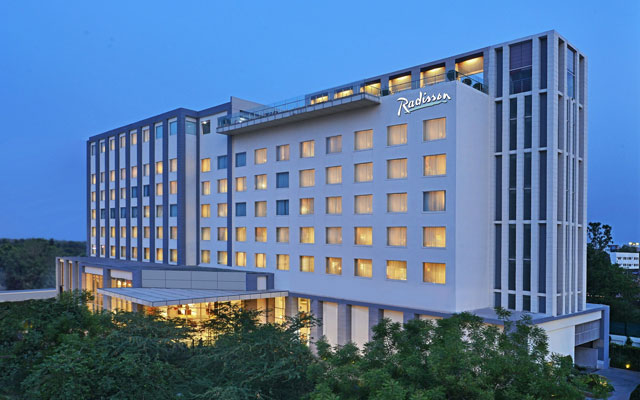
Radisson Hotel Group (RHG) has entered 2020 with the signing of 17 new hotels in India, boosting the company’s portfolio in South Asia to more than 150 hotels and 17,000 rooms, both in operation and under development.
The new hotels will add approximately 1,880 hotel rooms across India between now and 2025.
RHG expands footprint across India
The 17 hotels include two operational ones: the 165-room Radisson Hotel Agra which opened in June 2019, and the 135-room Radisson Hotel Gurugram Sohna Road City Center which has been running since April 2019.
Park Inn by Radisson Gwalior is expected to open this year.
Properties coming up in 2021 include the 180-room Radisson Hotel Greater Noida, the 100-room Radisson Hotel Bareilly, and the 100-room Park Inn by Radisson Surat.
The last property in the expanded portfolio to open will be the 180-key Radisson Blu Hotel Jaipur Malviya Nagar, come 2025.
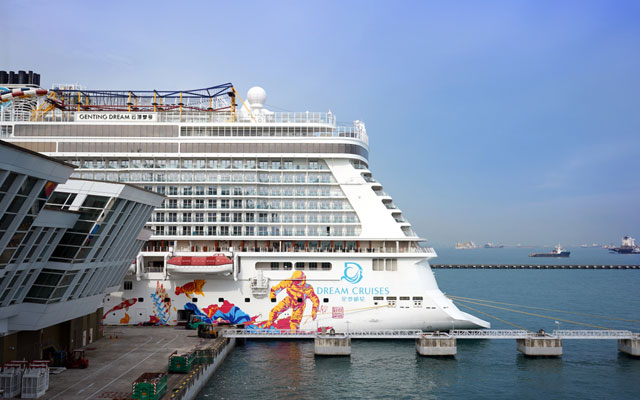
Dream Cruises will be suspending Genting Dream’s operations from Singapore from now until March 27, 2020, in response to growing concerns about the spread of Covid-19.
Dream Cruises president Michael Goh said: “Guests who are booked on any of the cancelled itineraries will be contacted and provided with a variety of compensation options, including to defer their cruise to a future sailing or, if needed, to cancel their cruise for a full refund.”
Dream Cruises suspends Singapore operations due to Covid-19
As the health and safety of guests and crew are of top priority for Dream Cruises, the company has from the onset of the Covid-19 outbreak been working closely with various local and regional authorities in implementing precautionary measures across its fleet.
Health and temperature screening for all embarking guests and crew members before every sailing, as well as stringent sanitisation and enhanced disinfection protocols, especially in high hand-touch areas, have been carried out on its ships.
As well, crew members on duty are required to wear masks and other appropriate gear, including disposable gloves; complimentary facial masks for passengers are available upon request.
To date, there have been no reported cases of Covid-19 among guests or crew while on board, or transmitted via any of Dream Cruises’ ships.
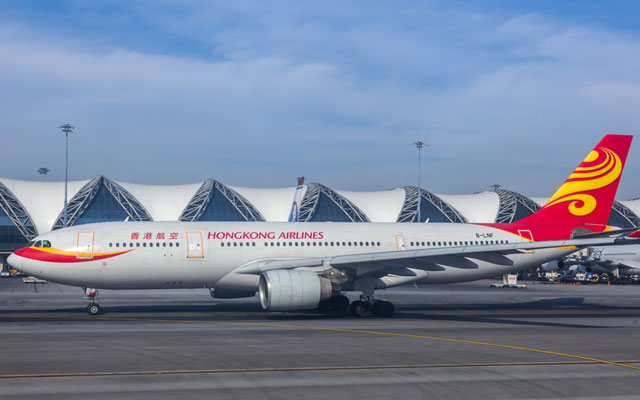
Hong Kong Airlines (HKA) has started sacking staff last week following a challenging few months of poor performance, as prolonged civil unrest in Hong Kong coupled with the wave of flight restrictions stemming from the coronavirus crisis has sent the airline into financial tailspin.
The move comes a day after the start-up airline slashed in-flight services to a bare minimum, reported the South China Morning Post (SCMP).
Hong Kong Airlines axed 170 employees last week to cut costs
Sources told the SCMP that 170 employees, mostly flight attendants, were informed that Wednesday (February 19) would be their last day of work.
The airline has also stopped offering food, drinks, blankets and pillows on all flights, as part of a series of cost-cutting measures, said SCMP.
Earlier, HKA had announced that it was making 400 staff redundant, while all other staff would be required to take unpaid leave from mid-February till end-June, or work part-time on half pay.
Unable to pay for in-flight entertainment, the airline has not offered screen entertainment since December. On Tuesday, the carrier closed its flagship airport lounge at Hong Kong International Airport, and made a drastic cut by only offering a bottle of water to business class passengers, and a pre-packed cup of water to economy passengers.
For more than a year, the airline has been battling severe financial woes. Last December, the government stopped the beleaguered carrier from losing its licence to operate through a last-minute cash injection.
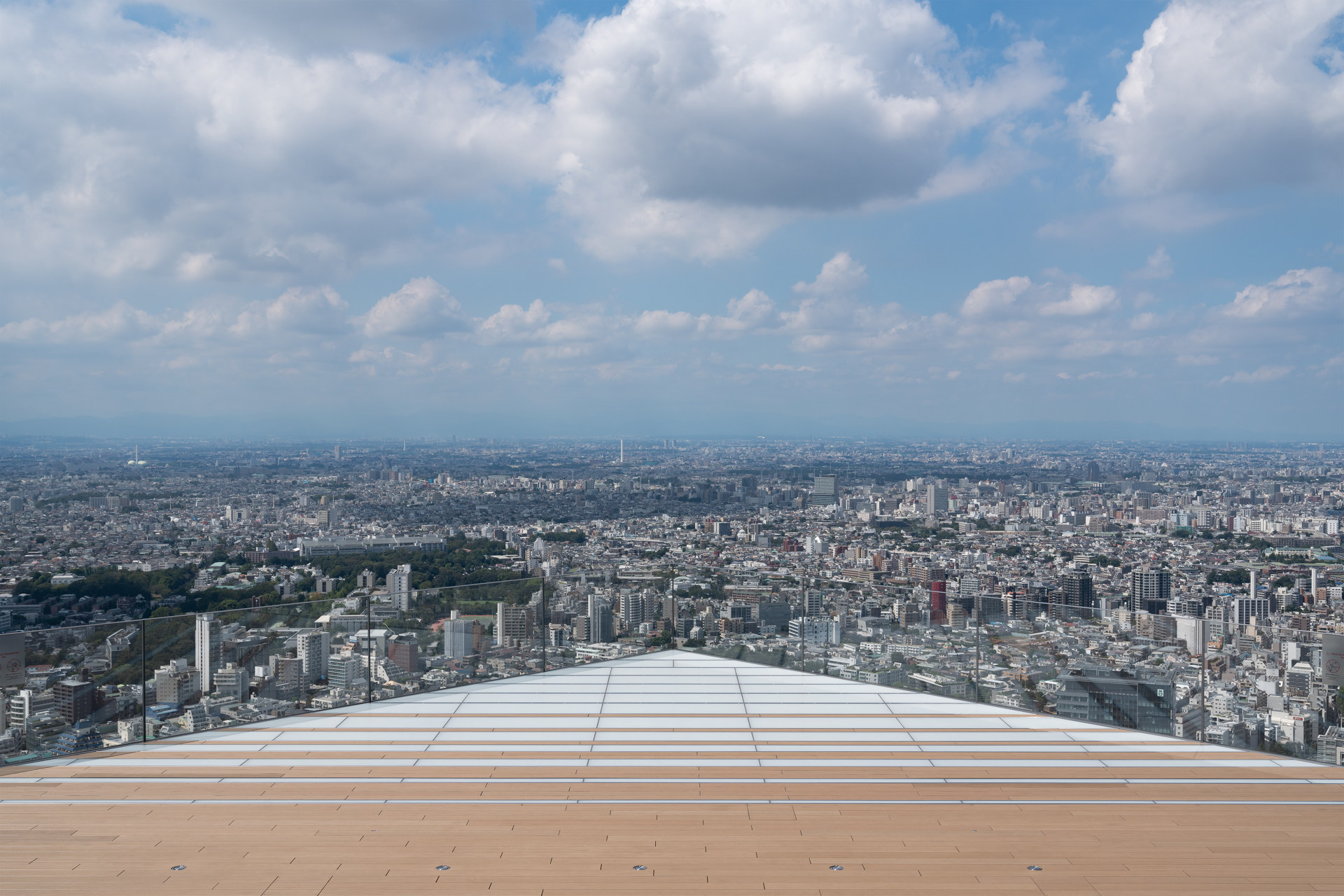
Tokyo’s newest attraction has risen in the form of the Shibuya Scramble Square, a 47-storey, large-scale multipurpose complex that at 230m, is the tallest building in Shibuya.
Sitting directly above Shibuya station, the new landmark, which opened on November 1, 2019, comprises an observation deck, offices, an industrial exchange facility, and commercial facilities.
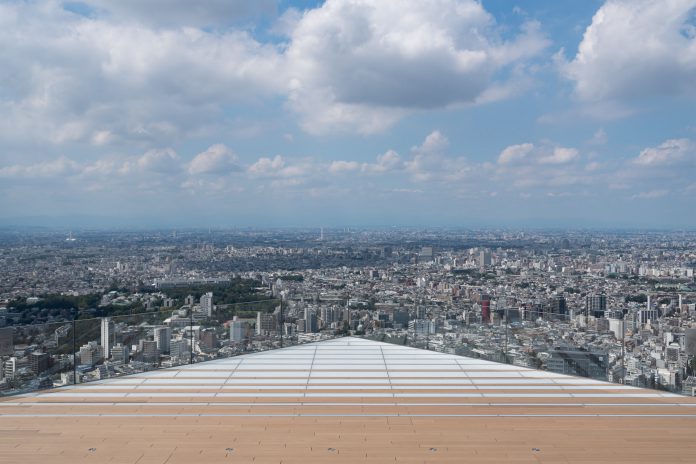
The view from Shibuya Sky
The building is home to 213 shops and restaurants, including seven newcomers to Japan and 49 newcomers to Shibuya.
The 2,500m2 Shibuya Sky, one of Japan’s biggest rooftop observatories, offers panoramic views of Tokyo’s landmarks.
Also situated within this facility is the Shibuya QWS, an interactive business community space where individuals from diverse backgrounds come together to invent new seeds of societal value. The venue also welcomes non-members, with the launch of Open QWS, an event that aims to encourage more people to utilise this facility.
Alba Wellness Valley by Fusion, a natural hot springs resort in Central Vietnam, has rolled out a host of well-being programmes, including a Reiki Training and Sound Journey, a Hot Springs Detox Retreat, and a year-round Wellness Detox programme.
Siam Reiki founder Lei Wei De, and Daphnee Lam, a sound healer and Siam Reiki practitioner, will be co-hosting a Reiki Training and Sound Journey retreat from March 3-5. Participants will learn how to self practice the healing art of Reiki on themselves and loved ones; and delve into Siam Reiki, a variation of traditional Reiki that tackles energy blockages in a person’s physical, mental, emotional and spiritual body.
Alba Wellness Valley by Fusion launches three new well-being programmes
Prices start from US$444 for two nights accommodation (based on twin sharing) and the Reiki certification. Sound healing and private Reiki sessions are an additional fee.
The Hot Springs Detox Retreat combines juice cleansing with alternating resting and movement. Guests will be guided by wellness experts, and get to relax in the property’s Japanese-style onsen, practice yoga and meditation, have daily detox massages, and more.
All-inclusive prices start from US$1,050 per person for a four-night stay in a one-bedroom bungalow. Courses run on an almost monthly basis with retreat dates set for the month of May through December.
Wellness Detox Packages are available in three-, five-, or seven-day arrangements. Highlights include a detox juicing class and a vegetarian cooking class, both using organic produce. Daily spa therapy is a key part of the process as well as the recommended D-TOX Reflexology treatment, which uses pressure points throughout the body to speed up the detox process. Retreat participants will take part in intermittent fasting, dropping down to just two meals a day.
These new programmes are in addition to the resort’s extensive range of wellness activities, from yoga to hiking.
The Philippines has come up with a two-fold approach to tackle the tourism slump owing to the coronavirus crisis: months-long reduced rates to spur domestic travel as well as a nationwide shopping festival next month tucked into inbound tour packages to woo major markets abroad.
While the rate reduction stimulants will not completely compensate for the tourism industry’s expected business losses, estimated to be 40 billion pesos (US$785 million) from February to April, it will cushion the impact of losing China – the country’s second biggest source market – and other feeder markets, explained Philippine Travel Agencies Association (PTAA) president Ritchie Tuano.
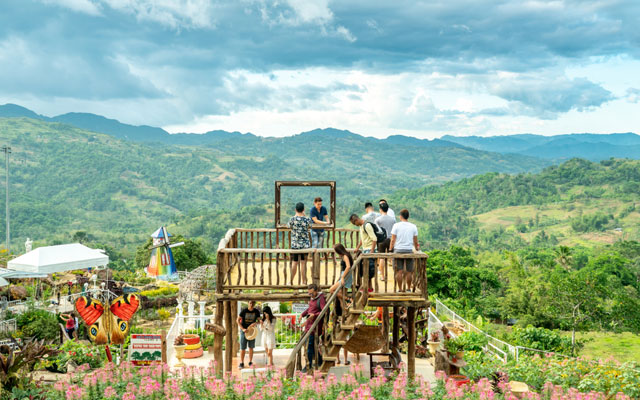
Philippines rolls out a series of promotions to boost tourism amid Covid-19; Sirao Flower Garden in Cebu, Philippines pictured
Tuano told TTG Asia that during past pandemics like SARS and H1N1 which deterred foreigners from coming to the Philippines, it was domestic travel that rallied the industry. Domestic travellers last year is expected to have surpassed the 100 million in 2018, compared with foreign arrivals which was 8.2 million last year.
More than 40 (and counting) hotels and resorts around the Philippines have agreed to cut room rates by up to 50 per cent in collaboration with the Department of Tourism (DoT) and its marketing arm, the Tourism Promotions Board, Tourism Congress of the Philippines (TCP), Philippine Hotel Owners Association, Hotel and Sales Marketing Association, PTAA, and Philippine Tour Operators Association.
The slashed room rates will be on offer until August, alongside 20 to 30 per cent in airfare reduction for flights on Philippine Airlines, Cebu Pacific and Air Asia Philippines – even as various quarters see room for more rate cuts, and are hoping for further reduction of up to 50 per cent in airfares.
As for the shopping festival set to take place this March, retail outlets across the country will dangle discounts of up to 70 per cent, especially on artisanal products and handicrafts. This itinerary will be incorporated into inbound packages to entice major markets including South Korea, Japan and Taiwan.
Elsewhere, the 360-member Network of Independent Travel Agencies (NITAS) will launch its own domestic sale programme this year, following a pre-emptive meeting with other industry stakeholders and the Department of Trade.
NITAS president Angel Ramos Bognot said their partner hotels and airlines will be offering “cut-throat rates” until September 15, with the involvement of local government units that will be offering souvenirs to travellers.
Dubbed Pasyal Pilipinas Now Na (loosely translated as Travel Around The Philippines Now), the programme is a continuation of NITAS’ pre-Covid-19 campaign encouraging product diversification by going into domestic tourism through product seminars and developments, Bognot said.
TCP president Jojo Clemente said he has made known to the DoT the request of some stakeholders for tax holidays, tax incentive and soft loans to tide them over the crisis. “I think the DoT would be in a better position to answer whether tax holidays and incentives are forthcoming. These are under their purview,” he said.
Oyo Hotels and Homes is setting up a dedicated fund of US$200,000 to support its partners and their families in the South-east Asian region who have been impacted by Covid-19.
This is the second fund by Oyo in Asia, following the hospitality chain’s dedicated fund of more than RMB one million (US$142,000) in China to support infected employees and their family members.
Oyo earmarks US$200,000 to assist its South-east Asian partners impacted by Covid-19
Oyo CEO for South-east Asia, Japan & Middle East, Mandar Vaidya, alongside other members of the leadership team for South-east Asia, have also pledged to donate a portion of their salaries for February 2020 to the fund.
Vaidya said in a statement: “The hospitality industry has been impacted and we are also concerned with the impact Covid-19 has on our partners as they come to grips with the current situation. Our responsibility as #TeamOYOSEA compels us to come out in full support of everyone connected to Oyo as we navigate through this difficult phase”.
He added: “Oyo stands in solidarity with all OYOprenuers and our partners in the region. Our effort reflects the organisation’s culture and values, which we hope, would spur others in the region to do their part during this challenging and uncertain time.”
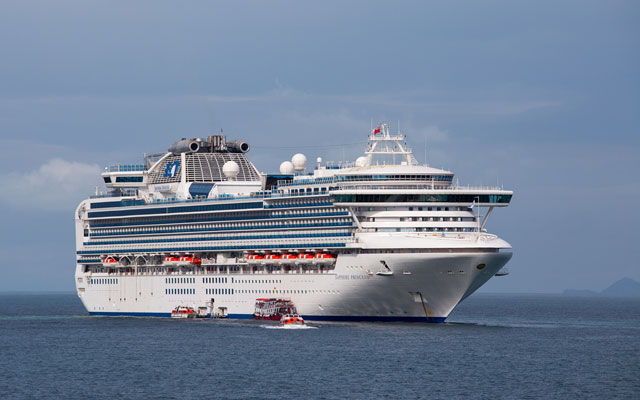
Princess Cruises’ decision to redeploy the 2,670-pax Sapphire Princess for an extended Australia season from May 1, 2020, will add 44 new cruises from five major Australian cities.
Unveiling the cruise line’s expanded programme, Stuart Allison, senior vice president Asia Pacific, said: “With the ongoing uncertainty of travel restrictions and port closures in Asia impacting our cruise operations in the region, we hope that this extended deployment in Australia will benefit local tourism, particularly in regional areas with 102 visits to regional ports around the country during her year-long deployment.”
Princess Cruises adds 44 new cruises from five major cities after cancelling another 21 sailings in Asia
On sale from February 27, Sapphire Princess’ programme will include 171 port calls. Travellers can go on an inaugural Australia circumnavigation voyage, sailing Adelaide roundtrip with similar options from Fremantle and Sydney, and enjoy 19 maiden calls along Western Australia’s coast including Geraldton and Exmouth.
Fares departing from Perth (Fremantle) start from A$3,249 (US$2,143) per person on a twin-share basis.
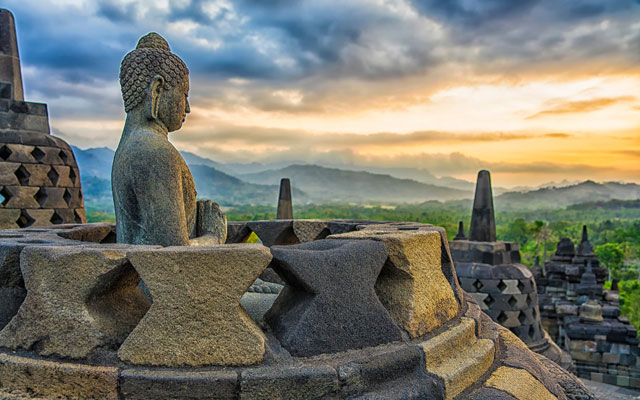
Travel trade players in Yogyakarta have been dealt a second blow with last week’s closure of the top levels of the Borobudur temple to visitors due to a conservation campaign, following the hike in ticket prices to the temple.
The Borobudur Conservation Agency (BKB) has banned visitors from entering the ninth and 10th levels of the Borobudur temple to prevent irresponsible actions that may threaten the conservation of the temple, such as climbing or sitting on the stupa walls, littering, vandalism, sticking used chewing gum on stone surfaces, smoking, and performing Parkour on the stupas.
Trade players rally against the closure of the top levels of the Borobudur temple
The agency found 3,074 stains of used chewing gum in the temple, including 590 on the top levels.
During the closure that runs from February 13 for an unspecified period, BKB allows visitors to enjoy the views of Borobudur from the eighth level.
The temple’s partial closure is part of a monitoring programme that aims to check several aspects, such as the maintainability of the stones, the stability of the structure, the impact of visitorship, and damage to the main stones of the stupa structure, according to a press release by the agency.
Edwin Ismedi, managing director of Trend Tour & Travel, said that while some of his inbound Malaysian visitors were understanding about the restriction, the majority protested against it since the main purpose of visiting Borobudur was to access the temple’s uppermost levels.
Raising doubts about BKB’s statement on the discovery of many used chewing gums on stone surfaces, Edwin said that tour guides who visited the venue daily reported that they never witnessed such irresponsible behaviour.
Visitors also now advise one another to not climb the stupa walls and litter, he added.
Similarly, Shelly Henry, managing director of Chacha Tours, said that she had received complaints about the ban from her business partners in Malaysia and Singapore. They requested the Borobudur entrance ticket of US$25 to be cut to compensate for the closure of the temple’s top floors.
The restriction also extends to customers who bought the Borobudur Sunrise and Borobudur Sunset packages, special entrance tickets for guests to enjoy the Borobudur temple at dusk or dawn.
This adds a further damper for travel agents, after Taman Wisata Candi (TWC), a company that manages the temple, raised their prices on January 1 from 475,000 rupiah (US$34) to 500,000 rupiah for foreigners.
Shelly said that the sudden price hike meant travel agents had to shoulder the price difference for contracts inked before the change.
In April, when the old contracts expire, Shelly plans to increase the price of tour packages by 20 to 30 per cent. In a similar vein, Edwin will also raise the price of his tour packages by 10 per cent.
Edwin expressed concern that the yearly ticket price hikes to the Borobudur temple may deter travellers from visiting Yogyakarta, and instead opt for Vietnam or other countries with similar attractions.
He added that there have yet to be significant improvements made to the services for the Borobudur Sunrise and Sunset tour packages since the price hike earlier this year.
A cheaper alternative, according to both Edwin and Shelly, is to catch the sunrise from the hilltop of Punthuk Setumbu, located west of the Borobudur temple.
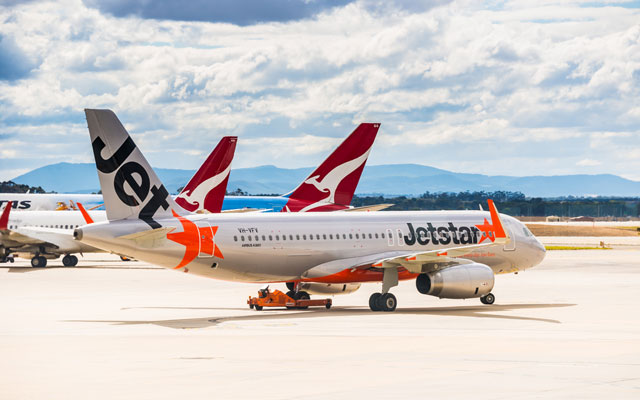
Qantas International and Jetstar Group have made temporary reductions to their flight schedule in response to a drop in demand due to the Covid-19 outbreak.
Qantas International will cut 16 per cent of Asia capacity until at least the end of May, a move that will impact flights from Australia to China, Hong Kong and Singapore.
Qantas, Jetstar to cut flights to Asia due to weakening demand amid the Covid-19 crisis
Its Sydney-Shanghai service will remain suspended; flights from Sydney, Brisbane and Melbourne to Hong Kong will be reduced; Melbourne-Singapore service will be operated using a Boeing 787 instead of the larger Airbus 380.
Jetstar Group will cut its capacity to Asia by 14 per cent until at least the end of May 2020, impacting flights from Australia to Japan and Thailand, and intra-Asia flights.
Cairns-Tokyo (Narita), Cairns-Osaka, Gold Coast-Tokyo (Narita) and Melbourne and Sydney-Phuket will each be reduced by up to two return flights per week.
Jetstar Asia (Singapore), Jetstar Japan and Jetstar Pacific (Vietnam) have suspended flights to China and are reducing flights across the region. In particular, Jetstar Asia is reducing total seats by 15 per cent.
There is no change to other key parts of the Qantas International network, such as the US and UK.
Qantas Group CEO Alan Joyce said the measures will help the company to limit exposure to softening markets impacted by the outbreak.
“We can extend how long the cuts are in place, we can deepen them or we can add seats back in if the demand is there. This is an evolving situation that we’re monitoring closely,” he said in a statement.