

Millennials set to travel first post-Covid
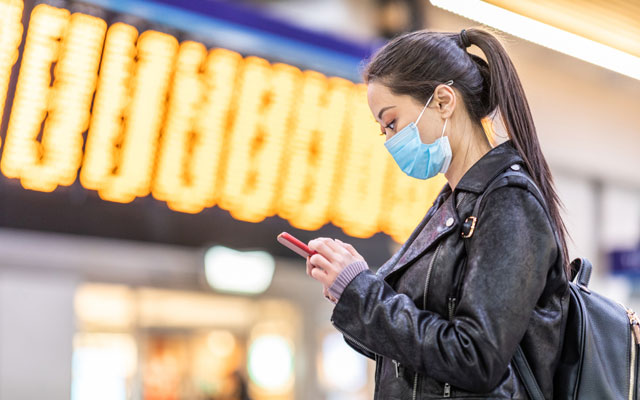
Many travellers in Asia-Pacific have plans to travel within six months, once travel bans lift, with millennials set to be the first to hit the road, according to a travel sentiment survey by Sabre Corporation.
The new survey aims to gain insight into the mindset of travellers across Asia-Pacific as the industry looks to survival, recovery and, ultimately, growth in the new normal brought about by the current pandemic.
“As travel restrictions start to lift and pockets of the industry begin to recover, we are seeing traveller behaviour adapt to the new normal,” said Todd Arthur, vice president, Asia Pacific, agency sales travel solutions, Sabre.
“Our findings show that, while consumer confidence in the safety of travelling is mixed, there is also a clear pent-up demand for travel among many people across Asia-Pacific, as well as strong opportunities to be seized by all sectors of the travel ecosystem as we move forward.”
Below are the six key findings of the Sabre survey into Asia-Pacific traveller sentiment:
Some 45% of respondents expect to travel within the next six months – with millennials set to travel first
While more than a third of travellers (35%) said they wouldn’t be travelling anytime soon, or until a Covid-19 vaccine is available, there were also positive indications for the travel industry, with 45% of respondents saying they planned to travel within six months (following the lifting of relevant travel restrictions).
Of all the age groups, the survey indicated that millennials (i.e., those in the 20 to 39 age category) are the keenest to travel as soon as restrictions are lifted, with 49% saying they would travel within six months.
Of respondents in all age groups, 11% indicated they would travel immediately after travel restrictions were lifted, while 20% said they planned to travel within one to three months, and 14% said they would travel within a four- to six-month timeframe.
Out of the regions in Asia-Pacific, South Asia has the highest percentage of travellers who indicated that they are keen to travel within a year (73%).
The country with the most positive travel sentiment was Pakistan, with only 10% of travellers saying they aren’t keen to travel soon. Those in Singapore also demonstrated a strong pent-up demand for travel, with just 14% saying they had no plans to travel. Some 18% of respondents in Singapore said they would travel immediately, with a further 18% saying they would travel within one to three months.
Travellers will be swayed by relaxed safety protocols rather than price – but they do want temperature checks at major tourist attractions
Of the respondents who said they had no plans to travel anytime soon, or until a Covid-19 vaccine is available, the majority said that they would not be swayed by price once they do think about booking their next trip.
Only 10% said the main factor they would consider would be competitively priced deals such as airfares or package holiday deals, while the majority (41%) said their main consideration was a relaxation of safety measures and protocols at a destination, such as a lack of 14-day quarantine or contact tracing measures.
Meanwhile, more than a third (35%) said they would consider the destination country government’s management of the Covid-19 pandemic, while 14% said they would look at the access to and quality of medical and healthcare systems at their potential destination country.
Of those respondents who stated they would travel within six months, 28% said they would be extremely likely to travel to a destination which implemented temperature screening before entering places of interest, tourism spots and all venues including hotels and restaurants.
Meanwhile, a quarter (25%) of respondents who will travel within six months said they would be more likely to travel to a destination where mask-wearing is enforced, while 26% said they would be more likely to travel where safe distancing measures were strictly enforced and 21% said they would be more likely to travel to a destination with contact tracing measures in place.
Travellers perceive air travel to be the riskiest mode of transport
More than a third (37%) of respondents said they believed air travel posed the highest risk of infection when travelling during the current Covid-19 pandemic, with cruise ships deemed to be the next riskiest mode of transport for travellers in Asia-Pacific (34%). More women than men deemed air travel to be risky. Of those saying air travel was the riskiest mode of transport, 62% were female.
However, even though respondents said they thought air travel posed the highest risk, more than half (52%) said they would still travel via air, provided that certain safety measures were put in place.
Additionally, 35% of all respondents said “safe social distancing with empty seats between passengers” was the most important measure to help them to feel safe to travel via air.
Other important measures for potential air passengers were a requirement for all crew members and passengers to wear a face mask, as well as enhanced cleaning for meal trays, seats and lavatories before boarding.
However, even with safety measures in place, 70% of respondents who said they would travel via air would prefer to cancel or reschedule their flight if they were informed that the flight was completely full.
In contrast with the overall Asia-Pacific results, the majority of travellers in Japan ranked cruise as the riskiest mode of transport in a finding. Some 50% of respondents in Japan stated cruise posed the highest risk of infection, with 73% indicating they would avoid travelling via this mode of transport completely.
More than a third of travellers (74%) are expected to opt for shorthaul or domestic travel
While travellers across Asia-Pacific remain cautious about travelling, of the 44% who indicated they will travel within the next six months, 41% said they would opt for shorthaul travel (below eight hours travel time), while 33% said they would choose domestic travel, with the remaining 26% saying they would be travelling longhaul or had no preference.
More than a third (38%) of respondents from Pakistan who do want to travel said they would go for shorthaul trips. In Japan, of the 49% of respondents who indicated they will travel in the next year, 61% of those said they will choose domestic travel. Meanwhile, of the 37% in Taiwan who indicated they will travel, 46% said they will opt for shorthaul travel.
More travellers are expected to book their trips through a travel agent
Travellers who previously booked their trips independently say they are more likely to book via travel agents in future.
Of those surveyed, 68% said they foresee booking their next holiday through travel agencies to save the hassle of pre-travel research. The results varied across markets in Asia-Pacific.
In South Asia, 96% of respondents indicated they will book through travel agents, while the figure was even higher in Pakistan, with 100% of respondents surveyed saying they will opt to book through travel agents. In North Asia, 67% of respondents indicated they will book their next trip through travel agents.
Strong confidence in international branded chain hotels
The survey revealed good news for international branded chain hotels, with 57% of respondents saying they had previously preferred to stay in international branded chain hotels, and 86% of those indicating that this will remain their top choice post-Covid-19.
This sentiment is particularly strong in North Asia, where 72% of respondents indicated that international branded chain hotels will remain their top choice post-Covid-19.
Meanwhile, 64% of respondents whose choice before Covid-19 were home stays, boutique hotels, motels or other forms of accommodation, and who said they would now change their preferred type of stay indicated their new choice would be international branded chain hotels.
The biggest reasons for sticking to, or making a switch to, branded chain hotels were assurances of enhanced sanitation and cleaning as well as the use of new cleaning technologies.
The Asia-Pacific travel sentiment survey polled travellers across the region from June 3 to June 30, 2020. A total of 618 responses were gathered and used to formulate these insights.
Indonesia gains favour with Russian tourists

Indonesia’s travel trade is seeing strong outbound demand from Russian travellers, but lack of clarity around the reopening of borders to international tourists is impeding efforts to sell the destination.
Asekan Djoyo Dono, director of Asia Collection Tour, said that his company have began accepting bookings from Russia to Bali. “Demand has picked up. We even have groups from Russia to handle in October,” he added.
As well, Pegasus Indonesia Travel has also seen a slight uptick in interest from the Russian market this month. Its president director, Jimmy Saputra, said their partners in Russia had began asking when Bali would reopen.
Jimmy elaborated: “Russian tourists are ready to travel and our wholesaler partner also wants to sell Bali soon. But they are hesitant to put Bali on the list because there is no clarity around when the border will be reopened by the central government.”
In a similar vein, Paul Edmundus Tallo, chairman of the Indonesia Inbound Tour Operators Association, said that most operators are ready to restart, with safety and cleanliness protocols firmly in place, and are awaiting authorities to lift the international travel ban.
He said: “(We need) certainty over when the border is going to reopen because we have to start selling. The government needs to at least provide a clear timeline, so we can start making business plans.”
Bali’s governor announced on July 5 that the destination will be ready to reopen to international travellers from September 11, but at press time, the trade is still waiting for the central government to announce the border reopening dates and policies to start sales.
In the meantime, Paul urged the travel trade to create new tourism products to attract more Russian tourists.
“They are no longer just looking for a beach. Nowadays, Russian travellers want to explore new places. In fact, they are now looking for adventures like an overland trip in Flores, with trekking to Mount Kelimutu,” Paul shared.
Anna Prikhodko, manager of Visit Indonesia Tourism Officer (VITO) Russia, said that Russian tourists are attracted to Indonesia for its nature, friendly locals, historical and culture heritage, as well as lower living costs as compared to the US and Europe.
Although around 80 per cent of Russian tourists who travel to Indonesia opt to visit Bali, according to Prikhodko, they have started looking for other destinations in the archipelago to explore.
“In recent years, Russian tourists have begun to travel to Lombok, Yogyakarta, Flores, North Sumatra, Batam and Bintan,” said Anna.
Asekan agreed, saying he saw demand from Russians wanting to visit Papua increase to eight per cent before the pandemic hit. Besides Papua, Russian tourists had also begun combining Bali with Sumba and Labuan Bajo, Flores on their trip. “They were looking for more quiet and exotic destinations than the crowded Bali,” he added.
Jimmy, however, saw the lack of flight connectivity posing a challenge to boosting traffic from Russia. Currently, only Rossiya Airlines serves a direct flight from Moscow to Bali, although the market was a significant market contributor to the country.
Statistics showed that in 2019, there were 158,943 Russian tourists to Indonesia, an increase of 26.4 per cent year-on-year. However, at the onset of the coronavirus, arrivals for the months of January and February 2020 dropped to 26,869.
He suggested that apart from Bali, the government should work to attract airlines to use different entry points such as Medan.
Jimmy added: “Imagine if tourists were to enter from Medan, then proceed down to the Riau Islands, before going to Java, and finally, Bali. We will have a massive variety of tour packages to offer (along that route), and it’s a greater way to attract Russian tourists.”
Penang pulls out all stops to woo domestic tourists
Penang’s tourism scene is springing back to life, in part thanks to efforts by the state government and tourism industry partners to boost domestic tourism while the border remains closed to foreign tourists.
At The Habitat Penang Hill, an eco-tourism hotspot in Penang, visitor numbers have bounced back to “near normal”, with more than 90 per cent visitorship comprising locals and expatriates living and working in Malaysia, shared its managing director Allen Tan.
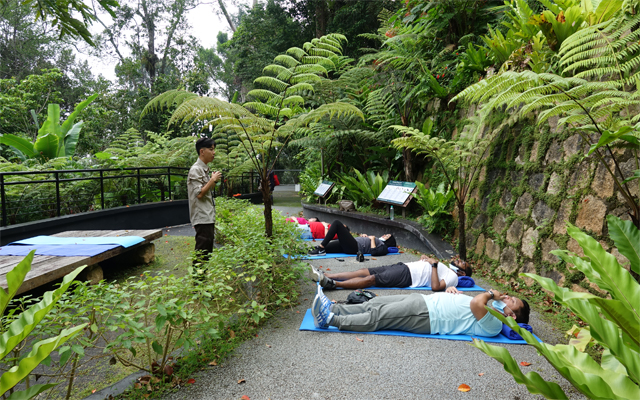
The Habitat Penang Hill has also recently introduced several new offerings, including Forest Bathing, a guided three-hour programme by a resident naturalist which helps participants destress and reconnect with nature by partaking in a series of breathing exercises in the rainforest.
Tan shared the programme was popular and timely with working people and those who had been cooped up at home for almost three months during the movement control order (MCO) period.
Amid its closure during the MCO, The Habitat Penang Hill conducted free virtual tours to stay top of mind. Down the road, Tan has in mind to create more virtual tours and to monetise them. Plans to set up an online retail store is underway too. He shared: “We intend to Covid-proof our business in the event of any unforeseen, future lockdowns that might happen.”
Kampung Agong, located on the mainland in Seberang Perai, is a community-based tourist attraction developed by the villagers themselves within their hometown. The place is packed with photo opportunities, such as giant swings resembling bird’s nests and a faux grand piano seated amidst miles of paddy fields. Its photogenic landscape is what drives visitors from all across the country here, shared its spokesperson, Nur Adlini Muhamad Khidir.

The attraction draws more than 500 visitors on weekends, made up mainly of families and friend groups coming from all over the peninsular and Penang Island by car.
The villagers had recently built a trio of village houses to accommodate guests on overnight stays to give them a taste of village living – and locals have been so taken with the idea that forward bookings are full on all weekends through end-September, shared Nur Adlini.
Another new attraction in Penang that has gained traction among locals is The Penang International Container Art Festival which runs till year-end.
Here, five shipping container art installations – the handiwork of local and foreign artists – are spread across George Town, Jelutong, and Balik Pulau on the island, as well as Butterworth and Batu Kawan on the mainland.
Malaysian Harmony Tour & Travel product planner, May Chiong, shared that the company has seen strong demand for Penang out of Kuala Lumpur, especially from the family segment looking for short weekend getaways, and that beach stays were selling well.
She said millennials travelling with like-minded friends from Kuala Lumpur were also attracted to the destination for short breaks as there were many Instagrammable-worthy places of interest to them.
Chiong was one of 19 outbound tour operators from the Klang Valley recently hosted by Penang Global Tourism (PGT) and Penang state exco for tourism development, arts, culture and heritage on a four-day familiarisation trip to Penang aimed at showcasing the state’s offerings.
PGT CEO, Ooi Chok Yan, said: “Many relate Penang to good food and its UNESCO George Town heritage status, but we wanted to showcase to agents that there is more to Penang than just that.”
Yeoh Soon Hin, state tourism, arts, culture and heritage committee chairman, shared: “Through this familiarisation trip, we hope to instil the perception that even local destinations can be as competitive as overseas ones, and that you do not have to go far to have a holiday.”
Last month, PGT also launched Penang Travel Deals, featuring deals on hotels, attractions and tour packages, as part of efforts to woo Malaysians to the state and help the local economy recover.
Thailand gears up to reopen to medical tourists
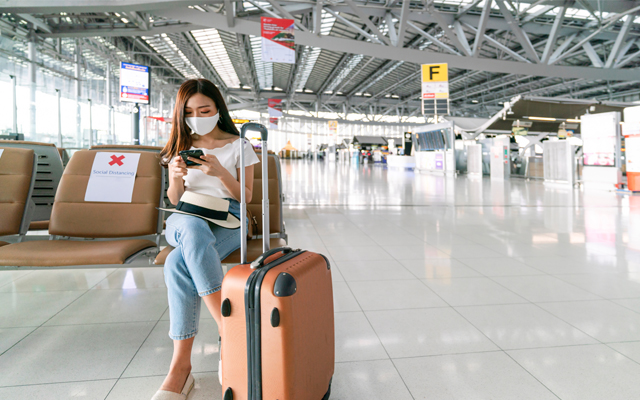
Despite the recent ruckus over two imported coronavirus cases that riled up Thailand’s local population, the Thai government has confirmed it will move ahead with its planned medical and wellness tourism programme.
Stricter disease control measures will, however, be implemented, and the first batch of patients are set to arrive at the end of this month.
Currently, eligible patients are those seeking infertility treatments or plastic surgery arriving by air. They will have to produce an appointment letter with a doctor in Thailand, documentation from the Thai embassy in their country of origin, and a negative Covid test pre-travel.
They will be tested again on arrival, and before they leave Thailand. Patients may be accompanied by one to three other travellers.
As of now, 62 private and state-owned hospitals are involved in the programme. The quarantine process will be different for medical tourists, and will be primarily handled by the hospitals. A medical hub committee chaired by tourism and sports minister Phiphat Ratchakitprakarn, who helms the project, will also oversee the setup of in-hospital quarantine facilities.
All patients will be required to complete a 14-day quarantine after their treatment, following after, they will be free to travel anywhere in Thailand. Locals tours are also being planned by the government for these tourists.
The programme is run primarily by the Thai government and hospitals. Local tour operators, hotels and hospitals that are not part of the programme will not have access to the tourists.
The Thai government announced earlier in July that 1,700 individuals from 17 countries in the Mekong region, China and the Middle East have already applied for the programme.
Medical tourism forms part of Thailand’s long-term plan to draw higher spending visitors post-Covid. Phuket has recently announced a three billion baht (US$94.6 million) plan to transform 140ha of land near Mai Khao beach, north of the airport, into a medical hub.
Thailand’s Centre for Covid-19 Situation Administration has green-lighted another four categories of foreigners that will be allowed entry into the country during phase six of its reopening in August, including Elite Visa holders, groups of medical tourists, foreign film crews, as well as convention exhibitors and co-organisers, pending cabinet approval.
Emirates covers Covid-19 costs for travellers
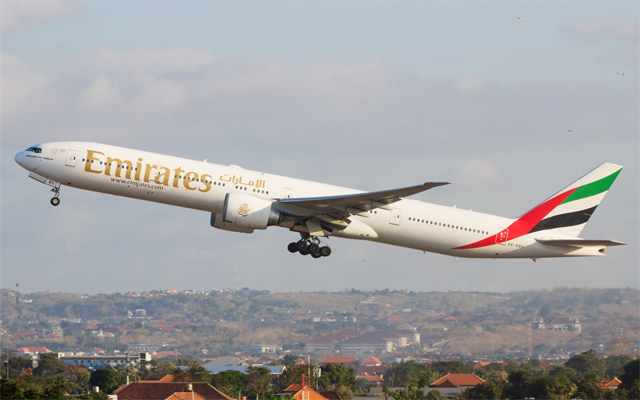
Emirates has become the first airline to offer its customers’ free cover for Covid-19-related costs, in a bid to boost travel confidence.
Customers flying with the Middle East airline from now until October 31, 2020 can claim medical expenses of up to €150,000 (US$174,000) and quarantine costs of 100 euros per day for 14 days, should they be diagnosed with Covid-19 during their travel, while away from home.
Sheikh Ahmed bin Saeed Al Maktoum, Emirates group chairman and CEO, said: “We know people are yearning to fly as borders around the world gradually reopen, but they are seeking flexibility and assurances should something unforeseen happen during their travel.”
Applicable across all fare classes and destinations, this cover will be valid for 31 days from when an Emirates’ passenger flies the first sector of their journey.
Customers do not need to register or fill in any forms before they travel, and they are not obligated to utilise this cover provided by Emirates.
Any impacted customer who has been diagnosed with Covid-19 during their travel simply has to contact a dedicated hotline to avail of assistance and cover.
Thanyapura holds one-day flash sale

Thanyapura Sports & Health Resort in Phuket will run a 12-hour flash sale on August 8 from 08.00 to 20.00 (GMT+7), offering 80 per cent off its regular hotel rates.
The offer will be valid for stays until September 30, 2021, and guests have the option to purchase sports and wellness packages.
In addition, Thanyapura will allow a one-time date change. Bookings can be made through Thanyapura’s website using the code FLASH80, applicable to all bookings that include breakfast. Hotel bookings made are non-refundable, non-commissionable and are subject to availability.
Located on the Thai island of Phuket, Thanyapura Sports & Health Resort is an active holiday destination offering personalised programmes ranging from sports and fitness to nutrition and lifestyle medicine.
NEC, SITA partner to create touchless solutions at airports
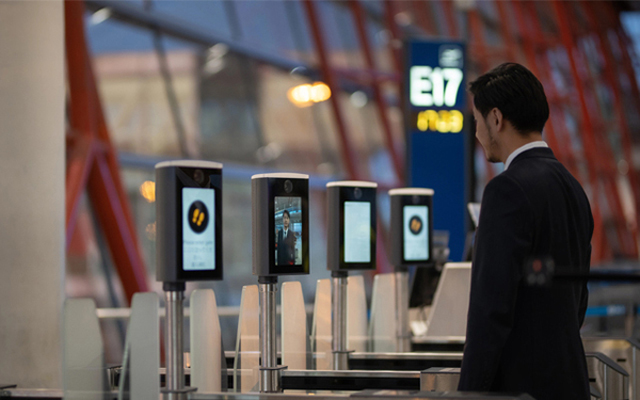
Japan’s NEC Corporation have joined forces with SITA to develop solutions that will enable a secure, seamless and automated journey at airports across the world.
The partnership comes as airports and airlines increasingly look to low-touch and automated passenger processing in order to safeguard the health and safety of passengers amid the global Covid-19 pandemic.
Through the partnership, passengers will be able to use their digital identity on their mobile phone at every step of their travel journey. They will be able to check-in, make payments, drop their luggage, as well as pass through security, immigration and boarding by simply scanning their face.
This solution will be developed by utilising both companies’ global presence in the market and the combination of technology for common-use platforms and artificial intelligence (AI) solutions, including NEC’s I:Delight identity management platform alongside SITA Smart Path and SITA Flex.

Through identification technologies and AI solutions like face recognition algorithm, NEC’s I:Delight platform enables passengers to be identified quickly and with higher accuracy. SITA Smart Path and SITA Flex solutions are able to integrate mobile and NEC’s biometric technologies with existing common-use infrastructure and airline applications while delivering a smoother airport journey.
Teardrop Hotels relaunches Geoffrey Bawa’s country estate
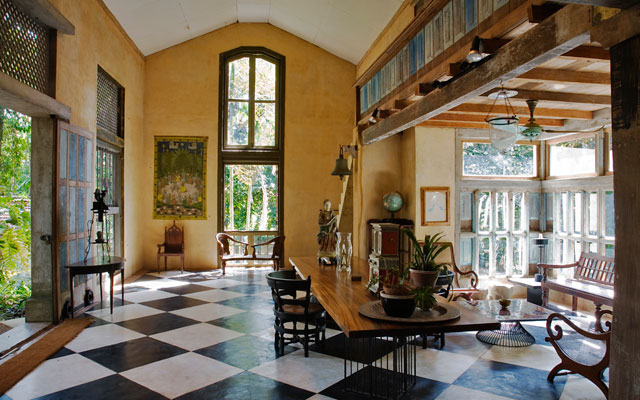
A partnership between Teardrop Hotels and The Geoffrey Bawa Trust has seen Bawa’s Lunuganga country estate located on the southwestern coast of Sri Lanka revitalised and relaunched as a nine-bedroom property.
Grounds of the estate feature the famed architect’s original home, which comprises a former 1930s plantation bungalow, with six private guest suites located around the estate. Lunuganga now also includes the reconstructed three-bedroom house of Bawa’s batik artist friend, Ena de Silva.
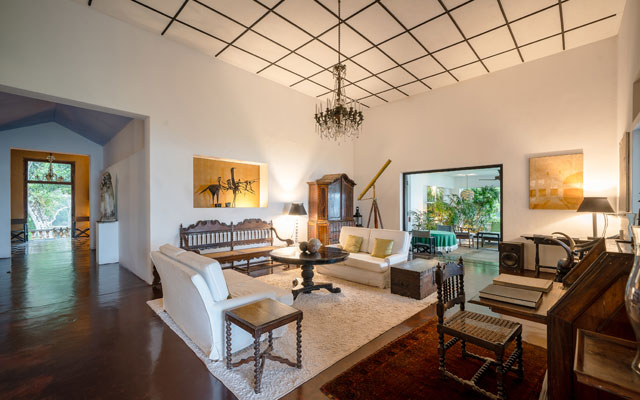

de Silva and her husband Osmund commissioned Bawa to design their home in 1962. In 2009, Ena sold the house to The Bawa Trust, which then moved the property brick by brick from its location in Colombo to Lunuganga. The house took three months to disassemble and six years to rebuild. Changes to the property have been kept to a minimum to preserve as much originality as possible.
A night at Lunuganga – in either the main house or the Ena de Silva villa – starts at US$265++ for two people sharing, inclusive of breakfast. To celebrate the relaunch, Teardrop Hotels is offering guests a 20 per cent discount on all rooms booked before November 30, 2020, which can then be used anytime until April 30, 2022.
An important part of Sri Lanka’s cultural and design heritage, Lunuganga was acquired by Bawa in 1947 as one of his first projects, where he transformed the property from a derelict rubber estate into one of the most beautiful gardens of the 20th century.
Marriott offers staycation deals in Singapore
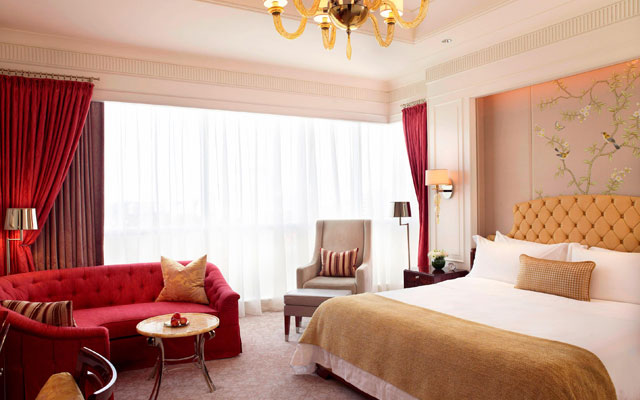
Marriott International has launched limited-time staycation offers at select properties across Singapore.
The ongoing 14-day limited-time offer for its Reserve Now, Indulge Later staycation packages will end on August 4, 2020, offering guests up to 20 per cent savings on all suites and 10 per cent off for standard room bookings, for stays until June 30, 2021.
Three curated, themed packages – Romantic Escapade, Dining, Family Fun – are available under the offer at participating hotels and resorts. The Romantic Escapade package caters to couples, the Dining package offers handcrafted dining experiences, while the Family Fun package comes with a ‘kids eat free’ inclusion.
Guests can choose from an array of bespoke packages at participating hotels: The St. Regis Singapore, W Singapore-Sentosa Cove, The Ritz-Carlton, Millenia Singapore, and Singapore Marriott Tang Plaza Hotel.
At The St. Regis Singapore, guests can enjoy a S$100 (US$72) daily credit for use on dining and spa experiences, an epicurean breakfast for two adults and two children (up to 12 years of age), and a bottle of champagne.
Those looking for a family staycation can check into The Ritz-Carlton, Millenia Singapore. The Ritz Kids Night Safari seeks to cultivate the spirit of the great outdoors in young children, and cater to their thirst for new adventures. This immersive programme will take the little ones on an in-room camping experience, with a sleeping tent pitched in the room, and equipped with a night lamp, an edible turndown amenity, a Ritz-Carlton lion beanie and an activity book.
For Singapore Marriott Tang Plaza Hotel, its staycation package includes a 24-hour stay with check-in and check-out flexibility, S$70 dining credit, complimentary breakfast for 2 children (below 12), free parking, English high tea with champagne, and more.







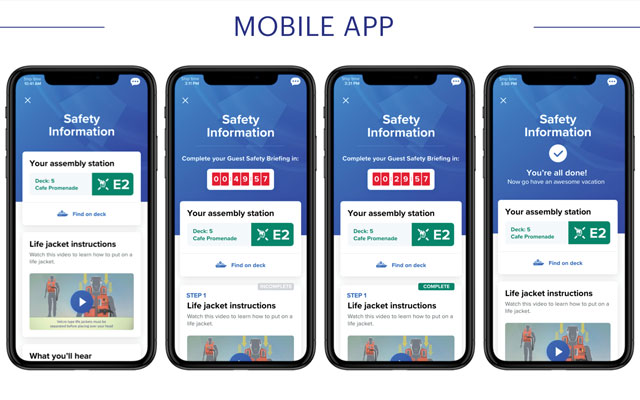
Royal Caribbean Group (RCG) has unveiled a new mode for cruise passengers to carry out the safety drill in a safe and socially distanced way – via digital app.
Dubbed as Muster 2.0, the digital drill delivers the key elements of the mandatory safety protocols to guests on an individual basis, eliminating the need for the traditional large group assemblies.
Passengers can access the cruise line’s safety protocols including exit points for use in emergency evacuation and instructions on how to properly use a life jacket on the digital app.
New technology, eMuster, will be used to help provide the information to guests via their mobile devices and interactive stateroom TVs.
Prior to the ship’s departure, guests will be required to visit their assigned assembly station, where a crew member will verify that they have read the safety information and answer any questions about safety protocols.
RCH chairman and CEO, Richard Fain, said in a press statement: “The health and safety of our guests and crew are our number one priority, and the development of this new muster process is an elegant solution to an outdated, unpopular process. The fact that this will also save guests time and allow the ship to operate without pause means that we can increase health, safety and guest satisfaction simultaneously.”
Jay Schneider, RCG’s senior vice president of digital, added: “Muster 2.0 represents a natural extension of our mission to improve our guests’ vacation experiences by removing points of friction. In this instance, what’s most convenient for our guests is also the safest option in light of needing to reimagine social spaces in the wake of Covid-19.”
More than a year in the making, Muster 2.0 is an initiative that will be part of the comprehensive set of protocols and procedures RCG is developing alongside the Healthy Sail Panel that was recently assembled in collaboration with Norwegian Cruise Line Holdings.