


Rally Investco to manage Bedsonline in Indonesia
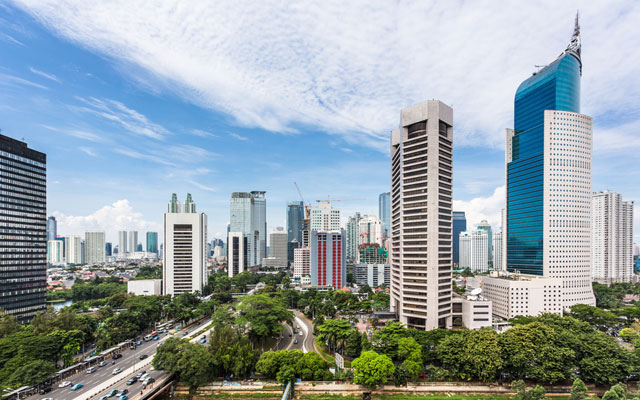
Bedsonline has signed Rally Investco up as its General Sales Agent (GSA) in Indonesia, allowing the latter to establish a rewards programme for travel agents as well as a dedicated help desk for the locals.
The strategic partnership will see Indonesian travel agencies continuing to book their accommodation, activities, transfers and car-hire via bedsonline.com, while taking advantage of Galileo Club, a collaboration between Rally Investco and Galileo Indonesia, to earn points from their bookings – including flight bookings on the Galileo GDS.
Rally Investco will also set up a help desk in the country, operated in Bahasa Indonesia. This will include local phone lines which will help reduce costs for Bedsonline’s customers.
Hui-Wan Chua, regional sales director, APAC, Bedsonline, said the Indonesian market “is a top priority for us”.
“To excel in the ever-changing travel landscape, our Indonesian customers deserve a partner that is much more than just a booking engine. Therefore, we have chosen Rally Investco – who are collaborating with Galileo Indonesia – to operate our local Bedsonline business going forward, given their extensive local market knowledge, presence and relationships,” Chua added.
Raymond Setokusumo, president director, Galileo Indonesia, said: “We believe this partnership will bring a new extended variety of services and programs for all Bedsonline’s clients in Indonesia.”
Phuket establishes Green Day to inspire island clean-up

Phuket Hotels Association’s Environmental & Sustainability Working Group is encouraging locals and tourists to value the beauty of Phuket’s well-loved beaches and surrounding seas through Phuket Green Day, a clean-up event on October 21, 2020.
The Phuket Green Day initiative, which is backed by Phuket Hotels for Islands Sustaining Tourism (PHIST) and endorsed by the local government, Tourism Authority of Thailand, US Embassy Bangkok, Australia Consulate in Phuket and member hotels, will see thousands of volunteers across the island unite to fight ocean and land pollution.
Supporting organisers have sponsored equipment and supplies for volunteers.
Boon Yongsakul, chairman of Boat Pattana Co., said the clean-up focuses on three main areas: Phuket’s branding, local education and environmental protection.
“By cleaning up our beaches and land, we are promoting Phuket as a global beach destination brand. We are also educating local communities, tourists and island businesses on the need to take care of the island’s natural assets, and we are preserving the environmental health of the ocean,” added Boon.
Phuket Green Day will officially open at Karon Beach, and there will be various cleaning zone meeting points.
TTG Conversation: Five questions with Eric Ricaurte, Greenview

As businesses restart their planning for tourism in the new normal, the recovery process presents a prime opportunity to embed sustainability and responsible practices into the supply chain for good. It is also a crucial moment as consumers will have an increasingly heightened awareness of socio-environmental issues and solutions in the year to come.
In this new episode of TTG Conversations: Five Questions, we speak to Eric Ricaurte, founder & CEO of Greenview, a boutique consulting firm that advises organisations and companies in the tourism and hospitality sector. Here, Ricaurte shares his thoughts on how businesses can truly integrate sustainability standards in the new normal.
Hopes persist even as Maldives tourism sees slow rebound
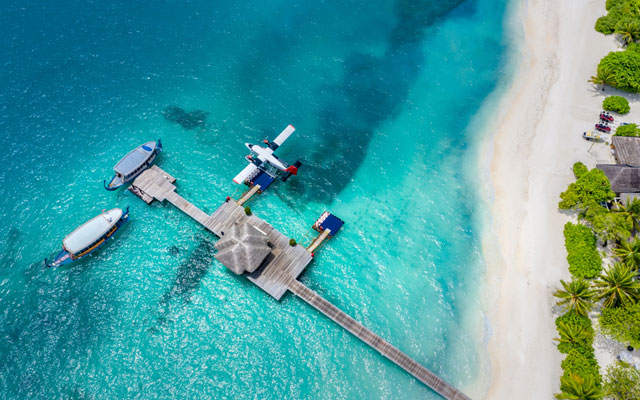
The Maldives, one of the few countries in Asia open to international tourists amid the ongoing pandemic, is likely to end 2020 with over 500,000 arrivals, marking a far cry from the record 1.7 million arrivals to the island resort in 2019, not to mention the targeted two million this year.
The island nation was the first in the region to lift border restrictions amid Covid-19, welcoming global tourists back on July 15, at first with no entry restrictions until a series of outbreaks across several resort islands had it tightening entry requirements in September. While at least 100 resorts have been in operation, the reopening of guesthouses were delayed until October 15.
According to government statistics, over 400,000 tourists arrived in the Maldives from the beginning of the year until the pandemic forced its border closure on March 27. Since its reopening on July 15 through October 14, the island nation has welcomed about 26,000 foreign visitors, with Russian tourists making up the majority with 4,817 arrivals.
Despite the slow uptick, industry officials retain an optimistic outlook going forward. “The pick-up is slow, but encouraging,” said Maldives Marketing and Public Relations Corporation (MMPRC) managing director Thoyyib Mohamed.
Tourism minister Abdulla Mausoom said during a tourism discussion on October 10 that over 100,000 tourist arrivals are expected to be recorded in the remaining months of the year.
In the meantime, the Maldives has launched a thee-tiered loyalty programme, Maldives Border Miles, touted as the first-of-its-kind in the world.
Slated to kick off on December 1, tourists who enroll in this programme will earn points based on the number of visits and duration of stay. Additional points will be awarded for visits to celebrate special occasions. There are three categories in this programme: Aida (bronze tier), Antara (silver tier) and Abaarana (gold tier). Each tier will be defined by a set of rewards, services and benefits, which will increase in value as members progress.
Initiated by Maldives Immigration, in collaboration with the Ministry of Tourism and the MMPRC, the scheme will allow eligible guests to enjoy free stays or upgrades in hotels and resorts. A discussion is also underway to bring airlines on board the programme.
Malaysian agency’s outbound tour packages sold out amid Covid

At a time when most international borders remain sealed, and Malaysians are banned from travelling abroad, outbound tour specialist Apple Vacations recently sold out its group tour packages to 25 destinations, under its seven-day travel recovery campaign run in early October.
Destinations that were on offer span the globe, including Cambodia, China, South Korea, Australia, Japan, UAE, and Europe, among others.
Its group managing director, Koh Yock Heng, shared that the competitive pricing of these full board group tour packages, with discounts up to 50 per cent alongside flexible departure dates in April and May 2021, was the reason why they were snapped up quickly.
For example, a nine-day/six-night package to Western Europe covering Switzerland, Germany, Netherlands, Belgium and France, all in costs RM5,399, instead of RM10,799. Elsewhere, a 10-day, seven-night holiday to the Balkans is priced at RM6,999 all in, as opposed to RM13,999.
Koh said the campaign is a collaboration between the agency, airlines, land operators and NTOs, who lent their support through joint marketing efforts.
“The airlines and ground operators also supported (the campaign) by giving big discounts on their end. If not for these partnerships, we would not have been able to come up with (competitively-priced packages for) this campaign,” he added.
Departure dates have been made flexible in the event that travel is not possible due to border restrictions. Koh shared: “The travel dates will then be postponed to new fixed departures. If clients are unable to go on these new dates, they can transfer their seats to someone else. And if that is not possible, we will give them a full refund.”
And should destinations reopen their borders to leisure tourists ahead of the set departure date, and Malaysia has lifted its ban on non-essential outbound travel, the tour will depart earlier. Koh said: “The idea is for us to be one of the first few visitors to visit a destination when it reopens.”
Ascott yields bumper crop of China signings

CapitaLand’s wholly owned lodging business unit, The Ascott Limited (Ascott), has secured more than 2,100 units across 12 properties in China over the last three months, bringing the number of new units to more than 5,600 across 26 properties in what marks a “record high” for the group.
This represents a 60 per cent year-on-year growth in units in China. Globally, Ascott has sealed new contracts for more than 3,700 units across 22 properties, with 60 per cent from China, while the rest are in various countries including Austria and Indonesia.
Signalling “strong recovery” in China on the operations front, Ascott’s apartment revenue in September 2020 reached close to 95 per cent of that in the same month last year. As well, Ascott has been maintaining a steady stream of openings, on the back of growing demand for extended-stay properties. In 2020, Ascott opened 17 properties with over 2,400 units, with about half of these units in China.
Ascott said that its base of long-stay corporate guests coupled with the strong domestic leisure travel market have enabled the group’s serviced residences in China to achieve “robust” occupancy rates.
In September 2020, close to 75 per cent of its guests in China were domestic travellers. During the same period, Ascott’s properties in tier one cities such as Beijing, Guangzhou, Shanghai and Shenzhen achieved an average occupancy rate of over 86 per cent. In Chongqing, despite facing the pandemic and the worst floods in decades, Ascott Raffles City Chongqing achieved a high occupancy rate of 80 per cent in August 2020, maintaining that momentum in the following month.
Kevin Goh, CapitaLand’s CEO for lodging and Ascott’s CEO, said: “The Covid-19 pandemic has brought the resilience and flexibility of Ascott’s business model to the fore. In 2020, we have signed more than 9,300 units in 48 properties worldwide, while expanding in China at a record rate. We are also planting new flags in markets such as Austria and Indonesia, offering our guests a wider network of Ascott properties.
“At the peak of the Covid-19 situation, many of Ascott’s properties worldwide remained open to provide a safe haven for our long-stay corporate guests, maintaining a robust average occupancy rate. With China being the first major economy to resume growth after the pandemic and the easing of domestic travel restrictions in the country, we are seeing strong recovery at our properties in China.”
Tan Tze Shang, Ascott’s managing director for China and head of business development for China, added that several of Ascott’s properties in cities such as Beijing, Shanghai, Hangzhou, Suzhou, Chongqing, Xi’an and Wuxi achieved 100 per cent occupancy during China’s Golden Week holiday from October 1-9. Apartment revenue for Ascott’s properties in China also saw year-on-year-growth during the Golden Week holiday, he added.
Tan also said that the 12 new properties secured in China will see Ascott making inroads into three new Chinese cities – Baotou, Ningbo and Yantai – while strengthening its presence in Changchun, Guangzhou, Hangzhou, Shanghai, Shenzhen, Suzhou and Xi’an. These properties are slated to open between December 2020 and 2026, and will bring the group’s total number of units in China to about 30,000 in more than 150 properties.
Etihad strikes deal with Trip.com

Etihad Guest, the loyalty programme of Etihad Airways, has partnered with Trip.com to allow programme members to earn miles on accommodation bookings made through the website.
Members will now be rewarded with three Etihad Guest Miles for every US$1 spent on accommodation bookings at over 1.4 million properties available through the portal, which has an international presence in more than 200 countries and regions.
To redeem, Trip.com users simply add their Etihad Guest membership number when making a booking and miles will be credited within 12 weeks after the stay is completed. Etihad Guest Miles will not expire, as long as one eligible transaction is made within an 18-month period.
KTO hosts special event to woo Vietnamese tourists

Vietnamese tourists can experience a trip to South Korea from now to December 6 at the Lotte Center Hanoi in Ba Dinh District, thanks to an event hosted by the Korea Tourism Organisation (KTO).
Amid global travel restrictions, KTO organised the Hi! Korea event to promote the destination to Vietnamese tourists, and to spark memories of their past visits to the country so as to inspire future travels.
A booth introducing South Korean tourism and culture is available with various activities for eight weeks. Visitors will have a chance to join mini-games to win prizes, wear traditional clothes, learn to make handicraft souvenirs and discover the country through virtual reality technology.
Special events – such as a photo exhibition, K-pop cover dance, and a quiz show – will also take place on weekends to introduce South Korean tourism through different themes.
Park Jong Sun, head of KTO Vietnam, said that the event is designed to spark curiosity about South Korea, in hopes of attracting more Vietnamese tourists to come to the country when the pandemic ends, adding that Vietnam remains an “important market”.
The event marks the latest initiative by KTO’s Vietnam office to boost inbound tourism to South Korea amid the ongoing pandemic.
Vietnam has been among South Korea’s top 10 tourist sources. The number of Vietnamese tourists to South Korea from January this year to the end of May was 73,490, marking a decrease of 195 per cent in comparison with the same period last year, reported various media outlets.
STB, Expedia team up to boost tourism recovery in overseas markets, spur rediscovery by locals
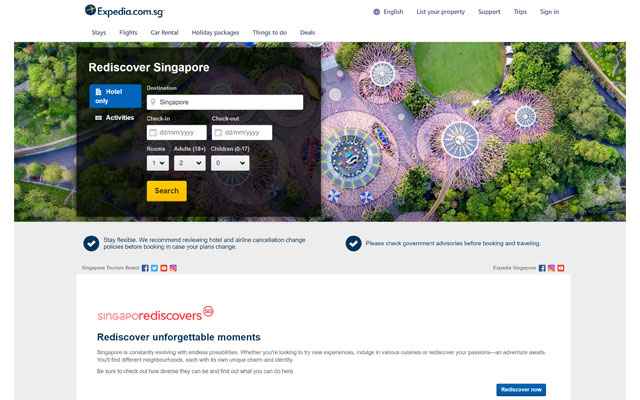
Singapore Tourism Board (STB) and Expedia have inked a two-year global marketing partnership aimed at stimulating the local tourism industry by supporting homegrown businesses and strengthening Singapore’s position as a destination of choice when international travel resumes.
From now till April 2021, STB and Expedia will team up to support the on-going SingapoRediscovers campaign. Residents in Singapore can access a selection of domestic holiday bundles, staycation offers, attractions and tours via a dedicated landing page. The site will also feature inspirational content that spotlights some of Singapore’s local highlights and hidden gems, inviting locals to rediscover 10 of the city-state’s key precincts, including Chinatown, Little India, Marina Bay, and Sentosa.
As part of efforts to rebuild trust in travel and provide greater assurance of safety and cleanliness for locals and subsequently international travellers, the landing page will also highlight the SG Clean certification programme.
As international travel gradually resumes, STB and Expedia, through its Expedia Group Media Solutions brand, will jointly promote Singapore as the destination of choice in 10 overseas markets – Japan, South Korea, Hong Kong, United Arab Emirates, Germany, France, Switzerland, Canada, the UK and the US. Apart from offering attractive promotions for travel-related products and experiences such as flight promotions, online display ads and creative campaigns will also be rolled out to put Singapore at the top of international travellers’ minds.
Lynette Pang, STB assistant CEO of the marketing group, said: “Local businesses are the heart and soul of our tourism industry, and it is important to support them through this challenging period. When global travel returns and when the time is right, this partnership with Expedia will allow the Singapore tourism industry to tap on Expedia’s vast global network and user base to help local businesses reach new customers.
“In the immediate term, we will encourage locals to rediscover their neighbourhoods and precincts, and to support their favourite businesses safely and responsibly.”








A group of 41 tourists from Shanghai will be the first foreign visitors to set foot in Thailand this evening since travel and border restrictions were imposed as a result of the Covid-19 pandemic.
Bearing a special tourist visa issued by the Thai government to individuals from countries deemed to be of low Covid-19 risks, these tourists will arrive at Bangkok’s Suvarnabhumi International Airport at about 17.00 today, according to Yutthasak Supasorn, governor of the Tourism Authority of Thailand.
Their visa will grant them entry to Thailand for up to 90 days.
Thai PBS World also reported that a second group of 100 visitors are due to arrive from China’s Guangdong province on Oct 26.
This evening’s arrival has been delayed for a month due to concerns by public health officials over a potential second wave of Covid-19 infections.
The Chinese tourists will undergo a Covid-19 screening upon arrival and remain in quarantine for 14 days, before they are allowed to proceed on their travel itinerary. They will be tracked by a tracing app on their smartphones.
While in quarantine, they will be given their first swab test on the third to fifth day after arrival, while the second test will be conducted on the 11th to 14th day.