TTG Asia
Asia/Singapore Friday, 3rd April 2026
Page 1066

Entire Luzon island now on lockdown

0

The entire Luzon island in northern Philippines – not just Metro Manila – is on a month-long lockdown which began on March 17, following the sharp increase in the number of confirmed Covid-19 cases in the Philippines.

The enhanced community quarantine measures now includes strict home quarantine for all households; suspension of mass public transport facilities and limited use of private vehicles; restricted land, air and sea travel; as well as temporary closure of establishments like malls and gaming; among other restrictions. Outbound passengers have also been given three days to leave.
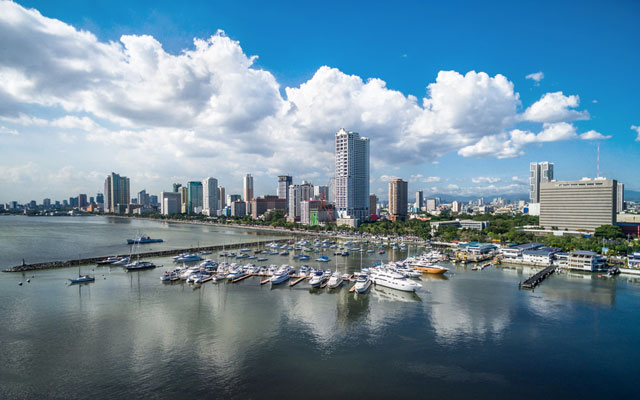
Luzon island has been placed on a month-long lockdown; aerial view of Port of Manila at Manila Bay in Luzon island pictured

Hotels and similar establishments are also to remain closed during the lockdown, the Department of Tourism (DoT) said yesterday, except those with foreign guests that have existing bookings as of March 17; those with long-staying guests; and those accommodating employees from exempted establishments.

However, foreign tourists, overseas Filipino workers, and visiting Filipinos will be allowed to leave any time during the Luzon lockdown provided they travel only to the airport within 24 hours of their departure time, the DoT added.

Tourist destinations in Luzon apart from Metro Manila include Tagaytay, Batangas, Clark, Zambales, Baguio, Sagada, Batanes, and Ilocos and Bicol regions.

But since the previous community quarantine was announced in Metro Manila on Monday – which didn’t include home quarantine and the suspension of mass public transport then – destinations like Visayas and Mindanao have followed suit.

As the situation becomes more dire with 142 confirmed Covid-19 cases, majority of which are in Luzon, the Tourism Congress of the Philippines (TCP) has listed seven additional recommendations to ensure the industry’s survival, one of the sectors hardest hit by the pandemic.

On March 6, TCP had already proposed to the DoT fiscal and other measures to help the tourism sector. On March 13, TCP’s president Jojo Clemente added six more proposals.

These additional recommendations are a minimum six-month moratorium on bank loan payment, credit card payments and corporate income tax fee reduction for accredited tourism industry stakeholders, subject to review of prevailing business conditions; grants, low-interest loans, subsidies and so on for tourism industry workers who will lose their jobs; and suspend for a minimum of one month the payments for water, electricity and Internet; office rental; and value-added tax on basic commodities.
Taiwan bans all foreigners amid spike in imported cases

0

Taiwan has indefinitely banned the entry of all foreign visitors, excluding foreign resident permit holders and diplomats, from midnight on Wednesday as part of Covid-19 countermeasures, following a sudden surge in imported cases.

The new restrictions exclude foreign resident permit holders and diplomats, but all people entering Taiwan will have to serve a 14-day home quarantine.

Most foreign visitors will not be allowed to enter Taiwan starting today

The government has also urged its citizens to avoid any non-essential travel.

Taiwan has been lauded by health experts for its successful efforts to stem the spread of the virus since early January, but it is now seeing a sudden spike in cases to 77, mostly from people returning to the island from other countries, especially Europe.

Sri Lanka shuts borders for two weeks

0

Sri Lanka will be banning all incoming flights for two weeks starting Wednesday to stem the spread of Covid-19.

Flights already in the air will be allowed to land and passengers can disembark, said Mohan Samaranayake, a spokesperson for president Gotabaya Rajapaksa.

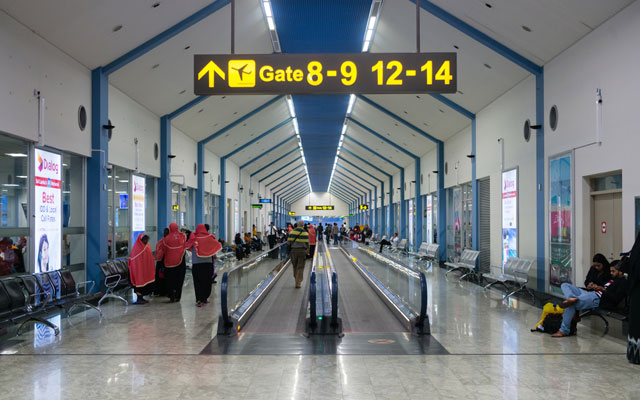
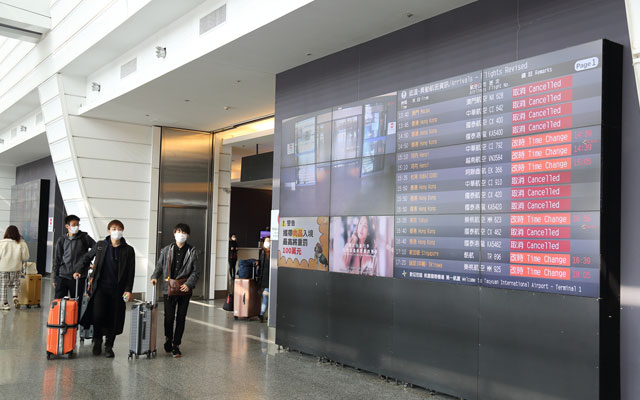
Sri Lanka bans all incoming flights for two weeks starting today; travellers in Bandaranaike International Airport pictured

The decisions were made at a meeting held by the Corona Prevention Task Force presided over by the president.

However, outgoing flights and incoming cargo flights will continue to operate at the country’s main international airport outside Colombo. Entry at the country’s ports have already been banned since last week.

The move is in response to a call by Sri Lankan tour operators on Monday for the government to heed locals’ cry for the banning of all tourist arrivals to the country, amid increasing cases of Covid-19 in the country.

“The Sri Lanka Association of Inbound Tour Operators, as a socially responsible organisation, has taken into consideration the increase in protests around the island by locals against foreign nationals, (as well as) the closure of wildlife parks and other tourist sites, and have decided that the relevant government authorities should consider restricting all foreign tourists from entering Sri Lanka from March 16-31,” its President Mahen Kariyawasam said in a statement on Tuesday.

Kariyawasam told TTG Asia that they had put forth the request to state-owned Sri Lanka Tourism chairperson Kimarli Fernando during a meeting on Monday, with the latter saying she would forward the request to the Task Force.

There have been several reports across the island of locals protesting against tourists visiting their areas. To date, Sri Lanka has reported 28 cases of Covid-19, all of which are Sri Lankans, with the majority having returned from Italy where they work.

Hotels and resorts have been reporting huge drops in occupancies over the past week, amid growing fears over contagion.

On Tuesday, the government added visitors from Qatar, Canada and Bahrain to the list of people banned from entering the country. The restriction also applies to visitors from Italy, South Korea, the UK, France, Belgium, Norway, Sweden, Switzerland, Spain, Germany, Austria, Netherlands, and Denmark.

As part of measures to curb the spread of the virus, the government has declared a three-day holiday till March 19, during which public gatherings are banned and schools and universities closed.

Adara launches real-time tracker of pandemic impact on travel

0

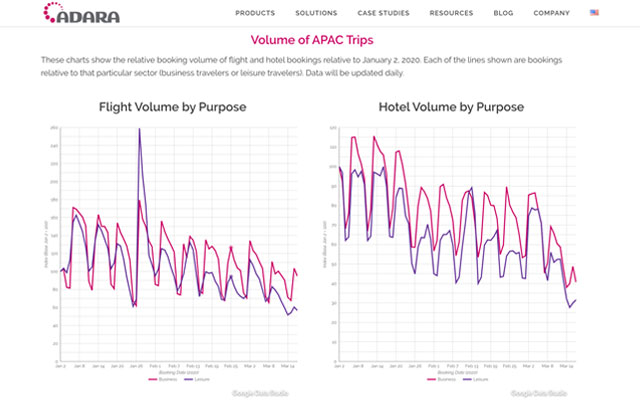
Travel intelligence company Adara has launched a real-time tracker of the impact of the ongoing pandemic on travel trends, under the Covid-19 Resource Centre on its website.

Using anonymised data on air and hotel bookings by consumers from more than 270 partners for 2020 year-to-date, the tracker presently monitors the virus’ impact on domestic US travel. Plans are in place to add Asia-Pacific travel data.

Adara releases Covid-19 tracker

The Adara travel trends tracker was developed to provide travel businesses with real-time consumer behaviour so they could make swift, informed decisions.

This is pertinent amid the continued progression of the virus worldwide and governments responding with border restrictions.

According to Adara, the existing data employed for US domestic travel trends has a moderately higher representation of unmanaged business travellers as well as leisure travellers.

Scoot offers voucher refunds, free date change

0

Scoot is extending voucher refunds and a one-time free date change to customers amid the Covid-19 pandemic.

With immediate effect, travellers can apply for voucher refunds for the full value of bookings made on or before March 15, 2020.

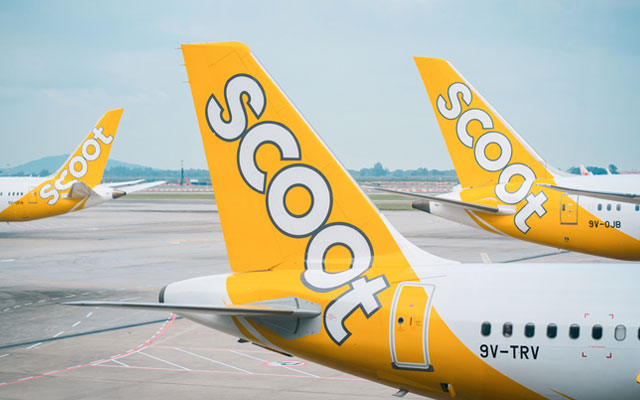
Scoot offers voucher refunds for flexible rebooking

The customer must have booked to travel on or before May 31, 2020. Vouchers can be used for future trips with Scoot for up to 12 months from the issue date.

Scoot said that an online portal for eligible customers to conveniently obtain voucher refunds will be up in a few days. The portal’s launch will be announced on Scoot’s website, social media pages and mobile app.

Customers flying off in the next 72 hours who wish to obtain a refund voucher are recommended to use the online feedback form or Facebook Messenger instead of the phone, due to the high volume of calls the carrier has been receiving.

Of course, those who booked through third-party channels are advised to contact the relevant channels or agents.

Between March 15 and May 31, 2020, customers who book flights on Scoot’s website, mobile app, or WeChat mini booking site are eligible for a one-time free date change.

The change has to be made at least four hours before departure. Fare differences still apply, and the latest date customers can change to is March 31, 2021.

Aviation roundup: GoAir, Bamboo Airways and Etihad Airways

0

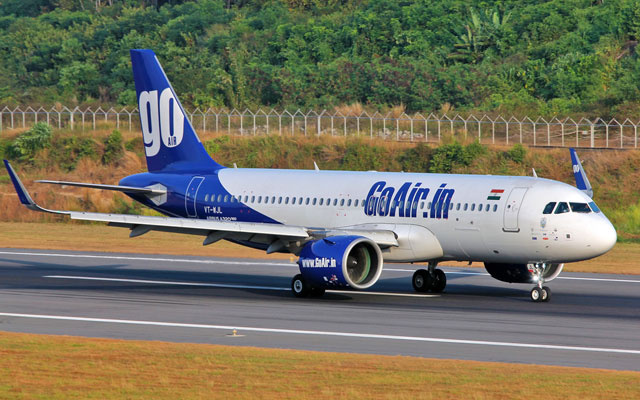
GoAir takes off for Colombo

Indian LCC GoAir will be starting direct flights from Delhi and Bengaluru to Colombo, the capital city of Sri Lanka, from March 20, 2020.

The Delhi-Colombo route will be operated daily, except Wednesday. G839 will depart Delhi’s Indira Gandhi International Airport at 10.35 and arrive in Bandaranaike International Airport, Colombo at 14.10, while return flight G840 will depart Colombo at 15.10 and arrive in Delhi at 19.00.

As for the Bengaluru-Colombo route, G847 will depart Bengaluru’s Kempegowda International Airport at 20.05 on Monday, Thursday, Friday, Sunday and at 20.20 on Saturday and will reach Bandaranaike International Airport, Colombo at 21:55. The return flight G848 will depart Colombo at 23:00 on Monday, Thursday, Friday, Saturday, Sunday and arrive in Bengaluru at 00:30.

Bamboo Airways heads to Germany

Vietnam-based Bamboo Airways will be starting the first non-stop flights from the country to Germany.

The airline signed an MoU with Munich Airport for direct flights connecting Munich, Germany’s third-largest city, to Hanoi and Ho Chi Minh City.

Using Boeing 787-9 aircraft, the airline plans to operate once-weekly flights from Hanoi, and twice-weekly flights from Ho Chi Minh City.

The two direct routes is expected to operate from July 2020.

Etihad Airways links Abu Dhabi to Vienna

Etihad Airways will launch a new daily service to Austria’s capital Vienna, using a two-class Boeing 787-9 Dreamliner.

The UAE national carrier will start operating this service four times weekly between May 22 and June 30; then daily from July 1 to August 31.

Thereafter, the airline will fly this route five times weekly from September 1 to November 30, before resuming the daily service from December 1.

Etihad said that it is introducing the new service to provide greater choice and convenience for point-to-point business and leisure travellers between the UAE and Austria, and to promote direct inbound tourism to Abu Dhabi.

Steven Phillips helms LUX* Grand Baie Resort & Residences

0

Steven Phillips has been appointed general manager to The Lux Collective’s flagship resort in Mauritius – LUX* Grand Baie Resort and Residences – scheduled to open 1Q2021.

Prior to joining LUX* Grand Baie Resort and Residences, Phillips served as area general manager for Joali Maldives, and was also the former general manager at Gili Lankanfushi for three years.

The UK native brings two decades’ worth of hotelier experience with various international brands, having overseen properties in London, Japan, Malta, Sri Lanka and Abu Dhabi.

New Zealand gets US$7.3 billion shot in the arm

0

New Zealand has unveiled a NZ$12.1 billion (US$7.3 billion) stimulus package on Tuesday – of which nearly half will go towards supporting the hard-hit aviation sector – to cushion the economic fallout from the Covid-19 pandemic.

The sum is equivalent to four per cent of New Zealand’s GDP, and the bulk of it will go towards businesses that have lost more than 30 per cent of their income as a result of the downturn, according to media reports.

New Zealand launches a NZ$12.1 billion fiscal package, which includes tax cuts for the aviation industry, to combat Covid-19 impact

Finance Minister Grant Robertson was quoted by reports as saying that “recession is almost certain” and will be more severe than the downturn after the 2008 global financial crisis.

But he added that the package, which also includes wage subsidies and tax breaks, would help counter its impact.

The package is the first phase of a broader recovery package, with further stimulus set to be announced in the annual budget in May.

About NZ$5.1 billion will go towards wage subsidies for businesses, NZ$2.8 billion towards income support, NZ$2.8 billion in business tax relief, and NZ$600 million for the aviation industry.

Robertson said the aviation support excluded direct government subsidies for ANZ, the national carrier, which recently announced it was slashing international capacity by 85 per cent and local routes by 30 per cent.

Airline alliances urge government, industry support to navigate Covid-19

0

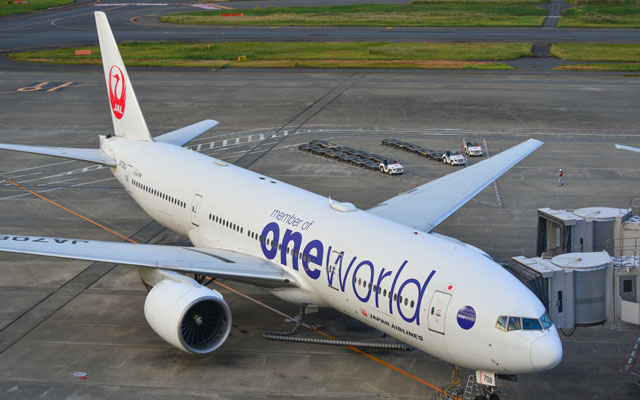
The world’s three major airline alliances – oneworld, SkyTeam and Star Alliance – have issued a joint release calling on governments and stakeholders to take action, such as providing slot relief, as well as airport and overflight fees reduction, to mitigate the unprecedented challenges faced by the global airline industry amid the Covid-19 pandemic.

The virus has sent the global aviation industry into a tailspin, due to weakening demand for travel that is tied to growing travel restrictions worldwide. As such, some airlines have been running near-empty flights or none at all, while others have been forced to temporarily shutter.

Global airline alliances urge government support to weather the Covid-19 storm

The three global alliances, which represent almost 60 airlines around the world, with member carriers contributing to more than half of global airline capacity, said that they are “strongly supporting a request by the IATA for regulators to suspend slot usage rules for the northern summer 2020 season as the airline industry suffers from extraordinary reductions in passenger demand”.

“The alliances welcome the moves in recent days by some regulators who have suspended slot regulations temporarily and urge others to follow suit promptly. They also request that regulators consider extending the suspensions for the entire operating season,” read the joint statement.

The impact of Covid-19 on the airline industry is significant, with IATA estimating up to US$113 billion in revenue losses for global passenger airlines. The impact is expected to have a ripple effect through the value chain that supports the airline industry.

The forecasted revenue loss scenario does not include travel restrictions recently imposed by the US and other governments. US restrictions on passengers from the Schengen Area will place pressure on the US-Schengen market, valued at over US$20 billion in 2019.

To alleviate the immense pressures faced by airlines in the current operating environment, and in support of IATA’s statement on March 12, the three alliances urge governments worldwide to prepare for the broad economic effects from actions taken by states to contain the spread of Covid-19, and to evaluate all possible means to assist the airline industry during this unprecedented period.

The alliances also call on other stakeholders to provide support. For example, airport operators are urged to evaluate landing charges and fees to mitigate the financial pressure faced by airlines due to a severe decline in passenger demand.

Rob Gurney, CEO of oneworld, said: “During such times of difficulty and uncertainty, it is important that the airline industry works even closer with stakeholders to mitigate adverse impacts from the virus and collaborate in areas within our control. Governments must implement the measures they consider necessary to contain the spread of Covid-19, and must be prepared for the wide-scale economic implications that will result from those measures.”

How the hospitality industry can ride out the Covid-19 storm

0

Recently, ITB Berlin was cancelled for the first time in its 58-year run due to concerns over the Covid-19 outbreak. While the impact of the virus has proven to be detrimental to the hospitality industry, the ultimate outcome of what happens to our industry remains largely unknown.

HotelPlanner has seen its fair share of how breaking news and trends have had an impact on the travel landscape, having experienced the effect of SARS in 2008, as well as the 9/11 attacks. Through these trying times, it becomes clear what the industry needs to do to survive this outbreak, and even better, come out stronger on the other end.

Hentschel: Hotels can step up safety measures and offer booking flexibility to draw travellers back

Be prepared, and know what to expect
What we think will happen in the near future: The hospitality industry will continue to consolidate under global brands that use technology to see trends first and act fast to adapt to them.

For instance, once we saw bookings in China drop by 80 per cent, while Asia fell to under 50 per cent occupancy, we knew the same was going to happen to hotels in Europe and North America. We quickly made adjustments to our expenses in line with new forecasts.

There will be regional travel companies that are slow to react and will either go out of business or be acquired. Industry first-movers will also either acquire smaller companies that are not prepared for this crisis or take market share from them.

Win travellers back with two key strategies
To ensure that hotels can win travellers back, there are two key strategies to employ.

First, guests need to feel safe. HotelPlanner conducted a survey recently to find out what keeps people from travelling during these times, and the top two responses indicate that it stems from a fear of getting the virus, as well as a fear of being quarantined.

Hotels can combat that fear by conducting temperature screening for all guests, staff, suppliers, contractors, and other associates; getting guests to complete a travel and health declaration and giving them a set of surgical masks and sanitisers upon check-in; as well as sanitising public areas and all guestroom door handles regularly.

The second, and more important thing to do, is to provide customers with the flexibility to change their plans. Monitoring the outbreak, it is clear that travel plans can change in an instant. Not allowing discounted bookings, as well as the flexibility for date changes and cancellations are no longer practical in today’s world where travel plans can be disrupted by government restrictions and other external factors.

Trying to go after customers for extra cash to bolster your revenue will hurt your brand’s reputation and turn repeat customers away. These properties should consider consulting their business insurance brokers instead, which should cover them for business interruptions like the outbreak.

Government stimulus is crucial to tide the industry through tough times
In the US, after multiple calls from our teams pushing for government stimulus in the industry, the White House has reacted positively. Larry Kudlow, president Donald Trump’s top advisor, indicated the possibility of economic aids, and we are optimistic that it can benefit both large and small companies. With this, we can avoid massive layoffs, unemployment will stay low, and the market will continue to grow as more 401k money continues to flow into the market.

It’s tougher to push a central policy for recovery in Asia. Similar to South America, Asia is made up of small countries with very different styles of governments and free markets.

Singapore has the best system in place to implement a central stimulus for the hospitality market. However, beyond the financial support package for the tourism sector, the industry needs more than US$8 billion. The industry needs crisis loans and grants, while citizens need tax credits to spend on staycations – to get locals back int hotels since it will be months before the majority of foreign tourists will return.

Singapore has been great at taking care of people with the virus and tracking the viruses’ spread to reduce future infections. Hopefully, the republic will allow for government intervention to inject financial stimulus into the struggling hospitality businesses.