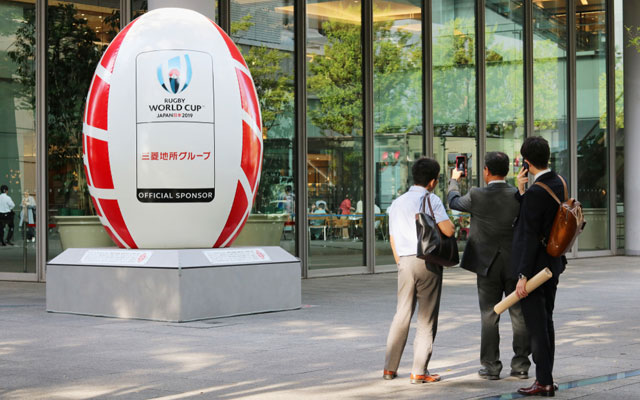
The Rugby World Cup (RWC) has fuelled a tourism boom from the competing nations, according to a study by ForwardKeys.
During the period from September 12 to November 6, which covers the tournament dates and several days before and after, flight bookings to Japan from the competing nations are currently 38.1 per cent ahead as compared to the same period last year, the study found. The highest peak is on the day before the opening ceremony, with bookings from the competing nations more than double those on the equivalent date in 2018.
Rugby World Cup has fuelled a tourism boom from the competing nations: ForwardKeys
Olivier Ponti, vice president insights, ForwardKeys, said: “When we analyse these visitors in more depth, we see that their average length of stay is 11.7 nights. That tells us that few people are coming to watch a specific game and then returning home; the majority are making a holiday of their visit.”
The RWC tourism boost is most strongly illustrated by visits from Ireland, which is not a mainstream tourism market for Japan and has no direct flight connections, according to the study.
Bookings for the period beginning September 12 to November 6 are currently 500.3 per cent ahead of where they were at this time last year. The average length of stay is 12.7 nights, which indicates that Irish visitors, having made the journey – the minimum flight time from Dublin to Tokyo is 13.5 hours – are also staying for a holiday in Japan.
There are very clear booking spikes around the dates when the Irish are playing their matches, which also happen to be the weekends.
Ponti said: “What intrigues me most is that the highest peak in bookings coincides with the quarter-finals. I’m tempted to suggest that Irish fans are confident of their team reaching that far but not necessarily any further. However, as Ireland is the world’s second ranked team, I suspect other factors are at play, such as the very limited availability of tickets for the semi-finals and final, and a strong preference of Irish rugby fans to take a two-week holiday.”
Industry players in Boracay are worried that the destination will stand to lose certain market segments following its prohibition of an upcoming beach volleyball tournament and public beach weddings on the island.
The most recent restrictions follow previous bans on other beach activities like sandcastle building, use of kerosene for fire performances, smoking and drinking.
Industry players fear Boracay’s tightening restrictions on beach activities, including the banning of an upcoming beach volleyball tournament, will affect tourism
The Boracay Beach Volleyball Open (BBVO) was notified by the general manager of the Boracay Inter-Agency Task Force (BIATF) over the phone recently that it is prohibited from holding the tournament from November 15 to 17 – three months after it made the request in June.
“We were informed that since they don’t allow beach weddings anymore, we are therefore also not allowed to have events on the beach,” a BBVO organiser said, adding that they are awaiting the official written communication from BIATF and that they couldn’t change the event’s venue on such short notice.
BBVO has been organising the volleyball open since 2011 except last year when Boracay was in the initial stage of its rehabilitation. “We usually have 200 attendees, including 150 athletes. During the last edition in 2017, we saw participants from some 15 countries,” the BBVO organiser revealed.
But a possible restriction on beach tournaments could affect sports tourism which is a key draw to the island, Viveca Hutchinson of Tribal Adventures, a Boracay-based adventure tour company specialising in kayaking, rafting and mountain biking, said: “As stakeholders of Boracay, we have not been approached (by BIATF) despite our decades of knowledge and experience of living on our beloved island. We have not been informed of the reasons behind the changes to the rules for activities held on the beach”.
“Apart from the monitoring and implementation of visitor numbers and garbage generated by events such as beach volleyball and more, we do not know of any reason how (holding the BBVO at Borocay) could affect the maintenance of the island’s ‘pristine’ condition,” Hutchinson added.
Narzalina Lim, founder of tourism and hospitality consultancy Asia Pacific Projects, calls for the BIATF to provide clarity regarding their restriction of activities on the beach. “There must be solid, defensible reasons why these activities are being restricted. The impression that I get from (BIATF) is that their decisions are based on knee-jerk reactions and not on facts,” she said.
She added that if the BBVO takes place during peak season when Boracay sees a tourism influx, and that the event takes up a lot of space over multiple days, then she agrees that it should not be held.
Lim also sees no reason to prohibit weddings, a big market for the destination. “I have been to a beach wedding in Boracay and it did not take up much space. The ceremony can be held at the beach, and the reception, at the resort,” she said.
Questioning the logic of banning sandcastle building on Boracay’s beaches, Lim remarked: “Children and adults both love building sandcastles, so why deprive them of this joy? Boracay will lose the family market if this activity is banned.
“The Department of Energy and Natural Resources should focus its attention and police powers instead on the mainland Chinese who are stealing sand from various beaches all over the Philippines and getting away with it.”
Other restrictions, like the ban on smoking and drinking on the beach and the use of kerosene for fire performances, only serve to minimise pollution and not its complete eradication, Lim stated. “What BIATF should do is focus on the powerful offenders with connections to higher-ups because that is what will have the most impact on the environment,” she said.
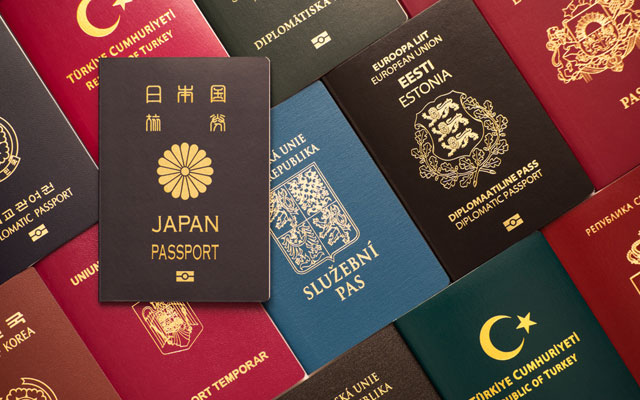
It’s clearly the age of Asia when it comes to passport power, as Japan and Singapore retain a firm hold at first place on the Henley Passport Index (HPI) entering the final quarter of 2019, each with a visa-free/visa-on-arrival score of 190 out of a maximum 227.
The HPI, a global ranking of countries according to the travel freedom for their citizens, is released by citizenship planning firm Henley & Partners.
Japan and Singapore retain first place on the Henley Passport Index (HPI)
For most of the 14-year history of the index, which is based on exclusive data from the IATA, the top spot has been held by a European country or by the US. However, this shifted dramatically in 2018, with Asian countries now firmly established as world leaders when it comes to both global economic activity and global mobility.
With visa-free/visa-on-arrival scores of 188, Finland, Germany, and South Korea remain in second place, while Denmark, Italy, and Luxembourg come in third, with a score of 187. Both the UK and the US remain in sixth place, with access to 184 destinations visa-free – the lowest position they have held since 2010 and a significant drop from their top ranking in 2014. Afghanistan sits at the bottom of the ranking, with access to just 25 countries without a prior visa.
Using historic data from the HPI and the Index of Economic Freedom, political science researchers Uğur Altundal and Ömer Zarpli of Syracuse University and the University of Pittsburgh, respectively, found that “countries that have higher visa scores also rank higher in economic freedom, especially in investment, financial, and business freedom”.
Christian Kaelin, chairman of Henley & Partners and the creator of the passport index concept, said: “Our ongoing research has shown that ‘passport power’ is more than simply the destinations a holder can travel to without a visa. Often, there is a strong correlation between visa freedom and other benefits such as business and investment freedom, independence of the judiciary, fiscal health, and property rights.”
While Brexit is – in theory, at least – only weeks away, the focus is firmly on how it will affect migration policy to and from the UK. Madeleine Sumption from The Migration Observatory at Oxford University noted: “Unlike trade policy, the future of immigration policy in the UK does not depend fundamentally on whether or not the UK leaves the EU with a deal. In either scenario, there will be a ‘transitional period’ until at least December 2020, in which free movement of EU citizens to the UK will continue more or less as it operates today. After that however, long-term settlement is likely to be much more difficult for EU citizens. And UK citizens who want to move to EU countries after Brexit will also face more restrictive immigration regimes.”
The biggest climber on the index over the past quarter has been the UAE, up five places to rank 15th. Lorraine Charles at Cambridge University’s Centre for Business Research said: “While the UAE may not be able to compete with Saudi Arabia – the regional hegemon – in terms of military strength and economic power, the projection of its soft power is uncontested in the GCC.”
As they have done throughout the index’s long history, countries offering investment migration programs continue to perform strongly. Moving up from the 16th-place position it held last quarter, Cyprus now holds 14th place, with Cypriot citizens able to access 173 destinations visa-free. Malta retains its strong seventh-place position with a visa-free/visa-on-arrival score of 183, while Antigua and Barbuda has risen to 28th place with a score of 149 after gaining access to Russia.
Commercial real estate information provider CoStar Group has entered into an agreement to acquire STR, one of the world’s biggest hospitality data and intelligence firm.
The acquisition comprises the entire STR portfolio, including STR, Inc, headquartered in Hendersonville, Tennessee; STR Global, the company’s international business headquartered in London; Hotel News Now, the company’s digital media arm based in Cleveland; and the Hotel Data Conference, hosted each year in Nashville since 2009.
CoStar Group signs deal to acquire STR for US$450 million
The transaction, valued at US$450 million in cash, is expected to close in 4Q2019, subject to customary closing conditions.
“The STR team has built an extraordinary company that partners with the hotel industry to create benchmarks and analytics that are the primary tools hotel management and investors rely on to optimise and improve their assets,” said Andrew Florance, founder and CEO of CoStar Group.
He added: “STR brings an unrivalled reputation within the global hospitality industry for their data integrity, reliability and strict confidentiality, and we look forward to continuing to build on these core values in the next chapter of STR’s growth.”
STR, Inc has been a private, family-owned company since its 1985 founding as then-Smith Travel Research by Randy and Carolyn Smith. The Smith family also maintained majority ownership in STR’s international entity. Overall, STR employs 370 team members in 15 countries.
“CoStar brings leading technologies, as well as complementary data, analytics and sales capabilities that we believe will enable STR to accelerate growth and increase the value and insights we provide to our hospitality clients,” said Amanda Hite, STR’s president and CEO.
The hotel industry has been the cornerstone of STR’s business from its founding. Today, the company processes, analyses and reports on data from 66,000 hotels representing 8.9 million rooms in 180 countries.
Cruise Lines International Association (CLIA) has launched its annual Cruise Month, a month-long campaign that promotes cruising as the preferred holiday style.
Running through October, Cruise Month aims to raise awareness about cruising and reinforce the benefits of booking through CLIA-accredited travel agents, telling consumers about the additional skills and education that dedicated cruise specialists have invested in, said the association in a statement.
Consumers can search for knowledgeable and experienced cruise agents based in Asia and accredited by CLIA with the CLIA travel agent search tool on the CLIA Asia website.
CLIA members can access new resources available in CLIA’s Cruise Month toolkit, which offers travel agents a wealth of downloadable materials that can be used in their own marketing and social media efforts.
Cruise Month will also celebrate the world’s wider cruise community as part of CLIA’s #WeAreCruise campaign, highlighting some of the many social and economic benefits that cruising brings to communities globally.
Travel agents with a keen interest in cruise are invited to join CLIA and its cruise line members at ITB Asia on October 18, 2019 to hear the latest trends and tips in increasing cruise profits.
Centara Hotels & Resorts has signed a landmark agreement with Taisei Corporation and Kanden Realty & Development to bring the Centara brand to Japan.
Scheduled to open in mid-2023, the 515-key Centara Grand Hotel Osaka will occupy a 34-storey tower in Osaka’s Namba district.
Centara Grand Hotel Osaka, the brand’s first property in Japan, is slated to open in mid-2023
Facilities include a lounge with customisable space for meetings and events, a rooftop restaurant sky bar, Spa Cenvaree, a fitness centre, as well as a diverse selection of restaurants and banquet facilities.
The addition of its first property in Japan is part of Centara’s expansion strategy, which calls for doubling the number of properties under its management by 2022.
Avis has joined hands with Travel Wander, a Singapore-based travel agency that specialises in active holidays, including cycling, hiking, running, conservation and culture.
The partnership aims to inspire more people to explore the unique and adventurous bike-drive itineraries offered in New Zealand.
Avis partners Singapore-based Travel Wander to promote bike-drive holidays in New Zealand (Pictured: Hawke’s Bay Trails North Island Ride, one of the bike itineraries offered by the companies)
With some of the world’s grandest mountain landscapes, Nga Haerenga, or the New Zealand Cycle Trail, offers an alternative way to soak up the beauty of the country. The bike path network, covering 2,500km of New Zealand’s countryside in both North and South Islands, has over 20 biking routes known as Great Rides for bikers of every age and ability.
Having access to a rental vehicle will give travellers the freedom to explore the country, and drive from one biking experience to the next whilst seeing the beautiful sights in New Zealand along the way, said Avis in a statement.
Angeline Tang, regional director – leisure travel & partnerships, Asia, Avis Budget Group, said: “Travel Wander is already a partner with Avis Singapore for New Zealand car rentals in the FIT segment… With trips being self-guided, our partnership with Travel Wander will provide travellers greater convenience and allows them the freedom to get from one ‘Great Ride’ to another in a car of their preference.”
Avis has one of New Zealand’s most comprehensive rental fleets, offering a wide range of vehicles from compact economic rental cars to luxurious soft top Cabriolets, 4-wheel drives, SUVs, eco-friendly hybrids, commercial vans and trucks. Last year, two additional hybrid models were introduced to the New Zealand fleet.
Avis New Zealand operates in almost 40 locations across the North and South Islands. Bicycle roof racks are also available for rental from Avis’ outlets at Auckland Airport and Christchurch Airport for travellers who are bringing their own bicycles for the Great Rides.
Here are some examples of the bike-drive itineraries:
Hawke’s Bay Trails North Island Ride
Meandering between the twin cities of Napier and Hastings, Hawke’s Bay Trails boasts 200km of cycle trails that are generally flat with a river and coastal network of pathways stretching over the Heretaunga Plains.
Tasman’s Great Taste Trail South Island Ride
Tasman’s Great Taste Trail starts from Nelson Airport and stretches across panoramic coastal and mountain views over Tasman Bay, Waimea Estuary and the Western Ranges, with many stops for fine food and relaxation in between.
The Queenstown Trail South Island Ride
The Queenstown Trail unveils close to 120km of spectacular cycling trail in Otago’s Wakatipu Basin.
West Coast Wilderness South Island Ride
In the middle of the Southern Alps on the West Coast lies a series of tracks carved by pioneering goldminers. Today these old tracks, together with extensive water races, logging tramways and historic railway lines, form the West Coast Wilderness Trail.
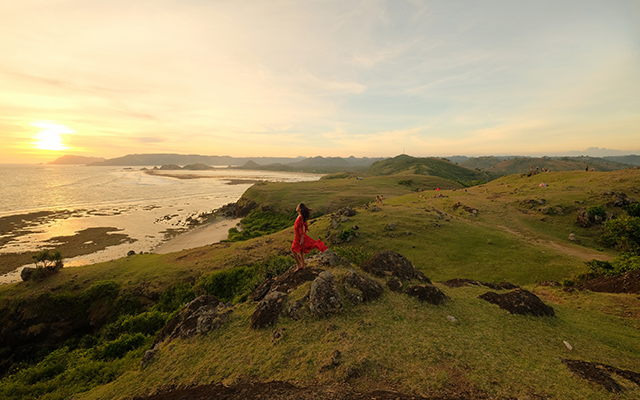
Thoughtfully developed by PT Pengembangan Pariwisata Indonesia (Persero) or Indonesia Tourism Development Corporation (ITDC), a state-owned enterprise specializes in the development and management of integrated tourism estates, with more than 45 years experience presiding over its flagship development, The Nusa Dua, a world-renowned tourism complex in south Bali. The Mandalika itself covers 1,175 hectares, with mesmerizing endless hills and well-known, unique beaches defining the island as an untouched paradise awaiting to be explored.
Start from Kuta Mandalika beach, which sits on the western part of The Mandalika coastline. This family-friendly public beach promenade is designed for public coastal leisure activities with its Beach Facility buildings providing bathrooms, showers and lockers for best convenience, as well as for events ranged from fun walk, fun bike, community yoga to big events such as The Mandalika Triathlon and TNI Marathon, welcoming more than 5.000 spectators.
This beach and the rolling hills of south Lombok are well suited for all kinds of sporting events such as running, cycling, paragliding, triathlons, as well as motorsports. Thanks to this natural setting, The Mandalika will host the world’s first street race for MotoGP in 2021. The Mandalika Street Circuit will be the first international street racing circuit designed and developed from the ground up that can accommodate international sanctioned motorbike races. The circuit construction will begin in Q4 2019 and will be ready by the start of the race in 2021.
The 2nd beach on the coastline is Seger beach, well-known of its Princess Mandalika statue representing the legendary tale about a beautiful princess of Lombok’s southern coast who sacrificed and threw herself into the ocean to bring prosperity to the people in form of “Nyale”, marine biota that is believed to bring luck during harvest time. The name of The Mandalika itself is inspired by this profound legendary tale.
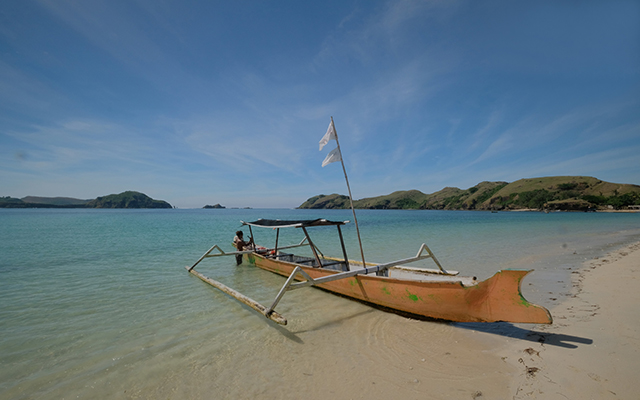
Added into the natural beauties of The Mandalika is Serenting beach that sits close by to the upcoming Street Circuit, the infamous white sand Tanjung Aan beach, and Gerupuk beach situated in the west of The Mandalika,well-known amongst international surfers as their “surf paradise” due to its unique waves, and it is complimented with a natural mangrove river perfect for visitors who love to enjoy the natural surroundings where a variety of birds, some migrating from Australian winter time, are thriving.
As a fully integrated tourism complex, The Mandalika will be equipped with a host of mid- to high-end hotels totalling some 16,000 rooms and 190,000 sq. m of retail space, a theme park, golf course, hospital, street racing circuit, international conference facilities, and small medium enterprises centre. The Mandalika also has been designated as an ecotourism destination which will continue to comply with global environmental standards, incorporating clean solar energy, water desalination plants, and suitable waste disposal. Additionally, over half of the area will be designated as open green space, which will not only maintain and protect the natural beauty, but also enhance the life and culture of local residents. ITDC has also factored into the plans a 70-hectare eco park, future homes to a variety of rare bird species, and a mangrove forest. Apart from functioning as a sanctuary for native jungle birds indigenous to the area, the bird park is expected to be a key attraction for visitors to The Mandalika.
Encouraged by the strong growth in visitor arrivals from Asia, which once trailed behind its traditional markets from the US and Europe, Canberra is now pumping more efforts and resources into wooing travellers from the region, particularly China, India, Singapore, Malaysia and Indonesia.
Andrew Barr, chief minister of the Australian Capital Territory, whose portfolio includes minister for tourism & special events and minister for trade, industry & investment, said: “Not too long ago, Europe, the US and the UK were key markets and Asia lagged behind, due to lack of awareness. Canberra was overshadowed by Sydney and Melbourne.
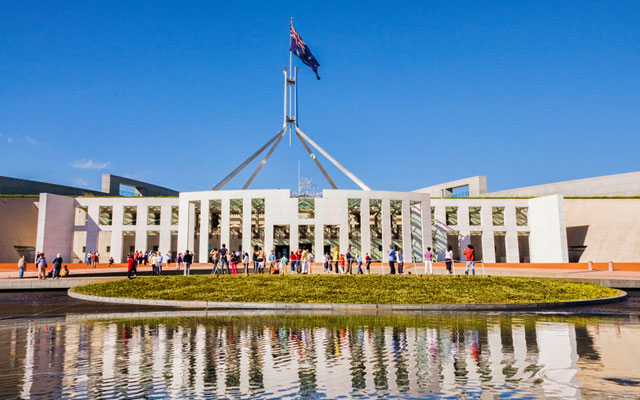
Canberra is promoting destination awareness among Asian visitors (Pictured: Parliament House in Canberra)
Since March, Visit Canberra has stepped up promotion efforts in South-east Asia, with the appointment of a full-time staff based in Singapore to service the travel trade and promote the Australian capital city in this region. “This has helped us build a stronger relationship with the travel trade and create more awareness of the destination,” said Barr.
Furthermore, Singapore Airlines’ daily Singapore-Canberra service via Sydney, launched since May 2018, has also bolstered the strong growth of Asia, which currently accounts for about 40 per cent of arrivals to Canberra.
“We have a strong partnership with Singapore Airlines and leverage (the carrier’s) distribution power through their global network to further promote the destination,” he added.
Barr is leading the Canberra delegation to Australia Marketplace South East Asia 2019 (AMSEA), which is currently taking place in Kuala Lumpur from September 30 to October 2. It is the first time AMSEA, formerly known as Walkabout South East Asia, is held in Malaysia. The event saw the participation of a total of 177 delegates, with 78 Australian tourism businesses meeting with 81 buyer companies from Malaysia, Singapore and Indonesia.
Brent Anderson, regional general manager, South & South-east Asia, Tourism Australia, shared that Malaysia was chosen to host this year’s AMSEA as it showed strong potential for further growth in arrivals as the seventh largest source market. “Over the last 18 months, arrivals have been hovering around 400,000,” he said.
According to Anderson, Australia has been attracting a growing number of travellers from Singapore, Malaysia and Indonesia looking for short getaways, especially during long weekends and school holidays.
“As more than 80 per cent of travellers from Malaysia and Singapore are repeat visitors, The UnDiscover Australia Campaign launched in September 2018 is a huge success because it showcased new experiences and destinations in Australia beyond the traditional city gateways of Sydney, Melbourne and Perth,” he said.
A trend noted by Visit Canberra is the growing number of millennial travellers, who are in part drawn by the many nature-based attractions located within a two-hour drive from Canberra’s CBD. Higher education institutes like the Australian National University, University of Canberra and Canberra Institute of Technology are also attracting Asian students, who in turn creates traffic from the visiting friends and relatives segment.
Apple Holidays Singapore’s director, Benny Ho, observed: “Airline promotions and a favourable exchange rate are driving demand for short breaks (to Australia) for the Singapore market. We also see repeat visitors wanting to explore new destinations, such as Uluru and Alice Springs, both in the Northern Territory.”
Adam Saunders, managing director of ExploreToursPerth.com, a first-time seller at this show, sees growing demand for private Muslim-friendly tours around Perth amongst visitors from Indonesia, Malaysia and Singapore. A year ago, his company launched Muslim-friendly tours, which now accounted for five per cent of the company’s revenue.
Anderson shared that Tourism Australia also saw the potential of the Muslim travel market and that more efforts had to be taken to tap into that market. He said: “We had an internal planning meeting last week and halal- and Muslim-friendly tourism were among the topics discussed. We know we are lagging behind South Korea and Japan in this area, so we hope to work with the Australian travel trade to roll out new initiatives by 2021. ”
The Competition and Consumer Commission of Singapore (CCCS) has proposed a set of guidelines on price transparency regarding the “dos and don’ts” for suppliers of all consumer-facing industries relating to various pricing practices so as to avoid misleading consumers, following its findings from a study on the online travel booking sector in Singapore.
CCCS’ market study on the online travel booking sector in Singapore revealed that the online travel booking segment in South-east Asia was worth US$19.4 billion in 2015, accounting for 61 per cent of the internet economy in South-east Asia. Between 2015 and 2018, online travel booking grew at 15 per cent driven by growth in online airline and hotel bookings, to a size of US$29.7 billion in 2018. Singapore was estimated to be the third largest in South-east Asia in terms of online booking market value in 2018, with the highest per-capita online travel booking expenditure in the region. By 2025, the online travel booking market in South-east Asia is estimated to reach US$78 billion, according to Google’s and Temasek’s e-Conomy SEA 2018 report.
CCCS pushes out guidelines on price transparency for online travel bookings, following study regarding misleading industry practices
Singapore consumers are increasingly turning to online channels in making their travel bookings, including searching for, comparing, and purchasing travel-related products such as air tickets and hotel accommodation online, whether directly from the websites of service providers like airlines and hotels, OTAs such as Expedia and Booking.com, or web aggregators, also known as metasearch engines like Skyscanner and Trivago, CCCS revealed.
Against this backdrop, CCCS conducted a market study on the online provision of bookings for flight tickets and hotel accommodation to Singapore consumers. The study examined various business practices adopted by the industry players, and the associated competition and consumer protection issues. This is the first market study by CCCS that examined both competition and consumer protection issues, since CCCS took on the additional function of administering the Consumer Protection (Fair Trading) Act (CPFTA) from April 1, 2018.
Price, being an important factor for most consumers and crucial for comparing between alternatives, is key to consumers making well-informed purchasing decisions. In the absence of clear disclosure on prices and pricing practices, consumers may be misled into making wrong decisions, said CCCS.
Following the study, CCCS has developed a set of guidelines on price transparency to assist suppliers of all consumer-facing industries in their display and advertisement of prices to avoid misleading consumers and infringing the CPFTA. These guidelines apply to both online and offline transactions.
The four common practices of online travel booking providers that give rise to consumer protection concerns, as well as CCCS’ proposed guidelines on price transparency are as follows:
1. Drip pricing
This refers to the practice of not disclosing both mandatory and optional charges upfront, which can lure consumers into making a purchase based on incomplete price information, and restrict competition by making it harder for consumers to compare product offerings across suppliers.
What CCCS recommends: Suppliers should ensure that any unavoidable or mandatory fees or charges, like taxes and surcharges, are included in the total headline price.
2. Pre-ticked boxes
Such practices can result in consumers buying unwanted add-on products, as a result of failing to opt-out by unchecking the pre-ticked boxes.
What CCCS recommends: As good practice, suppliers should avoid using pre-ticked boxes to automatically include add-ons. If pre-ticked boxes are used, suppliers must provide proper disclosures of the goods or services offered in a clear and prominent manner.
3. Strikethrough pricing
Such practices can mislead consumers into making a purchase, or paying a higher price, should the comparison between a current and a crossed-out price be false or misleading.
What CCCS recommends: When comparing their price with a previous price to represent a discount, suppliers should use an actual, bona fide previous price (i.e. usual price) that provides a legitimate basis for the price comparison.
When comparing their price with others, suppliers should ensure that any representations and price comparisons with other suppliers’ prices or the use of terms such as cost price, are not false or misleading.
4. Pressure selling
Suppliers touting false or misleading claims can create a false sense of urgency for consumers to make a purchase based on inaccurate information.
What CCCS recommends: When using the term “free”, suppliers should ensure that any representation that the price is $0 or “free” is not false or misleading and any qualifiers, terms and conditions as well as subsequent or deferred charges should be stated upfront clearly and prominently.
CCCS’ recommended positions are intended to encourage online travel booking providers to adopt transparent pricing practices, such that prices and their accompanying terms and conditions are communicated clearly. Through this, CCCS aims to educate suppliers and over time, reduce misleading pricing practices, thereby enabling consumers to shop confidently. This will enable consumers to make an informed choice and allow businesses to compete on a level playing field.
The guidelines will provide more clarity on what constitutes an infringement of the CPFTA and how suppliers should display and advertise prices in a clear manner, it added.
CCCS is seeking public feedback on the proposed guidelines on price transparency. The closing date for submissions is October 21, 2019.
More information on the proposed guidelines on price transparency and the public consultation can be accessed and downloaded from the CCCS website under the section “Public Consultation”.
CCCS said it will continue to monitor market developments in the online travel booking sector in Singapore.