Graeme Rutherford has joined Sage Hotel West Perth (under Next Hotels & Resorts) in Australia as general manager.
The industry veteran began his hospitality career with Rydges Hotels, working his way up to his first general manager position in Melbourne. Since then, Rutherford has managed a number of hotels in Australia and New Zealand, including Rydges Perth and Frasers Suites Perth.
Adara, a travel data co-op and provider of traveler intelligence for travel brands, has appointed Frank Teruel to the newly-created position of COO as the company expands its business and operations around the globe.
Teruel has more than 25 years of experience in venture-backed start-ups and tenured technology businesses. With his dual financial and operational background, he is expected to bring to Adara deep expertise in sales, operations, and finance.
Most recently, Teruel led ThreatMetrix through rapid global growth and expansion to new industries culminating in an US$830 million sale to LexisNexis Risk Solutions. Previously, Teruel held executive management positions at Vormetric and other software companies.
He is also a frequent speaker and thought leader on contributory data, digital identities, cybersecurity and internet fraud prevention topics.
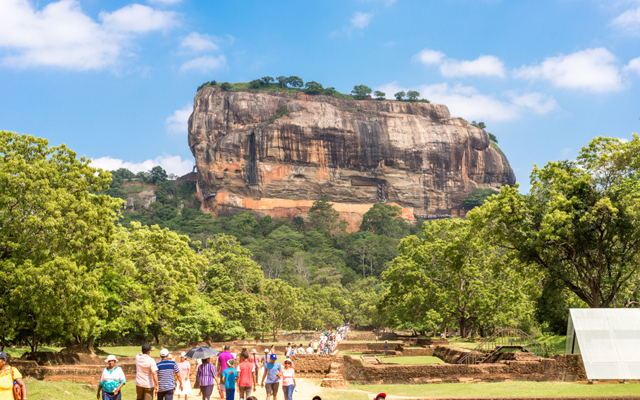
Sri Lanka has lifted its state of emergency – imposed after the Easter Sunday bombings in April – bringing hopes to the travel trade that the move will lead to a much-needed boost to tourist arrivals.
Trevor Rajaratnam, president of the Travel Agents Association of Sri Lanka, said the move would send a positive message to the rest of the world that Sri Lanka is open for travel. “It’s a huge positive move and will also help airlines which depend on more inbound travellers,” he noted.
Sri Lanka has lifted a four-month state of emergency which hopefully will boost tourist arrivals
Arrivals have dipped monthly since the attacks, and tourists have stayed away. Officials also believe winter arrivals will drop by 30 to 40 per cent, but hope that since the month-on-month emergency lapsed last Thursday, the situation could improve. Emergency rule permits the government to mobilise the armed forces on the streets among other security-related measures.
Mahen Kariyawasam, former president of the Sri Lanka Association of Inbound Operators, said that the removal of emergency rule was a very positive move and would help in the recovery of tourism efforts.
As well, tourism industry officials said that even though several countries have relaxed travel advisories, these advisories were still at the category 2 and 3 levels, which denote ‘be cautious’ when travelling to Sri Lanka. Some countries like Russia have not relaxed its travel advisory.
“Even though many countries have relaxed travel advisories, they were at a category where government officials are not advised to travel (to Sri Lanka). A forthcoming major business conference was unable to invite government officials from other countries for this reason, which would now help in their participation,” Kariyawasam said.
Meanwhile, Achini Dandunnage, senior manager at the Sri Lanka Convention Bureau, said: “With the lifting of the emergency, hopefully, travel advisories will be further relaxed.”
But there is light at the end of the tunnel, as authorities are in the midst of preparing for 21,000 to 25,000 followers of the minority Bohra Muslim community from 40 regions and countries that will descend into Sri Lanka for a mega international convention. The event, to be held from September 1-10 in Colombo, is a positive boost to business tourism.
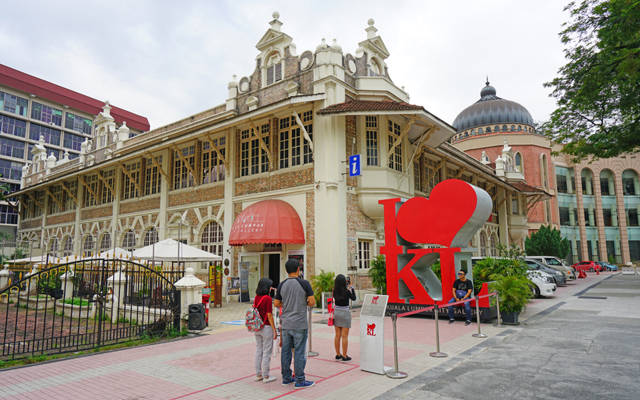
Malaysia has recorded RM41.7 billion (US$13.7 billion) in tourist receipts in 1H2019, a growth of 6.8 per cent from the corresponding period in 2018.
Speaking at a press conference on the performance of Malaysia’s tourism sector, minister of tourism, arts and culture Malaysia Mohamaddin Ketapi said that the number of foreign visitors to the country rose 4.9 per cent to 13.4 million in the first six months this year, up from 12.7 million in the corresponding period last year.
Malaysia welcomed 13.4 million tourists in the 1H2019, up 4.9 per cent from the same period last year
Asia-Pacific continues to dominate Malaysia’s foreign arrivals at 70 per cent, he revealed, accounting for six of the top 10 international tourist source markets in 1H2019. Arrivals from Singapore topped the list with 5.4 million tourists, followed by Indonesia (1.9 million), China (1.6 million), Thailand (990,565), Brunei (627,112), India (354,486), South Korea (323,952), the Philippines (210,974), Vietnam (200,314) and Japan (196,561).
Overall, the short-haul, medium-haul and long-haul markets registered positive growth at 4.7 per cent, 7.2 per cent and 1.8 per cent respectively, compared with the first half of 2018.
The top five countries with the highest expenditure per capita were Saudi Arabia at RM11,376 (US$2,715), the UK at RM5,241, Canada at RM4,593, China at RM4,546 and the US at RM4,537.
With steady growth recorded for the tourism sector in the first half, Mohamaddin is confident that Malaysia would meet its target of 28.1 million tourist arrivals for 2019 as the third quarter is also the peak summer travel season for the Indian, Middle East and European markets.
“We recorded over 13 million tourists in the first half of 2019. It is not the peak travel time for tourists from some countries yet. We have several more months (to) achieve our target,” he said.
Tourism Malaysia’s director general, Musa Yusof, who was also present at the press conference, said that he was optimistic that arrivals from China will continue to grow positively in 2H2019, despite China’s economic slowdown.
“Tourism Malaysia will be participating at the upcoming China (Guangdong) International Tourism Industry Expo from August 30. It will be great if we can capture 10 per cent of the Chinese population of Guangdong, which is around 111 million,” he said.
Apart from incentives such as the Joint International Tourism Development Program, Tourism Malaysia is also in discussion with China-based airlines and top Chinese outbound operators to attract more charter and scheduled flights from China to fly to Malaysia.
Next year also marks the Malaysia-China Cultural Tourism Year, which Musa believes will attract more Chinese tourists to Malaysia.
Thailand’s quarterly tourism confidence index in 2Q2019 held steady at 100 from its 1Q prediction, and is expected to remain at 100 in the third quarter of this year, a recent study found.
The survey, which is a collaboration between the Tourism Authority of Thailand (TAT), Tourism Council of Thailand and Chulalongkorn University’s Faculty of Economics, is based on responses from over 600 tourism operators and government officials from related agencies. It also interviewed 350 international and 350 domestic tourists, respectively.
Thailand’s quarterly tourism confidence index in 2Q2019 held steady at 100 from its 1Q prediction, and is expected to remain at 100 in 3Q2019
The findings in the second quarter of this year highlighted both the micro and macro factors affecting Thailand’s tourism industry: The slowdown of the world economy as well as Thailand’s economic stagnation; the Thai government’s stimulus and tax reduction scheme; extension on the visa-arrival fee waiver for citizens of 20 nations for another six months until October 2019, and the strength of the Thai baht to a weakening US dollar combined with rising inflation.
The index forecasts that the number of foreign arrivals in Q3 will increase 7.1 per cent year-on-year to 9.7 million visitors. It also projects that total arrivals will rise 4.7 per cent to reach 40.1 million international tourists for all of 2019, compared to 2018.
These findings, however, reflected a more positive sentiment than the latest projections from Thailand’s Ministry of Tourism and Sports, which had cut its foreign arrivals forecast further to 39-39.8 million this year, down from 40.2 million.
Thai tourism in the first half of this year saw only a 1.4 per cent growth in foreign arrivals to 19.7 million, prompting the Thai ministry to slash its target in July from 41.3 million to 40.2 million, according to a Bangkok Post report.
The report also quoted Thai tourism and sports minister Phiphat Ratchakitprakarn as saying that he is confident the new projection is attainable as the government has been doling out incentives to foreign visitors.
Phiphat added that the Thai cabinet will continue to promote tourism in the upcoming months by extending the waiver of visa-on-arrival fees to 19 nations, which already covers China and India, from October 31 this year until April 30, 2020.
TAT governor Yuthasak Supasorn was also quoted as saying that the Thai cabinet believes the incentive will help draw some 20 million foreign tourists in the second half, maintaining tourism momentum to support the country’s three per cent GDP growth this year.
Despite a dip in foreign arrivals, especially from China, Yuthasak is positive that the goal of 3.4 trillion baht (US$111.9 billion) in tourism revenue this year is achievable, a 9.5 per cent increase from last year.
Meanwhile, the latest statistics of the Thailand Tourism Intelligence Centre report 23.1 million foreign tourists visited Thailand in the first seven months this year, up by 1.94 per cent year-on-year.
China still accounts for the biggest portion with 6.63 million visitors, a contraction of 3.3 per cent, followed by Malaysia with 2.24 million, up 6.2 per cent, and India at 1.14 million, up 24 per cent.
Hotelivate, an India-based hospitality consulting firm, has opened its fourth office in Jakarta, after Delhi, Mumbai and Singapore, with Satria Wei, a veteran hotelier with over 30 years of experience, taking the reins as managing partner and managing director of Hotelivate Indonesia.
Satria was formerly the COO at MNC Land Bali, providing asset management and operational assistance in integrated resort projects such as Trump Resort Lido, Trump Resort Bali and Park Hyatt Jakarta. Prior to that, he was with PHM Hospitality.
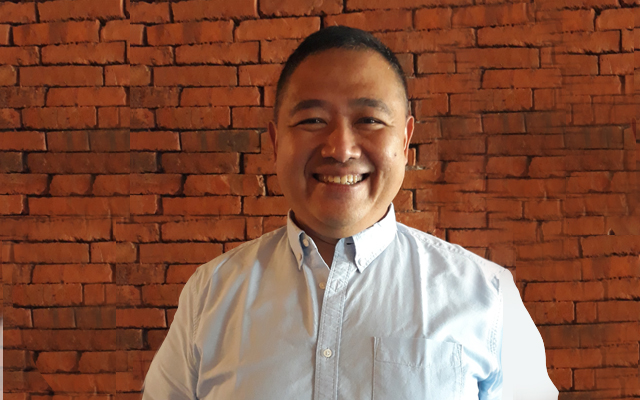
Satria: took the position as he wants to help improve hotel room rates throughout Indonesia
Manav Thadani, founder and chairman of Hotelivate, said in a statement: “Our teams have been monitoring and working in various Indonesian markets for over six years. While the hospitality market cycle was on a decline during much of this time, Hotelivate ran five editions of THINC (Tourism, Hotel Investment & Networking Conference) in Bali and Jakarta. We now observe a clear upswing in performance, and more importantly, in market sentiments.”
He added: “With the recent reelection of the government, we see a continuation of strong sentiments and feel this is an appropriate time for Hotelivate to set up an office in Jakarta.”
Satria told TTG Asia that his decision to helm Hotelivate started with his concern over the low room rates in Indonesia, particularly among individual-owned properties, as compared to other countries.
“I have been working with hotel management companies and trying to increase our prices has been difficult when the hotels around us were not trying to scale up but instead undercut our prices. (Improving hotel room rates) needs a concerted effort by a group of hotels in the area,” he said, adding that he will work with those hotels to improve their bottom line.
He said that Hotelivate Indonesia, which offers end-to-end hospitality business solutions, could play a role in improving hotel room rates and the first service the firm will offer is revenue and asset management, primarily to individual-owned hotels, and possibly for branded ones too.
Satria stressed on the importance of these services, citing the example of room rates in Bali’s Kuta area. “There are two- and three-star hotels selling their rooms for as low as Rp100,000 (US$9) to Rp200,000. Branded properties have their own revenue management, something that individual-owned properties are lagging behind,” he said.
He also observed that the rate of a room in an economy-branded hotel in Mumbai was double that of the same brand in Bali.
But with proper revenue management, Satria said, many hotels in Indonesia can potentially increase their average room rates by 15 to 20 per cent.
“I have met hotel owners who wanted to see their properties increase in value so that when they release their hotels into the market after five to 10 years of operations, their properties will not only be valued by the land – like many of them today – but also the assets,” he said.
Many hotels across Indonesia are engaged in price wars due to an oversupply situation and thus, may be resistant to spending their thin margins on consultancy fees. “We realise that imposing fees up front will not work, so we are formulating a different scheme whereby hotels pay only after they see the results,” said Satria.
Expounding the feasibility of the scheme, which is still in the planning phase, he said: “If the current average room rate is Rp500,000 and after working with us it increases to Rp600,000, I think hotels will not mind paying 15 per cent of Rp100,000 to us.”
Some 300 travel trade buyers from around the world have applied to attend TRAVEX next year, the B2B trade show that is part of the annual ASEAN Tourism Forum (ATF).
Running from January 14-16, 2020, at the BRIDEX International Conference Centre in Bandar Seri Begawan, Brunei, TRAVEX will offer buyers from around the world the opportunity to shop for some of the best and latest travel and tourism products from across South-east Asia.
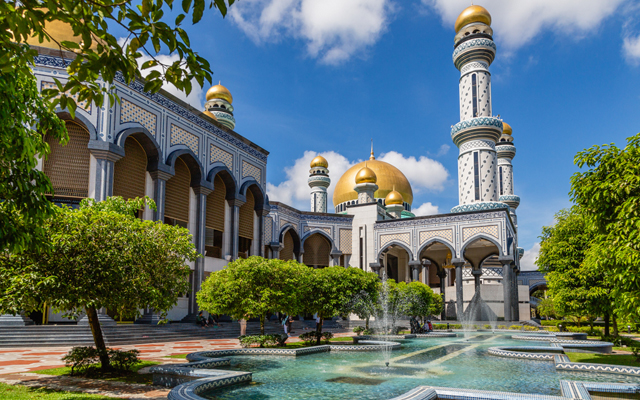
TRAVEX, the B2B trade show that is part of the annual ATF, will return next year in Brunei
At press time, Europeans make up the majority of approved buyers at 41 per cent, followed by Asians at 32 per cent and Americans at 15 per cent. The rest of the approved buyers hail from markets including Australia, New Zealand, Azerbaijan and Estonia.
Darren Ng, managing director of TTG Asia Media – whose business unit TTG Events is organising TRAVEX 2020 on behalf of Brunei Tourism – said interest from travel trade buyers has been strong.
“Travel trade buyers from Asia and other regions of the world have come to recognise the value TRAVEX brings to their programme research, as well as the acquisition of business contacts, products and services. In addition to many buyers keen on returning to the event in 2020 to source for South-east Asian travel and tourism products and services, we are also seeing a good number of new applications even though we are still five months away from the event,” said Ng.
He shared that TTG Events applies a strict qualifying process for hosted buyer applications to ensure exhibitors get quality business interactions. As such, the final count of approved buyers will grow in coming weeks after careful consideration.
One of the early-stage approved buyers is Jaime Monfort, operations manager with Bidtravel, Spain, who is looking “to develop group tours with tailored packages particularly from Brunei, Cambodia, Laos, Malaysia, the Philippines and Vietnam” from his attendance at TRAVEX 2020.
Also eyeing connections with new suppliers is Guillaume Vaudey de Vaudrey, general manager of Cosmopolis, France. He is keen on partners from Brunei, Malaysia, Singapore and Thailand.
Attractive social events and post-show tours are also magnets for buyers, according to Ng.
ATF 2020 and TRAVEX 2020 will also feature three self-paying tours from January 17, 2020. The Proboscis Monkey Tour is the shortest option, running for 2.5 hours to give participants an interesting snapshot of Brunei’s natural landscape, and the habitat and ecology of the elusive creature. The other two tours are bound for Ulu Temburong National Park, with one being a seven-hour-long day trip, and the other lasting for two days and one night.
Exhibition spaces are selling out fast, Ng noted, with confirmed sellers from both the corporate sector and regional NTOs.
Interested travel and tourism suppliers can contact TTG Events at atfsellers@ttgasia.com.
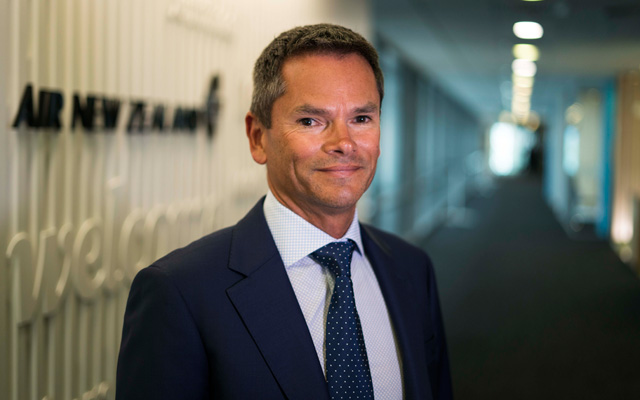
Air New Zealand has appointed CFO Jeff McDowall as acting CEO, as a global search goes underway to replace Christopher Luxon when he leaves the role on September 25.
Taking up the acting CEO role from September 26, McDowall is not seeking permanent appointment to the role, according to a statement issued from the airline. He will be remain the airline’s interim chief until a successful candidate is found, which may not be until 1Q2020.
Jeff McDowall
McDowall’s previous roles at Air New Zealand include group general manager corporate finance and group general manager commercial. Prior to Air New Zealand, he worked across a variety of industries in Asia, the US and the UK.
Meanwhile, general manager corporate finance Stephan Deschamps will take over as acting CFO on September 26.
In addition, the airline’s chairman Tony Carter will also retire on September 25 at the annual shareholders meeting. He will be replaced by current director Therese Walsh, who is leading the CEO search process on behalf of the board.
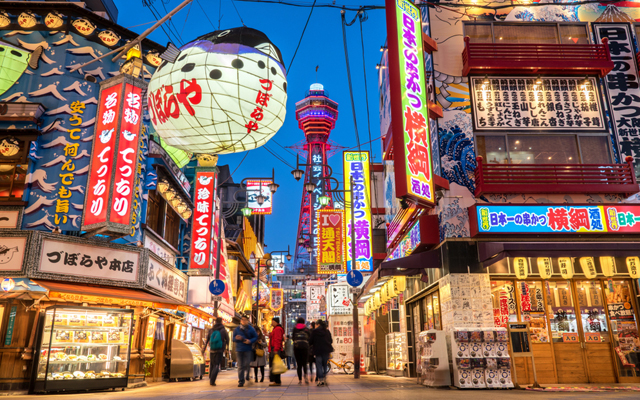
MGM Resorts International has reaffirmed its commitment to pursuing an integrated resort in Osaka, even as market rival, Las Vegas Sands, has announced the termination of plans to build a casino in the Japanese city in favour for Tokyo and Yokohama instead.
“MGM Resorts remains deeply committed to pursuing an integrated resort in Osaka, Japan,” said Jim Murren, chairman and CEO of MGM Resorts, in a statement. “We announced our ‘Osaka First’ strategy and have not wavered from that plan. We have always had confidence in our position, as what we will bring to Osaka is something only MGM Resorts can deliver.”
MGM Resorts has reaffirmed its commitment to pursuing an IR in Osaka
Not only will its proposed Osaka IR “bring world-class entertainment, exciting cultural events, convention expertise, and premium dining and retail experiences that will have broad appeal both nationally and internationally”, Murren said MGM Resorts will “develop a truly unique destination that will generate significant economic activity for the region and increase employment opportunities while delivering an attractive return for all stakeholders”.
He added: “We are also excited about our partnership with Orix, a highly respected Japanese company with a strong presence in Osaka, as we jointly pursue this venture.”
Roiback, a specialist in the management of the direct channel of hotel sales, is the first Spanish tech company to directly integrate with Book on Google, the tech company solution that allows users to book hotel rooms without leaving the search engine. This agreement benefits Roiback’s clients by providing a higher conversion rate and a lower acquisition cost.
One advantage of Book on Google is that it removes friction in the conversion process, particularly on mobile, by allowing users to book a room on a Google-hosted site, avoiding losing clients who tend to leave the reservation when they are directed to other websites from different OTAs or from the hotel.
Roiback’s integration into Book on Google allows users to book hotels rooms without leaving the searcher
With this function, Google improves the user experience and the conversion, thereby also increasing the hotel’s profitability. The hotelier still owns the reservation and its information, and Google does not add any extra costs for booking through this process, even though it is necessary to have a Hotel ads campaign to benefit from this service.
Book on Google is not only available in Spain, but also in the US, Australia, New Zealand, the UK, Ireland, Germany, Austria, Belgium, Canada, Denmark, France, Italy, the Netherlands, Norway, Sweden and Poland. This is another advantage for the hotels as they will be able to access more efficiently to markets that otherwise would be complicated to reach.
Rebeca González, managing director of Roiback, said: “In the last year, the sales generated from the metasearch engines have been multiplied by five and, in particular, Google Hotel Ads has tripled its traffic and it is present in more than 40 per cent of the traffic from the hotels in Google. In the end, what is important is the hotel’s profitability and if Book on Google allows you to increase your conversion and to lower the distribution cost, certainly, we must be there.”
Concurrently, and with the objective of offering better solutions to a changing industry where the weight of the metasearch engines is more and more relevant, Roiback has launched Metabase Pro, a specialised solution for the efficient management of the metasearch engines, that Roiback already offered with its reservation platform but from now will also be made available for clients who do not use the BackHotel from Roiback.
“The touristic industry is in a changing moment where the metasearch engines have more and more importance, especially with Google Hotel Ads and now, also with Book on Google. This is a great opportunity for small- and medium-sized chains to be able to face the big OTAs. Clearly, the traditional tourist industry has changed. The hotels have the great challenge of being where clients look for and to be able to position themselves, and in Roiback, we know how they can do it,” said González.