TTG Asia
Asia/Singapore Thursday, 9th April 2026
Page 1162

New platform for marine transport services launches in Indonesia

0

DTech Solusi Bisnis has introduced cGO, an online reservation platform for yachts, vessels, island tours, ferry transportation and tour guide services.

At the recent media launch of the platform in Jakarta, DTech Solusi Bisnis’ CEO Ngadiman said: “The idea to launch this app came about when I was in Lombok (during) the earthquake, and it was so difficult to find (information) on the available boats to transfer people out of the island.
DTech Solusi Bisnis’ Ngadiman (second from left) and his team at the media launch of cGO, an online reservation platform for marine transport services

“cGO aims to provide access for travellers to explore, experience and enjoy the Indonesian archipelago through local social platforms in an affordable, secure and comfortable manner. cGO strives to eliminate the conventional hassle of traditional booking systems between providers and customers.”

Recognising the niche market need for an all-in-one solution for boat charter and its derivatives, cGO provides an informative, secure and transparent online marketplace to ease the travel reservation of all modes of water transportation, which include yacht and vessel rental, ferry transfers as well as island tours and tour guide services, said the company in a statement.

It added that cGO aims “to be the platform where the demand and supply directly meet within an easily navigable reservation system”.

Nora Kassim, managing director and co-founder of cGO, said: “Through cGO, providers or merchants will be able to manage the inquiries directly through the comprehensive dashboard and promote their products and services to both local and international markets.”

This platform offers professional asset management system and marketing efforts for a flat commission rate.

“Backed by cGO’s professional team, operators can also enjoy multiple benefits including secure payment and billing, controlled flexibility, customisable system, transparency in information and higher sales performance,” Kassim said.

Ngadiman added: “As one of the digital tourism stakeholders, cGO is committed to empower the local economy and tour operators with an international standard and competitive edge that is dedicated to the local SME, mid-size tour and travel agents. On top of that, with the tour guide feature, cGO opens up a new business opportunity for the local human resources and encourages them to strive to reach international standards.”

When the app goes live in November, customers or users will be able to match their preferences to make reservations through a cloud-powered website and app. Customers can also compare all modes of water transportations and tours to popular sites as well as lesser-known destinations in Indonesia.

“With cGO, customers can view real-time rates and book transportation according to their desired budget and schedule. Above all, cGO prioritises safety, transparency and credibility. Each operator and brand at cGO is registered and audited to provide complete and accurate information with no hidden costs. The platform also ensures safety in payment gateway, secure customer data privacy and allows an objective review system,” Kassim said.

The company has joined hands with Dtour Travel Services, Ancol Marina Port, private and government sectors, as well as local and international boat owners, to provide supporting systems for the online platform so as to ensure a comprehensive range of services and reliable results.

IATA lifts off campaign to promote gender diversity in airline industry

0

The International Air Transport Association (IATA) has launched the 25by2025 campaign, an airline industry initiative to advance gender diversity in the airline industry by 2025.

The 25by2025 campaign is a voluntary commitment by participating IATA member airlines. Key among the commitments of airlines participating in the 25by2025 campaign are to increase the number of women in senior positions (to be defined by the member airlines) by either 25 per cent against currently reported metrics or to minimum representation of 25 per cent by 2025; and to increase the number of women in under-represented jobs, like pilots and operations, by either 25 per cent against currently reported metrics or to a minimum representation of 25 per cent by 2025.

IATA’s 25by2025 campaign aims to advance gender diversity in the airline industry by 2025, including increasing the number of women in senior and under-represented positions, like pilots and operations

IATA member airlines who have already signed up to the 25by2025 campaign include China Eastern, Lufthansa Group and Qatar Airways.

There is currently no comprehensive airline industry-wide gender diversity statistical report. But with women representing around five per cent of the global pilot population and three per cent of CEOs, the gender imbalance in the industry is clear.

Alexandre de Juniac, IATA’s director general and CEO, said: “Aviation is the business of freedom. An example of that is the freedom for 2.7 million women and men to develop exciting careers within this industry. But women are under-represented at senior levels, and in some professions, within airlines. Airlines understand the value that a diverse and gender-balanced workforce delivers. The 25by2025 campaign provides a global context and encouragement for the many initiatives our members are already taking to address the gender imbalance.

“I am confident that 25by2025 will be a major catalyst for progress -progress that will set the industry up to achieve even more in this important area. Our work will not be done in 2025 – in fact, this is only the beginning. Our ultimate aim is of course for a 50-50 gender split with equal opportunities for everyone in every part of our industry.”

In addition to the commitments from member airlines under the 25by2025 campaign, IATA will also be making the following commitments:

Increasing the representation of women in IATA’s senior management, referring to the director level and above, from the current 19 per cent to at least 25 per cent by 2025

Working with member airlines to increase the number of women they appoint to IATA governance roles from the current 17 per cent to a minimum of 25 per cent by 2025

Ensuring that the number of women participating as panelists or speakers at IATA conferences hits a minimum of 25 per cent by 2025

Creating a forum for sharing diversity and inclusion initiatives and best practices across the industry and publishing annual industry statistics on gender diversity

Malaysia’s first Conrad to rise in Kuala Lumpur

0
Hilton is bringing the luxury brand Conrad Hotels & Resorts to Malaysia

Hilton has signed a management agreement with Permodalan Nasional Berhad (PNB) to open Conrad Kuala Lumpur in the heart of the Malaysian capital.

Slated for completion in 2021, the 544-room new-build hotel will mark the entry of Conrad Hotels & Resorts, Hilton’s global luxury brand, into Malaysia.

Hilton is bringing the luxury brand Conrad Hotels & Resorts to Malaysia; the branding on its Chicago property pictured

Located within the prime Golden Triangle district of Kuala Lumpur and one hour by car from Kuala Lumpur International Airport, the hotel will be part of a mixed-use development that also comprises an office tower.

The hotel will feature an all-day dining restaurant, two specialty restaurants, a bar, a business centre, spa, fitness centre, a swimming pool, and a 3,400m² events space.

In Malaysia, Hilton currently operates 11 properties across three key brands – Hilton Hotels & Resorts, DoubleTree by Hilton and Hilton Garden Inn. Over the next three to five years, the company is targeting to open nine hotels in its pipeline, including five hotels under the DoubleTree by Hilton brand, and the introduction of lifestyle brand Canopy by Hilton.

Ascott acquires US$139 million freehold serviced residence in Sydney

0
A rendering of the soon-to-open Citadines Walker North Sydney

The Ascott, CapitaLand’s wholly-owned lodging business unit, has acquired a S$192 million (US$139 million) freehold serviced residence in North Sydney through its global fund with Qatar Investment Authority (QIA).

To be named Citadines Walker North Sydney, the serviced residence is part of a 48-storey integrated development with also office and retail components, and which will be the tallest tower in North Sydney upon its completion in 2021.

A rendering of the soon-to-open Citadines Walker North Sydney

Ascott’s chief executive Kevin Goh said the latest acquisition is in line with the strategy of growing the company’s fund management portfolio through private equity funds, joint ventures and listed hospitality trusts.

“We believe in achieving scale in the business, and fund management is central to the active capital management strategy of Ascott as a dominant lodging real estate player,” he added.

Ascott also signed 13 other properties under franchise and management contracts across China, France, Indonesia, Kenya and Vietnam. With these newly secured properties, Ascott has achieved S$10 billion in asset value. Among them are four franchise contracts signed with Aegide Domitys which will mark Ascott’s foray into three new cities in France – Golfe-Juan, Tours and Roanne.

These 14 newly secured properties were announced on September 26 at the grand opening of La Clef Champs-Élysées Paris in France.

Hartatik takes up GM reins at Oriental Residence Bangkok

0

Onyx Hospitality Group has appointed Jenni Hartatik as the new general manager of Oriental Residence Bangkok.

Hartatik previously held the title of general manager at established hotels across China, including the Radisson Blu Forest Manor Shanghai Hongqiao and the Hilton Dali Resort & Spa. Since 2008, she has been based in China, and first took on a general manager role at the Maritim Hotel Changzhou in 2012.

Hartatik first started her hospitality career of over 20 years in reception and guest services at five-star resorts in Bali. In 1996, she moved into sales as an account manager for the ITT Sheraton Bali Nusa Dua’s Japanese market, then becoming director of sales at the Intercontinental Resort Bali in 2001 before moving to the InterContinental Phnom Penh in 2006.

Too many (unregulated) rooms?

0
Hotels in Malaysia seek greater regulation of short-term rentals

A2.7 per cent growth in tourist arrivals to 6.7 million in 1Q2019 failed to lift market sentiment for Malaysia’s hospitality sector. In lieu, the hotel industry saw a 1.5 per cent decline in national occupancy to 64.2 per cent, from 65.7 per cent in 1Q2018, revealed a recent report by the Malaysian Association of Hotels (MAH).

With 39 per cent of arrivals from neighbouring Singapore, it’s possible a good number of tourists may have stayed with friends and relatives, or gone home after midnight.

Hotels in Malaysia seek greater regulation of short-term rentals

However, what has hoteliers more concerned is the other likely contributing reason for the occupancy drop – the influx of unregulated short-term accommodation services such as Airbnb, said MAH’s CEO Yap Lip Seng.

In July, Airbnb reported it had more than 53,000 listings in Malaysia and that it welcomed some 3.3 million guests to the country between July 2018 and July 2019, a staggering 73 per cent year-on-year growth.

“The number revealed by Airbnb is a worrying 21 per cent of legitimate hotels,” said Yap, comparing the figure to the Tourism, Arts and Culture Ministry’s database of 250,000 legitimate hotel rooms nationwide.

But such unregulated short-term accommodation services, said Yap, are negatively affecting the Malaysian tourism industry where the average occupancy rate of hotels was only 56 per cent in 2018.

Yap said the association welcomes regulation of short-term accommodation services and also called for a study to look into where short-term rentals could work for the industry, such as in rural areas.

“Kuala Lumpur has an oversupply of rooms. Allowing short-term accommodation rental services in the city centre is not helping. The government needs to act fast – every minute, valuable tourism dollars are leaked out of the system through unregulated businesses such as Airbnb,” lamented Yap.

Uzaidi Udanis, president of Malaysia Tourism Council agreed. “(We urge) the government to make it a level playing field for hotels to compete. Hotel regulations should also be relooked to consider reducing the number of permits required,” he suggested.

Uzaidi, who is also president of the Malaysian Inbound Tourism Association, called for more collaboration between hotels and tour operators to develop value-added packages that include tours. This will enable hotels to earn better revenue, grow market share and compete more effectively against Airbnb which offers dry rooms and tours and activities, he said.

“It is a better strategy than dropping rates to compete,” he stated.

Malaysian Association of Hotel Owners’ executive director, Shaharuddin Saaid, thinks regulating the hotel sector could have an even bigger impact than the introduction of the tourism tax.

“We need to find ways to attract more tourists. We are now competing with emerging destinations like Vietnam and Cambodia, and established ones like Thailand and Singapore. We cannot keep selling the same products and attractions we did 20 years ago,” said Saaid.

New GM at helm of Chengdu’s Temple House

0

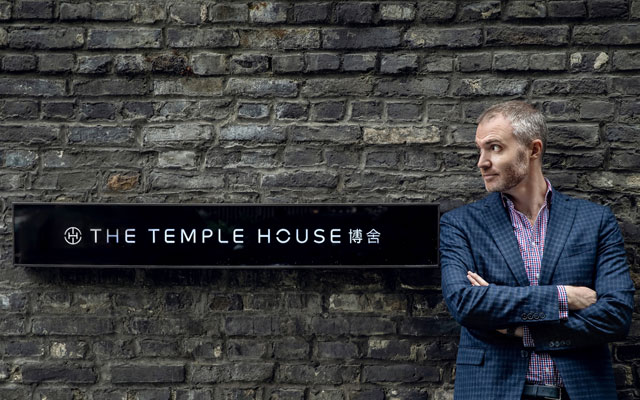
Swire Hotels has appointed Simon McHendry as general manager of The Temple House in Chengdu.

The former general manager of East, Beijing, McHendry began his life in Asia over a decade ago in 2004 when he relocated from London to Hong Kong and then later to Beijing.

McHendry first joined Swire Hotels as executive assistant manager – sales & marketing at The Opposite House, then later in 2016 moved over to East, Beijing, taking on the role of general manager. He has since been a part of the Swire Hotels family for over four years.

Indonesia’s Komodo island to remain open

0

The Indonesian government has decided that Komodo Island will remain open to visitors, after a study showed that the giant lizard is not under threat of extinction.

East Nusa Tenggara governor Viktor Laiskodat had earlier called on the Indonesian authorities to close the island to the public for one year to allow the dragons to regenerate and cut the risk of poaching their prey such as buffalo and wild boar.

Komodo Island will remain open to visitors, after a study showed that the giant lizard is not under threat of extinction

The Ministry of Environment and Forestry, which oversees the national parks in Indonesia including Komodo Island, has since formed a team to study the situation so as to determine the necessary steps to take.

Announcing the news in Jakarta yesterday, Siti Nurbaya Bakar, minister of environment and forestry, said: “(The number) of Komodo dragons on Komodo Island, based on observations that took place from 2002 to 2019, has been relatively stable. There is no threat of decline.”

However, the minister said that the management of the park would now be undertaken concurrently between the central and regional governments to ensure the sustainability of local livelihoods, the conservation of the dragons, as well as maintaining world-class tourism quality and investment.

Asia’s winners and losers as Chinese travellers stay home

0

The Sino-US trade war and a weaker yuan have put a damper on outbound travel from China, as Chinese travellers turn towards domestic travel or more value-for-money destinations in South-east Asia.

Guangdong Qiyouji International Travel Service’s marketing and partnership director, Anson Neo, cited the appreciating US dollar as one of the reasons why Chinese are skipping longhaul travel.

More Chinese travellers are opting to travel domestically or to less expensive destinations like the Philippines (Pictured: Chinese tourists on the small Virgin island of Panglao, Bohol in the Philippines)

“The overall economy has been affected by the trade war, bringing about a weaker Chinese currency. Clients believe that it will cost more to travel longhaul, but domestic travel or trips within Asia still remain affordable,” he shared with TTG Asia at the recent PATA Travel Mart in Nur-sultan, Kazakhstan.

Japan, Vietnam, the Philippines and Thailand remain popular destinations, said Neo, with the falling yuan affecting the luxury sector less as high-end travellers still willing to pay for longhaul trips.

An anonymous buyer from a China-based OTA, however, offers a more depressing outlook of the Chinese outbound market amid the volatile economy.

He elaborated: “I’ve heard that many people have cancelled their longhaul trips, or cut the frequency down to one or two (a year). Nearby protest-hit Hong Kong is no longer a safe destination, and many charter flights have ceased. As a result, travellers find it expensive to fly out, and are switching to domestic travel, which explains why self-drive products in China have surged 30 per cent.”

Although the uncertain economy has not led to an obvious decline in his business, the pace of growth has dropped, said Shane Wang, project manager of overseas destination marketing, Tongcheng-Elong Holdings.

And since groups cannot be sent to Hong Kong due to protests, Wang’s company sends groups to Macau instead, though as a mono destination now. Chinese OTAs such as Ctrip.com are also pushing a twinning of China and Macau, as they celebrate their respective milestone anniversaries this year.

Meanwhile, Thailand-based 500 Rai Resorts & Tours’ managing director Atirat Danphattharaworawat, has noted a drop in Chinese visitors to both Phuket and Krabi, as both destinations focus on drawing mass-market Chinese.

“Their economies have slowed down after the Chinese switched to less expensive destinations like the Philippines and Vietnam,” he added.

The Philippines and Malaysia, meanwhile, appear to reap the benefits of Chinese’ reduced appetite for longhaul travel.

For instance, China has now risen to the second biggest inbound market for the country, according to Monina Valdez, market specialist ASEAN and the Pacific division at the Philippines’ Tourism Promotions Board.

“There are no signs of this market slowing down. Even when Boracay was closed (a favourite destination for the Chinese), agents in the Philippines could still direct them to Palawan, Cebu and Bohol (as opposed to losing the business entirely),” added Valdez.

From January to July 2019, the Philippines welcomed around one million Chinese visitors, a 35.6 per cent spike year-on-year from 766,079 in 2018.

Olivia Ooi, senior vice president destination sales & marketing at Desaru Coast, in Johor, notices that the Malaysian integrated resort tends to draw the more affluent Chinese with the presence of international branded properties like Hard Rock and The Westin within its premises.

“We’re still a new destination, but the Chinese market has been growing for us year-on-year, alongside other markets like India and Hong Kong. To capture more of the Chinese market, we’ve been participating in roadshows, as well as conducting our own sales mission in China,” Ooi shared.

Additional reporting by Rachel AJ Lee

New Anantara-Verita partnership to bring health centres into hotels, starting first with Bangkok

0

Anantara Hotels, Resorts & Spas has entered into its first-ever joint venture with Verita Healthcare Group to collaborate on a global network of integrated, property-based health centres, which will cater to the increasing demand for personalised innovative travel and wellness offerings that go beyond traditional fitness and spa services.

William Heinecke, chairman and founder of Minor International, owning company of Anantara Hotels, Resorts & Spas, said that the joint venture is “a global first” and timely “with the increasing demand for luxury tailored travel and wellness offerings, added to the fact that international wellness tourism on its own is expected to grow to US$1 trillion by 2022”.

With a handshake, Minor International’s William Heinecke (left) and Verita Healthcare Group’s Julian Andriesz seals the deal between both companies to collaborate on a global network of integrated, property-based health centres

The partnership with Singapore-based MNC Verita is “a vote of confidence for medical tourism industry”, said Thomas Meier, senior vice president of Anantara Hotels, Resorts & Spas, Asia.

Following the initial collaboration in Bangkok, joint projects will be launched in Thailand and throughout Asia-Pacific.

Slated to open in 1Q2020, the Verita health facility is currently in development at Anantara Riverside Bangkok Resort and represents Anantara’s first foray into healthcare. The 677m2 centre will feature dark IV infusion rooms with sleep-promoting light therapy, streamlined VIP suites, a meditative garden and private consultations pods.

Owing to aging populations and increasing levels of chronic diseases due to modern lifestyle habits, there has been a rise in the demand for more sophisticated, scientifically-based therapies and services focused on smart early prevention and life extension, said Anantara in a statement.

Verita Healthcare Group founder and CEO Julian Andriesz said that the Anantara-Verita joint venture “will allow people to take proactive, personalised steps towards extending their healthy lifespans, reversing the effects associated with aging, and enhancing their overall human performance”.

The health facility’s treatment menu will combine diagnostics and a digital health platform. Technology provides advanced health analytics and reports in real-time for immediate consultation and recommendation of personalised programmes. The latest innovations such as the recovery XR cryotherapy chamber and cardio-synchronised vascular physiotherapy specifically target issues such as biological age reduction and performance improvement.

The facility will also help clients in customising diet and fitness plans to suit their genetics, aid them in issues concerning their weight, sleep, libido or immune system, or offer them a fast detox or energy boost.