TTG Asia
Asia/Singapore Wednesday, 8th April 2026
Page 1010

Arduous battle for small domestic pie

0

• Discounts and attractively-priced packages flood the market in Singapore, Hong Kong and Macau
• New business approach needed for survival
• Domestic market a new, unfamiliar territory for some players
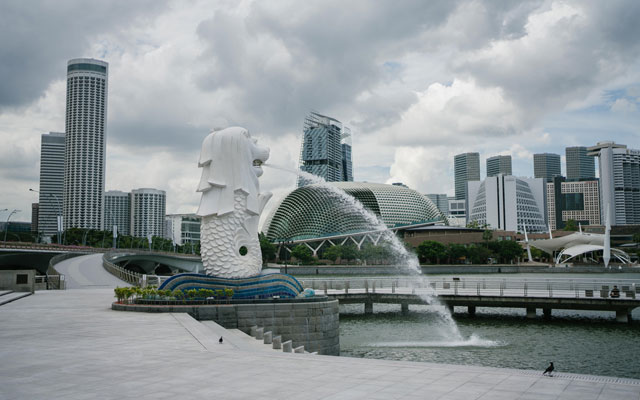
Merlion Park, a major tourist attraction, emptied of crowds during the country’s circuit breaker

Singapore, Hong Kong and Macau, once popular tourist destinations for a global market, are now finding themselves relying on a domestic audience for survival as extensive pandemic-induced travel restrictions remain even as local infection cases are down.

In Hong Kong and Macau, the tourism authorities are taking the lead in supporting their communities’ efforts to win over locals.

Hong Kong Tourism Board announced in May its HK$40 million (US$5.2 million) Hello Hong Kong campaign to encourage locals to travel around their hometown and explore the city from new perspectives. The campaign highlights unbeatable offers and unique tour experiences.

Across the border, the Macao Government Tourism Office is spearheading the Macao Ready Go! Local Tours project, in hopes of achieving progressive resumption of tourism activities in the destination. The project provides a subsidy worth 280 patacas (US$35) to every Macau resident who participates in one of 15 itineraries across two categories: Community-based Tours (six options) and Leisure Tours (nine options). Each resident is entitled to a maximum subsidy of 560 patacas.

Promotions galore
Many hotels, attractions and tour operators in Hong Kong, Macau and Singapore have come up with special offers to stimulate domestic interest.

Several F&B tenants of Singapore’s Sentosa Development Corporation are offering one-for-one meals and mains to entice visitors back to the island, where selected offerings have reopened from June 19. These include Sentosa’s beaches and nature trails, as well as the Fort Siloso Skywalk.

The Fullerton Hotels and Resorts, which has two properties in Singapore, is launching gift vouchers on its brand website as well as attractive discounts on luxury stays and dining to encourage advanced purchases.

Since reopening on May 8, Hong Kong’s sky100 indoor observation deck has been running its ninth anniversary promotion, offering Hong Kong residents free tickets with purchases as well as seasonal afternoon tea sets and a new Twilight Dinner Package at HK$399 per person.

Cash-strapped Ocean Park is offering exclusive deals for residents from June 13 to August 31, and waiving entrance fees for children aged 11 and below. A new animal exhibit, Little Meerkat & Giant Tortoise Adventure, is scheduled for launch this month.

Hotels across Hong Kong have also been whetting staycation appetites with appealing promotions. JW Marriott Hotel Hong Kong, for example, has created a summer family staycation package to make the most of the approaching holidays. Priced from HK$2,700 for two rooms per night, the package includes a 30-hour stay in a pair of connecting rooms, dining credits and free parking.

The Venetian Macao has seen success in welcoming back local residents with its latest attraction, teamLab SuperNature Macao, which soft-opened in mid-June. In addition, Sands Resorts Macao, which The Venetian Macao is part of, is dangling 30 per cent dining discounts as well as a Summer Fun Hotel Package for residents and non-resident worker ID cardholders that comprises free admission to four top attractions, dining vouchers, and other perks.

Over in Taipa Village, merchants are driving a promotion entitled Taipa Village e-Voucher Dining Bonanza, which ends July 31. Eight selected restaurants have developed special deals to encourage locals to eat out.

A different approach
Private Peranakan museum The Intan in Singapore has chosen to go down a different avenue to secure revenue. Owner Alvin Yapp said: “We have remained very active online with regular postings, including a tongue-in-cheek interpretation of how the Peranakan culture can fight Covid-19. We found a new way of reaching out to customers via merchandising and F&B – over the past two months, we sold more than 100 sets of Peranakan Batik masks and more than 4,000 Peranakan Chinese dumplings. This has helped us find a new customer base.”

Yapp shared that The Intan has found new distribution partners such as The Raffles Arcade mall to carry unique gifts and souvenirs, including a new curated range of merchandise that was created for The Raffles.

The Intan is now exploring the creation of an online Peranakan cooking game and masterclasses, as well as kicking off a one-for-one promotion from July 26.

Hong Kong’s Gray Line Tours, which has built its business on showcasing the best of Hong Kong to overseas visitors, is now looking to design two to three local tours for locals.

Executive director Ronald Wu acknowledges that this approach is a “new trial” for the company, and hopes to stand out through quality sightseeing routes that are not accessible by public transport. The tours would be rolled out in mid-July, for about 30 participants per group, and would be promoted to local contacts in Gray Line Tours’ database as well as clients seeking corporate outings.

In April, Grand Lapa Macau and Grand Coloane Resort, both managed by Artyzen Hospitality Group (AHG), converted their facilities into Medical Observation hotels for a month, catering to Macanese returnees who must serve quarantine notices. Since clearing of this responsibility, the hotels have diverted their sales and marketing attention to the only market available at the moment: the local market.

An usually quiet scene at the Taipa Village in Macau

Not an easy switch
Tourism suppliers new to domestic travel are realising that the switch comes with challenges.

Gray Line Tours’ Wu sees difficulties due to “the absence of local market connection and brand awareness”. “Domestic tourism is just a short-term strategy, and ultimately, we hope shorthaul markets will start to move in 4Q2020. We also hope that a travel bubble happens soon for the Greater Bay Area and its surroundings,” he said.

Although staycation demand has become a lifeline for hospitality players in other destinations dependent on domestic tourists, Singapore’s hotel operators have not had the same fortune, as the government’s anti-Covid-19 guidelines have put hotel reservations on hold.

Tony Cousens, general manager at the Ramada and Days Hotels by Wyndham Singapore at Zhongshan Park, told TTG Asia: “Our bookings are mainly from corporate companies housing their Malaysian staff affected by the movement control order. Our occupancy rate has fallen compared to the previous year.”

Furthermore, tourism sellers in Singapore, Hong Kong and Macau are today tackling a small local population compared to a global audience that they were once used to.

A spokesperson with Hong Kong’s sky100 said that while local visitorship this year has doubled that of 2019’s, it is “still far from the visitor numbers and revenue generated by overseas visitors”.

“The challenge (we face) is that locals are of a finite number. Besides offering value-for-money deals, we have to keep on adding new content to… drive repeat visits. And we will have to do that with a tight budget,” added the spokesperson.

That said, the spokesperson admitted that domestic business can “help us alleviate our financial stress”.

China Travel Service (Macao), which specialises in outbound traffic and handles only a small percentage of inbound or local tours, now has to grapple with intense competition for the small number of Macau residents.

Pun Cheng Man, the agency’s travel department sales and marketing manager, said: “The tour prices (for Macao Ready Go! Local Tours) are fixed by the government and all routes (are sold by agents). What sets us apart from other agencies are our well-established brand, word-of-mouth service assurance, and strong corporate/association database.”

Despite busy weekends from staycation bookings, Grand Lapa Macau and Grand Coloane Resort are struggling with weekday business. According to AHG vice president of Macau operations and general manager of Grand Lapa Macau, Rutger Verschuren, the properties are still far from breaking even.

“Price sensitivity and the fact that many hotels are now promoting to this limited market (of 650,000 residents) make it challenging,” said Verschuren. – Additional reporting by Pamela Chow
Preferred adds bonus commission in new campaign

0

Preferred Hotels & Resorts is offering a three per cent bonus commission to travel agents for bookings made under its new global campaign, Loving Local, which champions local and regional hotel stays across 21 markets.

The three per cent bonus is on top of the standard 10 per cent agency commission for Loving Local bookings made through the GDS or direct channels with a qualifying IATA/TIDS number.

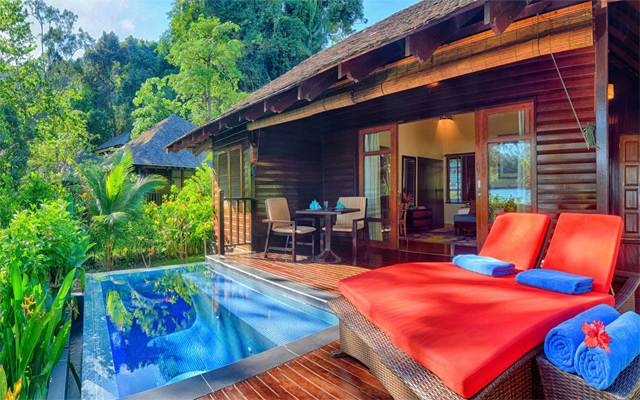
Preferred Hotels & Resorts launches global campaign to spur recovery, with 200 participating properties, including Bungaraya Island Resort in Sabah, Malaysia (above)

Loving Local must be booked by July 31, 2020 for stays through December 31, 2020, with a minimum two-night stay required. It is made available at more than 200 participating hotels and resorts worldwide.

Travellers who book Loving Local will receive the best available rate, daily breakfast options for two, and a stay credit ranging from US$25-$70 that can be used for on-site expenditures. The offer is subject to availability and blackout dates may apply.

In addition, they will also benefit from an immediate fast track to Elite status in the brand’s loyalty programme, I Prefer Hotel Rewards, which features a VIP amenity, next category room upgrade, 2,500 bonus points, and complimentary internet.

To receive the I Prefer benefits, guests must enroll and activate I Prefer membership prior to arrival or upon check-in at the hotel. I Prefer Elite benefits and points awards are only available at participating properties.

Upon confirmation, all Loving Local bookings will also unlock access to special benefits from partner brands including Avis (for car rentals in Asia), and Travel Curious (for curated tours of one’s chosen destination).

Participating hotels in Asia and Australasia include Azur in Queenstown, New Zealand; Bungaraya Island Resort in Sabah, Malaysia; Discovery Suites Manila Philippines in Manila, Philippines; Lancaster Bangkok in Bangkok, Thailand; One Farrer Hotel in Singapore; The Fullerton Hotel Sydney in Sydney, Australia; The Imperial New Delhi in New Delhi, India; The Leela Palace Udaipur in Udaipur, India; The Sanchaya in Bintan Island, Indonesia; and The Siam in Bangkok, Thailand.

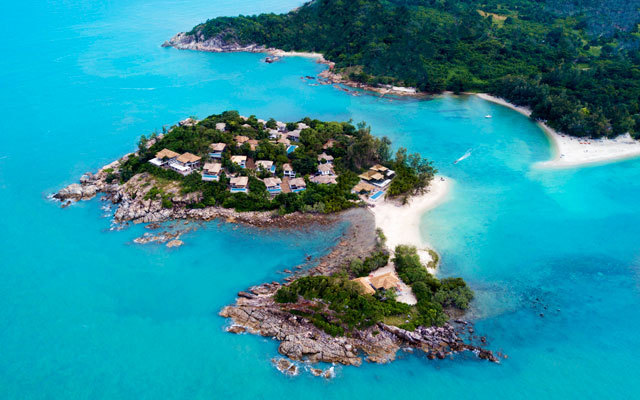
Cape Fahn Hotel offers 1-for-1 deal

0

Avis car rental unveils subscription service

0

Avis has launched a car rental subscription service called Avis Flex in Singapore, providing users with flexible, longer-term rental solutions.

The service allows customers to rent a car for a minimum of 28 days up to a maximum of 11 months. Customers are not required to pay any upfront costs nor sign any long-term agreements, and can swap cars thrice over the 11-month loan period.

Avis now offers subscription options, ranging from 28 days to 11 months

The monthly fee covers all running costs like maintenance, servicing and replacement of tyres. Included also is basic coverage, such as basic collision damage waiver and theft protection, along with 24/7 mechanical breakdown assistance.

Tom Mooney, managing director, Pacific, Avis Budget Group, said: “From Avis Budget Group’s future of mobility research in 2019, we found that 73 per cent of residents in Singapore would consider giving up car ownership and rely on long-term car rental if it was convenient and easy for them, ranking second among 16 countries in Europe and Asia surveyed.

“Now with the uncertainty from the coronavirus, we are expecting even more people to look into rental solutions as a private and flexible transport alternative.”

New bespoke travel brand launches in India

0

A Travel Circle, a bespoke luxury travel brand offering curated experiences, has debuted in India.

Apart from customised travel itineraries, guests can also avail of the brand’s curated collection of private villas or small boutique hotels for buyouts.

In India, A Travel Circle has partnered a number of luxury hospitality brands, including Four Seasons Hotels and Resorts, Marriott International, Shangri-La Hotels & Resorts, and Rosewood Hotels & Resorts. The agency is also part of the Traveller Made network and have access to some of the most prestigious travel shows worldwide.

Pritish Shah, its founder and CEO, said: “A Travel Circle is the newest addition to our experiential travel brands. During the past 10 years of successfully curating travel journeys for couples, we frequently received requests from numerous guests wanting tailor-made experiences for their varied holiday requirements.

“We conducted a comprehensive market research to better understand the evolving preferences of this ultra-wealthy segment. Spending quality time in a fabulous setting, and more importantly, to be able to bond with loved ones, emerged as the most prominent trends.

“This pandemic has fast-tracked us to launch A Travel Circle, as the changing travel expectations in the new normal world align very well with our product offerings – private villas for social distancing, private jets to avoid commercial airports, highest standards in safety with our carefully selected hospitality partners and other service vendors.”

Shah is also the founder behind two other specialised brands: A Travel Duet, an experiential travel brand targeting honeymooners; and A Travel Quest, catering to travellers seeking immersive and engaging experiences.

TakeMeTour takes Thai farms online to ride out tourism downturn

0

Peer-to-peer online activity marketplace TakeMeTour has established an online retail platform to help Thai farmers and gardeners, once dependent on tourist dollars, to better survive the current tourism crisis.

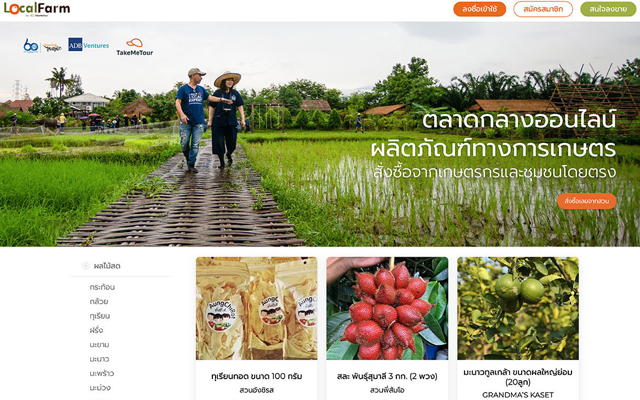
The LocalFarm online platform presently features agricultural products, such as seasonal vegetables and processed fruits, from more than 50 sellers across Thailand, with some of them being past Local Experts listed on TakeMeTour.

TakeMeTour helps onboard sellers on LocalFarm platform, but no micromanagement required: Taro 

Taro Amornched, co-founder of TakeMeTour, explained that the other sellers on LocalFarm are those affected by declining tourism activities and have been unable to sell or export their products, or are no longer able to welcome visitors.

“We promoted LocalFarm through Facebook and other social media networks (and) proactively reached out to some of them that we see a fit,” added Taro.

TakeMeTour charges these suppliers no fees or commissions to access the LocalFarm platform. And the assistance goes even farther; the suppliers can avail to photography services for their products, banner design expertise, copywriting help as well as advertising and marketing activities – with all costs shouldered by TakeMeTour.

“We help to onboard them but do not micromanage their account unless they want us to do so,” shared Taro, who added that the LocalFarm platform was designed to be easy to use, even for non-tech savvy individuals.

In turn, TakeMeTour’s work on LocalFarm is financially supported by the Asian Development Bank’s impact investment platform, ADB Ventures, and the Tourism Authority of Thailand (TAT). A seed grant of US$150,000 helps LocalFarm with product development and regional market validation.

ADB and TAT have supported TakeMeTour through technical assistance since 2017.

ADB Ventures senior investment specialist, Dominic Mellor, commented that “it is impressive to see how quickly and efficiently TakeMeTour has developed an innovative online platform to help frontline tourism workers earn alternative income streams” during what he described as an “unprecedented crisis”.

Just two weeks old at press time, LocalFarm has gained more than 100 transactions from across Thailand.

LocalFarm site features agricultural products from over 50 sellers across Thailand

In the initial phase, LocalFarm targets only Thai residents due to logistical restrictions. However, translations are underway to prepare the website for the expatriate community and future travellers to Thailand.

Taro is working towards two plans: one, to facilitate orders by tourists during tour bookings and have the purchases delivered to their hotel; two, to curate a selection of farms that are ready for agritourism activities, such as fruit pickings and farm visits.

When asked if LocalFarm could be expanded to help local farmers in the Greater Mekong Subregion, where TakeMeTour is also present and supporting more than 25,000 local experts, Taro said: “Although this is possible technically, we want to focus on our largest coverage location, which is Thailand, at the moment. However, we are open to partnerships or software licensing if anyone is interested.”

Alma Resort welcomes commercial director

0

Newly-opened Alma Resort has tapped to join the team as commercial director.

In his role, Koerner is tasked with positioning the 30ha beachfront resort on a consistent growth trajectory, and overseeing sales, marketing, public relations, distribution, and reservations.

The German comes to Alma Resort after a four-year-stint at The Anam, another five-star resort situated in Cam Ranh. There, he first served as director of sales and marketing during The Anam’s pre-opening before being promoted to group director of sales, marketing and distribution.

Prior to joining The Anam, he was the director of marketing for HG Holdings, the parent company of Sens Asia Travel and Bhaya Group.

Bali’s tourism revival likely led by China market

0

Swelling interest among Chinese tourists in Bali could lead its initial recovery phase, with the popular Indonesian island expected to receive the first wave of Chinese travellers as soon as 4Q of this year, according to a C9 Hotelworks’ survey.

Out of the six million overseas tourists Bali hosted last year, China made up 19 per cent of the total.

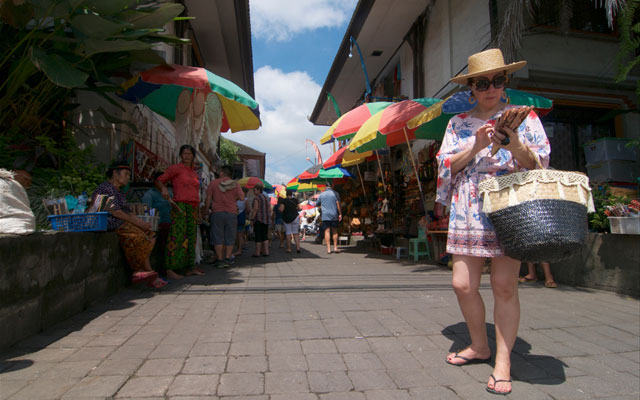
Bali still a magnet for Chinese travellers; a Chinese tourist in Ubud Art Market in Bali, Indonesia pictured

Speaking at the Bali Tourism – The Way Back webinar last week, Bill Barnett, managing director of C9 Hotelworks, said that compared to Australia, which is also Bali’s top source market, he believed that China will come back earlier. “Over 50 per cent of the people (in China we surveyed) want to travel either late this year or early next year,” he added.

Barnett shared the results of the China Bali Travel Sentiment Survey 2020 that tracked Chinese travellers’ inclinations towards visiting Bali amid the Covid-19 pandemic.

“About 35 per cent of Chinese travellers think that Bali is a safer holiday destination than other places during the present situation,” revealed Barnett, who surveyed 1,041 respondents in first-tier cities within China in June.

Some 86 per cent of respondents said that they would like to travel to Bali late this year or early next year, with youths likely to lead post-Covid-19 travel to the island as 43 per cent of the respondents are aged 20 to 29.

Barnett, however, highlighted the importance of air connectivity to make that happen. He said: “Airlift is everything. You can’t stay (in Bali) if you can’t get there. The LCCs and regional airlines can act quicker than the large legacy carriers. This is one of the reasons we think China market can potentially return by Q4 this year or 1Q2021.”

Jasper Palmqvist, area director Asia Pacific of STR Global, however, thought otherwise. He said: “I hope I’m wrong, but I don’t think China will travel (to Bali) in 2020 given the fact that there’s no drive market in Bali, like in Bangkok, for example, where the domestic market will spur the reboot.”

“The best-case scenario is that demand could reach its previous high levels by 2022, but with all that new (hotel) supply, along with other contributing factors, performance-wise, it will take much longer.”

For Bambang Sugiono, director of marketing and overseas promotion of Bali-based RD Tours, the response from his business partners in China has stirred optimism.

He said: “The Chinese traveller’s desire to visit Bali remained high as they kept contacting me to ask for updated information about the Indonesian government’s policies. Once the travel corridor is opened, travellers (from China) will be able to fly directly to Bali. Now, we are waiting for that travel bubble (to materialise).”

He said that according to his business partners, Chinese travellers, especially those aged below 35 years, intended to visit Bali in October to celebrate China’s Independence Day, or January next year to celebrate Chinese New Year. Bambang said that he has launched promotions to recapture the China market.

In the meantime, the C9 Hotelworks’ survey also revealed that 24 per cent of those willing to fly to Bali are returning visitors, which is higher than repeat China business to other destinations like the Philippines, Thailand, and Vietnam, Barnett said.

Majority of Chinese respondents said that they would like to stay for three days in Bali, as compared to 2.5 days for the average length of stay for the China market in Thailand, he added.

To reach more Chinese travellers during the post-Covid 19 era, Vanessa Zhu, China director of Delivering Asia Communications, encouraged travel trade players in Bali to retool their marketing strategy by utilising Tik Tok (Douyin) to gain mindshare and Fliggy to offer and sell products.

According to her, the duo are part of “a new pattern” in China’s travel booking ecosystem that has developed during the Covid-19 period.

“Young FITs (in China) are hooked on Fliggy. They tend to jump on Fliggy to look at the products. Fliggy is more like a department store so it allows hotels to (sell) products… to customers,” she said.

South Korean hotels ramp up focus on domestic honeymooners

0

Luxury hotels in South Korea are releasing honeymoon packages to attract newlyweds looking for domestic options to celebrate their marriage, in light of prevailing global travel restrictions amid the coronavirus.

The Banyan Tree Club & Spa Seoul, a downtown resort located in Namsan, is offering a limited-time Honeymoon Package, which includes a luxurious spa treatment, fancy dinner, and the use of its outdoor pool Oasis.

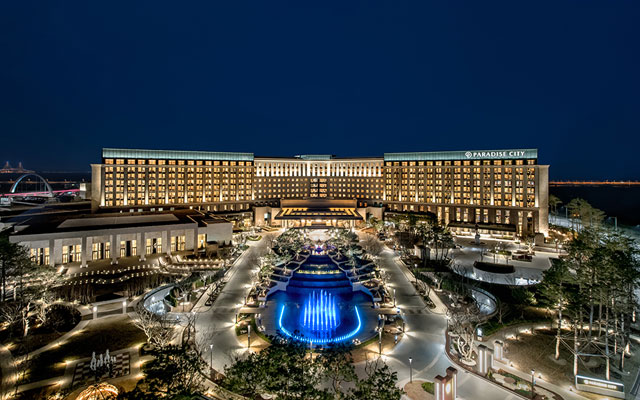
Paradise City among a number of luxury hotels in South Korea eyeing newlyweds seeking domestic getaways

Elsewhere in Incheon, Paradise City has launched the Honeymoon Flight package, with two options: Economy Choice and Prestige Choice. Guests can enjoy amenities like club lounges, swimming pools, saunas as well as an in-room private dining experience that prioritises safety.

Since March, the Haevichi Hotel & Resort in Jeju Island has been offering the Romantic Honeymoon package for couples. Perks include an executive room with an ocean view that comes with a complimentary whipped cream cake and sparkling wine. Couples can also enjoy an outdoor swimming pool as well as the option of golfing in Jeju’s famous golf courses.

Efforts to attract newlyweds are made not only at hotels, but at travel agencies too. DMC Palm Tour has been hosting customised one-on-one consultations with couples who have troubles planning their honeymoons due to uncertainties related to the pandemic.

“We recommend our clients airlines that offer early bird discounts as well as a full refund in the event of unexpected occasions like entry bans. They will also be guaranteed a full refund if they cancel 48 hours before check-in,” said its CEO Kwon Il-ho.

Palm Tour offers discounts for advance honeymoon bookings: Kwon

He added: “Not only do we offer discounts for those who reserve in advance for their honeymoon in the spring of 2021, but we have a system in place to guarantee a full refund if they were to cancel hotel resorts located in Hawaii, the Maldives and Mauritius as well.”

Popular overseas honeymoon destinations like Bali and the Maldives were closed due to the virus, but they are slowly opening up, propping up expectations for new business opportunities come next year. Guam said it will lift quarantine procedures for South Koreans from July 1.

Brisbane Airport’s new runway ready for take off

0

To commemorate the opening of Brisbane’s new runway, Brisbane Airport Corporation (BAC) is creating a time capsule for future generations to look back on.

15 years in the making, Brisbane Airport’s new runway is a key milestone in propelling the city to new heights as an aviation hub and to facilitate recovery for both the city and state from the global pandemic.

Brisbane Airport celebrates new runway with time capsule

With the cancellation of events planned for the runway’s opening due to Covid-19, BAC is inviting community members to contribute symbolic items for inclusion, creating a snapshot of 2020 for the unveiling in 50 years’ time – the same length of time the runway has been in the plans to be built.

The time capsule, to be opened in 2070, will be sealed during the official ribbon-cutting opening ceremony for Brisbane’s new runway on July 12, 2020. The sealed capsule will be housed in the Kingsford Smith Memorial at Brisbane Airport.