The global travel and tourism sector suffered a loss of almost US$4.5 trillion in 2020 due to the impact of Covid-19, revealed WTTC research.
The tourism body’s annual Economic Impact Report (EIR) showed the sector’s contribution to GDP dropped a staggering 49.1 per cent. In comparison, the overall global economy dropped by just 3.7 per cent last year.
Tourism sector’s contribution to GDP plunged 49.1 per cent in 2020; lone female tourist strolling along an empty street in Old Town Dubai in December 2020 pictured
Vast losses run up during 2020 paint the first full picture of a sector struggling to survive in the face of crippling travel restrictions and quarantines, which continue to threaten the recovery of the world economy.
Altogether, the sector’s contribution to global GDP plummeted to US$4.7 trillion in 2020 (5.5 per cent of the global economy), from nearly US$9.2 trillion the previous year (10.4 per cent).
In 2019, when global travel and tourism was thriving and generating one in four of all new jobs around the world, the sector contributed 10.6 per cent (334 million) jobs globally.
However last year, as the pandemic ripped through the heart of travel and tourism, more than 62 million jobs were lost, representing a drop of 18.5 per cent, leaving just 272 million employed across the industry globally.
These jobs losses were felt across the entire ecosystem of travel and tourism, with SMEs, which make up 80 per cent of all businesses in the sector, particularly affected. Furthermore, as one of the world’s most diverse sectors, the impact on women, youth and minorities was significant.
However, the threat persists as many of these jobs are currently supported by government retention schemes and reduced hours, which without a full recovery of travel and tourism could be lost, said WTTC.
The global tourism body fears governments cannot continue to prop up threatened jobs indefinitely and must instead turn to the sector to help its recovery, so it can power the global economic revival by saving businesses and creating much needed new jobs and saving the millions of livelihoods that depend on the sector.
The report also revealed a shocking loss in international travel spending, which was down 69.4 per cent on the previous year. Domestic travel spending fell by 45 per cent, a lower decline due to some internal travel in a number of countries.
Gloria Guevara, WTTC president & CEO, said: “With the sector’s contribution to GDP plunging by almost half, it’s more important than ever that travel and tourism is given the support needed so it can help power the economic recovery, which will be instrumental in enabling the world to revive from the effects of the pandemic.”
While 2020 and the winter of 2021 have been ruinous for travel and tourism, with millions around the world in lockdown, WTTC research showed that if international mobility and travel is resumed by June this year, it will significantly boost global and country level GDPs – and jobs.
According to the research, the sector’s contribution to global GDP could rise sharply this year, up 48.5 per cent year-on-year. The research also showed that its contribution could almost reach the same levels of 2019 in 2022, with a further year-on-year rise of 25.3 per cent.
WTTC also predicted that if the global vaccine rollout continues at pace, and travel restrictions are relaxed just before the busy summer season, the 62 million jobs lost in 2020 could return by 2022.
Move over, sustainable travel. The pandemic has birthed a call for a model of tourism that builds back better by going one step further than the motto of reaching net-zero. Regenerative tourism, the latest buzzword to enter the green scene, calls for a paradigm shift long overdue. Seen as a leap forward from simply developing tourism sustainably, regenerative tourism encourages travellers to leave a place better than they found it.
“Regenerative tourism gives back more than it takes. It should create measurable beneficial impacts for local community and ecosystems,” explained Jeffery Smith, vice president of sustainability for Six Senses Hotels Resorts Spa.
An experience at Elephant Conservation Center in Laos are among responsible products identified by Asian Trails, as part of its enhanced focus on regenerative tourism
“The goal of sustainability is to minimise negative impacts in these areas to the point where that business is able to survive. Regenerative tourism seeks to maximise the positive impacts; it should thrive.”
As tourism slowly emerges from the shackles of Covid-19, more stakeholders are sounding the call for the industry to build back better. Last June, six NGOs including the Centre for Responsible Travel and Sustainable Travel International united as the Future of Tourism Coalition with the goal of placing destination needs at the centre of tourism’s new future.
Twenty-two industry stakeholders, including tour operators like G Adventures and The Travel Corporation, NTOs such as the Jordan Tourism Board, and NGOs like the World Wildlife Fund, have committed to the coalition’s 13 guiding principles. These include choosing quality over quantity, demanding fair income distribution, mitigating climate impacts, closing the loop on resources, and operating business responsibly.
Booking agency Regenerative Travel released a white paper in December 2020 exploring how travel and hospitality stakeholders can employ regenerative principles to benefit both their surrounding areas and the local communities, without causing further damage. Included are case studies from hotels like Six Senses and Gal Oya Lodge in Sri Lanka which may have been practicing regeneration, without explicitly using that terminology.
Five regenerative principles are detailed in the paper, including whole systems thinking which considers all stakeholders in every decision, as well as the ripple effect those choices have on both animate and inanimate systems; honouring sense of place which entails adopting a holistic understanding of places; as well as community inclusion and partnership.
Tree-planting initiatives are offered to junior guests at Six Senses Yao Noi
Ramping up the regeneration focus
Some Asia-Pacific tourism stakeholders, long focused on a regenerative model, are making strides in progressing such efforts.
One such player is Asian Trails, which has always held regeneration close to its heart, but had tagged such actions as “responsible tourism” and “sustainable tourism”, shared its group sustainability coordinator, Ameer Virani.
“The move towards talking about regeneration came as a result of the launch of the regenerative travel movement in mid-2020 and growing awareness of the term and what it means. This helps us communicate more accurately what we are trying to do,” he added.
With a greater focus on regeneration, in July 2020, Asian Trails embarked on a rigorous evaluation process of all its day excursions, multi-day tours and animal experiences to identify its most responsible products, shared Virani.
Among other criteria, its evaluation guidelines consider direct support to small and social businesses, eco-friendly accommodation and transport, supporting community-based tourism, and financial or in-kind contributions to social or environmental causes.
Virani said these guidelines will also help its staff develop more regenerative products in future. “Our process is, of course, not an exact science but we really want to highlight those products that we believe have net positive outcomes on local people and places,” he added.
As well, the company launched a refillable water bottle initiative in early 2020, which has yet to be fully implemented due to the pandemic.
Virani explained that with the initiative, beyond the aim of reducing the use of single-use plastic bottles – an instance of sustainability – the company intends to also regenerate by donating US$1 from the sale of each refillable water bottle to a local drinking water or plastic reduction project to ensure wider community and environmental benefits.
Another DMC that also leveraged the pandemic pause to rethink its priorities is Discova. “We needed to reflect on the impact tourism has on our communities and the environment. This has allowed us to take things one step further than a mere sustainable tourism model, focusing instead on a regenerative model,” said Eileen Yee, regional general manager – Cambodia, Japan, Myanmar, Singapore and Education Travel, Discova.
In line with that new vision, Discova has undertaken a reforestation programme in Siem Reap to help regenerate the local environment, and started working with communities in Bali to grow organic vegetables, diversifying their crops in a mutually beneficial way.
Going down the regenerative route too is Six Senses, which has committed funding outside hotel operations designed to give back at the local level, on projects with clear objectives for local communities and ecosystems, shared Smith.
For instance, the group has installed free filters for local communities at Six Senses Yao Noi in Thailand, providing more than 105,000 people with access to clean drinking water.
Six Senses involves guests in its regenerative programming, said Smith. Since 2019, guests at Six Senses Con Dao in Vietnam has helped release endangered sea turtle hatchlings out to sea on the resort’s very own beach, via partnership with the national park.
As well, all Six Senses have an Earth Lab dedicated to schooling guests on its sustainability efforts through free workshops to learn tips like plastic reduction at home, crafty upcycling, and gardening. Guests also enjoy complimentary visits with community partner organisations and scientists to learn about regeneration projects outside the hotel.
Last August, Six Senses Yao Noi launched the Junior Eco Warrior programme for young guests to contribute in the preservation and regeneration of the island’s flora and fauna. Ways they can do so include sowing seeds, picking trash on the beach and DIY-ing them into treasure, as well as building nests from recycled timber for the resort’s resident hornbills.
A regenerative recovery
A post-vaccine return to travel has been predicted to be one that is greener and less crowded, driven by a new breed of more socially conscious travellers. Tourism stakeholders who invest in regenerative principles, therefore, are projected to gain favour with travellers who will be searching for more meaningful and purpose-driven experiences.
“The pandemic has led many to rethink, reflect on life, and contemplate the impact that we have on the things around us. This may mean that travellers will want to derive more from a holiday than just lazing on the beach and having fun,” said Yee.
“Thus, we believe purpose-driven experiences will gain a broader audience and become a bigger market for us – and regenerative tourism will be a way to satisfy this market.”
Having always placed sustainability at its core agenda, Discova intends to build on that firm foundation to further its green credentials. “Post-Covid, we will make available tour products that offer travellers more than just sightseeing, with rewarding experiences that give back to the communities, help the communities to grow, and hopefully, serve to regenerate their homes,” said Yee.
As tourism players ready for the rebound, Smith warned that those who lag behind the regenerative curve may ultimately find themselves on the losing end.
“Those (businesses) which do not responsibly mitigate negative impacts risk falling behind, and especially if – or when – the shift comes from inbound operators and OTAs. Similar to the abrupt shift we saw with elephant tourism in Thailand, some businesses may suddenly be left in the cold,” he said.
“The benefits for tourism players that shift to a regenerative model include reduced risk in the marketplace as well as increased support from local stakeholders and more reliable supply chains.”
Regenerative travel is a long-term endeavour, and once established, should reduce strategic risks, added Smith. “It is much easier to open a business that ignores externalities like public health or wildlife habitat, however, once those are eroded, that business will struggle to survive,” he said. “Going beyond risks, regenerative travel adds value to any tourism product through the fantastic authentic experiences it creates.”
As to how more tourism businesses can be encouraged to adopt regenerative practices, Virani said: “Consumers will be able to drive the regenerative travel trend, along with local governments who will hopefully play a more active and effective role in destination management in the future. A limited number of businesses will set the trend, but others will only follow if consumers and those managing destinations drive them in the right direction.”
He concluded: “Regenerative tourism is a no-brainer. It is in the best interests of our destinations and, as a result, our bottomline. Simply being sustainable is no longer good enough and never should have been considered that way.”
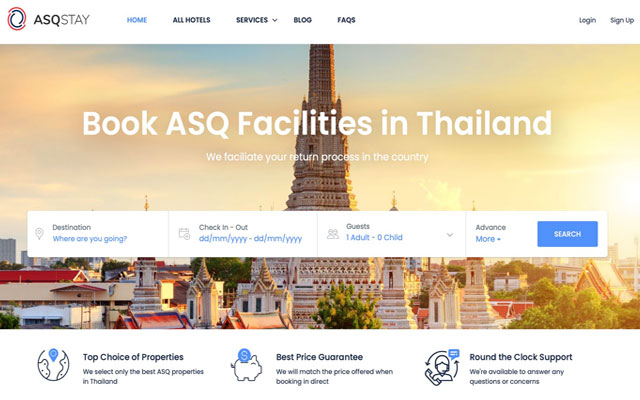
A new platform has been launched to help travellers book their alternative state quarantine (ASQ) stays in Thailand, uniting the country’s quarantine hotels on one platform.
Following its soft launch in December 2020 with 15 hotels, ASQ Stay presently has over 50 hotels on its site and has serviced over 200 travellers.
According to founder David Zilber, who comes from a travel start-up background, the idea was born when he was researching hotels to quarantine for himself on his way from France to Thailand.
“I looked up the process of getting into Thailand during Covid and the resources available to book a quarantine hotel. I felt the solutions existing in the market were not very elaborate. I had to call (the hotels) up one by one; there was no customer service and nobody to help in the process,” he explained.
After browsing Facebook groups and checking the feedback of other travellers to Thailand, he found many other confused travellers sharing similar experiences. “There were so many things they had to research themselves. Hotels were also new to the process so they didn’t really have the service or the teams. Hence, I felt there was a gap for a company to help you out – (a cross) between a concierge service and booking platform,” he shared.
On ASQ Stay, each hotel listing details what is included in each package. Travellers can also opt to rent or buy add-ons, such as treadmills, dumbbells and coffee machines, to enhance their quarantine experience.
“It’s really a one-stop shop to all the services; where we stand out is not just the booking process, but the customer support. Sometimes, clients have already checked into the hotel, and they’re not happy with the food. We’ve tried to fix that, for example, by having the hotel provide a microwave in the room,” Zilber elaborated.
ASQ Stay’s prices are the same as booking direct. “We receive a commission from the hotel, so we don’t have to upsell the room,” said Zilber.
He added that the platform is a pop-up product in response to the pandemic, but with more and more customer bookings everyday, ASQ Stay sees further potential in the market and is currently looking to expand to other destinations. “Now, we’re looking at Hong Kong as another destination to launch the platform, as a three-week quarantine is required (for incoming foreign travellers) and there is nothing similar (on the market),” Zilber concluded.
Domestic air travel in India has bounced back to 84 per cent of 2019 levels, while air bubble pacts have spurred the restoration of international seat capacity into the South Asian country, according to a ForwardKeys study.
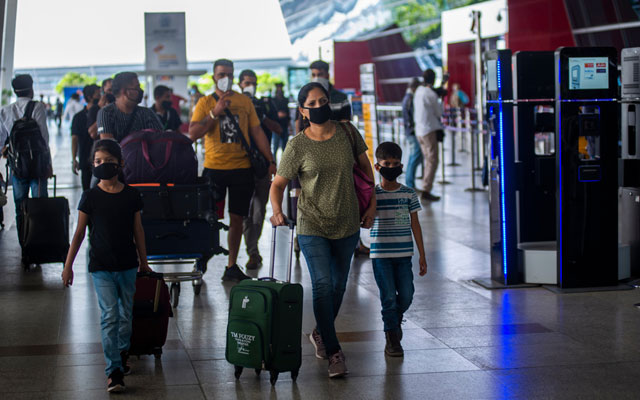
Domestic air travel recovery in India has been bumpy, since domestic flights resumed in May 2020; passengers at departure terminal of Delhi Airport in New Delhi, India pictured
Following the Indian government’s announcement that domestic flight operations could resume from May 25, 2020 through a calibrated approach, ForwardKeys’ air ticketing data reveals that domestic air travel has started, although the path to recovery has been bumpy.
The upward trajectory was disrupted from mid-June to mid-July, but quickly regained steam thereafter. In the first week of March 2021, domestic passengers had bounced back to 84 per cent of 2019 levels. Back in the lowest month of April 2020, domestic passengers were at 14 per cent of 2019 levels.
International commercial passenger flights have been suspended for over a year now – since March 23, 2020 when the national lockdown restrictions were imposed.
From Q3 last year, India began setting up air bubble agreements with various countries. Since October 22, 2020, it started permitting foreigners to enter India on all visas, except for tourist visas. As of March, India has formed travel bubble arrangements with 27 countries.
Spurred by India’s incremental expansion of air bubbles over the past eight months, international air travel seat capacity into India has clawed back steadily, from 10 per cent of the pre-pandemic level in June 2020 (June 2020 vs June 2019) to 34 per cent in February 2021 (February 2021 vs February 2020).
However, with leisure visas still under suspension and Covid-19 uncertainties looming like many other parts of the world, visitor arrivals into India remain expectedly low, with visitor arrivals recording 14 per cent of the pre-pandemic level in June 2020 (June 2020 vs June 2019) and 28 per cent in February 2021 (February 2021 vs February 2020).
Since June 2020, taking the lead from India’s air bubble developments and eyeing the leisure travel comeback in one of the biggest inbound tourism countries, airlines have been cautiously restoring international seat capacity into India and repositioning themselves to secure a head-start.
The upward trajectory in seat capacity has been sharper than the clawback in visitor arrivals. In the first two months of 2021, international seat capacity into India recorded 33 per cent of 2019 levels, while visitor arrivals lagged at just 26 per cent of 2019 levels.
The source markets mix has shifted for Destination India due to the pandemic. “Leading the preliminary recovery is the US (76 per cent of 2019 levels), followed by Canada (47 per cent), the UK (17 per cent), Europe excluding the UK (11 per cent), Australia and New Zealand (two per cent),” said Jameson Wong, APAC director at ForwardKeys.
Comparing April to September 2021 against the same six months in 2019, a significant shift in source markets is evident.
“The US, which used to account for 31 per cent of actual air tickets into India pre-Covid from April to September 2019, has doubled, up by 60 per cent for the next six months. Canada, which used to account for six per cent, now has grown to 10 per cent. Is India ready to welcome North American travellers?” asked Wong.
The UK, a traditional source market which used to constitute a sizeable 13 per cent, has shrunk by more than half to only six per cent. Europe, excluding the UK, has slid from 16 per cent to 12 per cent. Australia and New Zealand, combined, has dropped drastically from six per cent to one per cent.
Though not yet reflective of the true estimate of the leisure travel rebound as India still has leisure visas under suspension, such early signs of pandemic shifts in the traveller source markets to Destination India indicates the need for a change in planning and, exciting, new business opportunities, top-down. From government level to operator level.
Malaysia Airlines (MAS) passengers can now fly with the airline to new destinations across the globe through its codeshare partners, namely Qatar Airways, Turkish Airlines, Emirates Airline, and British Airways, when they book a holiday package with its tour operating arm MHholidays.
Launched on March 17, the codeshare services are marketed as MAS flights, and allows the airline’s passengers to choose from over 100 additional destinations worldwide beyond its network.
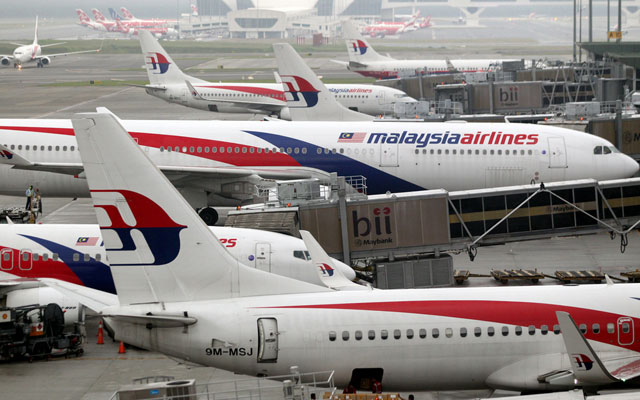
MHholidays offers more choice to customers whose holiday plans extend beyond Malaysia Airlines’ network
Holidaymakers can book their travel packages with a wide selection of hotels and flight tickets within a single platform in MHholidays. Business travellers can also grab lucrative packages of flight tickets and hotel stays, including ground transfers, when they book from the platform.
Additionally, MHholidays has also recently launched Trip and Tours, offering customers the option to personalise their travel with a selection of over 40,000 travel experiences worldwide. These include trips, concerts, attractions, museums, and excursions across 1,000 international and domestic cities within and beyond the airline’s network.
The Indian government has extended the ban on international commercial passenger services to and from India until April 30.
The Directorate General of Civil Aviation (DGCA) said in a circular on Tuesday that the restriction does not apply to international all-cargo operations and flights specifically approved by DGCA.
India has suspended international commercial passenger flights since March 23, 2020, due to the pandemic
It also added that international scheduled flights may be allowed on selected routes by the competent authority on a case-to-case basis.
The ban on overseas flights was initially slated to end on March 31, after a twelve-month gap.
Flights under the bilateral air bubble arrangements with select countries will continue to operate. Currently, India has air bubble agreements with about 27 countries, including Canada, Ethiopia, France, Germany, Iraq, Japan, Kenya, Kuwait, the Maldives, Nepal, the UAE, the UK, and the US.
Sydney Airport has inked a five-year contract with SITA for the provision of common-use services which will enable the implementation of a low-touch passenger journey, an improved baggage experience, and significant operational efficiency benefits for the airport.
Launched on March 1, the solutions are deployed at both Terminal 1 (international) and Terminal 2 (domestic). They comprise SITA BagMessage, which eliminates the need for multiple baggage system interfaces between airlines and airports; as well as SITA Flex, a common-use platform that enables replacement of current traditional common-use touchpoints such as check-in, gate boarding, and service desks.
Sydney Airport deploys SITA Flex and SITA BagMessage to enable a smarter passenger experience
The latter also builds on existing infrastructures – such as on-site and off-site bag drops and kiosks – which can be re-used and repurposed as required, offering efficiency benefits in a time of economic uncertainty.
Sumesh Patel, SITA’s president of APAC, said: “We understand the harsh impact of Covid-19 on airports globally and we’ve adapted our solutions to deliver airport operations that are resilient, agile, and highly cost-efficient.
“SITA’s goal is to provide best-in-class technology solutions and to help Sydney Airport reshape its value proposition to all its stakeholders. A key element is to ensure maximum use of existing assets and technology infrastructure.”
Sydney Airport’s vision for development had been laid out in its 2039 Master Plan, and the core tenets of this plan mirrored SITA’s mission and technology roadmap. Enhancing the passenger experience, increasing efficiency, focusing on safety and security, and driving productivity were shared focal points.
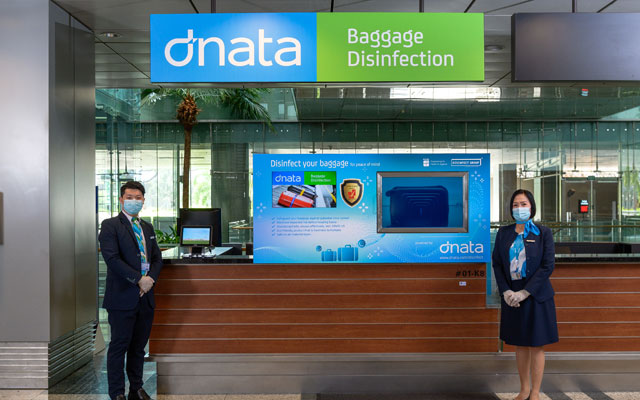
Singapore Changi Airport has unveiled a new baggage disinfection service for passengers arriving at Terminal 3, in its latest move to enhance the safety of travellers and restore confidence in air travel post-Covid.
Developed by dnata, in partnership with the Disinfect Group and Ecas4 Australia, the service allows passengers to have their baggage quickly and safely disinfected before leaving the airport. Disinfect Group’s equipment is “100 per cent natural, non-toxic, bio-degradable and can effectively kill over 99.99 per cent of bacteria and pathogens, such as coronavirus, on all types of baggage,” according to a press release by dnata.
dnata’s new baggage disinfection service now available for passengers at Changi Airport’s Terminal 3
The mist technology uses Ecas4 Australia’s electrolysed water that consists of salt and water, which are activated with an electrical process; and is “proven to be significantly more effective than bleach without the hazards of irritation to the skin, eyes, and respiratory systems”.
dnata said that the technology has been independently tested in private laboratories in Australia, the European Union, the UK and the US, and deemed completely safe for adults and children with approvals as a hospital grade disinfectant.
Services fees start from S$5 (US$3.71) per bag as an introductory price.
Plans are underway to roll out the service at other terminals and additional airports across the Asia-Pacific region in the second half of 2021.
It is vital private sector players step up their game to coordinate unified tourism recovery across the Greater Mekong Subregion (GMS) countries in the wake of change at Mekong Tourism Coordinating Office (MTCO), say regional stakeholders.
Earlier this month, Jens Thraenhart, MTCO’s longest serving executive director, handed in his resignation, citing “personal values” as the reason for leaving his seven-year tenure.
Coordination needed among GMS governments, private stakeholders to promote region post-pandemic
He said: “It’s about standing up for my values and doing what I believe in. This office was formed to develop collaborative sustainable tourism across the Mekong region and we have created a very unique and powerful private-public partnership that does that. But in the current situation, it’s difficult.”
Thraenhart will continue his service during his 90-day notice period.
A special MTCO board meeting of GMS member governments will be held in April, where the six tourism ministries will decide how to move forward.
In the interim, regional tourism stakeholders say now is the time for the industry to unite and strengthen the innovative framework Thraenhart has created through MTCO; the secretariat of GMS Tourism Working Group of the six governments; and Destination Mekong, a DMO driven by the private sector; to move forward.
Willem Niemeijer, CEO of YAANA Ventures, noted: “MTCO is a powerful regional lobby and countries need to all come together as one. Stakeholders now have the chance to be part of the building back in tourism recovery. Post-Covid, regional tourism is going to be very important and discussions need to be had.”
Nick Ray, product director at Hanuman Travel, agreed, adding: “The challenge is that each country is working unilaterally. As we begin to reopen, there needs to be coordination and forward-looking countries really need to work together to promote the region.”
He added that while MTCO is driven by GMS governments, it is vital the private sector remains involved in decision-making. “It’s important that Destination Mekong carries on in tandem with MTCO – and the private sector needs to make that happen.”
Geoffrey Lipman, former WTTC president and president of International Coalition of Tourism Partners, said the region’s industry needs to seize this opportunity to strengthen.
“There is now the chance for the organisation to evolve and become much more of a public-private economy. The right components have been put in place by MTCO over the past few years, now, the private sector needs to get engaged to make Destination Mekong a sustainable regional DMO. Often, the private sector better understands the digital and travel world than governments, and they need to work together.”
Destination Mekong is also the driving force behind a series of initiatives, including award-winning Mekong Moments and Mekong Mini Movie Festival, Mekong Innovations in Sustainable Tourism (MIST), and Experience Mekong Collection and Showcases.
Thraenhart expects the majority to continue, with a tourism recovery campaign in development and a virtual internship platform slated to launch in the next few months.
With the military coup currently taking place in Myanmar, this has raised questions over how this will impact MTCO’s work promoting the region. Niemeijer said that while political distractions create a “challenge”, it is important to keep conversations flowing.
He added: “Tourism needs to remain on the table as a way to keep the international and regional community involved in Myanmar as a destination and not put it in isolation. I see this as difficult, but an opportunity for MTCO to keep Myanmar engaged.”
Malaysia Tourism Council (MTC) is taking the lead to encourage all tourism associations to develop new products and promote off-the-beaten-path destinations in Malaysia, in order to appeal to the domestic crowd.
It recently trained the local community at Lenggong Valley, a UNESCO certified site in Perak, to become product operators and tailor their services for the domestic market, while international borders remain closed.
Malaysia Tourism Council keen to market Lenggong Valley to domestic travellers
MTC president, Uzaidi Udanis, shared: “It is important for the local community to benefit from tourism. Lenggong Valley has received UNESCO status since 2012, but not many Malaysians have been there as it is not well-promoted.”
Since the government allowed domestic tours to resume earlier this month – with travel limited to between recovery movement control order (RMCO) states, and via government-registered tour agencies – Uzaidi said MTC’s first project is to organise a technical visit for travel agents to Lenggong Valley early next month.
The purpose of the two-day, one-night visit is to connect travel agents with local operators and community leaders so they can network and explore business opportunities.
Uzaidi said: “In the pre-Covid period, many small operators in Malaysia did not develop their own tour products, but instead relied on selling tours developed by big wholesalers in Malaysia (that were designed) for the foreign inbound market.
“We are encouraging these smaller players to develop their own tourism products for the domestic market, (which can be marketed to) international inbound tourists when the border reopens.”
MTC also plans to host technical visits for agents to Pulau Tuba in Langkawi and the islands off Johor in June; as well as promote eco-tourism and community-based tourism in these destinations, in line with the National Tourism Masterplan.
Said Uzaidi: “In these challenging times, agents can no longer survive by selling dry rooms only as they will be competing directly with hotels.”















Domestic air travel in India has bounced back to 84 per cent of 2019 levels, while air bubble pacts have spurred the restoration of international seat capacity into the South Asian country, according to a ForwardKeys study.
Following the Indian government’s announcement that domestic flight operations could resume from May 25, 2020 through a calibrated approach, ForwardKeys’ air ticketing data reveals that domestic air travel has started, although the path to recovery has been bumpy.
The upward trajectory was disrupted from mid-June to mid-July, but quickly regained steam thereafter. In the first week of March 2021, domestic passengers had bounced back to 84 per cent of 2019 levels. Back in the lowest month of April 2020, domestic passengers were at 14 per cent of 2019 levels.
International commercial passenger flights have been suspended for over a year now – since March 23, 2020 when the national lockdown restrictions were imposed.
From Q3 last year, India began setting up air bubble agreements with various countries. Since October 22, 2020, it started permitting foreigners to enter India on all visas, except for tourist visas. As of March, India has formed travel bubble arrangements with 27 countries.
Spurred by India’s incremental expansion of air bubbles over the past eight months, international air travel seat capacity into India has clawed back steadily, from 10 per cent of the pre-pandemic level in June 2020 (June 2020 vs June 2019) to 34 per cent in February 2021 (February 2021 vs February 2020).
However, with leisure visas still under suspension and Covid-19 uncertainties looming like many other parts of the world, visitor arrivals into India remain expectedly low, with visitor arrivals recording 14 per cent of the pre-pandemic level in June 2020 (June 2020 vs June 2019) and 28 per cent in February 2021 (February 2021 vs February 2020).
Since June 2020, taking the lead from India’s air bubble developments and eyeing the leisure travel comeback in one of the biggest inbound tourism countries, airlines have been cautiously restoring international seat capacity into India and repositioning themselves to secure a head-start.
The upward trajectory in seat capacity has been sharper than the clawback in visitor arrivals. In the first two months of 2021, international seat capacity into India recorded 33 per cent of 2019 levels, while visitor arrivals lagged at just 26 per cent of 2019 levels.
The source markets mix has shifted for Destination India due to the pandemic. “Leading the preliminary recovery is the US (76 per cent of 2019 levels), followed by Canada (47 per cent), the UK (17 per cent), Europe excluding the UK (11 per cent), Australia and New Zealand (two per cent),” said Jameson Wong, APAC director at ForwardKeys.
Comparing April to September 2021 against the same six months in 2019, a significant shift in source markets is evident.
“The US, which used to account for 31 per cent of actual air tickets into India pre-Covid from April to September 2019, has doubled, up by 60 per cent for the next six months. Canada, which used to account for six per cent, now has grown to 10 per cent. Is India ready to welcome North American travellers?” asked Wong.
The UK, a traditional source market which used to constitute a sizeable 13 per cent, has shrunk by more than half to only six per cent. Europe, excluding the UK, has slid from 16 per cent to 12 per cent. Australia and New Zealand, combined, has dropped drastically from six per cent to one per cent.
Though not yet reflective of the true estimate of the leisure travel rebound as India still has leisure visas under suspension, such early signs of pandemic shifts in the traveller source markets to Destination India indicates the need for a change in planning and, exciting, new business opportunities, top-down. From government level to operator level.