TTG Asia
Asia/Singapore Sunday, 8th February 2026
Page 932

Enchanted Princess joins Princess Cruises fleet

0

The newly completed Enchanted Princess has been delivered to Princess Cruises in an official handover ceremony live-streamed from the Fincantieri shipyard in Monfalcone, Italy.

The ceremony was virtually attended by executives from Carnival Corporation including chairman of the board Micky Arison, president and CEO Arnold Donald; Stein Kruse, group CEO of Princess Cruises, Holland America Line, Seabourn, Carnival Australia and Carnival UK; and Jan Swartz, group president of Princess Cruises and Carnival Australia. Fincantieri was represented by CEO Giuseppe Bono.

Enchanted Princess crew at the official handover ceremony of the cruise ship to Princess Cruises

The 145,000-ton, 3,660-guest ship is the 100th cruise ship built by Italian shipbuilder Fincantieri, and its finalisation marks the first ship to be completed during the time of Covid.

Enchanted Princess will introduce new dining experiences, the most pools and whirlpool hot tubs ever, entertainment venues, and the Sky Suites, offering expansive views from the largest balconies at sea.

Enchanted Princess is scheduled to arrive in North America in December 2020, for a season of Caribbean cruises.

For the true costs of Thailand’s 2020 tourism retraction, look beyond the tourism sector

0

In the past decade, the Asia-Pacific region established itself as the world’s largest, fastest-growing, and most diverse tourism market. In Thailand, the tourism sector supported almost 20 per cent of national GDP in 2019, and one in five jobs, according to the WTTC.

This year, of course, the tourism sector has come to face with its biggest-ever challenge – the coronavirus.

In Oxford Economics’ latest projections for the travel and tourism sector in Thailand, we expect the volume of international visitor arrivals to fall by more than half in 2020, compared with last year. In our central scenario, we do not see tourism spending recovering to 2019 levels until 2024. That means a 4.8 trillion baht loss of visitor spending in Thailand’s economy compared with our pre-pandemic outlook.

For tourism providers in Thailand and across Asia-Pacific, this is a devastating blow. Our modelling identifies 40 million “jobs at risk” in the wider Asia-Pacific tourism sector. For workers and business owners in this sector, a return of tourism expenditure could not come soon enough. What is increasingly clear is that the rebuilding of the travel and tourism sector will be essential for the wider economic recovery of the region.

Airbnb’s role in Thailand, as part of the wider short-term rental sector, provides a useful example of how tourism spending manifests itself broadly around the economy. We recently worked with Airbnb to estimate its total economic impact across 13 Asia-Pacific countries in the five years preceding the coronavirus travel disruption. This included detailed modelling of the direct economic impacts of the spending Airbnb facilitates, and the indirect economic impacts it creates through supply chain effects and wage expenditure.

A little more than one third of Airbnb’s total economic footprint in Thailand (worth around 44 billion baht in 2019) can be attributed to this “direct impact” – that’s the value added by businesses and workers in the first line of tourism activity: the bars and restaurants, retailers, and taxi drivers. The remainder is generated by the “indirect” value added along the supply chains of these tourism providers, and from the wage expenditure of those workers earning incomes from it. And these wider impacts fall widely across sectors and are spread widely across states and regions.

In Thailand, only one quarter of Airbnb’s economic impact falls in Bangkok (Airbnb’s biggest local market in Asia-Pacific). The lion’s share is distributed around second-tier and smaller tourism destinations, including those with no tourism footfall to speak of at all.

Similarly, the decline in tourism has not only been felt by the unfortunate staff and operators of those frontline tourism providers, but also in the transport, retail, manufacturing, and agricultural jobs that service this tourism demand indirectly.

As our study for Airbnb highlights, there are more than 925,000 workers in Asia-Pacific whose employment was supported by Airbnb-related tourism alone in 2019. More than half of these workers benefited through indirect impacts. They might not make the connection themselves, but their employment and prosperity are tied in part to the recovery and trajectory of the tourism sector.

So, how can a recovery in travel and tourism be accelerated? When producing our forecasts, we tend to closely observe three core obstacles: physical travel restrictions, depressed economic conditions, and lasting impact the coronavirus will leave on traveller confidence.

It is increasingly clear that the early revival of short-haul and domestic travel along safe and trusted, low-risk travel corridors will be key to recovery, before a broader normalisation of tourism flows can be established in the years to come.

In many ways, platforms like Airbnb are well placed to help accelerate Asia-Pacific’s tourism recovery. There are five reasons why:

  1. Facilitating and inspiring domestic trips: As households look to substitute longhaul for short-haul and international for domestic trips, platforms like Airbnb can help connect that demand with new and unique alternatives.
  2. Supporting a youth-led recovery: The coronavirus has disproportionately affected older travellers in terms of health impacts and the willingness to travel. Young people will be critical to tourism’s recovery, particularly in the early stages, and the majority of Airbnb’s users are aged under 30.
  3. Helping to rebuild international travel as an export sector: Airbnb’s community model helps sustain traveller interest through the restricted travel period, and therefore, smooth and catalyse their return to the market once conditions normalise.
  4. Leveraging analytics to adapt to a changing landscape: With such a rapidly shifting landscape, agility in the current market is key. Hosts and travellers will benefit from the platform’s ability to respond quickly to the shifting trends and preferences.
  5. Finally, agility and flexibility in supply: Early signs of travel recovery have indicated a shift in demand for travel destinations, compared with the pre-coronavirus norms. Anchoring accommodation supply too heavily to pre-coronavirus tourism infrastructure could therefore act as a drag on recovery. Airbnb’s agile and flexibly supply of hosts can help facilitate the return of tourism spending more swiftly, and the wide range of jobs and incomes it supports.

In a post-pandemic world, a full recovery of the tourism industry will likely take time. There have been some encouraging signs of recovery in short-haul and domestic trips, but industry players across the board will need to do their part to deliver the sector’s broader revival. Platforms like Airbnb can play a pivotal role in supporting these efforts and reintroducing the many gains of tourism to the Thai economy.

Nikko grows China footprint with fifth Jiangsu property

0

Tourism Australia lures international visitors with 8D audio escapes

0

Inter-district travel banned in Sabah as Covid cases spike

0

Onyx Hospitality hires new China head

0

Stringent rules for staycations in GCQ areas draw flak from Philippine hoteliers

0

Philippine hoteliers are baulking at the stringent staycation guidelines for properties located in metro Manila and other destinations under general community quarantine (GCQ), including restricting accommodations to four- and five-star hotels, limiting guests to those residing within the destination, and mandatory antigen testing for all guests.

Chroma Hospitality country manager, James Montenegro, questioned the point of subjecting every family member living in one household to antigen testing.

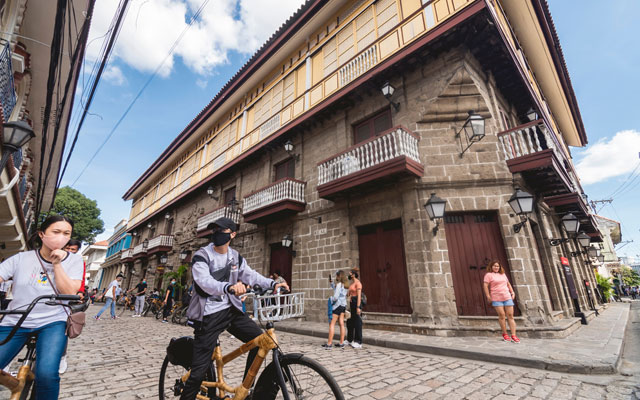
Hotels in GCQ areas, including metro Manila, are now allowed to resume staycations, but not without adhering to strict health protocols; Makati, a city in the Philippines’ metro Manila region, pictured

He also pointed out that while families are required to take antigen tests in GCQ hotels, masses are allowed to roam freely without Covid testing in malls, where the transmission risk is higher, especially on weekends when thousands throng the malls.

Montenegro said four- and five-star hotels have strict implementation of health and hygiene protocols that are similar to those in hospitals.

While he welcomed the authorities’ move to allow the resumption of staycations in GCQ areas, Montenegro also saw the need “to strike a balance” between public health measures and economic recovery, noting that hotels have been closed for at least six months now.

Cyndy Tan Jarabata, president of Tajara Leisure and Hospitality Group, and co-organiser of the Hotel Owners for Tomorrow, an action group made up of independent and MSME hotel owners and operators, agreed that certain staycation restrictions “don’t make sense to hotel owners, much less staycationers”.

Noting how families make up a key segment for the staycation market, she cited the example of how the costs of antigen tests for a family of four booking a staycation may amount to the same as the promotional room rate, deterring domestic travellers from taking staycations. Another problem, she added, is the limitation on the number of occupants, based on the room size.

“It’s too much hassle for a staycation in the city where we have been stuck since March. The domestic market would prefer to have some breathing space outside of the metro,” Jarabata explained.

As per other staycation requirements laid down by the Department of Tourism, all accommodation establishments in GCQ areas must also first secure a DoT Certificate of Authority to Operate for Staycations before accommodating any guests for a staycation. They are also required to have contactless booking and payment systems in place.

As well, the maximum number of guests allowed per room will be determined by the floor area – for example, a 49m2 room will be allowed to house a maximum of four guests. Accommodations which were previously used as quarantine or isolation facilities or had Covid-19 positive guests are also required to present a proof of sanitation and disinfection of their facilities.

New hotels: Mövenpick Resort Khao Yai, Capella Bangkok, and more

0

Snag a staycation with TTG’s 10.10 deals

0

Fairfield by Marriott steps up expansion in Japan

0