Greater understanding of the Covid-19 virus has allowed more airlines to establish sensible safe travel standards today, through partnerships with healthcare specialists, immigration authorities and government agencies.
However, communications between airlines and travellers are still fixated on pandemic-coping mechanisms and not enough attention is being paid to other critical travel aspects that have changed, such as traveller booking flexibility and service excellence.
In this new episode of TTG Conversations: Five Questions, we speak to Chetan Kapoor, co-Founder and chief strategy officer of Safe Travel Barometer.
Besides reviewing how airlines are delivering on safety promises amid a pandemic, Chetan also discusses how efforts have evolved with new information on the virus, airlines’ approach to health passports, and loopholes in Covid-19 testings and quarantine procedures that can weaken travel suppliers’ and immigration agencies’ attempts to limit infections.
Following the end of the government’s employment support scheme for the tourism industry last November, industry players have rallied together to create short-term job and business opportunities for travel agents and practitioners.
A proposal under the Job Creation Scheme put forth by 18 travel industry-related associations and unions, including the Travel Industry Council of Hong Kong (TIC) and the Hong Kong Hotels Association (HKHA), was accepted by the government recently.
Tour operators selling products at the inaugural travel fair organised by Hong Kong Japanese Operator Association
Last November, the government earmarked HK$6 billion (US$771.4 million) under the Anti-epidemic Fund to take forward the Job Creation Scheme, which is expected to create 30,000 temporary jobs in the public and private sectors over the next two years.
Under the scheme, tourism workers will be offered some 2,000 temporary jobs to assist in administrative tasks across 24 community vaccination centres (CVCs). The job openings target travel agents, hotel staff, tour guides/escorts, coach drivers and back office staff.
Currently, the government deploys manpower from various departments to run and manage operations at the CVCs, and the administrative support by the travel trade will allow for more flexible deployment of its manpower.
In order to conduct recruitments, a new company, the Tourism Industry CVC Administration Services, has been set up. The company will be granted a HK$2 million subsidy by the government.
According to convenor Michael Wu, the hiring process for the job openings started yesterday (April 7), and is expected to draw 7,000-8,000 applications.
So far, three job categories are waiting to be filled, namely, centre supervisors (46 vacancies with HK$40,000 monthly salary), assistant centre supervisors (92 vacancies with HK$30,000 monthly salary), and registration officers (1,600 vacancies with HK$1,300 daily salary). All appointees will undergo a short period of training and familiarisation before officially commencing work on May 1.
Each employment contract has a five-month term, with an estimated cost of HK$150 million for all 2,000 jobs combined.
Meanwhile, the first-ever mini travel mart to support the embattled tourism industry has been launched today (April 8) at a 650m2 event site in Kwun Tong. Jointly organised by Hong Kong Japanese Operator Association (HKTOA) and Inspire Hub, the four-day marketplace provides free booths for agents (15 booths) and practitioners (20 booths) to sell products.
HKTOA spokesman, Gianna Hsu, told TTG Asia the aim of the travel mart is to provide an avenue for the travel trade to earn some income during this challenging period. “As many practitioners have lost their jobs, we hope to drive more business opportunities for them. This mini-mart attracted more than 110 applications from the industry, and eventually, only 35 applicants were picked through a live lucky draw. It is estimated to draw around 1,000 visitors per day.”
Products on sale at the travel mart are mostly gourmet food sourced via the operator’s overseas networks. For instance, China Travel Service is showcasing a slew of premium tea brands and Japanese enzyme, while independent practitioners are selling everything from healthy dried fruit packets and soup packs to handmade jewelry and wellness products.
Admission tickets are available at HK$10 per person, while travel trade professionals enjoy free entry.
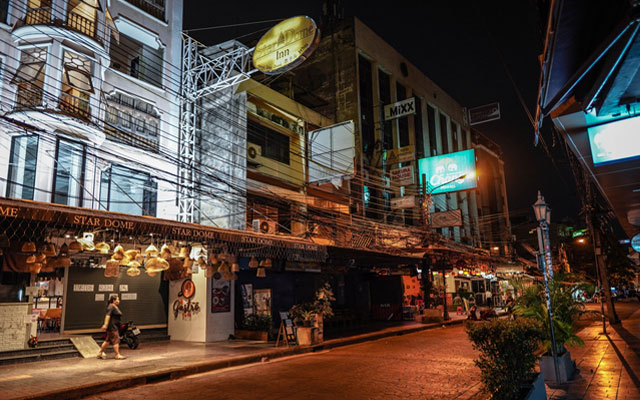
Thailand’s hotel and retail shares have plunged in the wake of a third Covid wave caused by the fast-spreading UK strain of the virus, which quickly spread from clusters of clubbers and partiers in Bangkok and Phuket.
Entertainment venues in 41 provinces have been ordered to shut down for the next two weeks starting today (April 9); while travel restrictions have also begun being implemented on a province-by-province basis.
All entertainment venues in 41 Thai provinces, including Bangkok, ordered closed from Friday
Some provinces like Nan, Khon Kaen and Chiang Mai now require those who come from red zones like Bangkok and its surrounding areas to undergo a 14-day quarantine. Meanwhile, Trang province requires visitors to present a negative Covid-19 test result prior to travel.
Others, like Samui, have been more lenient, saying only travellers from the three worst-hit districts of Bangkok need quarantine and that travellers from elsewhere will only be sent to the hospital if they show symptoms of being ill on arrival.
The Thai government has added additional days to this year’s Songkran holiday to stimulate domestic travel, but many travellers have either started to cancel their plans amid the uncertainty, or been forced to, given the new provincial travel restrictions.
The travel sector is divided over whether travel restrictions should be implemented ahead of Songkran.
Marisa Sukosol Nunbhakdi, president of the Thai Hotels Association, opined that inter-provincial travel should be permitted over the holidays, in order to catalyse the economy. She added that this year’s frequent stops and starts in domestic tourism prompts the need for a more proactive inoculation plan.
“We cannot stop operations every time a new cluster causes the government to impose strict restrictions. The most urgent need right now is a proactive strategy for the country’s public inoculation,” she told the Bangkok Post.
Meanwhile, domestic airlines like Thai Lion Air and Thai Air Asia (TAA) are urging travel restrictions. TAA shared that while their average load factor is 80-85 per cent over the beginning of the Songkran holidays, they would rather prioritise long-term benefits over short-term revenue. “There won’t be a third wave if the government can stop it earlier,” Tassapon Bijleveld, executive chairman of Asia Aviation, TAA’s largest shareholder, told the Bangkok Post.
The Centre for Covid-19 Situation Administration (CCSA) has the authority to issue a countrywide travel ban, but has not done so thus far. Last month, prime minister Prayut Chan-o-cha stated that Songkran travel is needed for the economy, but urged travellers to be vigilant and careful of infecting their vulnerable elderly relatives.
Privatisation of vaccines
Stephan Vanden Auweele, chief hospitality group officer at Asset World Corporation (AWC), shared that many in the private sector would happily support the government’s vaccination drive, and that the cost of vaccines is minute compared to the potential business impact and fallout that the industry will have to shoulder.
“At the end of the day, if we could buy (vaccines), we would – but we cannot (currently). If the vaccines do become available, we’d be happy to support the government and to help the country and the restart of tourism. I think the private sector could play a bigger role if (the government) would allow us to come in,” he stated.
He also said that the Federation of Thai Industries is currently lobbying very hard to see private vaccinations. “It’s about joining forces rather than competing with each other. We’re all here for the same thing, to help the country and the people, and obviously, to get the (tourism industry) back on track,” he added.
So far, AWC’s hotels have not seen a lot of cancellations. “There has been a little bit of impact so far, but not on a massive scale. We don’t know if (the cancellations) will come, because the governors of various provinces are still (in the midst of issuing) statements. If travel restrictions are confirmed, people will not go to those destinations,” he elaborated.
The UK Covid-19 strain is reportedly more virulent and more deadly. Local media reported today (April 9) that three inmates in a Bangkok prison have died from Covid-19. The CCSA also stated that it is considering asking people to work from home for the remainder of April.
The country is currently grappling with the shortage of hospital beds to accommodate Covid patients, with local media reporting that the military is planning to set up 10 more field hospitals, and that some private hospitals in Bangkok have stopped doing Covid-19 testing as they have run out of test kits and beds.
Indonesia will persist in its efforts to prepare for the reopening of Bali, Batam and Bintan to international travellers, despite the recent terrorist attacks that took place in Makassar, South Sulawesi and Jakarta.
On March 28, a suicide bombing took place at a Roman Catholic cathedral in Makassar which wounded at least 20 people. Three days later, a lone-wolf terrorist attempted to attack the national police headquarters in Jakarta. A number of suspects have been arrested following police raids conducted in various cities across the country in a counter-terrorism crackdown. Indonesia authorities are also on heightened alert for possible terror attacks in the near future.
Enhanced security measures put in place at tourist destinations following terror attacks in Indonesia; police officers stand guard in front of Makassar Cathedral Church following a suicide bombing on March 28, 2021 pictured
Sandiaga Uno, Indonesia’s minister of tourism and creative economy, called on all stakeholders not to be deterred by the terrorist attacks, nor to allow them to foil the country’s tourism recovery plans.
“The tourism and creative economy sector depends greatly on national stability. Therefore, we must not be afraid as (instilling public fear) is what (the terrorists) are after,” he said.
Sandiaga added that since the incidents, the government has tightened security measures and increased the number of CCTVs at a number of tourist destinations.
Heightened security measures have also been put in place by travel and hospitality players, although they express confidence that the terrorist acts will not hamper the government’s efforts to partially reopen borders.
Ng Sebastian, owner of Incito Vacations, said: “(In the past,) terrorist attacks had a severe impact on travel, but now, people are more concerned about travelling to a Covid-19-free zone than a terrorism-free destination, as the pandemic is (considered) to pose a higher (safety) risk.”
Eduard Rudolf Pangkerego, COO at Artotel Group, said: “(Safety) is always a concern for corporate travellers. However, questions related to terrorism are no longer top on their list (of concerns), but rather, the current Covid 19 situation and the new protocols being applied in Indonesia.”
Eduard added that Artotel has beefed up security and precautionary measures at its properties across the country, while its hotel staff have been trained to activate emergency procedures as needed. Additional surveillance measures have also been undertaken in the wake of the terrorist attacks. In fact, even during the pandemic, Artotel has maintained its number of security personnel patrolling the premises of its properties.
Paul Tallo, chairman of the Indonesia Inbound Tour Operators Association, said his members have shared the latest situation in Indonesia and explained the safety precautions being taken by the government in the wake of the attacks to their respective business partners overseas.
Tour businesses in Malaysia are reaping little benefits from the resumption of interstate travel, limited to states that are under the recovery movement control order (RMCO), since March 10.
A major contributing factor is that the bulk of domestic travellers originate from Selangor and Kuala Lumpur, which are still under the conditional movement control order that prohibits its residents from travelling to other states.
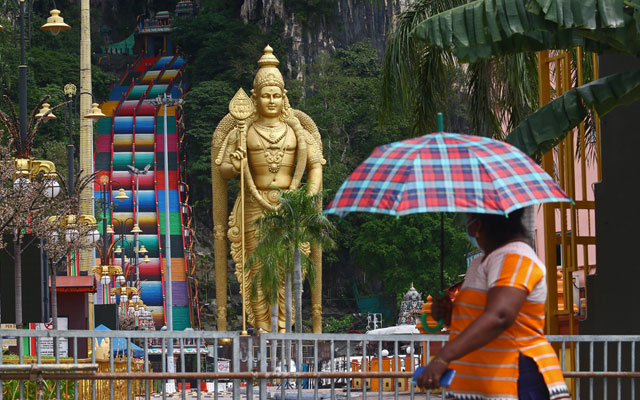
Interstate travel in Malaysia limited to between RMCO states; Batu Caves closed during MCO in January 2021 pictured
One of the conditions for interstate travel between RMCO destinations is that travellers must use a registered tour agency and a registered tour vehicle. Interstate travel on a personal capacity is still not allowed.
Mint Leong, managing director, Sunflower Holidays, shared that the agency has seen zero business since the resumption of interstate travel “as people from the Klang Valley are still not allowed to travel”.
She added: “Those staying in other states who are allowed to travel would use the services of travel agents from their home state, rather than get an agent from Kuala Lumpur to service them.”
Langkawi-based Mega Water Sports & Holidays director of sales and marketing, Sharmini Violet, shared that her company had received a small number of corporate group enquiries out of Kuala Lumpur for team-building activities in 4Q2021, “but no one has committed with bookings”.
She said: “Companies don’t dare make a booking now due to uncertainty as to when the government will lift the interstate travel ban for those living and working in Selangor and Kuala Lumpur.
“But when it is eventually lifted, we expect a boom in business. Currently, we are getting a trickle of bookings from FIT leisure travellers from Kedah and Perlis, and they usually request for one- or two-night packages.”
To support tour operators in Selangor and Kuala Lumpur, Malaysian Inbound Tourism Association (MITA) president, Uzaidi Udanis, held a discussion with the Selangor state government yesterday (April 8) on working together to identify and develop hidden gems in the state.
The inaugural joint workshop, due to take place on April 12, will train MITA agents on promoting and packaging of tourism products in Selangor.
Meanwhile, Tourism Selangor is initiating a campaign dubbed ‘Travel Selangor First’ to promote lesser-known destinations in the state and encourage those living in Selangor to explore their own backyard.
A significant surge in search activity for travel to Singapore originating from markets in and out of Asia-Pacific has emerged following discussions around bilateral travel bubbles.
According to recent data from Adara, there has been an increase in search activity for travel to Singapore coming from Australia, Indonesia, Malaysia and Taiwan through the last two weeks of March 2021 (March 1-14), compared to the first two weeks of the month (March 15-28).
This increase, as detected across Adara’s data consortiums, coincides with public announcements of plans to restore travel between these countries and Singapore.
The most significant travel search increase was detected from Australia, which was the first country to announce talks on a potential bilateral travel bubble with Singapore (around March 15). In the two weeks following the news, travel searches from Australia to Singapore saw a 34 per cent increase in market share, compared to the volume of all searches to Singapore across the same period.
Across March 15-28, travel searches and bookings from Australia to Singapore also increased, compared to the previous window (March 1-14).
Number of searches from Australia to Singapore increased by 32.4 per cent. In comparison, total number of global searches to Singapore decreased by 2.1 per cent.
Meanwhile, the number of bookings from Australia to Singapore increased by 2.9 per cent, while total number of global bookings to Singapore increased by 2.3 per cent.
Adara data also revealed a notable shift in travel searches and bookings from Singapore to Australia from March 15-28, compared to March 1-14.
Number of searches from Singapore to Australia increased by 28.3 per cent. In comparison, total number of global searches to Australia decreased by 8.1 per cent.
Meanwhile, number of bookings from Singapore to Australia increased by 9.2 per cent. On the other hand, total number of global bookings to Australia decreased by 7.2 per cent.
Across other countries that have also initiated discussions around travel bubble arrangements with Singapore, increases in travel searches have likewise been detected for the same window of time. For example, travel searches from Malaysia and Indonesia to Singapore both experienced a 19 per cent increase in market share, while that of Taiwan to Singapore saw a 14 per cent increase.
Beyond countries that have ongoing discussions around bilateral travel arrangements, Denmark and the UAE have also seen an increase in market share of global travel searches to Singapore at 26 per cent and 19 per cent, respectively.
The positive growth in travel searches originating from these source markets to Singapore is a preliminary indicator of pent-up demand for international travel. As arrangements solidify and more announcements materialise in the coming weeks and months, there remains more potential for intra-regional travel to gradually rebound, as pent-up travel demand accumulated across much of 2020 and the start of 2021 is released in waves.
Princess Cruises has scheduled Diamond Princess for a Japan summer season running from July to October 2021, with 24 departures out from Yokohama. Itineraries range from five to 19 nights, with some featuring multiple destinations such as Japan and South Korea, or Japan, Vladivostok and Korsakov.
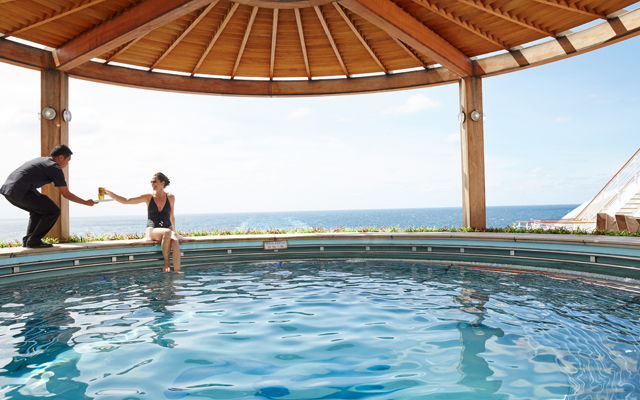
A Japanese hot tub onboard the Diamond Princess
Come summer 2022, Diamond Princess will sail out of Yokohama and Kobe on diverse itineraries spanning from the southern tropical islands of Okinawa to the northernmost island of Hokkaido. There will be 35 departures on offer, from May through September featuring 31 destinations and four countries – Japan, South Korea, Russia and Taiwan.
Both summer sailings will present numerous opportunities for passengers to experience local festivals, such as Kyoto Gion Festival, Osaka Tenjin Festival, Tokushima Awa Dance Festival and Kumano Fireworks Festival, in addition to visits to UNESCO World Heritage sites.
Highlights: Watch out for the MedallionClass Experience coming onboard Diamond Princess’s 2021 and 2022 summer sailings. A number of new features that leverage touchless technologies promise to significantly enhance and personalise the guest experience, as well as support new health protocols. This will include touchless embarkation and disembarkation, highly personalised services, contactless payment, and friends and family locator, among others. Princess MedallionClass ships also offer speedy Wi-Fi at sea, utilising VSAT technology that supports movie streaming and live TV.
Diamond Princess will complement her itineraries out of Japan with onboard Japanese experiences, such as authentic Japanese meals at Kai Sushi, soaks in a traditional Izumi bath that is said to be the largest Japanese bath at sea, and folk shows for entertainment.
Agent support: Travel agents continue to be critical trade partners for Princess Cruises, and the cruise line has been feeding them with latest news and industry developments throughout the pandemic, so that they can better advise their customers. Training is maintained online via the Princess Academy, while regular contact is made with travel advisors in order to understand their challenges and have relevant support crafted when the market recovers.
Support for planning, sales development and marketing are also provided.
The Balcony Cabin onboard Cunard’s Queen Elizabeth
Cunard
Cruisers can look forward to two sailings to Asia in 2022.
Queen Mary 2 will offer a seven-night itinerary from Singapore to Hong Kong from February 11 to 18, with two ports of call in Vietnam’s Ho Chi Minh City and Chan May.
The Queen Elizabeth will sail on an eight-night voyage from Singapore to Hong Kong from March 24 to April 1, taking in stops for shore excursions in Chan May and Hanoi.
Highlights: Cunard’s cruise ships are reputed from their British elegance and service standards are sterling.
As the cruise line’s flagship, Queen Mary 2 holds numerous charms. She boasts her own onboard micro-brewery and what is said to be the world’s finest wine cellar at sea – one that houses a unique collection of 486 fine wines and a stunning collection of ports, dating back to 1840.
Equally stunning, but for different reasons, is Illuminations, the ship’s planetarium. The planetarium dome takes guests on an epic voyage across the solar system and once retracted, becomes a luxury 3D cinema or classical music venue.
Bookworms will marvel at Queen Mary 2’s library, which contains about 10,000 books in various languages.
Outstanding experiences onboard the Queen Elizabeth include a large conservatory inspired by the famous hothouses of Kew Gardens, afternoon tea at the Queen’s Room and a game of croquet – all for a quintessential British holiday.
Agent support: Communication and training is a continuous process that is taken seriously at the Cunard, and efforts to plan and develop future co-funded marketing activities with travel agent partners have not ceased despite the pandemic.
Quantum of the Seas
Royal Caribbean International
This year, Royal Caribbean International operates two- to four-night cruise-to-nowhere Ocean Getaways onboard the Quantum of the Seas. These are exclusive to Singapore residents, and are available through October 2021.
Highlights:Quantum of the Seas boasts unique onboard products for entertainment. RipCord by iFLY, which offers a skydiving experience at sea, is iconic, and so is the North Star observation capsule that offers a 360-degree view from more than 91m above sea level.
Endless fun onboard continues at SeaPlex, the largest indoor sports and entertainment complex at sea and home to bumper cars, a roller-skating rink, a rock climbing wall and more.
Over at the Bionic Bar, drinks are made by robotic bartenders.
Performances are transformed in the Two70 multimedia theatre, where cutting-edge technology turns two-storey high windows into beautiful scenes, while aerialists and robots bring the space to life.
Dining experiences never gets old on the ship, thanks to 18 restaurant concepts.
Agent support: Believing that it is only a matter of time that other destinations will resume safe cruising, Royal Caribbean International continues to engage travel partners on a regular basis. Industry trends as well as information on updated health and safety protocols and cruise experience for guests are frequently shared.
The cruise line continues to invite many travel trade partners on Ocean Getaways to have them experience safe cruising.
For now, Royal Caribbean International is encouraging travel planners to focus on the individual incentive travel segment, as that will likely bounce back before large group travel, as well as new-to-cruise consumers.
World Dream calls at Singapore
Dream Cruises
World Dream offers a series of two- and three-Night Super Seacation itineraries out of Singapore from now until June 27, 2021.
Meanwhile, Explorer Dream continues with her round-island sailings in Taiwan, from March 7 until October 1, 2021. Options include the four-night Penghu-Kinmen-Matsu Island cruise; the four-night Penghu-Kinmen-Hualien cruise; and a combination of two-night cruises to Hualien, Penghu, Kinmen or Matsu Island.
World Dream’s cruise experience is made more enticing with special themes that are built on traditional and pop culture from South Korea and Thailand as well as gastronomy.
Onboard Explorer Dream, a taste of cultures and activities from around the world is dished out. This allows cruisers to ‘visit’ iconic destinations, such as Hawaii and the Nordic region, on a single excursion.
Highlights: Muslim and vegetarian guests will enjoy peace of mind when travelling onboard World Dream, which has been certified by both the United World Halal Development (UNWHD) and the Global Vegetarian Certification Services. The UNWHD certification encompasses not only cuisine but the overall Halal lifestyle onboard the ship.
Agent support: Parent company Genting Cruise Lines has been working closely with travel agent partners across the region, especially in key markets like Taiwan and Singapore where safe cruising has resumed since July and November 2020 respectively. Regular updates and training on the new norms of cruising are provided.
Star Cruises’ Star Pisces will kick off Malaysia sailings from May 13
Star Cruises
Star Pisces will become the first ship to resume sailing in Malaysia, departing from Penang starting May 13, at the start of the Hari Raya Aidilfitri Holidays.
It will offer a two-night Langkawi Escape and a series of one-night Straits of Malacca cruises.
Cruisers on the Langkawi Escape will get 10 hours of port time to explore the resort island, while those choosing the Straits of Malacca Cruise will be able to see all types of marine vessels in the Straits of Malacca, the busiest straits in the world.
Highlights:Star Pisces is packed with entertainment, dining and shopping options. There are six restaurants and bars, two swimming pools, a Jacuzzi, a running track, and the Galaxy of the Stars entertainment centre.
Agent support: Parent company Genting Cruise Lines has been working closely with travel agent partners across the region. Regular updates and training on the new norms of cruising are provided.
Costa Firenze’s Ristorante dei Medici
Costa Cruises
Costa Firenze will make her maiden call in South-east Asia in 4Q2021, with 13 departures from November 20 to January 8, 2022.
On offer are three-night roundtrips out of Singapore to Malaysia and four-night roundtrips from Singapore to Malaysia and Thailand. There will also be three-night roundtrips from Laem Chabang in Thailand to Cambodia’s Sihanoukville or Thailand’s Koh Samui, and four-night roundtrips from Laem Chabang to Vietnam’s Phu My.
Thematic itineraries are planned to coincide with Christmas and New Year festivities in 2022.
Cruisers looking for variety should keep an eye out for the Tropical Paradise Cruise, with four departures planned out of Singapore to Malaysia and Thailand; and the Amazing Strait Cruise from Singapore on December 11 and December 25, 2021 to Melaka and Klang, both in Malaysia.
Highlights: Costa ships take pride in their authentic Italian atmosphere. There are six themed zones, taking guests from the Renaissance period to modern day Florence, and its high fashion and elegance. In fact, the ship’s name is dedicated to the beautiful city of Florence and the interior design is inspired by it.
Costa Firenze is great for families, with plenty of activities – including a water park, exploration park and a Rope Garden – to keep everyone entertained. Come evening, catch stunning shows or take to the dance floor.
Agent support: Costa Asia has maintained a line of communications with travel agent partners, feeding them information on the resumption of cruise schedules, itinerary planning and safety protocols. Online training courses have also remained throughout the pandemic.
As Covid-19 infections continue to surge in metro Manila and nearby provinces, more hotels are needed to be converted into temporary treatment facilities, but existing quarantine hotels are not even enough to accommodate more overseas Filipino workers (OFWs) returning to the country.
Philippine Hotel Owners Association (PHOA) president, Arthur Lopez, said in an interview with ABS CBN’s Teleradyo yesterday (April 7) that their 78 quarantine hotels, 44 of which are in metro Manila, are “all fully booked”, with no rooms left to be repurposed as temporary treatment facilities.
Quarantine hotels in metro Manila struggle to accommodate more Covid-19 patients amid virus surge
Lopez added that “we have been scrounging around for other hotels” as more OFWs are returning to the Philippines and have to quarantine per existing regulations.
Apart from the 78 quarantine hotels owned by PHOA members, there are thousands more that are allowed to operate as quarantine hotels.
There are also 24 additional hotels with 2,442 rooms that have been converted into isolation facilities for Covid-19 positive patients. They are in Metro Manila, Cordillera Administrative Region, Davao Region and Calabarzon (Cavite, Laguna, Batangas, Rizal and Quezon).
Metro Manila and neighbouring Cavite, Laguna, Rizal and Bulacan are currently under the enhanced community quarantine (ECQ) – the strictest form of lockdown – due to the alarming increase in daily Covid-19 infections.
The Department of Tourism classifies hotels and other accommodations under three categories: Regular hotels for staycation; isolation hotels for Covid-19 positive patients; as well as quarantine hotels for returning OFWs, foreign nationals allowed to enter the country, health workers near their place of work, and those unable to quarantine in their homes.
Under the ECQ, even the 15 luxury hotels in the metro classified as staycation hotels are not allowed to accept guests.
The Philippine College of Physicians has formally requested the government to convert several hotels into temporary hospital facilities as 14 out of 21 hospitals in metro Manila are almost full and many patients had to be turned away. The group said it is ready to help the government convert hotels into medical facilities for mild cases such as the elderly with comorbidities.
Lopez disclosed that he met up with senator and Philippine Red Cross chief Richard Gordon and his group who was asking hotels to donate bedsheets, toiletries and other items to be used in isolation facilities that are being set up in the University of the Philippines Dormitory, La Salle University in Pasay and Ateneo High School.
New research by Booking.com reveals growing optimism among Singaporean travellers about returning to travel, in the wake of vaccine rollouts and ongoing discussions on potential air travel bubbles.
The survey found that seven in 10 (71%) Singaporean travellers feel more hopeful about travelling in 2021 as the country ramps up its vaccination programme. The same amount (70%) state that not being able to travel extensively in 2020 has made them yearn for travel even more in 2021.
Global vaccination rollout fuels hope of a travel rebound
Results from the survey is part of a larger global study, where Booking.com polled more than 28,000 travellers across 28 countries and territories, including Singapore, to uncover what travellers feel most hopeful about as it becomes safe to travel again, and what support they believe the travel industry needs to get back on its feet.
The trust in vaccines runs deep, with slightly over half (63%) of Singaporean travellers stating that they won’t travel internationally until they have been vaccinated, which rises to 69% among those 55+ years old. Meanwhile, a greater number (67%) of Singaporean travellers say they will only travel to countries that have implemented vaccination programmes. But there is still some hesitation, with almost half (52%) remaining sceptical as to whether a vaccine will truly help make travel safer.
Showing the extent of pent-up travel demand, almost two thirds (65%) of Singaporean travellers say they would rather go on a vacation in 2021 than find true love, while over half (59%) say they would prioritise travelling over success at work, preferring to go on vacation than get promoted.
Six in 10 (62%) Singaporean travellers have used the increased time at home to plan future travel, while slightly over half (54%) have banked more vacation days, so are excited about the potential of taking longer vacations in 2021. When dreaming about their next vacation, 51% of Singaporean travellers feel confident that they will be able to hit the beach by summer 2021, with 18% saying a relaxing beach or spa trip will be the first type of trip they favour when it’s safe to travel again. Only 9% will book a city break and just 5% say an active break is a priority.
Following the impact that Covid-19 has had on the travel industry, 96% of Singaporean travellers think the industry needs to be supported to get back on its feet. Nearly three quarters (74%) believe that government financial stimuli are now needed to help travel’s recovery, and over two thirds (69%) worry that the industry won’t survive unless it is supported with government grants.
In terms of more practical regulations, 75% state that wider access to pre-travel Covid-19 testing is needed, and 73% say that governments should collaborate with travel associations and providers to set more consistent standards.
While 70% of Booking.com’s accommodation partners surveyed are cautiously optimistic about the future of their business, they share travellers’ mindset that the industry needs support, as the majority of them would like to see governments do more in the future to support the travel industry during the ongoing Covid-19 crisis.
Three key areas that need to be addressed, according to properties of all types and sizes, are more consistent international standards when it comes to travel advice and rules, speeding up of vaccine rollout programmes, and wider access to pre-travel Covid-19 testing.
Accommodation providers are not the only ones willing to roll up their sleeves, with 60% of Singaporean travellers willing to accept only being able to travel if they could prove they have been vaccinated. Meanwhile 71% would accept having to wear a face mask when travelling, with 61% going as far as supporting a ‘no mask no travel’ ban (unless exempt). Two thirds (68%) would be willing to only travel in small groups of two to six people.
To support the travel industry more directly, 25% of Singaporean travellers plan to use travel credits or vouchers from cancelled trips, instead of requesting a refund, and 22% will buy vouchers for family and friends for them to use when it’s safe to travel again. Meanwhile, 28% plan to choose less frequented destinations, while 27% want to book independent accommodations or accommodations in or near their hometown to support local businesses (32%).
Hyatt Hotels Corporation plans to grow its brand footprint in India by more than 70 per cent by 2023, with six new hotels set to open this year across the Hyatt Regency and Hyatt Place brands.
With 24 executed managed and franchised agreements, Hyatt will add more than 3,600 keys to its existing portfolio of 32 Hyatt-branded hotels across eight brands in the country.
Hyatt Regency Dehradun among 24 new Hyatt-branded properties to open across India through 2023
In 2021, Hyatt plans to primarily expand its Hyatt Regency and Hyatt Place brands. The Hyatt Regency brand will enter two new markets with Hyatt Regency Jaipur Mansoravar, and Hyatt Regency Trivandrum. The Hyatt Place brand will enter four new markets with Hyatt Place Bodh Gaya, Hyatt Place Jaipur Malviya Nagar, Hyatt Place Vadodara, and Hyatt Place Bharuch.
Other Hyatt-branded hotels in India that are expected to open through 2023 include: Grand Hyatt Gurgaon, Grand Hyatt Jaipur, Hyatt Regency Dehradun, Hyatt Regency Ghaziabad, Hyatt Regency Udaipur Sisarma, Hyatt Regency Kochi Malayattoor Resort, Hyatt Regency Goa Baga, Hyatt Regency Kasauli, Hyatt Regency Surat, and Hyatt Regency Jaipur.
Under the Hyatt Centric and Hyatt Place brands, upcoming hotels are: Hyatt Centric Sector 17 Chandigarh, Hyatt Centric Lonavala, Hyatt Centric Electronic City Bangalore, Hyatt Place Vijayawada, Hyatt Place Dehradun Rajpur Road, Hyatt Place Kolhapur Shiroli, Hyatt Place Tirupati, and Hyatt Place Visakhapatnam Madhurawada.