

One-night, one-dollar plan proposed to lure tourists back to Phuket
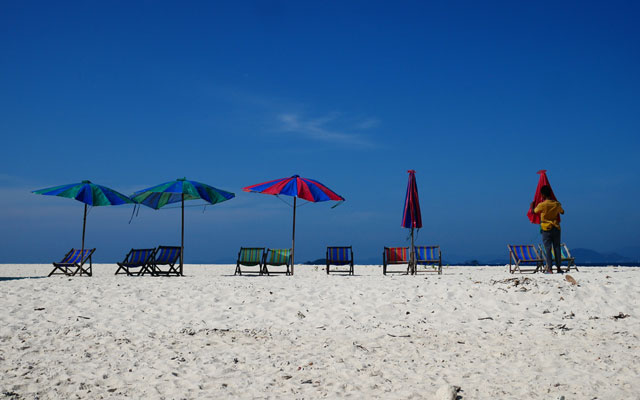
A catchily named campaign, One-night, one-dollar, has been proposed by the Tourism Council of Thailand (TCT) to attract international tourists back to Phuket, ahead of the popular resort island’s planned July reopening.
Under the plan, participating operators will offer to foreign tourists room rates at US$1 per night – for rooms that typically sell for between 1,000 baht (US$32) and 3,000 baht per night – with costs to be subsidised by the government, explained TCT president Chamnan Srisawat.
If the proposal is green-lit, tourism players in Thailand will roll out the campaign to international markets.
“TCT also discussed the idea with major wholesalers and online travel agents to prepare for the reopening of Phuket. And they are ready to help,” Chamnan said.
He expects that out of a total of 70,000 rooms on the island, nearly one million room nights would be up for sales, generating at least 40 billion baht into hotels and other services throughout July.
TCT’s proposal has been submitted to the Tourism Authority of Thailand and the Ministry of Tourism and Sports, and will be escalated to the cabinet for approval within June.
If Phuket’s One-night, one-dollar campaign proves successful, private sector players and the government may expand the campaign to other destinations such as Koh Samui, Pattaya and Bangkok.
“However, the current wave of Covid-19 infection could (impact the) final decision. But we have been suffering from the pandemic for 15 months now. Only mass tourism will save us,” Chamnan said.
Set to be the first Thai city to reopen to vaccinated foreign tourists in July, Phuket is expected to welcome 500,000 visitors through year-end, much lower than the 6.7 million arrivals in 2020, mainly from the first quarter.
In 2019, prior to the pandemic, Thailand received nearly 40 million visitors, generating 190 billion baht (US$60 billion) in revenue.
Work from Bali programme launched to boost domestic tourism
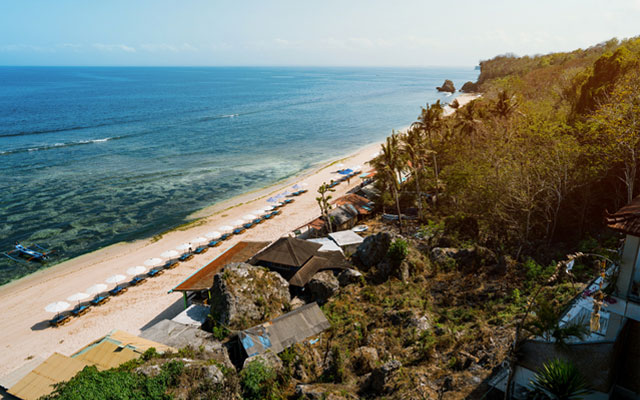
A government-led programme that will dispatch Jakarta-based civil servants to work remotely from Bali is set to be rolled out as part of efforts to revive domestic tourism in the pandemic-ravaged island.
The Work from Bali (WFB) programme led by the Coordinating Ministry of Maritime Affairs and Investment (CMMAI) will assign civil servants from the office and its seven subordinate ministries, including the Ministry of Tourism and Creative Economy, to work from hotels on the island.
Under the programme, Bali will host not only the ministries’ regular meetings but also international events for the year ahead to prove that the island is safe.
Depicting Bali as a Covid-safe destination is expected to lure more domestic tourists to the island and raise hotel occupancy during this pandemic, opined Odo Manuhutu, deputy for tourism and creative economy at CMMAI.
He recalled that when the government held the Bali Investment Forum in March, the host hotel saw a rise in occupancy from eight to 50 per cent within the week.
On May 18, CMMAI and Indonesia Tourism Development Corporation (ITDC) signed a MoU for the WFB programme to be launched in ITDC’s Nusa Dua complex, which is home to 16 hotels.
Sandiaga Uno, minister of tourism and creative economy, said that the WFB initiative is aimed at providing emergency help to Bali hotels struggling with record-low occupancy rates averaging at around nine per cent. He further noted that the island’s GDP contracted by 9.31 per cent in Q1 of this year, lowest among the 34 provinces in Indonesia.
“We hope that with WFB in place, Bali can see a positive economic growth in late Q3 or Q4,” he said.
Sandiaga added that the WFB programme is also part of the government’s effort to prepare tourism players in Bali to welcome foreign visitors once borders reopen. Nusa Dua is one of three green zones being prepared for international travellers under the Travel Corridor Arrangement.
CMMAI is still mulling the number of civil servants that will take part in the WFB programme, according to Sandiaga, but his office proposed 25 per cent of employees from each participating ministry.
He also expressed hopes for corporates in Bali and other regions to follow suit, and opt to remote work from the resort island.
I Putu Astawa, head of Bali Tourism Agency, said that the Bali administration would rope in pecalang (traditional Balinese guards) from 1,493 customary villages across Bali to help armies and police personnel monitor the WFB programme and ensure strict enforcement of health protocols on-site.
Sri Lanka will reopen to foreign tourists from June 1
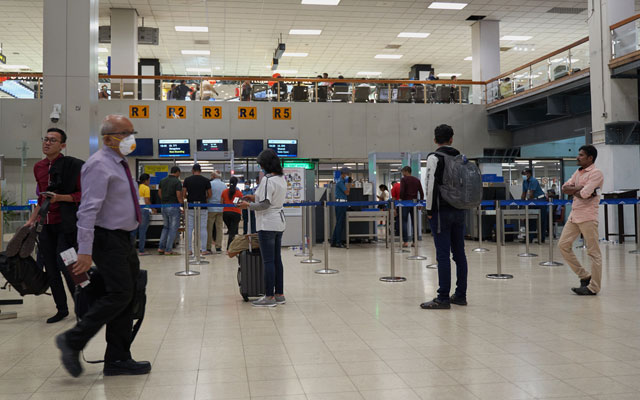
Sri Lanka will reopen its two international airports to foreign arrivals on June 1, following a 10-day shutdown to curb a rising tide of Covid-19 infections.
The country has been placed under an islandwide lockdown since May 21 lasting till June 7, with restrictions to be lifted for three days in-between for 19 hours per day to enable Sri Lankans to secure their essential provisions.
On Tuesday, the Department of Civil Aviation said the airports would be reopened on June 1, but noted that the ban on travellers from India, which has been engulfed by a tsunami of infections, would remain.
All foreign tourists are subject to a pre-arrival PCR test, with more testing required upon arrival. They must also stay at Covid-19 certified hotels. The pre-arrival PCR test requirement also applies to tourists who have received both doses of the vaccination.
Under new guidelines, only 75 passengers comprising both Sri Lankans and tourists will be permitted per flight. The airports are currently open only for outbound passengers.
The announcement of the airports’ reopening has been welcomed by industry officials who said even though arrivals have been merely a trickle since the airports reopened on January 21 after a prolonged pandemic shutdown last year, it means the country is back in business and open for tourism.
Arrivals totalled 9,629 from January 21 to end-April 2021 – a sharp drop compared to the 507,311 arrivals in the January-April period in 2020. Kazakhstan, Ukraine, Germany, India and China were the top five tourist generating markets during this pandemic period.
In the meantime, a former Sri Lankan ambassador in Russia and now tourism entrepreneur has announced that he would bring down 2,500 travellers from Russia as soon as the airports reopen.
Udayanga Weeratunga was quoted by the Daily Mirror newspaper as saying that discussions are ongoing with Russia’s Aeroflot airline and SriLankan Airlines for each carrier to operate at least one weekly flight between Moscow and Colombo, with at least 275 passengers arriving in Sri Lanka per week.
Weeratunga was also responsible for a pilot project bringing nearly 3,000 tourists from Ukraine to Sri Lanka between December 28, 2020 and January 19, 2021 in 12 flights operated during this period.
New hotels: the Arca, Avani Seminyak Bali Resort, and more
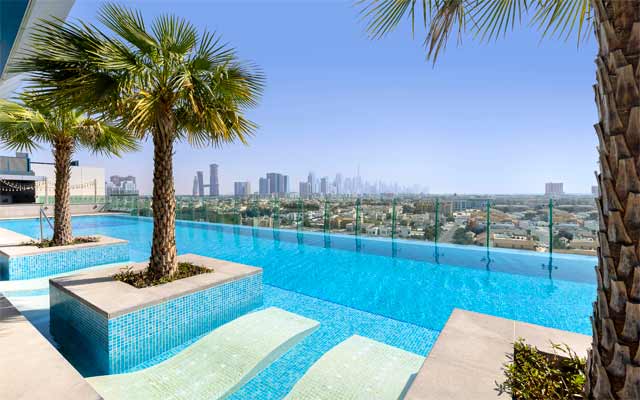

the Arca, Hong Kong
Located in the up-and-coming neighbourhood of Wong Chuk Hang in Aberdeen – on the east coast of Hong Kong Island – the hotel is a 7-minute walk away from the Wong Chuk Hang MTR station. Helmed by Yulan Group, the Arca features 187 guestrooms and suites, a restaurant, rooftop bar, customisable event and function spaces, and a rooftop infinity pool. For guests with furry friends, the Arca also offers a suite of amenities, menus and services to ensure each dog experience is an enjoyable stay.
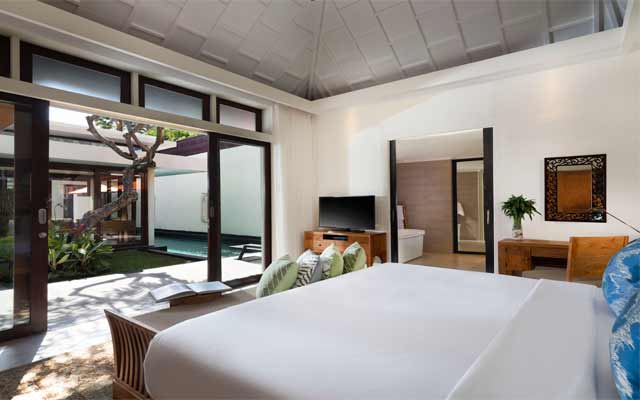
Avani Seminyak Bali Resort, Indonesia
Set to open on June 1, Avani Seminyak Bali Resort will mark the brand’s first property in Indonesia. Centrally located in the heart of Seminyak, the resort will offer 21 residence-style accommodations and 16 private pool villas. Each villa and residence will feature private kitchen and dining areas, while the private pool villas promise 150m2 of spaciousness. Elsewhere, the suite residences will boast open-air terraces, and range from simple studios to larger multi-bedroom units with pool access. Guests can enjoy Indonesian and international dishes at Groove restaurant and learn to create Bali’s traditional cuisine at the community cooking classes. They can also work up a sweat at the AvaniFit gym or complete laps at the secluded pool before relaxing in a poolside cabana.
Aloft Al Mina, Dubai and Element Al Mina, Dubai, UAE
Marriott Bonvoy has expanded the Aloft Hotels and Element Hotels in the UAE with the opening of two hotels – Aloft Al Mina and Element Al Mina – in Dubai. Both hotels are situated on Sheikh Rashid Road in the Al Raffa neighbourhood and in close proximity to the city’s famed attractions.
Aloft Al Mina, Dubai is home to 192 guestrooms, each complete with complimentary Wi-Fi, 55-inch flatscreen TVs, and modern bathrooms featuring walk-in showers with rainfall showerheads and custom toiletries. The hotel offers a number of signature social spaces and amenities including W XYZ Bar offering craft beverages and light bites, the Re:mix Lounge which acts as a hub for locals and travellers, and the all-day restaurant, Mix. Other facilities are a 24/7 Re:charge fitness centre, an outdoor infinity pool overlooking the Dubai skyline, and meeting spaces.
Elsewhere, Element Al Mina, Dubai presents a longer-stay concept with a collection of 96 studios, alongside one- and two-bedroom apartments. Each apartment features a signature Heavenly bed, a spa-inspired bathroom, oversized closets and a fully-equipped kitchen. The hotel features a compact meeting room, 24/7 fitness centre, and a rooftop pool.
Frasers Hospitality enlarges footprint in China
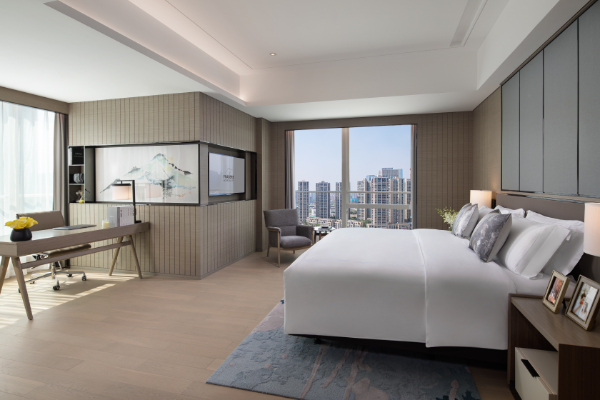
Frasers Hospitality, a member of Frasers Property Group, will be adding seven more properties to its portfolio in China over the next four years.
The properties will be located in first- and second-tier cities and are Modena by Fraser Nanjing; Fraser Residence Nanjing; Fraser Suites Pazhou, Guangzhou; Fraser Residence Shenzhen; Fraser Residence Tianjin; Fraser Place Chengdu; and Fraser Residence Chongqing.
Frasers Hospitality currently operates 12 properties across 12 key gateway cities. The new signings will bring its total inventory in the country to over 4,500 keys.
“Despite the global economic slowdown caused by the COVID-19 pandemic, China remains the world’s second-largest economy and one of the most-watched inbound and outbound tourist markets.
“Our growth plans in the market are backed by the significant business potential we’re observing in China, which has remained steadfast amid the challenges brought about by Covid-19. China was the only major economy in the world to have expanded in 2020, registering a 2.3 per cent5 GDP growth, and is expected to continue on this upward trajectory in the coming years,” said Mark Chan, chief operating officer of Frasers Hospitality, in a statement.
With international travel halted, Chinese travellers have turned to domestic excursions to satisfy pent-up demand. During the recent Labour Day Holiday in early May, the country reported 230 million domestic trips, up three per cent from pre-pandemic figures.
“Despite the current challenges, our properties in China have remained resilient as they are fuelled by a strong base of long-stay corporate guests. At the same time, demand for our serviced apartments also appeal to shorter-term guests who are showing a preference for larger personal spaces and privacy,” said Chew Hang Song, senior vice president, head of operations – North Asia at Frasers Hospitality.
The company’s most recent opening in June 2020, Fraser Residence Chengdu, has had occupancy rates hitting a year-to-date high of 90 per cent.
The group’s current portfolio in China also includes properties across Beijing, Changsha, Chengdu, Dalian, Guangzhou, Shanghai, Shenzhen, Tianjin, Wuhan, and Wuxi. The new openings bring the hospitality provider’s global portfolio to more than 120 properties in over 70 cities worldwide.
TTG Conversations: Innovator Chat with Phau Hui Hoon, Changi Airport Group

When the pandemic brought air travel to a near standstill last year, Changi Airport had to act swiftly and innovate to sustain its business. Over the past year, it has found a lifeline in the form of festive events and unique activities catering to Singapore residents.
In this episode of TTG Conversations: Innovator Chat, Phau Hui Hoon, Changi Airport Group’s general manager of landside concession, shares that these pivots not only supported the businesses under its wing, but also served to jumpstart other consumer-facing innovations, such as a park connector, closed-door duty-free shopping for loyalty members and an integrated app.
Watch this episode to find out how the airport is turning its hardware and software around for survival.
Hong Kong plans cruise restart end-July
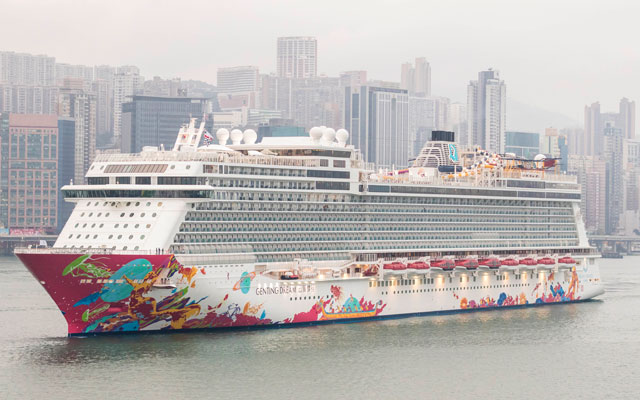
After a 15-month freeze, cruises out of Hong Kong will likely restart end of July – at the earliest – with strictly regulated cruise-to-nowhere itineraries for vaccinated residents.
In announcing its decision on May 26, the Hong Kong government said that participating cruises must adhere to a set of health precautionary measures specifically designed for cruise travel. These measures include sailing with a fully vaccinated crew that must undergo a Covid-19 polymerase chain reaction (PCR) nucleic acid test shoreside and obtain a negative result every 14 days; having all passengers to obtain a negative PCR test result within 48 hours prior to boarding; and reducing passenger capacity to no more than 50 per cent.
The news is met with relief across Hong Kong’s travel agencies, especially those that specialise in retailing cruises.
According to Hong Kong Outbound Tour Operators’ Association, chairman, Johnny So, the resumption of cruising will benefit travel agencies as well as logistic and transport suppliers.
As over 90 per cent of cruise bookings come from agents, So said retailing cruise packages “is way better than counting local tour or staycation (business)”.
Welcoming the news too is Jeff Bent, managing director of Worldwide Cruise Terminals, which manages Kai Tak Cruise Terminal. Both Genting Cruise Lines and Royal Caribbean International have booked berths at the Kai Tak Cruise Terminal.
Bent said: “The conditions are now ripe for a restart, and many parties will benefit.”
He added: “Many local firms and employees will benefit from cruise resumption, including travel agencies, ground handlers, ship agents, stevedores, ground transport providers, provisioners, bunkerers, tugs, pilots, and mooring, security and cleaning providers.”
When asked what sort of cruise itineraries would work best to entice Hong Kongers amid the pandemic, So suggested: “Three-day weekend escapes would work as Hong Kongers are hungry for travel. I am sure diverse entertainment on board, such as casino games, would meet Hong Kongers’ need, especially those who cannot set foot in Macau for gaming.”
So expects strong interest in the cruise restart, but said that the requirement for all passengers to be fully vaccinated might “dampen the desire to go onboard”.
“In Singapore, vaccination is not a prerequisite and (cruises) did well without outbreak so far,” So remarked.
He emphasised that cruises have been abiding health and safety protocols, which will earn consumers’ confidence. Citing an example, he said Royal Caribbean International has ships equipped with negative pressure rooms for emergency use. Passengers capacity is also halved, with only rooms with balconies are available for booking.
EGL Tours, executive director, Steve Huen, told TTG Asia that the travel trade has been pushing the idea of cruise resumption to the government for months. While the decision is now made to bring back cruising for Hong Kong, he said it would take another two months at least for cruise lines to prepare – such as by vaccinating and quarantining crew.
While cruise bookings account for only a single-digit component of his business, Huen said it is the one source of revenue to rely on when outbound travel is still restricted.
“We will channel more resources to build this segment but we expect many other agents will also vie for this,” Huen said.
Soon after the government’s announcement, Genting Hong Kong’s Dream Cruises said it would commence summer sailings with Genting Dream at the end of July, offering two- and three-night itineraries. Bookings will open today.
Macao – A healthy, safe, and quality destination
Brought to you by Macao Government Tourism Office (MGTO)

An array of colorful “tourism +” dimensions
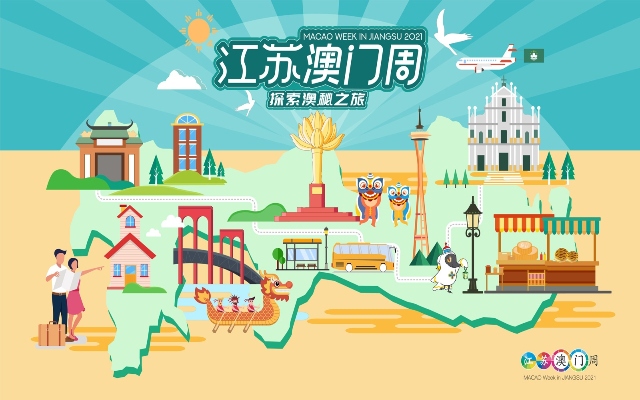
Held at the capital of Jiangsu – Nanjing – “Macao Week in Jiangsu” is the latest destination promotion activity which the Macao SAR Government put together in expanding visitor source markets to spur its economic and tourism revival.
For four days from May 14 to 17, the mega roadshow lining Nanjing Pedestrian Street presented Macao’s diverse tourism experiences and commercial opportunities to locals and visitors through its UNESCO-accredited attractions; the city’s cultural and creative industries; sporting events; MinM – Made in Macao (an intitiative supporting local products) and products from Portuguese-speaking countries; and a joint presentation by Macao’s tourism enterprises and an airline; in positioning the city as a healthy, safe and quality destination for all.
A number of “tourism+” initiatives launched in 2021 were also brought to the fore, such as “tourism + MICE”; “tourism + culture and creativity”; “tourism + e-commerce”; and “tourism + sports” to enhance the competitiveness of Macao’s tourism industry, and facilitate the connection between tourism, MICE and other emerging industries.
Besides glimpses of Macao’s cultural symphony and unique charm via a thoughtfully-arranged programme showcase and a meet-and-greet session with beloved tourism mascot MAK MAK at the tourist information booth; a Macanese food promotion event was also concocted jointly by MGTO, Jinling Hotel Nanjing and Macau Cuisine Association in celebrating Macao’s culinary legacy and allure as a UNESCO Creative City of Gastronomy.
As well, the event featured a Macao tourism and MICE presentation seminar jointly organised by MGTO and Investment Promotion Institute to facilitate networking and business opportunities amongst the travel trade between the two cities through updates on the territory’s tourism and MICE industry trends.

Harnessing new media in publicising event
Special travel offers amounting to over RMB$90 million (US$14 million) on air tickets; hotel accommodation; dining and more; went on sale at the roadshow and their supporting social media platforms.
To generate hype for the event, an extensive promotional campaign was also launched through various online and offline platforms, leveraging the wide influence of varying key opinion leaders (KOLs) specialising in travel, photography, gastronomy, fashion, and other fields from the Mainland.
In total, 16 KOLs came together in conducting an assortment of live streams, short videos, and articles about the event highlights on platforms such as Yizhibo; Weibo; and Trip.com.
As of May 17, the live streams have engaged over 72 million counts of live views and playback, with the hashtag “#Macao Week in Jiangsu” attaining 28 million pageviews on Weibo.
Also, MGTO provided detailed information about the Macao Week in Jiangsu on the “Macao Week” H5 page and via its officials accounts on Weibo; WeChat; Xiaohongshu; Douyin; Ly.com; Mafengwo travel application; Tuniu; Trip.com; Meituan and DianPing.

Visitor numbers trending up
Arrivals have continued to dial up since the Macao SAR Government launched a spending-stimulus scheme aimed at inbound tourists from the mainland.
During the recent Labour Day holidays (May 1 to May 5), Macao welcomed a total of 167,000 visitors, with a new record high of 45,000 visitor arrivals registered on May 1.
This indicated a significant surge to figures reported for the Spring Festival Golden Week and April 2021, at 158.2 per cent and 25.4 per cent, respectively.
In addition, compared with the Labour Day Holidays in 2019, the average daily volume of visitor arrivals during the Labour Day Holidays 2021 rebounded up to 21.1 per cent of the pre-pandemic figure (158,082) during the Labour Day Holidays in 2019.
With hotel occupancies, a report by the Statistics and Census Service (DSEC) showed the first quarter of 2021 saw the average hotel occupancy rate at 44.9 per cent, up by 3.6 percentage points year-on-year, with the average length of stay going up by 0.1 night to 1.7 nights.
At press time, the number of guests checked into hotels and guesthouses increased by 160.2 per cent year-on-year, with Mainland guests’ numbers soaring at 216.5 per cent.
More Macao Week events are in the pipeline for key provinces and cities such as Shanghai, Chongqing, Xiamen, Taiyuan, Tianjin and Chengdu.
For more travel updates and inspirations, follow Mak Mak Macao (Instagram), Stopover Macao (Facebook), Macao Moments (Twitter) or Macao Government Tourism Office website.
New COO takes reins at Ananda in the Himalayas
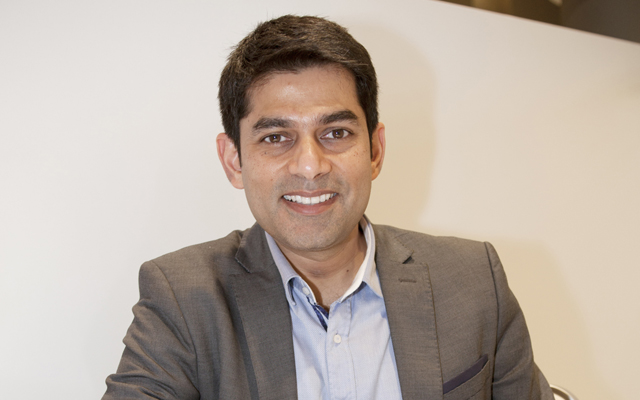
Ananda in the Himalayas has promoted Mahesh Natarajan to chief operating officer.
In his new role, Natarajan will drive Ananda’s brand, business vision and goals, as well as lead wellness strategy, product development, research and innovation. He will also lead the international expansion of Ananda’s footprint and extend the company’s deep expertise in wellbeing into new brands and strategic developments.
Since 2008, Natarajan has been leading brand, marketing, sales and business development of IHHR Hospitality, the company behind Ananda in the Himalayas.
With over 25 years of experience in brand and marketing, sales and business development, Natarajan has worked in strategy consulting (Accenture), fast-moving consumer goods (Procter & Gamble and Perfetti) and hospitality (Oberoi Hotels & Resorts and Ista Hotels). He also founded and managed a tech-marketing start-up for creating CRM solutions for B2C industries.
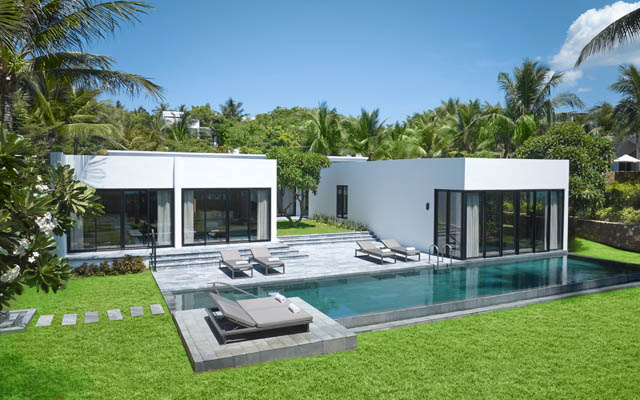
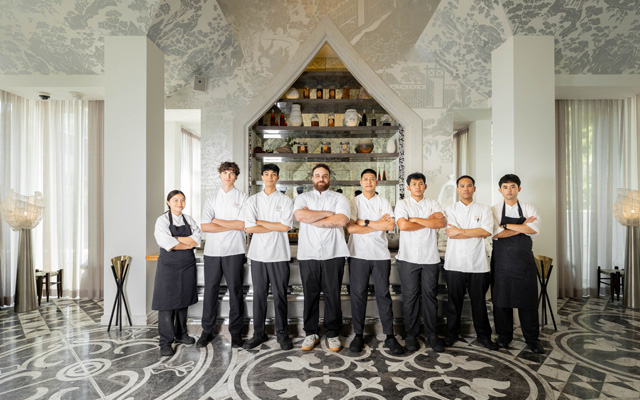






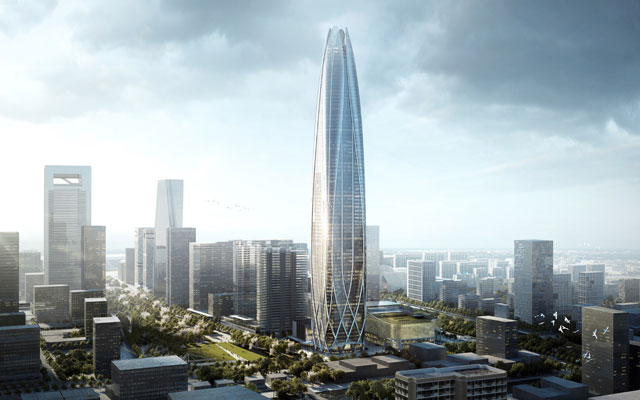
Marriott International has inked an agreement with the Ningbo Central Plaza Construction and Development to bring Marriott Bonvoy’s Ritz-Carlton brand to the heart of Ningbo.
Expected to open in 2025, The Ritz-Carlton, Ningbo is set to be the first addition to Marriott Bonvoy’s luxury portfolio in Ningbo.
Developed by Shanghai Construction Group, Shanshan Group, and Greentown China Holdings, the hotel is slated to occupy the 62nd to 80th floors of the 409m-tall Ningbo Central Plaza, which will also house offices, commercial and residential space with apartments, among other offerings.
The Ritz-Carlton, Ningbo is expected to feature 257 rooms and suites, alongside a Club Lounge and three F&B venues – an all-day dining outlet, a Chinese restaurant and a specialty restaurant. In addition to a lobby lounge, the hotel is set to include a destination bar to provide a nightlife hub for guests and locals alike. Elsewhere, planned banquet space spanning 1,700m² promises to accommodate a wide range of events.