


UNWTO, Google scale up collaboration to drive tourism recovery
UNWTO has signed a MoU with Google to collaborate on harnessing the power of innovation, education, data and market intelligence to drive a sustainable and inclusive recovery for global tourism.
The new MoU builds on past cooperation between the UN specialised agency for tourism and Google, and comes as destinations in some parts of the world look to restart their tourism engines.
Notably, the two organisations will host trainings for DMOs, using a new Capacity Building Curriculum developed by Google. These sessions will empower destinations to switch to digital, with the training adapted to reflect their specific circumstances and the unique challenges every destination currently faces.
The new Capacity Building Curriculum will also complement existing joint initiatives, and a data sharing agreement for Google’s Travel Insights to power a portion of the UNWTO’s tourism recovery tracker.
Alongside this, the Tourism Accelerator Program, designed by Google in partnership with UNWTO, will also be scaled up globally. A pilot programme launched across EMEA (Europe, Middle East, Africa) in 2020 showed the value of working with policymakers to put digital at the heart of their tourism recovery plans and the benefits of upskilling DMOs so they can make effective use of data and market intelligence.
The partnership will go beyond empowering destinations and businesses during the immediate recovery phase. Under the agreement, Google will provide ongoing support for a number of UNWTO’s leading initiatives, including Startup Competitions designed to promote and support innovation across the sector.
UNWTO secretary-general Zurab Pololikashvili said: “The strong partnership between UNWTO and Google will help put innovation and digital at the centre of tourism’s recovery. By working together, UNWTO and Google will empower destinations, businesses and tourism workers to realise the power of data and market intelligence, both increasingly important as global tourism looks to restart and recover.”
Looking ahead, UNWTO and Google will also collaborate on joint research projects related to tourism, providing governments, destinations and businesses with the data and insights to guide tourism towards recovery.
Japan ponders state of emergency extension

Japan may be forced to endure a longer pandemic-induced state of emergency beyond May 31, as current measures fail to show sufficient decline in Covid-19 infections.
The country recorded 4,045 new cases on May 22, down from 7,521 new cases on May 12, the peak number recorded this spring. The average daily rate, however, is not significantly below that recorded before the state of emergency declaration on April 23, when 5,014 new cases were recorded.
Initiated to curb a Covid-19 surge related to Golden Week, a series of consecutive national holidays in early May, the emergency measures at first covered Tokyo, Osaka, Kyoto and Hyogo: four prefectures home to one quarter of Japan’s 126 million people. Large events were banned, commercial facilities covering more than 1,000m² were asked to shut, teleworking was encouraged and eateries were required to close by 20.00.
Now, the Japanese government is considering a longer state of emergency, which has already been expanded in scale (to include seven more prefectures), accounting for 40 per cent of Japan’s prefectures and 70 per cent of its population.
According to a top government spokesperson speaking Sunday, the government is considering either extending the state of emergency from May 31 to June 20 or scaling back emergency measures in only some areas to quasi-emergency measures.
Government Covid-19 advisory panel member Keiichiro Kobayashi told NHK: “If the government hastily lifts the declarations, that would lead to a rebound (in the number of cases) and put a major brake on the economy.”
In addition to placing anti-infection measures on residents, the Japanese government has tightened its already rigorous travel bans, increasing the number of countries and regions covered by travel restrictions to 159.
In the past week, Japan banned entry to foreign nationals who have recently travelled to India, Pakistan, Nepal, Bangladesh, the Maldives, Thailand, Cambodia, Sri Lanka, the Seychelles, Saint Lucia, East Timor and Mongolia.
Trip.com Group launches Covid-19 medical relief initiative for India
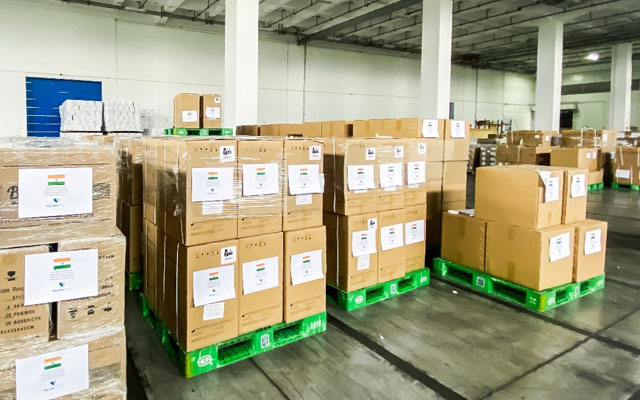
Trip.com Group has donated 400 oxygen concentrators to its industry partners and local organisations in India to help the South Asian country tackle oxygen equipment shortages amid the Covid-19 crisis.
The first shipment of 125 medical oxygen concentrators has already arrived with industry partners in India, while the further 275 oxygen concentrators will arrive to local government and NGO partners in the coming week.
Over the past few months, new Covid-19 cases have surged in India. As a result, the Indian medical system has been heavily burdened with huge numbers of patients and inadequate supplies of critical medical equipment, including oxygen concentrators.
Trip.com Group chairman James Liang said: “The pandemic has given people a deeper understanding of the importance of community and collaboration as we look towards a positive shared future. Covid-19 is a challenge that we all need to overcome. It is increasingly necessary to strengthen cooperation, support each other, and work together in the fight against the virus.”
Jane Sun, CEO of Trip.com Group, added: “We are doing everything we can to provide immediate and direct support for people at risk of Covid-19 in India. We urge all businesses in the travel industry to collaborate and help where possible, to protect communities and individuals and make greater contributions to the recovery of the global travel sector.”
Construction kicks off on Cross Vibe Bangkok Udomsuk Station

Cross Hotels & Resorts has commenced the construction of the 102-key Cross Vibe Bangkok Udomsuk Station, a joint venture with Italmar (Thailand) signed in 2019.
The new property will join Cross Vibe Bangkok Sukhumvit to mark the second Cross Vibe property owned by Italmar (Thailand).
As its name suggests, Cross Vibe Bangkok Udomsuk Station is located only steps away from the Udomsuk BTS Skytrain station which will become the interchange station of the Light Rail Train system’s Bangna – Suvarnabhumi Airport line.
Slated to open in 4Q2022, Cross Vibe Bangkok Udomsuk Station will offer a connection area, co-working space, business centre, lifestyle café, fitness centre and rooftop pool.
MHTC signs two MoUs to strengthen ties with China

Malaysia Healthcare Travel Council (MHTC) has signed MoUs with China’s International Medical Exchange & Cooperation Committee (IMECC) and Hangzhou Rende Maternity Hospital, in an effort to improve the patient experience for healthcare travellers from China to Malaysia.
Both partnerships will encourage knowledge exchange between MHTC and IMECC and Hangzhou Rende Maternity Hospital, respectively, through a series of virtually conducted Continuous Medical Education (CME) sessions, whereby Malaysian and Chinese healthcare experts will explore and discuss industry best practices and healthcare matters.

Additionally, the partnership with each respective entity will also open doors for patients from China to seek safe and trusted treatment options with MHTC members through virtual consultations.
MHTC CEO, Mohd Daud Mohd Arif, said in a press statement that the partnerships will ensure that healthcare travellers from China “benefit from a more holistic patient journey experience which offers continuity of care with excellent pre- and post-care services”.
Malaysia is an increasingly preferred healthcare destination for medical travellers from China, particularly since the country has been positioned regionally as the Fertility Hub of Asia and has experienced a 300 per cent increase in demand for fertility treatments between 2011 and 2016, according to an MHTC statement.
By the same token, Malaysia has also been positioned as the Cardiology Hub of Asia, being home to highly reputable cardio health institutions which have achieved many breakthroughs in the field of cardiology. Moving forward, Malaysia will also be showcased as the Cancer Centre of Excellence.
Point-to-point airlines will lead industry recovery: GlobalData
A growing desire to travel closer to home coupled with budget constraints will put point-to-point airlines, especially LCCs, in good stead to lead post-Covid recovery, said GlobalData.
A GlobalData poll, which surveyed 1,160 people, revealed that 43 per cent of respondents will consider taking a domestic trip in the next 12 months, and 27 per cent will consider an international trip on the same continent.
Gus Gardner, associate travel and tourism analyst at GlobalData, commented: “Domestic travel and short-haul destinations are set to dominate in 2021 as travellers seek destinations that are closer to home. With substantial demand for short-haul flights, many travellers will be seeking the most direct option.
“Airlines with a robust domestic and short-haul network will benefit from an increase in demand. Furthermore, flying longhaul is often more costly. Some travellers will be looking to curb spending, and those operating short-haul, direct routes will win customers in the immediate recovery period.”
GlobalData’s latest consumer survey, which polled more than 21,700 respondents, revealed that many consumers are concerned about their financial situation, with 87 per cent of respondents ‘extremely’, ‘quite’, or ‘somewhat’ concerned about this. Furthermore, 50 per cent of respondents in the same survey ‘somewhat’, or ‘completely’ agreed that their household budget had reduced in the last year.
Gardner added: “Many travellers will be looking to cut costs, and LCCs will likely benefit from this. Cost-cutting measures including streamlining operations and salary reductions will allow LCCs to push ticket prices to new lows to win over budget-conscious travellers that historically would have used full-service carriers.”
Legacy airlines will have the advantage of deploying higher capacity widebody aircraft onto short-haul routes in response to surges in demand, said GlobalData. However, it added, widebody aircraft are often configured for long-distance routes, with low-density seating not as well suited for short-haul flying. Moreover, the cost per seat will be higher for airlines opting for this strategy and will result in LCCs being in a stronger position.
Gardner concluded: “By flying directly as opposed to travelling via a hub airport, travellers will eliminate any unnecessary stops where they could inadvertently mix with passengers from around the world, which would notably increase the risk. With point-to-point carriers eliminating the unnecessary stopover and offering the quickest journey time, travellers will be more likely to pay extra to guarantee a perceivably higher level of safety.”
Malaysia travel trade calls for total lockdown as Covid surge continues
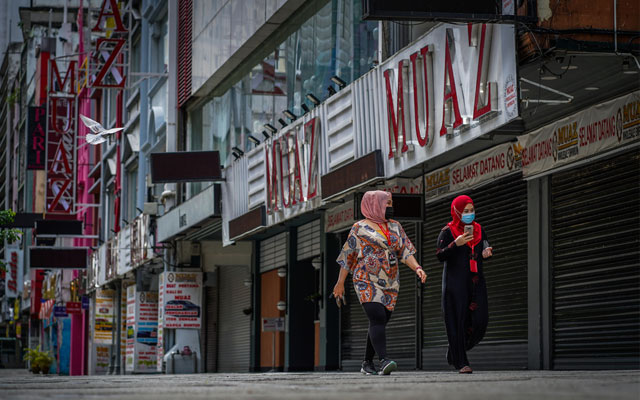
Tourism industry players in Malaysia are calling on authorities to impose a full lockdown, similar to the movement control order (MCO) 1.0 last year, so as to flatten the Covid-19 curve as quickly as possible.
They shared that the government’s efforts to tighten travel and mobility restrictions, starting from Tuesday (May 24), are insufficient to break the chain as daily cases continue to surge.
On Sunday, Malaysia recorded 6,976 new cases and 49 deaths, marking the fifth consecutive day of more than 6,000 new infections. Some states, such as Kelantan and Negri Sembilan, have requested the Health Ministry for field ICUs, as many hospital ICUs have reached maximum capacity.
Malaysian Inbound Tourism Association president, Uzaidi Udanis, believed that only a fortnight-long full lockdown will help lower the infection rate.
He opined that additional restrictions to be imposed from tomorrow such as a two-hour limit for shoppers at retail premises is not very effective. “It takes only a few seconds of exposure to contract the virus. Enforcement will also not be easy,” he said.
Other new rules to curb the contagion include reducing passenger capacity on public transportation by half and restricting operating hours of businesses.
Also calling for a total lockdown is Malaysian Association of Hotels (MAH) president, N Subramaniam, citing the ineffectiveness of current MCO restrictions in stamping out the virus spread.
“The tourism and hotel industry is of the opinion that the government needs to implement stricter and more effective measures such as a total lockdown, similar to MCO 1.0, to control the spread as soon as possible,” he said. “Limiting attendance at workplaces and operation hours of economic sectors will only prolong the situation.”
He also stressed that the industry needed greater assistance from the government, to prevent the closure of more hotels in the near future.
According to MAH, the hotel industry alone recorded a loss of over RM6.53 billion (US$1.57 million) last year. For year-to-date, the loss of revenue easily adds up to RM5 billion, making it worse than last year.
Members of the public too have been calling on the government for a stricter lockdown, but the government has been reluctant to initiate one. Finance minister, Tengku Zafrul Tengku Abdul Aziz, explained that it could lead to one million job losses, with low-income earners suffering the most.
He said that the MCO 1.0 last year had contributed to a 5.3 per cent unemployment rate, with 826,000 people losing their jobs – the highest level of unemployment since the commodity crisis in the 1980s.
Prime minister, Muhyiddin Yassin, has also stressed that a total lockdown would lead to more unemployment.
“If we (imposed a total lockdown on all economic sectors), we will face bigger problems to the point where our country will be unable to get back on its feet,” New Straits Times quoted him as saying.
Instead, he is encouraging Malaysians to practice self-lockdown by staying at home and not going out unnecessarily.
TTG Asia takes Vesak Day break

TTG Asia will be taking a break for Vesak Day on Wednesday, May 26. News will resume on May 27.
Here’s wishing all our readers a happy Vesak Day!
Singapore hotels get busy filling bellies at home as new restrictions set in

- Hotels move in with expanded home delivery and takeaway menu and service
- Brisk business seen, as families stay safe at home
- Home delivery and takeaway revenues insufficient to mend traditional hotel business dent
As Singapore moves back into partial lockdown, disabling dining out at restaurants and limiting activities beyond homes, hotels in Singapore brought out their 2020 playbook and stepped up F&B delivery service and takeaways.
Shangri-La Singapore expanded its takeaway and delivery menu, offering 10 cuisines and more than 150 dishes for guests to enjoy in the comfort and safety of their home. To further entice customers, the luxury hotel has shaved 15 per cent off selected items, and lifted minimum spend requirements.
Fullerton Hotel Singapore, Parkroyal on Beach Road, Pan Pacific Singapore, JW Marriott Singapore South Beach and many more are doing the same, dangling gourmet treats all ready for pick-up or home delivery.
Four properties under Accor – Raffles Hotel Singapore, Fairmont Singapore, Sofitel Singapore City Centre and Sofitel Singapore Sentosa Resort & Spa – which are not part of the government’s quarantine hotel programme, swiftly turned all of their 20 restaurants and bars around to feed guests at home, with meals for every budget and occasion. Taste at ibis Singapore Bencoolen has meals from as little as S$8.90 (US$6.70), rivalling many meal options offered on other food delivery platforms.
Garth Simmons, CEO for Accor South-east Asia, Japan & South Korea, told TTG Asia: “We went through this in 2020, so we are better prepared and have introduced new innovations for this situation.”
These innovations include Fairmont Singapore’s online premium supermarket, Fairmontathome, as well as Raffles Hotel Singapore’s expanded Raffles Grab & Go concept.
To encourage more home deliveries and takeaways, Accor grants loyalty incentives for members of ALL – Live Limitless and Accor Plus, with discounts of up to 30 per cent and three times bonus points.
Tane Picken, general manager, Shangri-La Singapore recalled how his hotel had been just as quick last year in turning business focus to catering as travel restrictions dried up international arrivals.
“(We created) from scratch a robust online delivery and takeaway offering, which proved to be very popular among guests particularly over the festive periods,” Picken said. Demand has spiked again with current movement restrictions.

Having maintained their home delivery and takeaway service since Singapore’s Circuit Breaker lockdown in April 2020, Marriott International’s properties were able to “hit the ground running” when Phase 2 kicked in, said Anuj Sharma, area director of operations – Singapore, Malaysia & Maldives.
Guests are able to enjoy luxury takeaways from notable dining venues such as The Kitchen Table at W Singapore – Sentosa Cove, Madam Fan at JW Marriott Hotel Singapore South Beach, and Brasserie Les Saveurs at The St. Regis Singapore, with offerings regularly enhanced over the months.
Marriott’s F&B reach was expanded in late-2020 when it entered a strategic partnership with Asian super app Grab, which brought premium hospitality experiences to consumers across South-east Asia, including Singapore.
“From all our learnings and experiences last year, we are in a stronger position today with most of our menu offerings available on delivery platforms like GrabFood for our guests’ easy ordering,” commented Peter Foreman, senior director, sales & distribution – Singapore, Malaysia, Maldives with Marriott International.
Small plug for a wide gap
While hotels are enjoying brisk business with their home delivery and takeaway service, hoteliers say this segment of revenue will not be enough to cushion the full impact of Phase 2 restrictions on hotel business over the next four weeks.
Simmons said: “Within the first 24 hours after the announcement, our teams took hundreds of calls, with most guests looking to postpone rather than cancel their plans but the impact will be significant. (The F&B pivot) would never make up for the lost restaurant, banqueting and staycation business that we would have seen ordinarily. It’s sad because just before this announcement, our bars and restaurants were performing as strongly as or sometimes stronger than they were before Covid-19, as people are desperate to get out and enjoy life.”
Anuj agrees but said that the strong takeaway and delivery demand was at least enough to help sustain F&B operations. “The global business forecast remains challenging, but we will continue to remain optimistic,” he added.
Picken pointed to critical lessons from the past 16 months that showed “the need to remain nimble and agile to respond to new measures”.
Echoing that view, Simmons said: “Our team has been amazing over this period, introducing new sources of income including new ‘workspitality’ models, delivery and take-home food and drinks, pre-prepared meal kits and online entertainment such as cooking classes, yoga or fitness sessions to help our guests get through the pandemic.”
While Simmons believes that Accor colleagues “are definitely more mentally prepared this time around”, he said successive lockdowns could take an emotional toll on industry professionals.







The Philippine Department of Tourism (DOT) has proposed to the government the possibility of setting up a green lane that will facilitate the entry of foreign visitors who are fully vaccinated against Covid-19.
The green lane will make it easier for fully vaccinated travellers to visit the country for leisure as quarantine rules are being relaxed with the progress of the vaccination worldwide.
Tourism secretary Bernadette Romulo-Puyat said: “The green lane will pave the way for the reopening of our tourist destinations to leisure travellers who are now fully vaccinated. It will give the jobs back to many of our tourism workers and gradually revive the tourism industry under safe conditions.”
DOT’s proposal follows the move by several countries to open up their major destinations to fully vaccinated foreign travellers.
Romulo-Puyat said: “We must keep pace with our neighbours and the rest of the world in slowly reopening our tourist destinations. We must be ready for the visitors when the whole world is ready to safely travel again.”
The Inter-Agency Task Force for the Management of Emerging Infectious Diseases (IATF-EID) has tasked the DOT and several other agencies of the government to explore protocols for inbound international travel for fully vaccinated individuals.
Headed by the DOT and the Department of Foreign Affairs, a small working group has been formed to evaluate the possibility of implementing green lanes and formulate protocols therefor.
The group also includes the Bureau of Quarantine under the Department of Health, the Bureau of Immigration under the Department of Justice, the Department of Information and Communications Technology, the Department of Transportation, the Office of the Presidential Adviser on the Peace Process, the Overseas Workers Welfare Administration under the Department of Labor and Employment, and the Department of Trade and Industry.