


Emirates seals codeshare with Garuda Indonesia
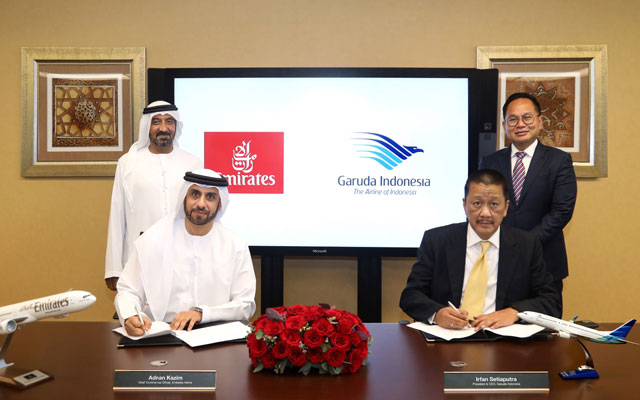
Emirates and Garuda Indonesia have signed an MoU to establish a codeshare partnership between both airlines, a move which will allow customers of both airlines to enjoy seamless connectivity on new routes across the Americas, Middle East, Africa and Europe.
In addition, Emirates and Garuda Indonesia will also explore opportunities to cooperate on their respective frequent flyer programmes, to enable customers of both airlines to earn and redeem loyalty points for reward tickets, upgrades and other exclusive benefits.
The codeshare agreement is expected to come into effect from January 2022, with customer benefits to include seamless booking, ticketing, one baggage policy and check-through to the final destination in addition to travel benefits across 18 routes on both airlines’ networks.
Irfan Setiaputra, president & CEO, Garuda Indonesia, said: “This partnership is timely as countries are expected to start to reopen their borders for international flights and ease their travel restrictions. It will also help open up many opportunities for Indonesia’s trade and tourism activities.”
Under the codeshare agreement, Emirates customers will be able to connect to and from Denpasar, Surabaya, Makassar, Balikpapan, Manado, Medan, Padang and Solo airports on flights operated by Garuda Indonesia from Jakarta, to Dubai and beyond with a single ticket.
Additionally, routes directly connecting Denpasar with Surabaya and Makassar will be available for passengers’ convenience.
Garuda Indonesia will also add their marketing code to flights on eight routes operated by Emirates, including between Dubai and Jakarta, Denpasar, Bahrain, Moscow, Johannesburg, Cairo, London and Manchester.
Open-air panoramic ride SkyHelix to open in Sentosa next month

Sentosa’s latest attraction SkyHelix, billed as the highest open-air panoramic ride in Singapore, will open at Imbiah Lookout on December 15.
The opening is a few months ahead of schedule, in time for the school holidays and year-end celebrations, said operator Mount Faber Leisure Group (MFLG).

Standing at 40m tall, SkyHelix features a vertical helix-like structure. During the ride, guests will be seated in an open-air rotating gondola, which ascends 35m above the ground to a height of 79m above sea level.
The 12-minute ride includes 10 minutes rotating at the peak. With a drink in hand, guests will be able to enjoy panoramic views of Sentosa, the Keppel Bay area, and the Greater Southern Waterfront.
As an added safety measure, an attraction host will accompany guests on the ride to ensure safety protocols are followed.
Adult tickets cost S$18 (US$13.30), while child tickets – over 1.05m – cost S$15. All tickets come with a choice of one standard non-alcoholic beverage (soft drink or slushie) or a SkyHelix Sentosa souvenir. Alcoholic beverages and snacks are subject to additional pricing.
The ride is open only to vaccinated guests and accompanying children under 12 years old.
Designed and constructed by French company Aerophile, an expert on high-point attractions, the SkyHelix will be powered by three electrical winches that are managed on ground, and include emergency brakes and a safety mechanism.
When asked about the attraction’s sustainable aspects, Buhdy Bok, managing director at MFLG, revealed that SkyHelix’s projected carbon footprint for a whole year – 365 days for up to 12 hours a day, and carrying a projected 100,000 guests – would be “equivalent to one flight from Singapore to Kuala Lumpur”.
To achieve carbon neutrality, mitigation methods will be deployed, where renewable energy, such as the installation of solar panels to reduce energy consumption, will be looked into, added Favian Ooi, MFLG’s director, operations and asset development.
Bok noted: “As Singapore eyes a long-term goal recovery of its tourism sector, the opening of SkyHelix Sentosa signals a strong message of hope and optimism for the industry and the country.”
He told TTG Asia that vaccinated travel lanes (VTLs) will help attract tourists back to Singapore, and every established VTL “is a positive sign which will go a long way in supporting travel and tourism recovery”.
“We have seen the VTL daily quota steadily increase from 2,500 to 6,000. While it is yet to be determined how many of these VTL travellers are tourists, on November 10, CAAS (Civil Aviation Authority of Singapore) reported encouraging figures especially from Australia and South Korea and this sends a positive message that VTLs are impactful for tourism recovery,” he elaborated.
Thien Kwee Eng, CEO of Sentosa Development Corporation, added that SkyHelix joins a pipeline of new and upcoming Sentosa experiences, including wellness experiences at Oasia Resort Sentosa; a perfumery experience at Scentopia; as well as the island’s new lifestyle destination, Southside; among others.
She said: “We look forward to welcoming more guests to Sentosa, as we bolster our position as Asia’s leading leisure destination.”
Malaysia to launch travel corridor with Indonesia, prepares to reopen to international visitors by January 1
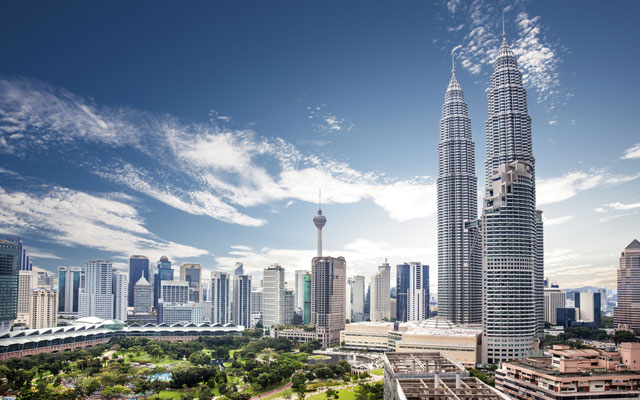
The governments of Malaysia and Indonesia have agreed to implement a travel corridor between the two countries in stages.
Priority will be given to fully vaccinated individuals travelling for business, medical or humanitarian purposes, said Malaysia’s prime minister, Ismail Sabri Yaakob, in a joint press conference on Wednesday (November 10) with Indonesian president Joko Widodo at Istana Bogor in conjunction with his three-day inaugural official visit which began on Tuesday.
“Reopening borders in a safe manner is important in balancing between the need to open up and redevelop the economy and maintain aspects of public health security and control,” said Ismail Sabri.
He added that the travel corridor arrangement may start between Kuala Lumpur and Jakarta, as well as Bali.
Further details on the reopening of the border between Malaysia and Indonesia will be issued in a joint statement at a later date.
Earlier this week, Malaysia and Singapore agreed to launch a vaccinated travel lane (VTL) between the two countries, with six daily designated flights between Changi Airport and Kuala Lumpur International Airport, from November 29.
Under the VTL, fully vaccinated travellers will be able to travel between Singapore and Malaysia, and be subjected to Covid-19 tests in lieu of serving quarantine or stay-home notice.
Malaysian high commissioner to Singapore, Azfar Mohamad Mustafar, said the relevant agencies in Malaysia and Singapore are ironing out related issues such as Covid-19 testing regimes and cross-border processes, The Star reported.
Malaysia’s borders are also expected to reopen to foreign visitors from many more countries, latest by January 1, 2022.
National Recovery Council chairman, Muhyiddin Yassin, gave this assurance on Thursday, after taking into consideration the achievements of the Covid-19 National Immunisation Programme.
“In general, I’m satisfied with the development, particularly in the trend of daily positive cases, deaths, admissions of patients under Categories 3 to 5 in hospitals and the vaccination rate among the adult population, which have reached 95 per cent, along with 76.7 per cent coverage for adolescents,” he said, as reported in New Straits Times.
Denmark imposes quarantine for travellers from Singapore
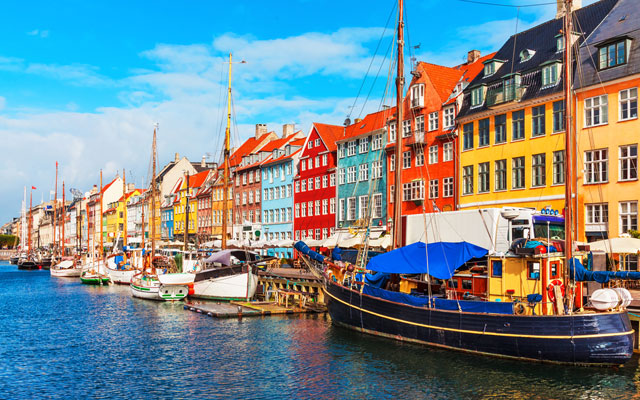
Vaccinated travellers from Singapore will no longer be able to enjoy two-way quarantine-free travel with Denmark, and will have to serve at least four days of quarantine in the European country.
In a Facebook post on Thursday (November 11), the Embassy of Denmark stated that “Singapore is now considered a high risk country for travel to Europe” due to its Covid-19 infection numbers.
According to the post, all travellers from Singapore must be tested upon arrival and self-isolate for 10 days, regardless of their vaccination status. However, their quarantine period will be shortened if they test negative for their PCR test on day 4 of their arrival.
This news comes just a month after it was announced that Denmark was one of several countries that Singapore had added to its vaccinated travel lane (VTL) scheme, which allows for quarantine-free travel for fully vaccinated travellers entering Singapore on designated VTL flights.
Upcoming Superbike World race drives hope for Lombok’s tourism revival

Lombok is gearing up to host its first post-pandemic mega international motorbike race at its brand new 4.3km Pertamina Mandalika International Street Circuit next week, a warm-up event to MotoGP 2022 and eyed as a launchpad for the revival of tourism in the destination.
The World Superbike (WSBK) will take place from November 19-21, and all preparations are completed for the event, according to Sandiaga Uno, minister of tourism and creative economy, who conducted a site visit.
The government has issued Covid-19 health and safety guidelines to the organiser and limited the three-day WSBK event to 25,000 spectators.
Sandiaga said he has also seen the crowd simulation for crowd control management by the local police, armed forces and the Covid-19 task force to prevent a new virus wave.
The minister said the event is important for the tourism and creative economic sector, particularly for West Nusa Tenggara (NTB). Moreover, Mandalika is one of the country’s five super priority tourism destinations, he added.
The event is expected to provide a momentum boost to the promotion of the tourism and creative economy, particularly that of NTB, as well as attract international special interest travellers to visit Indonesia, now that the international border is open, he said.
Aiming to capture that momentum too is the local Lombok community. As soon as movement curbs were eased last month, the West Lombok Tourism Office and the tourism community kicked off a series of activities, such as cultural performances, creative economic and home industry exhibitions, food festival, as well as outdoor activities and games for families in the Senggigi area.
Saiful Ahkam, head of West Lombok Tourism Office, said the WSBK event serves as a catalyst to motivate the local industry to get back on their feet and organise activities to attract travellers – starting from the local Lombok residents to the neighbouring islands and eventually, international travellers when international traffic returns.
Saiful said: “We started a couple of weeks back with a pedestrian acoustic performance to attract passers-by. Hotels organised staycation programmes with festivals and games to attract families, and the response has been great. Some hotels have reported 100 per cent occupancies during the weekends.”
While the WSBK event is located in Central Lombok, Saiful hopes the activities in West Lombok would attract visitors to the Senggigi area.
“Although people’s focus will be on WSBK during the event, West Lombok Tourism Office will enliven Senggigi with various interesting events (to) attract visitors to stay in Senggigi,” Saiful said.
Awan Aswinabawa, owner of A&T Holidays Lombok, said: “West Lombok has set an example for tourism stakeholders that even with limited budgets, they can restart their businesses by working hand-in-hand to maximise the momentum of international events (held in Indonesia). I do hope that other regions will follow suit and that Lombok shines again.”
Ennismore to build Tribe in SE Asia
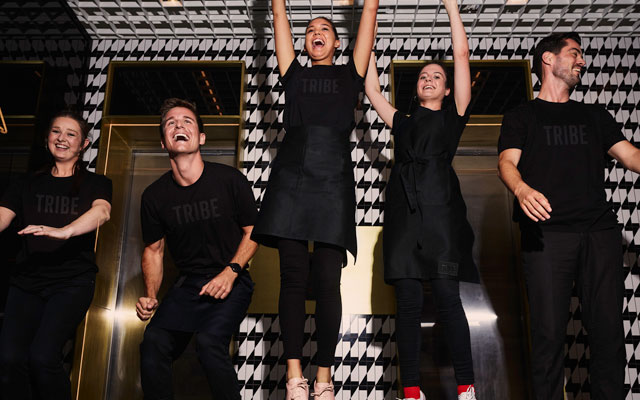
Lifestyle hotel group Ennismore, a joint venture between founder Sharan Pasricha and Accor, has launched Tribe hotels in South-east Asia, with properties set to open in Cambodia, Thailand, Indonesia, Singapore and the Philippines in the coming years.
Tribe’s expansion to South-east Asia forms part of Ennismore’s global growth of its lifestyle brands. Ennismore has already signed 50 Tribe hotels and is aiming for rapid expansion with up to 150 to open globally within the next five years, including in Phnom Penh, Bali, Singapore, Phuket and Manila by 2025.
Launched in 2019, Tribe is an alternative lifestyle brand “that is shaking up the rules of hospitality to fulfil the wants and needs of the modern traveller, without compromising on sophistication, style or functionality”.
A key feature of Tribe hotels are multifunctional spaces that encourage connection between guests, such as collaborative workspaces, decompression zones and social destinations.
François Leclerc, deputy brand COO at Ennismore, said: “Tribe is all about reshaping the traditional hotel experience into something that enables guests to stay, work and socialise in a truly contemporary environment.”
From the music selections to the choice of local coffee roasters, each Tribe element is meticulously curated. Tribe collaborates with different creative designers at each location, selecting elements to reflect the brand’s philosophy and unique vibe.
Guestrooms feature high quality linens, intuitive connectivity, rain showers, signature robes, and Nespresso coffee machines.
Leading hotel groups unite to build sustainability framework
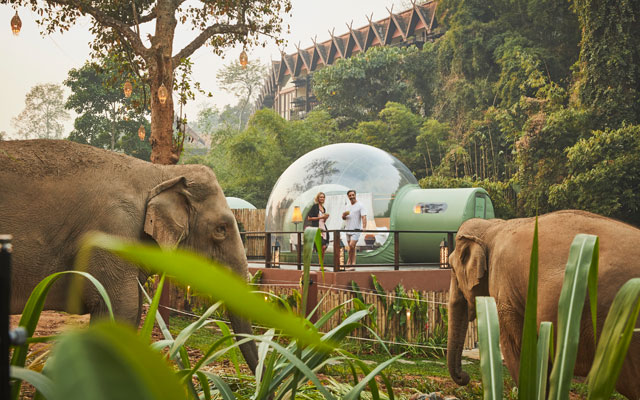
An initiative to set a common definition of hotel sustainability to drive responsible tourism has been launched by several leading hotel companies, in cooperation with the WTTC and Sustainable Hospitality Alliance.
Developed in consultation with distribution partners and key tourism and travel stakeholders, the Basic Sustainability framework aims “to raise the global basic level of hotel sustainability in a clear and transparent manner for all travellers and stakeholders”.
The framework will critically deliver on a common starting point for hotel sustainability accessible to all hotel actors worldwide – whether they are part of a large international group or independents. It will encompass four clear stages and practical tools that guide the industry towards a regenerative impact on our planet.
In the coming months, the hotel groups in this initiative will work in close alignment with the WTTC, the Sustainable Hospitality Alliance and key stakeholders on finalising the essential sustainability actions with demonstrable positive impact. They will also collaborate to share tools and best practices with each other and the wider industry to ensure all hotels start on a pathway towards the targets of the COP 21 Paris Accord.
The sustainability basic framework is aligned with the main aspirations such as the UNWTO Glasgow Declaration and the UNSDG’s decade of action.
Current partner hotel groups include Minor Hotels, NH Hotel Group, Barceló Hotel Group, Huazhu including their affiliate Deutsche Hospitality, Accor, Indian Hotels Company, Jin Jiang International (Holdings) Co. including their affiliate Jin Jiang Hotels, Meliá Hotels International, Louvre Hotels Group and Radisson Hotel Group.
Currently in the development phase, the Basic Sustainability framework will be launched in March 2022.
Seeding a promise of growth for all
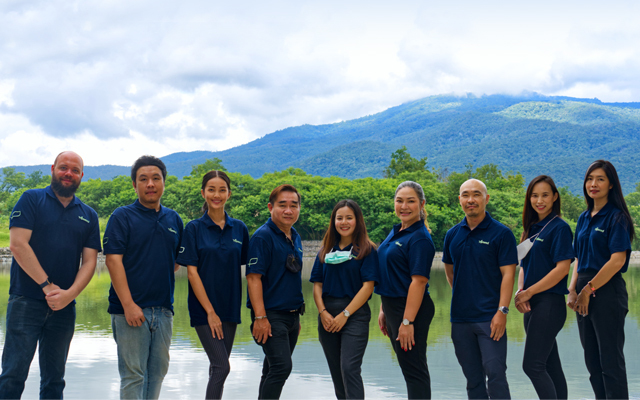
Four travel industry veterans with over two decades of combined experience in destination management have come together to rebuild Thailand’s tourism industry in a manner that will benefit new or smaller travel sellers, local tourism workers, and the wider community.
The product of their vision is Tripseed, a destination operator and distributor that specialises in curated tourist experiences across Thailand which support locally owned businesses and communities.
Itineraries feature opportunities – some of which are exclusive to Tripseed – for travellers to engage with natives, learn local cultures and traditions, and have their spend channelled directly to local communities.
An example is the Cooking with a Local Family tour in Chiang Mai, where travellers will interact with the Yong ethnic group; partake in various activities with the people, such as making flower bouquets; visit a Yong cultural museum; and join a local family for a home-cooked meal.
As well, a tour to a lesser-known, rural village puts travellers on a unique mode of transport known as etak etan and brings them around to fruit orchards and various craftwork houses for activities, such as mud cloth production and silk weaving. Revenue goes directly to members of the community.
Ewan Cluckie, founder of Tripseed, told TTG Asia: “Communities like these have few other means of income, so working with the villagers to create (tourist) experiences introduces a vital additional revenue stream for the community. It is about getting the money to where it is most needed in the most direct way possible.”
Cluckie, a marketing professional with travel and hospitality experience, is joined by partners Suphawadi Cluckie, a German language specialist who previously oversaw the German inbound market for one of Asia’s largest DMCs; Narissara Wongmahawan, a ground expert in northern Thailand, with experience in leading operations for a key industry player; and Richard Ludwig, who led critical product development for two of Asia’s largest DMCs.
Tripseed also achieves an environmental regeneration goal, as a tree is planted for every customer that travels with the company. The programme is enforced through Plant with Purpose, an organisation with 35 years of experience working with local communities to reverse deforestation through a sustainable, pro-farmer approach.
“We were very careful about our choice of partner here, as it needed to be environmentally sustainable and not just a tree farm, but also provide jobs and income. So, it’s a win for the planet and a win for the local community,” commented Cluckie.
For smaller travel sellers Tripseed supports, services are available to help them market and compete more efficiently. Dedicated account managers ensure equal access to highly personalised service for agents and operators of all sizes, while in-house marketing agency, Tripseed Studio, provides partners with marketing know-how.
“We’re trying to even the playing field for smaller travel sellers,” said Cluckie, who noted that competition is stiff in a marketplace dominated by big players.
Another critical direction of Tripseed is to improve equality in tourism employment. One of the normalised discriminatory hiring practices that the company is determined to break is the different set of employment terms for local and expatriate staff. A common feature of this is unequal annual leave terms, revealed Cluckie.
“It is very common for local employees to be given the minimum annual leave required by the government, which is six days after one year of service. In contrast, expatriates are given around 20 days of leave from their first day of employment. It would take a local employee 15 years of service to (get the same leave days as) their expatriate counterparts. At Tripseed, everyone is given 20 days of annual leave,” he said.
He added: “This is just one example. In our industry, we are always discussing responsible tourism in the context of climate change and wildlife protection, and even gender and racial discrimination, but there has been a failure to give local employees a voice and address their concerns when they face discrimination of their own. It is our goal to lead by example and deliver an alternative to the status quo that provides a greater level of equality for local employees.”
In line with Tripseed’s promise to “grow travel back better”, the company prioritises partnerships with suppliers that “align closely with our own values”. Such suppliers are given preference in Tripseed’s marketing and sales pitches.
However, Cluckie takes a practical view on this and acknowledges that the tourism landscape is very diverse and it is impossible to only work with suppliers that share the same beliefs.
“The big part of our promise, and the key word on which we focus is ‘grow’. For our partners, our suppliers and even ourselves, our belief is that we should be better than we were the day before, whether that means driving more of our profits to offering better wages for our staff or providing resources and solutions to suppliers so they can operate in a more conscientious fashion. As long as our partners are willing to constantly improve, we feel there is value to the relationship,” he added.
With Tripseed’s official launch just days ago on November 1, Cluckie said it is hard to define how the marketplace is taking its presence. The company will, for a start, specialise in Thailand as a destination and work with agents and operators in the UK, Germany and the US.
Ahead of launch, Tripseed operated some tours for Thai travellers, which Cluckie said drew strong praise. The customers have gone on to become “strong advocates, raising a lot of interest in our upcoming Tripseed affiliate programme”, which is an agent monetisation platform to give independent sellers a route to grow into an established travel retailer.
“(The affiliate programme) is in tune with our goal of helping new travel businesses grow and flourish,” he said.
Positive word of mouth has also generated interest from the UK, the US and Germany, and many agents have reached out to Tripseed to learn more.
To raise awareness, Tripseed is offering a 11.11 special offer on November 11, targeting agents in its key markets. Agents are eligible for 11 per cent off their first three confirmed bookings made between November 11 and January 30, 2022 when they subscribe to Tripseed’s newsletter and connect on LinkedIn and Facebook.
“This is to celebrate our launch, and also the gradual reopening of Thailand, but also provide a way for agents and operators to try out our services at very little risk,” he said.
Indian tourists to be highly sought-after, says GlobalData

Indian tourists will be some of the most desirable travellers, given India’s growing economy, young population and rising middle class, according to GlobalData.
The analytics company noted that the country is projected to reach record levels of 29 million outbound trips by 2025 – a buoyant outlook considering the strains of Covid-19.

Craig Bradley, associate travel & tourism analyst at GlobalData, said: “Before the pandemic, India was one of the most important and sought-after tourism source markets globally, and was a key target for major players such as VisitBritain and Tourism Australia. While the Covid-19 crisis put considerable strain on the country’s economy and tourism industry, Indian travellers are expected to be ready to travel once more.”
India’s economy will continue to build on its success, after an initial lull in 2020. Current projections show the national GDP of India will reach US$4 trillion, 50 per cent higher than 2021 levels, according to GlobalData’s Macroeconomic database.
The growth within India’s economy will directly contribute to a boost in the middle-class population, resulting in increased wealth and disposable income for years to come.
“Tourism development typically thrives in developing economies, and India’s future looks bright – providing it can avoid further Covid-19 outbreaks and subsequent lockdowns,” Bradley commented.
Destination marketers can capitalise on the country’s growing population, comprising about 51 per cent of Gen Z and millennials, who are inclined to travel, he said, adding that India’s improving infrastructure and developing LCC market has made outbound travel both affordable and accessible.
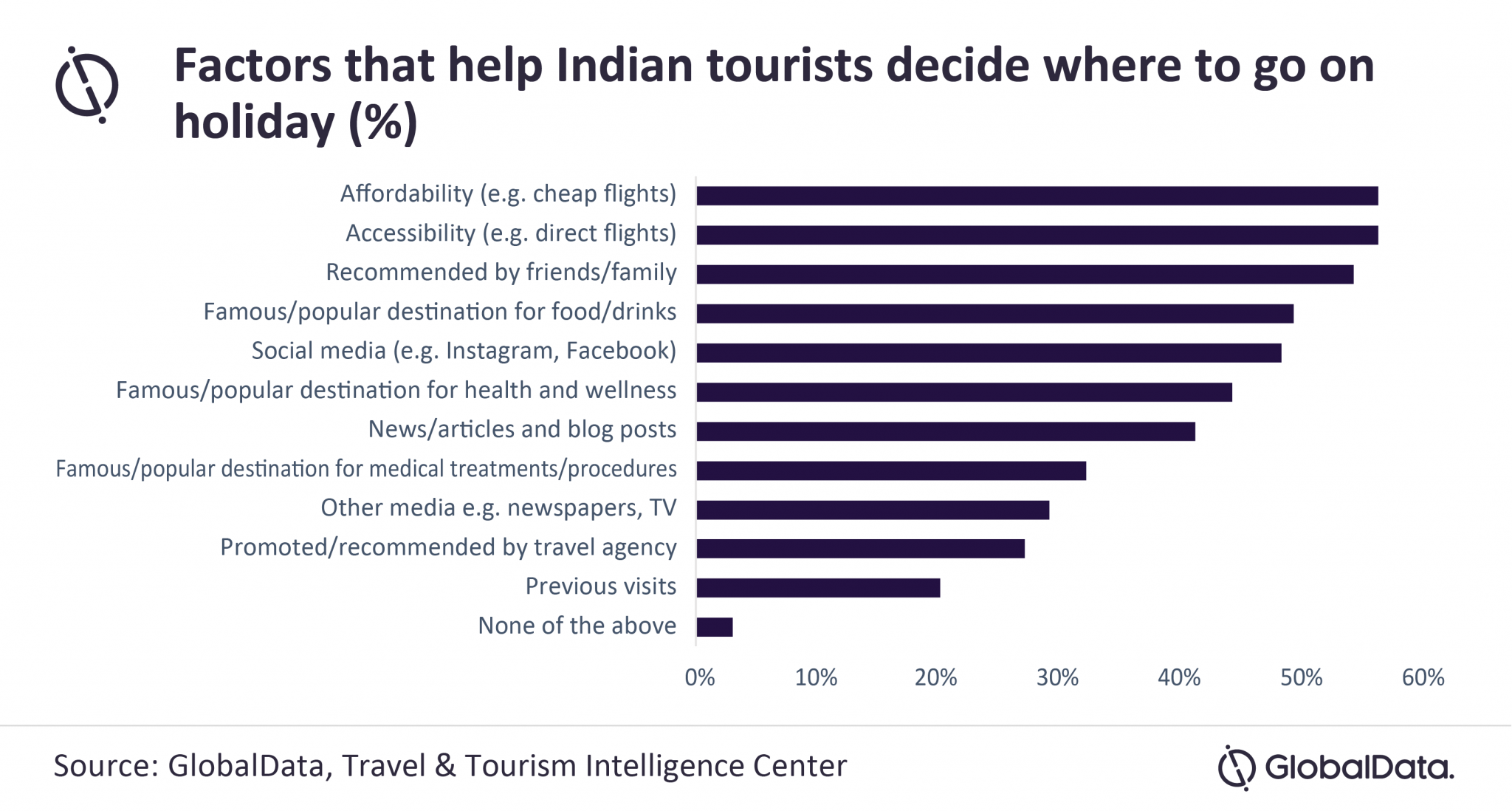
According to a 3Q2021 Global Consumer survey by GlobalData, 56 per cent of Indians said that ‘affordability’ and ‘accessibility’ were key considerations when purchasing a holiday. This underlines that simple, cost-effective travel solutions are the way forward, said GlobalData.
Bradley added: “India’s increased investment in budget airlines, as well as improving airport infrastructure, means better connections from regional and major airports. Therefore, international travel will be more straightforward and cheaper for Indian travellers. This will be essential to India’s success in the post-pandemic era.”
He observed that India’s budget airline industry has increased drastically over the past decade alongside its economy – in 2016, it surpassed full-service carriers by the number of passenger seats sold, and accounts for 51 per cent of all of India’s passenger traffic as of 2021.
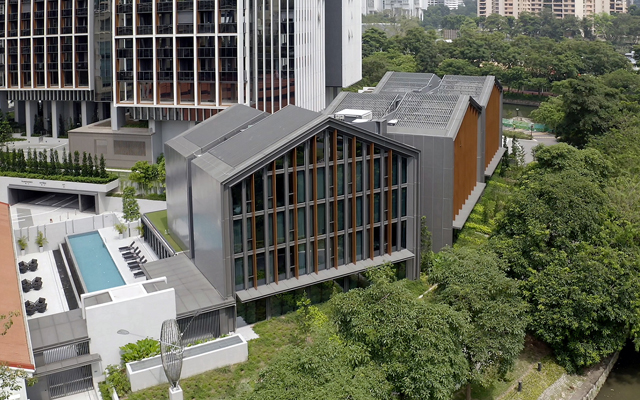






The age-old traditions and cultures of Scandinavia will come to life this Christmas on board Dream Cruises’ Genting Dream and World Dream, during its A Nordic Christmas Adventure sailings, taking place from mid-November until January 1, 2022.
The Singapore sailings will feature an array of culinary delights, as well as Christmas-themed activities, decorations and entertainment with influences from Denmark, Finland, Iceland, Norway and Sweden.
Highlights include a lighting ceremony that will bring to life the exclusive Dream Advent Calendar and a miniature Santa Express train wending its way through a Gingerbread Town.
At the Zouk Beach Club, guests can explore a Nordic village illuminated with thousands of twinkle lights, highlighted by a festive Swedish yule goat in the village square, with Santa making an appearance.
A selection of Christmas pastries, festive hampers, Scandinavian souvenirs and fun crafts will be available at the Nordic Market, where there will also be photo opportunities with iconic Christmas characters.
Guests can pick up a set of limited-edition Dream Cruises Christmas cards and explore the ships to collect 10 different embossing stamps to personalise each card to keep as a souvenir.
At the inclusive restaurants, The Lido and Dream Dining Room, complimentary traditional holiday fare will include roast turkey, slipper lobster, Gammon ham, roasted beef tenderloin, honey glazed Norwegian salmon, ginger-spiced chocolate cake, Christmas cookies, Swedish St. Lucia saffron buns, and more.
Gastronomes can upgrade their dining experience at specialty restaurants such as Prime Steakhouse & Seafood Grill or Umi Uma with Wagyu beef, foie gras, tiger prawns, oysters and other delicacies.
Family-friendly performances will take place in the Zodiac Theatre that will bring back memories of nostalgic childhood Christmas shows.
Verry Christmas, on board Genting Dream, is a Christmas spectacular replete with Santa Claus, elves, an evil Snow Queen and a polar bear; while World Dream’s Jolly Holly show highlights an array of performers in spellbinding routines.
From November 17 to December 18, musical theatre performer Eli Zaelo, from the cast of The Lion King Musical and Titanic The Musical, will also be performing at the Nordic Village square on board Genting Dream.